
Forest Mother-of-Pearl Butterfly: Spot This Beauty!

The Forest Mother-of-Pearl butterfly (Protogoniomorpha anaria) is a captivating butterfly found in African forests. To identify it, look for its striking orange and dark brown patterned wings, a wingspan of about 2.5 to 3 inches, and a preference for shaded, forest environments. Observing its behavior, such as its flight patterns and host plant associations, will further confirm its identification.
Have you ever been walking through a lush African forest and caught a glimpse of a butterfly with intricate patterns that seemed to blend perfectly with the shadows and sunlight? Identifying butterflies can sometimes feel like a puzzle, especially when they flit by so quickly. Many people find it challenging to distinguish one species from another, leading to missed opportunities to appreciate these beautiful creatures.
In this guide, we’ll explore the fascinating world of the Forest Mother-of-Pearl butterfly, providing you with clear, easy-to-follow steps to identify this stunning insect. We’ll dive into its unique characteristics, habitat, and behavior, ensuring you can confidently recognize it. Get ready to unlock the secrets of the forest and discover the beauty of the Protogoniomorpha anaria!
What is the Forest Mother-of-Pearl Butterfly?

The Forest Mother-of-Pearl butterfly (Protogoniomorpha anaria) is a member of the Nymphalidae family, also known as brush-footed butterflies. These butterflies are native to the forests of Africa and are known for their striking appearance and interesting behaviors.
Key Characteristics
- Scientific Name: Protogoniomorpha anaria
- Family: Nymphalidae (Brush-footed butterflies)
- Wingspan: Approximately 2.5 to 3 inches (6.3 to 7.6 cm)
- Habitat: Tropical and subtropical forests of Africa
Why Study the Forest Mother-of-Pearl Butterfly?
Studying the Forest Mother-of-Pearl butterfly can provide valuable insights into forest ecosystems. Understanding its habitat preferences, life cycle, and interactions with other species can help us better appreciate and conserve these environments. Plus, its unique beauty makes it a favorite among butterfly enthusiasts and nature lovers alike.
Identifying the Forest Mother-of-Pearl Butterfly

Identifying the Forest Mother-of-Pearl butterfly involves looking at its physical characteristics, habitat, and behavior. Here’s a detailed guide to help you recognize this beautiful butterfly.
1. Examine the Wing Patterns
The wing patterns are one of the most distinctive features of the Forest Mother-of-Pearl butterfly. These patterns help it camouflage in its forest environment and attract mates.
- Upperside: The upperside of the wings typically features a mix of orange and dark brown patterns. The forewings have a complex pattern of lines and spots.
- Underside: The underside is usually a lighter shade of brown with intricate patterns that resemble a leaf, providing excellent camouflage when the butterfly rests with its wings closed.
2. Check the Size and Shape
Size and shape are important factors in butterfly identification. The Forest Mother-of-Pearl butterfly has a specific wingspan and wing shape that can help distinguish it from other species.
- Wingspan: The wingspan ranges from about 2.5 to 3 inches (6.3 to 7.6 cm).
- Shape: The wings are generally rounded with slightly irregular edges, which contribute to their camouflage effect.
3. Observe the Habitat
The habitat where you find the butterfly can be a crucial clue. The Forest Mother-of-Pearl butterfly is primarily found in specific types of forests in Africa.
- Location: Look for it in tropical and subtropical forests.
- Environment: It prefers shaded areas with plenty of vegetation.
4. Note the Behavior
Butterfly behavior can also aid in identification. Observing how the butterfly flies, feeds, and interacts with its environment can provide valuable information.
- Flight Pattern: The Forest Mother-of-Pearl butterfly has a relatively slow and fluttering flight.
- Feeding Habits: It feeds on nectar from flowers and can often be seen near flowering plants.
- Resting Position: When resting, it usually holds its wings closed, displaying the leaf-like pattern on the underside.
5. Identify Host Plants
Host plants are the specific plants that the butterfly’s caterpillars feed on. Knowing the host plants in an area can help you predict where you might find the Forest Mother-of-Pearl butterfly.
- Common Host Plants: The caterpillars of this species feed on plants in the family Euphorbiaceae.
- Specific Plants: Examples include plants from the Bridelia genus.
Detailed Look at Physical Characteristics
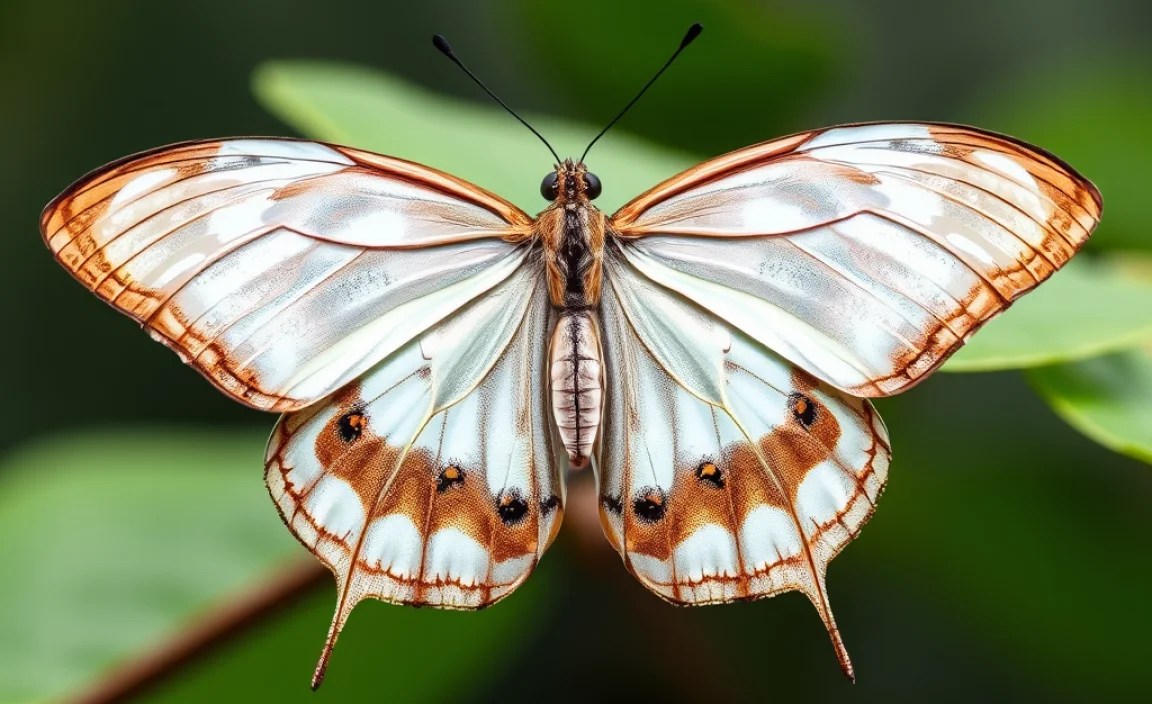
Let’s delve deeper into the physical characteristics of the Forest Mother-of-Pearl butterfly, focusing on the details that make it unique.
Wing Coloration and Patterns
The coloration and patterns on the wings are not just for show; they serve important purposes such as camouflage and mate attraction.
- Upperside Details: The orange and dark brown patterns on the upperside create a mottled effect that helps the butterfly blend in with the forest foliage.
- Underside Details: The underside has intricate patterns that mimic the veins and texture of a leaf, providing excellent camouflage when the butterfly is at rest.
Size and Proportions
The size and proportions of the butterfly are consistent within the species, making them reliable identification markers.
- Average Size: The average wingspan is between 2.5 and 3 inches.
- Body Size: The body is relatively small and slender, typical of many Nymphalidae butterflies.
Distinguishing Features
Some unique features can help you distinguish the Forest Mother-of-Pearl butterfly from similar species.
- Irregular Wing Edges: The slightly irregular edges of the wings add to the camouflage effect.
- Distinct Markings: The specific arrangement of spots and lines on the forewings is unique to this species.
Habitat and Distribution
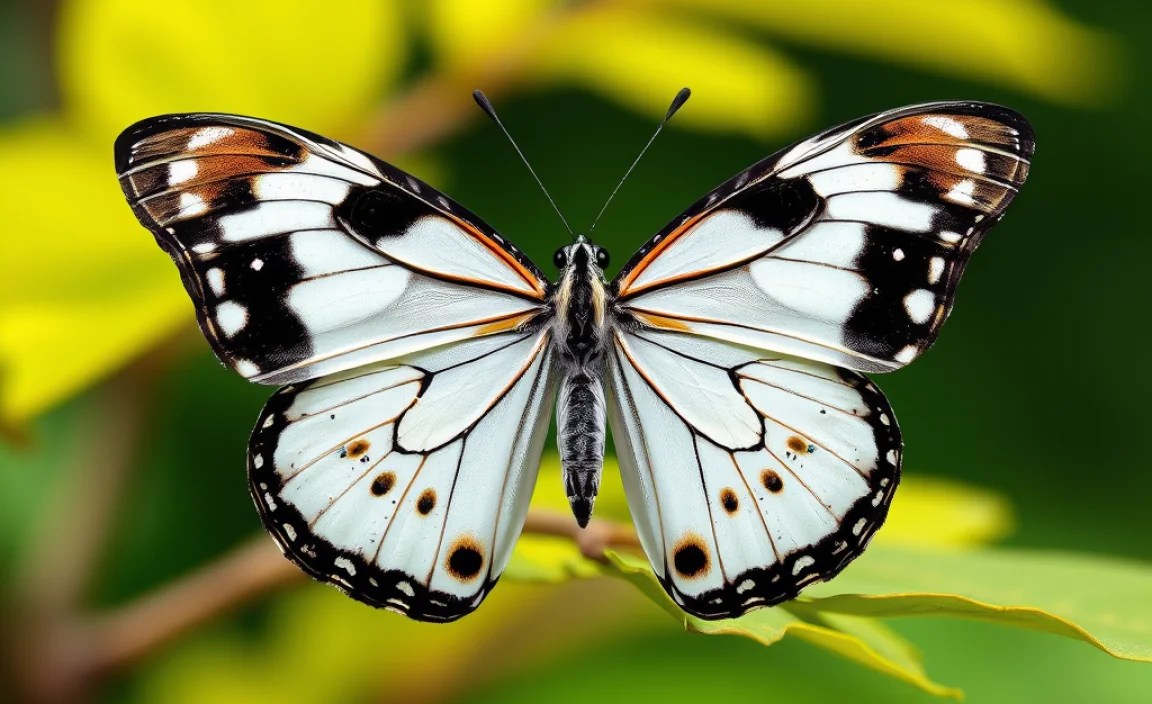
Understanding the habitat and distribution of the Forest Mother-of-Pearl butterfly is crucial for locating and identifying it.
Geographical Range
The Forest Mother-of-Pearl butterfly is primarily found in specific regions of Africa.
- Regions: Central Africa, West Africa, and parts of East Africa.
- Countries: Examples include Nigeria, Cameroon, and the Democratic Republic of Congo.
Preferred Habitats
Within its geographical range, the butterfly prefers certain types of habitats.
- Forest Types: Tropical and subtropical forests are its primary habitats.
- Specific Environments: It prefers shaded areas with dense vegetation, such as forest edges and clearings.
Ecological Role
The Forest Mother-of-Pearl butterfly plays a role in its ecosystem.
- Pollination: As it feeds on nectar, it helps pollinate various flowering plants.
- Food Source: It serves as a food source for birds and other predators.
Behavioral Traits
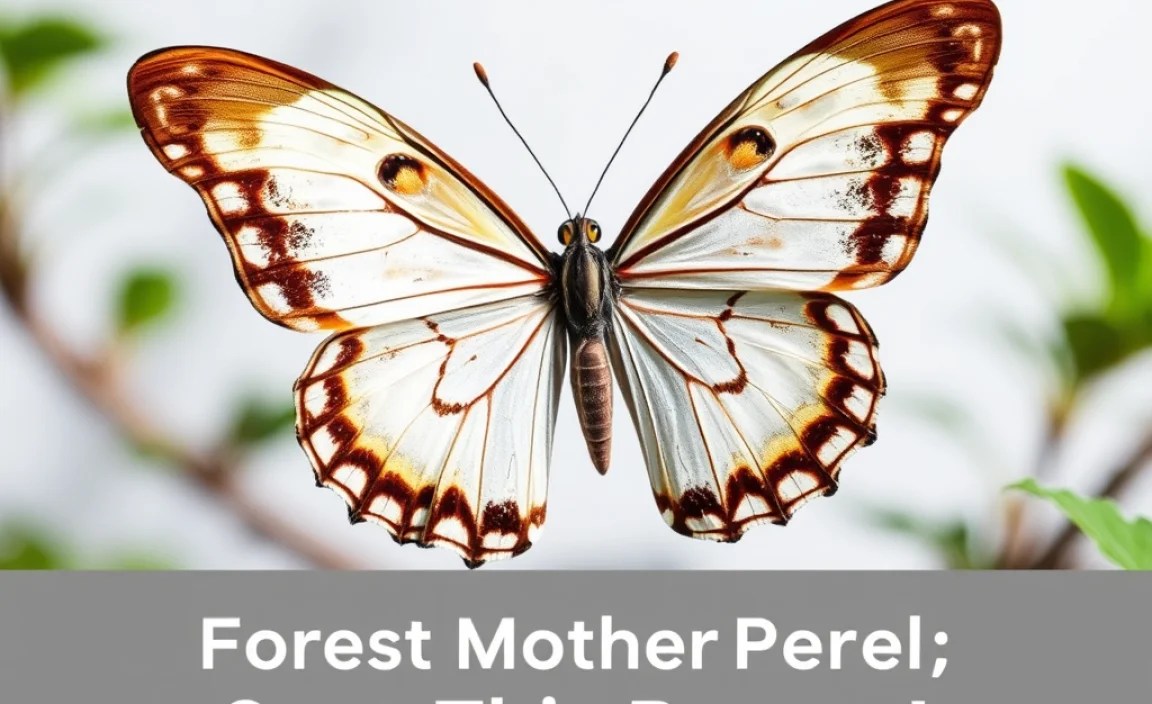
Observing the behavioral traits of the Forest Mother-of-Pearl butterfly can offer additional clues for identification.
Flight Patterns
The way a butterfly flies can be a distinguishing characteristic.
- Flight Style: The Forest Mother-of-Pearl butterfly has a slow and fluttering flight, often close to the ground.
- Activity Times: It is most active during the warmer parts of the day.
Feeding Habits
Understanding its feeding habits can help you find it near its food sources.
- Nectar Sources: It feeds on the nectar of various flowering plants.
- Preferred Flowers: It is often seen near flowers with bright colors and easy-to-access nectar.
Social Behavior
While not highly social, there are certain social behaviors you might observe.
- Solitary Nature: It is typically seen alone or in small groups.
- Mating Behavior: During mating season, males may engage in courtship displays to attract females.
Life Cycle
Knowing the life cycle of the Forest Mother-of-Pearl butterfly can provide a deeper understanding of its biology and behavior.
Egg Stage
- Appearance: The eggs are typically small and laid on the host plant.
- Location: They are usually placed on the underside of leaves.
Larval Stage (Caterpillar)
- Appearance: The caterpillar feeds on specific host plants.
- Feeding Habits: Caterpillars eat constantly to grow.
Pupal Stage (Chrysalis)
- Appearance: The pupa is camouflaged to blend with its surroundings.
- Duration: The pupal stage lasts for a few weeks.
Adult Stage
- Emergence: The adult butterfly emerges from the pupa.
- Reproduction: Adults reproduce and lay eggs, continuing the cycle.
Tools and Resources for Identification
To enhance your identification skills, consider using these tools and resources.
Field Guides
Field guides are essential for butterfly identification.
- Recommended Guides: “Butterflies of West Africa” and similar regional guides.
- Key Features: Look for guides with detailed descriptions and high-quality photos.
Websites and Apps
Online resources can provide additional information and identification support. The Xerces Society is a great resource.
- Helpful Websites: Butterfly identification websites and online forums.
- Mobile Apps: Butterfly identification apps that use image recognition.
Local Experts
Consulting with local experts can be invaluable.
- Entomologists: Contact local entomologists or butterfly experts.
- Nature Centers: Visit nature centers and participate in guided tours.
Conservation Status and Efforts
Understanding the conservation status of the Forest Mother-of-Pearl butterfly and the efforts to protect it is essential.
Current Status
The conservation status of the Forest Mother-of-Pearl butterfly is based on available data and assessments.
- Threats: Habitat loss due to deforestation is a major threat.
- Population Trends: Monitoring population trends is crucial for conservation efforts.
Conservation Efforts
Various organizations and initiatives are working to protect butterflies and their habitats.
- Habitat Preservation: Efforts to preserve and restore forest habitats.
- Sustainable Practices: Promoting sustainable forestry practices.
How You Can Help
You can contribute to butterfly conservation in several ways.
- Support Conservation Organizations: Donate to organizations working to protect butterfly habitats.
- Promote Awareness: Share information about butterfly conservation with others.
Comparing with Similar Species
To accurately identify the Forest Mother-of-Pearl butterfly, it’s helpful to compare it with similar species.
Species Table
Here’s a table comparing the Forest Mother-of-Pearl butterfly with other butterflies from the Nymphalidae family that you might encounter in the same region.
| Species | Key Identification Features | Habitat | Behavior |
|---|---|---|---|
| Forest Mother-of-Pearl (Protogoniomorpha anaria) | Orange and dark brown patterned wings, leaf-like underside. | Tropical and subtropical forests. | Slow, fluttering flight, feeds on nectar. |
| Precis octavia (Gaudy Commodore) | Bright red or orange wings with black markings, seasonal variations. | Savannas and open woodlands. | Fast flight, often basks in the sun. |
| Charaxes jasius (Two-tailed Pasha) | Large size, brown wings with a distinctive tail on each hindwing. | Forests and woodlands. | Strong, soaring flight, territorial behavior. |
Visual Comparison
Pay attention to the subtle differences in wing patterns, size, and shape.
- Wing Patterns: Note the specific arrangement of spots and lines.
- Size: Measure or estimate the wingspan to compare sizes.
- Shape: Observe the overall shape of the wings and any unique features.
Attracting Forest Mother-of-Pearl Butterflies to Your Garden
While the Forest Mother-of-Pearl butterfly primarily lives in forests, you can create a garden that attracts similar species and supports local butterfly populations.
Planting Host Plants
Providing host plants is essential for attracting butterflies to your garden.
- Suitable Plants: Include plants from the Euphorbiaceae family, such as Bridelia species.
- Placement: Plant these in a sunny spot with well-drained soil.
Providing Nectar Sources
Nectar-rich flowers will attract adult butterflies to your garden.
- Flower Choices: Choose native flowering plants that provide nectar.
- Color Preferences: Butterflies are often attracted to bright colors like red, orange, and yellow.
Creating a Butterfly-Friendly Environment
A butterfly-friendly environment includes shelter, water, and protection from pesticides.
- Shelter: Provide shrubs and trees for shelter from wind and predators.
- Water Source: Offer a shallow dish of water with pebbles for butterflies to land on.
- Pesticide-Free: Avoid using pesticides that can harm butterflies and other beneficial insects.
Photographing Forest Mother-of-Pearl Butterflies
Capturing beautiful photos of Forest Mother-of-Pearl butterflies can be a rewarding experience. Here are some tips for successful butterfly photography.
Equipment
Having the right equipment can make a big difference.
- Camera: Use a camera with a macro lens for close-up shots.
- Lens: A telephoto lens can be useful for capturing butterflies from a distance.
Techniques
Employing the right techniques will help you get sharp, well-composed photos.
- Focus: Use manual focus to ensure the butterfly is sharp.
- Aperture: Use a wide aperture (low f-number) to create a shallow depth of field and blur the background.
- Shutter Speed: Use a fast shutter speed to freeze the butterfly’s movement.
Tips for Approaching Butterflies
Approaching butterflies carefully will increase your chances of getting a good shot.
- Patience: Be patient and wait for the butterfly to settle.
- Slow Movements: Move slowly and avoid sudden movements.
- Timing: The best time to photograph butterflies is early morning when they are less active.
The Cultural Significance of Butterflies
Butterflies have held cultural significance in many societies throughout history. They often symbolize transformation, beauty, and the soul.
Symbolism
Butterflies are rich in symbolism.
- Transformation: The metamorphosis of a caterpillar into a butterfly represents transformation and rebirth.
- Beauty: Their delicate beauty and vibrant colors make them symbols of grace and elegance.
- Soul: In some cultures, butterflies are believed to represent the human soul.
Cultural Beliefs
Different cultures have unique beliefs about butterflies.
- Ancient Greece: The Greek word for butterfly is “psyche,” which also means soul.
- China: Butterflies are symbols of love and joy in Chinese culture.
- Japan: In Japan, butterflies are often seen as symbols of happiness and marital bliss.
Art and Literature
Butterflies have inspired countless works of art and literature.
- Paintings: Many artists have depicted butterflies in their paintings, capturing their beauty and symbolism.
- Poems: Poets have used butterflies as metaphors for transformation, freedom, and the fleeting nature of life.
FAQ About Forest Mother-of-Pearl Butterflies
Here are some frequently asked questions about the Forest Mother-of-Pearl butterfly.
What does the Forest Mother-of-Pearl butterfly eat?
The adult Forest Mother-of-Pearl butterfly primarily feeds on nectar from flowers. The caterpillars feed on specific host plants, such as those in the Euphorbiaceae family.
Where can I find the Forest Mother-of-Pearl butterfly?
This butterfly is found in the tropical and subtropical forests of Africa, particularly in Central, West, and parts of East Africa. Look for it in shaded areas with dense vegetation.
How can I attract butterflies to my garden?
To attract butterflies, plant host plants for caterpillars and nectar-rich flowers for adults. Provide a water source and avoid using pesticides.
What is the wingspan of the Forest Mother-of-Pearl butterfly?
The wingspan of the Forest Mother-of-Pearl butterfly ranges from about 2.5 to 3 inches (6.3 to 7.6 cm).
What is the conservation status of this butterfly?
The Forest Mother-of-Pearl butterfly faces threats from habitat loss due to deforestation. Supporting conservation organizations and promoting sustainable practices can help protect it.
How can I distinguish this butterfly from similar species?
Look for the distinctive orange and dark brown patterns on the upperside of its wings and the leaf-like pattern on the underside. Also, note its slow, fluttering flight and preference for forest habitats.
What role do butterflies play in the ecosystem?
Butterflies play important roles in pollination and serve as a food source for other animals. They also contribute to the overall biodiversity and health of their ecosystems.
Conclusion
Identifying the Forest Mother-of-Pearl butterfly is a rewarding journey into the heart of African forests. By paying close attention to its wing patterns, size, habitat, and behavior, you can confidently recognize this stunning creature. Remember to consult field guides, use online resources, and seek advice from local experts to enhance your identification skills.
Conserving the Forest Mother-of-Pearl butterfly and its habitat is crucial for maintaining biodiversity and ecological balance. By supporting conservation efforts, promoting awareness, and creating butterfly-friendly environments, you can contribute to the protection of these beautiful insects for future generations. So, venture out into the forests, keep your eyes peeled, and embrace the joy of discovering the wonders of the butterfly world!


