
Asian Butterfly Wing Structure: The Secret Revealed

Have you ever seen a butterfly up close? Their wings are so colorful. They look like tiny paintings. Did you know that Asian butterfly wing structure is special? These wings help them fly and stay safe. Let’s learn more about these amazing wings.
Butterflies are insects. They have six legs and three body parts. Their wings are covered in tiny scales. These scales give them color. They also help them fly. The Asian butterfly wing structure is different for each type. Some wings are big. Some wings are small. All of them are perfect for the butterfly.
Key Takeaways
- Asian butterfly wing structure is unique and helps them fly and stay safe.
- The tiny scales on butterfly wings give them their beautiful colors.
- Different butterfly species have different wing shapes and sizes.
- Butterfly wings are delicate but also strong enough for long flights.
- Scientists study butterfly wings to learn about nature and design.
Understanding Asian Butterfly Wing Structure

Asian butterfly wing structure is truly amazing. Butterfly wings are not just colorful decorations. They are complex and delicate structures. These structures allow butterflies to fly. They also help butterflies avoid predators. The wings are made of a thin membrane. This membrane is supported by veins. The veins provide strength. They also carry nutrients. The wings are covered in tiny scales. These scales overlap like shingles on a roof. The scales give butterflies their color. They also protect the wings from damage. Different species of butterflies have different wing structures. These structures are adapted to their specific environments. Understanding these structures helps us appreciate the beauty and complexity of nature.
- Butterfly wings are made of a thin membrane.
- Veins support the wing and carry nutrients.
- Scales give butterflies their color.
- Scales protect the wings from damage.
- Different species have different wing structures.
The study of Asian butterfly wing structure is important for many reasons. Scientists can learn about evolution. They can also learn about aerodynamics. Engineers can use this knowledge to design better airplanes. The colors and patterns on butterfly wings are also inspiring. Artists and designers use these patterns in their work. Butterflies are important pollinators. They help plants reproduce. Protecting butterflies and their habitats is important. We can ensure that future generations can enjoy these beautiful creatures. Learning about butterflies teaches us about the natural world. It also teaches us about the importance of conservation.
Why are butterfly wings so colorful?
Have you ever wondered why butterfly wings are so colorful? The colors come from the tiny scales. These scales contain pigments. Pigments are substances that absorb certain colors of light. They reflect other colors. Some scales do not contain pigments. They create colors by scattering light. This is similar to how a prism works. The colors on butterfly wings can serve many purposes. They can attract mates. They can also warn predators. Some butterflies have camouflage. This helps them blend in with their surroundings. The colors and patterns on butterfly wings are truly remarkable. They are a testament to the power of nature.
How do butterfly wings help them fly?
Butterfly wings are not just pretty. They are also very functional. The shape and structure of the wings help butterflies fly. The wings are lightweight but strong. The veins provide support. The scales help to create lift. When a butterfly flaps its wings, air flows over the surface. The shape of the wing causes the air to move faster over the top. This creates lower pressure on the top of the wing. Higher pressure on the bottom of the wing pushes the wing upward. This is called lift. Butterflies can also control the angle of their wings. This allows them to steer and maneuver. The flight of a butterfly is graceful and efficient.
What happens if a butterfly loses scales?
Butterfly wings are covered in scales. These scales are important for color and protection. What happens if a butterfly loses some scales? Losing a few scales is usually not a big problem. Butterflies can still fly. They can still survive. However, if a butterfly loses too many scales, it can become more vulnerable. The wings can become damaged more easily. The butterfly may also lose some of its color. This can make it harder to attract mates. It can also make it easier for predators to spot them. Butterflies can regrow scales. But it is a slow process. It is important to be gentle with butterflies. Avoid touching their wings whenever possible.
Fun Fact or Stat: Some butterfly wings have metallic colors. This is due to the way light reflects off the scales!
The Microscopic Structure of Wings
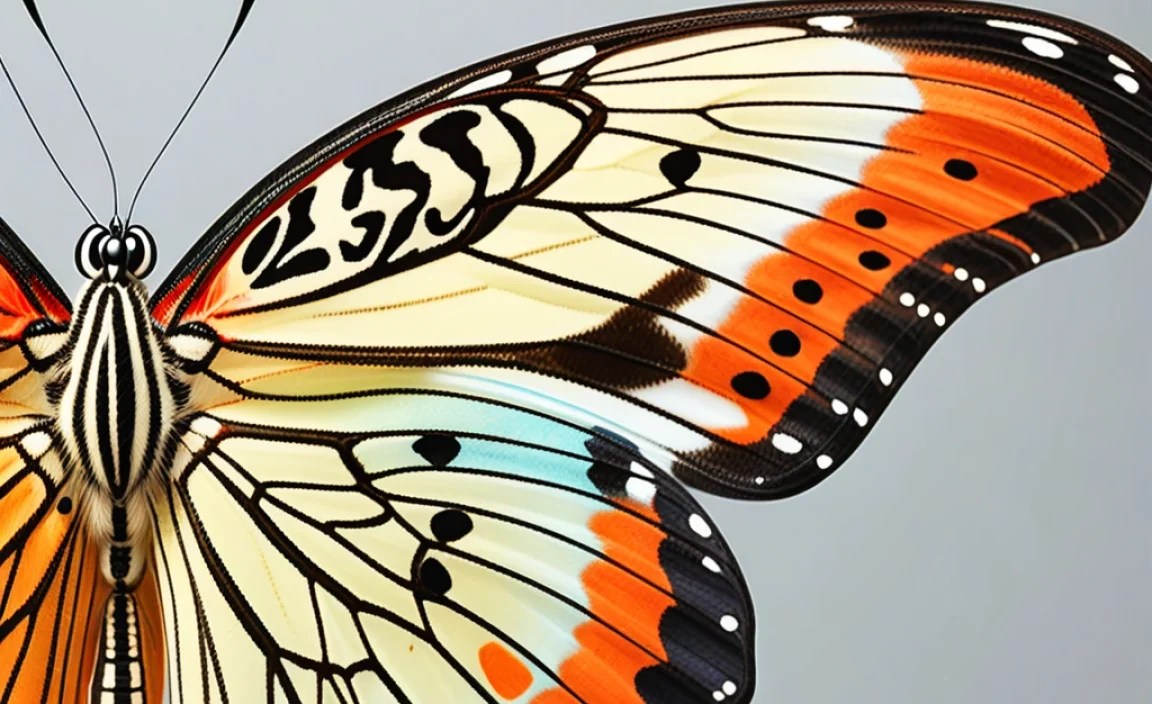
The microscopic structure of Asian butterfly wing structure is fascinating. If you looked at a butterfly wing under a microscope, you would see a complex arrangement of scales. Each scale is tiny and shaped like a flattened sac. The scales are attached to the wing membrane by a small stalk. The scales overlap each other like shingles on a roof. This overlapping structure provides strength and protection. The surface of each scale is covered in tiny ridges. These ridges help to scatter light. This creates the iridescent colors seen in some butterflies. The microscopic structure of butterfly wings is a marvel of engineering. It is a testament to the power of natural selection.
- Scales are shaped like flattened sacs.
- Scales are attached to the wing membrane.
- Scales overlap each other.
- The surface of each scale has tiny ridges.
- Ridges scatter light to create iridescent colors.
Studying the microscopic structure of Asian butterfly wing structure helps scientists understand how butterflies create color. It also helps them understand how butterflies fly. The scales and veins work together to create lift and control. Engineers can use this knowledge to design better airplanes and drones. They can also use this knowledge to create new materials with unique optical properties. The microscopic structure of butterfly wings is a source of inspiration for scientists and engineers. It is a reminder that nature is full of amazing designs. We can learn a lot by studying the natural world.
How do scales attach to the wing?
The way scales attach to a butterfly wing is very interesting. Each scale is connected by a tiny stalk. Think of it like a very short, thin string. This stalk fits into a small socket on the wing membrane. The connection is strong enough to hold the scale in place. But it is also flexible enough to allow the scale to move slightly. This flexibility is important. It allows the scales to overlap and protect the wing. It also allows the scales to vibrate and create color. The attachment of scales to the wing is a delicate balance of strength and flexibility.
What are the ridges on the scales for?
Have you ever wondered about the tiny ridges on butterfly scales? These ridges are very important. They help to scatter light. When light hits the ridges, it bounces off in different directions. This scattering of light creates the colors we see. Some ridges are arranged in a regular pattern. This pattern can create iridescent colors. Iridescent colors change depending on the angle of light. The ridges also help to keep the scales clean. Dust and dirt can easily fall off the ridges. This helps to keep the wings lightweight and functional.
How does the structure affect flight?
The structure of Asian butterfly wing structure is important for flight. The scales and veins work together. They help the butterfly to create lift and control. The veins provide support and stiffness. The scales help to create a smooth surface. This reduces drag. The shape of the wing is also important. It is curved in a way that helps to generate lift. The butterfly can also control the angle of its wings. This allows it to steer and maneuver. The flight of a butterfly is a complex interaction of structure and function.
Fun Fact or Stat: There can be up to 600 scales per square millimeter on a butterfly wing!
Coloration and Patterns on Butterfly Wings

The coloration and patterns on Asian butterfly wing structure are diverse. Butterflies use color to attract mates. They also use it to warn predators. Some butterflies have bright colors. These colors signal that they are poisonous. Other butterflies have camouflage. This helps them blend in with their surroundings. The patterns on butterfly wings can be simple or complex. Some butterflies have spots. Others have stripes. Some have intricate designs. The colors and patterns on butterfly wings are a product of evolution. They are adapted to the specific environments in which the butterflies live.
- Butterflies use color to attract mates.
- Butterflies use color to warn predators.
- Some butterflies have bright colors.
- Other butterflies have camouflage.
- Patterns can be simple or complex.
The study of coloration and patterns on Asian butterfly wing structure is important for understanding evolution. Scientists can learn how different colors and patterns have evolved over time. They can also learn how these colors and patterns affect the survival of butterflies. The colors and patterns on butterfly wings are also inspiring to artists and designers. Many artists and designers use butterfly patterns in their work. Butterflies are a symbol of beauty and transformation. Their colors and patterns are a source of wonder and inspiration.
How do butterflies create different colors?
Butterflies create different colors in a few ways. Some colors come from pigments in the scales. These pigments absorb certain colors of light. They reflect other colors. Other colors are created by the structure of the scales. These scales scatter light. This creates iridescent colors. The combination of pigments and structural colors creates the wide variety of colors seen in butterflies. The way butterflies create color is a complex and fascinating process.
What is the purpose of camouflage?
Camouflage is a way for animals to blend in with their surroundings. Some butterflies use camouflage to hide from predators. Their wings look like leaves or bark. This makes it hard for predators to see them. Other butterflies use camouflage to hide from prey. They can sneak up on their prey without being seen. Camouflage is an important adaptation. It helps butterflies survive in their environment.
Why do some butterflies have spots?
Some butterflies have spots on their wings. These spots can serve several purposes. Some spots look like eyes. These “eyes” can scare away predators. The predator thinks it is being watched. Other spots can distract predators. The predator attacks the spot instead of the butterfly’s body. Some spots help butterflies attract mates. The spots are bright and colorful. This makes the butterfly more attractive.
Fun Fact or Stat: Some butterfly wing patterns mimic other insects to avoid predation!
Veins and Their Role in Wing Support
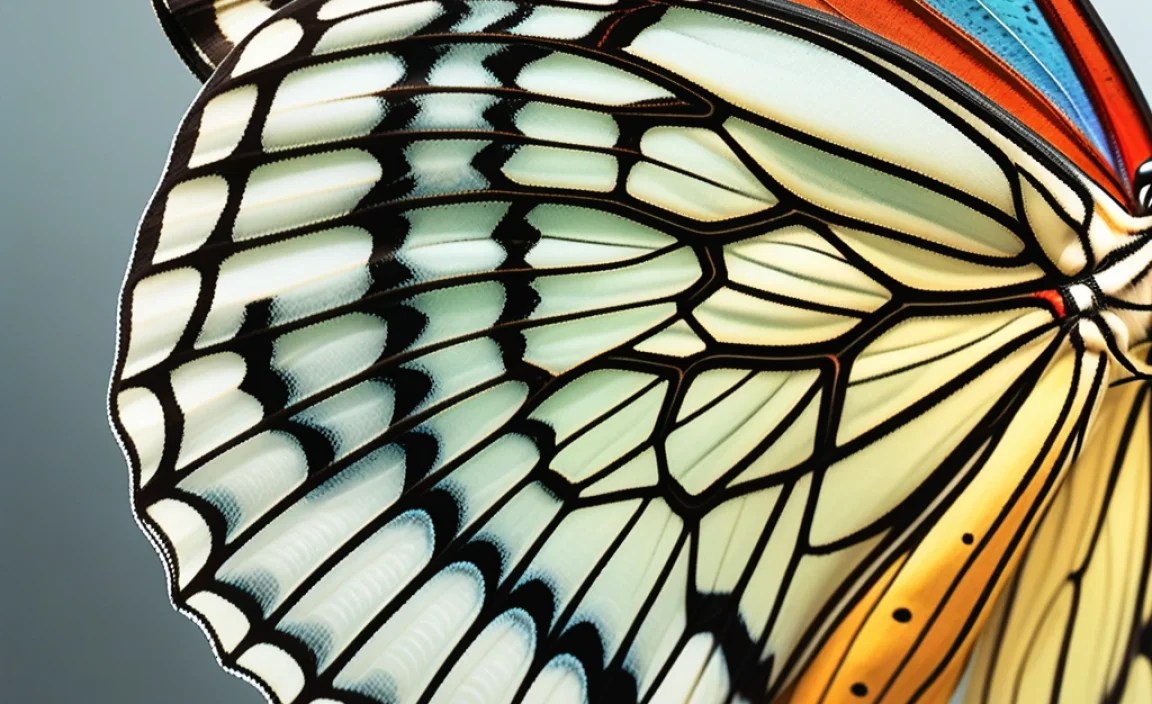
Veins are an important part of Asian butterfly wing structure. The veins are like tiny tubes. They run through the wings. They provide support and strength. They also carry nutrients to the wings. The veins are arranged in a specific pattern. This pattern helps to distribute stress evenly across the wing. The veins are made of a strong material called chitin. Chitin is the same material that makes up the exoskeletons of insects. The veins are essential for the proper functioning of butterfly wings.
- Veins are tiny tubes that run through the wings.
- Veins provide support and strength.
- Veins carry nutrients to the wings.
- Veins are arranged in a specific pattern.
- Veins are made of chitin.
Studying the veins in Asian butterfly wing structure can help scientists understand how butterfly wings evolved. They can also learn how the veins contribute to flight. Engineers can use this knowledge to design better airplane wings. The veins are a key component of the butterfly wing. They play a vital role in its structure and function. Without veins, butterfly wings would be too fragile to fly. The veins are a testament to the ingenuity of nature.
What are veins made of?
Veins in butterfly wings are made of a material called chitin. Chitin is a strong and flexible material. It is also lightweight. Chitin is the same material that makes up the exoskeletons of insects. The chitin in veins is arranged in a specific pattern. This pattern gives the veins their strength and support. Chitin is a remarkable material. It allows insects to be strong and lightweight.
How do veins help with flight?
Veins help with flight in several ways. They provide support and stiffness to the wing. This prevents the wing from bending or twisting during flight. They also help to distribute stress evenly across the wing. This prevents the wing from breaking. The veins also help to create lift. The shape of the veins helps to direct airflow over the wing.
Can butterflies survive without veins?
Butterflies cannot survive without veins in their wings. The veins are essential for the structure and function of the wings. Without veins, the wings would be too fragile to fly. The veins also carry nutrients to the wings. Without nutrients, the wings would not be able to grow and develop properly. The veins are a vital part of the butterfly’s anatomy.
Fun Fact or Stat: The pattern of veins on a butterfly wing is unique to each species!
Adaptations for Flight: Size and Shape
The size and shape of Asian butterfly wing structure are important adaptations for flight. Different species of butterflies have different wing sizes and shapes. These differences are related to their flight style and habitat. Some butterflies have large wings. These wings allow them to fly long distances. Other butterflies have small wings. These wings allow them to maneuver in tight spaces. The shape of the wing also affects flight. Some wings are rounded. Others are pointed. Some wings are broad. Others are narrow. The size and shape of butterfly wings are a product of evolution. They are adapted to the specific needs of each species.
- Different species have different wing sizes and shapes.
- Large wings allow for long-distance flight.
- Small wings allow for maneuvering in tight spaces.
- Wing shape affects flight style.
- Size and shape are adaptations for specific needs.
Studying the size and shape of Asian butterfly wing structure can help scientists understand how butterflies fly. They can also learn how different wing shapes affect flight performance. Engineers can use this knowledge to design better airplanes and drones. The size and shape of butterfly wings are a testament to the power of natural selection. They are a reminder that nature is full of amazing designs.
How does wing size affect flight speed?
Wing size affects flight speed in a few ways. Larger wings generally allow for slower, more gliding flight. Smaller wings often allow for faster, more agile flight. Butterflies with larger wings can generate more lift. This allows them to stay in the air longer. Butterflies with smaller wings can flap their wings faster. This allows them to accelerate quickly.
How does wing shape affect maneuverability?
Wing shape affects maneuverability in a few ways. Rounded wings are good for gliding and soaring. Pointed wings are good for fast flight and sharp turns. Broad wings are good for generating lift. Narrow wings are good for reducing drag. Butterflies with different wing shapes are adapted to different flight styles.
What is the ideal wing size for migration?
The ideal wing size for migration depends on the distance of the migration. Butterflies that migrate long distances need large wings. Large wings allow them to glide and soar. This conserves energy. Butterflies that migrate short distances can have smaller wings. Smaller wings are more efficient for shorter flights. The Monarch butterfly is a famous example of a long-distance migrant. It has relatively large wings.
Fun Fact or Stat: Some butterflies can fly up to 3,000 miles during migration!
Protecting Butterfly Wings: Defense Mechanisms
Asian butterfly wing structure is delicate. Butterflies have developed various defense mechanisms. These mechanisms protect their wings from damage. Some butterflies have tough scales. These scales are resistant to tearing. Other butterflies have patterns that break up their outline. This makes it harder for predators to see them. Some butterflies can even detach a portion of their wing. This allows them to escape from predators. The defense mechanisms of butterfly wings are essential for their survival.
Here’s a table comparing a few defense mechanisms:
| Defense Mechanism | Description | Benefit | Example |
|---|---|---|---|
| Tough Scales | Scales that are resistant to tearing. | Protects wings from minor damage. | Swallowtail butterflies |
| Camouflage Patterns | Patterns that blend with surroundings. | Makes it harder for predators to spot them. | Oakleaf butterflies |
| Eyespots | Spots that resemble eyes. | Startles or distracts predators. | Buckeye butterflies |
| Autotomy | Detaching a portion of the wing. | Allows escape from predators. | Some Blue butterflies |
- Tough scales resist tearing.
- Camouflage patterns break up their outline.
- Eyespots startle predators.
- Autotomy allows them to detach a portion of their wing.
- These mechanisms are essential for survival.
Studying the defense mechanisms of Asian butterfly wing structure can help scientists understand how butterflies have adapted to their environments. They can also learn how predators and prey interact. This knowledge can be used to develop better conservation strategies. Protecting butterflies and their habitats is essential. This will ensure that future generations can enjoy these beautiful creatures. The defense mechanisms of butterfly wings are a testament to the power of evolution.
How do eyespots scare predators?
Eyespots are large, circular markings on butterfly wings. They resemble the eyes of a larger animal. When a predator sees these eyespots, it may think it is being watched. This can startle the predator. It might hesitate to attack. The eyespots can also distract the predator. It might attack the eyespot instead of the butterfly’s body. This gives the butterfly a chance to escape.
What is autotomy?
Autotomy is the ability of an animal to detach a part of its body. Some butterflies can detach a portion of their wing. This allows them to escape from predators. The detached wing portion is not essential for flight. The butterfly can still fly with a slightly smaller wing. Autotomy is a risky strategy. The butterfly loses a part of its wing. But it can save the butterfly’s life.
How do tough scales help?
Tough scales help to protect butterfly wings from minor damage. The scales are made of a strong material called chitin. They are also arranged in an overlapping pattern. This pattern provides additional protection. Tough scales can resist tearing and abrasion. This helps to keep the wings in good condition. This is important for flight and survival.
Fun Fact or Stat: Some butterflies play dead to avoid predators!
Evolutionary Aspects of Wing Structure
The evolutionary aspects of Asian butterfly wing structure are complex. Butterfly wings have evolved over millions of years. They are a result of natural selection. The earliest butterflies had simple wings. Over time, the wings became more complex. They developed veins, scales, and colors. These adaptations helped butterflies to fly better. They also helped them to survive in their environments. The evolution of butterfly wings is a fascinating story. It is a testament to the power of evolution.
- Butterfly wings evolved over millions of years.
- They are a result of natural selection.
- Early butterflies had simple wings.
- Wings became more complex over time.
- Adaptations helped them fly and survive.
Studying the evolutionary aspects of Asian butterfly wing structure can help scientists understand how life on Earth has changed over time. They can also learn how different species are related to each other. This knowledge can be used to develop better conservation strategies. Protecting biodiversity is essential. This will ensure that future generations can enjoy the wonders of the natural world. The evolution of butterfly wings is a reminder that life is constantly changing.
What did the first butterfly wings look like?
The first butterfly wings were likely very simple. They were probably small and lacked many of the features we see today. They may have been used for gliding rather than powered flight. Over time, the wings gradually became more complex. They developed veins, scales, and colors. These adaptations allowed butterflies to fly more efficiently and survive in a wider range of environments.
How did scales evolve?
The evolution of scales is a complex process. Scales are thought to have evolved from flattened hairs. These hairs provided some protection to the wing. Over time, the hairs became more flattened and developed ridges. The ridges helped to scatter light and create color. Eventually, the hairs evolved into the scales we see today.
How does wing structure vary across species?
Wing structure varies greatly across different species of butterflies. Some butterflies have large wings. Others have small wings. Some have rounded wings. Others have pointed wings. Some have brightly colored wings. Others have camouflaged wings. These differences in wing structure reflect the different lifestyles and environments of different butterfly species.
Fun Fact or Stat: Butterfly wings can change color slightly depending on the temperature!
Summary
Asian butterfly wing structure is a marvel of nature. These delicate wings are essential for flight and survival. The wings are made of a thin membrane. Veins provide support. Scales give them color. The microscopic structure of the wings is complex. It helps butterflies fly efficiently. Coloration and patterns help them attract mates. They also warn predators. Defense mechanisms protect the wings from damage.
The size and shape of the wings are adapted to different flight styles. Studying butterfly wings helps scientists understand evolution. It also inspires engineers. Butterflies are important pollinators. Protecting them is crucial. Their wings tell a story of adaptation and beauty.
Conclusion
Asian butterfly wing structure is a fascinating example of natural engineering. The wings are lightweight yet strong. They are colorful yet functional. Butterflies have adapted their wings over millions of years. They meet the demands of their environment. By studying these creatures, we can learn about nature. We can also find inspiration for new technologies. Let’s appreciate these beautiful insects. We must also protect their habitats for future generations.
Frequently Asked Questions
Question No 1: What is the main purpose of Asian butterfly wing structure?
Answer: The main purpose is to enable flight. The wings are designed to be lightweight and strong. The veins provide support. The scales help with lift and maneuverability. The colors and patterns also play a role. They help with camouflage and attracting mates. The entire structure works together. It allows butterflies to fly efficiently and survive in their environment. The wings are essential for their survival and reproduction. Without their wings, butterflies would not be able to find food or escape from predators. The Asian butterfly wing structure is a remarkable adaptation.
Question No 2: How do butterflies get their colors on their wings?
Answer: Butterflies get their colors in two main ways. Some colors come from pigments. Pigments are substances that absorb certain colors of light. They reflect other colors. Other colors are created by the structure of the scales. These scales scatter light. This creates iridescent colors. The combination of pigments and structural colors creates the wide variety of colors seen in butterflies. The way butterflies create color is a complex and fascinating process. Scientists are still learning about all the details. These colors are important for attracting mates and warning predators. Camouflage can also help them blend in with their surroundings.
Question No 3: What happens if a butterfly’s wing is damaged?
Answer: If a butterfly’s wing is damaged, it can affect its ability to fly. Minor damage, like losing a few scales, is usually not a big problem. But if the wing is torn or broken, it can be more serious. The butterfly may have difficulty flying. It might also be more vulnerable to predators. Butterflies cannot repair their wings. But they can sometimes survive with damaged wings. It depends on the extent of the damage. It is important to be gentle with butterflies. Avoid touching their wings whenever possible. You can help protect butterflies by planting flowers that they can feed on.
Question No 4: Are all butterfly wings the same size and shape?
Answer: No, not all butterfly wings are the same size and shape. Different species of butterflies have different wing sizes and shapes. These differences are related to their flight style and habitat. Some butterflies have large wings. These wings allow them to fly long distances. Other butterflies have small wings. These wings allow them to maneuver in tight spaces. The shape of the wing also affects flight. Some wings are rounded. Others are pointed. The Asian butterfly wing structure adapts to their environment.
Question No 5: How do scientists study butterfly wings?
Answer: Scientists study butterfly wings in a variety of ways. They use microscopes to examine the microscopic structure of the wings. They study the scales, veins, and membranes. They also use genetic analysis to study the evolution of butterfly wings. They observe butterflies in their natural habitats. This helps them understand how the wings function in real-world conditions. Scientists can also use computer models to simulate butterfly flight. This helps them understand how different wing shapes affect flight performance. All of these methods help us to better understand the amazing Asian butterfly wing structure.
Question No 6: Why is it important to protect butterflies?
Answer: It is important to protect butterflies for several reasons. Butterflies are important pollinators. They help plants reproduce. Butterflies are also an important part of the food chain. They serve as food for birds and other animals. Butterflies are also beautiful and inspiring creatures. They bring joy to people around the world. Protecting butterflies helps to protect biodiversity. It also helps to ensure that future generations can enjoy these amazing creatures. Habitat loss and pesticide use are major threats to butterflies. We can help protect butterflies by planting butterfly gardens. This will provide them with food and shelter. We can also reduce our use of pesticides. Preserving Asian butterfly wing structure means preserving butterflies.


