
Indian Oakleaf Butterfly: Ultimate ID Guide

The Indian Oakleaf butterfly (Kallima inachus) is famous for its incredible camouflage. When its wings are closed, it looks exactly like a dry leaf, complete with a stem and veins! This helps it hide from predators in forests and wooded areas across Asia.
Have you ever walked through a forest and been amazed by how well some creatures blend in with their surroundings? One of the most incredible examples is the Indian Oakleaf butterfly. It’s a master of disguise, and spotting one can be quite a challenge! Many people are curious about how this butterfly achieves its amazing camouflage and where they can find one. This article will guide you through everything you need to know about the Indian Oakleaf, from its appearance and habitat to its life cycle and conservation status. Get ready to discover the secrets of this fascinating butterfly!
What is the Indian Oakleaf Butterfly?

The Indian Oakleaf butterfly is a fascinating insect known for its remarkable camouflage. When its wings are closed, it perfectly mimics a dead leaf, making it incredibly difficult for predators to spot. This disguise is so effective that it’s a prime example of natural selection at work.
Scientific Classification
Here’s a quick look at its scientific classification:
- Kingdom: Animalia
- Phylum: Arthropoda
- Class: Insecta
- Order: Lepidoptera
- Family: Nymphalidae
- Genus: Kallima
- Species: Kallima inachus
Identifying the Indian Oakleaf Butterfly

Identifying the Indian Oakleaf butterfly is quite simple once you know what to look for. Its most distinctive feature is, of course, its leaf-like appearance when the wings are closed. However, when the wings are open, it displays a beautiful contrast of colors.
Appearance
- Closed Wings: Resemble a dry leaf, with detailed patterns that mimic veins and a stem. Colors range from various shades of brown to reddish-brown.
- Open Wings: The upperside of the wings is a vibrant mix of orange, blue, and black. The forewings have a distinctive pointed shape.
- Size: The wingspan typically ranges from 85 to 110 mm (3.3 to 4.3 inches).
- Sexual Dimorphism: Males and females have similar patterns, but females are generally larger and have more rounded wings.
Distinguishing Features
The key to identifying the Indian Oakleaf lies in the details of its camouflage. Look for the following:
- “Stem”: A small tail-like projection on the hindwing that perfectly mimics the stem of a leaf.
- “Veins”: Dark lines on the wings that resemble the veins of a leaf.
- Color Variation: The color can vary depending on the environment, allowing it to blend in with different types of foliage.
Habitat and Distribution

The Indian Oakleaf butterfly is primarily found in Asia, where it thrives in tropical and subtropical forests. Understanding its habitat and distribution can help you know where to look for it.
Geographical Range
- India: Found in various regions, including the Himalayas and the Western Ghats.
- Southeast Asia: Common in countries like Thailand, Vietnam, and Malaysia.
- China: Inhabits the southern regions of China.
- Japan: Found in some parts of Japan, particularly the southern islands.
Preferred Habitats
- Tropical and Subtropical Forests: Prefers areas with dense vegetation and plenty of trees.
- Wooded Areas: Often found in areas with a mix of trees and shrubs.
- Areas Near Water: Commonly seen near streams and other water sources.
- Elevation: Typically found at elevations ranging from lowlands to about 2,400 meters (7,900 feet).
Life Cycle of the Indian Oakleaf Butterfly
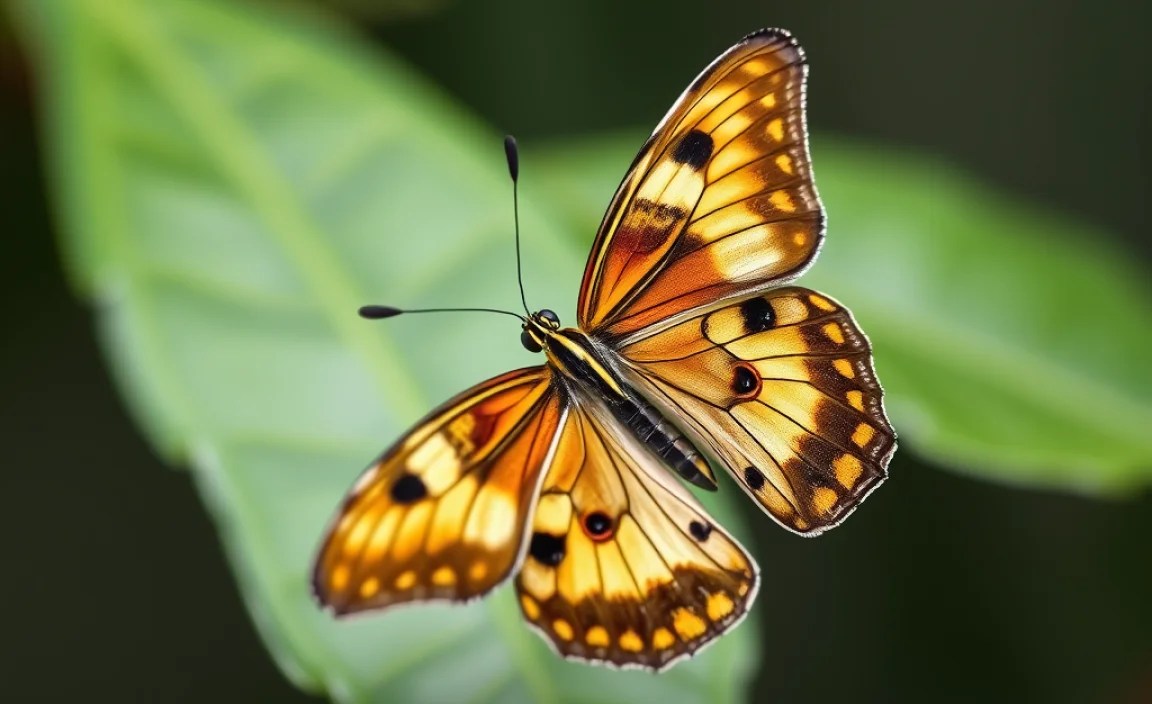
The life cycle of the Indian Oakleaf butterfly is a fascinating process, involving several distinct stages. Understanding these stages can provide insight into its behavior and survival strategies.
Egg Stage
- Appearance: The eggs are small and typically laid singly on the host plant.
- Location: Females usually lay eggs on the underside of leaves to protect them from predators and harsh weather.
- Duration: The eggs hatch in about 3 to 7 days, depending on the temperature and humidity.
Larval Stage (Caterpillar)
- Appearance: The caterpillars are spiky and change color as they grow, often resembling bird droppings to avoid predation.
- Feeding: They feed on the leaves of their host plants, growing rapidly.
- Molting: The caterpillars go through several molts (shedding their skin) as they grow larger.
- Duration: The larval stage lasts for about 2 to 4 weeks.
Pupal Stage (Chrysalis)
- Appearance: The chrysalis is typically green or brown and hangs upside down from a twig or leaf.
- Camouflage: It blends in with its surroundings, making it difficult for predators to spot.
- Duration: The pupal stage lasts for about 1 to 2 weeks.
Adult Stage
- Emergence: The adult butterfly emerges from the chrysalis, and its wings expand and harden over a few hours.
- Lifespan: Adult butterflies typically live for about 2 to 4 weeks, during which they reproduce.
- Behavior: They are most active during the day, feeding on nectar and searching for mates.
Behavior and Diet
The Indian Oakleaf butterfly has specific behaviors and dietary preferences that contribute to its survival. Understanding these aspects can help you appreciate its ecological role.
Behavioral Traits
- Camouflage: Its primary defense mechanism is its ability to blend in with its surroundings.
- Flight Pattern: It has a rapid, erratic flight pattern, making it difficult for predators to track.
- Basking: It often basks in the sun to regulate its body temperature.
- Seasonal Adaptations: During the dry season, it becomes less active and seeks shelter in shaded areas.
Diet
- Larvae: Caterpillars feed on the leaves of various host plants, including:
- Strobilanthes species
- Graptophyllum pictum (commonly known as the caricature plant)
- Other plants in the Acanthaceae family
- Adults: Adult butterflies primarily feed on nectar from flowers, as well as:
- Tree sap
- Overripe fruit
- Moisture from damp soil
Threats and Conservation
Like many butterfly species, the Indian Oakleaf faces several threats that impact its population. Conservation efforts are essential to ensure its survival.
Threats
- Habitat Loss: Deforestation and urbanization reduce the available habitat for the butterfly.
- Pesticide Use: Pesticides can harm or kill caterpillars and adult butterflies.
- Climate Change: Changes in temperature and rainfall patterns can disrupt their life cycle and food sources.
- Collection: Over-collection for trade can also impact local populations.
Conservation Status
- IUCN Red List: The Indian Oakleaf butterfly is not currently listed as threatened on the IUCN Red List.
- Local Protection: In some regions, it may be protected by local laws and regulations.
Conservation Efforts
- Habitat Preservation: Protecting and restoring forests and wooded areas is crucial.
- Sustainable Practices: Promoting sustainable agriculture and reducing pesticide use can help protect butterfly populations.
- Education and Awareness: Educating the public about the importance of butterflies and their habitats can encourage conservation efforts.
- Butterfly Gardens: Creating butterfly-friendly gardens with host plants and nectar sources can provide valuable habitat.
Attracting Indian Oakleaf Butterflies to Your Garden
If you live in an area where Indian Oakleaf butterflies are found, you can attract them to your garden by providing the right conditions and resources.
How to Attract Them
- Plant Host Plants: Include plants like Strobilanthes and Graptophyllum pictum in your garden to provide food for the caterpillars.
- Provide Nectar Sources: Plant a variety of flowering plants that provide nectar for adult butterflies. Some good choices include:
- Lantana
- Hibiscus
- Buddleja (butterfly bush)
- Create a Water Source: Provide a shallow dish of water with pebbles or stones for butterflies to land on and drink.
- Avoid Pesticides: Use organic gardening practices and avoid using pesticides that can harm butterflies and other beneficial insects.
- Provide Shelter: Plant trees and shrubs to provide shelter from wind and predators.
Recommended Plants
Here’s a table of recommended plants to attract Indian Oakleaf butterflies:
| Plant Type | Plant Name | Benefits |
|---|---|---|
| Host Plant | Strobilanthes species | Provides food for caterpillars |
| Host Plant | Graptophyllum pictum | Provides food for caterpillars |
| Nectar Source | Lantana | Provides nectar for adult butterflies |
| Nectar Source | Hibiscus | Provides nectar for adult butterflies |
| Nectar Source | Buddleja | Provides nectar for adult butterflies |
Interesting Facts About the Indian Oakleaf Butterfly
The Indian Oakleaf butterfly is full of surprises. Here are some fascinating facts that highlight its unique adaptations and behaviors.
Amazing Facts
- Master of Disguise: Its camouflage is so effective that it can even fool experienced observers.
- Seasonal Variations: The color and pattern of its wings can vary slightly depending on the season and environment.
- Rapid Flight: Its erratic flight pattern makes it difficult for predators to catch.
- Sun Basking: It often basks in the sun to warm up its body, especially in the cooler months.
- Habitat Indicator: The presence of Indian Oakleaf butterflies can be an indicator of a healthy forest ecosystem.
The Indian Oakleaf Butterfly in Culture and Art
Butterflies, in general, often hold symbolic meaning in various cultures. While the Indian Oakleaf may not have specific cultural significance unique to itself, it shares in the broader symbolism associated with butterflies.
Symbolism
- Transformation: Represents transformation and change, as it undergoes a complete metamorphosis from caterpillar to butterfly.
- Beauty: Symbolizes beauty and grace, with its vibrant colors and delicate wings.
- Freedom: Represents freedom and liberation, as it flies freely from flower to flower.
- Spirituality: In some cultures, butterflies are seen as messengers from the spirit world.
In Art
- Nature Illustrations: Often featured in nature illustrations and artwork, highlighting its unique camouflage and beauty.
- Decorative Motifs: Used as a decorative motif in textiles, jewelry, and other art forms.
- Symbolic Representations: Artists may use the butterfly to symbolize transformation, hope, or the fleeting nature of life.
FAQ About Indian Oakleaf Butterflies
What does the Indian Oakleaf butterfly eat?
The caterpillars primarily eat the leaves of plants like Strobilanthes and Graptophyllum pictum. Adult butterflies feed on nectar from flowers, tree sap, and overripe fruit.
Where can I find Indian Oakleaf butterflies?
They are commonly found in tropical and subtropical forests across Asia, including India, Southeast Asia, China, and parts of Japan. Look for them in wooded areas near water sources.
How long do Indian Oakleaf butterflies live?
The adult butterflies typically live for about 2 to 4 weeks. The entire life cycle, from egg to adult, takes about 6 to 8 weeks.
What makes the Indian Oakleaf butterfly so good at camouflage?
Its wings perfectly mimic a dry leaf, with detailed patterns that resemble veins and a stem. This allows it to blend seamlessly into its surroundings and avoid predators.
Are Indian Oakleaf butterflies endangered?
No, they are not currently listed as endangered. However, habitat loss and pesticide use can pose threats to their populations, so conservation efforts are important.
How can I help protect Indian Oakleaf butterflies?
You can help by supporting habitat preservation, using sustainable gardening practices, avoiding pesticides, and creating butterfly-friendly gardens with host plants and nectar sources.
What is the wingspan of an Indian Oakleaf butterfly?
The wingspan typically ranges from 85 to 110 mm (3.3 to 4.3 inches).
Conclusion
The Indian Oakleaf butterfly is truly a marvel of nature, showcasing the incredible power of camouflage and adaptation. From its leaf-like wings to its fascinating life cycle, this butterfly offers a glimpse into the wonders of the natural world. By understanding its habitat, behavior, and the threats it faces, we can all play a part in ensuring its survival for generations to come. Whether you’re a nature enthusiast, a gardener, or simply someone who appreciates beauty, the Indian Oakleaf butterfly is sure to inspire awe and wonder. So, next time you’re in a forest, keep an eye out – you might just spot this master of disguise!


