
Butterfly Camouflage Patterns: Secret Protection?

Butterfly camouflage patterns help these delicate creatures survive by blending in with their surroundings. These patterns use colors, shapes, and textures to mimic leaves, bark, or even bird droppings, making it harder for predators to spot them. This natural disguise is a vital defense mechanism, increasing their chances of living long enough to reproduce.
Have you ever been amazed by how easily butterflies seem to disappear in your garden? It’s not magic, but a brilliant survival trick called camouflage! Butterflies face constant threats from birds, lizards, and other predators. Their camouflage patterns are like nature’s secret code, helping them hide in plain sight. In this guide, we’ll explore the fascinating world of butterfly camouflage, discover how it works, and learn about some of the most amazing examples in the butterfly kingdom. Get ready to see butterflies in a whole new light!
Understanding Butterfly Camouflage
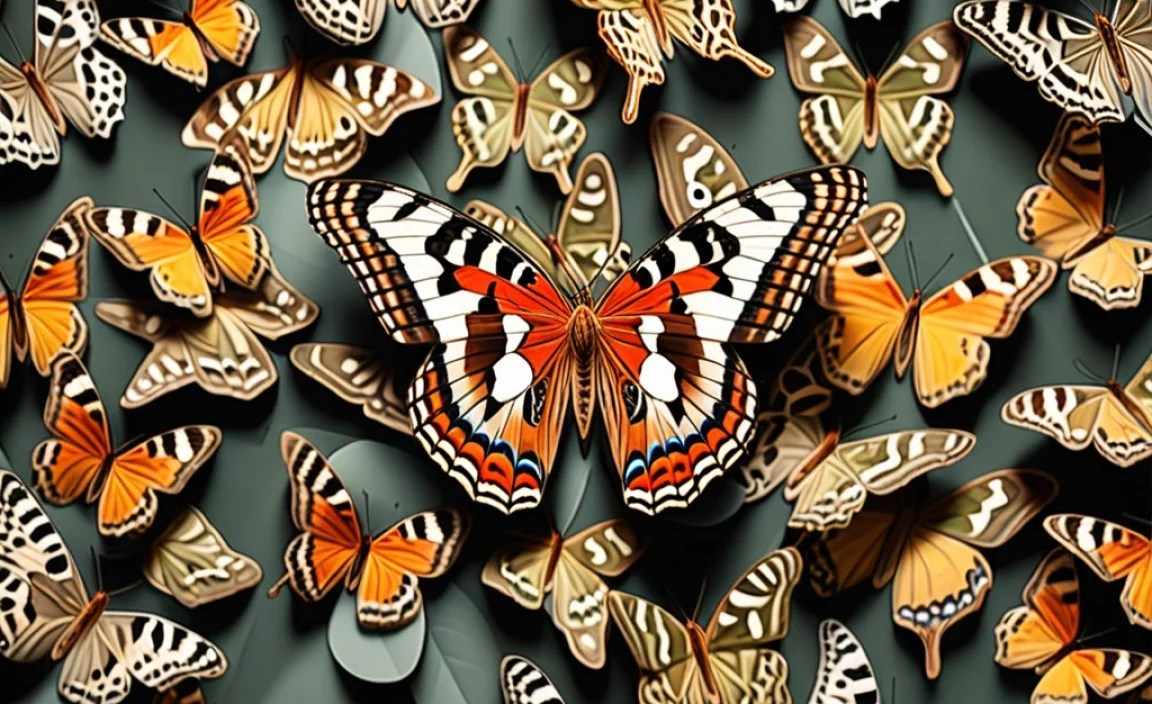
Butterfly camouflage is an evolutionary adaptation that allows butterflies to blend seamlessly into their environments. This helps them avoid detection by predators and increases their chances of survival. The effectiveness of camouflage depends on various factors, including the butterfly’s behavior, the surrounding habitat, and the visual acuity of its predators. Let’s dive deeper into the different types of camouflage and how they work.
Types of Butterfly Camouflage
Butterflies employ several types of camouflage, each suited to different environments and survival strategies:
- Crypsis: This is the most common type of camouflage, where a butterfly’s color and pattern closely resemble its surroundings. For example, a butterfly might look like a leaf or a piece of bark.
- Masquerade: In this case, a butterfly mimics a specific object, such as a bird dropping or a twig. This can be very effective in fooling predators that aren’t looking for that particular object.
- Disruptive Coloration: This involves bold patterns and contrasting colors that break up the butterfly’s outline, making it harder to see against a complex background.
- Shadow Concealment: Some butterflies position themselves to minimize shadows, making them less visible.
How Camouflage Works
Camouflage works by exploiting the visual perception of predators. Here’s a breakdown of the key elements:
- Color Matching: Butterflies evolve colors that match common elements in their habitat, such as green leaves, brown bark, or colorful flowers.
- Pattern Disruption: Bold patterns break up the butterfly’s shape, making it difficult for predators to recognize it as prey.
- Texture Mimicry: Some butterflies have wing textures that mimic the surface of leaves or bark, adding another layer of disguise.
- Behavioral Adaptations: Butterflies often adopt behaviors that enhance their camouflage, such as resting in specific positions or choosing particular resting spots.
Examples of Butterfly Camouflage Patterns

The butterfly world is full of incredible examples of camouflage. Let’s explore some of the most remarkable patterns and the butterflies that use them.
Leaf Mimicry
Many butterflies have evolved to look almost exactly like leaves. This is particularly common in tropical regions, where dense foliage provides ample opportunities for camouflage. The Indian Leaf Butterfly is a prime example.
Indian Leaf Butterfly (Kallima inachus)
The Indian Leaf Butterfly is a master of disguise. When its wings are closed, it looks almost identical to a dead leaf, complete with veins, spots, and even “holes.” This camouflage is so effective that it can be difficult to spot these butterflies even when they are right in front of you. They live in the tropical forests of Asia.
- Habitat: Tropical forests of Asia
- Camouflage Features: Wing patterns mimic dead leaves, including veins and spots.
- Behavioral Adaptations: Rests with wings closed to enhance camouflage.
The accuracy of the leaf mimicry is astounding. Predators often overlook these butterflies because they simply don’t register as potential food.
Bark Mimicry
Some butterflies have patterns that resemble tree bark, allowing them to blend in seamlessly with the trunks and branches of trees. This is particularly useful for butterflies that spend a lot of time resting on trees.
Oakleaf Butterfly (Dryas iulia)
Although the Oakleaf Butterfly’s closed-wing pattern is bark-like, its open wings reveal brilliant orange coloring. When threatened, it quickly reverts to its bark camouflage, disappearing against tree trunks.
- Habitat: Tropical and subtropical regions of the Americas
- Camouflage Features: Wing patterns mimic tree bark, blending in with tree trunks and branches.
- Behavioral Adaptations: Rests on trees to enhance camouflage.
The Oakleaf Butterfly demonstrates how effective bark mimicry can be, providing excellent protection from predators.
Bird Dropping Mimicry
Believe it or not, some butterflies mimic bird droppings as a form of camouflage. While it might seem unpleasant to us, this disguise can be highly effective in deterring predators.
Club-Tailed Swallowtail (Battus polydamas)
The caterpillars of the Club-Tailed Swallowtail mimic bird droppings to avoid predation. This unusual form of camouflage is surprisingly effective.
- Habitat: North and South America
- Camouflage Features: Caterpillar patterns mimic bird droppings, deterring predators.
- Behavioral Adaptations: Remains still to enhance camouflage.
By resembling something unappetizing, these caterpillars are often overlooked by predators searching for a tasty meal.
Disruptive Coloration
Disruptive coloration involves bold patterns and contrasting colors that break up a butterfly’s outline, making it harder to see against a complex background. This type of camouflage is common in butterflies that live in varied habitats.
Zebra Longwing (Heliconius charithonia)
The Zebra Longwing butterfly has bold black and white stripes that help it blend in with the dappled light and shadows of its forest habitat. These patterns disrupt its outline, making it harder for predators to see it as a single object.
- Habitat: Southern United States, Central America, and South America
- Camouflage Features: Bold black and white stripes that disrupt its outline.
- Behavioral Adaptations: Flies in a zigzag pattern to further confuse predators.
The Zebra Longwing’s disruptive coloration, combined with its erratic flight pattern, makes it a challenging target for predators.
Factors Influencing Butterfly Camouflage

The effectiveness of butterfly camouflage is influenced by several factors, including environmental conditions, predator behavior, and the butterfly’s own behavior.
Environmental Conditions
The surrounding environment plays a crucial role in determining the effectiveness of camouflage. Butterflies that live in diverse habitats may have more complex camouflage patterns than those that live in uniform environments.
- Habitat Complexity: Butterflies in complex habitats often have more intricate camouflage patterns.
- Seasonal Changes: Some butterflies change their camouflage patterns seasonally to match changes in vegetation.
- Light Conditions: Light levels can affect how well a butterfly’s camouflage works, with some patterns being more effective in bright sunlight and others in shade.
Predator Behavior
The hunting strategies and visual acuity of predators also influence the evolution of butterfly camouflage. Butterflies must adapt to the specific predators in their environment.
- Predator Vision: Butterflies evolve camouflage patterns that are effective against the specific vision capabilities of their predators.
- Hunting Strategies: Butterflies adapt to the hunting strategies of their predators, such as ambush predators or those that hunt by sight.
- Learning: Predators can learn to recognize common camouflage patterns, so butterflies must continually evolve new and improved disguises.
Butterfly Behavior
A butterfly’s behavior can significantly enhance its camouflage. By choosing specific resting spots, adopting certain postures, and moving in particular ways, butterflies can maximize the effectiveness of their disguise.
- Resting Posture: Butterflies often rest with their wings closed to enhance camouflage.
- Habitat Selection: Butterflies choose resting spots that match their camouflage patterns.
- Movement: Butterflies may move in ways that further enhance their camouflage, such as swaying gently like a leaf in the wind.
How to Spot Camouflaged Butterflies

Spotting camouflaged butterflies can be a fun and rewarding challenge. Here are some tips to help you find these hidden gems:
- Look Carefully: Take your time and scan your surroundings carefully. Pay attention to details and look for anything that seems out of place.
- Know Their Habitat: Understanding the types of habitats that different butterflies prefer can help you narrow your search.
- Check Resting Spots: Look for butterflies resting on leaves, bark, and other surfaces that match their camouflage patterns.
- Use Binoculars: Binoculars can help you spot butterflies from a distance without disturbing them.
- Be Patient: Finding camouflaged butterflies takes patience and persistence. Don’t give up if you don’t see one right away.
The Evolutionary Significance of Camouflage

Camouflage is a powerful example of natural selection in action. Butterflies with better camouflage are more likely to survive and reproduce, passing on their genes to the next generation. Over time, this leads to the evolution of increasingly sophisticated and effective camouflage patterns.
Natural Selection
Natural selection is the driving force behind the evolution of camouflage. Butterflies that are better camouflaged are more likely to avoid predation and survive long enough to reproduce. This gives them a selective advantage over butterflies with less effective camouflage.
Genetic Variation
Genetic variation provides the raw material for natural selection to act upon. Random mutations can produce new camouflage patterns, and those that are most effective are more likely to be passed on to future generations.
Adaptation
Camouflage is an adaptation that allows butterflies to thrive in their environment. By blending in with their surroundings, butterflies can avoid predators and increase their chances of survival. This adaptation is a testament to the power of evolution.
Conservation and Butterfly Habitats
Protecting butterfly habitats is essential for conserving these beautiful and important creatures. Habitat loss, pollution, and climate change all pose threats to butterfly populations. By creating and maintaining butterfly-friendly habitats, we can help ensure that these amazing insects continue to thrive.
Creating Butterfly Gardens
Creating a butterfly garden is a great way to support butterfly populations and enjoy their beauty up close. Here are some tips for creating a butterfly-friendly garden:
- Plant Native Species: Native plants are best suited to local butterfly species and provide the food and shelter they need.
- Provide Host Plants: Host plants are those that butterflies lay their eggs on. Be sure to include host plants for the butterfly species you want to attract.
- Offer Nectar Sources: Nectar-rich flowers provide butterflies with the energy they need to fly and reproduce.
- Avoid Pesticides: Pesticides can harm or kill butterflies, so it’s important to avoid using them in your garden.
- Provide Water: Butterflies need water to drink, so provide a shallow dish of water or a butterfly puddling station.
Supporting Conservation Efforts
There are many organizations working to protect butterfly habitats and conserve butterfly populations. By supporting these organizations, you can help ensure that butterflies continue to thrive for generations to come.
- Donate to Conservation Organizations: Many organizations rely on donations to fund their conservation efforts.
- Volunteer Your Time: Volunteering your time is a great way to support conservation efforts and make a difference in your community.
- Educate Others: Educating others about the importance of butterfly conservation can help raise awareness and inspire action.
Table: Butterfly Camouflage Patterns and Examples
| Camouflage Type | Description | Example Butterfly | Habitat |
|---|---|---|---|
| Crypsis (Leaf Mimicry) | Resembles a leaf | Indian Leaf Butterfly (Kallima inachus) | Tropical forests of Asia |
| Crypsis (Bark Mimicry) | Resembles tree bark | Oakleaf Butterfly (Dryas iulia) | Tropical and subtropical regions of the Americas |
| Masquerade | Mimics a bird dropping | Club-Tailed Swallowtail (Battus polydamas) (caterpillar) | North and South America |
| Disruptive Coloration | Breaks up the butterfly’s outline | Zebra Longwing (Heliconius charithonia) | Southern United States, Central America, and South America |
Table: Factors Influencing Camouflage Effectiveness
| Factor | Description | Impact on Camouflage |
|---|---|---|
| Environmental Conditions | Habitat complexity, seasonal changes, light conditions | Determines the effectiveness of specific camouflage patterns |
| Predator Behavior | Predator vision, hunting strategies, learning | Shapes the evolution of camouflage patterns |
| Butterfly Behavior | Resting posture, habitat selection, movement | Enhances the effectiveness of camouflage |
FAQ About Butterfly Camouflage
What is butterfly camouflage?
Butterfly camouflage is when a butterfly’s colors and patterns help it blend in with its surroundings, making it harder for predators to spot.
Why do butterflies need camouflage?
Butterflies need camouflage to protect themselves from predators like birds and lizards. It helps them hide in plain sight, increasing their chances of survival.
What are the different types of butterfly camouflage?
The main types of butterfly camouflage include crypsis (blending in), masquerade (mimicking objects like bird droppings), disruptive coloration (breaking up the butterfly’s outline), and shadow concealment (minimizing shadows).
How can I spot camouflaged butterflies?
To spot camouflaged butterflies, look carefully, know their habitat, check resting spots, use binoculars, and be patient. They’re masters of disguise!
What is disruptive coloration in butterflies?
Disruptive coloration involves bold patterns and contrasting colors that break up a butterfly’s outline, making it harder to see against a complex background.
How do environmental conditions affect butterfly camouflage?
Environmental conditions like habitat complexity, seasonal changes, and light levels can affect how well a butterfly’s camouflage works. Butterflies adapt their patterns to match their surroundings.
How can I help protect butterflies and their habitats?
You can help by creating butterfly gardens with native plants, avoiding pesticides, providing water, and supporting conservation organizations. Every little bit helps!
Conclusion
Butterfly camouflage is a fascinating example of the power of natural selection and adaptation. These delicate creatures have evolved a wide range of camouflage patterns to help them survive in a world full of predators. By understanding how butterfly camouflage works, we can gain a greater appreciation for the beauty and complexity of nature. And by protecting butterfly habitats, we can help ensure that these amazing insects continue to thrive for generations to come. So, the next time you’re in your garden or out in nature, take a closer look – you might just spot a camouflaged butterfly hiding in plain sight! Happy butterfly watching!


