
Easy Species Identification of Cicadas: A Visual Guide

Have you ever heard a loud buzzing sound in the summer? It might be a cicada! These insects are known for their songs. They spend most of their lives underground. Then, they come out to sing and mate. Figuring out what kind of cicada you are hearing or seeing is {species identification of cicadas}.
Cicadas are very interesting. There are many different types. Each type looks and sounds a little different. Learning about them can be a lot of fun. Let’s explore how to tell them apart. We can learn about their colors, sizes, and songs.
Cicadas are not harmful to people. They are an important part of nature. Birds and other animals eat them. Their tunnels help air get into the soil. So, next time you hear a cicada, take a closer look. You might be able to figure out what kind it is.
Key Takeaways
- {Species identification of cicadas} involves observing unique physical traits and listening to their calls.
- Cicadas have different life cycles; some emerge yearly, while others appear every 13 or 17 years.
- Look at the size and color of the cicada’s body and wings to identify the species.
- Cicada songs are distinctive; each species has its own unique sound pattern.
- Knowing a cicada’s geographic location helps narrow down identification because they live in specific regions.
Understanding Cicada Species ID
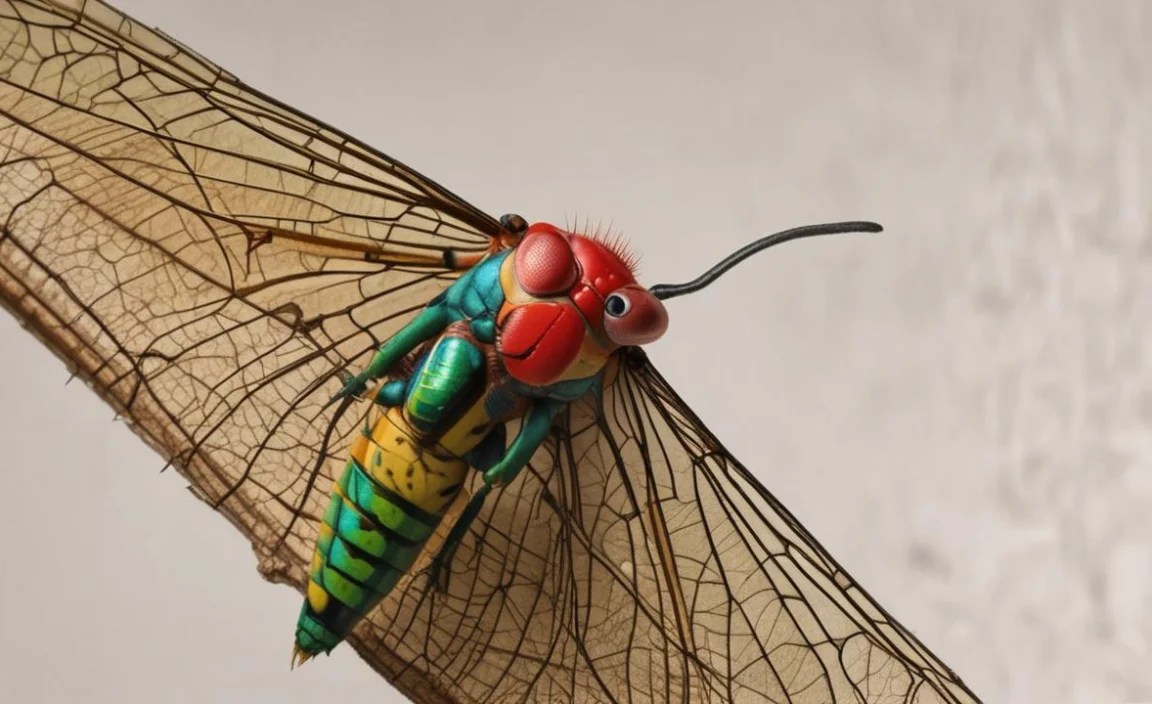
Species identification of cicadas can be tricky. But, it can also be very rewarding. Cicadas are insects. They belong to the order Hemiptera. This means they have piercing-sucking mouthparts. There are thousands of cicada species around the world. They live on every continent except Antarctica. In North America, there are about 190 species. Some are very common. Others are rare and hard to find. To identify cicadas, you need to look at a few things. These include their size, color, and the patterns on their wings. You also need to listen to their songs. Each species has a unique song. Where you find the cicada also matters. Different species live in different areas. By combining all these clues, you can figure out what kind of cicada you have found. It takes practice, but it is a fun way to learn about nature.
- Cicadas are insects in the order Hemiptera.
- There are thousands of cicada species worldwide.
- Size, color, and wing patterns help ID.
- Cicada songs are unique to each species.
- Location is important for species identification.
Learning about cicadas can teach us a lot. They have a long life cycle. Most of it is spent underground. Some species stay underground for 13 or 17 years! These are called periodical cicadas. When they emerge, they do so in huge numbers. This is called an emergence. The males sing to attract females. After mating, the females lay eggs in tree branches. The eggs hatch, and the young cicadas, called nymphs, fall to the ground. They burrow into the soil and start the cycle again. Understanding this life cycle is key to understanding cicadas. It also helps with species identification of cicadas. For example, periodical cicadas are easy to spot because of their large emergences.
What Makes Cicadas Unique?
Have you ever wondered what makes cicadas so unique? Cicadas are special because of their life cycle. They spend most of their lives underground as nymphs. Nymphs feed on the sap of plant roots. They go through several molts as they grow. After many years, they emerge from the ground as adults. This emergence is a big event. Millions of cicadas can emerge at once. They sing loudly to find mates. The adult cicadas only live for a few weeks. During this time, they mate and lay eggs. Then they die. Their unique life cycle helps them avoid predators. It also helps them find mates. This makes them a fascinating part of the natural world.
Why Do Cicadas Sing?
Ever wondered why cicadas sing so loudly? Male cicadas sing to attract female cicadas. Their song is a mating call. Each species has its own unique song. Some songs are loud and buzzing. Others are soft and trilling. The males have special organs called tymbals. They vibrate these organs to produce sound. The sound is amplified by their hollow abdomen. This makes their song very loud. The females do not sing. They listen for the songs of the males. When they find a mate, they signal back. The songs of cicadas are a key part of their life cycle. It is also an important clue for species identification of cicadas.
Where Do Cicadas Live?
Where do cicadas live, anyway? Cicadas live all over the world. They are found on every continent except Antarctica. Different species live in different habitats. Some live in forests. Others live in grasslands. Some even live in deserts. The type of habitat affects their life cycle. It also affects their appearance. Cicadas need trees or plants to survive. The nymphs feed on the roots of plants. The adults lay their eggs in tree branches. So, cicadas are usually found near trees or plants. Knowing where a cicada lives can help you identify it. Some species are only found in certain regions. So, location is an important clue.
Fun Fact or Stat: The loudest cicada song can reach up to 120 decibels, which is as loud as a motorcycle!
Key Features for Cicada Identification
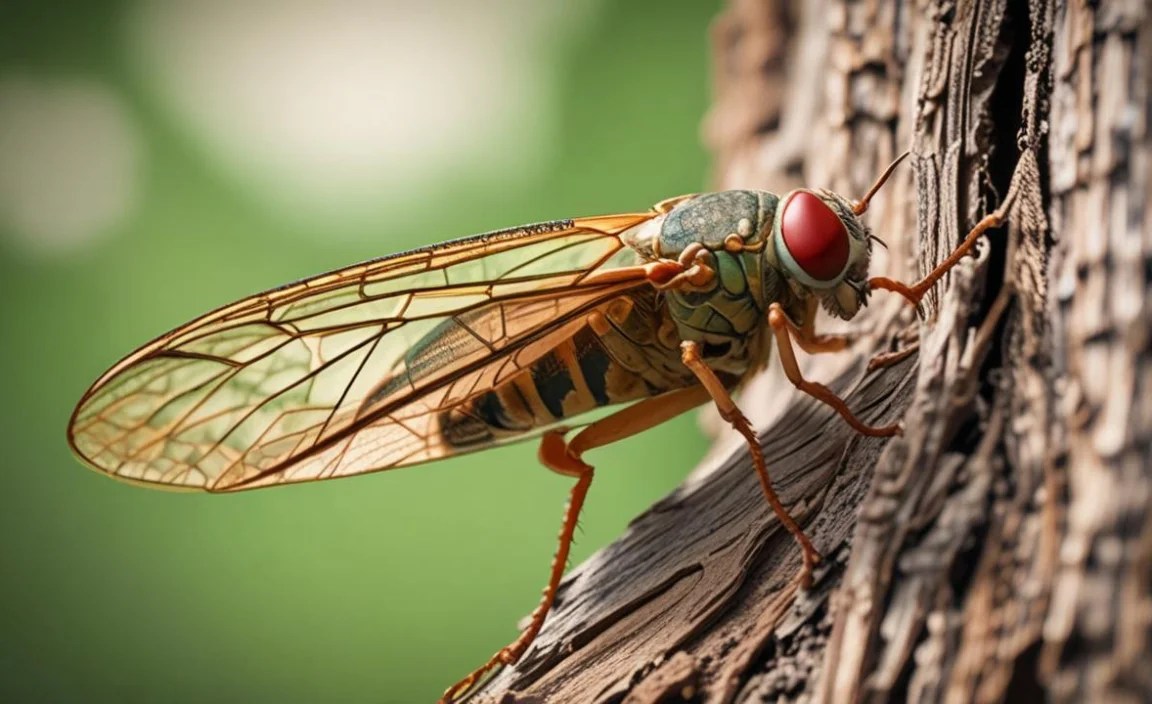
To successfully achieve species identification of cicadas, you need to know what to look for. There are several key features that can help. First, look at the size of the cicada. Some species are very small. Others are quite large. Next, look at the color of the cicada. Cicadas come in many colors. Some are green. Others are brown or black. Some have bright colors, like orange or red. The patterns on the wings are also important. Some cicadas have clear wings. Others have dark spots or bands. The shape of the body can also be a clue. Some cicadas are slender. Others are stout. Finally, listen to the cicada’s song. Each species has a unique song. By looking at all these features, you can narrow down the possibilities.
- Size: Some are small; others are large.
- Color: Green, brown, black, or bright colors.
- Wing Patterns: Clear, spotted, or banded wings.
- Body Shape: Slender or stout bodies.
- Song: Each species has a unique song.
Let’s talk more about cicada songs. Cicada songs are produced by male cicadas. They use special organs called tymbals. These are located on the sides of their abdomen. The tymbals are like tiny drums. The cicadas vibrate them to make sound. The sound is amplified by their hollow abdomen. This makes their song very loud. Different species have different songs. Some songs are buzzing. Others are clicking. Some are whistling. The songs can be used to attract females. They can also be used to warn off other males. To identify a cicada by its song, you need to learn the different songs. There are many recordings available online. With practice, you can learn to identify cicadas by their songs.
How Big Are Cicadas?
Have you ever wondered how big cicadas can get? The size of a cicada depends on the species. Some cicadas are very small. They are only about an inch long. Others are quite large. They can be over two inches long. The largest cicadas are found in Asia. They can have a wingspan of over seven inches. The size of a cicada can be a helpful clue for identification. If you see a very large cicada, it is likely one of the larger species. If you see a very small cicada, it is likely one of the smaller species. So, size can be an important factor in species identification of cicadas.
What Colors Do Cicadas Come In?
What colors do cicadas come in, anyway? Cicadas come in many different colors. Some are green. These are often called “green cicadas.” Others are brown or black. These are often called “brown cicadas” or “black cicadas.” Some cicadas have bright colors. They can be orange, red, or yellow. The color of a cicada can depend on its species. It can also depend on its age. Some cicadas change color as they get older. The color of a cicada can be a helpful clue for identification. If you see a bright orange cicada, it is likely one of the orange species. So, color is something to consider.
What Do Cicada Wings Look Like?
Ever noticed what cicada wings look like? The wings of cicadas are very interesting. They are made of a thin membrane. This membrane is supported by veins. The veins give the wings strength. The wings can be clear or colored. Some cicadas have clear wings. You can see right through them. Others have colored wings. They can have spots or bands on their wings. The pattern of the veins can also be different. The shape and pattern of the wings can be a helpful clue for identification. Look closely at the wings of a cicada. You might be able to figure out what kind it is. Wing patterns are key to species identification of cicadas.
Fun Fact or Stat: Some cicada species can fly up to 25 miles per hour!
Comparing Different Cicada Types
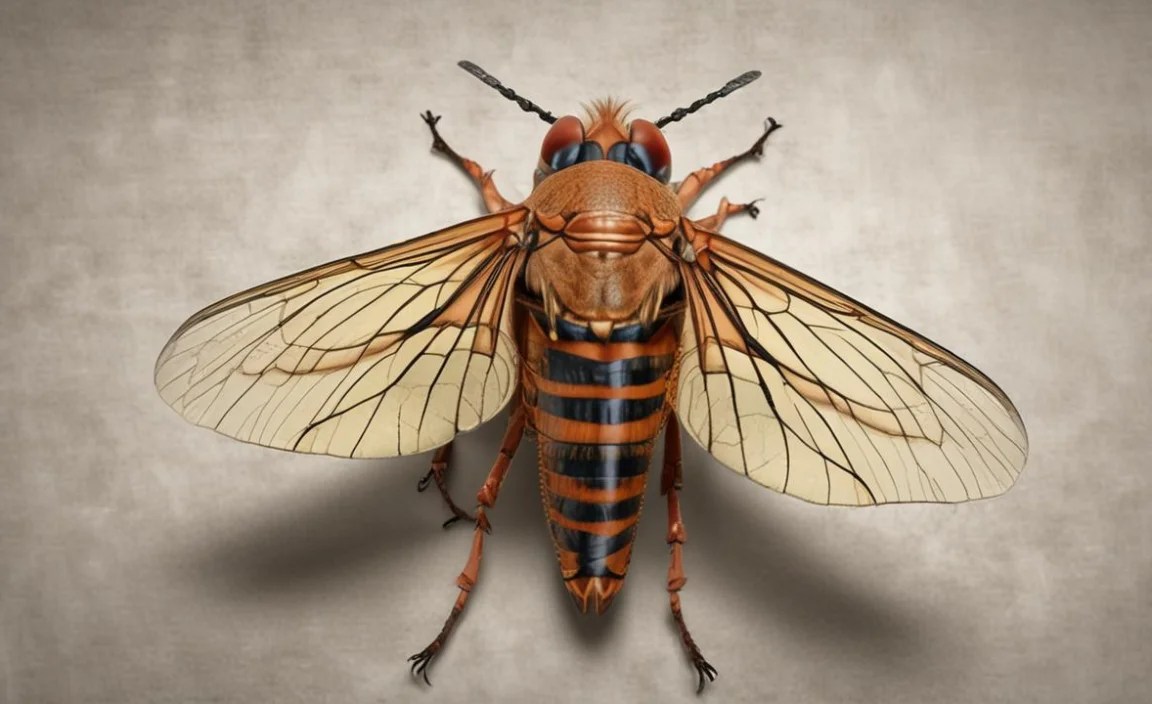
Species identification of cicadas often involves comparing different types. This helps you see the differences between them. Let’s compare some common cicada types. First, there are annual cicadas. These emerge every year. They are usually green or brown. Their songs are loud and buzzing. Then, there are periodical cicadas. These emerge every 13 or 17 years. They are black with red eyes. Their songs are very loud and synchronized. There are also dog-day cicadas. These emerge in the summer. They are large and green. Their songs are long and drawn-out. By comparing these different types, you can learn to tell them apart. Look at their size, color, and song. This will help you identify them.
- Annual cicadas emerge every year.
- Periodical cicadas emerge every 13 or 17 years.
- Dog-day cicadas emerge in the summer.
- Each type has a unique song.
- Size and color vary between types.
Here is a table to show the differences between cicada types:
| Type | Emergence | Color | Song |
|---|---|---|---|
| Annual Cicada | Every year | Green or Brown | Loud, buzzing |
| 13-Year Cicada | Every 13 years | Black with Red Eyes | Loud, synchronized |
| 17-Year Cicada | Every 17 years | Black with Red Eyes | Loud, synchronized |
| Dog-Day Cicada | Summer | Green | Long, drawn-out |
Comparing cicada types can be fun. It can also be helpful for science. Scientists study cicadas to learn about their life cycles. They also study their songs. This can help us understand how they communicate. By comparing different species, we can learn more about evolution. We can also learn about how cicadas adapt to their environment. So, the next time you see a cicada, take a closer look. Try to figure out what kind it is. You might be surprised at what you learn. Remember to use size, color and song to help with species identification of cicadas.
What Are Annual Cicadas?
What are annual cicadas, anyway? Annual cicadas are cicadas that emerge every year. They are also called dog-day cicadas. This is because they emerge in the summer during the dog days of summer. They are usually green or brown in color. They are smaller than periodical cicadas. Their songs are loud and buzzing. They can be heard during the day. They are found in many different habitats. They are an important part of the ecosystem. They provide food for birds and other animals. Their tunnels help aerate the soil. Annual cicadas are a common sight in the summer.
What Are Periodical Cicadas?
Ever heard of periodical cicadas? Periodical cicadas are cicadas that emerge every 13 or 17 years. They are also called 13-year cicadas or 17-year cicadas. They are black with red eyes. They emerge in huge numbers. This is called an emergence. Their songs are very loud and synchronized. They can be deafening. They are only found in North America. They are a fascinating phenomenon. Scientists are still studying them to learn more about their life cycle. The periodical cicadas are a great example of species identification of cicadas being easy due to their unique emergence cycle.
What Are Dog-Day Cicadas?
What are dog-day cicadas, exactly? Dog-day cicadas are cicadas that emerge in the summer. They are also called annual cicadas. They are large and green in color. Their songs are long and drawn-out. They can be heard during the day. They are found in many different habitats. They are an important part of the ecosystem. They provide food for birds and other animals. Their tunnels help aerate the soil. Dog-day cicadas are a common sight in the summer. You can use their color and song to help you identify them.
Fun Fact or Stat: Periodical cicadas emerge in such large numbers that they can cover the ground like a carpet!
Using Location for Cicada ID
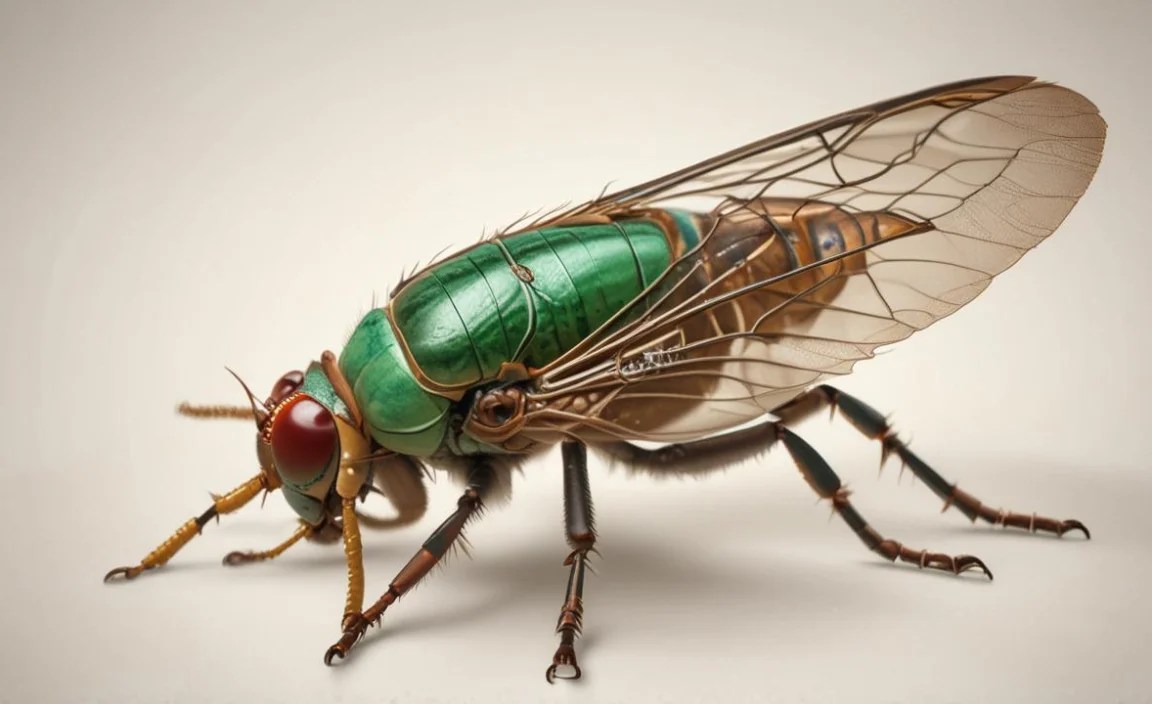
Location can be a big help for species identification of cicadas. Different cicada species live in different areas. Some are only found in certain regions. For example, some species only live in the eastern United States. Others only live in the western United States. Some only live in the south. Knowing where you are can narrow down the possibilities. If you are in the eastern United States, you can rule out species that only live in the west. If you are in the south, you can rule out species that only live in the north. Look up which cicada species are found in your area. This will make identification easier.
- Different species live in different regions.
- Some species are only found in certain areas.
- Knowing your location helps narrow down possibilities.
- Look up local cicada species for help.
- Location is a key factor in identification.
Let’s talk about some specific examples. The 17-year cicada is found in the eastern United States. It is not found in the west. The Pacific Northwest cicada is found in the Pacific Northwest. It is not found in the east. The Great Basin cicada is found in the Great Basin. It is not found in the east. These are just a few examples. There are many other cicada species with specific ranges. You can find maps online that show the ranges of different species. These maps can be a valuable tool for identification. Remember that location is just one piece of the puzzle. You should also look at the size, color, and song of the cicada.
What Cicadas Live in the East?
What cicadas live in the eastern United States? The eastern United States is home to many different cicada species. These include the 17-year cicada, the 13-year cicada, and the dog-day cicada. The 17-year cicada is found in the northeastern United States. The 13-year cicada is found in the southeastern United States. The dog-day cicada is found throughout the eastern United States. These are just a few of the cicada species that live in the east. There are many others. You can learn more about them by looking them up online. Consider the emergence cycle when doing species identification of cicadas.
What Cicadas Live in the West?
What about cicadas in the western United States? The western United States is also home to many different cicada species. These include the Pacific Northwest cicada, the Great Basin cicada, and the cactus dodger cicada. The Pacific Northwest cicada is found in the Pacific Northwest. The Great Basin cicada is found in the Great Basin. The cactus dodger cicada is found in the deserts of the Southwest. These are just a few of the cicada species that live in the west. There are many others to discover. Each species has its own unique characteristics.
Why Does Location Matter?
Why does location matter when identifying cicadas? Location matters because different species live in different areas. Some species are only found in certain regions. This is because they have adapted to the specific climate and environment of that region. For example, the cactus dodger cicada is adapted to the hot, dry climate of the deserts of the Southwest. It cannot survive in the cooler, wetter climate of the Pacific Northwest. So, knowing where a cicada lives can help you narrow down the possibilities. It is an important piece of the puzzle when it comes to species identification of cicadas.
Fun Fact or Stat: Some cicada species are named after the regions they live in, like the “Pacific Northwest cicada!”
Tools for Cicada Species Identification
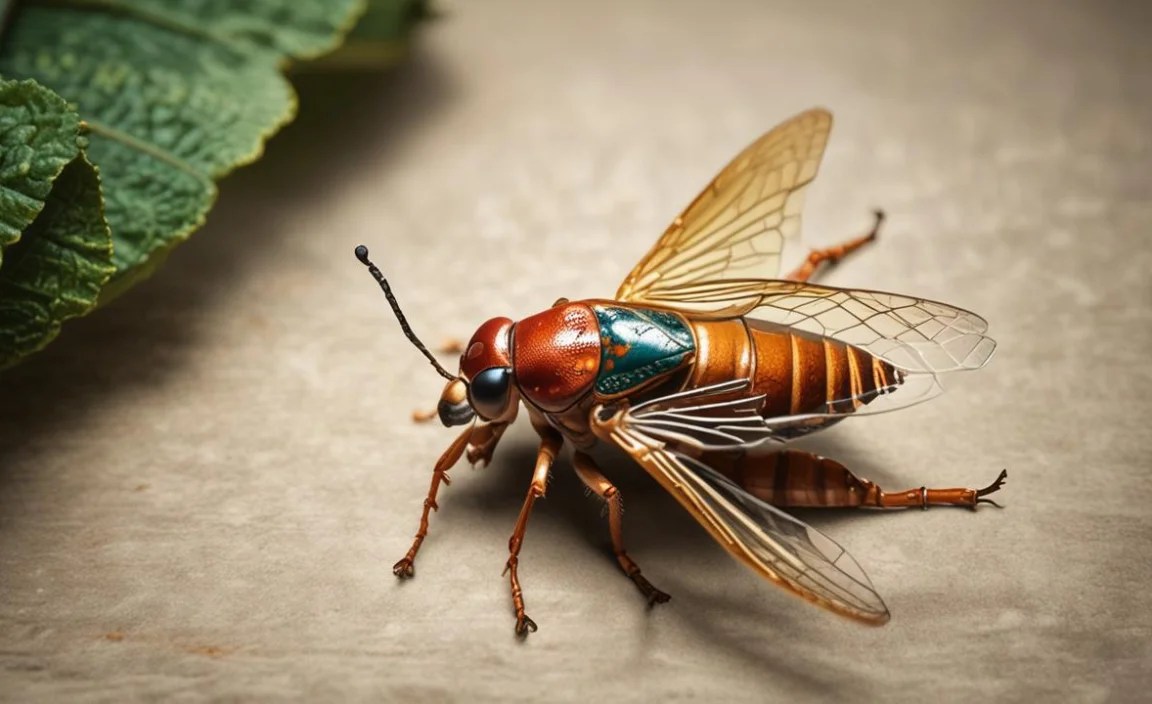
Several tools can help with species identification of cicadas. Field guides are a great resource. They have pictures and descriptions of different species. They also have information about their range and habitat. Online resources are also helpful. There are websites and apps that can help you identify cicadas. Some apps even let you record the cicada’s song. Then, they can compare it to a database of songs. This can help you identify the species. Another tool is a magnifying glass. This can help you see the details of the cicada’s body and wings. These details can be important for identification. Finally, talking to experts can be helpful. Local entomologists or naturalists can help you identify cicadas.
- Field guides provide pictures and descriptions.
- Online resources offer websites and apps.
- Magnifying glasses help see details.
- Experts can help identify cicadas.
- Song recordings can be compared to databases.
Let’s talk more about field guides. Field guides are books that help you identify plants and animals. There are many field guides to insects. Some are specific to cicadas. These guides usually have pictures of different cicada species. They also have descriptions of their size, color, and wing patterns. They also have information about their range and habitat. Some field guides also have recordings of cicada songs. These can be very helpful for identification. When choosing a field guide, look for one that is specific to your region. This will make it easier to find the cicada species that live in your area.
What Are Field Guides?
What are field guides, anyway? Field guides are books that help you identify plants and animals. They are designed to be used in the field. This means that they are small and portable. They usually have pictures or illustrations of the species they cover. They also have descriptions of their key features. Field guides can be very helpful for beginners. They can help you learn the basics of identification. They can also help you identify species that you have never seen before. When it comes to species identification of cicadas, a good field guide is invaluable.
What Online Resources Are Available?
What online resources can help you? There are many online resources that can help you identify cicadas. Websites like BugGuide.net and iNaturalist have pictures and information about different species. Some websites also have recordings of cicada songs. There are also apps that can help you identify cicadas. These apps use your phone’s camera to take a picture of the cicada. Then, they compare it to a database of images. This can help you identify the species. Some apps also let you record the cicada’s song. Then, they can compare it to a database of songs.
Who Are the Experts?
Who are the experts you can ask? Experts can be a great resource for identifying cicadas. Local entomologists are experts in insects. They can help you identify cicadas. Naturalists are experts in nature. They can also help you identify cicadas. You can find entomologists and naturalists at universities, museums, and nature centers. You can also find them online. Many entomologists and naturalists have websites or blogs. You can contact them with questions. They may be able to help you identify a cicada from a picture or description.
Fun Fact or Stat: Some apps can identify cicadas just by listening to their song!
Cicada Look-Alikes: Avoiding Mistakes
When trying to identify cicadas, it’s easy to make mistakes. Some insects look similar to cicadas. This can make species identification of cicadas difficult. One common look-alike is the leafhopper. Leafhoppers are small, wedge-shaped insects. They are often green or brown. They can jump very far. Another look-alike is the treehopper. Treehoppers are small, oddly shaped insects. They often have spines or horns on their backs. They can be found on trees and shrubs. It’s important to look closely at the insect’s features. This will help you tell it apart from a cicada. Look at the size, shape, and color. Also, listen for the cicada’s song.
- Leafhoppers are small and wedge-shaped.
- Treehoppers have odd shapes and spines.
- Look closely at the insect’s features.
- Listen for the cicada’s song.
- Size, shape, and color are important.
Let’s talk more about how to tell cicadas apart from leafhoppers. Cicadas are larger than leafhoppers. Cicadas have clear wings. Leafhoppers have colored wings. Cicadas have a loud song. Leafhoppers do not sing. Cicadas are usually found on trees. Leafhoppers are usually found on smaller plants. By looking at these differences, you can tell them apart. It is important to avoid making mistakes. Incorrect identification can lead to confusion. It can also lead to inaccurate data. So, take your time and look closely.
What Are Leafhoppers?
What are leafhoppers, anyway? Leafhoppers are small, wedge-shaped insects. They are related to cicadas. They feed on plant sap. They have piercing-sucking mouthparts. They are often green or brown in color. They can jump very far. They are found on many different plants. They can be pests of crops and gardens. They can transmit diseases to plants. They are smaller than cicadas and do not sing.
What Are Treehoppers?
What are treehoppers, then? Treehoppers are small, oddly shaped insects. They are related to cicadas and leafhoppers. They feed on plant sap. They have piercing-sucking mouthparts. They often have spines or horns on their backs. They can be found on trees and shrubs. They are not as common as leafhoppers. They are not usually pests of crops or gardens. They are interesting insects to observe. They do not sing like cicadas.
How Can You Tell Them Apart?
How can you tell cicadas, leafhoppers, and treehoppers apart? Look at their size. Cicadas are larger than leafhoppers and treehoppers. Look at their shape. Cicadas have a typical insect shape. Leafhoppers are wedge-shaped. Treehoppers are oddly shaped. Look at their color. Cicadas can be green, brown, or black. Leafhoppers are often green or brown. Treehoppers can be many different colors. Listen for their song. Cicadas have a loud song. Leafhoppers and treehoppers do not sing. By looking at these differences, you can tell them apart. Correct species identification of cicadas requires careful observation.
Fun Fact or Stat: Treehoppers are known for their bizarre shapes, which help them camouflage as thorns or leaves!
Summary
Species identification of cicadas can be a fun and educational activity. Cicadas are fascinating insects with unique life cycles. They spend most of their lives underground as nymphs. Then, they emerge as adults to sing and mate. There are many different species of cicadas. They vary in size, color, and song. Learning to identify them can be challenging. But, it is also rewarding. You can use several tools to help you. These include field guides, online resources, and experts. Remember to look closely at the insect’s features. Also, listen for its song. With practice, you can become a cicada expert. Understanding their distinct features is key.
Location can also be a helpful clue. Different species live in different areas. Knowing where you are can narrow down the possibilities. Be careful not to confuse cicadas with other insects. Leafhoppers and treehoppers can look similar. But, they have different features. By paying attention to the details, you can avoid mistakes. Identifying cicadas is a great way to learn about nature. It is also a fun way to spend time outdoors.
Conclusion
Cicadas are interesting insects. They have a unique life cycle. They also have a loud song. Species identification of cicadas can be tricky. However, it is a rewarding hobby. By learning to identify cicadas, you can learn more about nature. You can also appreciate the diversity of life around you. So, next time you hear a cicada, take a closer look. See if you can figure out what kind it is. You might be surprised at what you discover.
Frequently Asked Questions
Question No 1: What is the best way to start learning about cicada identification?
Answer: The best way to start learning about cicada identification is to begin with local species. Find a good field guide for your region. This guide should have pictures and descriptions of the cicadas in your area. Listen to recordings of their songs. Practice identifying them in your backyard or local park. Start with the most common species. Then, move on to the more difficult ones. Remember that species identification of cicadas is a process. Don’t be discouraged if you don’t get it right away.
Question No 2: How can I tell the difference between a male and female cicada?
Answer: Telling the difference between male and female cicadas is usually easy. Male cicadas sing. Female cicadas do not sing. This is the easiest way to tell them apart. You can also look at their abdomens. Male cicadas have a tymbal organ on their abdomen. This is what they use to make sound. Female cicadas do not have this organ. Their abdomens are smooth. So, listen for the song. Or, look for the tymbal organ. These are the best ways to tell the difference.
Question No 3: What should I do if I find a cicada that I can’t identify?
Answer: If you find a cicada that you can’t identify, don’t worry. This happens to everyone. First, take good pictures of the cicada. Take pictures of its top, bottom, and sides. Also, take a picture of its wings. Then, try to record its song. Upload the pictures and song to an online forum or website. Ask for help from other cicada enthusiasts. You can also contact a local entomologist or naturalist. They may be able to help you identify the cicada. Accurate species identification of cicadas sometimes requires expert assistance.
Question No 4: Are cicadas harmful to plants or humans?
Answer: Cicadas are generally not harmful to plants or humans. Cicada nymphs feed on the roots of plants. This can sometimes damage young trees. But, it is usually not a serious problem. Adult cicadas lay their eggs in tree branches. This can sometimes cause the branches to break. But, again, it is usually not a serious problem. Cicadas do not bite or sting humans. They are harmless to humans. Some people even eat cicadas! So, you don’t need to worry about cicadas.
Question No 5: How long do cicadas live?
Answer: The lifespan of a cicada depends on the species. Annual cicadas live for about 2–5 years as nymphs. They live for a few weeks as adults. Periodical cicadas live for 13 or 17 years as nymphs. They also live for a few weeks as adults. Most of their life is spent underground. They only emerge for a short time to mate and lay eggs. This makes their adult life very busy! The long nymph stage is important for their survival. It allows them to avoid predators and find food. Therefore, it is critical to consider the emergence cycle during {species identification of cicadas}.
Question No 6: Why is identifying cicada species important?
Answer: Identifying cicada species is important for several reasons. It helps us understand the biodiversity of our planet. It also helps us track the distribution and abundance of different species. This is important for conservation efforts. If we know where cicadas live, we can protect their habitats. Identifying cicada species can also help us learn more about their life cycles. This information can be used to predict emergences. It can also be used to control populations. By understanding species identification of cicadas, we can better understand the world around us.


