
Easy Butterfly Identification from Photos: A Free Guide

Butterfly Identification from Photos: A Simple Guide

Identifying butterflies from photos is easier than you think! Look closely at wing patterns, colors, size, and location. Use online tools and field guides to match your photos. With a bit of practice, you’ll be naming butterflies like a pro in no time!
Have you ever snapped a photo of a beautiful butterfly fluttering in your garden and wondered what kind it was? It’s a common question! Identifying butterflies can seem tricky at first, with so many different colors, patterns, and sizes. But don’t worry, it’s totally achievable. This guide will break down the process step-by-step, so you can confidently identify butterflies from your photos. Get ready to unlock the fascinating world of butterfly identification!
Step 1: Get a Good Photo

The first step is to make sure you have a decent photo. A blurry or poorly lit picture will make identification much harder. Here’s how to improve your chances of getting a useful shot:
- Clear Focus: Ensure the butterfly is in sharp focus. Use your camera’s autofocus feature, or tap the screen on your smartphone to focus.
- Good Lighting: Natural light is best. Avoid harsh shadows or direct sunlight, which can wash out colors. Overcast days are ideal.
- Multiple Angles: If possible, take photos from different angles, including the top and side of the wings.
- Close-Up: Get as close as you can without disturbing the butterfly. Even better, use your camera’s macro setting.
Step 2: Observe Key Features
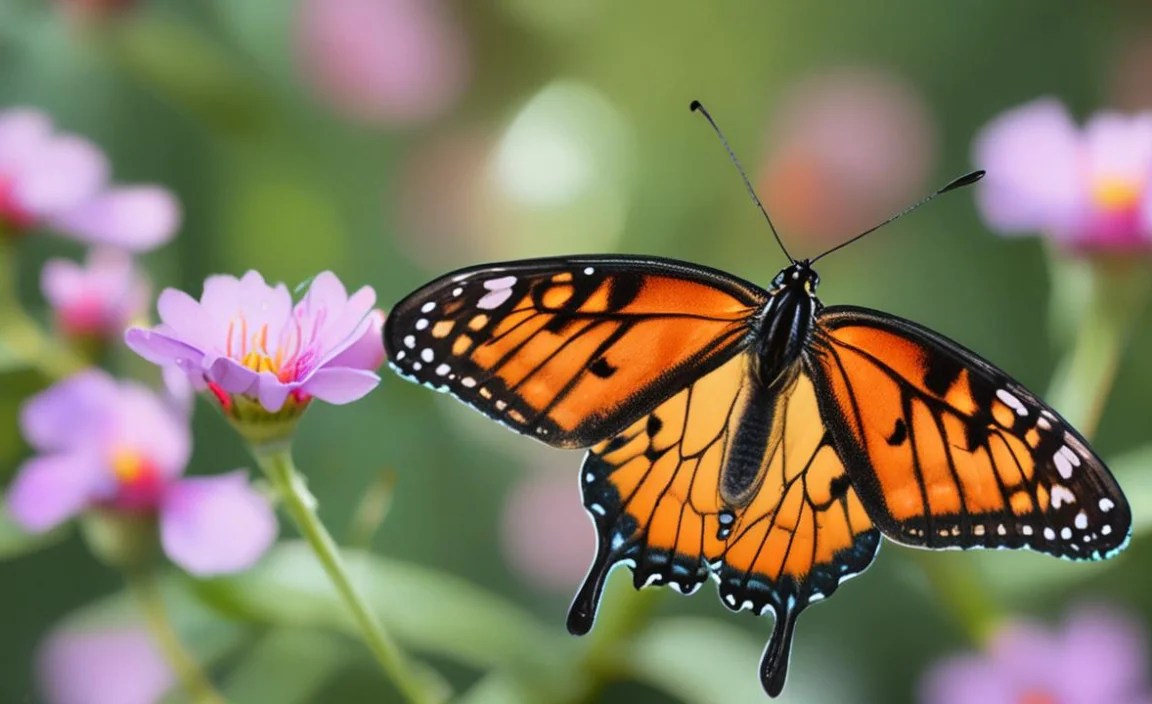
Now that you have your photo, it’s time to examine the butterfly closely. Pay attention to these key features:
Wing Patterns and Colors
This is usually the most obvious starting point. Note the dominant colors, any distinct patterns (stripes, spots, bands), and any unique markings. Are the colors bright and bold, or muted and earthy? Are the patterns symmetrical or asymmetrical?
Size and Shape
Estimate the butterfly’s wingspan. Is it small, medium, or large? Also, notice the shape of the wings. Are they rounded, pointed, or swallow-tailed? Do they have any unusual extensions or lobes?
Body Characteristics
Look at the butterfly’s body. What color is it? Is it slender or stout? Are there any noticeable features, such as antennae shape or leg color?
Location and Habitat
Where did you see the butterfly? The geographical location and habitat can significantly narrow down the possibilities. Butterflies are often specific to certain regions and habitats. Was it in a garden, a forest, a meadow, or near a body of water? For example, Monarch butterflies are commonly found in fields with milkweed, their host plant.
Step 3: Use Online Butterfly Identification Tools

Several websites and apps can help you identify butterflies from photos. Here are a few popular options:
- iNaturalist: This app allows you to upload a photo and get suggestions based on image recognition and location data. It’s also a great way to contribute to citizen science. iNaturalist
- Picture Insect: An app specifically designed for insect identification, including butterflies. It uses AI to analyze your photo and provide potential matches.
- Butterfly Identification Websites: Many websites offer butterfly identification tools and databases, such as the Butterflies and Moths of North America (BAMONA) website.
When using these tools, be sure to provide as much information as possible, such as location and date. The more details you provide, the more accurate the results will be.
Step 4: Consult Field Guides

Field guides are invaluable resources for butterfly identification. They typically include detailed descriptions, illustrations, and range maps for different species. Here are a few popular field guides:
- “Butterflies of North America” by Jim P. Brock and Kenn Kaufman: A comprehensive guide covering all of North America.
- “National Audubon Society Field Guide to North American Butterflies”: A user-friendly guide with excellent photographs.
- Local or Regional Guides: These guides focus on butterflies found in a specific area, providing more detailed information and increasing your chances of accurate identification.
When using a field guide, compare your photo to the illustrations or photographs, paying close attention to the key features you observed in Step 2.
Step 5: Compare with Online Databases
Many online databases provide detailed information about butterfly species, including descriptions, photos, and distribution maps. Here are a few useful databases:
- Butterflies and Moths of North America (BAMONA): A comprehensive database with information on North American butterflies and moths.
- BugGuide.Net: A website with a vast collection of insect photos and information, including butterflies.
- Discover Life: A website that helps identify species based on location and characteristics.
Use these databases to cross-reference the information you’ve gathered from your photo, online tools, and field guides. Pay attention to the distribution maps to see if the species is known to occur in your area.
Step 6: Consider Similar Species
Butterfly identification can be challenging because many species look very similar. Be aware of look-alike species and pay close attention to subtle differences in wing patterns, colors, and size. For example, the Viceroy butterfly mimics the Monarch butterfly for protection from predators. Understanding these mimicry relationships can help you avoid misidentification.
Step 7: Seek Expert Advice
If you’re still unsure about the identification, don’t hesitate to seek expert advice. Here are a few options:
- Local Butterfly Experts: Contact your local nature center, butterfly club, or university entomology department.
- Online Forums and Communities: Share your photo on online forums or social media groups dedicated to butterfly identification.
- Citizen Science Projects: Participate in citizen science projects, such as butterfly surveys or monitoring programs. These projects often provide opportunities to learn from experienced butterfly enthusiasts.
Butterfly Anatomy: Key Identification Features
Understanding butterfly anatomy can greatly aid in identification. Here’s a breakdown of key features:
| Feature | Description | Identification Significance |
|---|---|---|
| Wings | Butterflies have four wings, typically covered in scales. | Wing shape, color, and pattern are crucial for identification. |
| Antennae | Long, slender appendages on the head used for sensing. | Antennae shape (e.g., clubbed, hooked) can distinguish species. |
| Body | Consists of the head, thorax, and abdomen. | Body color and markings can provide clues. |
| Legs | Butterflies have six legs, though some may appear to have only four. | Leg color and presence of spines can be helpful. |
| Proboscis | A long, straw-like tongue used for feeding on nectar. | Not typically used for identification from photos. |
Decoding Wing Patterns
Butterfly wings are adorned with intricate patterns that serve various purposes, from camouflage to attracting mates. Understanding these patterns is key to accurate identification.
- Spots: Circular markings of varying sizes and colors.
- Bands: Stripes or bands running across the wings.
- Eyespots: Larger, eye-like markings that can startle predators.
- Lines: Fine, thin lines that create delicate patterns.
- Margins: The edges of the wings, which can be smooth, scalloped, or toothed.
Common Butterfly Colors and What They Indicate
Butterfly colors are determined by pigments and structural coloration (light reflecting off wing scales). Here’s a look at common colors and their significance:
- Orange and Yellow: Often associated with warning coloration (aposematism), indicating toxicity to predators. Monarchs and Swallowtails are prime examples.
- Blue and Purple: Frequently created by structural coloration, resulting in iridescent, shimmering effects. Morpho butterflies are famous for their vibrant blue wings.
- Brown and Gray: Provide excellent camouflage, allowing butterflies to blend in with their surroundings. Skippers and Satyrs often exhibit these colors.
- White: Can serve as camouflage or play a role in thermoregulation (reflecting sunlight to stay cool). Cabbage Whites are a common example.
Butterfly Mimicry: When Looks Can Be Deceiving
Mimicry is a fascinating evolutionary strategy where one species evolves to resemble another. There are two main types of butterfly mimicry:
- Batesian Mimicry: A harmless species mimics a harmful one to deter predators. The Viceroy butterfly mimics the toxic Monarch butterfly.
- Müllerian Mimicry: Several harmful species resemble each other, reinforcing the warning signal to predators. Various species of Heliconius butterflies exhibit this type of mimicry.
Butterfly Habitats: A Guide to Finding Butterflies
Different butterfly species prefer specific habitats. Knowing the habitat can narrow down the possibilities when identifying butterflies.
| Habitat | Common Butterfly Types | Example |
|---|---|---|
| Gardens | Swallowtails, Monarchs, Painted Ladies | Planting nectar-rich flowers and host plants attracts these species. |
| Meadows and Fields | Skippers, Blues, Fritillaries | Grassy areas with wildflowers provide food and shelter. |
| Forests | Admirals, Satyrs, Wood-Nymphs | Shady areas with diverse vegetation support these species. |
| Wetlands | Swallowtails, Crescentspots, Coppers | Moist environments with aquatic plants are ideal. |
| Deserts | Checkerspots, Swallowtails, Marbles | Drought-tolerant plants provide sustenance in arid regions. |
Butterfly Behavior: Clues from Actions
Observing butterfly behavior can also aid in identification. Here are some behaviors to watch for:
- Feeding: What type of flowers is the butterfly visiting? Some species are specialists, feeding only on certain types of nectar.
- Flight Pattern: Is the flight erratic and fluttering, or smooth and gliding? Skippers have a fast, darting flight.
- Basking: Does the butterfly perch with its wings open to absorb sunlight? This is a common behavior for many species.
- Puddling: Male butterflies often gather at puddles or damp soil to extract minerals and salts.
Attracting Butterflies to Your Garden
Creating a butterfly-friendly garden is a wonderful way to observe and identify these beautiful creatures up close. Here are some tips:
- Plant Host Plants: Provide plants that caterpillars can feed on. Milkweed is essential for Monarchs, while parsley and dill are host plants for Swallowtails.
- Plant Nectar-Rich Flowers: Choose flowers that provide a good source of nectar for adult butterflies. Include a variety of colors and shapes to attract different species.
- Provide a Water Source: Butterflies need water to survive. Create a shallow dish of water with pebbles or sand for them to land on.
- Avoid Pesticides: Pesticides can harm or kill butterflies and other beneficial insects. Use organic gardening methods instead.
- Provide Shelter: Butterflies need shelter from wind and rain. Plant trees and shrubs to create protected areas.
The Importance of Butterfly Conservation
Butterflies are important pollinators and play a vital role in the ecosystem. Unfortunately, many butterfly species are threatened by habitat loss, climate change, and pesticide use. By learning about butterflies and taking steps to protect them, we can help ensure their survival for future generations. Support organizations like the Xerces Society, which are dedicated to invertebrate conservation.
FAQ: Butterfly Identification
What is the easiest way to identify a butterfly?
Start by noting the butterfly’s size, color, and any distinct patterns on its wings. Use a field guide or online identification tool, and consider the location where you saw it.
Are butterfly identification apps accurate?
Butterfly identification apps can be helpful, but they are not always 100% accurate. It’s best to use them as a starting point and cross-reference the results with other resources.
What do I do if I can’t identify a butterfly?
If you’re stumped, try posting a photo on a butterfly identification forum or contacting a local butterfly expert for assistance.
What is the difference between a butterfly and a moth?
Butterflies typically have clubbed antennae, are active during the day, and hold their wings vertically at rest. Moths usually have feathery antennae, are active at night, and hold their wings flat at rest.
Why are some butterflies brightly colored?
Bright colors can serve as a warning to predators (indicating toxicity) or as a way to attract mates.
How can I attract more butterflies to my garden?
Plant nectar-rich flowers and host plants for caterpillars, provide a water source, and avoid using pesticides.
Where can I find reliable information about butterflies?
Reputable sources include field guides, university websites, conservation organizations like the Xerces Society, and citizen science platforms like iNaturalist.
Conclusion
Identifying butterflies from photos is a rewarding and educational experience. By following these steps and using the resources available, you can unlock the secrets of these beautiful creatures and deepen your appreciation for the natural world. Remember to take clear photos, observe key features, consult field guides and online databases, and don’t hesitate to seek expert advice. Happy butterfly spotting!


