
Australian Butterfly Species: Discover the Beauty!

Quick Summary: Australia boasts a stunning array of butterfly species, from the iconic Ulysses Butterfly with its brilliant blue wings to the delicate Richmond Birdwing. Identifying these butterflies involves observing their size, wing patterns, colors, and behavior. Understanding their habitats and food sources is crucial for conservation and enjoying their beauty in your backyard.
Have you ever been mesmerized by a butterfly fluttering through your garden, wondering what its name is? Australia is home to hundreds of butterfly species, each with unique colors and patterns. It can feel overwhelming to identify them! But don’t worry. This guide will help you recognize some common Australian butterflies and teach you how to attract them to your garden. Get ready to discover the wonderful world of Australian butterflies!
Exploring the Diverse World of Australian Butterfly Species

Hello, butterfly enthusiasts! I’m Frances O’Brien from ButterflyAsk.com, and I’m thrilled to guide you through the fascinating world of Australian butterflies. Australia’s diverse landscapes are home to an incredible array of butterfly species, each playing a vital role in our ecosystems. From the vibrant rainforests to the arid outback, butterflies add beauty and contribute to pollination. Let’s dive in and discover some of these amazing creatures!
Iconic Australian Butterfly Species

Australia is home to a breathtaking variety of butterfly species, each with its unique charm and ecological role. Here are some of the most iconic and recognizable butterflies you might encounter:
The Ulysses Butterfly (Papilio ulysses)
The Ulysses Butterfly is perhaps one of Australia’s most recognizable butterflies. Its iridescent blue wings make it a stunning sight in the rainforests of northern Queensland. Spotting a Ulysses in flight is an unforgettable experience. They are attracted to nectar-rich flowers. The Ulysses Butterfly is truly a jewel of the Australian rainforest.
- Habitat: Rainforests of northern Queensland.
- Appearance: Bright iridescent blue wings with black borders.
- Fun Fact: The blue color is created by microscopic structures on the wings that reflect light.
The Cairns Birdwing (Ornithoptera euphorion)
As Australia’s largest butterfly, the Cairns Birdwing is a sight to behold. With a wingspan that can reach up to 19cm in females, this butterfly is truly impressive. The males have striking green and black wings, while the females are larger with brown and white patterns. They are found in the rainforests of northeastern Australia. The caterpillars feed on specific vines. Seeing a Cairns Birdwing in flight is a majestic experience.
- Habitat: Rainforests of northeastern Australia.
- Appearance: Males have green and black wings; females are larger with brown and white patterns.
- Fun Fact: The Cairns Birdwing is poisonous due to the toxins it ingests from its host plant.
The Richmond Birdwing (Ornithoptera richmondia)
The Richmond Birdwing is another spectacular birdwing butterfly found in southeastern Queensland and northern New South Wales. It’s smaller than the Cairns Birdwing but still quite impressive. The males have vibrant green and black wings, while the females are brown and white. Habitat loss has made this species vulnerable. Conservation efforts are crucial to protect it. Planting the Richmond Birdwing Butterfly Vine (Pararistolochia praevenosa) helps to create habitats for the Richmond Birdwing caterpillars, supporting population growth.
- Habitat: Southeastern Queensland and northern New South Wales.
- Appearance: Males have green and black wings; females are brown and white.
- Fun Fact: This species is threatened due to habitat loss and is a focus of conservation efforts.
The Monarch Butterfly (Danaus plexippus)
The Monarch Butterfly is famous for its long migrations. Though not native to Australia, it’s a common sight across the country. Its bright orange wings with black veins and white spots are easily recognizable. Monarchs rely on milkweed plants as their host plant. Planting milkweed in your garden can help support Monarch populations. The Monarch butterfly is a symbol of transformation and resilience.
- Habitat: Found throughout Australia.
- Appearance: Bright orange wings with black veins and white spots.
- Fun Fact: Monarchs undertake incredible migrations, traveling thousands of kilometers.
The Common Jezebel (Delias nigrina)
The Common Jezebel is a striking butterfly with vibrant colors and patterns. Its wings are white and orange with black borders and red spots. It is commonly found in eastern Australia. The Common Jezebel is a beautiful addition to any butterfly garden. It is a delight to observe this species flitting among the flowers.
- Habitat: Eastern Australia.
- Appearance: White and orange wings with black borders and red spots.
- Fun Fact: The bright colors warn predators that it is distasteful.
The Blue Triangle Butterfly (Graphium sarpedon)
The Blue Triangle Butterfly is named for the distinctive blue triangle markings on its wings. It’s a fast-flying butterfly commonly found in gardens and forests. Its striking blue markings make it easy to identify. The Blue Triangle Butterfly adds a touch of elegance to any garden. It is a joy to watch this species darting through the air.
- Habitat: Gardens and forests throughout Australia.
- Appearance: Black wings with distinctive blue triangle markings.
- Fun Fact: It is a fast-flying butterfly that is difficult to photograph.
Identifying Australian Butterflies: A Step-by-Step Guide
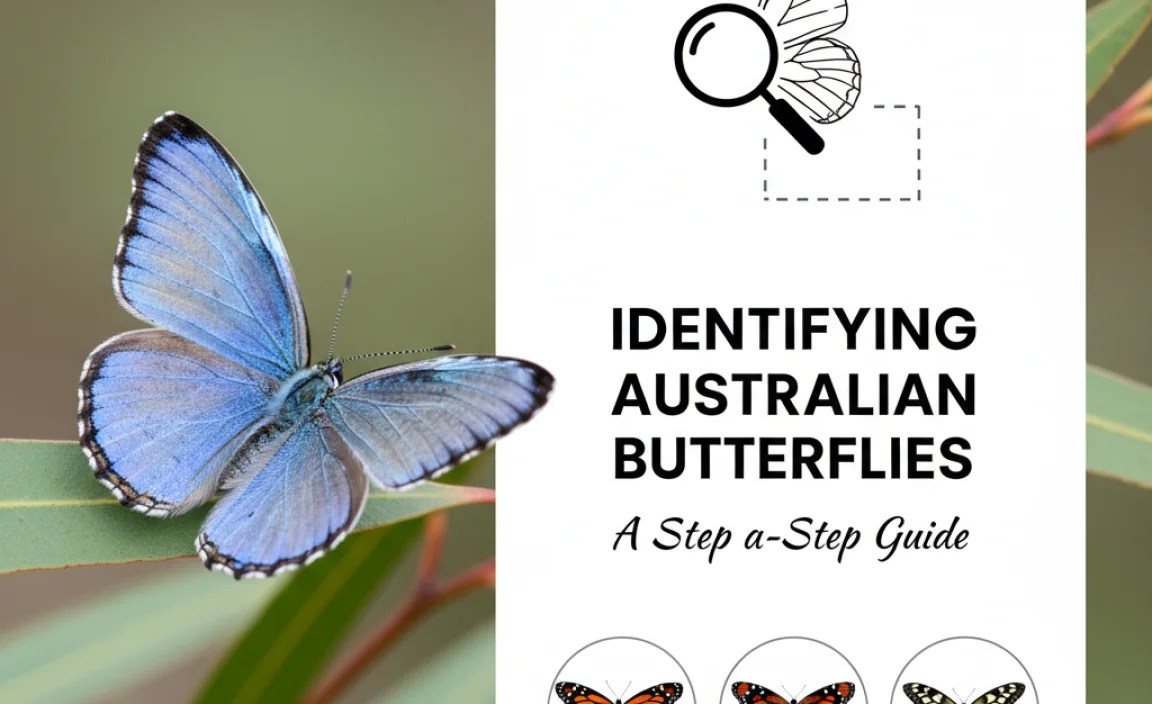
Identifying butterflies can be a rewarding experience. Here’s a simple guide to help you get started:
Step 1: Observe Size and Shape
Start by noting the butterfly’s size and wing shape. Is it large like a birdwing, or small and delicate? The size and shape can help narrow down the possibilities.
Step 2: Examine Wing Patterns and Colors
Pay close attention to the colors and patterns on the wings. Are there stripes, spots, or bands? What colors are dominant? Wing patterns are key to identifying different species.
Step 3: Note the Location and Habitat
Where did you see the butterfly? Was it in a rainforest, garden, or open field? Different species prefer different habitats. Location can provide valuable clues.
Step 4: Observe Behavior
How does the butterfly behave? Is it a fast flier or does it flutter gently? What flowers does it visit? Observing behavior can help distinguish between similar species.
Step 5: Use a Field Guide or App
Carry a field guide or use a butterfly identification app on your phone. These resources provide detailed descriptions and images to help you identify butterflies accurately. Some popular apps include iNaturalist and Butterfly ID.
Attracting Butterflies to Your Garden

Creating a butterfly-friendly garden is a wonderful way to support these beautiful creatures. Here’s how:
Plant Nectar-Rich Flowers
Butterflies need nectar for energy. Plant a variety of nectar-rich flowers that bloom at different times of the year. Native Australian flowers are particularly attractive to local butterfly species. Some good options include:
- Bottlebrush (Callistemon)
- Grevillea
- Lantana
- Butterfly Bush (Buddleja davidii)
Provide Host Plants for Caterpillars
Butterflies lay their eggs on specific host plants that the caterpillars will feed on. Research which host plants are needed for the butterfly species in your area and plant them in your garden. For example:
- Milkweed (Asclepias) for Monarchs
- Richmond Birdwing Butterfly Vine (Pararistolochia praevenosa) for Richmond Birdwings
- Citrus trees for Orchard Swallowtails
Offer a Water Source
Butterflies need water, but they can’t drink from open water sources. Provide a shallow dish of water with pebbles or marbles for them to land on. This allows them to drink safely.
Avoid Pesticides
Pesticides can harm or kill butterflies and caterpillars. Avoid using pesticides in your garden. Instead, use natural pest control methods.
Provide Shelter
Butterflies need shelter from wind and predators. Plant shrubs and trees to provide cover. A butterfly house can also offer a safe place for them to rest.
Butterfly Conservation in Australia
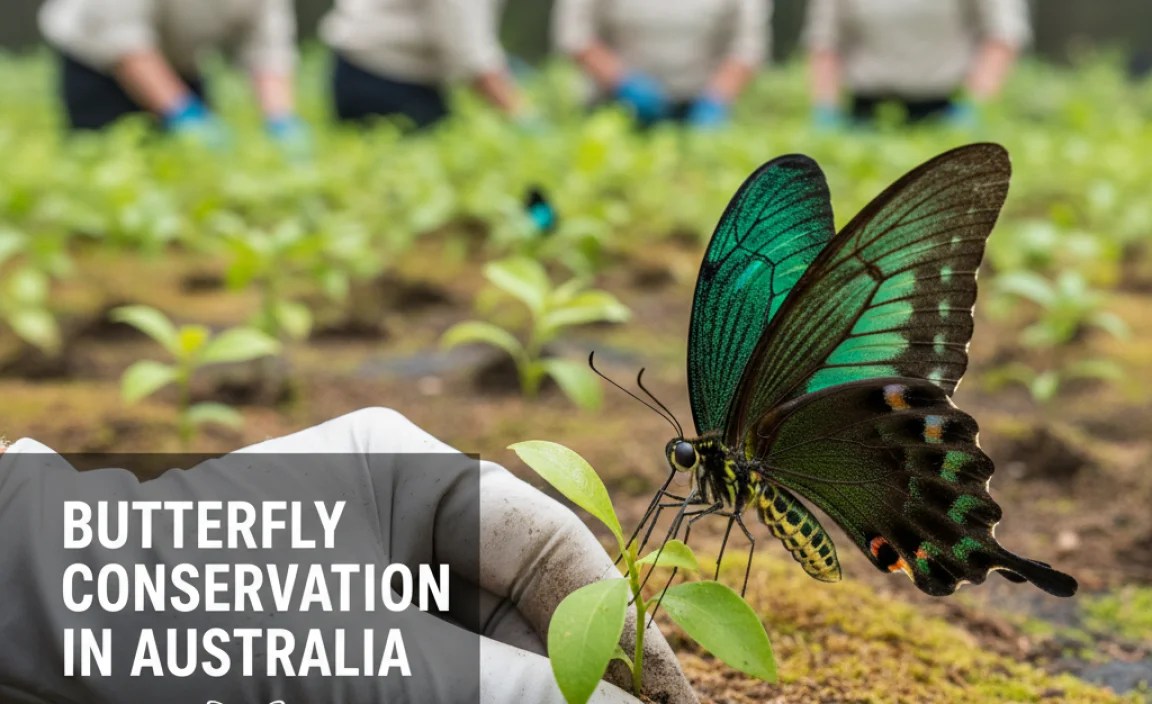
Many Australian butterfly species are threatened by habitat loss, climate change, and pesticide use. Here are some ways you can help protect butterflies:
- Create Butterfly-Friendly Habitats: Plant native flowers and host plants in your garden.
- Support Conservation Organizations: Donate to or volunteer with organizations that work to protect butterflies and their habitats. The Butterfly Conservation Initiative is a great place to start.
- Advocate for Change: Support policies that protect natural habitats and reduce pesticide use.
- Educate Others: Share your knowledge about butterflies with friends, family, and your community.
The Ecological Importance of Butterflies
Butterflies play a crucial role in our ecosystems. They are important pollinators, helping to ensure the reproduction of many plant species. They also serve as a food source for birds, lizards, and other animals. By supporting butterfly populations, we contribute to the health and resilience of our environment. According to the Smithsonian, pollinators like butterflies are essential for maintaining biodiversity and supporting agriculture.
Australian Butterfly Habitats
Australian butterflies thrive in a variety of habitats. Understanding these habitats can help you locate and identify different species:
| Habitat | Description | Common Butterfly Species |
|---|---|---|
| Rainforests | Warm, wet environments with dense vegetation. | Ulysses Butterfly, Cairns Birdwing, Richmond Birdwing |
| Gardens | Urban and suburban areas with cultivated flowers and plants. | Monarch Butterfly, Blue Triangle Butterfly, Common Jezebel |
| Open Fields | Grasslands and meadows with wildflowers. | Australian Painted Lady, Meadow Argus |
| Woodlands | Areas with scattered trees and shrubs. | Imperial Jezebel, Varied Eggfly |
| Coastal Areas | Regions along the coast with salt-tolerant vegetation. | Saltbush Blue, Common Grass Blue |
Butterfly Life Cycle
Butterflies undergo a complete metamorphosis, with four distinct stages:
- Egg: Butterflies lay their eggs on host plants.
- Larva (Caterpillar): The caterpillar hatches from the egg and feeds on the host plant.
- Pupa (Chrysalis): The caterpillar transforms into a pupa, or chrysalis.
- Adult Butterfly: The adult butterfly emerges from the chrysalis.
Each stage is critical for the butterfly’s survival. Providing the right host plants and a safe environment can help ensure a successful life cycle.
Camouflage and Mimicry in Australian Butterflies
Many Australian butterflies use camouflage and mimicry to protect themselves from predators. Camouflage involves blending in with the environment, while mimicry involves resembling another species that is unpalatable or dangerous.
Camouflage
Some butterflies have wing patterns that resemble leaves or bark, allowing them to blend in with their surroundings. This helps them avoid detection by predators.
Mimicry
Some butterflies mimic the appearance of poisonous or distasteful species. For example, some swallowtail butterflies mimic the appearance of the poisonous Cairns Birdwing, deterring predators from eating them.
Butterfly Migration in Australia
While not as well-known as the Monarch migrations in North America, some Australian butterflies undertake seasonal migrations. These migrations are often triggered by changes in weather or food availability.
Australian Painted Lady (Vanessa kershawi)
The Australian Painted Lady is known to undertake large-scale migrations in response to rainfall and food availability. These migrations can cover hundreds of kilometers. They will fly great distances to find food. The Australian Painted Lady is a truly remarkable species.
Cultural Significance and Symbolism of Butterflies
Butterflies have long held cultural significance and symbolism in many societies. They often represent transformation, beauty, and hope. In some cultures, butterflies are seen as symbols of the soul or spirits of the departed. Butterflies are revered in many cultures. Their symbolism is rich and varied.
Resources for Further Learning
Want to learn more about Australian butterflies? Here are some helpful resources:
- Australian National Insect Collection: A comprehensive collection of insect specimens and information.
- Butterfly Conservation Initiative: An organization dedicated to protecting butterflies and their habitats.
- Field Guides: Look for field guides specific to Australian butterflies.
- Museums: Visit natural history museums to see butterfly specimens and exhibits.
- Online Forums: Join online forums and communities to connect with other butterfly enthusiasts.
Conclusion
Exploring the world of Australian butterfly species is a journey filled with beauty, wonder, and learning. From the iconic Ulysses to the tiny Blue Jewel, each butterfly has a unique story to tell. By understanding their habitats, behaviors, and ecological importance, we can better appreciate and protect these incredible creatures. I encourage you to step outside, explore your local environment, and discover the butterflies that call it home. Together, we can make a difference in ensuring the survival of these delicate and essential members of our ecosystems. Happy butterflying!
Frequently Asked Questions About Australian Butterflies
What is the most common butterfly in Australia?
The Cabbage White Butterfly (Pieris rapae) is one of the most common butterflies in Australia. It’s often seen in gardens and agricultural areas.
How many butterfly species are there in Australia?
Australia is home to over 400 different species of butterflies. Each species has unique characteristics and habitats.
What is the largest butterfly in Australia?
The Cairns Birdwing (Ornithoptera euphorion) is Australia’s largest butterfly. Females can have a wingspan of up to 19cm.
Are Australian butterflies poisonous?
Some Australian butterflies, like the Cairns Birdwing, are poisonous to predators. This is because their caterpillars feed on toxic plants.
How can I attract butterflies to my garden?
Planting native nectar-rich flowers and host plants for caterpillars is a great way to attract butterflies. Providing a water source and avoiding pesticides also helps.
What do Australian butterfly caterpillars eat?
Caterpillars have specific host plants they feed on. For example, Monarch caterpillars eat milkweed, while Richmond Birdwing caterpillars eat native vines.
Where can I find more information about Australian butterflies?
Museums, field guides, and online resources like the Australian National Insect Collection and Butterfly Conservation Initiative are great places to learn more.


