
Painted Lady Butterfly Identification Guide: Easy ID!

Have you ever seen a butterfly with orange and brown wings? Did it have white spots? It might be a painted lady butterfly! These butterflies are found all over the world. They are fun to watch in gardens and fields. This painted lady butterfly identification guide will help you learn how to spot them.
Let’s learn about these amazing insects. We will explore their colors and patterns. You will also learn where they live. Knowing these things will make it easier to find them. Soon, you’ll be a butterfly expert!
Butterflies are important. They help flowers make seeds. This is called pollination. When they fly from flower to flower, they carry pollen. Pollen helps new plants grow. Learning about butterflies helps us protect them. We want to keep our gardens full of these beautiful creatures. So, let’s start our painted lady butterfly identification guide.
Have you ever raised a butterfly from a caterpillar? It is a fun and amazing experience. You can watch them change and grow. Then, you can let them fly away. Learning about butterflies can be a fun adventure. It can also teach you about nature. So, get ready to explore the world of painted lady butterflies!
Key Takeaways
- Use this painted lady butterfly identification guide to spot key markings on the wings.
- Painted lady butterflies have orange, brown, and white patterns on their wings.
- These butterflies live in many places, including gardens and open fields.
- Painted ladies migrate long distances, sometimes across continents.
- Caterpillars eat thistles and other plants before becoming butterflies.
Painted Lady Butterfly Identification: Key Features
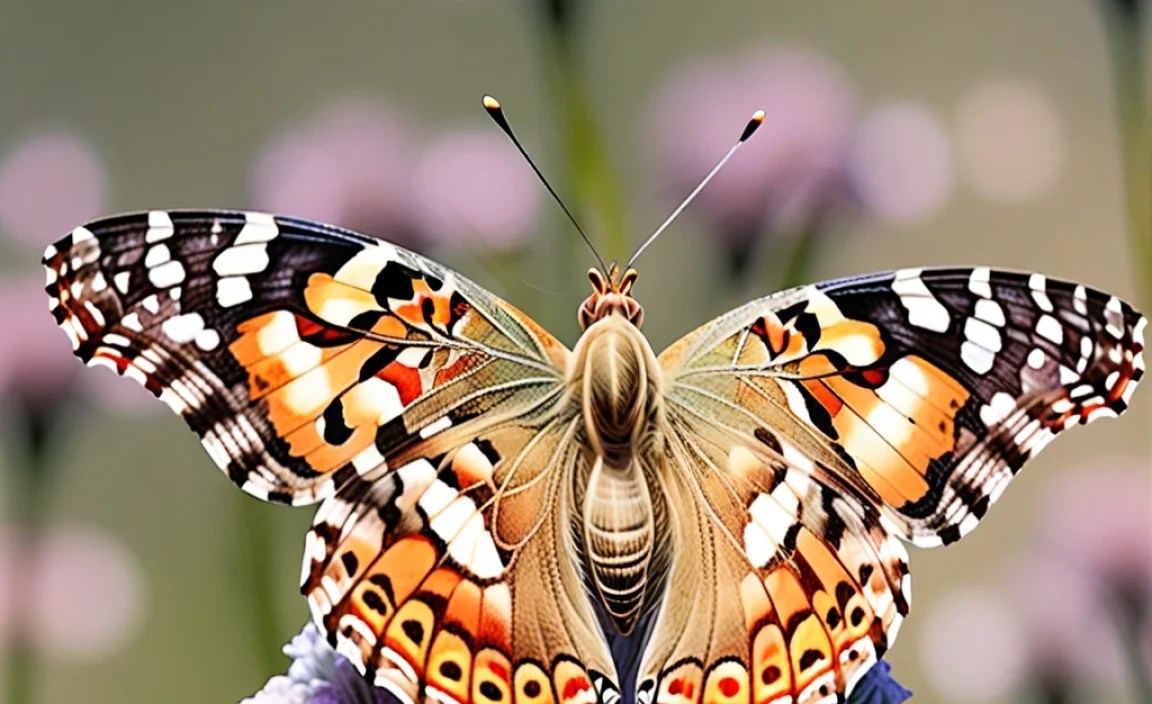
Identifying a painted lady butterfly is easier than you think. Look closely at the colors of its wings. Painted ladies are mostly orange and brown. They have dark spots on their wings. The edges of their wings have white spots. These spots help you tell them apart from other butterflies. The size of the butterfly is also important. Painted ladies are medium-sized. They are not as big as monarchs, but bigger than some smaller butterflies. You can often see them fluttering around flowers in your garden. Remember to look for the distinctive patterns when using a painted lady butterfly identification guide.
- Orange and brown wings are key features.
- Look for dark spots on the wings.
- White spots are found on the wing edges.
- They are medium-sized butterflies.
- Their wingspan is about two inches.
- They fly quickly and gracefully.
Pay attention to where you see the butterfly. Painted ladies can be found almost everywhere. They live in gardens, fields, and even cities. They migrate long distances. This means they travel from one place to another. They often move to find food or better weather. Knowing where they live can help you identify them. Also, watch how they fly. Painted ladies have a fast, fluttering flight. This is different from the slow, gliding flight of some other butterflies. You can use these clues to help you spot painted lady butterflies.
Wing Color Patterns
What makes the wings so special? The colors are not just pretty. They also help the butterfly. The orange and brown colors help them hide. This is called camouflage. It protects them from birds and other animals that might eat them. The dark spots can also confuse predators. They might think the spots are eyes. This can scare them away. The white spots might help them attract mates. Male and female butterflies use their colors to find each other. These patterns are important for their survival.
Butterfly Size and Shape
Have you ever wondered how big a painted lady is? They are not too big and not too small. Their wingspan is about two inches. This is the distance from one wingtip to the other. The shape of their wings is also special. They have a triangular shape. This helps them fly quickly. The shape and size are good for long flights. They can travel long distances to find food or mates. The shape and size help them survive in different places.
Habitat and Location
Where do painted ladies like to live? They are found in many different places. They live in gardens, fields, and even cities. They are very adaptable. This means they can live in different environments. They like places with lots of flowers. Flowers provide them with nectar. Nectar is a sweet liquid that they drink for energy. They also like places with host plants. Host plants are plants that their caterpillars eat. Thistles are a common host plant for painted lady caterpillars.
Fun Fact or Stat: Painted lady butterflies can fly up to 100 miles in a single day during migration!
Distinguishing Painted Ladies From Similar Species

Sometimes, it can be tricky to tell butterflies apart. There are other butterflies that look like painted ladies. One of these is the American lady butterfly. It also has orange and brown wings. But there are some differences. American ladies have two large eyespots on their hind wings. Painted ladies have smaller spots. Another butterfly is the monarch. Monarchs are bigger and brighter orange. They also have thicker black lines on their wings. Paying attention to these details will help you use this painted lady butterfly identification guide effectively.
- American ladies have large eyespots.
- Monarchs are bigger and brighter.
- Viceroy butterflies mimic monarchs.
- Red admirals have red bands on wings.
- Question marks have silver markings.
- Use a field guide for comparison.
Look at the patterns on the underside of the wings. This can also help you tell them apart. Painted ladies have a mottled pattern underneath. This means the colors are mixed and blended. American ladies have a more distinct pattern. They often have a small blue spot. Monarchs have a clear orange and black pattern. The underside patterns are a good way to confirm your identification. Remember to look closely at all the details. This will help you avoid mistakes. With practice, you will become an expert at identifying butterflies.
| Butterfly | Wing Color | Wing Size | Distinct Features |
|---|---|---|---|
| Painted Lady | Orange and brown | Medium | White spots on edges |
| American Lady | Orange and brown | Medium | Large eyespots |
| Monarch | Bright orange | Large | Thick black lines |
| Viceroy | Orange | Medium | Black line across hindwing |
Comparing Wing Patterns
Do you see a pattern on the wings? Patterns help us tell butterflies apart. Painted ladies have a mix of orange, brown, and white. The patterns are not always the same. But they are always similar. American ladies have similar colors. But their patterns are different. They have bigger spots and different shapes. Monarchs have a very clear pattern. Their black lines make them easy to spot. Look closely at the patterns. This will help you learn to identify butterflies.
Eyespots and Markings
Have you noticed the eyespots? Some butterflies have spots that look like eyes. These are called eyespots. They can scare away predators. They can also distract them. American ladies have large eyespots on their hind wings. Painted ladies have smaller spots. Monarchs do not have eyespots. But they have other markings. They have black lines and white spots. These markings help them stand out.
Size and Shape Differences
How big is the butterfly? Size is another way to tell them apart. Monarchs are the biggest. Painted ladies and American ladies are smaller. The shape of their wings is also different. Monarchs have a more rounded shape. Painted ladies have a more triangular shape. American ladies have a more irregular shape. These differences can be hard to see. But with practice, you will learn to notice them.
Fun Fact or Stat: The American lady butterfly often has a small blue spot on the underside of its wing!
Habitat and Range of Painted Lady Butterflies

Painted lady butterflies are found almost everywhere. They live on every continent except Antarctica. This is because they migrate. Migration means they move from one place to another. They move to find food or better weather. They can travel long distances. Some painted ladies travel thousands of miles. They fly across countries and even oceans. They can live in many different habitats. Habitats are the places where animals live. Painted ladies live in gardens, fields, and deserts. They can even live in cities. This painted lady butterfly identification guide is useful anywhere.
- They live on almost every continent.
- Painted ladies migrate long distances.
- They adapt to many habitats.
- Gardens are common habitats.
- Fields and meadows are also homes.
- Deserts can be their habitats too.
They are very adaptable. This means they can live in different environments. They can survive in hot and cold climates. They can eat many different types of plants. Their caterpillars eat thistles and other plants. Thistles are prickly plants that many animals avoid. But painted lady caterpillars love them. This helps them survive in places where other butterflies cannot. Their ability to live in so many places makes them one of the most common butterflies in the world. So, keep your eyes open. You might see one anywhere!
Migration Patterns
Why do painted ladies migrate? They migrate to find food and better weather. In the winter, it can be too cold for them to survive. They fly to warmer places. In the summer, it can be too hot and dry. They fly to cooler, wetter places. They follow the food. They fly to places where their host plants are growing. Migration is a long and dangerous journey. Many butterflies do not survive. But those that do can lay eggs and start new generations.
Preferred Habitats
What kind of places do they like best? They like places with lots of flowers. Flowers provide them with nectar. Nectar is a sweet liquid that they drink for energy. They also like places with host plants. Host plants are plants that their caterpillars eat. They like open areas. They like places where they can fly easily. They do not like dense forests. They prefer sunny places. They like to bask in the sun to warm up.
Global Distribution
Where can you find them around the world? You can find them in North America. You can find them in Europe. You can find them in Asia. You can find them in Africa. You can even find them in Australia. They are one of the most widely distributed butterflies in the world. They are not found in Antarctica. It is too cold for them to survive there. But they can live almost anywhere else. This makes them a very successful species.
Fun Fact or Stat: Painted lady butterflies undertake one of the longest migrations of any butterfly species, sometimes traveling over 3,000 miles!
Life Cycle Stages: From Egg to Butterfly

The life of a painted lady butterfly is amazing. It starts as a tiny egg. The egg is laid on a host plant. The egg hatches into a caterpillar. The caterpillar eats and grows. It sheds its skin several times. This is called molting. The caterpillar becomes a pupa. The pupa is also called a chrysalis. Inside the pupa, the caterpillar changes. It transforms into a butterfly. The butterfly emerges from the pupa. It dries its wings. Then, it flies away. Understanding these stages is part of the painted lady butterfly identification guide.
- Eggs are laid on host plants.
- Caterpillars eat and grow quickly.
- Molting occurs as they grow.
- Pupa forms a chrysalis.
- Butterfly emerges from pupa.
- Wings dry before flying.
Each stage is important for the butterfly’s survival. The egg needs to be laid on the right plant. The caterpillar needs to eat enough food. The pupa needs to be protected. The butterfly needs to be able to fly and find food. The whole process takes about a month. It depends on the weather. Warm weather speeds up the process. Cold weather slows it down. Watching a butterfly go through these stages is a fascinating experience. You can even raise your own butterflies at home.
Egg Laying and Hatching
Where do the butterflies lay their eggs? They lay their eggs on host plants. Host plants are plants that the caterpillars eat. They choose plants carefully. They want to make sure the caterpillars have enough food. The eggs are very small. They are often laid on the underside of leaves. This protects them from the sun and rain. The eggs hatch in a few days. A tiny caterpillar emerges. It is ready to start eating.
Caterpillar Growth and Molting
What do caterpillars do all day? They eat! They eat and grow. They eat a lot of leaves. They grow very quickly. As they grow, they shed their skin. This is called molting. They molt several times. Each time they molt, they get bigger. They also change color. They can be different colors and patterns. They use their colors to camouflage themselves. This protects them from predators.
Pupa Formation and Transformation
What happens inside the pupa? The pupa is a special stage. It is a time of great change. The caterpillar transforms into a butterfly. This is called metamorphosis. The pupa is protected by a hard shell. Inside the shell, the caterpillar’s body breaks down. It then rebuilds itself into a butterfly. This process takes about two weeks. When it is done, the butterfly is ready to emerge.
Fun Fact or Stat: A painted lady caterpillar can eat up to 20 times its own weight in a single day!
Host Plants and Diet of Painted Lady Caterpillars
Painted lady caterpillars are picky eaters. They only eat certain plants. These plants are called host plants. Thistles are their favorite. They also eat mallows and other plants. The caterpillars need to eat a lot. They need to grow big and strong. They eat the leaves of the host plants. They can eat a whole plant in a few days. Knowing the diet of caterpillars is useful for the painted lady butterfly identification guide.
- Thistles are a favorite food.
- Mallows are also eaten.
- They eat leaves of host plants.
- Caterpillars need to eat a lot.
- They grow quickly on this diet.
- Diet affects butterfly health.
The type of plant they eat affects the butterfly. Healthy caterpillars make healthy butterflies. If the caterpillars do not get enough food, they will be small. They might not be able to fly well. They might not be able to reproduce. It is important to protect the host plants. This helps the caterpillars survive. It also helps the butterflies thrive. So, if you want to attract painted lady butterflies to your garden, plant some thistles!
Thistle Varieties
What kind of thistles do they like? There are many different types of thistles. Some thistles are prickly. Some thistles are not. Painted lady caterpillars eat many different kinds of thistles. They like Canada thistle. They like bull thistle. They like milk thistle. They are not too picky. As long as it is a thistle, they will probably eat it. Thistles are often considered weeds. But they are important food for painted lady caterpillars.
Other Host Plants
Are there other plants they eat? Yes, they also eat other plants. They eat mallows. Mallows are plants with soft, fuzzy leaves. They eat sunflowers. Sunflowers are big, bright flowers. They eat hollyhocks. Hollyhocks are tall, colorful flowers. They eat a variety of plants. This helps them survive in different places. They can find food even if thistles are not available.
Nutritional Needs
What do caterpillars need to grow? They need lots of nutrients. Nutrients are things that help them grow. They need protein. Protein helps them build their bodies. They need carbohydrates. Carbohydrates give them energy. They need vitamins. Vitamins help them stay healthy. They get all these nutrients from the plants they eat. A healthy diet is important for their survival.
Fun Fact or Stat: Painted lady caterpillars can completely defoliate a thistle plant in just a few days!
Attracting Painted Lady Butterflies to Your Garden
Do you want to see more painted lady butterflies in your garden? You can attract them by planting their favorite flowers. Plant flowers that provide nectar. Nectar is a sweet liquid that butterflies drink. Plant flowers that are bright colors. Butterflies are attracted to bright colors. Plant flowers that bloom at different times. This will provide nectar all season long. You can also provide a water source. Butterflies need water to drink. A shallow dish of water with some stones will work. This will help you use your painted lady butterfly identification guide more often.
- Plant nectar-rich flowers.
- Use bright colors to attract them.
- Provide a water source.
- Avoid using pesticides.
- Plant host plants for caterpillars.
- Create a sunny, sheltered spot.
Avoid using pesticides. Pesticides can kill butterflies and other insects. If you need to use pesticides, use them carefully. Only use them when necessary. Choose pesticides that are safe for butterflies. Plant host plants for the caterpillars. This will provide food for the caterpillars. It will also encourage the butterflies to lay their eggs in your garden. Create a sunny, sheltered spot. Butterflies like to bask in the sun. They also need shelter from the wind. A sunny spot with some bushes will be perfect.
Nectar-Rich Flowers
What flowers do butterflies like? They like flowers that have lots of nectar. They like flowers that are easy to access. They like flowers that are the right shape. Some good choices include zinnias, butterfly bushes, and coneflowers. Zinnias are colorful and easy to grow. Butterfly bushes attract many butterflies. Coneflowers are native plants that are good for the environment. Choose a variety of flowers to attract different types of butterflies.
Water Sources
How do butterflies drink? They drink with a long, straw-like tongue. This is called a proboscis. They unroll their proboscis and stick it into the flower. They suck up the nectar. They also need water. You can provide water by putting out a shallow dish of water. Put some stones in the dish. This will give the butterflies a place to land. They can drink without falling in.
Avoiding Pesticides
Why are pesticides bad for butterflies? Pesticides are chemicals that kill insects. They can kill butterflies too. Even if they do not kill them directly, they can harm them. They can make them sick. They can make them unable to reproduce. It is best to avoid using pesticides in your garden. If you must use them, use them carefully. Choose pesticides that are safe for butterflies. Apply them in the evening when butterflies are not active.
Fun Fact or Stat: Butterflies taste with their feet! They have taste receptors on their feet that help them find nectar.
Summary
The painted lady butterfly is a common butterfly found around the world. You can identify it by its orange and brown wings with white spots. They migrate long distances to find food and better weather. They go through several life stages, from egg to caterpillar to pupa to butterfly. The caterpillars eat thistles and other plants. You can attract them to your garden by planting nectar-rich flowers and host plants. This painted lady butterfly identification guide can help you identify and appreciate these butterflies.
Remember to look for the key features. The orange and brown wings with white spots are the most important. Also, pay attention to where you see them. They can be found in gardens, fields, and even cities. By following this guide, you can become an expert at identifying painted lady butterflies. You can also help protect them by providing food and habitat in your garden.
Conclusion
Learning about painted lady butterflies is fun and interesting. They are beautiful creatures. They play an important role in the ecosystem. They help pollinate flowers. This painted lady butterfly identification guide provides you with the knowledge to identify them. You can now recognize them in your garden or local park. You can also share this information with your friends and family. By learning about these butterflies, you can help protect them. You can also appreciate the beauty of nature.
Frequently Asked Questions
Question No 1: What are the key features of a painted lady butterfly?
Answer: Painted lady butterflies have distinct orange and brown wings. They also have white spots along the edges. The upper side of the wings has a mix of orange, brown, and black markings. The underside is more muted with intricate patterns. These butterflies are medium-sized. Knowing these features is essential for using any painted lady butterfly identification guide. The patterns and colors help them camouflage and attract mates.
Question No 2: Where can I find painted lady butterflies?
Answer: Painted lady butterflies are found on almost every continent. They live in many different habitats. You can find them in gardens, fields, meadows, and even urban areas. They are migratory butterflies. This means they travel long distances. They move to find food and suitable breeding grounds. Look for them in sunny areas with plenty of flowers. Their wide distribution makes this painted lady butterfly identification guide useful worldwide.
Question No 3: What do painted lady caterpillars eat?
Answer: Painted lady caterpillars primarily eat thistles. They also consume mallows and other plants. Thistles are their favorite food source. They provide the nutrients needed for growth and development. If you want to attract painted lady butterflies to your garden, plant thistles. Providing these host plants is crucial for the butterfly’s life cycle. A good painted lady butterfly identification guide should mention their dietary needs.
Question No 4: How long does it take for a painted lady butterfly to develop from an egg?
Answer: The complete life cycle of a painted lady butterfly takes about a month. This includes the egg, caterpillar, pupa, and adult stages. The exact duration depends on the temperature and availability of food. Warmer temperatures accelerate the process. Adequate food supply ensures healthy development. Watching this transformation is a fascinating experience. Remember to consider these factors when using your painted lady butterfly identification guide.
Question No 5: Are painted lady butterflies migratory?
Answer: Yes, painted lady butterflies are migratory. They undertake long journeys to find suitable habitats. These migrations can span thousands of miles. They move to avoid harsh weather conditions. They also follow the availability of food sources. Their migratory behavior contributes to their wide distribution. Understanding their migration patterns can enhance your painted lady butterfly identification skills.
Question No 6: How can I attract painted lady butterflies to my garden?
Answer: To attract painted lady butterflies, plant nectar-rich flowers. Choose bright colors like purple, red, and yellow. Provide a water source such as a shallow dish with stones. Avoid using pesticides, as they can harm butterflies and other beneficial insects. Plant host plants like thistles to support the caterpillars. Creating a butterfly-friendly garden is a rewarding experience. This ensures you’ll have many opportunities to use your painted lady butterfly identification guide.


