
Blue Morpho Content Angles: The Ultimate Guide

Have you ever seen a butterfly so bright it looks like the sky? These butterflies are the amazing Blue Morphos. They are known for their shiny, blue wings. People love to learn about them. What makes them so special? Exploring Blue Morpho content angles helps us understand these cool creatures better. Let’s find out more about their life and what makes them unique.
Key Takeaways
- Blue Morphos are famous for their bright blue wings.
- They live in rainforests of Central and South America.
- Caterpillars eat many leaves but adults sip fluids.
- Exploring Blue Morpho content angles shows their beauty and importance.
- Their bright colors warn predators they might taste bad.
Discovering Blue Morpho Content Angles
The Blue Morpho butterfly is truly amazing. It is known for its big, bright blue wings. These wings can span up to eight inches! They live in the rainforests of Central and South America. These butterflies are not just pretty. They also play a vital role in their ecosystem. Scientists and nature lovers both study them. Understanding Blue Morpho content angles helps us see how important they are. We learn about their life cycle, diet, and how they protect themselves. This knowledge helps us protect their homes and ensure they continue to thrive. They are a symbol of the rainforest’s beauty and the importance of conservation. These butterflies remind us to care for our planet.
- Blue Morphos live in rainforests.
- Their wings can be eight inches wide.
- They are important to their ecosystem.
- Scientists study them to learn more.
- We must protect their rainforest homes.
Learning about Blue Morphos teaches us many things. We discover how they change from tiny eggs to amazing butterflies. They start as caterpillars that eat a lot of leaves. Then, they form a chrysalis where they change. Finally, they emerge as beautiful, blue butterflies. These butterflies do not eat leaves. Instead, they sip fluids from fruits and tree sap. They use their bright colors to scare away predators. Their shiny wings can confuse enemies. They teach us about survival and adaptation. By understanding their world, we can help them survive. We need to protect their rainforest homes. This helps all the creatures that live there.
What Makes Their Wings So Blue?
Have you ever wondered why Blue Morphos have such bright blue wings? It is not from blue pigment, like paint. Instead, their wings have tiny structures. These structures reflect light in a special way. This is called iridescence. The structures cause the blue color we see. Other colors are canceled out. Only the blue light reflects back to our eyes. This makes their wings look very bright and shiny. It is like a trick of the light! This is why they seem to glow. Scientists study this to make new technologies. They want to copy how the butterflies make colors. It is an amazing example of nature’s engineering.
How Do They Find Food?
Imagine being a butterfly and needing to find food. Adult Blue Morphos do not eat leaves. Instead, they drink fluids. They like the juice from rotting fruits. They also sip sap from trees. They use their long, straw-like tongue to drink. This is called a proboscis. They unroll it to reach the fluids. They can taste with their feet! This helps them find the best food. They fly around the rainforest looking for these treats. They are important for the rainforest. They help pollinate plants as they fly. They carry pollen from flower to flower. This helps the plants grow.
Why Are They Important to the Rainforest?
Blue Morphos play a big role in the rainforest. They are part of the food chain. Caterpillars eat plants, and butterflies help pollinate. They also serve as food for other animals. Birds and lizards might eat them. Their presence shows a healthy rainforest. When scientists study them, they learn about the forest’s health. If there are fewer butterflies, it might mean the forest is in trouble. This is why it is important to protect their homes. We must stop cutting down trees and polluting the environment. By protecting the Blue Morphos, we protect the whole rainforest. This helps all the animals and plants that live there.
Fun Fact or Stat: The Blue Morpho’s bright blue color is created by the microscopic scales on its wings, not by pigment!
The Life Cycle: Blue Morpho Content Exploration
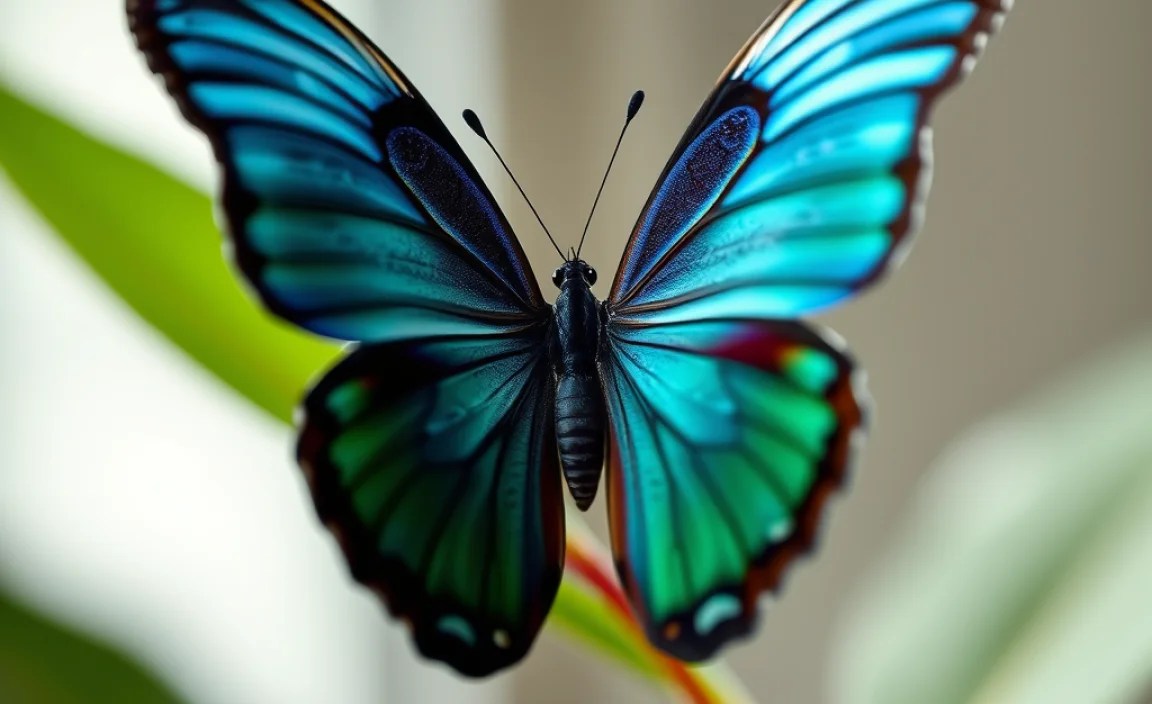
The life cycle of a Blue Morpho is fascinating. It starts with an egg, usually laid on a leaf. The egg hatches into a caterpillar. The caterpillar eats a lot of leaves and grows quickly. It sheds its skin several times as it gets bigger. After growing, the caterpillar turns into a chrysalis. Inside the chrysalis, a big change happens. The caterpillar transforms into a butterfly. This process is called metamorphosis. The butterfly emerges from the chrysalis. It unfolds its wings and flies away. Studying the Blue Morpho content angles during each stage shows how amazing nature is. We can learn about growth, change, and survival. It is a reminder of the beauty and complexity of life.
- Eggs are laid on leaves.
- Caterpillars eat and grow fast.
- They shed their skin many times.
- A chrysalis forms around the caterpillar.
- The butterfly emerges and flies.
- Metamorphosis is a big change.
Understanding each stage of the Blue Morpho life cycle is important. The eggs are tiny and often hidden. This protects them from predators. The caterpillars are often brown or green. This helps them blend in with the leaves. They can eat poisonous plants to protect themselves. The chrysalis is also camouflaged. It looks like a leaf or a twig. This makes it hard for predators to find. The butterfly’s bright colors warn predators. They might taste bad because of the plants the caterpillar ate. These are all ways the butterfly survives. Learning about this helps us understand nature better. It shows us how everything is connected. We need to protect each stage of their life.
What Do Caterpillars Eat?
Blue Morpho caterpillars are very picky eaters. They do not eat just any leaf. They prefer certain types of plants. These plants often have toxins that protect them. The caterpillar can eat these toxins without getting sick. The toxins stay in their body. This makes the butterfly taste bad to predators. Some caterpillars even eat members of the pea family. They can eat a lot of leaves in a short time. This helps them grow quickly. They need to grow fast to prepare for the next stage. They shed their skin as they grow. Each time they shed, they get bigger. It is amazing how much they eat!
How Long Does Metamorphosis Take?
Have you ever wondered how long it takes for a caterpillar to turn into a butterfly? The process of metamorphosis is different for each type of butterfly. For Blue Morphos, it usually takes about two to three weeks. During this time, the caterpillar is inside the chrysalis. It is changing into a butterfly. The chrysalis looks like a leaf or twig. This helps protect it from predators. Inside, the caterpillar is breaking down. It is reforming into a butterfly. It is an amazing transformation. When the butterfly is ready, it breaks out of the chrysalis. It unfolds its wings and flies away. It is a beautiful sight to see!
What Happens Inside the Chrysalis?
Inside the chrysalis, something amazing happens. The caterpillar breaks down into a soup-like substance. Then, special cells start to rebuild it. These cells create the butterfly’s wings, legs, and other body parts. It is like building a new creature from scratch. The chrysalis protects the caterpillar during this process. It keeps it safe from predators and the weather. The color of the chrysalis can change. This helps it blend in with its surroundings. It is an incredible process of transformation. Scientists study this to learn more about how cells work. It is one of nature’s most amazing mysteries.
Fun Fact or Stat: The Blue Morpho caterpillar can eat poisonous plants without getting sick, and it uses the toxins to protect itself!
Habitat and Location: Key Blue Morpho Content Aspects

Blue Morphos live in the rainforests of Central and South America. They like warm, wet places. Rainforests provide everything they need. There are plenty of plants for caterpillars to eat. There are also fruits and sap for butterflies to drink. The tall trees provide shelter from the sun and rain. Understanding their habitat is important. It helps us protect them. When we protect the rainforest, we protect the Blue Morphos. We also protect many other animals and plants. Learning about Blue Morpho content aspects helps us understand their needs. This knowledge helps us make good choices. We can support rainforest conservation. We can also reduce our impact on the environment. Every little bit helps.
- They live in rainforests.
- They need warm, wet places.
- Rainforests provide food and shelter.
- Protecting the rainforest helps them.
- We can reduce our impact on the environment.
The rainforest is home to many creatures. Blue Morphos are just one of them. These forests are being destroyed. People cut down trees for wood and farms. This destroys the butterfly’s home. It also hurts other animals and plants. We need to find ways to protect the rainforest. We can support companies that use sustainable practices. We can also donate to conservation groups. Teaching others about the importance of rainforests is also important. Together, we can make a difference. We can help protect these amazing butterflies and their homes. Every action counts towards a better future for our planet.
Where Exactly Do They Live?
Blue Morphos can be found in several countries. They live in Mexico, Costa Rica, and Brazil. They also live in other Central and South American countries. They prefer dense rainforests with lots of trees. They are usually found near rivers and streams. These areas have plenty of moisture. They also have a lot of food for both caterpillars and butterflies. The butterflies like to fly in the understory of the forest. This is the area below the tall trees. They can also be seen in open areas. They like to bask in the sun. It is amazing to see them flying in their natural habitat.
Why Are Rainforests Important?
Rainforests are very important for many reasons. They provide oxygen for us to breathe. They also help regulate the climate. Rainforests are home to many different types of plants and animals. Many of these plants and animals cannot be found anywhere else. Rainforests also provide us with resources. We get medicines, food, and other products from the rainforest. When we destroy rainforests, we lose these benefits. We also hurt the environment. It is important to protect these valuable ecosystems. We can all do our part to help save the rainforests. This will help Blue Morphos and all the other creatures that live there.
How Can We Protect Their Habitat?
There are many ways we can protect the Blue Morpho’s habitat. We can support organizations that work to conserve rainforests. We can also reduce our use of paper and wood products. This helps to decrease the demand for logging. We can buy products that are sustainably sourced. This means they are made in a way that does not harm the environment. We can also educate others about the importance of rainforests. The more people who know about the problem, the more likely we are to find solutions. Every small action can make a big difference. Together, we can protect these amazing places.
Fun Fact or Stat: Rainforests cover only about 6% of the Earth’s surface, but they contain over half of the world’s plant and animal species!
Diet and Feeding Habits: Revealing Blue Morpho Content

The diet of a Blue Morpho changes as it grows. Caterpillars eat leaves. They eat a lot to grow big. Butterflies drink fluids. They sip juice from rotting fruit. They also drink sap from trees. They use their long tongue like a straw. This is called a proboscis. Understanding their diet helps us protect them. We need to make sure they have food. We can plant trees that caterpillars eat. We can also leave out fruit for butterflies. Learning about Blue Morpho content about their diet shows us how important it is. It is important to protect their food sources. This will help them thrive. We can all do our part to help.
- Caterpillars eat leaves to grow.
- Butterflies drink fluids.
- They like juice from rotting fruit.
- They use a proboscis to drink.
- We can plant trees for caterpillars.
- We can leave out fruit for butterflies.
It is interesting to see how different the caterpillar and butterfly diets are. Caterpillars are like tiny eating machines. They munch on leaves all day long. They need the energy to grow. Butterflies are more delicate. They sip fluids for energy. They do not need to eat as much. Their main goal is to reproduce. They need energy for flying and finding mates. They also help pollinate plants. This is important for the rainforest. By understanding their diet, we can help them. We can make sure they have the food they need to survive. This helps the whole ecosystem.
What Kind of Leaves Do Caterpillars Prefer?
Blue Morpho caterpillars are picky eaters. They prefer certain types of leaves. They often eat leaves from plants in the pea family. They also like plants that contain toxins. These toxins do not hurt them. Instead, they protect them. The toxins make them taste bad to predators. This is a clever way to stay safe. They can eat a lot of leaves in a short time. This helps them grow quickly. They need to grow fast to prepare for the next stage. They shed their skin as they grow. Each time they shed, they get bigger. It is amazing how much they eat!
How Do Butterflies Find Food?
Imagine being a butterfly and needing to find food. Adult Blue Morphos have special ways to find food. They can taste with their feet! This helps them find the best food. They also use their eyes to spot ripe fruit. They fly around the rainforest looking for these treats. They can smell the fruit from far away. They use their antennae to smell. Their proboscis is perfect for sipping fluids. It is long and thin like a straw. They unroll it to reach the fluids. They are very efficient at finding food. They are important for the rainforest. They help pollinate plants as they fly.
Why Is Their Diet Important to Their Survival?
The diet of Blue Morphos is very important for their survival. Caterpillars need to eat a lot of leaves to grow. They store energy for the next stage. Butterflies need fluids for energy. They need energy to fly and reproduce. If they cannot find food, they will not survive. This is why it is important to protect their food sources. We can plant trees for caterpillars. We can leave out fruit for butterflies. We can also protect the rainforest. This ensures they have a healthy ecosystem. This will help them thrive. Every small action can make a big difference.
Fun Fact or Stat: Adult Blue Morphos primarily feed on the juices of rotting fruit, tree sap, and fungi!
Predators and Defense Mechanisms: Blue Morpho Content View
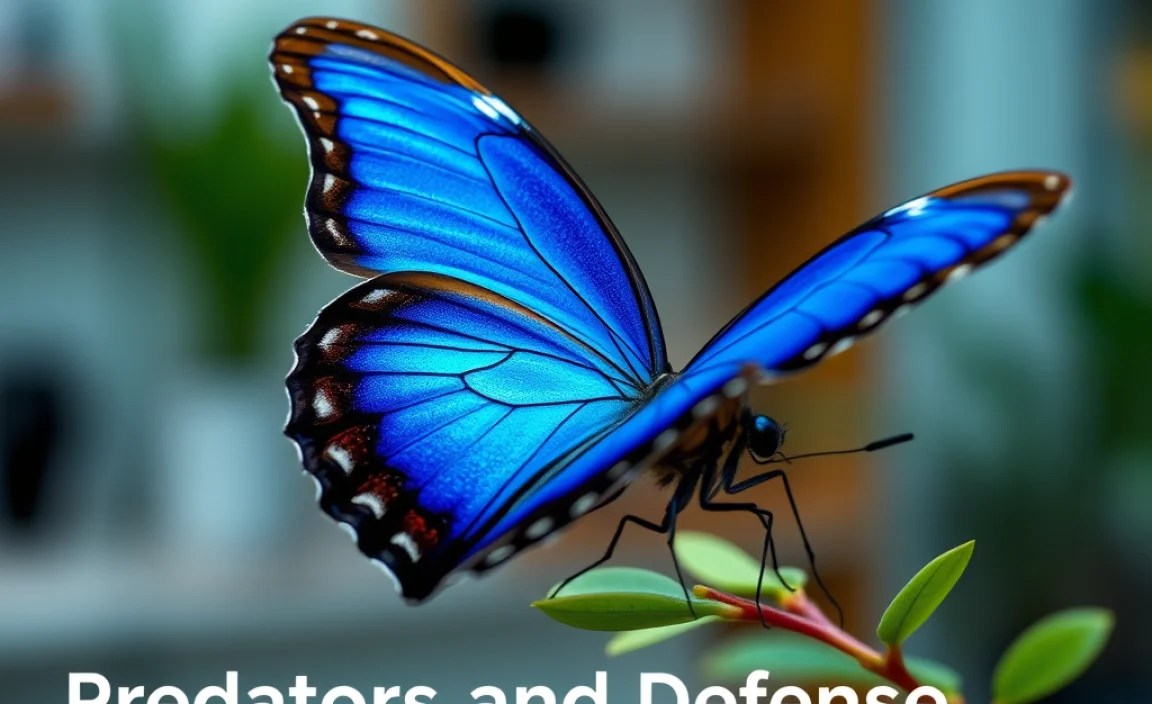
Blue Morphos face many dangers. Birds and lizards want to eat them. They have ways to protect themselves. Their bright colors can scare predators. They also fly quickly to escape. Caterpillars eat toxic plants. This makes them taste bad. Butterflies can also play dead. They fall to the ground and stay still. Understanding their defenses is interesting. It shows how they survive. Learning about Blue Morpho content view on their predators helps us appreciate them more. We can help protect them from harm. We can keep their homes safe.
- Birds and lizards eat them.
- Bright colors can scare predators.
- They fly quickly to escape.
- Caterpillars eat toxic plants.
- Butterflies can play dead.
- We can protect their homes.
It is amazing how Blue Morphos have adapted to survive. Their bright colors are not just for show. They also warn predators. The colors say, “I might taste bad!” This is called warning coloration. Their quick flight helps them escape. They can fly in unpredictable patterns. This makes it hard for predators to catch them. Caterpillars use toxins to protect themselves. They store the toxins in their bodies. Butterflies also use camouflage. The underside of their wings is brown. This helps them blend in with trees. They are masters of survival. We can learn a lot from them.
How Do Their Colors Help Them?
The bright blue color of Blue Morphos is very important. It helps them in several ways. The bright color can startle predators. It gives the butterfly a chance to escape. The color also reflects light. This can confuse predators. It makes it hard to track the butterfly. The underside of their wings is brown. This helps them blend in when they are resting. It is a clever combination of colors. The bright blue attracts mates. It also warns predators. The brown helps them hide. It is an amazing adaptation.
What Happens If They Get Caught?
Even with their defenses, Blue Morphos can get caught. If a bird catches a butterfly, it might try to eat it. If the caterpillar ate toxic plants, the butterfly will taste bad. The bird might spit it out. This gives the butterfly a chance to escape. Sometimes, a predator might only catch a piece of the wing. The butterfly can still fly. It can survive with a damaged wing. This is another way they can escape. They are very resilient creatures. They can survive even in tough situations.
How Can We Help Protect Them From Predators?
We can help protect Blue Morphos from predators in several ways. We can protect their habitat. This gives them more places to hide. We can also reduce our use of pesticides. Pesticides can harm butterflies and other insects. We can support organizations that work to conserve rainforests. They help protect the butterflies and their homes. We can also educate others about the importance of butterflies. The more people who know about them, the more likely we are to protect them. Every small action can make a big difference. Together, we can help save these amazing creatures.
Fun Fact or Stat: The underside of the Blue Morpho’s wings is brown with eyespots, providing camouflage when they are at rest!
Conservation Status and Efforts: Blue Morpho Content Insight
Blue Morphos are not endangered. But, their habitat is at risk. Rainforests are being destroyed. This hurts the butterflies. We need to protect their homes. We can support conservation efforts. We can also reduce our impact on the environment. This helps the butterflies and other animals. Understanding their conservation status is important. It helps us know what to do. Learning about Blue Morpho content insight about conservation shows us how to help. We can all make a difference. We can protect these beautiful creatures.
- They are not endangered now.
- Their habitat is at risk.
- Rainforests are being destroyed.
- We need to protect their homes.
- We can support conservation efforts.
- We can reduce our impact.
It is important to remember that even though Blue Morphos are not endangered, they still need our help. Their habitat is disappearing. This is a serious threat. We need to act now to protect them. We can support organizations that work to conserve rainforests. We can also make changes in our own lives. We can reduce our use of paper and wood. We can buy products that are sustainably sourced. We can also educate others about the importance of conservation. Together, we can make a big difference. We can help ensure that these beautiful butterflies survive for generations to come.
What Are the Biggest Threats to Blue Morphos?
The biggest threat to Blue Morphos is habitat loss. Rainforests are being destroyed at an alarming rate. This is due to logging, agriculture, and mining. When the rainforest is destroyed, the butterflies lose their homes. They also lose their food sources. Another threat is climate change. Climate change can alter the rainforest ecosystem. This can make it harder for the butterflies to survive. Pollution is also a threat. Pollution can harm butterflies and other insects. We need to address these threats to protect the butterflies.
What Conservation Efforts Are in Place?
There are many conservation efforts in place to protect Blue Morphos and their habitat. Organizations are working to conserve rainforests. They are also working to educate people about the importance of conservation. Some organizations are creating butterfly farms. These farms help to raise butterflies. They can then be released into the wild. This helps to increase the butterfly population. Governments are also creating protected areas. These areas help to protect the rainforest from destruction. These efforts are important for the survival of the butterflies.
How Can We Support Conservation Efforts?
There are many ways we can support conservation efforts. We can donate to organizations that work to conserve rainforests. We can also volunteer our time. We can help to plant trees. We can also help to educate others about conservation. We can make changes in our own lives. We can reduce our use of paper and wood. We can buy products that are sustainably sourced. We can also spread the word about conservation. The more people who know about the problem, the more likely we are to find solutions. Every small action can make a big difference. Together, we can help save these amazing creatures.
Fun Fact or Stat: Although not endangered, the Blue Morpho population is threatened by deforestation and habitat loss in the rainforests.
Blue Morpho in Culture and Art: Diverse Content Angles
Blue Morphos are beautiful and fascinating. People all over the world admire them. They appear in art, stories, and even movies. They symbolize beauty and transformation. In some cultures, they represent good luck. Their bright blue color is eye-catching. They are often used in jewelry and decorations. Understanding how they appear in culture is interesting. It shows how much people appreciate them. Exploring these Blue Morpho content angles helps us see their importance. We can share this appreciation with others. We can help protect them for future generations.
- They appear in art and stories.
- They symbolize beauty.
- They represent transformation.
- They are used in jewelry.
- They represent good luck.
- People admire them.
It is amazing to see how Blue Morphos have inspired people. Artists paint them. Writers write about them. They are a symbol of hope and change. Their life cycle is a reminder that we can all transform. Their beauty is a reminder to appreciate nature. They teach us to care for the environment. They are a symbol of the rainforest. They remind us to protect these important ecosystems. By understanding their cultural significance, we can appreciate them even more. We can share this appreciation with others. We can help protect them for future generations.
How Are They Used in Art?
Blue Morphos are a popular subject in art. Artists paint them on canvases. They also use them in sculptures. Their bright blue color makes them stand out. They are often used to represent beauty and nature. Some artists use real butterfly wings in their art. This is a controversial practice. It is important to make sure the butterflies are sourced ethically. Many artists use other materials instead. They create stunning artwork that captures the beauty of these butterflies. Their wings are often captured in jewelry and placed in resin.
What Do They Symbolize in Different Cultures?
Blue Morphos have different meanings in different cultures. In some cultures, they symbolize transformation. This is because of their life cycle. They change from a caterpillar to a butterfly. In other cultures, they represent hope. Their bright colors bring joy. Some cultures believe they bring good luck. They are often seen as messengers from the spirit world. They are a symbol of beauty and grace. Their cultural significance adds to their appeal. They are more than just beautiful insects. They are symbols of hope and transformation.
Why Are They So Admired?
Blue Morphos are admired for many reasons. Their bright blue color is captivating. Their large size is impressive. They are graceful and elegant. Their life cycle is fascinating. They are a symbol of beauty and transformation. They represent the wonders of nature. People are drawn to their beauty and their symbolism. They inspire us to appreciate the natural world. They remind us of the importance of conservation. They are a gift to the world. We must protect them for future generations. They are worth protecting.
Fun Fact or Stat: In some cultures, the Blue Morpho is seen as a symbol of transformation and change due to its dramatic metamorphosis!
Summary
Blue Morphos are amazing butterflies known for their bright blue wings. They live in rainforests and have a fascinating life cycle. From caterpillars that eat a lot of leaves to butterflies that sip fluids, they are unique. They also have ways to protect themselves from predators. Understanding Blue Morpho content angles shows how important it is to protect their homes. They also appear in art and culture. This shows how much people appreciate them. By learning about them, we can help protect these beautiful creatures.
Conclusion
Blue Morphos are more than just beautiful butterflies. They are an important part of the rainforest ecosystem. They face many threats, but we can help. By protecting their habitat and supporting conservation efforts, we can make a difference. Understanding the various Blue Morpho content angles shows how important it is to appreciate and protect these amazing creatures for future generations.
Frequently Asked Questions
Question No 1: What do Blue Morpho butterflies eat?
Answer: Blue Morpho caterpillars eat leaves, often from plants in the pea family. Adult butterflies sip fluids. They enjoy the juice from rotting fruit. They also drink sap from trees. They use their long, straw-like tongue, called a proboscis, to drink. This is why you often see them near fallen fruit in the rainforest. Understanding their diet is one of many Blue Morpho content angles that help us care for them.
Question No 2: Where do Blue Morpho butterflies live?
Answer: Blue Morpho butterflies live in the rainforests of Central and South America. They like warm, wet places with lots of trees. These forests provide them with food and shelter. They are often found near rivers and streams. This is because there is more moisture and food available there. Protecting their rainforest habitat is essential for their survival. This is why examining Blue Morpho content angles related to habitat is so important.
Question No 3: How do Blue Morpho butterflies protect themselves?
Answer: Blue Morpho butterflies have several ways to protect themselves. Their bright colors can startle predators. Caterpillars eat toxic plants, making them taste bad. Butterflies can also play dead. They fall to the ground and stay still. They also fly quickly and erratically to escape. These are all amazing adaptations that help them survive in the rainforest. Learning about Blue Morpho content angles concerning defense mechanisms shows their resilience.
Question No 4: Are Blue Morpho butterflies endangered?
Answer: Blue Morpho butterflies are not currently endangered. However, their habitat is at risk. Rainforests are being destroyed at an alarming rate. This is due to logging, agriculture, and mining. We need to protect their homes to ensure their survival. Supporting conservation efforts is crucial. This will help preserve their habitat and protect these beautiful creatures. Considering the conservation-related Blue Morpho content angles, we can all contribute to their well-being.
Question No 5: What is special about their blue wings?
Answer: The bright blue color of Blue Morpho wings is not from pigment. Instead, their wings have tiny structures. These structures reflect light in a special way. This is called iridescence. The structures cause the blue color we see. Other colors are canceled out. Only the blue light reflects back to our eyes. This makes their wings look very bright and shiny. Understanding how their wings create color is one of many interesting Blue Morpho content angles.
Question No 6: What is the life cycle of a Blue Morpho butterfly?
Answer: The life cycle of a Blue Morpho starts with an egg. The egg hatches into a caterpillar. The caterpillar eats a lot of leaves. It then turns into a chrysalis. Inside, it transforms into a butterfly. The butterfly emerges and flies away. This process is called metamorphosis. Understanding each stage of their life cycle is one of many Blue Morpho content angles that helps us appreciate their journey. It’s a story of growth, change, and survival.


