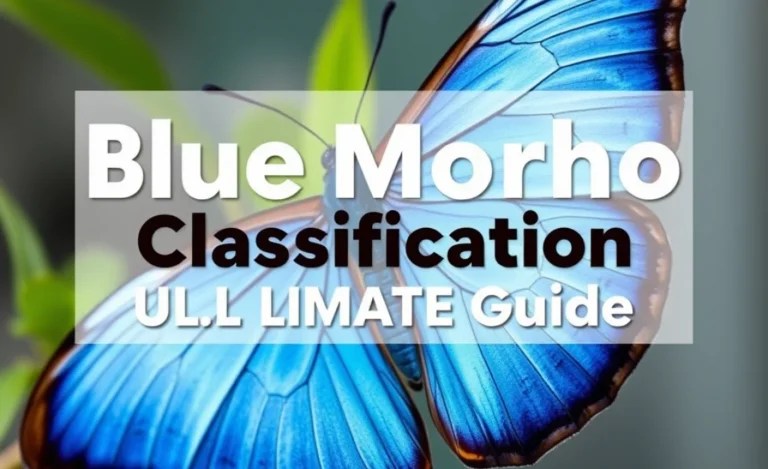
Blue Morpho Ecology: The Secret to Their Survival

Have you ever seen a butterfly so blue it looks like the sky? That might be a Blue Morpho! These amazing butterflies live in rainforests. They are known for their bright blue wings. But what do they eat? Where do they live? Let’s explore the fascinating {Blue Morpho ecology}.
The Blue Morpho is more than just a pretty face. It plays an important role in its home. Understanding how it lives helps us protect it. Are you ready to learn about this beautiful butterfly? Let’s dive into the world of the Blue Morpho!
We will discover what makes the Blue Morpho special. We’ll learn about its life cycle. We will also see how it interacts with other plants and animals. This is the story of the Blue Morpho and its place in nature. Get ready for a colorful journey!
Key Takeaways
- The Blue Morpho’s bright blue wings help it avoid predators in the rainforest.
- Caterpillars eat many types of leaves, while adults drink sap and fruit juice.
- {Blue Morpho ecology} involves interactions with rainforest plants and animals.
- They live in Central and South American rainforests, from Mexico to the Amazon.
- Protecting rainforests is important for the Blue Morpho and many other species.
Understanding Blue Morpho Butterfly Ecology

The Blue Morpho butterfly is a true wonder of the rainforest. Its bright blue wings shimmer in the sunlight. But its beauty is only part of the story. Blue Morpho ecology is complex and fascinating. It involves how they live, what they eat, and how they interact with their environment. These butterflies are found in the rainforests of Central and South America. They depend on the rainforest for their survival. They also play a role in the rainforest’s health. They are an important part of the food chain. Their caterpillars eat leaves, and the butterflies help pollinate flowers. Understanding their ecology helps us protect them and their habitat. It shows us how everything in nature is connected. Protecting rainforests is key to protecting these amazing butterflies. The Blue Morpho is a symbol of the rainforest’s beauty and importance.
- Blue Morphos live in rainforests from Mexico to the Amazon.
- Their bright blue wings help them startle predators.
- Caterpillars eat many types of leaves.
- Adults drink sap, fruit juice, and nectar.
- They are an important part of the rainforest food chain.
The Blue Morpho butterfly’s life cycle is amazing. It starts as a tiny egg laid on a leaf. The egg hatches into a caterpillar, which eats and grows. The caterpillar then turns into a pupa, or chrysalis. Inside the pupa, the butterfly transforms. Finally, the beautiful Blue Morpho emerges. This process takes several weeks. The butterfly then flies off to find food and reproduce. The Blue Morpho’s life cycle is a reminder of nature’s incredible transformations. It shows us how even the smallest creatures can go through amazing changes. Understanding this cycle is key to understanding the butterfly’s role in the Blue Morpho ecology. It highlights the importance of each stage for its survival and the rainforest’s health.
Fun Fact or Stat: The Blue Morpho’s wings appear iridescent because of microscopic scales that reflect light!
What Do Blue Morpho Caterpillars Eat?
Have you ever wondered what baby Blue Morphos eat? These caterpillars have a big appetite! They munch on many different types of leaves. They especially love plants in the pea family. These leaves give them the energy they need to grow. Caterpillars eat a lot because they need to get bigger quickly. They also store energy for when they become butterflies. Some of their favorite plants are poisonous to other animals. But Blue Morpho caterpillars can eat them without getting sick. This is because they have special bodies that can handle the toxins. Eating these plants also makes the caterpillars taste bad to predators. This helps protect them from being eaten. So, the next time you see a Blue Morpho, remember its caterpillar started out as a leaf-eating machine!
What Do Adult Blue Morphos Eat?
Adult Blue Morphos have a different diet than their caterpillars. Instead of leaves, they drink liquids. They use their long tongues to sip sap from trees. They also eat juice from rotting fruit. Sometimes, they even drink nectar from flowers. These liquids give them the sugar they need for energy. They need energy to fly and find mates. Adult Blue Morphos do not eat solid food. They can only drink liquids. This is because their mouthparts are like straws. They cannot chew or bite. They use their feet to taste the liquids before they drink them. This helps them find the best food sources. So, next time you see a Blue Morpho, watch it sipping its sweet treat!
How Does Diet Affect Blue Morpho Health?
What we eat affects how healthy we are. The same is true for Blue Morphos. A good diet helps them grow strong and healthy. Caterpillars need to eat lots of leaves to grow big. The right leaves give them the nutrients they need. Adult butterflies need sugary liquids for energy. They use this energy to fly and reproduce. If they don’t get enough food, they can get weak. They might not be able to fly well or lay eggs. A healthy diet is also important for their bright colors. The nutrients from their food help make their wings shine. So, a good diet is essential for the Blue Morpho’s health and survival. It helps them thrive in their rainforest home. This is a key part of Blue Morpho ecology.
Blue Morpho Habitat and Distribution

The Blue Morpho butterfly calls the rainforests of Central and South America home. You can find them from Mexico down to the Amazon rainforest. They love the warm, humid climate of these areas. They need the rainforest’s tall trees and lush plants to survive. These butterflies live in the understory of the rainforest. This is the area between the forest floor and the top of the trees. Here, they find food, shelter, and mates. The rainforest provides everything they need to live. Different species of Blue Morphos live in different parts of the rainforest. Some prefer the higher elevations of the mountains. Others like the lower, wetter areas. But all Blue Morphos need a healthy rainforest to survive. Deforestation and habitat loss are major threats to their survival. Protecting the rainforest is key to protecting these beautiful butterflies. This is important for maintaining the Blue Morpho ecology.
- They live in rainforests from Mexico to the Amazon.
- They prefer warm, humid climates.
- They live in the understory of the rainforest.
- Different species live in different areas.
- Deforestation is a major threat to their habitat.
- Protecting the rainforest is key to their survival.
The Blue Morpho’s habitat is under threat. Deforestation is destroying the rainforest. This is happening because people are cutting down trees for wood. They are also clearing land for farming and mining. This destroys the Blue Morpho’s home. It also makes it harder for them to find food and mates. Climate change is also a threat. Changes in temperature and rainfall can affect the rainforest. This can make it harder for the Blue Morpho to survive. Protecting the rainforest is essential for the Blue Morpho’s survival. We need to find ways to stop deforestation and fight climate change. By protecting the rainforest, we can help the Blue Morpho and many other species thrive. This will ensure the future of Blue Morpho ecology.
Fun Fact or Stat: Blue Morphos are rarely seen on the rainforest floor; they prefer the canopy!
What Types of Rainforests Do They Inhabit?
Blue Morphos live in many types of rainforests. They can be found in tropical rainforests. These forests are hot and wet all year round. They also live in cloud forests. These forests are high in the mountains. They are often covered in mist and clouds. The type of rainforest depends on the location and climate. Some Blue Morphos prefer the dense, humid forests near the equator. Others like the cooler, wetter forests further away from the equator. No matter the type, all rainforests provide the same things. They offer food, shelter, and mates for the Blue Morpho. Understanding the different types of rainforests helps us protect them. It also helps us understand the needs of the Blue Morpho. This is a key part of understanding Blue Morpho ecology.
How Does Altitude Affect Blue Morpho Distribution?
Did you know that altitude affects where Blue Morphos live? Some species prefer lower altitudes. These areas are warmer and wetter. Other species live higher up in the mountains. These areas are cooler and cloudier. The altitude affects the plants that grow there. This, in turn, affects the food available for the Blue Morphos. Species that live higher up may have different diets. They might also have different behaviors. The altitude also affects the predators that live there. This can affect how the Blue Morphos avoid being eaten. Understanding how altitude affects Blue Morpho distribution is important. It helps us understand how they adapt to different environments. It also helps us protect them in different areas. This is important for maintaining the Blue Morpho ecology across its range.
What Role Do Specific Plants Play in Their Habitat?
Plants play a very important role in the Blue Morpho’s habitat. Caterpillars eat the leaves of certain plants. These plants provide the food they need to grow. Adult butterflies drink sap from trees and nectar from flowers. These provide the sugar they need for energy. Some plants also provide shelter for the Blue Morphos. They can hide among the leaves to avoid predators. Specific plants are also important for laying eggs. Female Blue Morphos lay their eggs on certain types of leaves. These leaves will then become the food for the caterpillars. Without these plants, the Blue Morpho could not survive. Protecting these plants is essential for protecting the Blue Morpho. This is a key part of protecting their Blue Morpho ecology and habitat. We must ensure these vital plant species continue to thrive.
Reproduction and Life Cycle of the Blue Morpho

The Blue Morpho’s life cycle is a fascinating journey. It starts with the female laying eggs. She lays them on the leaves of specific plants. These plants will be food for the caterpillars. The eggs are small and green. They hatch into caterpillars after a few days. The caterpillars eat and grow, shedding their skin several times. This is called molting. After several weeks, the caterpillar turns into a pupa. The pupa is also called a chrysalis. It is a hard, protective shell. Inside the pupa, the butterfly transforms. This process takes about two weeks. Finally, the butterfly emerges from the pupa. It unfolds its wings and flies away. The adult Blue Morpho then finds a mate and lays eggs. The cycle starts all over again. This process is a key part of Blue Morpho ecology.
- Females lay eggs on specific plants.
- Eggs hatch into caterpillars.
- Caterpillars eat and grow, molting several times.
- Caterpillars turn into pupae (chrysalises).
- Butterflies transform inside the pupae.
- Adults emerge and find mates.
The Blue Morpho’s reproduction depends on the rainforest. The right plants must be available for the caterpillars to eat. The climate must be warm and humid for the eggs to hatch. The rainforest also provides shelter from predators. If the rainforest is damaged, the Blue Morpho’s reproduction can be affected. Deforestation and climate change are major threats. They can disrupt the Blue Morpho’s life cycle. Protecting the rainforest is essential for the Blue Morpho’s survival. We need to find ways to stop deforestation and fight climate change. By protecting the rainforest, we can help the Blue Morpho thrive. This will ensure the continuation of the Blue Morpho ecology and life cycle.
Fun Fact or Stat: Blue Morpho caterpillars are cannibalistic, sometimes eating each other!
How Do Blue Morphos Find Mates?
Finding a mate is very important for Blue Morphos. They use their bright colors to attract each other. The males have very bright blue wings. They fly around in the rainforest, showing off their colors. The females are attracted to the brightest males. This helps them find the best mates. Blue Morphos also use pheromones to find each other. Pheromones are special chemicals that they release into the air. These chemicals have a scent that attracts other Blue Morphos. The males and females use these scents to find each other in the rainforest. Finding a mate is essential for reproduction. Without mates, they cannot lay eggs and continue the cycle. This is a key part of the Blue Morpho ecology and their survival.
What is the Role of Host Plants in Reproduction?
Host plants play a very important role in Blue Morpho reproduction. These are the plants that the female Blue Morphos lay their eggs on. The caterpillars will eat these plants when they hatch. The host plants provide the food that the caterpillars need to grow. Without the right host plants, the caterpillars cannot survive. Female Blue Morphos are very picky about where they lay their eggs. They only lay them on certain types of plants. These plants must be healthy and have plenty of leaves. The female Blue Morphos can sense which plants are best for their caterpillars. They use their antennae to smell the plants and taste the leaves. This ensures that their caterpillars have the best chance of survival. This is a crucial part of Blue Morpho ecology.
How Long Do Blue Morphos Live?
Blue Morphos have a relatively short lifespan. They only live for about a month as adults. During this time, they need to find a mate and lay eggs. They also need to avoid predators and find food. Caterpillars live for a few weeks as they grow. The pupa stage lasts for about two weeks. The entire life cycle, from egg to adult, takes about two to three months. Their short lifespan makes it even more important to protect them. They need to be able to reproduce quickly to keep their population healthy. Protecting the rainforest is essential for their survival. It allows them to complete their life cycle and thrive. The short lifespan highlights the importance of maintaining a healthy Blue Morpho ecology.
Predators and Defense Mechanisms of Blue Morphos

Blue Morphos face many dangers in the rainforest. They have several predators that want to eat them. Birds, lizards, and monkeys are just a few. These animals hunt Blue Morphos for food. To survive, Blue Morphos have developed several defense mechanisms. Their bright blue wings help them startle predators. When they fly, the sudden flash of blue can scare the predator away. The underside of their wings is brown and camouflaged. When they land, they close their wings. This makes them blend in with the leaves and bark. Blue Morpho caterpillars also have defenses. They eat poisonous plants, which makes them taste bad to predators. They also have spiky hairs that can irritate the mouths of predators. These defenses help them survive in the dangerous rainforest. Understanding these mechanisms is vital for understanding Blue Morpho ecology.
- Birds, lizards, and monkeys are predators.
- Bright blue wings startle predators.
- Brown undersides provide camouflage.
- Caterpillars eat poisonous plants.
- Caterpillars have spiky hairs.
The Blue Morpho’s survival depends on its defenses. Without them, it would be easily eaten by predators. The bright blue wings are a key part of its defense. They help it avoid being caught in the first place. The camouflage on the underside of its wings helps it hide when it is resting. The caterpillars’ defenses help them survive their vulnerable stage. By eating poisonous plants, they make themselves unappetizing to predators. The spiky hairs also provide protection. These defenses have evolved over time. They help the Blue Morpho thrive in the rainforest. Protecting the rainforest is essential for maintaining these defenses. It ensures that the Blue Morpho can continue to survive. This is a crucial aspect of maintaining the Blue Morpho ecology.
Fun Fact or Stat: The bright blue color of the Morpho’s wings is created by the reflection of light, not pigment!
How Do Blue Morphos Avoid Predators?
Blue Morphos have many ways to avoid becoming a meal. One of their best tricks is their bright blue wings. When they fly, the blue flashes. This can startle predators and give the butterfly time to escape. When they land, they close their wings. The undersides are brown and blend in with the trees. This makes them hard to see. They also fly in a jerky, unpredictable way. This makes it hard for predators to catch them. They also spend a lot of time high in the trees. This keeps them away from ground-based predators. By using these strategies, they increase their chances of survival. These strategies are a key part of Blue Morpho ecology.
What Predators Target Blue Morpho Caterpillars?
Blue Morpho caterpillars are a tasty treat for many predators. Birds are a major threat. They swoop down and grab the caterpillars off the leaves. Lizards also eat caterpillars. They crawl along the branches and snatch them up. Monkeys sometimes eat caterpillars too. They pick them off the plants and eat them. Parasitic wasps also target caterpillars. They lay their eggs inside the caterpillars. The wasp larvae then eat the caterpillar from the inside out. These predators make life difficult for Blue Morpho caterpillars. This highlights the challenges faced by the species within the Blue Morpho ecology.
How Effective Are Their Defense Mechanisms?
The Blue Morpho’s defense mechanisms are quite effective. Their bright blue wings startle many predators. This gives them a chance to escape. Their camouflage helps them hide when they are resting. The caterpillars’ poisonous diet makes them unappetizing to some predators. Their spiky hairs also deter predators. However, these defenses are not foolproof. Some predators are not fooled by the bright colors. Others can tolerate the poison in the caterpillars. The effectiveness of the defenses depends on the predator. It also depends on the situation. But overall, these defenses help Blue Morphos survive in the rainforest. These defenses are a key part of what makes up the Blue Morpho ecology.
Conservation Status and Threats to Blue Morphos

The Blue Morpho butterfly is not currently endangered. However, it faces several threats to its survival. The biggest threat is habitat loss. Deforestation is destroying the rainforest. This is where the Blue Morpho lives. As the rainforest disappears, so does the Blue Morpho’s home. Climate change is another threat. Changes in temperature and rainfall can affect the rainforest. This can make it harder for the Blue Morpho to survive. Pollution can also harm Blue Morphos. Pesticides and other chemicals can poison them. Collecting Blue Morphos for display is also a threat. Although it is not as big a threat as habitat loss, it can still impact populations. Protecting the rainforest is essential for the Blue Morpho’s survival. We need to find ways to stop deforestation and fight climate change. This will ensure a safe future for this species and for the Blue Morpho ecology.
| Threat | Description | Impact on Blue Morphos | Possible Solutions |
|---|---|---|---|
| Deforestation | Cutting down rainforest trees | Loss of habitat and food sources | Sustainable forestry, reforestation |
| Climate Change | Changes in temperature and rainfall | Disruption of life cycle, habitat changes | Reduce emissions, protect rainforest |
| Pollution | Pesticides and other chemicals | Poisoning and death | Reduce pesticide use, clean up pollution |
| Collecting | Collecting butterflies for display | Reduced populations | Regulations and enforcement, education |
- Habitat loss is the biggest threat.
- Deforestation is destroying the rainforest.
- Climate change is another threat.
- Pollution can harm Blue Morphos.
- Collecting is also a threat.
- Protecting the rainforest is essential.
Conserving the Blue Morpho requires action on many fronts. We need to protect the rainforest from deforestation. This means finding ways to use the rainforest sustainably. We also need to fight climate change. This means reducing our carbon emissions. We can also help by reducing pollution. This means using fewer pesticides and chemicals. We can also support organizations that are working to protect the rainforest. By working together, we can ensure the Blue Morpho’s survival. This will help maintain the delicate balance of the Blue Morpho ecology and ensure its future.
Fun Fact or Stat: Some Blue Morpho species are becoming rarer due to habitat destruction!
What Conservation Efforts Are in Place?
Many conservation efforts are underway to protect Blue Morphos. Some organizations are working to protect the rainforest. They are buying land and creating protected areas. Other organizations are working to reforest damaged areas. They are planting trees to restore the rainforest. Some organizations are also working to educate people about the importance of the rainforest. They are teaching people how to live sustainably. Some organizations are also working to stop the illegal collection of Blue Morphos. They are enforcing laws and regulations. These efforts are helping to protect the Blue Morpho and its habitat. These efforts are vital for the continued health of the Blue Morpho ecology.
How Can We Help Protect Blue Morphos?
There are many things we can do to help protect Blue Morphos. We can support organizations that are working to protect the rainforest. We can also reduce our carbon footprint. This means using less energy and driving less. We can also buy sustainable products. This means buying products that are made in a way that does not harm the environment. We can also educate others about the importance of the rainforest. We can tell our friends and family about the Blue Morpho and its habitat. By taking these actions, we can help ensure the Blue Morpho’s survival. This collective effort will help preserve the intricate Blue Morpho ecology.
What is the Future Outlook for Blue Morphos?
The future outlook for Blue Morphos depends on our actions. If we continue to destroy the rainforest, their future is bleak. But if we take action to protect the rainforest, their future is brighter. We need to stop deforestation and fight climate change. We also need to reduce pollution and stop the illegal collection of Blue Morphos. If we can do these things, the Blue Morpho can thrive. Their bright blue wings will continue to shimmer in the rainforest. This will ensure the continuation of the Blue Morpho ecology for generations to come. The future is in our hands, and it’s up to us to protect these beautiful creatures.
The Role of Blue Morphos in the Rainforest Ecosystem
Blue Morphos play an important role in the rainforest ecosystem. As caterpillars, they eat leaves. This helps to control the growth of plants. As butterflies, they pollinate flowers. This helps plants to reproduce. They also serve as food for other animals. Birds, lizards, and monkeys eat Blue Morphos. This helps to keep the food chain balanced. Their presence indicates a healthy ecosystem. A healthy population of Blue Morphos means the rainforest is thriving. They are a symbol of the rainforest’s biodiversity. Protecting them helps to protect the entire ecosystem. They are an integral part of the Blue Morpho ecology.
- Caterpillars eat leaves, controlling plant growth.
- Butterflies pollinate flowers, helping plants reproduce.
- They serve as food for other animals.
- Their presence indicates a healthy ecosystem.
- They are a symbol of the rainforest’s biodiversity.
The Blue Morpho’s role in the rainforest is interconnected with other species. They depend on plants for food and shelter. They are also a food source for other animals. If the Blue Morpho disappears, it could have a ripple effect on the ecosystem. The plants they eat could grow out of control. The animals that eat them could lose a food source. This could disrupt the balance of the rainforest. Protecting the Blue Morpho helps to protect the entire ecosystem. It ensures that all the species can thrive. This is a vital aspect of preserving the Blue Morpho ecology and the health of the rainforest.
Fun Fact or Stat: Blue Morphos contribute to pollination, though they are not as efficient as bees!
How Do Blue Morphos Contribute to Pollination?
Blue Morphos contribute to pollination, though not as much as bees. When they drink nectar from flowers, they pick up pollen. They then carry the pollen to other flowers. This helps the plants to reproduce. However, Blue Morphos are not very efficient pollinators. They do not have special structures for carrying pollen. They also do not visit flowers as often as bees. But they still play a role in pollination. Their large size and bright colors attract them to flowers. This helps them to spread pollen over a wide area. Their contribution to pollination is a small but important part of the Blue Morpho ecology.
What is the Impact of Blue Morpho Caterpillars on Plant Life?
Blue Morpho caterpillars eat a lot of leaves. This can have a significant impact on plant life. They help to control the growth of plants. By eating leaves, they prevent plants from growing too quickly. This helps to keep the rainforest from becoming overgrown. However, if there are too many caterpillars, they can damage plants. They can eat all the leaves off a plant, which can kill it. The impact of Blue Morpho caterpillars on plant life depends on their population size. A healthy population of caterpillars helps to keep the rainforest balanced. These interactions are a key part of the Blue Morpho ecology.
How Does Their Presence Affect Other Rainforest Inhabitants?
The presence of Blue Morphos affects other rainforest inhabitants in several ways. They serve as a food source for birds, lizards, and monkeys. This helps to support these animal populations. They also help to pollinate flowers, which benefits plants. Their bright colors and graceful flight add beauty to the rainforest. This can attract tourists, which can help the local economy. Their presence indicates a healthy ecosystem. This can encourage people to protect the rainforest. Overall, their presence has a positive impact on other rainforest inhabitants. Their role is an integral part of the Blue Morpho ecology.
Summary
The Blue Morpho butterfly is a fascinating creature. It lives in the rainforests of Central and South America. It is known for its bright blue wings. The Blue Morpho’s life cycle is complex and interesting. It starts as an egg, then becomes a caterpillar, then a pupa, and finally a butterfly. These butterflies face many threats, including deforestation and climate change. It is important to protect their habitat. This will ensure their survival for future generations. We must remember the importance of plants for the caterpillars, and how adults need liquid nourishment. The Blue Morpho ecology is tightly linked to the health of the rainforest.
Understanding the Blue Morpho’s habitat, diet, and defenses is key. By protecting them, we are also protecting the rainforest. This helps many other species that live there. There are many efforts underway to protect the Blue Morpho. We can all do our part to help. By supporting conservation organizations and reducing our carbon footprint, we can make a difference. The Blue Morpho is a symbol of the rainforest’s beauty and importance. Its future depends on our actions. Let’s work together to ensure that it continues to thrive. Protecting Blue Morpho ecology will benefit us all.
Conclusion
The Blue Morpho is more than just a pretty butterfly. It plays a vital role in the rainforest ecosystem. Understanding its life cycle, habitat, and threats is essential. We need to protect the rainforest from deforestation and climate change. By doing so, we can ensure the Blue Morpho’s survival. We can support conservation efforts and educate others about the importance of these butterflies. The future of the Blue Morpho depends on our actions. It’s important to remember that the Blue Morpho ecology is interconnected with the entire rainforest, and protecting one helps protect the other. Let’s work together to preserve these amazing creatures and their home.
Frequently Asked Questions
Question No 1: Where do Blue Morpho butterflies live?
Answer: Blue Morpho butterflies live in the rainforests of Central and South America. You can find them from Mexico to the Amazon. They prefer warm, humid climates. They need the rainforest’s tall trees and lush plants to survive. These butterflies live in the understory of the rainforest. This is the area between the forest floor and the top of the trees. Here, they find food, shelter, and mates. The rainforest provides everything they need to live. Different species of Blue Morphos live in different parts of the rainforest, but all need a healthy environment to survive. The range of habitats displays the breadth of Blue Morpho ecology.
Question No 2: What do Blue Morpho caterpillars eat?
Answer: Blue Morpho caterpillars have a big appetite. They munch on many different types of leaves. They especially love plants in the pea family. These leaves give them the energy they need to grow. Caterpillars eat a lot because they need to get bigger quickly. They also store energy for when they become butterflies. Some of their favorite plants are poisonous to other animals, but Blue Morpho caterpillars can eat them without getting sick. This is because they have special bodies that can handle the toxins. Eating these plants also makes the caterpillars taste bad to predators. This helps protect them from being eaten.
Question No 3: How do Blue Morpho butterflies avoid predators?
Answer: Blue Morpho butterflies have several defense mechanisms. Their bright blue wings help them startle predators. When they fly, the sudden flash of blue can scare the predator away. The underside of their wings is brown and camouflaged. When they land, they close their wings. This makes them blend in with the leaves and bark. Blue Morpho caterpillars also have defenses. They eat poisonous plants, which makes them taste bad to predators. They also have spiky hairs that can irritate the mouths of predators. The combination of these adaptations are key to Blue Morpho ecology and survival.
Question No 4: Why are Blue Morpho butterflies important to the rainforest?
Answer: Blue Morpho butterflies play an important role in the rainforest ecosystem. As caterpillars, they eat leaves. This helps to control the growth of plants. As butterflies, they pollinate flowers. This helps plants to reproduce. They also serve as food for other animals. Birds, lizards, and monkeys eat Blue Morphos. This helps to keep the food chain balanced. Their presence indicates a healthy ecosystem. A healthy population of Blue Morphos means the rainforest is thriving. They are a symbol of the rainforest’s biodiversity. Protecting them helps to protect the entire ecosystem. Understanding Blue Morpho ecology helps scientists gauge the overall health of the rainforest.
Question No 5: What are the biggest threats to Blue Morpho butterflies?
Answer: The biggest threat to Blue Morpho butterflies is habitat loss. Deforestation is destroying the rainforest. This is where the Blue Morpho lives. As the rainforest disappears, so does the Blue Morpho’s home. Climate change is another threat. Changes in temperature and rainfall can affect the rainforest. This can make it harder for the Blue Morpho to survive. Pollution can also harm Blue Morphos. Pesticides and other chemicals can poison them. Collecting Blue Morphos for display is also a threat. Protecting the rainforest is essential for the Blue Morpho’s survival.
Question No 6: How can I help protect Blue Morpho butterflies?
Answer: There are many things you can do to help protect Blue Morpho butterflies. You can support organizations that are working to protect the rainforest. You can also reduce your carbon footprint. This means using less energy and driving less. You can also buy sustainable products. This means buying products that are made in a way that does not harm the environment. You can also educate others about the importance of the rainforest. You can tell your friends and family about the Blue Morpho and its habitat. By taking these actions, you can help ensure the Blue Morpho’s survival. All these actions can help to preserve the Blue Morpho ecology.