Blue Morpho Dorsal vs Ventral Wings: The Secret Reveal

Have you ever seen a butterfly shimmer in the sun? Some butterflies have a special trick. Their wings look different on each side. Today, we will look at a very cool butterfly. It is called the Blue Morpho. We will explore the {Blue Morpho dorsal vs ventral wings}. What makes them so special?
Key Takeaways
- The Blue Morpho’s vibrant blue color is only on the dorsal (top) side of its wings.
- The ventral (under) side features brown colors with many different eyespots.
- These eyespots help the Blue Morpho scare away predators in the rainforest.
- Understanding {Blue Morpho dorsal vs ventral wings} helps us learn about adaptation.
- Both sides of the Blue Morpho’s wings are important for its survival in nature.
Dorsal vs. Ventral: Morpho Wing Sides
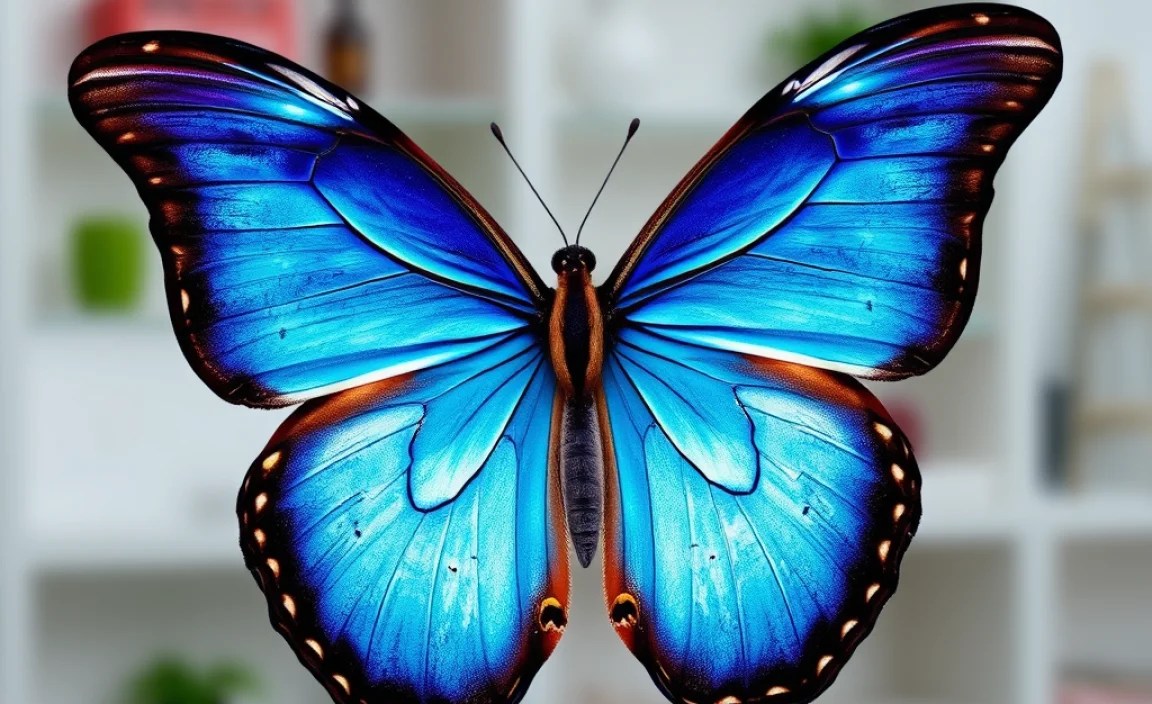
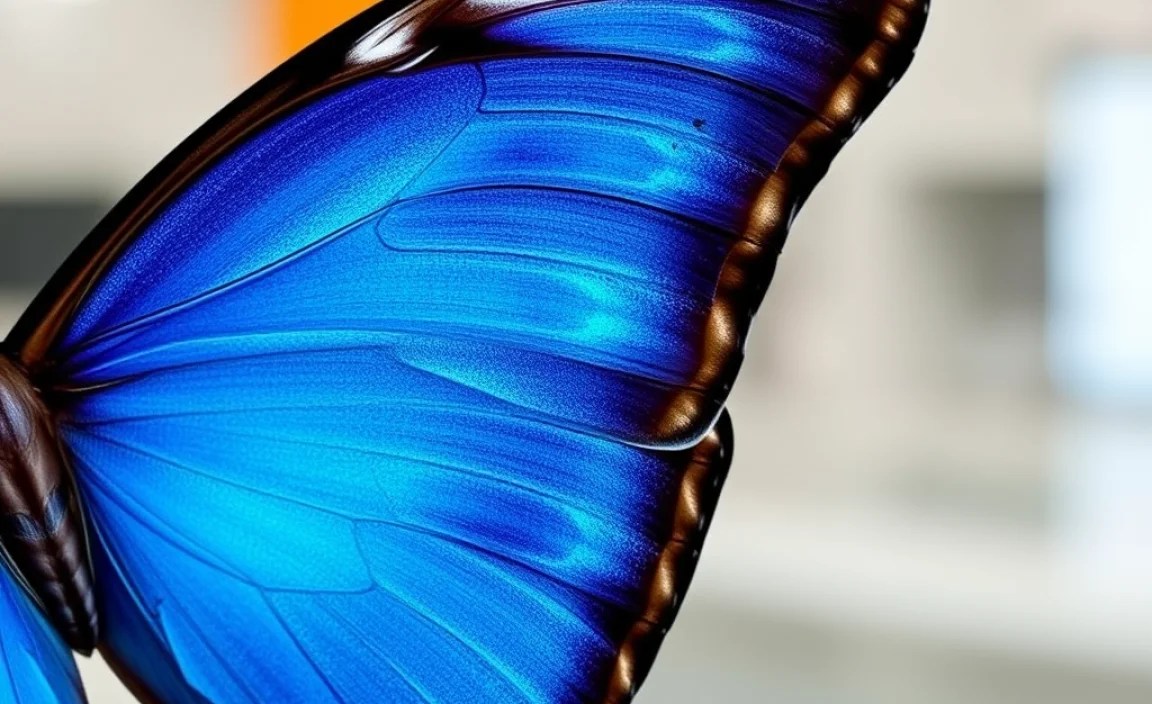
Butterflies are beautiful insects. They fly around our gardens. Did you know their wings have two different sides? The top side is called the dorsal side. The bottom side is the ventral side. The {Blue Morpho dorsal vs ventral wings} are very different. The dorsal side is bright blue. It shimmers in the sunlight. The ventral side is brown. It has little spots that look like eyes. These different sides help the Blue Morpho. They stay safe and sound in the rainforest. The bright blue helps them find each other. The eyespots trick predators. Nature is full of amazing designs!
- Dorsal means the top side of the wing.
- Ventral means the bottom side of the wing.
- The Blue Morpho has blue on the dorsal side.
- The ventral side has brown and eyespots.
- Both sides help it survive in the rainforest.
The Blue Morpho uses its wings in clever ways. The bright blue dorsal side helps it signal other Morphos. Imagine trying to find your friends in a big forest. A flash of bright blue would be easy to see! The brown ventral side with eyespots is like a disguise. When the butterfly is resting, it closes its wings. This hides the blue and shows the brown. Predators might think it is just a dead leaf. Or, they might be scared by the eyespots. This makes them think twice about attacking. The {Blue Morpho dorsal vs ventral wings} are a perfect example of how animals adapt to their environment.
Fun Fact or Stat: The Blue Morpho’s wings get their color from tiny structures, not pigment!
Why Is the Dorsal Side Blue?
Have you ever wondered why the Blue Morpho is blue? It is not because of blue color. The color comes from tiny structures. These structures are on the scales of the wings. They bend light in a special way. This bending of light makes us see blue. It is like a trick of the light. This is called iridescence. The blue color is very bright. It can be seen from far away. It helps Morphos find each other in the dense rainforest. The blue color is only on the dorsal side. The ventral side is brown. This difference is important for survival.
What Purpose Do the Ventral Eyespots Serve?
Imagine you are a small bird looking for a snack. You see something that looks like big eyes staring back at you. Would you be scared? That is what the Blue Morpho hopes! The eyespots on the ventral side of its wings look like the eyes of a larger animal. These spots can scare away predators. They might think the butterfly is bigger or more dangerous than it is. This gives the Morpho a chance to escape. The eyespots are a clever way to stay safe in the rainforest. The {Blue Morpho dorsal vs ventral wings} work together.
How Does the Blue Morpho Use Both Sides?
The Blue Morpho is a master of disguise. It uses both sides of its wings to stay safe. When it flies, the bright blue dorsal side flashes. This attracts attention. But when it lands, it closes its wings. This hides the blue and shows the brown ventral side. Now it looks like a dead leaf. Predators have a hard time finding it. The butterfly also uses the eyespots to scare away enemies. It is like a superhero with two different costumes. Each costume helps it in a different way. The {Blue Morpho dorsal vs ventral wings} are a great example of adaptation.
Fun Fact or Stat: A Blue Morpho can live for about 115 days!
Morpho Wing Coloration: Dorsal Side
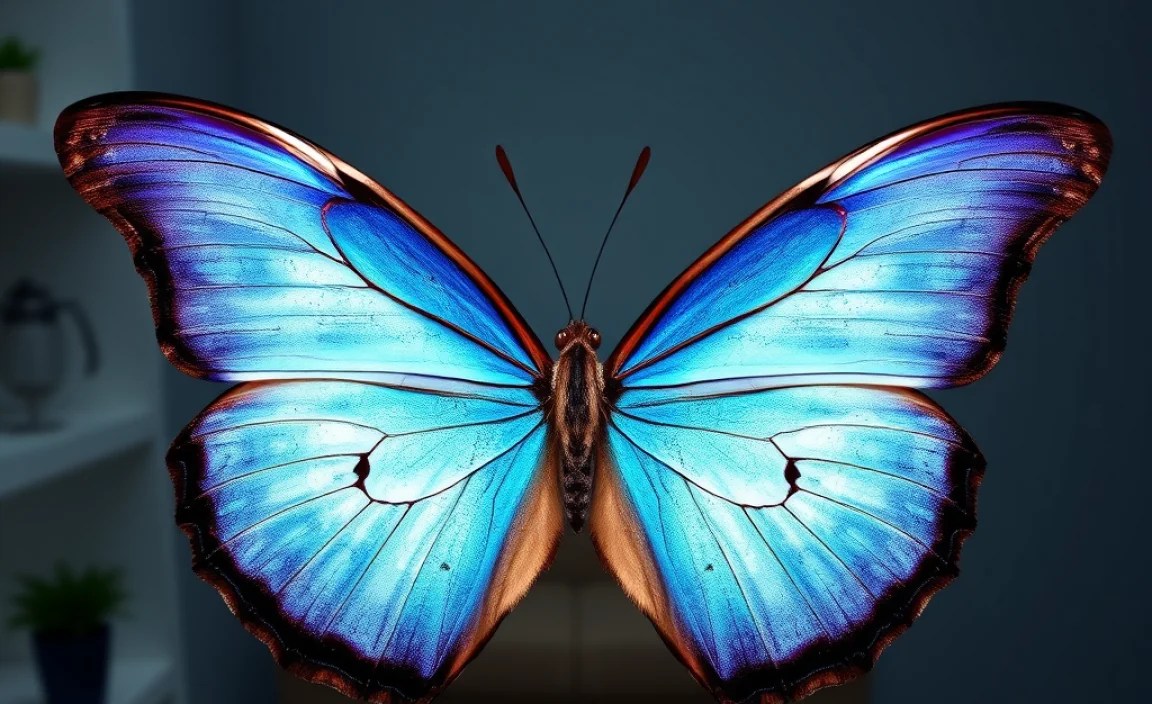
The dorsal side of the Blue Morpho’s wings is famous. It has a brilliant blue color. This color is not from pigments. Instead, it comes from the structure of the wing scales. These scales are tiny. They reflect light in a specific way. This creates the bright blue that we see. The blue color is iridescent. This means it changes slightly depending on the angle of the light. The {Blue Morpho dorsal vs ventral wings} show a big contrast. The dorsal side is for attracting attention. The ventral side is for hiding.
- The dorsal side is bright blue.
- The color comes from light reflection.
- It is not from pigments.
- The blue color is iridescent.
- It helps Morphos find each other.
- The dorsal side attracts attention.
The bright blue dorsal side helps the Blue Morpho in several ways. It helps them find mates. The males use their bright color to attract females. It also helps them signal to each other. This is important in the dense rainforest where it can be hard to see. The bright color can also startle predators. A sudden flash of blue can confuse them. This gives the butterfly a chance to escape. The dorsal side is like a flag. It says, “Here I am!” But the ventral side is its secret weapon. It keeps the butterfly safe when it needs to hide. The {Blue Morpho dorsal vs ventral wings} are a perfect team.
Fun Fact or Stat: Male Blue Morphos are usually brighter blue than females!
Why Is Iridescence Important?
Have you ever seen a soap bubble shimmer with different colors? That is iridescence! It is the same thing that makes the Blue Morpho’s wings so special. Iridescence means the color changes depending on how you look at it. This makes the butterfly even more noticeable. It is like a flashing light in the rainforest. This helps other Morphos see it. It also makes it harder for predators to focus on it. The changing colors can confuse them. Iridescence is a clever trick of nature.
How Does Light Create the Blue Color?
Imagine tiny mirrors on the Blue Morpho’s wings. These mirrors are the scales. They are shaped in a special way. When light hits these scales, it bounces around. Some of the light is canceled out. But the blue light is reflected back to our eyes. That is why we see blue. It is like a magic trick with light. The scales are so small that we cannot see them. But they do a big job. They create the beautiful blue color that makes the Blue Morpho famous.
Is the Blue Morpho the Only Iridescent Butterfly?
The Blue Morpho is famous for its iridescence. But it is not the only butterfly with this trick. Many other butterflies also have iridescent wings. Some have green, purple, or even rainbow colors. These colors help them attract mates. They also help them hide from predators. Iridescence is a common adaptation in the butterfly world. It shows how creative nature can be. The {Blue Morpho dorsal vs ventral wings} are just one example of this amazing phenomenon.
Fun Fact or Stat: The Blue Morpho’s iridescent scales are only about 1/1000th of a millimeter thick!
Ventral Wing Patterns: Camouflage
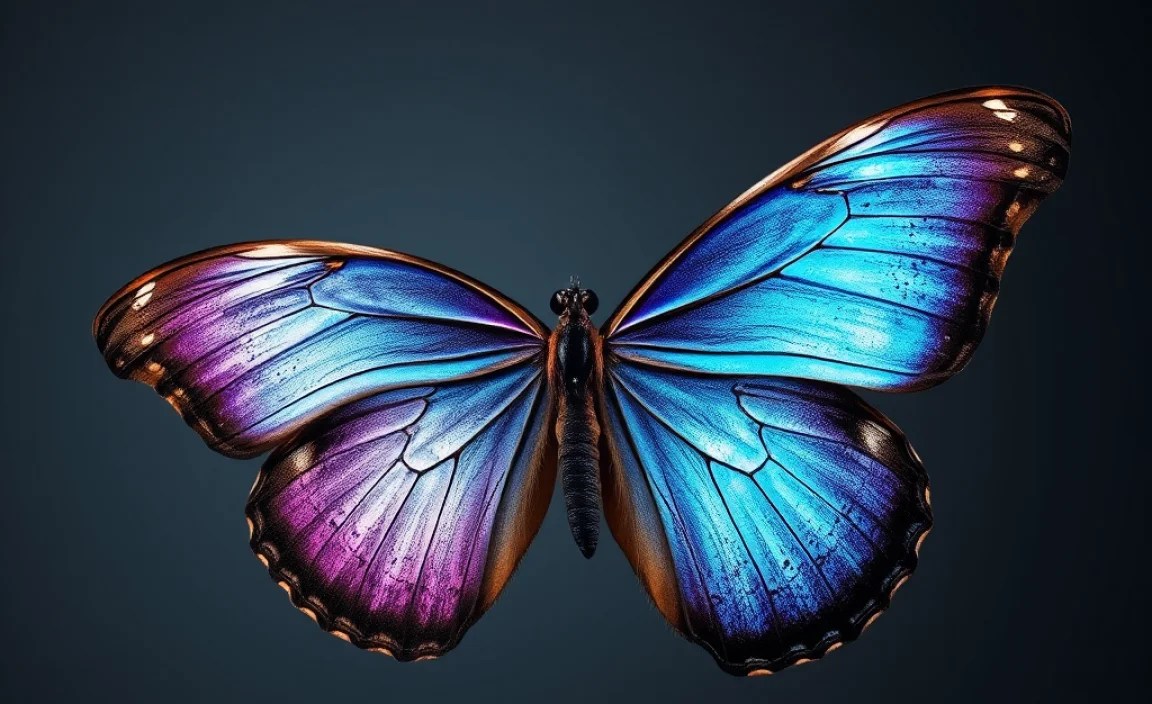
The ventral side of the Blue Morpho’s wings is different. It is not bright blue. Instead, it is brown with eyespots. These eyespots are like fake eyes. They help the butterfly hide from predators. The brown color blends in with the leaves. This is called camouflage. When the butterfly closes its wings, it looks like a dead leaf. Predators might not even see it. The eyespots can also scare predators. They might think the butterfly is a bigger animal. The {Blue Morpho dorsal vs ventral wings} are a great example of how animals use color to survive.
- The ventral side is brown with eyespots.
- It helps the butterfly hide.
- The brown color is camouflage.
- It blends in with leaves.
- Eyespots can scare predators.
- The ventral side is for hiding.
Camouflage is very important for the Blue Morpho. It spends a lot of time resting with its wings closed. This hides the bright blue dorsal side. It shows only the brown ventral side. This makes it very hard for predators to find. The eyespots add another layer of protection. They can startle predators and give the butterfly a chance to escape. The {Blue Morpho dorsal vs ventral wings} work together to keep the butterfly safe. The bright blue attracts attention. The brown camouflage helps it hide. It is a clever combination.
Fun Fact or Stat: The Blue Morpho’s camouflage is so good, it can even fool humans!
How Do Eyespots Help with Camouflage?
Eyespots are a clever trick. They make the butterfly look like a bigger animal. This can scare away predators. Imagine you are a bird looking for a meal. You see something that looks like big eyes staring at you. You might think twice about attacking. The eyespots can also distract predators. They might attack the eyespots instead of the butterfly’s body. This gives the butterfly a chance to escape. Eyespots are a great example of how animals use patterns to survive.
Why Is Brown a Good Camouflage Color?
Brown is a great camouflage color in the rainforest. The forest floor is covered in dead leaves. These leaves are brown. The Blue Morpho’s brown ventral side blends in perfectly with these leaves. This makes it very hard for predators to see. Brown is also a common color on tree bark. This helps the butterfly hide on trees. Camouflage is all about blending in with your surroundings. Brown is a perfect color for the rainforest.
Do All Butterflies Have Camouflage?
Many butterflies use camouflage. But not all of them. Some butterflies are brightly colored. They use these colors to warn predators that they are poisonous. Other butterflies mimic the colors of poisonous butterflies. This is called mimicry. It helps them avoid being eaten. Camouflage is just one way that butterflies survive. Some use bright colors to warn. The {Blue Morpho dorsal vs ventral wings} are just one strategy in the butterfly world.
Fun Fact or Stat: Some butterflies can even change their camouflage to match different environments!
Eyespots and Predator Defense
The eyespots on the ventral side are important. They help the Blue Morpho defend itself. Predators often get scared by the eyespots. The spots look like big eyes. This can trick the predator into thinking it’s facing a larger animal. This gives the Morpho time to fly away. The eyespots may also distract predators. Instead of attacking the body, they attack the wings. Damaged wings are better than being eaten. The {Blue Morpho dorsal vs ventral wings} have a great defense system.
- Eyespots scare predators.
- They look like big eyes.
- Predators think it is a bigger animal.
- This gives the Morpho time to escape.
- Eyespots can distract predators.
- They attack the wings instead of the body.
The size and number of eyespots can vary. Some Blue Morphos have bigger eyespots. Others have more eyespots. This can depend on where they live. It can also depend on what predators are common in their area. The eyespots are an adaptation. This means they have changed over time. They help the butterfly survive better. The {Blue Morpho dorsal vs ventral wings} are an example of natural selection. Butterflies with better eyespots are more likely to survive. They pass on their genes to the next generation.
Fun Fact or Stat: Some eyespots even have a shiny spot that looks like reflected light, making them even more realistic!
How Do Predators React to Eyespots?
Imagine you are a bird looking for food. You spot a butterfly. But then you see two big eyes staring back at you. You might get scared. You might think it is a bigger animal. You might fly away. That is how eyespots work. They play on the predator’s fear. They make the butterfly seem more dangerous. This gives the butterfly a chance to escape. It is a clever trick that has evolved over time.
Are Eyespots Only for Defense?
Eyespots are mainly for defense. But they can also have other uses. Some butterflies use eyespots to attract mates. The eyespots can be part of a mating display. The male shows off his eyespots to the female. This can help him win her over. Eyespots can also help with camouflage. They can break up the butterfly’s outline. This makes it harder for predators to see. Eyespots are multi-purpose tools.
Do All Butterflies Have Eyespots?
Many butterflies have eyespots. But not all of them. Some butterflies use other defenses. They might be poisonous. They might have camouflage. They might be very fast fliers. Eyespots are just one of many ways to survive. Each butterfly has its own strategy. The {Blue Morpho dorsal vs ventral wings} are just one example of how butterflies adapt. It depends on their environment.
Fun Fact or Stat: Some caterpillars also have eyespots to scare away predators!
Blue Morpho Lifespan and Habitat

The Blue Morpho lives in the rainforests of Central and South America. They like warm, wet places. They fly around in the understory. This is the layer of plants below the tall trees. The Blue Morpho has a short lifespan. They only live for about 115 days. During this time, they eat sap, fruit, and nectar. The females lay eggs on plants. The caterpillars eat the leaves. Then they turn into butterflies. The {Blue Morpho dorsal vs ventral wings} are important for their survival.
- They live in rainforests.
- They like warm, wet places.
- They live in the understory.
- They eat sap, fruit, and nectar.
- They live for about 115 days.
- Females lay eggs on plants.
The Blue Morpho is an important part of the rainforest ecosystem. They help pollinate plants. This means they carry pollen from one flower to another. This helps the plants make seeds. The caterpillars are also a food source for other animals. The Blue Morpho is a beautiful and important creature. We need to protect their habitat. This will help them survive for many years to come. The {Blue Morpho dorsal vs ventral wings} are a symbol of the rainforest. The forest is a complex web of life.
Fun Fact or Stat: The Blue Morpho caterpillar is reddish-brown and has poisonous hairs!
What Is the Blue Morpho’s Diet?
Blue Morpho butterflies do not eat like we do. They do not have mouths for chewing. Instead, they have a long, straw-like tongue. This is called a proboscis. They use it to suck up liquids. They like to eat sap from trees. They also eat juice from rotting fruit. Sometimes they drink nectar from flowers. The caterpillars eat leaves. They need a lot of food to grow big. The {Blue Morpho dorsal vs ventral wings} depend on the food the butterfly eats.
How Do Rainforests Help the Morpho?
Rainforests are the perfect home for Blue Morphos. They are warm and wet. There are many plants for the caterpillars to eat. There are also many flowers and fruits for the butterflies. The rainforest provides everything they need to survive. The tall trees give them shade. The understory gives them a place to hide. Rainforests are full of life. They are home to many amazing creatures. We must protect these forests.
What Threats Does the Blue Morpho Face?
The Blue Morpho faces many threats. One of the biggest threats is habitat loss. People are cutting down rainforests. This destroys the Blue Morpho’s home. Another threat is pollution. Pesticides can kill the caterpillars. Climate change is also a threat. It can change the temperature and rainfall. This can make it harder for the Blue Morpho to survive. We need to protect the Blue Morpho from these threats. The {Blue Morpho dorsal vs ventral wings} could disappear if we don’t act.
Fun Fact or Stat: Some people collect Blue Morphos, which can also threaten their population!
Comparing Wing Traits: Table
| Feature | Dorsal Side | Ventral Side |
|---|---|---|
| Color | Bright Blue | Brown with Eyespots |
| Function | Attract mates, signal | Camouflage, defense |
| Visibility | Highly visible | Low visibility |
| Predator Interaction | Startles, attracts | Hides, deters |
| Light Reflection | Iridescent | Non-iridescent |
The table above shows the main differences. The dorsal side uses bright color. It attracts mates and helps the Morpho signal. The ventral side uses camouflage. It helps the Morpho hide from predators. The {Blue Morpho dorsal vs ventral wings} work together for survival. Each side plays a different role. Both are important for the Blue Morpho.
The bright blue is like a flag. It says, “Here I am!” The brown camouflage is like a secret disguise. It says, “I am not here!” The eyespots are like a warning. They say, “Beware!” The Blue Morpho uses all these tools to survive. It is a master of adaptation. The {Blue Morpho dorsal vs ventral wings} help it thrive in the rainforest. This is an example of natural selection. The butterfly has evolved to survive in its environment.
Fun Fact or Stat: The scales on a butterfly’s wings are modified hairs!
Why Is a Table Useful for Comparison?
A table is a great way to compare things. It puts information in a clear and organized way. You can easily see the differences and similarities. A table makes it easy to understand complex information. In this case, the table shows the differences between the dorsal and ventral sides. This helps us understand how the {Blue Morpho dorsal vs ventral wings} help it survive.
What Other Wing Traits Could We Compare?
We could compare the size of the wings. We could also compare the shape of the wings. We could even compare the types of scales on the wings. There are many different traits that we could compare. Each trait tells us something about the butterfly. The wings are complex structures. They are adapted for flight and survival. Studying them helps us understand nature.
How Does This Comparison Help Us Understand Adaptation?
This comparison shows how the Blue Morpho has adapted. The dorsal side is bright to attract mates. The ventral side is camouflaged to hide from predators. These are both adaptations. They help the butterfly survive in its environment. Adaptation is the process of changing over time. It helps animals survive better. The {Blue Morpho dorsal vs ventral wings} are a great example of adaptation.
Fun Fact or Stat: Butterflies taste with their feet!
Conservation Efforts for the Morpho
The Blue Morpho is a beautiful butterfly. But it is facing threats. Habitat loss is a big problem. People are cutting down rainforests. This destroys the butterfly’s home. Pollution is also a threat. Pesticides can kill the caterpillars. Climate change can change the butterfly’s environment. We need to protect the Blue Morpho. There are many things we can do. We can protect rainforests. We can reduce pollution. We can fight climate change. The {Blue Morpho dorsal vs ventral wings} depend on a healthy planet.
- Protect rainforests.
- Reduce pollution.
- Fight climate change.
- Support sustainable farming.
- Educate others about conservation.
- Donate to conservation organizations.
There are many organizations working to protect the Blue Morpho. They are working to protect rainforests. They are also working to reduce pollution. They are educating people about conservation. You can help by supporting these organizations. You can also help by making small changes in your own life. You can recycle. You can reduce your carbon footprint. Every little bit helps. The {Blue Morpho dorsal vs ventral wings} are a symbol of the rainforest. We must protect them.
Fun Fact or Stat: Some organizations are breeding Blue Morphos and releasing them into the wild!
How Can We Protect Rainforests?
We can protect rainforests in many ways. We can support sustainable farming. This means farming that does not harm the environment. We can buy products that are made from sustainable sources. We can also donate to organizations that protect rainforests. We can educate others about the importance of rainforests. Rainforests are important for the whole planet. They provide clean air and water.
What Is Sustainable Farming?
Sustainable farming is farming that does not harm the environment. It uses methods that protect the soil and water. It also protects wildlife. Sustainable farming is good for the planet. It is also good for farmers. It helps them make a living. Sustainable farming is important for the future. It helps us feed the world without destroying the environment.
How Can We Reduce Our Carbon Footprint?
Our carbon footprint is the amount of carbon dioxide we release into the atmosphere. Carbon dioxide is a greenhouse gas. It contributes to climate change. We can reduce our carbon footprint in many ways. We can drive less. We can use less energy. We can eat less meat. We can recycle. Every little bit helps. Reducing our carbon footprint is important for the planet. It helps us fight climate change. The {Blue Morpho dorsal vs ventral wings} will benefit from a healthier planet.
Fun Fact or Stat: Buying less stuff can also reduce your carbon footprint!
Summary
The Blue Morpho butterfly is a stunning insect. The {Blue Morpho dorsal vs ventral wings} show amazing adaptation. The top side, or dorsal side, is bright blue. This helps the butterfly attract mates and signal to others. The bottom side, or ventral side, is brown with eyespots. This helps the butterfly hide from predators. The eyespots can also scare predators away. The Blue Morpho lives in rainforests and faces threats like habitat loss and pollution. We can help protect this beautiful butterfly by protecting rainforests and reducing pollution.
Conclusion
The Blue Morpho butterfly is a marvel of nature. Its wings have two very different sides. The bright blue dorsal side attracts. The brown ventral side protects. The {Blue Morpho dorsal vs ventral wings} show us how animals adapt. We must protect this beautiful creature. We can help them survive. We can protect rainforests. We can fight climate change. Every action counts.
Frequently Asked Questions
Question No 1: What is the difference between dorsal and ventral?
Answer: Dorsal and ventral are terms used to describe the sides of an animal. The dorsal side is the top side. Think of a shark’s fin sticking up. That is its dorsal side. The ventral side is the bottom side. Think of your belly. That is your ventral side. The {Blue Morpho dorsal vs ventral wings} have very different colors and patterns. The dorsal side is blue. The ventral side is brown with eyespots. These differences help the butterfly survive.
Question No 2: Why is the Blue Morpho blue?
Answer: The Blue Morpho is blue because of tiny structures on its wings. These structures are like tiny mirrors. They reflect light in a special way. This makes us see blue. It is not because of blue pigment. The color is called iridescence. It changes depending on the angle of the light. The blue color helps the butterfly attract mates. It also helps them signal to each other. The {Blue Morpho dorsal vs ventral wings} show a big contrast in color.
Question No 3: What are eyespots for?
Answer: Eyespots are spots that look like eyes. They are on the ventral side of the Blue Morpho’s wings. They help the butterfly defend itself. Predators get scared by the eyespots. They think it is a bigger animal. This gives the Morpho time to fly away. The eyespots may also distract predators. Instead of attacking the body, they attack the wings. Damaged wings are better than being eaten. The {Blue Morpho dorsal vs ventral wings} have eyespots for defense.
Question No 4: Where do Blue Morphos live?
Answer: Blue Morphos live in the rainforests of Central and South America. They like warm, wet places. They fly around in the understory. This is the layer of plants below the tall trees. Rainforests provide everything they need to survive. The tall trees give them shade. The understory gives them a place to hide. Rainforests are full of life. They are home to many amazing creatures. We must protect these forests.
Question No 5: What do Blue Morphos eat?
Answer: Blue Morpho butterflies do not eat like we do. They have a long, straw-like tongue. This is called a proboscis. They use it to suck up liquids. They like to eat sap from trees. They also eat juice from rotting fruit. Sometimes they drink nectar from flowers. The caterpillars eat leaves. They need a lot of food to grow big. The {Blue Morpho dorsal vs ventral wings} depend on the food the butterfly eats as a caterpillar.
Question No 6: How can I help protect Blue Morphos?
Answer: You can help protect Blue Morphos in many ways. You can protect rainforests. You can reduce pollution. You can fight climate change. You can support sustainable farming. You can educate others about conservation. You can donate to conservation organizations. Every little bit helps. The {Blue Morpho dorsal vs ventral wings} are a symbol of the rainforest. We must protect them so future generations can marvel at their beauty and intricate design.