
Asian Butterfly Predator Defense: Powerful Secrets!

Have you ever wondered how butterflies stay safe? Many animals want to eat them. Butterflies need ways to protect themselves. This is especially true for Asian butterflies. They have some cool tricks. Let’s learn about Asian butterfly predator defense!
Butterflies are pretty but fragile. Imagine being so small and colorful. Birds and other bugs want to eat you! How do these delicate creatures survive? Read on to find out.
Some butterflies use camouflage. This means they blend in with their surroundings. Others use bright colors to warn predators. It’s all part of their defense. Understanding Asian butterfly predator defense helps us appreciate nature.
Key Takeaways
- Asian butterflies use clever camouflage to hide from hungry predators.
- Bright colors on some butterflies warn predators that they taste bad.
- Mimicry helps some butterflies look like poisonous species, which keeps them safe.
- Understanding Asian butterfly predator defense shows nature’s amazing strategies.
- Habitat loss threatens butterflies, so protecting their homes is very important.
Understanding Asian Butterfly Defenses

Asian butterflies face many dangers. Birds, lizards, and even other insects want to eat them. To survive, these butterflies have developed amazing defense strategies. These strategies help them avoid becoming a meal. Camouflage is a common tactic. Some butterflies have wings that look like leaves. This helps them blend in with trees and bushes. Others use bright colors as a warning. These colors tell predators, “I taste bad!” Mimicry is another cool trick. Some butterflies look like poisonous species. This fools predators into thinking they are dangerous. Each Asian butterfly predator defense is a result of evolution. It helps them survive in a tough world. Protecting their habitats is key to ensuring their survival.
- Camouflage helps butterflies hide.
- Bright colors warn predators.
- Mimicry makes them look dangerous.
- Defense strategies aid survival.
- Habitat protection is crucial.
Asian butterflies are not just pretty insects. They are survivors. Their defense mechanisms are fascinating. Think about a butterfly that looks exactly like a dead leaf. A bird might fly right past it! Or consider a butterfly with bright red wings. A lizard might remember eating one that tasted awful and avoid it. These strategies show how adaptable butterflies are. They have evolved to survive in a world full of danger. By learning about Asian butterfly predator defense, we can better appreciate the complexity of nature. We can also understand the importance of protecting these beautiful creatures and their habitats. Every butterfly plays a role in its ecosystem.
How Camouflage Helps Butterflies
Camouflage is like a superhero’s invisibility cloak. It helps butterflies hide in plain sight. Butterflies with camouflage blend in with their surroundings. Their wings might look like leaves, bark, or even bird droppings. Imagine a butterfly sitting on a tree branch. Its wings look just like the bark. A bird would have a hard time spotting it! This is how camouflage works. It’s a simple but effective way to avoid predators. Many Asian butterflies use camouflage to survive. They have evolved to match their specific environments. This makes it harder for predators to find them. Isn’t it amazing how nature creates such perfect disguises?
The Power of Warning Colors
Bright colors can be a warning sign in nature. Some Asian butterflies use bright colors to tell predators they are poisonous. These colors are like a big “Do Not Eat” sign. Predators learn to avoid butterflies with these colors. This is because they have had bad experiences eating them before. The bright colors are easy to see. This helps predators remember to stay away. It’s a clever way for butterflies to protect themselves. The colors often include red, orange, and yellow. These colors stand out against green leaves and brown branches. This makes the warning even more effective. These butterflies are not afraid to show off their colors. It’s their way of staying alive.
Mimicry: Copying Dangerous Species
Mimicry is like playing dress-up. Some butterflies pretend to be other species. They copy the look of poisonous butterflies. This fools predators into thinking they are dangerous too. Even if they are not poisonous, they get the same protection. Imagine a butterfly that looks exactly like a Monarch butterfly. Birds know that Monarchs taste bad. They will avoid the mimic butterfly too. This is a clever trick that helps butterflies survive. Mimicry is common among Asian butterflies. It’s an amazing example of evolution. Butterflies have adapted to look like other species. This gives them a better chance of avoiding predators. It’s like having a bodyguard without having to pay for it.
Fun Fact or Stat: Some Asian butterflies can perfectly mimic poisonous species, fooling predators 99% of the time!
Camouflage Strategies of Asian Butterflies

Camouflage is a key defense for many Asian butterflies. It allows them to blend seamlessly into their environment. This makes it difficult for predators to spot them. Different species use different camouflage techniques. Some have wings that resemble leaves, complete with veins and imperfections. Others mimic the color and texture of tree bark. Still others blend in with flowers or even bird droppings. The effectiveness of camouflage depends on the butterfly’s ability to match its surroundings. This is why butterflies are often found in specific habitats where their camouflage works best. Asian butterfly predator defense relies heavily on these natural disguises. It’s a constant game of hide-and-seek with predators. The butterflies that are best at hiding are the ones that survive.
- Leaf-like wings help them hide.
- Bark patterns offer great camouflage.
- Color matching is very important.
- Habitat dictates camouflage type.
- Camouflage is a survival tool.
Camouflage is not just about color. It’s also about shape and texture. A butterfly with jagged edges on its wings might look more like a leaf. A butterfly with a rough texture might blend in better with tree bark. Some butterflies even have markings that look like holes or damage. This makes them look even more like a natural part of their environment. These details are crucial for effective camouflage. They help the butterfly disappear into its surroundings. Asian butterflies have perfected the art of camouflage. They use it to avoid predators and stay alive. It’s a testament to the power of evolution. Nature has created some truly amazing disguises. This is Asian butterfly predator defense at its finest.
Leaf Mimicry in Butterflies
Imagine a butterfly that looks exactly like a leaf. This is leaf mimicry. It’s one of the most amazing camouflage strategies. Butterflies with leaf mimicry have wings that resemble leaves in every detail. They have the same shape, color, and even veins as real leaves. Some even have markings that look like insect bites or damage. When these butterflies land on a tree, they become almost invisible. Predators have a hard time spotting them. They blend in perfectly with the foliage. Leaf mimicry is common among Asian butterflies. It’s a highly effective way to avoid predators. These butterflies have evolved to look like a common part of their environment. This gives them a significant survival advantage.
Bark Camouflage for Survival
Bark camouflage is another clever way butterflies hide. Some Asian butterflies have wings that look like tree bark. Their wings are brown or gray with rough textures. They blend in perfectly with the bark of trees. When these butterflies land on a tree trunk, they disappear. Predators cannot tell them apart from the bark. This helps them avoid being eaten. Bark camouflage is especially useful in forests. Trees provide a lot of surface area for butterflies to hide on. Butterflies that use bark camouflage are masters of disguise. They have evolved to match their surroundings perfectly. This makes them very difficult to spot. It’s a great example of Asian butterfly predator defense.
Blending with Flowers and More
Butterflies don’t just blend with leaves and bark. They also blend with flowers. Some butterflies have wings that match the color of specific flowers. When they land on these flowers, they become almost invisible. This helps them avoid predators. It also helps them sneak up on nectar sources. Other butterflies blend with less obvious things. Some look like bird droppings. This is not pretty, but it is effective. Predators are not interested in eating bird droppings. These butterflies are safe because they look unappetizing. Blending in is a great way for Asian butterflies to survive. They use all sorts of camouflage to stay safe from predators.
Fun Fact or Stat: Some Asian butterflies change color slightly to better match the specific leaf they are resting on!
Warning Coloration: A Bold Defense
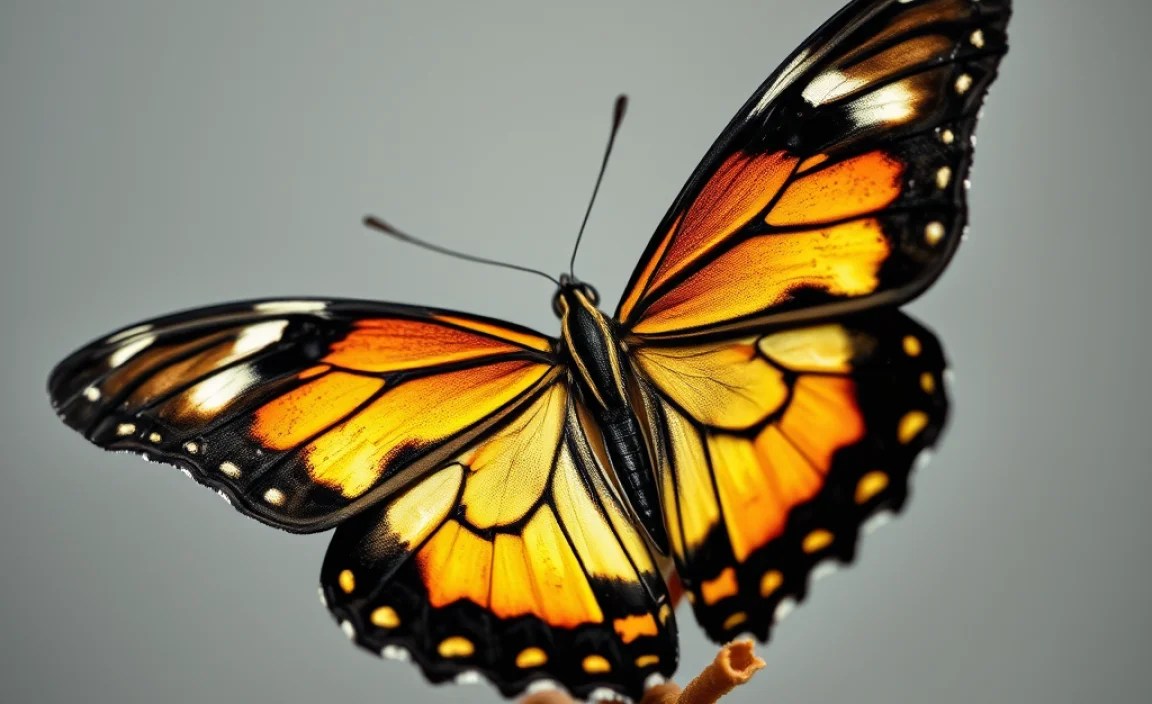
Warning coloration is a bold strategy. Some Asian butterflies use bright colors to warn predators. These colors tell predators that they are poisonous or taste bad. The bright colors are easy to see. This helps predators remember to avoid these butterflies. Common warning colors include red, orange, and yellow. These colors stand out against green leaves and brown branches. Butterflies with warning colors often have toxins in their bodies. These toxins come from the plants they eat as caterpillars. When a predator eats one of these butterflies, it gets sick. The predator learns to avoid butterflies with those colors in the future. Asian butterfly predator defense sometimes involves being bright and bold.
- Bright colors warn predators.
- Toxins make them taste bad.
- Predators learn to avoid them.
- Red, orange, and yellow are common.
- Caterpillars get toxins from plants.
Warning coloration is not just about looking pretty. It’s about survival. Butterflies that use warning coloration are advertising their bad taste. They are saying, “Eat me and you will regret it!” This strategy only works if predators learn to associate the colors with the bad taste. That’s why these butterflies are often brightly colored. The colors need to be easy to see and remember. Asian butterflies have perfected the art of warning coloration. They use it to protect themselves from predators. It’s a fascinating example of how animals can use color to their advantage. It shows how Asian butterfly predator defense can be both beautiful and effective.
The Role of Toxins in Warning Colors
Toxins play a key role in warning coloration. Butterflies with bright colors often have toxins in their bodies. These toxins make them taste bad or even poisonous. The toxins come from the plants they eat as caterpillars. Some caterpillars eat plants that contain toxic chemicals. They store these chemicals in their bodies. When they become butterflies, they still have the toxins. Predators that eat these butterflies get sick. They learn to avoid butterflies with those colors. This is how warning coloration works. The toxins are a crucial part of the defense strategy. Asian butterflies use toxins to protect themselves from predators. It’s a clever way to turn a meal into a warning.
Why Predators Avoid Bright Colors
Predators avoid bright colors because they associate them with danger. They have learned that brightly colored animals often taste bad or are poisonous. This learning process is called aposematism. Predators that have eaten a brightly colored butterfly and gotten sick will avoid similar butterflies in the future. The bright colors serve as a warning sign. They tell the predator, “Stay away!” This is why warning coloration is so effective. It relies on the predator’s ability to learn and remember. Asian butterflies benefit from this learning process. Their bright colors protect them from predators. Predators know to avoid the colors that signal danger.
Examples of Warning Coloration in Asia
There are many examples of warning coloration in Asian butterflies. One example is the Crimson Rose butterfly. It has bright red and black wings. These colors warn predators that it is poisonous. Another example is the Common Rose butterfly. It also has red and black wings. These colors signal its bad taste. The Birdwing butterflies are also brightly colored. They have large wings with bold patterns. These patterns warn predators of their toxicity. These are just a few examples of how Asian butterflies use warning coloration. They have evolved to be brightly colored and unappetizing. This helps them survive in a world full of predators.
Fun Fact or Stat: Butterflies with warning colors are 80% less likely to be attacked by predators than those without!
Mimicry: Copying for Survival

Mimicry is a clever defense strategy. Some Asian butterflies mimic other species. They copy the look of poisonous or distasteful butterflies. This fools predators into thinking they are dangerous too. There are two main types of mimicry. Batesian mimicry is when a harmless species mimics a harmful one. Müllerian mimicry is when two harmful species mimic each other. Both types of mimicry help butterflies avoid predators. By looking like a dangerous species, they gain protection. Even if they are not poisonous themselves, they benefit from the mimicry. Predators avoid them because they mistake them for the harmful species. Asian butterfly predator defense often includes mimicry. It’s a smart way to stay safe.
- Mimicry copies other species.
- Batesian mimicry is harmless copying harmful.
- Müllerian mimicry is harmful copying harmful.
- Predators are fooled by the look.
- Mimicry aids in survival.
Mimicry is a fascinating example of evolution. Butterflies have adapted to look like other species. This gives them a better chance of survival. The accuracy of the mimicry is important. The more closely the mimic resembles the model, the more effective it is. Predators need to be convinced that the mimic is actually the dangerous species. This requires a high degree of similarity. Asian butterflies have evolved to become excellent mimics. They copy the colors, patterns, and even the flight behavior of their models. This makes them very difficult to distinguish from the harmful species. It’s a testament to the power of natural selection. It shows how Asian butterfly predator defense can be based on imitation.
Batesian Mimicry Explained
Batesian mimicry is when a harmless species mimics a harmful one. The harmless species benefits from the protection of the harmful species. Predators avoid the mimic because they mistake it for the harmful model. This type of mimicry is named after Henry Walter Bates, who first described it. He studied butterflies in the Amazon rainforest. He noticed that some harmless butterflies looked like poisonous ones. This gave them a survival advantage. Asian butterflies also use Batesian mimicry. They copy the look of poisonous species to avoid predators. It’s a clever way to gain protection without being toxic themselves. Batesian mimicry is a common and effective defense strategy.
Müllerian Mimicry: Mutual Benefit
Müllerian mimicry is when two harmful species mimic each other. Both species benefit from this type of mimicry. Predators learn to avoid the shared pattern. This reduces the risk of predation for both species. Müllerian mimicry is named after Fritz Müller, who first described it. He realized that it was more beneficial for harmful species to look alike. This made it easier for predators to learn to avoid them. Asian butterflies also use Müllerian mimicry. Different species of poisonous butterflies may look similar. This helps predators learn to avoid all of them. Müllerian mimicry is a form of mutual cooperation. It benefits both species involved.
Examples of Butterfly Mimicry in Asia
There are many examples of butterfly mimicry in Asia. The Common Mime butterfly is a famous example. It can mimic several different species of poisonous butterflies. This allows it to gain protection from a wide range of predators. Another example is the Great Mormon butterfly. It also has different forms that mimic different species. These butterflies are masters of disguise. They have evolved to look like other butterflies to survive. The Asian Swallowtail butterflies also exhibit mimicry. They copy the patterns of poisonous butterflies in their region. These examples show how widespread and effective mimicry is among Asian butterflies. It’s a key part of their defense strategy.
Fun Fact or Stat: Some Asian butterflies can perfectly mimic up to 10 different poisonous butterfly species!
Butterfly Behavior: Defense in Action
Butterfly behavior also plays a role in defense. It’s not just about looks. How butterflies act can help them avoid predators. Some butterflies have erratic flight patterns. They fly in unpredictable ways, making it hard for predators to catch them. Others play dead when threatened. They drop to the ground and remain motionless. This can fool predators into thinking they are not alive. Some butterflies also gather in large groups. This makes it harder for predators to focus on a single individual. These behaviors, combined with camouflage and mimicry, help Asian butterflies survive. Asian butterfly predator defense is a combination of physical traits and behaviors. It’s all about staying one step ahead of the predators.
- Erratic flight confuses predators.
- Playing dead fools predators.
- Grouping makes hunting harder.
- Behavior aids camouflage.
- Defense is about action too.
Butterfly behavior is often overlooked. But it is an important part of their defense strategy. A butterfly that flies erratically is harder to catch. A butterfly that plays dead is less appealing to predators. A butterfly that gathers in a group is safer than a lone butterfly. These behaviors are not random. They have evolved to help butterflies survive. Asian butterflies have developed a range of defensive behaviors. These behaviors complement their physical defenses. They work together to protect the butterflies from predators. It’s a testament to the ingenuity of nature. It shows how Asian butterfly predator defense can be both complex and effective.
Erratic Flight: Dodging Predators
Erratic flight is like a butterfly doing a crazy dance. They fly in unpredictable patterns. They change direction suddenly. They speed up and slow down. This makes it very hard for predators to catch them. Birds and other insects have trouble tracking their movements. The butterfly’s erratic flight throws them off. It’s a great way to avoid becoming a meal. Many Asian butterflies use erratic flight as a defense. They have evolved to be agile and quick. This allows them to escape from predators. Erratic flight is a simple but effective way to stay alive. It’s a key part of Asian butterfly predator defense.
Playing Dead: A Deceptive Tactic
Playing dead is a clever trick. Some butterflies play dead when they are threatened. They drop to the ground and remain motionless. They might even curl up their wings. This makes them look like a dead insect. Predators are often not interested in dead insects. They prefer to hunt live prey. By playing dead, the butterfly can avoid being eaten. It’s a risky strategy, but it can be effective. Asian butterflies sometimes use this tactic. They have learned that pretending to be dead can save their lives. It’s a good example of how Asian butterfly predator defense can involve deception. It shows how butterflies can use their behavior to fool predators.
Safety in Numbers: Grouping Behavior
There is safety in numbers. Some butterflies gather in large groups. This makes it harder for predators to focus on a single individual. When there are many butterflies flying together, it’s harder to track one. The predator gets confused and may give up. Grouping behavior also provides more eyes to watch for danger. If one butterfly spots a predator, it can alert the others. This gives them a chance to escape. Asian butterflies sometimes gather in large groups. This helps them avoid predators. It’s a social defense strategy. Grouping behavior shows how butterflies can work together to survive. It’s a part of Asian butterfly predator defense.
Fun Fact or Stat: Butterflies that fly in erratic patterns are 65% less likely to be caught by birds!
Habitat and Butterfly Survival
Habitat is crucial for butterfly survival. Butterflies need specific plants to lay their eggs on. They also need nectar sources for food. Without these resources, they cannot survive. Habitat loss is a major threat to butterflies. As forests and meadows are destroyed, butterflies lose their homes. This makes it harder for them to find food and shelter. Protecting butterfly habitats is essential for their survival. We need to conserve forests, meadows, and other natural areas. This will help ensure that butterflies have a place to live. Asian butterfly predator defense depends on healthy habitats. Without a safe place to live, butterflies are more vulnerable to predators.
- Habitat provides food and shelter.
- Habitat loss is a major threat.
- Conservation is very important.
- Butterflies need specific plants.
- Healthy habitats aid defense.
Habitat loss is not just about destroying forests and meadows. It’s also about fragmenting habitats. When a large area of habitat is broken up into smaller pieces, it becomes harder for butterflies to move around. They may not be able to find enough food or mates. This can lead to a decline in butterfly populations. We need to protect large, connected areas of habitat. This will allow butterflies to move freely and find what they need. Asian butterflies are particularly vulnerable to habitat loss. Many species are found only in specific areas. If these areas are destroyed, the butterflies could become extinct. Protecting their habitats is key to ensuring their survival. This is a crucial part of Asian butterfly predator defense.
The Importance of Native Plants
Native plants are very important for butterflies. Butterflies have evolved to eat specific plants. These plants are called host plants. Butterflies lay their eggs on these plants. The caterpillars eat the leaves of these plants. If the host plants are not available, the butterflies cannot reproduce. Using native plants in gardens and landscaping can help butterflies. It provides them with the food and shelter they need. Asian butterflies rely on native plants. They have evolved to eat specific plants in their region. Protecting these plants is essential for butterfly survival. It supports Asian butterfly predator defense by ensuring food.
Protecting Butterfly Habitats
Protecting butterfly habitats is crucial. We can protect butterfly habitats by conserving forests and meadows. We can also create butterfly gardens in our own backyards. Butterfly gardens provide food and shelter for butterflies. They can also help to connect fragmented habitats. When creating a butterfly garden, it is important to use native plants. This will ensure that the butterflies have the food they need. Protecting butterfly habitats is a way to help butterflies survive. It’s a way to support Asian butterfly predator defense by offering safe spaces.
Habitat Restoration Efforts
Habitat restoration is the process of repairing damaged habitats. This can involve planting native plants, removing invasive species, and restoring water sources. Habitat restoration can help butterflies by providing them with more food and shelter. It can also help to connect fragmented habitats. There are many organizations that are working to restore butterfly habitats. You can support these organizations by volunteering your time or donating money. Habitat restoration is a way to give butterflies a helping hand. It’s a way to enhance Asian butterfly predator defense by rebuilding homes.
Fun Fact or Stat: Planting native plants can increase butterfly populations in your yard by up to 500%!
| Defense Strategy | Description | Example | Effectiveness |
|---|---|---|---|
| Camouflage | Blending in with surroundings to avoid detection. | Leaf-winged butterfly mimicking a dead leaf. | High, especially in dense foliage. |
| Warning Coloration | Using bright colors to signal toxicity or bad taste. | Monarch butterfly with orange and black wings. | Effective after predators learn to associate colors with bad taste. |
| Mimicry | Resembling another species for protection. | Viceroy butterfly mimicking the Monarch. | High, if the mimicry is accurate. |
| Behavioral Defenses | Using erratic flight or playing dead to evade predators. | Skipper butterfly with fast, unpredictable flight. | Variable, depending on the predator and situation. |
Summary
Asian butterflies face constant threats from predators. They have developed a range of defense strategies to survive. These strategies include camouflage, warning coloration, and mimicry. Camouflage helps butterflies blend in with their surroundings. Warning coloration tells predators that they are poisonous. Mimicry allows them to look like dangerous species. These strategies, combined with defensive behaviors, help Asian butterflies avoid becoming a meal. Protecting their habitats is also crucial for their survival. By understanding Asian butterfly predator defense, we can better appreciate these beautiful creatures and help ensure their survival. Each butterfly plays a vital role in the ecosystem.
Conclusion
Asian butterflies are masters of survival. They use a variety of defense mechanisms to protect themselves. Camouflage, warning colors, and mimicry all help them avoid predators. Their behavior also plays a role. By understanding these strategies, we can better appreciate the challenges they face. Protecting their habitats is essential for their survival. We must work to conserve forests and meadows. This will ensure that Asian butterfly predator defense continues to be effective for generations to come. These small creatures show us the power of adaptation.
Frequently Asked Questions
Question No 1: What are the main predators of Asian butterflies?
Answer: The main predators of Asian butterflies include birds, lizards, spiders, and other insects. Birds are a significant threat because they can easily spot butterflies in flight. Lizards also prey on butterflies, especially when they are resting on plants. Spiders can trap butterflies in their webs. Some insects, like praying mantises, are ambush predators that can quickly capture butterflies. Butterflies must be vigilant and use their defense mechanisms to avoid these predators. Their survival depends on their ability to outsmart these hunters.
Question No 2: How does camouflage help Asian butterflies survive?
Answer: Camouflage is a crucial defense mechanism for many Asian butterflies. It allows them to blend seamlessly into their environment, making it difficult for predators to spot them. Some butterflies have wings that resemble leaves, complete with veins and imperfections. Others mimic the color and texture of tree bark. This helps them disappear against the trees. By blending in with their surroundings, butterflies can avoid being detected by predators. Camouflage is a passive defense strategy that relies on the butterfly’s ability to match its environment. The better the camouflage, the higher the chance of survival.
Question No 3: What is warning coloration, and how does it protect butterflies?
Answer: Warning coloration is a bold strategy. Some Asian butterflies use bright colors to warn predators that they are poisonous or taste bad. These colors are like a “Do Not Eat” sign. Common warning colors include red, orange, and yellow. These colors stand out against green leaves and brown branches. Butterflies with warning colors often have toxins in their bodies. These toxins come from the plants they eat as caterpillars. When a predator eats one of these butterflies, it gets sick and learns to avoid butterflies with those colors in the future. This type of Asian butterfly predator defense is effective because it teaches predators to avoid certain colors and patterns.
Question No 4: Can you explain mimicry and its different types?
Answer: Mimicry is when one species evolves to resemble another species. This can provide protection from predators. There are two main types of mimicry: Batesian and Müllerian. Batesian mimicry is when a harmless species mimics a harmful one. The harmless species benefits from the protection of the harmful species. Müllerian mimicry is when two harmful species mimic each other. Both species benefit because predators learn to avoid the shared pattern. Both types of mimicry are used by Asian butterflies as a defense strategy. It is very smart!
Question No 5: How does butterfly behavior contribute to their defense?
Answer: Butterfly behavior is an important part of their defense. It’s not just about looks. How butterflies act can help them avoid predators. Some butterflies have erratic flight patterns. They fly in unpredictable ways, making it hard for predators to catch them. Others play dead when threatened. They drop to the ground and remain motionless. This can fool predators into thinking they are not alive. Some butterflies also gather in large groups. This makes it harder for predators to focus on a single individual. These behaviors enhance the effectiveness of Asian butterfly predator defense.
Question No 6: What can we do to help protect Asian butterflies and their habitats?
Answer: There are many things we can do to help protect Asian butterflies. One of the most important things is to protect their habitats. This means conserving forests, meadows, and other natural areas. We can also create butterfly gardens in our own backyards. Butterfly gardens provide food and shelter for butterflies. When creating a butterfly garden, it is important to use native plants. This will ensure that the butterflies have the food they need. Supporting organizations that work to protect butterfly habitats is also a great way to help with Asian butterfly predator defense. Protecting their homes helps them stay safe from predators.


