Blue Morpho Evolutionary History: Uncover Secrets

Have you ever seen a butterfly with bright blue wings? It might have been a Blue Morpho! These butterflies are famous for their shiny, colorful wings. But have you ever wondered how they got those amazing colors? Let’s explore the {Blue Morpho evolutionary history} and discover how these butterflies changed over time.
Butterflies have been around for a very long time. Scientists study fossils and DNA. This helps them learn about how butterflies evolved. Learning about the {Blue Morpho evolutionary history} can tell us a lot about nature. It can also teach us about how animals adapt to their surroundings.
Key Takeaways
- The bright blue color of Blue Morphos helps them avoid predators in the rainforest.
- Evolution has helped Blue Morphos adapt to their environment over millions of years.
- Scientists study fossils and DNA to understand the {Blue Morpho evolutionary history}.
- The Blue Morpho’s large wings help it fly high above the rainforest floor.
- These butterflies use camouflage on the underside of their wings to hide.
Understanding Blue Morpho Evolutionary History
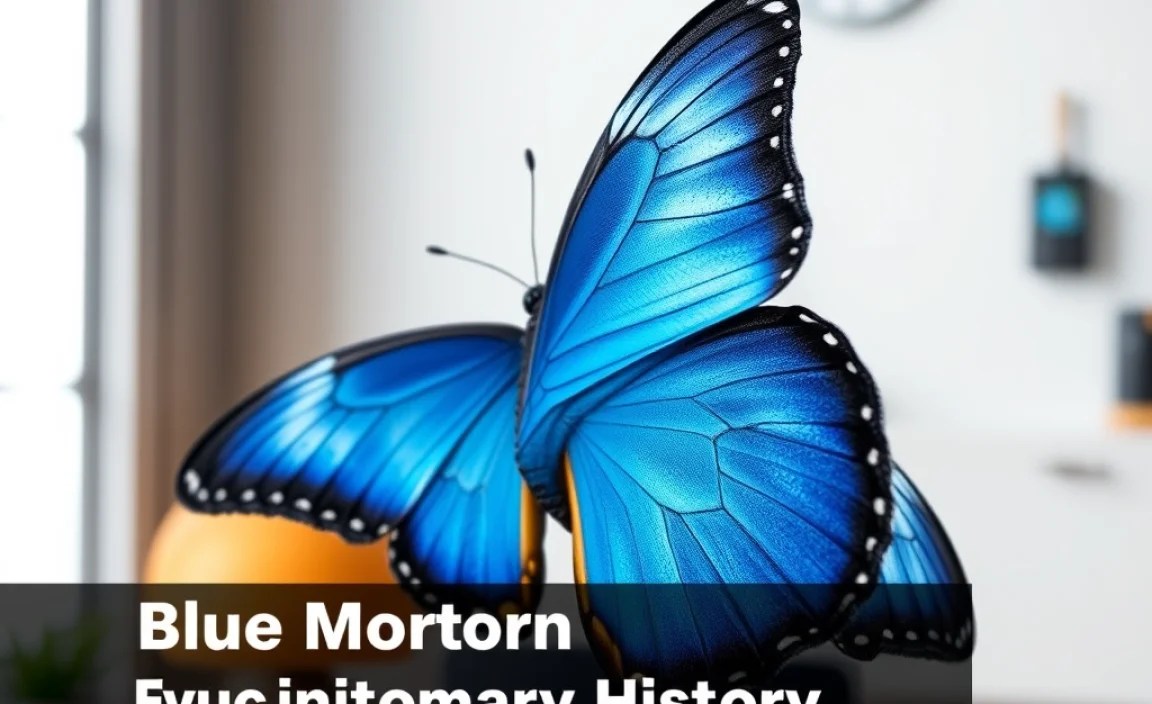
The Blue Morpho’s evolutionary history is a long and exciting story. It all started millions of years ago. The ancestors of the Blue Morpho were likely different from the butterflies we see today. Over time, these butterflies changed. They adapted to survive in their environment. The rainforest is full of challenges. There are predators and changing weather. Only the butterflies that could adapt survived. This process is called natural selection. Natural selection means that the butterflies with the best traits for survival are more likely to reproduce. Over many generations, these traits become more common. This is how the Blue Morpho got its amazing blue wings and other special features.
- Butterflies evolved over millions of years.
- Natural selection helped them adapt.
- Rainforests are challenging environments.
- Blue wings help them survive.
- They developed special features.
Understanding the Blue Morpho’s evolutionary history helps us appreciate how amazing nature is. It shows us how animals can change and adapt over time. The Blue Morpho is a perfect example of this. Its bright blue wings are not just beautiful. They are also a result of millions of years of evolution. Scientists continue to study these butterflies. They want to learn even more about their history. By studying their DNA and fossils, we can piece together the story of how the Blue Morpho became the butterfly we know and love today. This butterfly shows us the power of adaptation and change.
Fun Fact or Stat: The Blue Morpho’s wings aren’t actually blue because of pigment! The color comes from the way light reflects off tiny structures on their wings.
What Did Blue Morphos Evolve From?
Have you ever wondered what the ancestors of Blue Morphos looked like? It’s a fascinating question! Scientists believe that the Blue Morpho evolved from earlier butterfly species. These earlier species may have had duller colors. They might have been smaller in size. Over time, small changes occurred in their DNA. These changes led to new traits. Some of these traits were helpful for survival. For example, a slightly brighter color might have helped a butterfly attract a mate. Butterflies with this brighter color were more likely to reproduce. This meant that their offspring were also more likely to have the brighter color. Over many generations, this process led to the bright blue wings we see today. The {Blue Morpho evolutionary history} is all about small changes adding up over time.
How Does DNA Affect Evolution?
DNA is like a blueprint for building a butterfly. It contains all the instructions for how a butterfly should look and function. Sometimes, there are small changes in the DNA. These changes are called mutations. Mutations can be random. They can be caused by things like radiation or chemicals. Most mutations are harmful or have no effect. But sometimes, a mutation can be helpful. For example, a mutation might make a butterfly’s wings slightly stronger. This would help it fly faster and escape predators. Butterflies with this mutation would be more likely to survive and reproduce. Over time, the helpful mutation would become more common in the population. This is how DNA drives evolution. It provides the raw material for change.
Why Study Butterfly Fossils?
Imagine finding a butterfly fossil that is millions of years old! What could it tell us? Butterfly fossils are rare. They are very delicate. But when scientists find them, they can learn a lot. Fossils can show us what butterflies looked like in the past. They can also tell us about the environment they lived in. For example, a fossil might show that a butterfly had different wing patterns. This could mean that the environment was different back then. Perhaps there were different predators or different types of plants. By studying butterfly fossils, scientists can piece together the {Blue Morpho evolutionary history}. They can see how these butterflies changed over millions of years. It’s like reading a story written in stone.
The Role of Natural Selection in Blue Morpho Evolution

Natural selection is a key part of the {Blue Morpho evolutionary history}. It is the process where the best-suited traits help an animal survive. Think about the Blue Morpho’s bright blue wings. They are beautiful, but are they helpful? Yes! The bright color helps them stand out. This makes it easier for them to find mates. It can also confuse predators. When a predator sees a flash of blue, it might hesitate. This gives the butterfly a chance to escape. Butterflies with duller colors might not be as successful at finding mates or avoiding predators. Over time, the butterflies with the bright blue wings are more likely to survive and reproduce. This means that the bright blue color becomes more common in the population. This is how natural selection works.
- Natural selection favors helpful traits.
- Blue wings help find mates.
- Bright colors confuse predators.
- Duller colors are less successful.
- Traits become common over time.
Natural selection is not a perfect process. It doesn’t always lead to the “best” possible outcome. It simply favors the traits that are most helpful in a particular environment. The rainforest is a constantly changing environment. This means that the traits that are helpful can also change over time. What works today might not work tomorrow. This is why evolution is an ongoing process. The Blue Morpho is still evolving. It is still adapting to its environment. By studying natural selection, we can better understand how the Blue Morpho became the amazing butterfly it is today. It also helps us understand what traits are important for its survival.
Fun Fact or Stat: Only male Blue Morphos have the bright blue color. Female Blue Morphos are usually brown or yellow. This is because the bright blue color is mainly used to attract mates.
How Do Predators Influence Evolution?
Predators play a big role in shaping the {Blue Morpho evolutionary history}. Imagine you are a butterfly. Birds and other animals want to eat you. How do you survive? One way is to develop defenses. Some butterflies have camouflage. They blend in with their surroundings. Others have bright colors that warn predators they are poisonous. The Blue Morpho uses a different strategy. Its bright blue wings are very noticeable. But they also have a trick. When the butterfly flies, the blue color flashes. This can confuse predators. It makes it hard for them to track the butterfly. Predators that are better at catching butterflies will survive. They will pass on their genes. This means that butterflies must always adapt to survive.
What Is Genetic Variation?
Genetic variation is like having different ingredients for a recipe. Imagine you are baking cookies. You can use different types of flour, sugar, and chocolate chips. Each ingredient will change the final result. The same is true for butterflies. Genetic variation means that there are differences in the DNA of different butterflies. Some butterflies might have slightly different wing patterns. Others might have slightly different body sizes. These differences can be small. But they can also be important. Genetic variation gives natural selection something to work with. It provides the raw material for evolution. Without genetic variation, butterflies would not be able to adapt to changing environments.
Can Evolution Happen Quickly?
Evolution usually happens very slowly. It takes many generations for significant changes to occur. But sometimes, evolution can happen more quickly. This is especially true when there is a big change in the environment. For example, imagine a new predator arrives in the rainforest. This predator is very good at catching butterflies with dull colors. Suddenly, butterflies with brighter colors have a big advantage. They are more likely to survive and reproduce. Over a few generations, the population of butterflies might become much brighter. This is an example of rapid evolution. It shows how quickly animals can adapt when they need to. The {Blue Morpho evolutionary history} also had times of rapid change.
Adaptations of the Blue Morpho for Survival

The Blue Morpho has many adaptations that help it survive. These adaptations are a result of its {Blue Morpho evolutionary history}. One of the most obvious adaptations is its bright blue wings. As we discussed, this helps them find mates and confuse predators. But the Blue Morpho has other adaptations too. Its large wings allow it to fly high above the rainforest floor. This helps it avoid predators that live on the ground. The underside of its wings is brown and camouflaged. When the butterfly is resting, it can fold its wings together. This makes it blend in with the bark of trees. The Blue Morpho also has special hairs on its body. These hairs help it collect pollen and nectar from flowers. These are only a few of the adaptations that help the Blue Morpho survive in its challenging environment.
- Bright blue wings attract mates.
- Large wings help it fly high.
- Camouflage hides it from predators.
- Hairs collect pollen and nectar.
- These adaptations help it survive.
Adaptations are not always perfect. They are simply the best solutions that evolution has come up with so far. The Blue Morpho’s adaptations are not foolproof. It can still be caught by predators. It can still be affected by changes in the environment. But its adaptations give it a better chance of survival. By studying the Blue Morpho’s adaptations, we can learn a lot about how animals adapt to their environment. We can also learn about the power of evolution. The Blue Morpho is a living example of how animals can change and adapt over millions of years. This butterfly is a true success story of evolution.
Fun Fact or Stat: Blue Morpho caterpillars are cannibalistic! They sometimes eat each other.
How Do Wing Patterns Evolve?
Have you ever noticed how different butterflies have different wing patterns? Some have spots, others have stripes, and some have intricate designs. These wing patterns are not just for show. They can also serve important functions. Some wing patterns help butterflies blend in with their surroundings. Others warn predators that the butterfly is poisonous. Wing patterns evolve through natural selection. Butterflies with wing patterns that help them survive are more likely to reproduce. Over time, these patterns become more common in the population. The {Blue Morpho evolutionary history} shows how wing patterns can change over time.
What Is Camouflage?
Camouflage is like wearing an invisible cloak. It helps animals blend in with their surroundings. This makes it harder for predators to see them. It also makes it harder for prey to see them. Many butterflies use camouflage to hide from predators. They have wing patterns that look like leaves or bark. This helps them disappear against the background. The Blue Morpho doesn’t use camouflage on the bright blue side of its wings. But the underside of its wings is brown and camouflaged. This helps it hide when it is resting. Camouflage is a very effective adaptation. It helps animals survive in a world full of predators.
Why Are Some Butterflies Poisonous?
Some butterflies are poisonous because they eat poisonous plants. The toxins from the plants build up in their bodies. This makes them poisonous to predators. Predators that eat these butterflies get sick. They learn to avoid butterflies with similar colors and patterns. This is called warning coloration. Warning coloration is a way for butterflies to advertise their toxicity. It helps them avoid being eaten. The Blue Morpho is not poisonous. But it uses its bright blue color to confuse predators. This is another way to avoid being eaten. There are many different ways that butterflies can protect themselves.
Genetic Factors Influencing Blue Morpho Evolution

Genetics play a vital role in the {Blue Morpho evolutionary history}. Genes are like instructions that tell a butterfly how to develop. These instructions control everything from wing color to body size. Small changes in genes can lead to big changes in appearance and behavior. These changes can then be acted upon by natural selection. For example, a gene might mutate and cause a butterfly to have brighter blue wings. If the brighter wings help the butterfly survive and reproduce, the gene will become more common in the population. Over time, this can lead to the evolution of a new species. Scientists study the genes of Blue Morphos to understand how they have evolved over time. By comparing the genes of different species, they can learn about the relationships between them.
- Genes control butterfly traits.
- Mutations can change genes.
- Brighter wings can help survival.
- Genes become more common.
- Scientists study genes to learn.
Genetics is a complex field. There is still much that we don’t understand about how genes work. But scientists are making progress all the time. New technologies are allowing us to study genes in more detail than ever before. This is helping us to understand the {Blue Morpho evolutionary history} and the evolution of all living things. The more we learn about genetics, the better we will be able to protect endangered species. We can also use this knowledge to develop new medicines and treatments for diseases. Genetics is a powerful tool that can help us to improve the world.
Fun Fact or Stat: The Blue Morpho’s DNA is similar to other butterflies, but it has unique genes that give it its special characteristics.
What Are Mutations?
Imagine you are copying a sentence from a book. Sometimes, you might make a mistake. You might accidentally write the wrong word or misspell a word. These mistakes are like mutations in DNA. Mutations are changes in the genetic code. They can happen spontaneously. They can also be caused by environmental factors like radiation. Most mutations are harmful. They can cause diseases or other problems. But some mutations are neutral. They don’t have any effect on the organism. And sometimes, mutations can be beneficial. They can give an organism a new trait that helps it survive and reproduce. Mutations are the raw material for evolution.
How Do Genes Get Passed Down?
Genes get passed down from parents to offspring. When animals reproduce, they pass on their genes to their children. Each child gets half of their genes from their mother and half from their father. This means that children inherit traits from both of their parents. For example, if both parents have brown eyes, their children are likely to have brown eyes too. But sometimes, children can inherit traits that neither of their parents have. This is because of recessive genes. Recessive genes are genes that are hidden unless there are two copies of them. If both parents carry a recessive gene, their children have a chance of inheriting two copies of it. This can lead to a new trait that neither parent has.
What Is Gene Flow?
Gene flow is like a river that carries genes from one population to another. Imagine two groups of butterflies living in different areas. If butterflies from one group fly to the other group and reproduce, they will introduce new genes into the population. This is called gene flow. Gene flow can help to increase genetic variation. It can also help to spread beneficial genes throughout a population. Gene flow can be especially important for small populations. Small populations are more likely to suffer from inbreeding. Inbreeding is when closely related individuals reproduce with each other. This can lead to a loss of genetic variation. Gene flow can help to prevent inbreeding by introducing new genes into the population.
Environmental Pressures on Blue Morpho Evolution
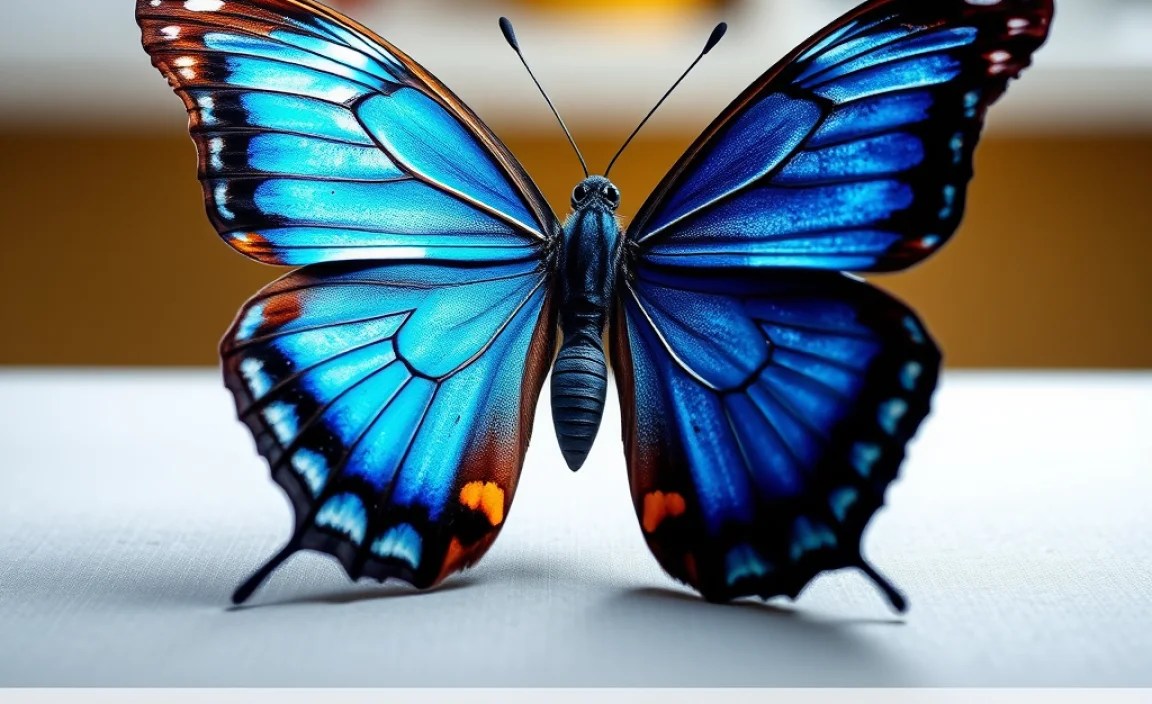
Environmental pressures have greatly impacted the {Blue Morpho evolutionary history}. The rainforest is a tough place to live. There are many predators, diseases, and changes in weather. These environmental pressures have forced the Blue Morpho to adapt over time. For example, the deforestation of rainforests has reduced the Blue Morpho’s habitat. This has made it harder for them to find food and mates. Climate change is also a threat. Changes in temperature and rainfall can affect the plants that the Blue Morpho relies on. Pollution can also harm the Blue Morpho. Pesticides and other chemicals can poison them. These environmental pressures are constantly shaping the evolution of the Blue Morpho. Only the butterflies that can adapt to these changes will survive.
- Rainforests are tough environments.
- Deforestation reduces habitat.
- Climate change affects plants.
- Pollution harms butterflies.
- Butterflies must adapt to survive.
It is important to protect the rainforest. We need to reduce pollution and slow down climate change. This will help to ensure that the Blue Morpho and other rainforest animals can survive. We can all do our part to help. We can reduce our carbon footprint by using less energy and driving less. We can support companies that are environmentally friendly. We can also educate others about the importance of protecting the rainforest. Together, we can make a difference. The Blue Morpho is a symbol of the beauty and diversity of the rainforest. We must do everything we can to protect it.
Fun Fact or Stat: Blue Morphos are very sensitive to changes in their environment. They are often used as indicator species to assess the health of the rainforest.
How Does Climate Change Affect Butterflies?
Climate change is a big threat to butterflies around the world. As the Earth gets warmer, many butterflies are shifting their ranges. They are moving to cooler areas. But some butterflies are not able to move quickly enough. They are becoming extinct. Climate change is also affecting the plants that butterflies rely on. Some plants are blooming earlier in the year. This can disrupt the timing of the butterfly life cycle. If the butterflies emerge before the flowers are blooming, they will not be able to find food. Climate change is a complex problem. It requires a global solution. We need to reduce our greenhouse gas emissions. We also need to protect and restore natural habitats.
What Is Deforestation?
Deforestation is the clearing of forests for other uses. This can include agriculture, logging, and urbanization. Deforestation has many negative impacts on the environment. It leads to soil erosion, water pollution, and loss of biodiversity. It also contributes to climate change. Forests absorb carbon dioxide from the atmosphere. When forests are cleared, this carbon dioxide is released. This contributes to the greenhouse effect. Deforestation is a major threat to the Blue Morpho. It reduces their habitat and makes it harder for them to find food and mates. We need to stop deforestation. We need to protect and restore forests around the world.
Why Is Biodiversity Important?
Biodiversity is the variety of life on Earth. It includes all the different species of plants, animals, and microorganisms. Biodiversity is important for many reasons. It provides us with food, medicine, and other resources. It also helps to regulate the climate, purify water, and pollinate crops. Biodiversity is essential for the health of the planet. When we lose biodiversity, we lose the benefits that it provides. The Blue Morpho is just one example of the many species that are threatened by habitat loss and climate change. We need to protect biodiversity. We need to conserve natural habitats and reduce our impact on the environment.
Comparing Blue Morpho to Other Butterfly Evolution
The {Blue Morpho evolutionary history} can be better understood by comparing it to other butterflies. All butterflies share a common ancestor. But different species have evolved in different ways. Some butterflies have developed camouflage to hide from predators. Others have developed bright colors to warn predators that they are poisonous. The Blue Morpho has developed bright blue wings to attract mates and confuse predators. By comparing the adaptations of different butterflies, we can learn about the different environmental pressures that have shaped their evolution. We can also learn about the different ways that animals can adapt to survive.
| Butterfly Species | Wing Color | Primary Defense | Habitat |
|---|---|---|---|
| Blue Morpho | Bright Blue | Confusion and Attraction | Rainforests |
| Monarch | Orange and Black | Poisonous | North America |
| Swallowtail | Various | Camouflage and Mimicry | Worldwide |
| Glasswing | Transparent | Camouflage | Central America |
Comparing the {Blue Morpho evolutionary history} to other butterflies shows us the variety of ways that animals can adapt to their environment. Some butterflies rely on camouflage. Others rely on poison. The Blue Morpho uses a combination of bright colors and confusing flight patterns. These different strategies reflect the different challenges that butterflies face in different environments. By studying the evolution of different butterfly species, we can gain a better understanding of the power of natural selection and the diversity of life on Earth. Each butterfly has a unique story to tell. The {Blue Morpho evolutionary history} is just one chapter in that story.
Fun Fact or Stat: There are over 20,000 different species of butterflies in the world!
What Is Convergent Evolution?
Convergent evolution is when two different species evolve similar traits independently. This happens when they face similar environmental pressures. For example, bats and birds both have wings. But they evolved from different ancestors. They both developed wings because wings are helpful for flying. Convergent evolution shows that there are often multiple ways to solve the same problem. The {Blue Morpho evolutionary history} might show convergent evolution with other species that use bright colors to confuse predators.
How Does Mimicry Work?
Mimicry is when one species evolves to look like another species. This can be helpful for avoiding predators. For example, some harmless butterflies mimic poisonous butterflies. Predators avoid them because they look like the poisonous species. Mimicry can also be helpful for attracting mates. Some male butterflies mimic female butterflies. This allows them to get close to females without being attacked by other males. Mimicry is a fascinating example of evolution in action. It shows how animals can adapt to their environment in surprising ways.
What Are Phylogenetic Trees?
Phylogenetic trees are like family trees for species. They show how different species are related to each other. The branches of the tree represent different lineages. The tips of the branches represent different species. Phylogenetic trees are based on DNA evidence. The more similar the DNA of two species, the more closely related they are. Phylogenetic trees can help us understand the {Blue Morpho evolutionary history}. They can show us how the Blue Morpho is related to other butterflies. They can also show us how butterflies have evolved over time.
Summary
The {Blue Morpho evolutionary history} is a fascinating story of adaptation and survival. Over millions of years, these butterflies have evolved to thrive in the rainforest. Their bright blue wings, large size, and unique behaviors are all a result of natural selection. Environmental pressures, such as predators and climate change, have played a key role in shaping their evolution. By studying the genes and fossils of Blue Morphos, scientists can piece together the story of their past.
Comparing the {Blue Morpho evolutionary history} to other butterflies helps us understand the diversity of life on Earth. Each species has its own unique story to tell. The Blue Morpho is a reminder of the beauty and complexity of nature. It is important to protect these butterflies and their rainforest habitat. By doing so, we can ensure that future generations will be able to enjoy these amazing creatures.
Conclusion
The Blue Morpho butterfly is more than just a pretty insect. It is a living example of evolution in action. Its bright blue wings and other adaptations are the result of millions of years of natural selection. By studying the {Blue Morpho evolutionary history}, we can learn about the power of adaptation and the importance of protecting biodiversity. We must continue to protect the rainforest. This will ensure that the Blue Morpho and other amazing species can continue to thrive for years to come.
Frequently Asked Questions
Question No 1: How long have Blue Morpho butterflies been around?
Answer: Scientists believe that the ancestors of Blue Morpho butterflies have been around for millions of years. It’s hard to say exactly when the first “true” Blue Morpho appeared, but butterfly fossils show that butterflies have been evolving for a very long time. The {Blue Morpho evolutionary history} is a long and gradual process. It involves small changes accumulating over many generations. These changes are driven by natural selection and other evolutionary forces. The exact timeline is still being researched by scientists.
Question No 2: What is the biggest threat to Blue Morpho butterflies today?
Answer: The biggest threat to Blue Morpho butterflies today is habitat loss. Rainforests are being destroyed at an alarming rate. This is due to deforestation for agriculture, logging, and mining. This loss of habitat makes it harder for Blue Morphos to find food, mates, and shelter. Climate change is also a growing threat. Changes in temperature and rainfall can disrupt the delicate balance of the rainforest ecosystem. This can affect the plants that Blue Morphos rely on for food and shelter. Protecting rainforests is crucial for the survival of Blue Morphos and many other species.
Question No 3: Can Blue Morpho butterflies adapt to new environments?
Answer: Blue Morpho butterflies are adapted to living in rainforests. They have special adaptations that help them survive in this environment. It would be difficult for them to adapt to a completely different environment. However, they may be able to adapt to small changes in their environment. For example, if the rainforest becomes slightly warmer, they may be able to shift their range to cooler areas. The speed of the {Blue Morpho evolutionary history} depends on how quickly the environment changes. If changes are too rapid, they may not be able to adapt quickly enough.
Question No 4: Are Blue Morpho butterflies endangered?
Answer: Blue Morpho butterflies are not currently listed as endangered. However, their populations are declining in some areas due to habitat loss and other threats. It is important to protect their rainforest habitat to ensure that they do not become endangered in the future. Conservation efforts are needed to protect these butterflies and their environment. This includes protecting rainforests, reducing pollution, and addressing climate change. The future of Blue Morpho butterflies depends on our actions today.
Question No 5: How do scientists study the {Blue Morpho evolutionary history}?
Answer: Scientists use several methods to study the {Blue Morpho evolutionary history}. They study fossils to learn about the ancestors of Blue Morphos and how they changed over time. They also study the DNA of Blue Morphos and other butterflies to understand their relationships. By comparing the genes of different species, they can learn about how they evolved. They also study the behavior and ecology of Blue Morphos to understand how they interact with their environment. This helps them to understand the environmental pressures that have shaped their evolution.
Question No 6: What can kids do to help protect Blue Morpho butterflies?
Answer: Kids can do many things to help protect Blue Morpho butterflies! They can learn about the importance of rainforests and share what they learn with their friends and family. They can support organizations that are working to protect rainforests. They can also reduce their carbon footprint by using less energy and driving less. They can also plant butterfly-friendly flowers in their gardens. Every little bit helps! By working together, we can make a difference and protect Blue Morpho butterflies for future generations. Learning about the {Blue Morpho evolutionary history} can inspire kids to care about conservation.