
Blue Morpho Content Series: Discover Secrets!

Do you know about amazing butterflies? Some butterflies are big and bright. The Blue Morpho is one of these butterflies. This article will teach you all about it. This is your guide to the Blue Morpho content series.
Blue Morpho butterflies live in rainforests. They are truly beautiful creatures. Let’s learn more about where they live. We can also learn what they eat.
Butterflies are important. They help plants grow. They are also food for other animals. The Blue Morpho content series will explore all of this. Get ready to be amazed by these beautiful butterflies!
Key Takeaways
- Blue Morpho butterflies have shiny, bright blue wings that shimmer in the sun.
- They live in rainforests of Central and South America, flitting through the trees.
- These butterflies eat tree sap, fruit, and fungi, using a long straw-like tongue.
- The Blue Morpho content series shows how these butterflies change from caterpillars.
- Blue Morphos escape predators using their bright colors and quick, erratic flight.
Discovering Blue Morpho Habitats
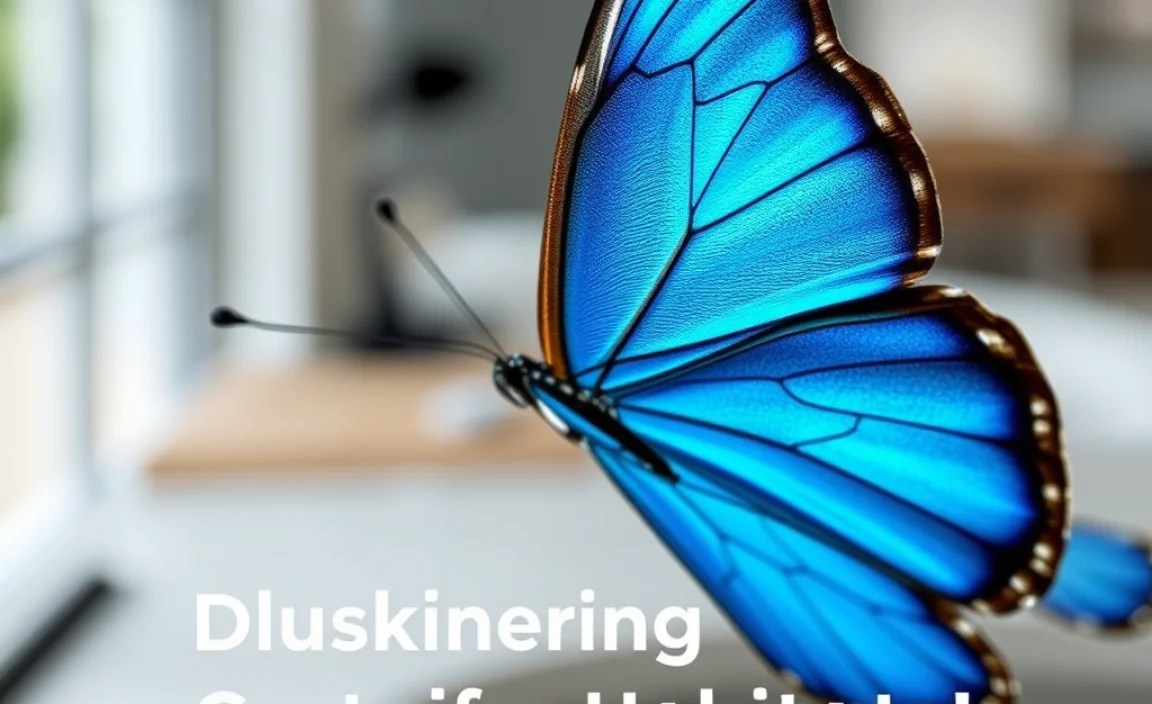
Blue Morpho butterflies live in rainforests. These rainforests are in Central and South America. The butterflies like warm, wet places. They live high up in the trees. This is called the canopy. The canopy is sunny and full of food. Blue Morphos can also be found lower down. They fly near rivers and streams. These areas are humid and shady. The butterflies need these different areas. They need them for food and shelter. Rainforests are very important for Blue Morphos. Without rainforests, they would not survive. People must protect rainforests. We need to protect these butterflies too. The Blue Morpho is a symbol of the rainforest.
- They live in rainforests.
- They like warm, wet places.
- They live high in the trees.
- They fly near rivers.
- Rainforests are important to them.
The Blue Morpho faces habitat loss. People cut down rainforests for wood. They also clear land for farms. This destroys the butterfly’s home. It also makes it hard to find food. Conservation groups work to protect rainforests. They help the Blue Morpho and other animals. You can help too! Learn about rainforests. Tell others why they are important. Support groups that protect rainforests. Every little bit helps. Together, we can save the Blue Morpho’s home.
Fun Fact or Stat: The Blue Morpho’s habitat ranges from Mexico to the Amazon rainforest!
Why Rainforests Matter to Morphos
Have you ever wondered why rainforests are so important? Rainforests are like giant apartment buildings. Many plants and animals live there. The Blue Morpho is one of them. Rainforests give the Blue Morpho everything it needs. The trees provide shelter from rain and wind. The plants provide food for the caterpillars. The warm, humid air helps the butterflies stay healthy. When rainforests are cut down, the Blue Morpho loses its home. It also loses its food. We need to protect rainforests. We need to protect the Blue Morpho too. They are both important parts of our world.
How Climate Affects Blue Morphos
Imagine a butterfly in a snowstorm. It would not survive. Blue Morphos need warm weather. They live in tropical rainforests. These forests are warm all year. Climate change is making the Earth warmer. It is also changing rainfall patterns. This can hurt the Blue Morpho. If it gets too hot, they might overheat. If there is not enough rain, the plants might die. This means less food for the caterpillars. We need to stop climate change. We must protect the Blue Morpho. They deserve a healthy home.
Finding the Perfect Morpho Home
If you were a Blue Morpho, where would you live? You would want a place with plenty of food. You would also want a safe place to hide. Blue Morphos like tall trees. They also like areas near water. These places have lots of plants. The plants give caterpillars food. The trees give butterflies shelter. Finding the perfect home is important for survival. Blue Morphos are very picky about where they live. That is why they only live in rainforests. Rainforests are the perfect place for them.
Understanding Blue Morpho Diet
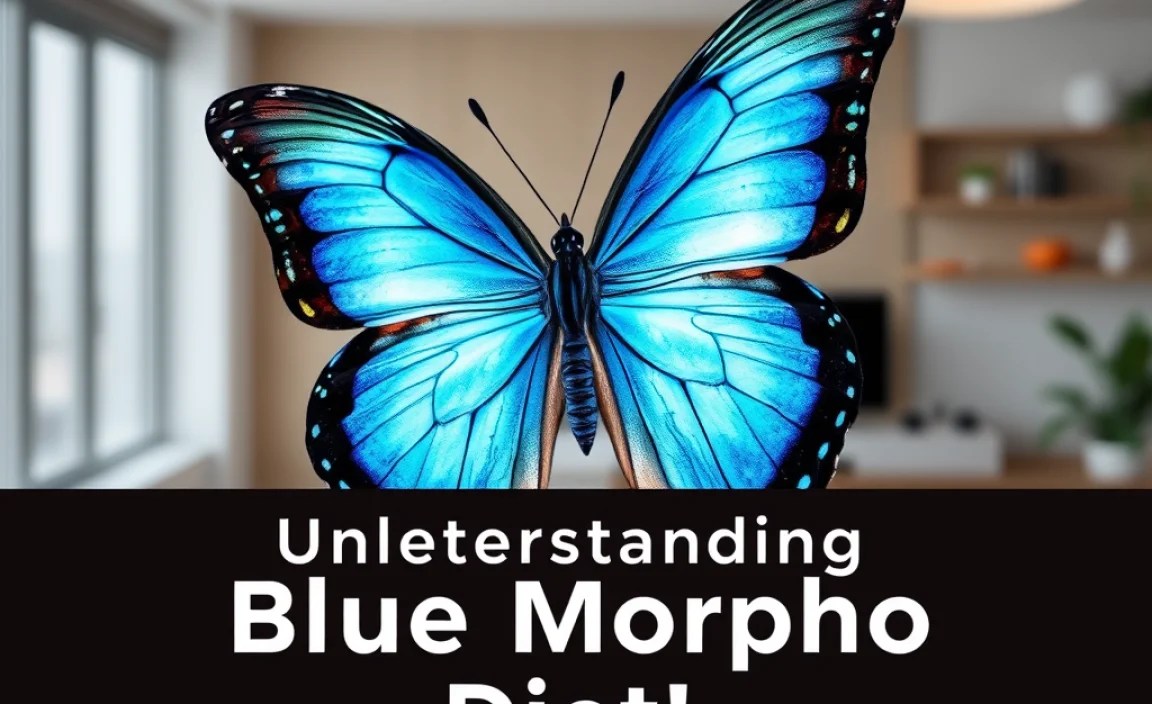
What do Blue Morpho butterflies eat? They do not eat flowers like other butterflies. Instead, they drink tree sap. They also like fruit that has fallen on the ground. Sometimes, they even eat dead animals. This might sound gross, but it is important. It gives them the nutrients they need. Blue Morphos have a long, straw-like tongue. This is called a proboscis. They use it to suck up liquids. The proboscis is like a built-in straw. It helps them get food from hard-to-reach places. The Blue Morpho’s diet is very different from other butterflies. It is one of the things that makes them special.
- They drink tree sap.
- They eat fallen fruit.
- They sometimes eat dead animals.
- They use a proboscis to suck up liquids.
- Their diet is different from other butterflies.
The Blue Morpho caterpillar eats leaves. They like to eat leaves from specific plants. These plants are often poisonous to other animals. But the Blue Morpho caterpillar can eat them without getting sick. This gives them an advantage. They do not have to share their food with other insects. When the caterpillar turns into a butterfly, its diet changes. It no longer eats leaves. It drinks liquids instead. This is a big change. But it is necessary for the butterfly to survive. Understanding the Blue Morpho’s diet is important. It helps us protect them.
Fun Fact or Stat: Blue Morphos taste with sensors on their feet!
Caterpillar’s Leafy Lunch
Imagine being a tiny caterpillar. All you do is eat leaves all day. That is what the Blue Morpho caterpillar does. It eats leaves from special plants. These plants are often poisonous to other animals. But the caterpillar is not affected. It can eat as much as it wants. Eating lots of leaves helps the caterpillar grow. It needs to grow big and strong. This will help it turn into a butterfly. The caterpillar’s leafy lunch is very important. It gives it the energy it needs. Without leaves, the caterpillar could not survive.
Butterfly’s Liquid Feast
What would you drink if you were a butterfly? You might drink juice. Or maybe soda. But Blue Morpho butterflies drink tree sap. They also drink juice from rotting fruit. They use their long tongues to suck up the liquids. This is called a proboscis. The proboscis is like a built-in straw. The butterfly’s liquid feast is very important. It gives it the energy it needs to fly. Without liquids, the butterfly could not survive. The liquid feast helps them stay strong.
Why Rotting Fruit Is a Treat
Have you ever seen rotting fruit? It might look gross. But Blue Morpho butterflies love it. Rotting fruit is full of sugar. It is also full of nutrients. These nutrients give the butterflies energy. They need energy to fly and find mates. Rotting fruit is like a sweet treat for butterflies. They can smell it from far away. They fly to it and start drinking. The juice from rotting fruit helps them live longer. It is a very important part of their diet.
Exploring Blue Morpho Life Cycle
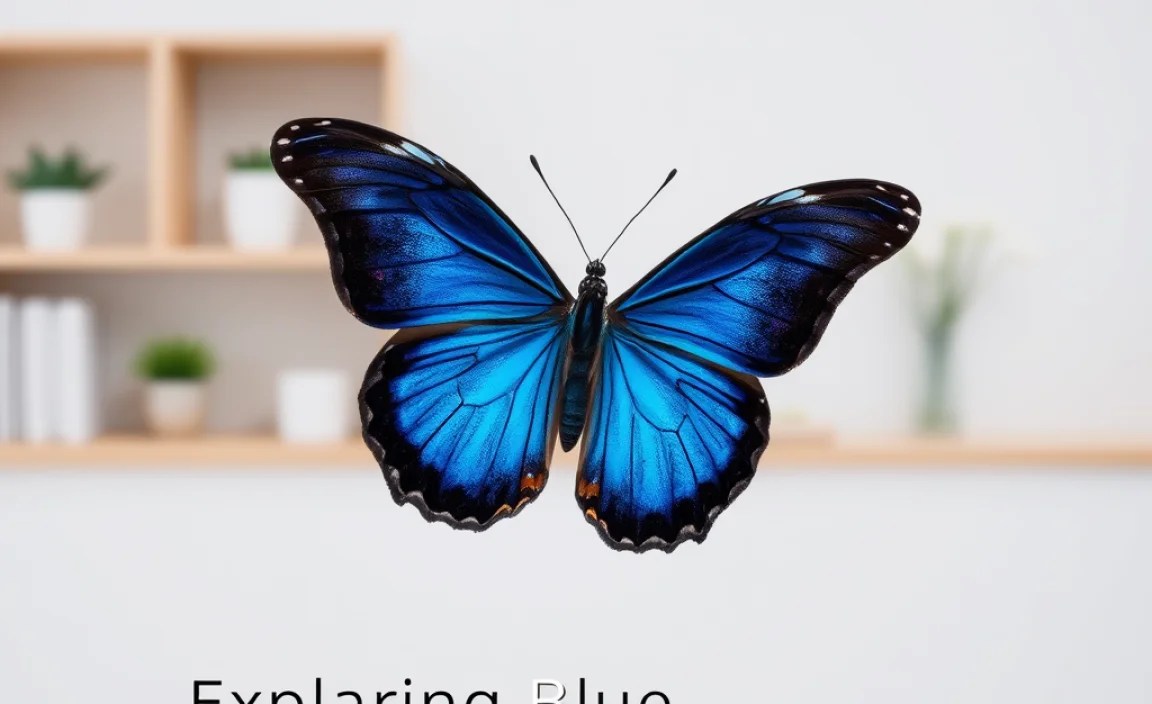
The Blue Morpho butterfly starts as a tiny egg. The egg is laid on a leaf. When the egg hatches, a caterpillar comes out. The caterpillar eats leaves. It grows bigger and bigger. After a few weeks, the caterpillar turns into a pupa. The pupa is also called a chrysalis. It is like a sleeping bag for the butterfly. Inside the pupa, the caterpillar changes. It turns into a butterfly. After a few weeks, the butterfly comes out of the pupa. It spreads its wings. Then it flies away. The Blue Morpho’s life cycle is amazing. It is a journey of change and growth.
- It starts as an egg.
- The egg hatches into a caterpillar.
- The caterpillar turns into a pupa.
- The pupa turns into a butterfly.
- The butterfly flies away.
The Blue Morpho life cycle takes about 115 days. The egg stage lasts about 8 days. The caterpillar stage lasts about 6 weeks. The pupa stage lasts about 2 weeks. The butterfly stage lasts about 1 month. Each stage is important. Each stage helps the butterfly survive. The Blue Morpho life cycle is a reminder of how amazing nature is. It is a reminder of how things can change and grow. The Blue Morpho teaches us about life.
Fun Fact or Stat: The Blue Morpho caterpillar can eat poisonous leaves without getting sick!
Egg to Caterpillar: The Beginning
Imagine being a tiny egg on a leaf. That is how the Blue Morpho butterfly starts its life. The egg is very small. It is about the size of a pinhead. The egg is usually green or yellow. It is laid on a leaf of a plant that the caterpillar will eat. After about a week, the egg hatches. A tiny caterpillar comes out. The caterpillar is very hungry. It starts eating the leaf right away. The egg is the beginning of a long journey.
Pupa to Butterfly: Transformation
Have you ever seen a caterpillar turn into a butterfly? It is like magic. The caterpillar turns into a pupa. The pupa is also called a chrysalis. Inside the pupa, the caterpillar changes. It turns into a butterfly. This is called metamorphosis. The butterfly stays inside the pupa for about two weeks. Then it comes out. It spreads its wings. The wings are wet and crumpled. But they soon dry and become strong. The butterfly flies away. The transformation from pupa to butterfly is amazing.
Butterfly’s Flight: New Beginnings
Imagine flying for the first time. That is what it is like for a Blue Morpho butterfly. When it comes out of the pupa, its wings are wet. The butterfly must wait for its wings to dry. Then it can fly. The butterfly’s flight is graceful. It flies through the rainforest. It looks for food and mates. The butterfly’s flight is a new beginning. It is the start of a new chapter in its life. The Blue Morpho flies with beauty.
Identifying Blue Morpho Characteristics
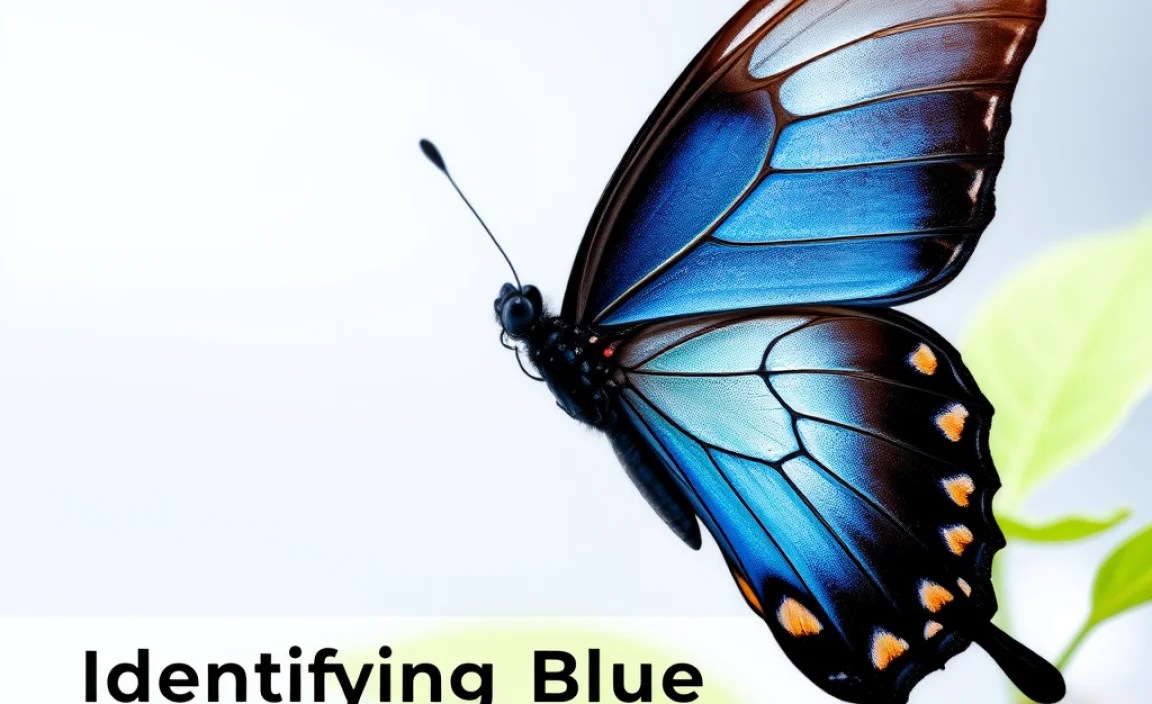
Blue Morpho butterflies are known for their bright blue wings. The blue color is not from pigment. It is from the way light reflects off the scales on their wings. This is called iridescence. The underside of their wings is brown with eyespots. These eyespots help to scare away predators. Blue Morphos are large butterflies. Their wingspan can be up to 8 inches. They are also very fast fliers. They can fly up to 20 miles per hour. Identifying Blue Morpho characteristics helps us appreciate them.
- They have bright blue wings.
- The blue color is from iridescence.
- The underside of their wings is brown with eyespots.
- They are large butterflies.
- They are fast fliers.
Male Blue Morphos are usually brighter blue than females. This helps them attract mates. The females are often larger than the males. They need to be bigger to carry their eggs. Blue Morphos also have long antennae. They use their antennae to smell and feel their surroundings. The antennae help them find food and mates. They also have six legs. But they only use four legs for walking. The other two legs are used for tasting. Blue Morphos are truly amazing creatures.
Fun Fact or Stat: The Blue Morpho’s bright blue color is visible from up to half a mile away!
The Shimmering Blue Wings
Have you ever seen something that shimmers? The Blue Morpho’s wings shimmer in the sunlight. The blue color is very bright. It is like looking at the sky on a sunny day. The shimmering blue wings are what make the Blue Morpho famous. People travel from all over the world to see them. The wings are covered in tiny scales. These scales reflect light in a special way. This creates the shimmering effect. The shimmering blue wings are a work of art.
Eyespots: Nature’s Defense
Imagine having eyes on your wings. That is what the Blue Morpho has. The underside of its wings has eyespots. These eyespots look like the eyes of a bigger animal. They scare away predators. When a bird sees the eyespots, it thinks the butterfly is a bigger animal. It might fly away. The eyespots are a clever defense mechanism. They help the Blue Morpho survive. Nature is very smart.
Size and Speed: Morpho Power
If you were a butterfly, would you want to be big or small? The Blue Morpho is a big butterfly. Its wingspan can be up to 8 inches. This makes it easy to see. It is also a fast flier. It can fly up to 20 miles per hour. This helps it escape predators. It also helps it find food and mates. The Blue Morpho’s size and speed give it power. It is a strong and beautiful butterfly.
Comparing Blue Morpho Species
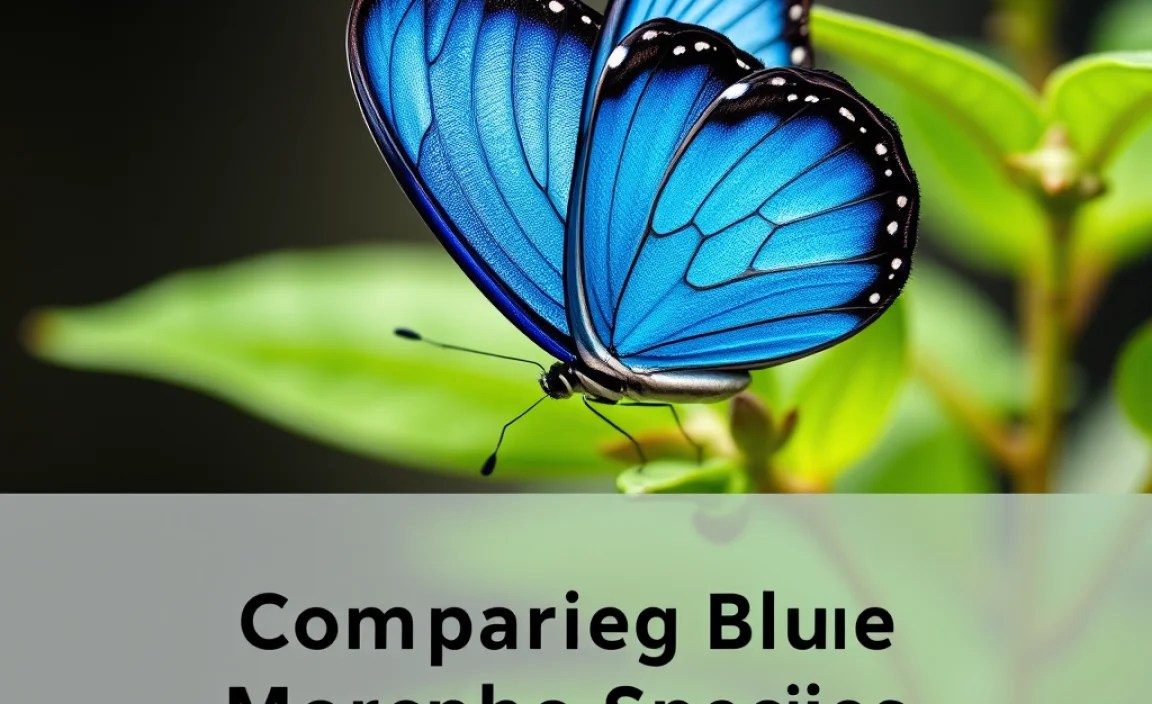
| Species | Wing Color | Size | Habitat |
|---|---|---|---|
| Morpho menelaus | Bright blue with black edges | Large (5-6 inches) | Amazon rainforest |
| Morpho peleides | Lighter blue with white spots | Medium (4-5 inches) | Central America |
| Morpho helenor | Dark blue with iridescent sheen | Large (5-7 inches) | South America |
| Morpho achilles | Pale blue with brown markings | Small (3-4 inches) | Brazil |
There are many different species of Blue Morpho butterflies. Each species has its own unique characteristics. Some are bigger than others. Some have brighter blue wings. Some live in different areas. Morpho menelaus is one of the most common species. It is found in the Amazon rainforest. Morpho peleides is another common species. It is found in Central America. Comparing Blue Morpho species helps us understand their diversity. It also helps us appreciate their beauty. All Blue Morphos are amazing.
- Each species has unique traits.
- Some are bigger than others.
- Some have brighter blue wings.
- Some live in different areas.
- All Blue Morphos are amazing.
Understanding the differences between Blue Morpho species is important for conservation. Some species are more endangered than others. They need more protection. By studying the different species, we can learn how to help them. We can also learn how to protect their habitats. The Blue Morpho is a symbol of the rainforest. It is important to protect all species of Blue Morpho. They are all part of the rainforest ecosystem.
Fun Fact or Stat: There are over 30 recognized species of Blue Morpho butterflies!
Morpho Menelaus: The Classic Blue
Have you ever seen a picture of a Blue Morpho? It was probably a Morpho menelaus. This is the classic Blue Morpho. It has bright blue wings with black edges. It is one of the biggest Blue Morphos. It lives in the Amazon rainforest. The Morpho menelaus is a symbol of the rainforest. It is a beautiful and amazing creature. People all over the world love it.
Morpho Peleides: A Central American Gem
Imagine a butterfly with lighter blue wings. It also has white spots. This is the Morpho peleides. It lives in Central America. It is smaller than the Morpho menelaus. But it is still very beautiful. The Morpho peleides is a gem of Central America. It is a special and unique butterfly. It deserves our protection and respect.
Morpho Helenor: The Iridescent Wonder
Have you ever seen something that is iridescent? It changes color when you move it. The Morpho helenor is an iridescent wonder. Its wings are dark blue with an iridescent sheen. It lives in South America. It is one of the biggest Blue Morphos. The Morpho helenor is a stunning butterfly. It is a treasure of the rainforest.
Conserving Blue Morpho Populations
Blue Morpho populations are threatened by habitat loss. Rainforests are being cut down for farming and logging. This destroys the butterflies’ homes. Climate change also threatens them. Changes in temperature and rainfall can harm them. Pollution can also hurt them. Pesticides can poison the caterpillars. We need to conserve Blue Morpho populations. We can do this by protecting rainforests. We can also reduce pollution. We can also support sustainable farming. Conserving Blue Morpho populations is important. They are a part of the rainforest ecosystem.
- Habitat loss threatens them.
- Climate change threatens them.
- Pollution can hurt them.
- We need to protect rainforests.
- We can support sustainable farming.
There are many things you can do to help Blue Morpho butterflies. You can learn more about them. You can tell others about them. You can support organizations that protect rainforests. You can also reduce your carbon footprint. This will help fight climate change. Every little bit helps. Together, we can make a difference. We can save the Blue Morpho. We can save the rainforest. The Blue Morpho needs our help.
Fun Fact or Stat: Some organizations are creating butterfly farms to help boost Blue Morpho populations!
Protecting Butterfly Habitats
Imagine a world without rainforests. It would be a sad place. Rainforests are home to many plants and animals. The Blue Morpho is one of them. We need to protect butterfly habitats. We can do this by supporting organizations that buy rainforest land. We can also support sustainable farming. This means farming in a way that does not harm the environment. Protecting butterfly habitats is important. It helps the Blue Morpho survive. It also helps other animals.
Reducing Pollution Impact
Have you ever seen pollution? It is not pretty. Pollution can hurt butterflies. Pesticides can poison caterpillars. Air pollution can damage their wings. We need to reduce pollution impact. We can do this by using less pesticides. We can also drive less. We can also recycle. Reducing pollution impact helps the Blue Morpho. It also helps other animals. It makes the world a cleaner place.
Supporting Sustainable Practices
What does it mean to be sustainable? It means using resources in a way that does not harm the environment. We can support sustainable practices. We can buy products that are made in a sustainable way. We can also support companies that are committed to sustainability. Supporting sustainable practices helps the Blue Morpho. It also helps other animals. It makes the world a better place.
The Cultural Significance of Blue Morphos
Blue Morpho butterflies are important in many cultures. They are often seen as symbols of beauty and transformation. In some cultures, they are believed to be messengers from the spirit world. They are also used in art and jewelry. The bright blue color is very striking. It makes them a popular subject for artists. The Blue Morpho is a symbol of the rainforest. It represents the beauty and diversity of nature. The Blue Morpho is also a reminder of the importance of conservation.
- They symbolize beauty.
- They symbolize transformation.
- They are seen as messengers.
- They are used in art.
- They represent the rainforest.
The Blue Morpho is a powerful symbol. It reminds us of the importance of protecting our planet. It also reminds us of the beauty that surrounds us. We must do our part to conserve this amazing creature. We must also protect its habitat. The Blue Morpho is a gift from nature. We must cherish it. Learning about the cultural significance of the Blue Morpho helps us appreciate it more. It also inspires us to protect it.
Fun Fact or Stat: Some indigenous tribes believe that the Blue Morpho carries wishes to the heavens!
Morphos in Art and Jewelry
Have you ever seen a butterfly in a painting? Or maybe on a necklace? Butterflies are often used in art and jewelry. The Blue Morpho is a popular choice. Its bright blue color is very eye-catching. Artists use the Blue Morpho to represent beauty and transformation. Jewelers use it to create stunning pieces. The Blue Morpho adds a touch of magic to art and jewelry. It is a symbol of hope and wonder.
Butterflies as Spiritual Messengers
Imagine a butterfly flying into your life. What would it mean? In some cultures, butterflies are seen as spiritual messengers. They are believed to carry messages from the spirit world. The Blue Morpho is especially powerful. Its bright blue color is associated with the heavens. Some people believe that seeing a Blue Morpho is a sign of good luck. They believe that it means that your wishes will come true. Butterflies bring joy to our lives.
Morphos: Symbols of Transformation
Have you ever changed? Maybe you learned something new. Or maybe you grew taller. Change is a part of life. Butterflies are symbols of transformation. They start as caterpillars. Then they turn into butterflies. This is a big change. The Blue Morpho is a powerful symbol of transformation. It reminds us that we can always change and grow. It inspires us to be our best selves.
Summary
The Blue Morpho is a stunning butterfly. It lives in the rainforests of Central and South America. Its bright blue wings shimmer in the sunlight. This makes it easy to spot. The Blue Morpho eats tree sap, fruit, and sometimes even dead animals. It goes through an amazing life cycle. It starts as an egg, then becomes a caterpillar, then a pupa, and finally a butterfly. The Blue Morpho content series highlights the importance of protecting these butterflies. Habitat loss and climate change threaten them. We can help by protecting rainforests and reducing pollution.
Conclusion
The Blue Morpho is more than just a pretty butterfly. It is a symbol of beauty, transformation, and the rainforest. We must protect this amazing creature. We can learn about them and tell others. We can also support conservation efforts. The Blue Morpho content series teaches us about this special butterfly. Let’s all do our part to ensure that the Blue Morpho continues to fly for generations to come.
Frequently Asked Questions
Question No 1: Where do Blue Morpho butterflies live?
Answer: Blue Morpho butterflies live in the rainforests of Central and South America. They prefer warm, humid environments. You can find them flitting through the trees in countries like Brazil, Costa Rica, and Mexico. They thrive in the canopy layer of the rainforest. They can also be seen near streams and rivers. Their habitat is rich with the plants and resources they need to survive. Protecting these rainforests is crucial for their survival.
Question No 2: What do Blue Morpho butterflies eat?
Answer: Blue Morpho butterflies have a unique diet. Unlike many butterflies that feed on flower nectar, Blue Morphos primarily consume tree sap, rotting fruit, and sometimes even fungi or dead animals. They use their long, straw-like proboscis to suck up the liquids. As caterpillars, they munch on the leaves of specific plants. These plants often contain toxins that don’t harm the caterpillars, giving them a competitive advantage. Their diet is a key part of their life cycle.
Question No 3: What makes Blue Morpho wings blue?
Answer: The brilliant blue color of the Blue Morpho’s wings is not due to pigments. Instead, it comes from the microscopic structure of the scales on their wings. These scales reflect light in a way that creates iridescence. This means the color changes depending on the angle you view it from. This structural coloration is a fascinating example of how nature uses physics to create beauty. The Blue Morpho content series explains it well.
Question No 4: How do Blue Morpho butterflies protect themselves?
Answer: Blue Morpho butterflies have several defense mechanisms. The bright blue color can startle predators. When they close their wings, the brown underside with eyespots helps them blend in with the forest floor. They are also fast and erratic fliers, making them difficult to catch. As caterpillars, they eat toxic plants, which makes them less appealing to some predators. These adaptations help them survive in the rainforest.
Question No 5: Why are Blue Morpho butterflies important?
Answer: Blue Morpho butterflies are an important part of the rainforest ecosystem. As caterpillars, they eat plants, and as butterflies, they contribute to pollination. They are also a food source for other animals. Beyond their ecological role, they are a symbol of beauty and biodiversity. Their presence indicates a healthy rainforest environment. The Blue Morpho content series illustrates their significance.
Question No 6: What can I do to help Blue Morpho butterflies?
Answer: There are many ways you can help Blue Morpho butterflies. You can support organizations that protect rainforests. You can reduce your carbon footprint to combat climate change. You can also avoid using pesticides in your garden. Educating others about the importance of these butterflies is another great way to help. Every little bit makes a difference in protecting their habitat and ensuring their survival. Learn more from the Blue Morpho content series.


