
Chalkhill Blue Butterfly: Secret to Spotting Them!

The Chalkhill Blue butterfly (Lysandra coridon) is a beautiful, powder-blue butterfly found in grasslands, especially in southern England and parts of Europe. Recognizable by its striking blue wings in males and brownish-grey wings with blue dusting in females, it relies on horseshoe vetch for food. Conserving its habitat is key to its survival.
Have you ever strolled through a meadow and been captivated by a butterfly that seems to float on air, its wings a mesmerizing shade of blue? Identifying different butterfly species can be tricky, and many people wonder how to tell them apart. One of the most enchanting is the Chalkhill Blue butterfly. This beautiful creature, with its serene blue hue, graces our grasslands and adds a touch of magic to the landscape.
In this guide, we’ll explore everything you need to know about the Chalkhill Blue butterfly, from its unique characteristics and life cycle to where you can find it and how you can help protect it. Get ready to deepen your appreciation for this jewel of the butterfly world!
What is the Chalkhill Blue Butterfly?

The Chalkhill Blue butterfly (Lysandra coridon) is a member of the Lycaenidae family, commonly known as the gossamer-winged butterflies. This group includes some of the most delicate and intricately patterned butterflies. The Chalkhill Blue is particularly admired for its distinctive coloration and close association with chalky grasslands.
Key Characteristics
Here are some distinguishing features of the Chalkhill Blue butterfly:
- Wingspan: Typically ranges from 30-40 mm (1.2-1.6 inches).
- Coloration: Males have bright, powder-blue wings with a narrow dark border. Females are usually brownish-grey with a dusting of blue near the base of the wings and orange spots along the edges.
- Underside: Both sexes have greyish-brown undersides with black spots surrounded by white halos.
- Habitat: Found primarily in calcareous grasslands, especially those rich in Horseshoe Vetch (Hippocrepis comosa), its larval foodplant.
- Flight Period: Usually flies from July to September.
Taxonomy and Classification
Understanding the scientific classification helps us appreciate the Chalkhill Blue’s place in the natural world:
- Kingdom: Animalia
- Phylum: Arthropoda
- Class: Insecta
- Order: Lepidoptera
- Family: Lycaenidae
- Genus: Lysandra
- Species: Lysandra coridon
Identifying the Chalkhill Blue
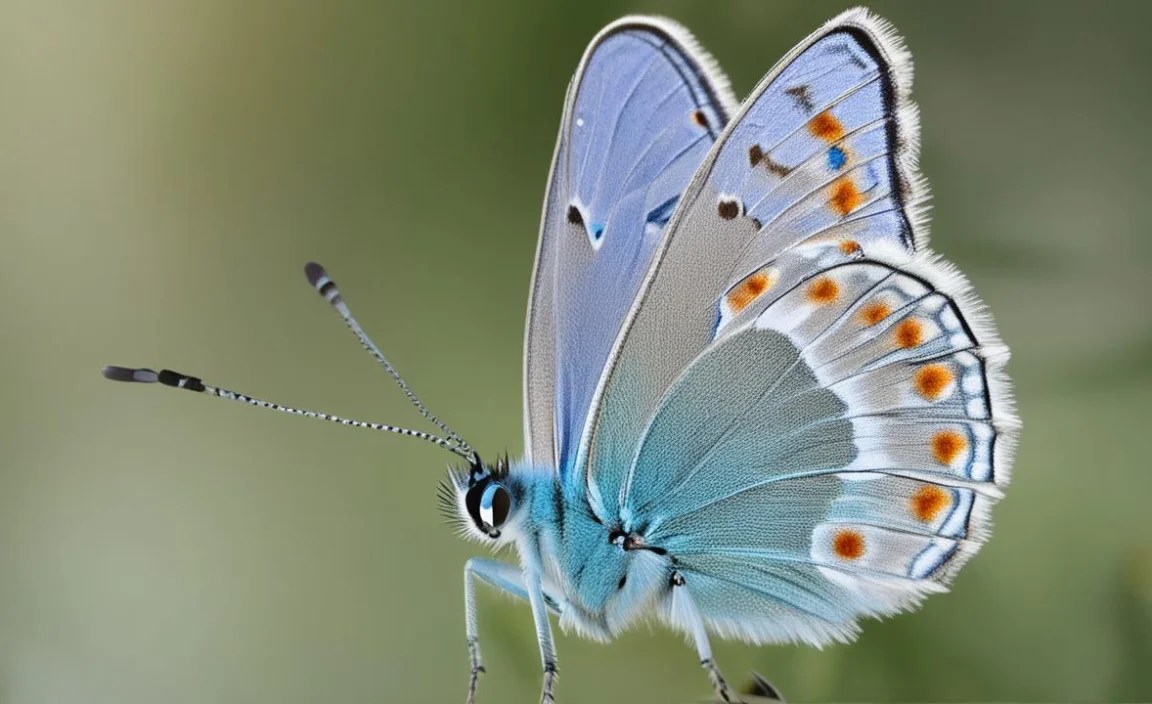
Correctly identifying butterflies can be a rewarding skill. Here’s a detailed guide to help you distinguish the Chalkhill Blue from similar species.
Distinguishing Features of Males
Male Chalkhill Blues are known for their vibrant blue wings. Key features include:
- Color: Bright, powdery sky-blue wings.
- Wing Borders: Narrow dark border along the edge of the wings.
- Size: Small to medium size, with a wingspan of 30-40 mm.
Distinguishing Features of Females
Female Chalkhill Blues have a more subdued appearance, which can sometimes make them harder to identify. Look for:
- Color: Predominantly brownish-grey wings.
- Blue Dusting: A dusting of blue scales near the base of the wings.
- Orange Spots: Orange spots along the edge of the hindwings.
Similar Species and How to Tell Them Apart
Several other blue butterflies can be confused with the Chalkhill Blue. Here’s how to differentiate them:
| Species | Male Characteristics | Female Characteristics | Key Differences |
|---|---|---|---|
| Chalkhill Blue (Lysandra coridon) | Bright sky-blue, narrow dark border | Brownish-grey, blue dusting, orange spots | Males: Brighter blue. Females: More prominent orange spots. |
| Adonis Blue (Lysandra bellargus) | Intense sky-blue, white fringe with black spots | Brown, bright blue near the body, blue scales at wing base | Males: Brighter, more intense blue. Females: More blue at the base of the wings. |
| Common Blue (Polyommatus icarus) | Lighter blue, broader dark border | Brown with varying amounts of blue, orange spots | Males: Lighter blue. Females: More extensive blue scaling. |
Life Cycle of the Chalkhill Blue Butterfly

Understanding the life cycle of the Chalkhill Blue is essential for appreciating its ecology and conservation needs.
Egg Stage
The life cycle begins with the egg. Female Chalkhill Blues lay their eggs on or near Horseshoe Vetch plants. These eggs are:
- Appearance: Small, flattened, and white or pale green.
- Location: Laid singly on Horseshoe Vetch leaves or stems.
- Duration: Eggs are laid in late summer and hatch in the spring.
Larval Stage (Caterpillar)
Once the eggs hatch, the larval stage begins. The caterpillars of the Chalkhill Blue:
- Appearance: Green with a dark stripe down the back and yellowish stripes along the sides.
- Feeding: Feed exclusively on Horseshoe Vetch leaves.
- Growth: Grow through several instars (stages) by shedding their skin.
- Ant Association: Often attended by ants, which protect them from predators in exchange for sugary secretions.
Pupal Stage (Chrysalis)
After the larval stage, the caterpillar transforms into a pupa, or chrysalis. The pupa:
- Appearance: Green or brown, blending with the surrounding vegetation.
- Location: Attached to a Horseshoe Vetch stem or nearby plant.
- Duration: The pupal stage lasts for a few weeks.
Adult Stage (Butterfly)
The final stage is the emergence of the adult butterfly. Adult Chalkhill Blues:
- Emergence: Emerge from the pupa in the morning.
- Feeding: Feed on nectar from various flowers.
- Reproduction: Mate and lay eggs, continuing the cycle.
- Lifespan: Adult butterflies typically live for a few weeks.
Habitat and Distribution
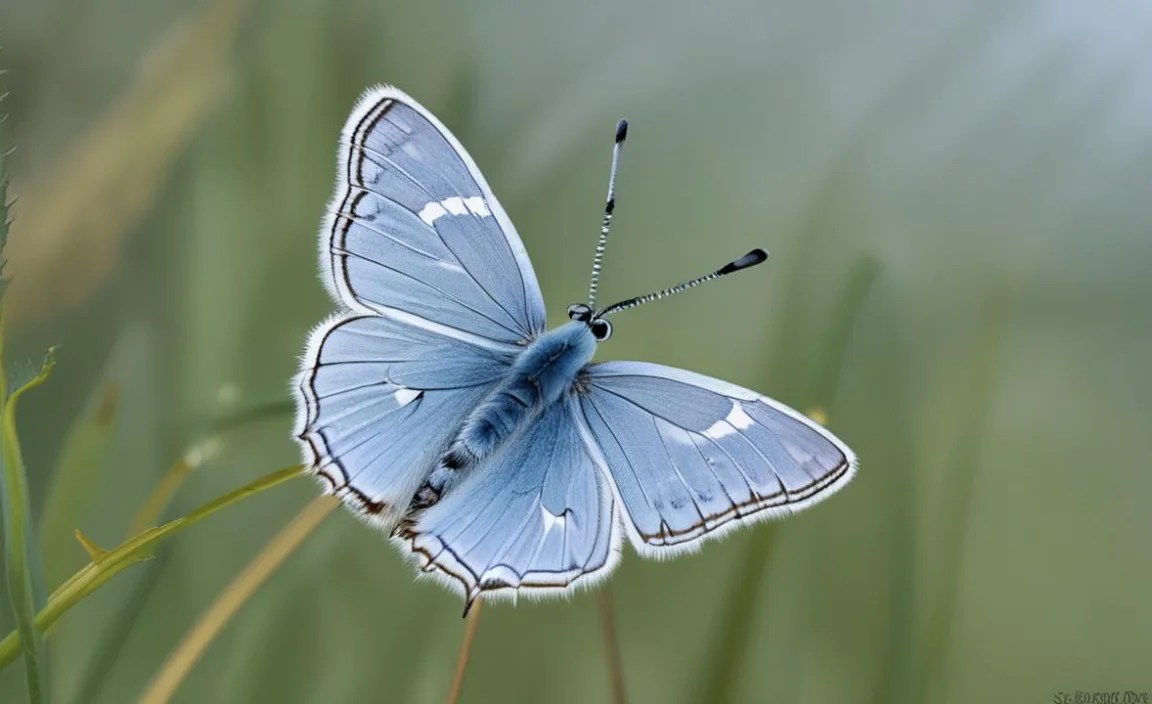
The Chalkhill Blue butterfly has specific habitat requirements and a limited distribution range. Let’s explore where you can find them.
Preferred Habitats
Chalkhill Blues thrive in calcareous grasslands, which are:
- Soil Type: Characterized by chalky or limestone-rich soils.
- Vegetation: Dominated by short, sparse grasses and wildflowers.
- Sun Exposure: Open and sunny areas are essential.
- Horseshoe Vetch: The presence of Horseshoe Vetch is crucial as it is the primary food source for the caterpillars.
Geographical Distribution
The Chalkhill Blue is primarily found in:
- Europe: Widespread across central and southern Europe.
- United Kingdom: Concentrated in southern England, particularly in chalk downland areas.
Specific Locations to Spot Them
In the UK, some prime locations to observe Chalkhill Blues include:
- Sussex Downs: A classic chalk grassland habitat.
- North Downs in Kent: Another stronghold for the species.
- Salisbury Plain: A large area of chalk grassland in Wiltshire.
Behavior and Ecology
Understanding the behavior and ecological interactions of the Chalkhill Blue provides insights into its survival strategies and role in the ecosystem.
Flight Patterns
Chalkhill Blues exhibit distinctive flight patterns:
- Flight Style: Males have a rapid, erratic flight as they search for females.
- Sun Basking: Often seen basking in the sun to regulate their body temperature.
- Hilltopping: Males gather on hilltops to attract females.
Feeding Habits
Adult Chalkhill Blues feed on nectar from various flowers, including:
- Thistles
- Knapweed
- Wild Marjoram
Caterpillars feed exclusively on Horseshoe Vetch.
Symbiotic Relationships
Chalkhill Blue caterpillars have a mutualistic relationship with ants:
- Ant Attendance: Ants protect the caterpillars from predators.
- Honeydew Secretion: Caterpillars secrete a sugary substance (honeydew) that ants feed on.
Threats and Conservation
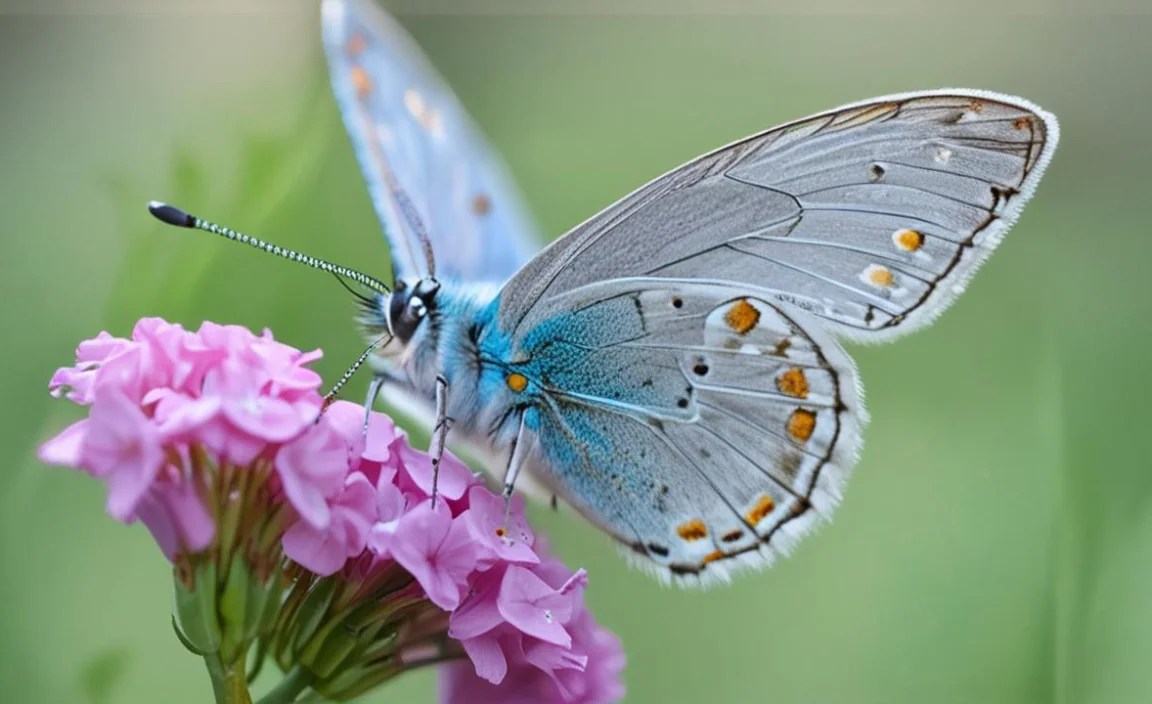
Like many butterfly species, the Chalkhill Blue faces several threats. Conservation efforts are crucial for its survival.
Habitat Loss
One of the most significant threats is the loss of calcareous grasslands due to:
- Agricultural Intensification: Conversion of grasslands into farmland.
- Development: Building on or near grassland habitats.
- Overgrazing or Undergrazing: Both can lead to the degradation of suitable habitats.
Climate Change
Climate change impacts the Chalkhill Blue through:
- Altered Weather Patterns: Changes in temperature and rainfall can affect the timing of the butterfly’s life cycle and the availability of its food plants.
- Habitat Shifts: As climate changes, suitable habitats may shift or disappear.
Pesticide Use
Pesticides can directly harm Chalkhill Blue butterflies and their caterpillars:
- Direct Toxicity: Pesticides can kill butterflies and caterpillars.
- Food Source Contamination: Pesticides can contaminate or destroy Horseshoe Vetch plants.
Conservation Strategies
Effective conservation strategies include:
- Habitat Management: Implementing appropriate grazing regimes to maintain grassland diversity.
- Habitat Restoration: Restoring degraded grasslands by removing scrub and reintroducing Horseshoe Vetch.
- Protected Areas: Establishing and managing protected areas to safeguard key habitats.
- Monitoring Populations: Regularly monitoring butterfly populations to assess the effectiveness of conservation efforts.
How to Attract Chalkhill Blue Butterflies to Your Garden
While Chalkhill Blues primarily inhabit grasslands, you can take steps to create a butterfly-friendly garden that supports them and other butterfly species.
Planting Native Wildflowers
Choose native wildflowers that provide nectar for adult butterflies:
- Wild Marjoram (Origanum vulgare)
- Thistles (Cirsium spp.)
- Knapweed (Centaurea nigra)
Creating a Horseshoe Vetch Patch
If you have a suitable area, consider planting Horseshoe Vetch to support Chalkhill Blue caterpillars:
- Source Seeds: Obtain Horseshoe Vetch seeds from a reputable source.
- Prepare the Soil: Ensure the soil is well-drained and chalky.
- Planting: Sow the seeds in a sunny location.
Avoiding Pesticides
Refrain from using pesticides in your garden to protect butterflies and other beneficial insects:
- Organic Gardening: Use organic gardening methods to control pests.
- Natural Predators: Encourage natural predators like ladybugs and lacewings.
Providing a Water Source
Butterflies need water, especially during hot weather:
- Shallow Dish: Provide a shallow dish of water with pebbles for butterflies to land on.
- Damp Sand: Keep a patch of damp sand or mud in your garden.
Cultural Significance and Symbolism
Butterflies, including the Chalkhill Blue, have long held cultural significance and symbolic meanings across different societies.
Symbolism of Butterflies
Butterflies are often seen as symbols of:
- Transformation: Representing the metamorphosis from caterpillar to butterfly.
- Hope: Signifying new beginnings and positive change.
- Beauty: Admired for their delicate and colorful wings.
- Soul: In some cultures, butterflies symbolize the human soul.
Specific Symbolism of Blue Butterflies
Blue butterflies, like the Chalkhill Blue, may also symbolize:
- Joy: Representing happiness and good fortune.
- Dreams: Associated with aspirations and the pursuit of goals.
- Peace: Symbolizing tranquility and harmony.
Resources for Further Learning
To deepen your knowledge and appreciation of the Chalkhill Blue butterfly, here are some valuable resources:
- Books: Field guides to butterflies of Britain and Europe.
- Websites: Butterfly Conservation (butterfly-conservation.org) is an excellent resource for information and conservation efforts.
- Local Conservation Groups: Join a local conservation group to participate in monitoring and habitat management activities.
FAQ About Chalkhill Blue Butterflies
What do Chalkhill Blue caterpillars eat?
Chalkhill Blue caterpillars exclusively feed on Horseshoe Vetch (Hippocrepis comosa) leaves.
Where can I find Chalkhill Blue butterflies?
They are primarily found in calcareous grasslands in southern England and parts of Europe, especially where Horseshoe Vetch is abundant.
How can I tell the difference between male and female Chalkhill Blue butterflies?
Males have bright sky-blue wings with a narrow dark border, while females are brownish-grey with blue dusting near the base of the wings and orange spots along the edges.
What is the lifespan of a Chalkhill Blue butterfly?
Adult Chalkhill Blue butterflies typically live for a few weeks.
Why are Chalkhill Blue butterflies important?
They are an important part of the grassland ecosystem and serve as indicators of habitat health. Their presence contributes to biodiversity and the overall balance of nature.
How can I help protect Chalkhill Blue butterflies?
Support habitat conservation efforts, avoid using pesticides, and create butterfly-friendly gardens with native wildflowers and Horseshoe Vetch.
Are Chalkhill Blue butterflies endangered?
While not currently classified as endangered, their populations are vulnerable due to habitat loss and climate change, making conservation efforts essential.
Conclusion
The Chalkhill Blue butterfly is a true gem of our grasslands, with its captivating beauty and fascinating life cycle. As we’ve explored, this butterfly’s survival depends on specific habitats and food sources, making it vulnerable to environmental changes.
By understanding its needs and taking action to protect its habitat, we can help ensure that future generations have the opportunity to witness the enchanting flight of the Chalkhill Blue. Whether you’re planting wildflowers in your garden, supporting conservation organizations, or simply spreading awareness, every effort counts.
Let’s cherish and protect these delicate creatures, ensuring that the serene blue of the Chalkhill Blue continues to grace our landscapes for years to come.


