Butterfly Color Pattern Guide: The Ultimate ID

Butterfly color patterns aren’t just pretty—they’re vital for survival! This guide breaks down the fascinating world of butterfly colors, helping you understand their purpose and how to identify different species. Learn how these patterns help butterflies attract mates, hide from predators, and regulate their temperature.
Ever wondered why butterflies have such dazzling colors? It’s more than just beauty! Butterfly color patterns are key to their survival. They use colors to attract mates, camouflage themselves, and even warn predators that they’re not tasty. But with so many different butterflies out there, it can be tricky to understand what all those colors and patterns mean.
This guide will help you unlock the secrets of butterfly colors. We’ll explore the different types of patterns, what they mean, and how to use them to identify butterflies in your backyard. Get ready to dive into the colorful world of butterflies!
Understanding Butterfly Color Patterns
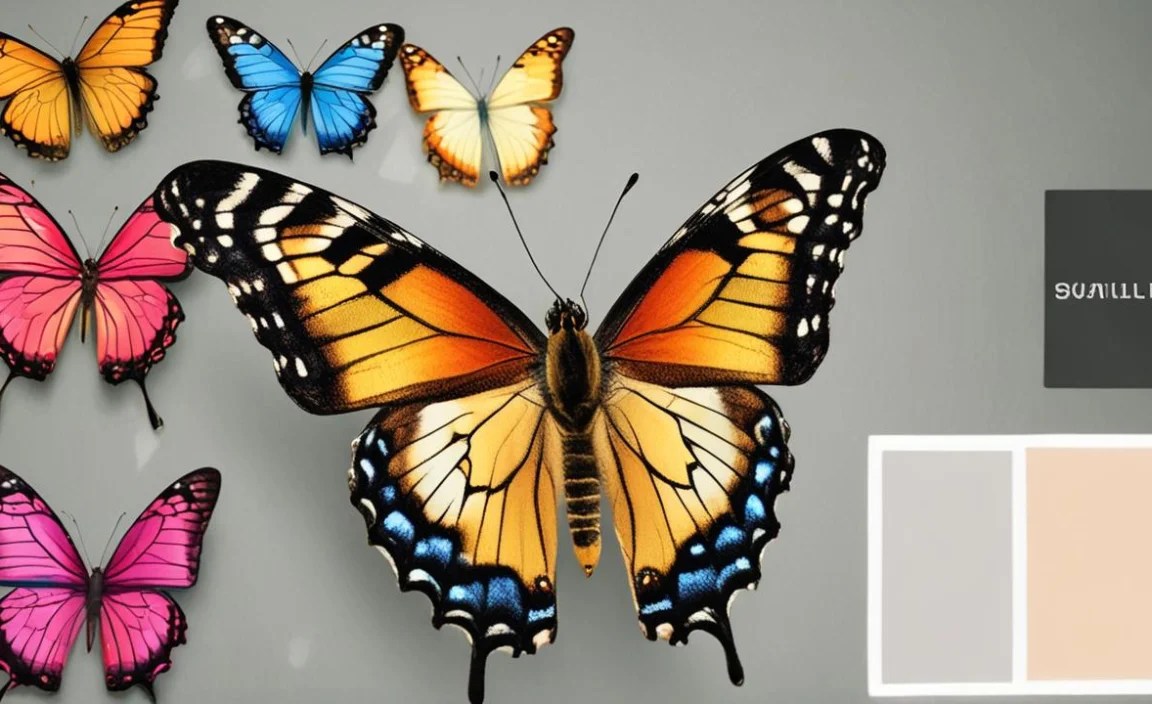
Butterfly wings are covered in tiny scales, much like roof shingles. These scales contain pigments that create the colors we see. But it’s not just about the pigments! The structure of the scales themselves can also create colors through the way they reflect light. This is called structural coloration.
Pigmentary Colors
Pigmentary colors come from chemical compounds within the scales. These pigments absorb certain wavelengths of light and reflect others, creating the colors we see. Common butterfly pigments include:
- Melanin: Creates black, brown, and tan colors. It also helps butterflies absorb heat.
- Carotenoids: Produce yellow, orange, and red colors. Butterflies get carotenoids from the plants they eat as caterpillars.
- Pteridines: Create white, yellow, orange, and red colors. These pigments are synthesized by the butterfly.
- Flavonoids: Produce pale yellow and ivory colors. These are also derived from the plants the caterpillar consumes.
Structural Colors
Structural colors are created by the physical structure of the butterfly scales. These structures bend and reflect light in different ways, creating iridescent and metallic colors. The most common type of structural coloration in butterflies is iridescence, where the color changes depending on the angle of light.
The Morpho butterflies of South America are famous for their brilliant blue iridescent wings, which are created by microscopic structures on their scales.
Types of Butterfly Color Patterns and Their Functions

Butterfly color patterns serve various functions, including camouflage, mimicry, signaling, and thermoregulation. Let’s explore each of these in more detail.
Camouflage
Camouflage helps butterflies blend in with their surroundings, making them less visible to predators. Some butterflies have wings that look like leaves, bark, or even bird droppings!
- Leaf Mimicry: Butterflies like the Indian Leaf Butterfly (Kallima inachus) have wings that look exactly like dead leaves, complete with veins and even fake “holes.”
- Bark Mimicry: Some butterflies have mottled brown and gray patterns that help them blend in with tree bark.
Aposematism (Warning Coloration)
Aposematism, or warning coloration, is when butterflies use bright, contrasting colors to signal to predators that they are toxic or distasteful. Predators learn to avoid these brightly colored butterflies after a bad experience.
- Monarch Butterfly: The Monarch (Danaus plexippus) is a classic example of aposematism. Its bright orange and black wings warn predators that it is poisonous due to the milkweed it eats as a caterpillar.
- Swallowtail Butterflies: Some swallowtail butterflies also use aposematism. For example, the Pipevine Swallowtail (Battus philenor) is black with iridescent blue markings, signaling its toxicity.
Mimicry
Mimicry is when one species evolves to resemble another species. In butterflies, there are two main types of mimicry:
- Batesian Mimicry: A harmless species mimics a harmful one. For example, the Viceroy butterfly (Limenitis archippus) mimics the Monarch, gaining protection from predators who avoid the Monarch’s toxicity.
- Müllerian Mimicry: Two or more harmful species mimic each other. This reinforces the warning signal to predators, benefiting all species involved. For example, several species of Heliconius butterflies in South America have similar color patterns, all warning predators of their toxicity.
Signaling and Mate Attraction
Butterflies use colors to attract mates. Male butterflies often have brighter and more elaborate colors than females. They may also use ultraviolet (UV) patterns that are invisible to humans but visible to butterflies.
- Ultraviolet Patterns: Many butterflies have UV patterns on their wings that play a role in mate recognition. Males and females may have different UV patterns, helping them identify each other.
- Bright Colors: Male butterflies may use bright colors to attract the attention of females. For example, the male Blue Morpho butterfly has iridescent blue wings that are used to attract mates.
Thermoregulation
Dark colors absorb more heat than light colors. Butterflies use this to regulate their body temperature. Some butterflies have dark wings that help them warm up quickly in the sun, while others have light wings that help them stay cool.
- Dark Wings: Butterflies that live in cool climates often have dark wings to absorb heat. For example, the Mourning Cloak (Nymphalis antiopa) has dark brown wings with a pale yellow border, helping it warm up quickly in the early spring.
- Light Wings: Butterflies that live in hot climates often have light wings to reflect heat.
Examples of Butterfly Color Patterns
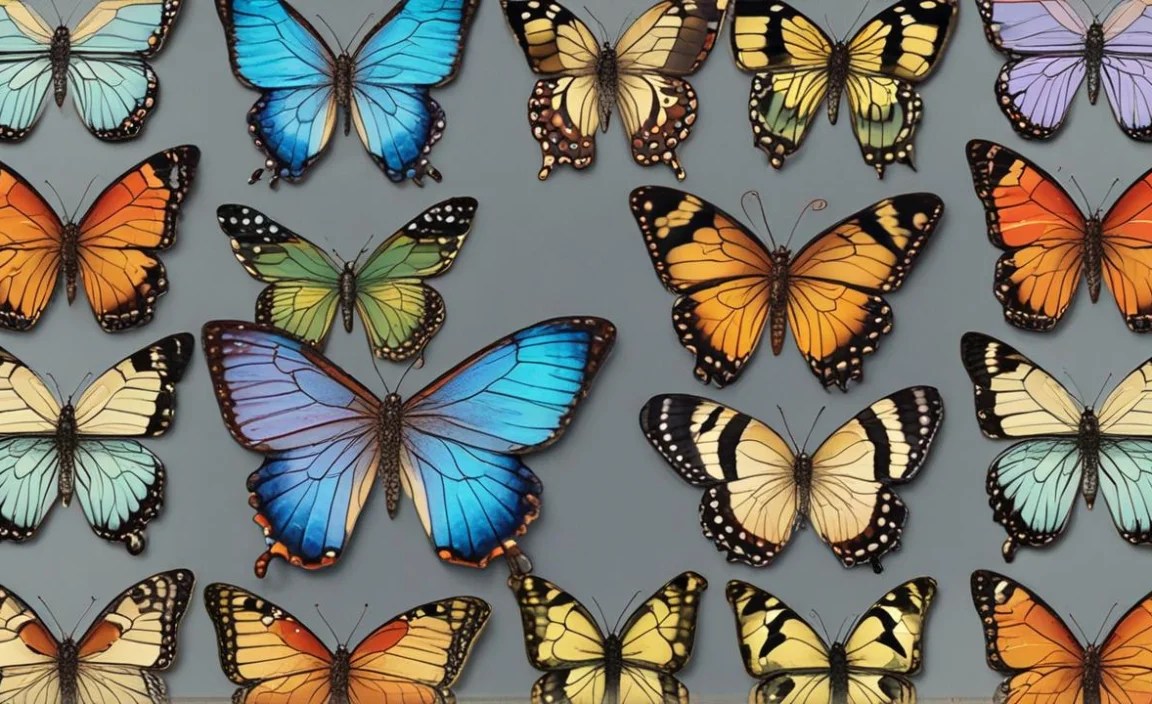
Let’s look at some specific examples of butterfly color patterns and what they mean.
Monarch (Danaus plexippus)
The Monarch is famous for its bright orange and black wings, which serve as a warning signal to predators. The caterpillars feed on milkweed, which makes them toxic. The Monarch’s bright colors tell predators to stay away!
Viceroy (Limenitis archippus)
The Viceroy mimics the Monarch, gaining protection from predators. While the Viceroy is not as toxic as the Monarch, its resemblance is close enough to fool many predators.
Blue Morpho (Morpho species)
The Blue Morpho is known for its iridescent blue wings, which are created by structural coloration. The males use these bright colors to attract mates.
Indian Leaf Butterfly (Kallima inachus)
The Indian Leaf Butterfly is a master of camouflage. When its wings are closed, it looks exactly like a dead leaf, making it very difficult for predators to spot.
Swallowtail Butterflies (Papilio species)
Swallowtail butterflies come in a variety of colors and patterns. Some use aposematism to warn predators of their toxicity, while others use mimicry to resemble toxic species.
Butterfly Color Pattern Identification Guide
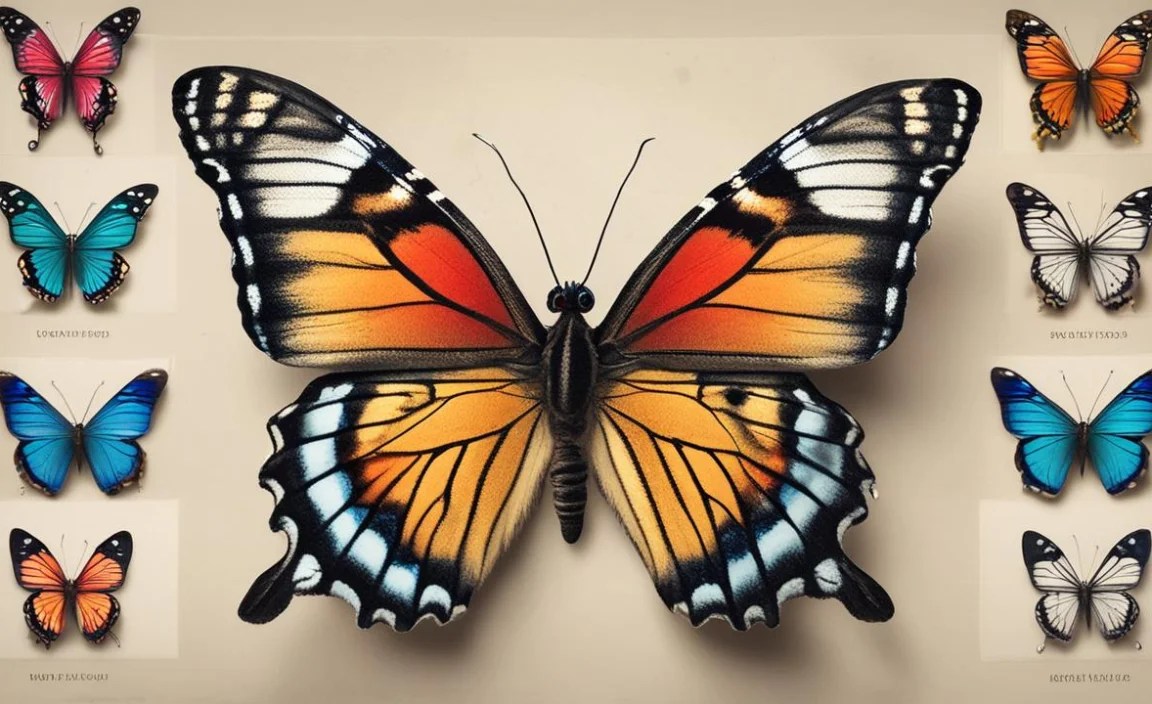
Use this guide to help you identify butterfly color patterns and understand their functions:
| Color Pattern | Function | Example |
|---|---|---|
| Bright Orange and Black | Aposematism (Warning Coloration) | Monarch Butterfly |
| Leaf-like Patterns | Camouflage | Indian Leaf Butterfly |
| Iridescent Blue | Mate Attraction | Blue Morpho Butterfly |
| Mottled Brown and Gray | Camouflage | Many Skipper Butterflies |
| Mimicry of Monarch | Batesian Mimicry | Viceroy Butterfly |
Attracting Butterflies to Your Garden

You can attract butterflies to your garden by planting flowers that provide nectar for adults and host plants for caterpillars.
Nectar Plants
Nectar plants provide food for adult butterflies. Choose a variety of flowers that bloom at different times of the year to provide a continuous source of nectar.
- Butterfly Bush (Buddleja davidii): A popular choice for attracting butterflies.
- Zinnia (Zinnia elegans): Easy to grow and comes in a variety of colors.
- Milkweed (Asclepias species): Essential for Monarch butterflies.
- Lantana (Lantana camara): Produces clusters of colorful flowers.
- Salvia (Salvia species): Attracts hummingbirds and butterflies.
Host Plants
Host plants provide food for caterpillars. Butterflies are very specific about which plants they will lay their eggs on, so it’s important to plant the right host plants for the butterflies you want to attract.
- Milkweed (Asclepias species): Host plant for Monarch caterpillars.
- Dill, Parsley, Fennel (Anethum graveolens, Petroselinum crispum, Foeniculum vulgare): Host plants for Swallowtail caterpillars.
- Spicebush (Lindera benzoin): Host plant for Spicebush Swallowtail caterpillars.
- Violets (Viola species): Host plants for Fritillary caterpillars.
Other Tips for Attracting Butterflies
- Provide a water source: Butterflies need water to drink. You can provide a shallow dish of water with pebbles for them to land on.
- Provide a sunny spot: Butterflies need sunlight to warm up. Choose a sunny location for your butterfly garden.
- Avoid pesticides: Pesticides can harm or kill butterflies and caterpillars. Use organic gardening methods instead.
The Science Behind Butterfly Colors
Butterfly colors are a fascinating area of scientific research. Scientists are still learning about the complex processes that create these colors and how they affect butterfly behavior and survival.
Genetic Basis of Color Patterns
The genes that control butterfly color patterns are complex and not fully understood. However, scientists have identified some of the key genes involved in pigment production and scale structure.
Research has shown that a single gene can have a major impact on butterfly color patterns. For example, a gene called “optix” controls the development of red pigments in Heliconius butterflies. Variations in this gene can lead to different color patterns.
Evolutionary Significance
Butterfly color patterns are constantly evolving in response to natural selection. Predators, mates, and environmental factors all play a role in shaping these patterns.
For example, in areas where Monarch butterflies are common, Viceroy butterflies have evolved to closely resemble them. This mimicry provides protection from predators who have learned to avoid Monarchs. However, in areas where Monarchs are rare, Viceroy butterflies may have different color patterns.
Future Research
Scientists are continuing to study butterfly color patterns to learn more about the genetic basis of these patterns, how they evolve, and how they affect butterfly behavior and survival. New technologies, such as genomics and imaging techniques, are helping researchers to unlock the secrets of butterfly colors.
Understanding butterfly colors can also help us learn more about evolution and ecology in general. Butterflies are a valuable model system for studying these processes.
Butterfly Color Meanings and Symbolism
Butterflies have been symbols of transformation, hope, and beauty in many cultures throughout history. The colors of butterflies can also have symbolic meanings.
Cultural Significance
In many cultures, butterflies are seen as symbols of the soul or spirit. They are often associated with death and rebirth, as well as transformation and change.
For example, in some Native American cultures, butterflies are seen as messengers from the spirit world. In ancient Greece, butterflies were associated with Psyche, the goddess of the soul.
Color Symbolism
The colors of butterflies can also have symbolic meanings. Here are some common associations:
- White: Purity, innocence, and new beginnings.
- Yellow: Joy, happiness, and optimism.
- Orange: Energy, enthusiasm, and creativity.
- Red: Passion, love, and courage.
- Blue: Peace, tranquility, and spirituality.
- Green: Growth, renewal, and harmony.
- Purple: Royalty, wisdom, and mystery.
Spiritual Interpretations
Many people believe that butterflies can bring messages from the universe. Seeing a butterfly may be a sign that you are on the right path or that you need to make a change in your life.
The color of the butterfly may also provide additional guidance. For example, seeing a yellow butterfly may be a sign that you need to focus on joy and happiness, while seeing a blue butterfly may be a sign that you need to find peace and tranquility.
Conservation and Protecting Butterfly Habitats
Butterfly populations are declining worldwide due to habitat loss, pesticide use, and climate change. It’s important to take action to protect butterflies and their habitats.
Creating Butterfly-Friendly Habitats
You can help butterflies by creating butterfly-friendly habitats in your backyard, school, or community.
- Plant nectar and host plants: Provide food for adult butterflies and caterpillars.
- Avoid pesticides: Use organic gardening methods to protect butterflies and other beneficial insects.
- Provide a water source: Butterflies need water to drink.
- Provide a sunny spot: Butterflies need sunlight to warm up.
- Leave leaf litter: Some butterflies overwinter as pupae in leaf litter.
Supporting Conservation Organizations
You can also support conservation organizations that are working to protect butterflies and their habitats. Some organizations to consider include:
- The Xerces Society: A non-profit organization that protects invertebrates and their habitats.
- The North American Butterfly Association: An organization that promotes butterfly conservation and education.
- The Monarch Joint Venture: A partnership of organizations working to protect Monarch butterflies.
Reducing Pesticide Use
Pesticides can harm or kill butterflies and caterpillars. Reduce your pesticide use by using organic gardening methods and supporting policies that restrict the use of harmful pesticides.
You can also encourage your neighbors and community to reduce pesticide use. Educate them about the dangers of pesticides and the benefits of organic gardening.
Combating Climate Change
Climate change is a major threat to butterflies. Support policies that reduce greenhouse gas emissions and promote sustainable practices.
You can also take individual actions to reduce your carbon footprint, such as driving less, using public transportation, and conserving energy.
FAQ About Butterfly Color Patterns
What determines the color of a butterfly’s wings?
Butterfly wing color comes from pigments within the scales and the structure of the scales themselves, which reflect light.
Why are some butterflies brightly colored?
Bright colors can serve as a warning to predators (aposematism) or to attract mates.
What is mimicry in butterflies?
Mimicry is when one butterfly species evolves to look like another, usually for protection.
How do butterflies use camouflage?
Butterflies use camouflage to blend in with their surroundings, like leaves or bark, to avoid predators.
Can butterflies see colors that humans can’t?
Yes, many butterflies can see ultraviolet (UV) patterns on wings that are invisible to humans, which help with mate recognition.
What are host plants for butterflies?
Host plants are the specific plants that butterfly caterpillars need to eat to grow and develop.
How can I attract more colorful butterflies to my garden?
Plant a variety of nectar-rich flowers and host plants, provide a water source, and avoid using pesticides.
Conclusion
Butterfly color patterns are a captivating blend of art and science. From camouflage and mimicry to vibrant displays of warning and attraction, these colors play a vital role in the lives of butterflies. By understanding these patterns, we gain a deeper appreciation for the beauty and complexity of the natural world.
By creating butterfly-friendly habitats and supporting conservation efforts, we can help protect these amazing creatures for future generations. So, plant some nectar-rich flowers, avoid pesticides, and take a moment to admire the colorful world of butterflies. Let’s all do our part to ensure that these beautiful insects continue to thrive!