Owl Butterfly Species: See Amazing Types!

Quick Summary: Owl butterflies, belonging to the Brassolini tribe, are known for their distinctive large eyespots that resemble owl eyes. These butterflies are found in the rainforests of Central and South America. The Caligo genus includes some of the most well-known species, such as the Giant Owl Butterfly (Caligo memnon). These butterflies use their eyespots to startle predators, a fascinating example of natural camouflage and defense.
Have you ever been walking through a lush forest and felt like something was watching you? Sometimes, that feeling might come from an owl butterfly! These amazing insects have large, eye-like markings on their wings that can be a bit startling. It’s easy to wonder what these beautiful creatures are, where they live, and why they have such unique patterns.
This article will guide you through everything you need to know about owl butterfly species. We’ll explore their habitats, diets, life cycles, and even how they protect themselves. Get ready to discover the captivating world of owl butterflies!
What Are Owl Butterflies?
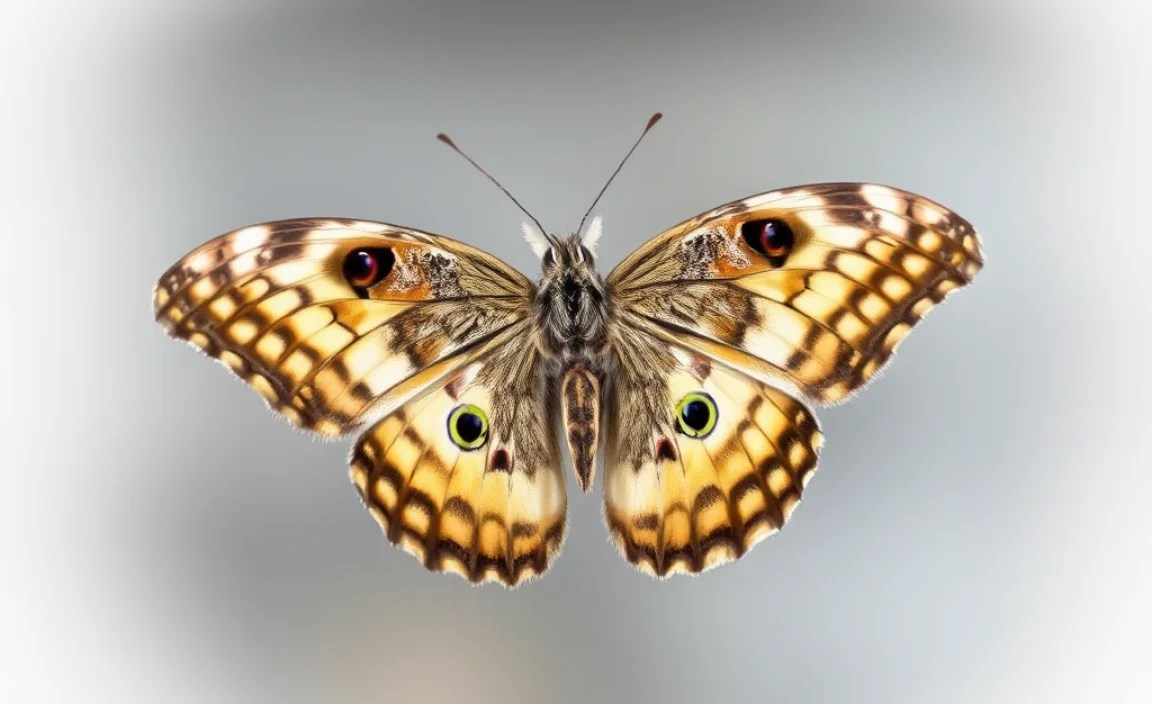
Owl butterflies belong to the tribe Brassolini, which is part of the larger Nymphalidae family (also known as brush-footed butterflies). These butterflies are primarily found in the tropical rainforests of Central and South America and are admired for their impressive size and unique wing patterns.
The name “owl butterfly” comes from the large, prominent eyespots on their wings. These eyespots look remarkably like the eyes of an owl. This is a form of mimicry that helps the butterfly defend itself against predators.
Key Characteristics
- Eyespots: Large, owl-like eyespots on the hindwings.
- Size: Generally large, with wingspans ranging from 5 to 8 inches.
- Coloration: Typically brown, tan, and yellow, providing excellent camouflage.
- Habitat: Tropical rainforests of Central and South America.
- Activity: Often crepuscular, meaning they are most active at dawn and dusk.
Popular Owl Butterfly Species

Several species of owl butterflies are particularly well-known and fascinating. Here are a few examples:
Caligo memnon (Giant Owl Butterfly)
The Giant Owl Butterfly is one of the most recognized species. Its large size and prominent eyespots make it a favorite among butterfly enthusiasts.
- Wingspan: Up to 6.5 inches.
- Color: Predominantly brown with yellow or orange eyespots.
- Habitat: Common in rainforests from Mexico to the Amazon.
- Fun Fact: This species is known to be quite strong fliers.
Caligo eurilochus (Forest Owl Butterfly)
The Forest Owl Butterfly is another notable species, known for its striking appearance and behavior.
- Wingspan: Around 5 to 6 inches.
- Color: Dark brown with large, distinct eyespots.
- Habitat: Found in Central America and parts of South America.
- Fun Fact: They often fly in the understory of the forest, seeking shade.
Caligo atreus
Caligo atreus is a captivating species known for its unique wing patterns and impressive size.
- Wingspan: Approximately 5 to 7 inches.
- Color: Dark brown with a purple-blue sheen and prominent eyespots.
- Habitat: Inhabits rainforests of Central and South America.
- Fun Fact: Known for its crepuscular behavior, it’s most active during twilight hours.
Caligo illioneus
Caligo illioneus is a beautiful owl butterfly species that stands out due to its distinct coloration and markings.
- Wingspan: Ranging from 5 to 6 inches.
- Color: Light brown with intricate patterns and well-defined eyespots.
- Habitat: Native to the rainforests of South America.
- Fun Fact: The caterpillars of this species feed on banana leaves, making them occasionally found in banana plantations.
Caligo teucer (Teucer Owl Butterfly)
The Teucer Owl Butterfly is admired for its unique appearance and ecological role.
- Wingspan: About 5 to 6 inches.
- Color: Brown with distinctive eyespots and subtle patterns.
- Habitat: Found in the rainforests of South America.
- Fun Fact: This species is known to be less active during the day, preferring to fly at dusk and dawn.
Habitat and Distribution
Owl butterflies are primarily found in the tropical rainforests of Central and South America. They thrive in warm, humid environments with dense vegetation. These habitats provide them with food sources, shelter, and suitable conditions for reproduction.
Geographical Range
- Central America: Countries like Costa Rica, Panama, and Honduras.
- South America: Regions including Brazil, Colombia, and Peru.
- Specific Habitats: Lowland rainforests, cloud forests, and areas near rivers and streams.
Environmental Requirements
- Temperature: Warm, with average temperatures between 70°F and 85°F.
- Humidity: High humidity levels, often above 70%.
- Vegetation: Dense forests with a variety of host plants for caterpillars and nectar sources for adults.
Life Cycle of Owl Butterflies

The life cycle of owl butterflies is a fascinating process that includes four distinct stages: egg, larva (caterpillar), pupa (chrysalis), and adult butterfly.
Egg Stage
Female owl butterflies lay their eggs on or near the host plants that their caterpillars will feed on. The eggs are typically small and round, often laid in clusters.
- Appearance: Small, round, and often pale green or yellow.
- Location: Laid on host plants.
- Duration: Eggs hatch in about a week.
Larva (Caterpillar) Stage
Once the eggs hatch, the larvae emerge. These caterpillars are voracious eaters, consuming large amounts of plant matter to fuel their growth. As they grow, they molt several times, shedding their skin to accommodate their increasing size. You can find great resources on caterpillar identification at the U.S. Forest Service website.
- Appearance: Large caterpillars with varying colors and patterns.
- Diet: Primarily feed on leaves of host plants, such as banana and heliconia plants.
- Growth: Molt several times as they grow.
- Duration: Several weeks.
Pupa (Chrysalis) Stage
After reaching their full size, the caterpillars enter the pupa stage. They form a chrysalis, which is a protective shell where the transformation into a butterfly takes place. This stage can last from a few weeks to several months, depending on the species and environmental conditions.
- Appearance: Green or brown chrysalis, often camouflaged to blend in with the surroundings.
- Process: Transformation from larva to butterfly occurs inside the chrysalis.
- Duration: Few weeks to several months.
Adult Butterfly Stage
Finally, the adult butterfly emerges from the chrysalis. The butterfly’s wings are initially crumpled, but they quickly expand as blood flows into the veins. Once the wings are dry and strong, the butterfly is ready to fly and reproduce.
- Appearance: Large butterflies with distinctive eyespots on their wings.
- Diet: Primarily feed on nectar from flowers and juices from rotting fruit.
- Reproduction: Adult butterflies mate and lay eggs, continuing the life cycle.
- Lifespan: Few weeks to several months.
Diet and Feeding Habits

Owl butterflies have different dietary needs at different stages of their life cycle. Caterpillars primarily feed on plant leaves, while adult butterflies feed on nectar and fruit juices.
Caterpillar Diet
Owl butterfly caterpillars are herbivores, meaning they feed exclusively on plants. Their diet mainly consists of the leaves of specific host plants.
- Host Plants: Banana leaves, heliconia leaves, and other tropical plants.
- Feeding Behavior: Voracious eaters, consuming large amounts of foliage.
- Impact: Can sometimes be considered pests in agricultural areas, particularly banana plantations.
Adult Butterfly Diet
Adult owl butterflies primarily feed on liquids, such as nectar from flowers and juices from rotting fruit. They use their long proboscis to sip these fluids.
- Nectar Sources: Various tropical flowers.
- Fruit Juices: Rotting fruits provide essential nutrients.
- Feeding Behavior: Often feed in the early morning or late afternoon.
Defense Mechanisms
Owl butterflies have developed several defense mechanisms to protect themselves from predators. The most notable is the presence of large eyespots on their wings.
Eyespots
The large eyespots on the wings of owl butterflies resemble the eyes of an owl or other large animal. These eyespots serve multiple purposes:
- Startle Predators: The sudden appearance of eyespots can startle potential predators, giving the butterfly a chance to escape.
- Deflect Attacks: Predators may target the eyespots instead of the butterfly’s body, allowing it to survive an attack.
- Mimicry: The eyespots mimic the appearance of a larger, more threatening animal, deterring predators.
Camouflage
In addition to eyespots, owl butterflies also use camouflage to blend in with their surroundings. Their brown and tan coloration helps them to disappear against tree bark and leaf litter.
- Coloration: Brown, tan, and yellow patterns that resemble tree bark.
- Behavior: Often rest with their wings closed, further enhancing their camouflage.
Flight Patterns
Owl butterflies often have erratic flight patterns, which can make it difficult for predators to track them. They may fly in a zigzag pattern or suddenly change direction to evade capture.
Ecological Importance
Owl butterflies play several important roles in their ecosystems. They contribute to pollination, serve as a food source for other animals, and indicate environmental health.
Pollination
As they feed on nectar, owl butterflies help to pollinate various plant species. While they are not as efficient pollinators as bees, they still contribute to the reproductive success of many plants.
Food Source
Owl butterflies and their caterpillars serve as a food source for a variety of animals, including birds, reptiles, and other insects. They are an important part of the food web in their habitats.
Indicator Species
The presence and abundance of owl butterflies can indicate the health of their environment. Changes in their populations can signal habitat degradation or other environmental problems.
Conservation Status and Threats
While many owl butterfly species are not currently considered endangered, they face several threats that could impact their populations in the future.
Habitat Loss
Deforestation and habitat destruction are major threats to owl butterflies. As rainforests are cleared for agriculture, logging, and development, owl butterflies lose their homes and food sources. You can find more information about rainforest conservation efforts at the Rainforest Alliance website.
Climate Change
Climate change can also affect owl butterflies by altering their habitats and disrupting their life cycles. Changes in temperature and rainfall patterns can impact the availability of host plants and nectar sources.
Pesticide Use
The use of pesticides in agricultural areas can harm owl butterflies and their caterpillars. Pesticides can directly kill butterflies or contaminate their food sources.
| Threat | Impact | Possible Solutions |
|---|---|---|
| Habitat Loss | Reduces available habitat and food sources | Support conservation efforts, promote sustainable land use |
| Climate Change | Alters habitats and disrupts life cycles | Reduce carbon emissions, protect existing habitats |
| Pesticide Use | Directly harms butterflies and contaminates food sources | Promote organic farming practices, reduce pesticide use |
Attracting Owl Butterflies to Your Garden
While owl butterflies are native to tropical regions, you can still create a butterfly-friendly garden that attracts other beautiful butterfly species. Here are some tips:
Plant Host Plants
Provide host plants for caterpillars to feed on. This will encourage butterflies to lay their eggs in your garden and support the growth of new generations.
- Examples: Milkweed for Monarch butterflies, dill for Swallowtail butterflies.
Provide Nectar Sources
Plant a variety of flowers that provide nectar for adult butterflies. Choose flowers with different colors, shapes, and blooming times to attract a wide range of species.
- Examples: Butterfly bush, zinnias, and coneflowers.
Offer a Water Source
Butterflies need water to stay hydrated. Provide a shallow dish of water with pebbles or stones for them to land on.
Avoid Pesticides
Pesticides can harm butterflies and other beneficial insects. Avoid using pesticides in your garden and choose organic gardening methods instead.
Cultural Significance and Symbolism
Butterflies, including owl butterflies, hold significant cultural and symbolic meaning in many societies around the world.
Symbol of Transformation
Butterflies are often seen as symbols of transformation and rebirth. Their life cycle, from egg to caterpillar to pupa to butterfly, represents the process of change and growth.
Spiritual Meaning
In some cultures, butterflies are believed to be messengers from the spirit world. They may represent the souls of loved ones who have passed away.
Art and Literature
Butterflies have been a popular subject in art and literature for centuries. They are often used to represent beauty, freedom, and fragility.
Frequently Asked Questions (FAQ)
What do owl butterfly caterpillars eat?
Owl butterfly caterpillars primarily eat the leaves of host plants such as banana and heliconia plants. They are voracious eaters and consume large amounts of foliage to fuel their growth.
How do owl butterflies protect themselves from predators?
Owl butterflies protect themselves with large eyespots on their wings that startle predators. They also use camouflage to blend in with their surroundings and have erratic flight patterns to evade capture.
Where do owl butterflies live?
Owl butterflies live in the tropical rainforests of Central and South America. They thrive in warm, humid environments with dense vegetation.
What is the lifespan of an owl butterfly?
The lifespan of an owl butterfly varies, but adult butterflies typically live for a few weeks to several months. The entire life cycle, from egg to adult, can take several months to a year.
Are owl butterflies endangered?
While many owl butterfly species are not currently considered endangered, they face threats such as habitat loss, climate change, and pesticide use that could impact their populations in the future. Conservation efforts are important to protect these beautiful creatures.
Why are they called owl butterflies?
They are called owl butterflies because of the large, prominent eyespots on their wings that resemble the eyes of an owl. This mimicry helps them deter predators.
How big do owl butterflies get?
Owl butterflies are generally large, with wingspans ranging from 5 to 8 inches. The Giant Owl Butterfly (Caligo memnon) can have a wingspan of up to 6.5 inches.
Conclusion
Owl butterflies are truly fascinating creatures with their distinctive eyespots, impressive size, and unique behaviors. From the Giant Owl Butterfly to the Forest Owl Butterfly, each species contributes to the rich biodiversity of the tropical rainforests they inhabit. Understanding their life cycle, diet, and defense mechanisms can deepen our appreciation for these remarkable insects.
By supporting conservation efforts, promoting sustainable practices, and creating butterfly-friendly gardens, we can help protect owl butterflies and their habitats for future generations. Let’s continue to explore and cherish the wonders of the natural world, one butterfly at a time.