
Asian Butterfly Identification Tips: Easy Guide

Do you love butterflies? They are so pretty. Butterflies fly all around us. Some butterflies live in Asia. Figuring out which butterfly is which can be tricky. This article gives you Asian butterfly identification tips. You can learn how to name these beautiful insects.
Key Takeaways
- Asian butterfly identification tips include checking size, color, and wing patterns.
- Notice the colors on the top and bottom of the butterfly’s wings.
- Look for unique spots, stripes, or tails on each butterfly.
- Observe where you find the butterfly, as habitats vary.
- Use books or websites to compare your observations to known species.
Easy Asian Butterfly Identification Tips
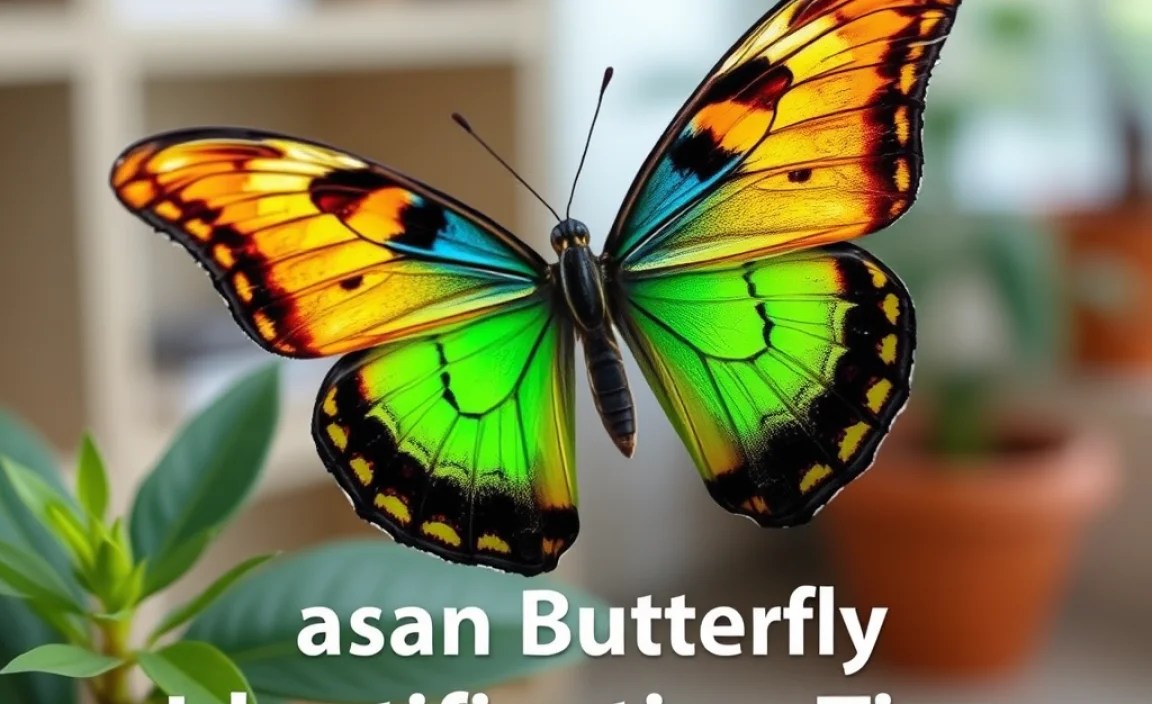
Identifying Asian butterflies can be a fun adventure. Butterflies are different sizes. They also have different colors. Some are big and bright. Others are small and dull. Start by looking at the size of the butterfly. Is it as big as your hand? Or is it smaller than your thumb? Next, notice the colors on its wings. Are they bright and colorful? Or are they plain and simple? Pay close attention to the patterns on the wings. Do you see any spots, stripes, or lines? These things can help you tell one butterfly from another. Many resources, like books and websites, can help. They show pictures of different butterflies. You can compare the butterfly you see to the pictures in the books or websites. Have fun exploring the world of butterflies!
- Check the size of the butterfly.
- Note the colors on its wings.
- Look for any patterns or spots.
- See where you found the butterfly.
- Use a book or website to help.
When you’re trying to name a butterfly, think like a detective. Imagine you are trying to solve a mystery. The butterfly is your clue. The more you look, the more you will see. It takes time to learn all the different kinds of butterflies. Don’t worry if you don’t know every butterfly right away. Keep looking and learning. Each time you see a butterfly, try to notice something new. Maybe you will see a tiny spot you didn’t see before. Or maybe you will notice the way it flies. Every little bit helps. Soon, you’ll become a butterfly expert! Remember to have fun while you learn.
Fun Fact or Stat: Some butterflies can taste with their feet!
What Size Is the Butterfly?
When you see a butterfly, think about how big it is. Is it small like a coin? Or is it big like your hand? Size can help you narrow down what kind of butterfly it might be. Some butterflies are always small. Others are always big. Knowing the size can help you start to figure out its name. For example, a tiny blue butterfly is probably a type of “blue” butterfly. A big, orange butterfly might be a monarch. Keep in mind that some butterflies look similar. So, size is just one thing to consider. Pay attention to the other details too! Use all the clues to solve the mystery.
What Colors Do You See?
Butterflies come in all sorts of colors. Some are bright and bold. Others are soft and gentle. Pay close attention to the colors you see. Do you see red, orange, yellow, green, blue, or purple? Maybe you see a mix of colors. The colors can tell you a lot about the butterfly. For example, some butterflies have bright colors to warn predators. Other butterflies have dull colors to help them hide. Look closely at the colors and how they are arranged. Do the colors form a pattern? Are the colors on the top of the wings different from the bottom? All of these details can help you figure out which butterfly you are seeing.
What Patterns Are on the Wings?
Butterfly wings are like tiny works of art. They have all sorts of patterns. Some have spots, others have stripes. Some have lines, and some have tails. These patterns are not just for show. They help the butterfly in many ways. Some patterns help the butterfly hide from predators. Other patterns help the butterfly attract a mate. Look closely at the patterns on the wings. Are there any unique shapes or designs? Do the patterns repeat? Are the patterns the same on both wings? All of these details can help you identify the butterfly.
Check Wing Shape and Markings for Butterfly ID

To identify Asian butterflies, study their wing shapes. Some wings are round. Others are pointy. The edges can be smooth or jagged. Look for unique markings. These can be spots, lines, or bands. Markings often differ on the top and bottom. Note if the butterfly has tails or extensions. These features help tell butterflies apart. Use guides with pictures to compare. Match the shapes and markings. This helps you find the butterfly’s name. Wing details are very important for ID. They offer clues to the butterfly’s species.
- Note the overall shape of the wings.
- Check for pointy or rounded edges.
- Look at markings on the top side.
- Examine markings on the underside.
- See if there are any tails or extensions.
- Compare to pictures in field guides.
Imagine you’re an artist looking at a painting. You notice every little detail. The same goes for butterflies. The more you look, the more you see. Wing shape is like the outline of the painting. Markings are like the colors and brushstrokes. Each butterfly has its own unique artwork on its wings. Some butterflies have wings that look like leaves. This helps them hide in trees. Others have bright colors to attract attention. The markings can even trick predators. Some butterflies have spots that look like eyes. This can scare away birds. So, pay close attention to the wings. They hold many secrets.
Fun Fact or Stat: Butterfly wings are covered in tiny scales, like shingles on a roof.
Are the Wings Rounded or Pointy?
Take a close look at the butterfly’s wings. Are they mostly rounded? Or do they have pointy tips? Some butterflies have wings that are almost perfectly round. Others have wings that come to a sharp point. The shape of the wings can tell you a lot. Butterflies with rounded wings often fly slower. Butterflies with pointy wings can fly faster. The shape also helps with camouflage. Rounded wings can look like leaves or flowers. Pointy wings can help a butterfly blend into the grass. So, pay attention to the shape. It’s an important clue.
What Kind of Markings Do You See?
Markings are like the butterfly’s signature. They are unique to each species. Some butterflies have spots. Others have stripes. Some have lines, and others have bands. The markings can be different colors too. Some are black, others are white. Some are red, and others are blue. The markings can be on the top of the wings. Or they can be on the bottom. Sometimes they are on both. Look closely at the markings. Do they form a pattern? Are they symmetrical? All of these details can help you identify the butterfly.
Does the Butterfly Have Tails?
Some butterflies have tails on their wings. These tails can be long or short. They can be thin or wide. Some butterflies have one tail on each wing. Others have two or more. The tails can serve different purposes. Some tails help the butterfly attract a mate. Other tails help the butterfly confuse predators. When a bird attacks, it might go for the tail instead of the body. This gives the butterfly a chance to escape. So, if you see a butterfly with tails, take note. It’s an important clue.
Understanding Butterfly Habitats in Asia

Asian butterfly identification tips include knowing where butterflies live. Butterflies live in different places. Some like forests. Others prefer gardens. Some live near water. The habitat helps you narrow your search. For instance, a butterfly in a forest is not a desert species. Look around. What plants are nearby? Some butterflies only eat certain plants. Knowing the food source is helpful. Location is key to ID. Observe the surroundings. This gives you important clues. Use this information with other features.
- Note if it is a forest, garden, or field.
- See if there are specific plants nearby.
- Consider if it is near water sources.
- Think about the altitude and climate.
- Check if that species is known to live there.
- Note other insects and creatures around.
Imagine you are planning a trip. You need to know where to go. Butterflies are the same. They need specific places to live. Some butterflies need warm, sunny places. Others need cool, shady spots. The plants around them are important too. Butterflies lay their eggs on specific plants. The caterpillars eat those plants. So, if you see a butterfly near a certain plant, it’s a clue. Knowing the habitat is like having a map. It helps you find the butterfly you are looking for. It makes the identification process easier.
Fun Fact or Stat: Some butterflies migrate thousands of miles each year!
Is It a Forest Butterfly?
Forest butterflies love to live in the woods. They like shady spots and lots of trees. These butterflies often have colors that help them blend in. They might be brown, green, or gray. Some forest butterflies have patterns that look like leaves. This helps them hide from predators. If you see a butterfly in the forest, look closely. What kind of trees are around? Are there lots of leaves on the ground? These details can help you figure out which butterfly it is. Forest butterflies are often different from butterflies you see in gardens or fields.
Does It Prefer Gardens?
Garden butterflies love flowers. They are attracted to bright colors and sweet smells. These butterflies often have bright colors too. You might see red, orange, yellow, or blue. Garden butterflies like to fly around and drink nectar from flowers. They also lay their eggs on garden plants. If you see a butterfly in a garden, look around. What kind of flowers are blooming? Are there any vegetables growing? These details can help you figure out which butterfly it is. Garden butterflies are often different from butterflies you see in forests or near water.
Does It Live Near Water?
Some butterflies like to live near water. They might live near rivers, lakes, or ponds. These butterflies often need water to survive. They drink water to stay hydrated. They also lay their eggs on plants that grow near water. If you see a butterfly near water, look closely. Are there any reeds or cattails growing nearby? Are there any fish or frogs in the water? These details can help you figure out which butterfly it is. Butterflies that live near water are often different from butterflies that live in forests or gardens.
Using Field Guides for Asian Butterflies
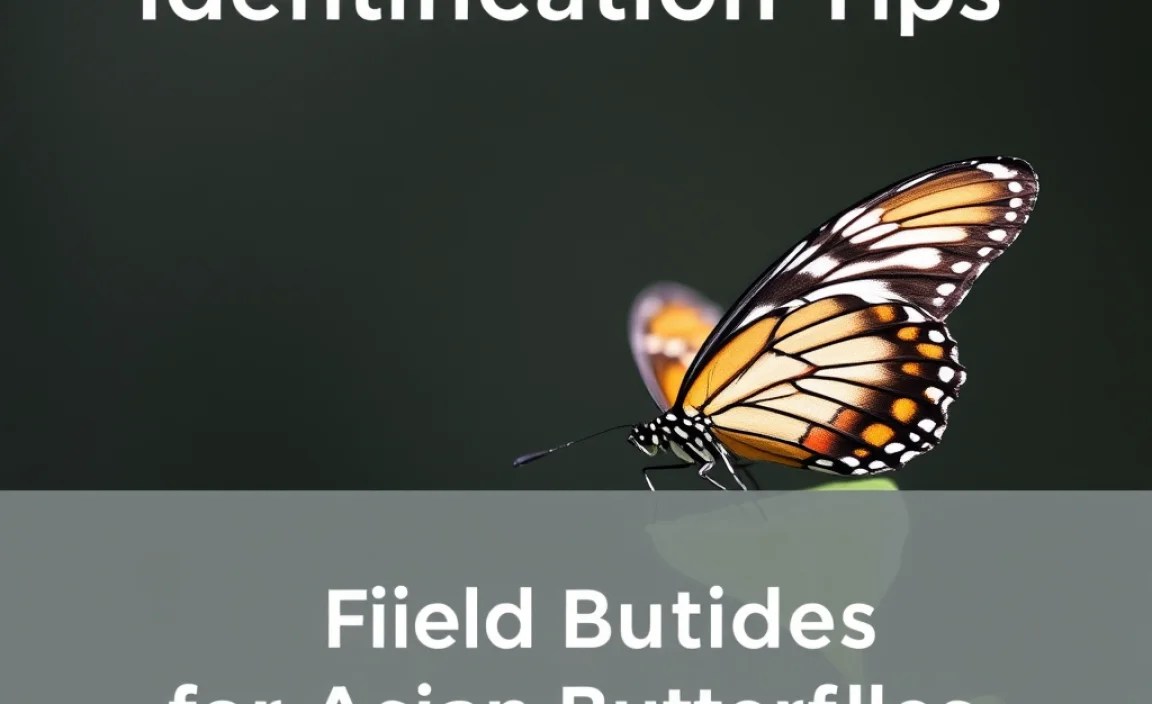
Field guides are useful for Asian butterfly identification tips. These books show pictures of different butterflies. They also describe each butterfly. The descriptions include size, color, and habitat. Compare your butterfly to the pictures. Read the description carefully. Look for matching features. Field guides often have maps. These maps show where each butterfly lives. This helps you confirm your ID. Field guides are a great resource. They make identifying butterflies easier.
- Find a field guide for your region.
- Look up butterflies by color or shape.
- Read the descriptions carefully.
- Compare pictures to the butterfly you see.
- Check the range maps.
- Note the common and scientific names.
Imagine you are going on a treasure hunt. A field guide is your map. It helps you find the treasure, which is the butterfly’s name. The pictures are like clues. They show you what the butterfly looks like. The descriptions tell you more about it. The maps show you where to look. Using a field guide is like having an expert with you. It helps you learn about butterflies and identify them correctly. So, grab a field guide and start exploring! You’ll be amazed at how much you can learn.
Fun Fact or Stat: The scientific study of butterflies is called lepidopterology.
What Does the Butterfly Look Like?
Field guides show pictures of butterflies. Look at the pictures carefully. Compare them to the butterfly you see. Note the colors, patterns, and shapes. Does the butterfly in the picture look like the one you found? If so, read the description. The description will give you more details. It will tell you about the butterfly’s size, habitat, and behavior. Use all of this information to help you identify the butterfly. The more you look, the more you will learn.
Where Does the Butterfly Live?
Field guides have maps that show where butterflies live. Look at the map for the butterfly you think you found. Does the map show that the butterfly lives in your area? If so, that’s a good sign. It means you might have identified it correctly. But don’t rely on the map alone. Make sure to check the other details too. The colors, patterns, and shapes should match. The habitat and behavior should also be similar. Use all of the information together to make sure you are right.
What Else Does the Field Guide Say?
Field guides give lots of information about butterflies. They tell you about their size, color, and habitat. They also tell you about their behavior. Do they fly fast or slow? Do they prefer sunny or shady spots? Do they lay their eggs on specific plants? All of this information can help you identify the butterfly. Read the field guide carefully. Learn as much as you can. The more you know, the easier it will be to identify butterflies. Field guides are a great resource for butterfly lovers.
Comparing Butterfly Species in Asia

Asian butterfly identification tips involve comparing species. Some butterflies look alike. Notice small differences. Check the wing patterns closely. Look at the colors in detail. Compare the sizes carefully. Note the habitats they prefer. Use a table to list features. This helps you see the differences. Comparing helps avoid mistakes. It makes identification more accurate. It is important to be precise. This ensures you name the right butterfly.
| Feature | Species A | Species B | Species C |
|---|---|---|---|
| Wing Color | Orange and Black | Blue and White | Green and Brown |
| Wing Pattern | Stripes | Spots | No Pattern |
| Size | Large | Small | Medium |
| Habitat | Forest | Garden | Near Water |
- Note the colors of different butterflies.
- Compare the patterns on the wings.
- Check the size of each species.
- See where they live.
- Use a table to compare features.
- Avoid common mistakes.
Imagine you have two similar toys. They look almost the same. But if you look closely, you’ll see differences. One might have a different color. Another might have a different shape. Butterflies are like that too. Some species look very similar. But there are always differences. You just need to look closely. Comparing butterflies is like solving a puzzle. You need to find the clues that tell them apart. Use your eyes and your brain. You can become a butterfly detective. Have fun with it!
Fun Fact or Stat: Butterflies are important pollinators, helping plants make seeds.
What Are the Key Differences in Color?
Color is a very important feature. It helps you tell butterflies apart. Some butterflies are brightly colored. Others are dull. Pay attention to the different shades of color. Is it a light blue or a dark blue? Is it a bright red or a dull red? Look at how the colors are arranged. Are they in stripes or spots? Do they blend together or are they separate? The more you notice about the colors, the better you will be at identifying butterflies. Color is a key clue. Use it to solve the butterfly puzzle.
How Do the Wing Patterns Differ?
Wing patterns are like fingerprints. They are unique to each species. Some butterflies have stripes. Others have spots. Some have lines, and some have bands. Look closely at the patterns. How are they arranged? Are they symmetrical? Do they repeat? Are they on the top or bottom of the wings? The more you notice about the patterns, the better you will be at identifying butterflies. Patterns are a key clue. Use them to solve the butterfly puzzle.
Are There Size Variations Between Species?
Size is another important feature. Some butterflies are large. Others are small. Pay attention to the size of the butterfly. Is it as big as your hand? Or is it smaller than your thumb? Compare the size to other butterflies you have seen. This can help you narrow down the possibilities. Size is not always the most important feature. But it can be a useful clue. Use it along with the other clues to identify the butterfly.
Online Resources for Butterfly Identification
For more Asian butterfly identification tips, use online resources. Many websites show butterfly pictures. They also have descriptions. Some sites let you search by color or shape. Others have forums where you can ask questions. Online resources are very helpful. They give you access to lots of information. You can learn about butterflies from experts. These resources make ID easier. They can help you become a butterfly pro.
- Use websites with butterfly photos.
- Search by color, shape, or location.
- Read descriptions of different species.
- Join online forums to ask questions.
- Watch videos about butterfly ID.
- Download butterfly identification apps.
Imagine you have a question. You can ask the whole world for help. That’s what online resources are like. They connect you to people and information from all over. You can see pictures of butterflies from different countries. You can read descriptions written by experts. You can ask questions and get answers from other butterfly lovers. Online resources make learning about butterflies fun and easy. They are a great tool for anyone who wants to learn more.
Fun Fact or Stat: There are over 20,000 different species of butterflies in the world.
What Websites Can Help Me?
There are many websites that can help you identify butterflies. Some popular websites include butterfly identification guides and nature websites. These websites have pictures and descriptions of different butterfly species. They also have information about their habitat and behavior. You can search for butterflies by color, shape, or location. Some websites also have forums where you can ask questions and get help from other butterfly enthusiasts. These websites are a great resource for anyone who wants to learn more about butterflies.
Are There Apps for Identifying Butterflies?
Yes, there are apps that can help you identify butterflies. These apps use your phone’s camera to take a picture of the butterfly. Then, they compare the picture to a database of butterfly images. The app will then suggest the most likely species. Some apps also have information about the butterfly’s habitat and behavior. These apps are a convenient way to identify butterflies in the field. They can be especially helpful for beginners.
Can I Ask Experts Online?
Yes, you can ask experts online for help identifying butterflies. Many websites and forums have experts who are willing to answer questions. You can post a picture of the butterfly and ask for help identifying it. Be sure to include as much information as possible, such as the location, date, and time. The experts will use their knowledge and experience to help you identify the butterfly. This is a great way to learn from the pros.
Photographing Butterflies for Later ID
Taking photos helps with Asian butterfly identification tips. A good photo captures details. Get close to the butterfly. Focus on the wings. Take pictures from different angles. Note the date and location. Write down what plants are nearby. Photos help you remember details. You can compare the photo to field guides later. Photos make identification easier. They are a great tool for butterfly lovers.
- Get a clear, close-up shot.
- Focus on the wings and markings.
- Take photos from different angles.
- Note the date and location of the sighting.
- Record any nearby plants or flowers.
- Use the photos for later comparison.
Imagine you are a wildlife photographer. You want to capture the beauty of butterflies. Taking good photos is important. It helps you remember the details. It also helps you share your discoveries with others. A good photo can show the colors, patterns, and shapes of the butterfly’s wings. It can also show the butterfly’s habitat. Taking photos is like creating a memory. You can look back at the photos later and relive the experience.
Fun Fact or Stat: Butterflies have four wings, not two, even though they look like they only have two.
How Can I Get a Good Photo?
Getting a good photo of a butterfly can be tricky. Butterflies are small and they move quickly. But with a little practice, you can take great photos. First, try to get close to the butterfly. Use a zoom lens if you have one. Second, focus on the butterfly’s wings. Make sure the wings are sharp and clear. Third, take photos from different angles. This will give you a better view of the butterfly. Finally, be patient. It may take several tries to get a good photo.
What Details Should I Capture?
When you are taking photos of butterflies, there are several details you should try to capture. First, focus on the butterfly’s wings. The wings are the most important part of the butterfly. They have the colors, patterns, and shapes that you need to identify it. Second, try to capture the butterfly’s habitat. What plants are nearby? Is it in a forest or a garden? This information can help you narrow down the possibilities. Finally, note the date and location of the sighting. This information can also be helpful for identification.
How Do I Use Photos for ID Later?
Once you have taken photos of a butterfly, you can use them to identify it later. First, compare the photos to field guides. Look for a butterfly that matches the colors, patterns, and shapes in the photos. Second, check the habitat and location. Does the field guide say that the butterfly lives in your area? Third, read the description in the field guide. Does the description match the butterfly in your photos? If everything matches, you have probably identified the butterfly correctly.
Summary
Identifying Asian butterflies involves several steps. First, observe the butterfly’s size, color, and wing patterns. Second, note the habitat where you found it. Third, use field guides or online resources to compare your observations. Fourth, take photos to capture important details. Comparing different species is also helpful. By following these Asian butterfly identification tips, you can learn to name these beautiful creatures. Remember to be patient and have fun. With practice, you will become a butterfly expert.
Conclusion
Learning to identify Asian butterflies is a rewarding hobby. It connects you with nature. You can use simple methods to name different species. Observe wing patterns, colors, and sizes. Note the butterfly’s habitat. Use field guides and online tools. Taking photos helps with later identification. With these Asian butterfly identification tips, you can enjoy discovering the world of butterflies. Keep exploring and learning!
Frequently Asked Questions
Question No 1: What is the first thing I should look for when trying to identify an Asian butterfly?
Answer: The very first thing you should consider when trying to identify an Asian butterfly is its overall size. Is it a tiny butterfly, perhaps smaller than your thumb? Or is it a larger butterfly, maybe even as big as your hand? Size can help you quickly narrow down the possibilities. Note this detail along with the location where you spotted it. Combine the size with color observations for a more precise start. This is a simple but effective Asian butterfly identification tip.
Question No 2: How important is the location where I saw the butterfly?
Answer: The location or habitat of the butterfly is very important. Different butterfly species prefer different environments. Some butterflies thrive in forests. Others prefer open fields or gardens. Some butterflies are only found near water sources. If you know the habitat, you can rule out species that don’t live in that area. Note if it was a forest, garden, or near a stream. Knowing this helps narrow down your search. Remember, Asian butterfly identification tips always include habitat.
Question No 3: What are some good online resources for identifying Asian butterflies?
Answer: Several excellent online resources can help you identify Asian butterflies. Websites dedicated to butterflies often have extensive photo galleries and descriptions. Many nature websites also have sections on butterflies. Some apps can help identify butterflies from photos. Butterfly forums and groups are great places to ask questions and get help from experts. These resources provide valuable information. They enhance your Asian butterfly identification tips knowledge.
Question No 4: The wing patterns on the butterfly I saw were very complex. How should I approach this?
Answer: Complex wing patterns are common in Asian butterflies. Take a close-up photo if possible. Try to focus on key elements like spots, lines, and bands. Notice if the patterns are symmetrical. Look for unique shapes or designs. Compare the patterns to field guides and online resources. Sometimes, breaking down the pattern into smaller parts makes it easier to identify. Remember to use all Asian butterfly identification tips for the best results.
Question No 5: What if I can’t find an exact match for the butterfly I saw?
Answer: Sometimes, identifying a butterfly can be tricky. You might not find an exact match. This could be because the butterfly is rare or has unusual markings. It could also be a variation within a species. In this case, try to narrow down the possibilities as much as possible. Consult with experts online or in person. They may be able to help you identify the butterfly. Don’t be discouraged. Keep learning and exploring. Improve your Asian butterfly identification tips skills.
Question No 6: Is it important to know the scientific name of the butterfly?
Answer: Knowing the scientific name isn’t always essential. But it can be helpful. Common names can vary by region. The scientific name is universal. It helps avoid confusion. If you want to communicate with scientists or other butterfly enthusiasts, the scientific name is important. It ensures everyone knows which butterfly you are talking about. Learning scientific names enhances your Asian butterfly identification tips knowledge. It makes you a more knowledgeable butterfly observer.


