Tiger Swallowtail Identification: Your Easy Guide

Quick Summary: Identifying a Tiger Swallowtail butterfly involves looking for its large size (3-5.5 inch wingspan), yellow wings with black tiger-like stripes, and distinctive “tails” on the hindwings. Females may have a blue iridescent wash and a row of blue spots. Familiarize yourself with regional variations and lookalikes like the Spicebush Swallowtail. Observing their behavior and habitat can also aid in identification.
Have you ever been captivated by a large, yellow butterfly gracefully fluttering through your garden? Chances are, you’ve spotted a Tiger Swallowtail! These magnificent creatures are a joy to behold, but telling them apart from other butterflies can sometimes be a bit tricky. Don’t worry, though! With a few simple tips and tricks, you’ll be identifying these beauties like a pro. I’ll guide you through each key characteristic, making the process easy and fun. Get ready to unlock the secrets of Tiger Swallowtail identification!
Tiger Swallowtail Identification: A Comprehensive Guide
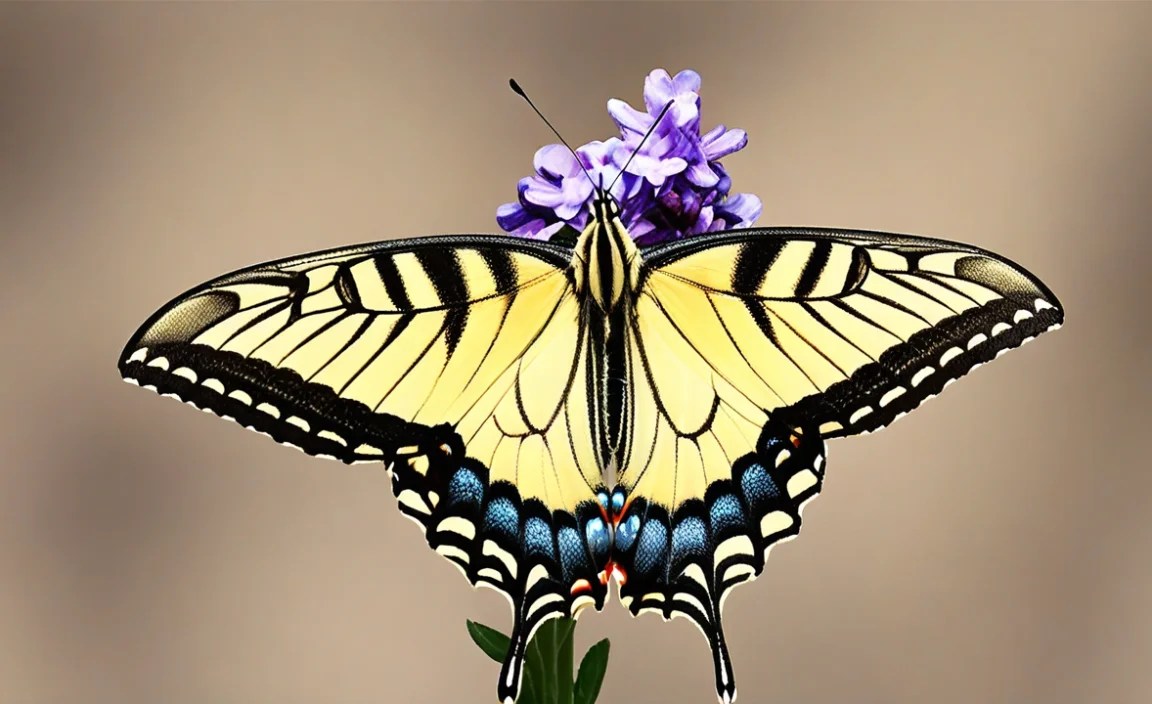
Tiger Swallowtails are among the most recognizable butterflies in North America. Their large size and striking yellow and black patterns make them a favorite among butterfly enthusiasts. However, with regional variations and similar-looking species, accurate identification can be challenging. Let’s explore the key features that will help you confidently identify these stunning butterflies.
Size and Wingspan
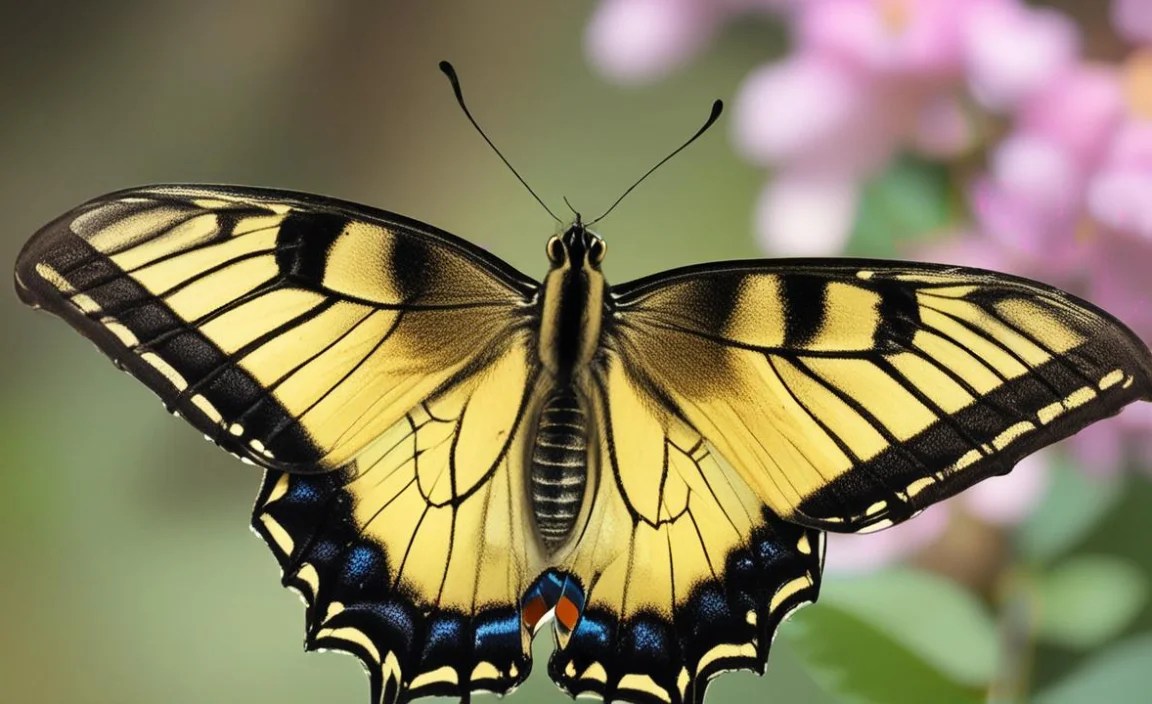
One of the first things you’ll notice about Tiger Swallowtails is their impressive size. They are among the largest butterflies you’re likely to encounter.
- Typical Wingspan: 3 to 5.5 inches (7.6 to 14 cm).
- Visual Cue: Larger than most common butterflies like Monarchs or Painted Ladies.
This significant wingspan is a great starting point in distinguishing them from smaller swallowtail species or other yellow butterflies.
Color and Markings
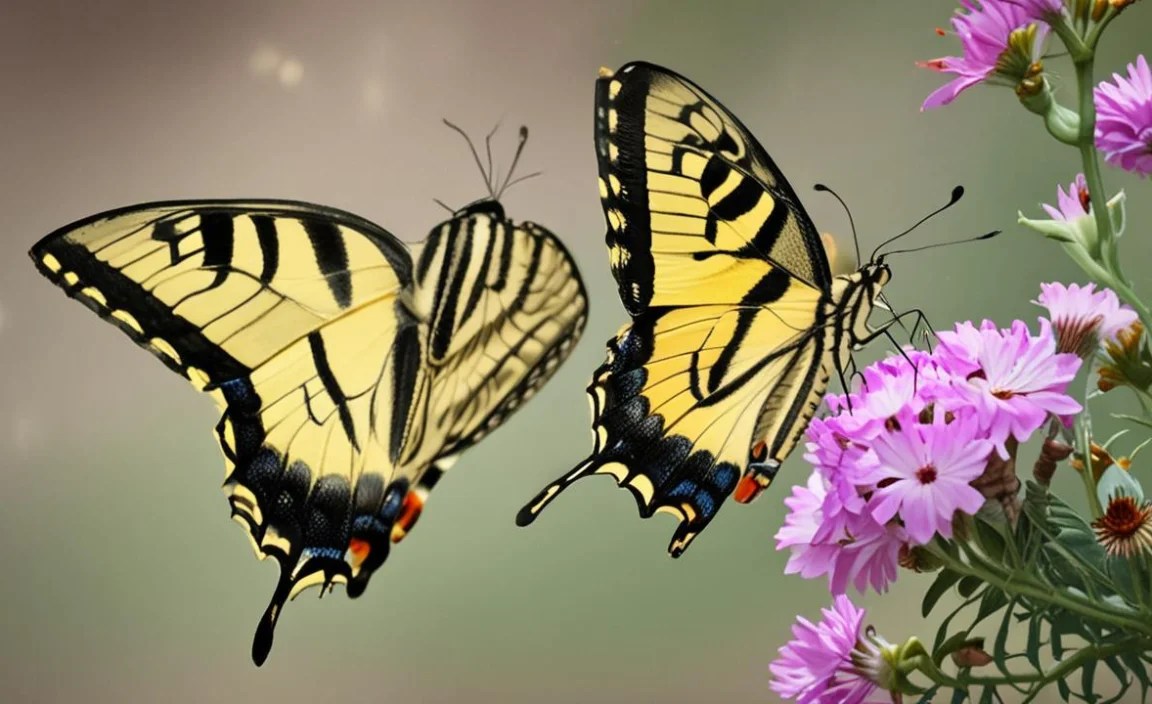
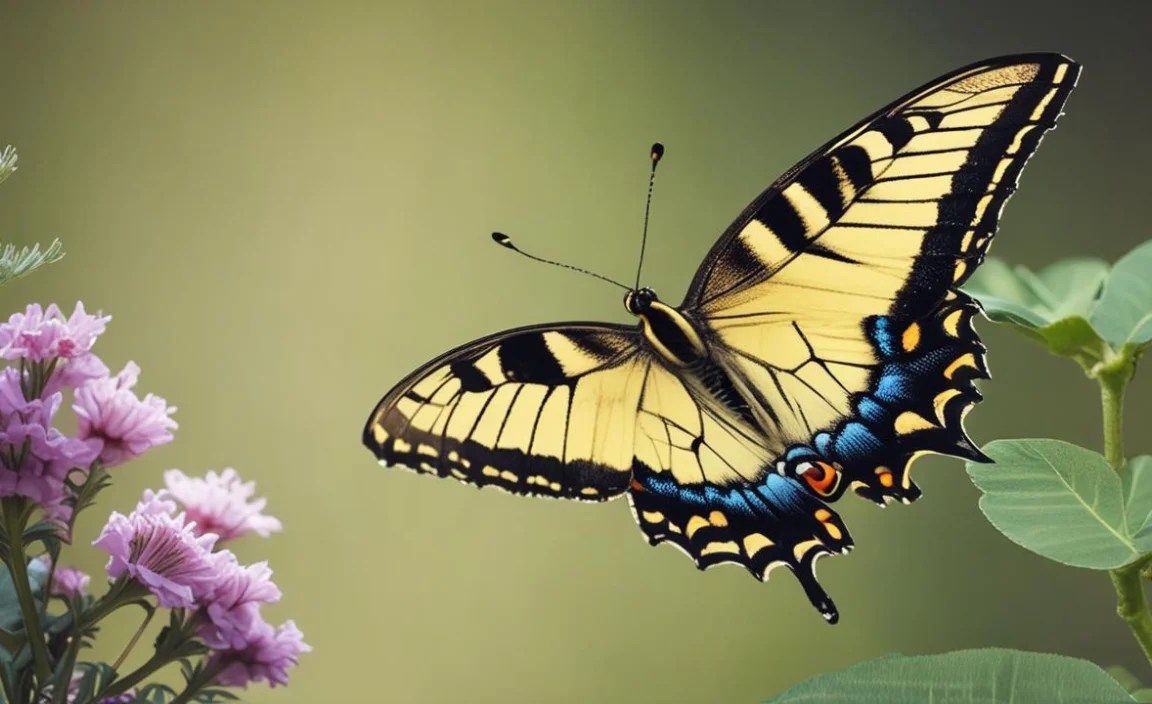
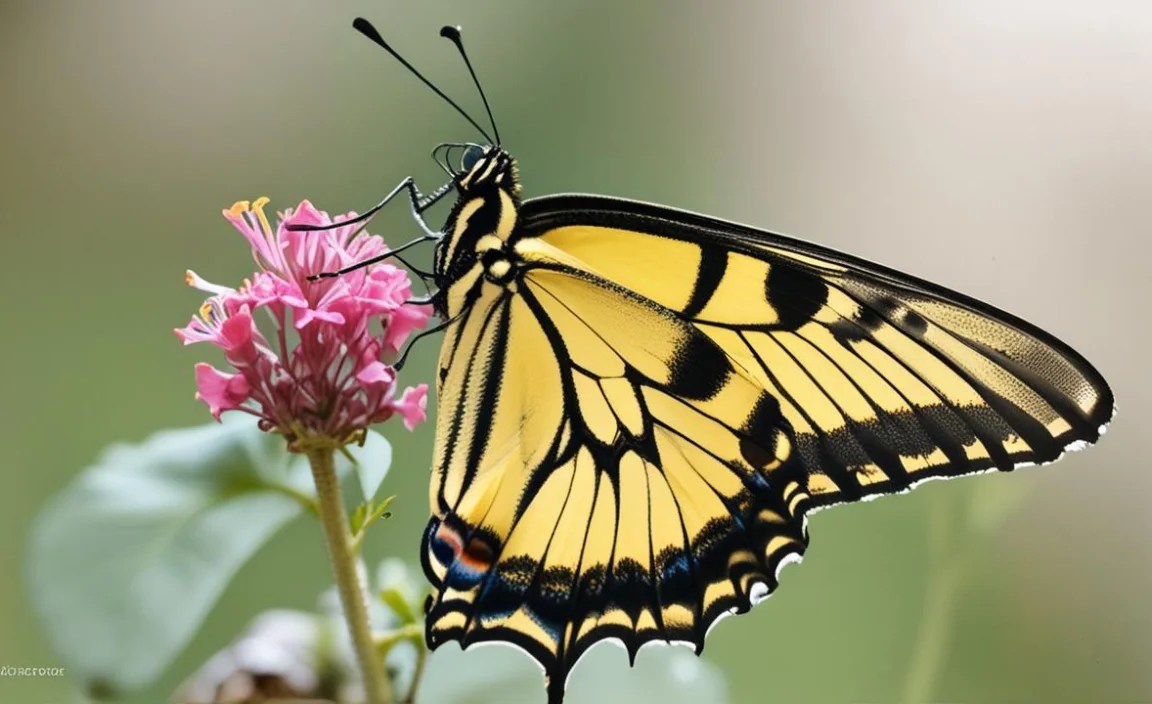
The color and markings of Tiger Swallowtails are their most distinctive features. Pay close attention to the following:
- Base Color: Typically bright yellow.
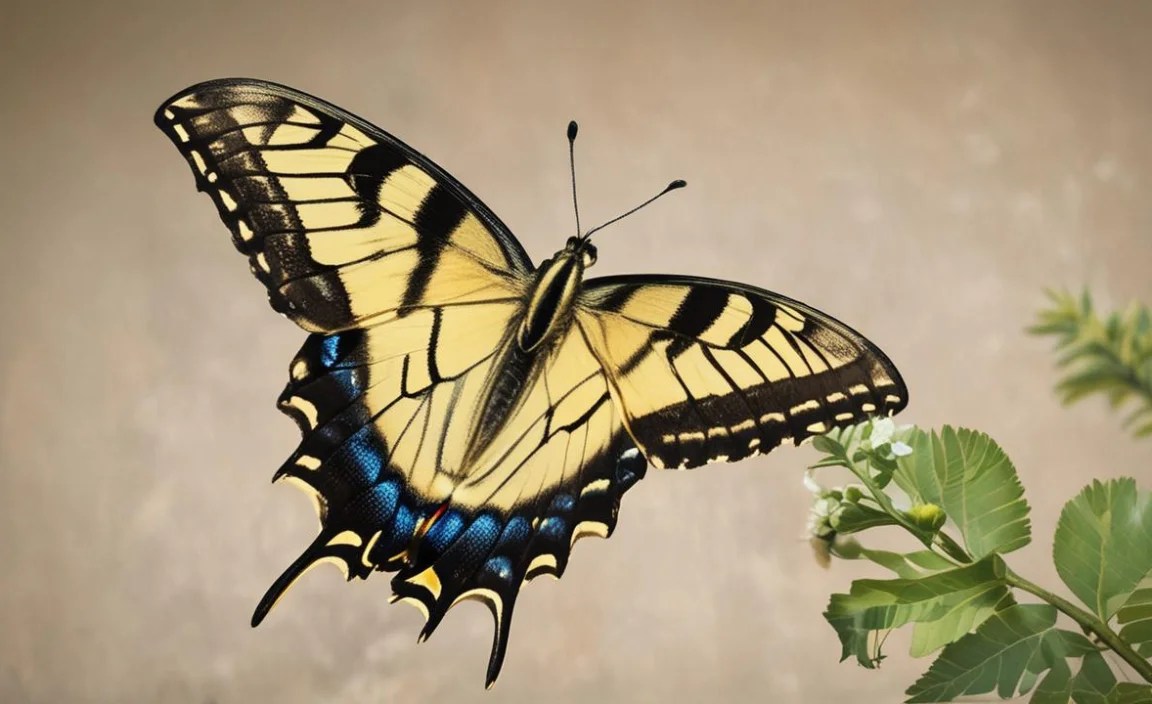
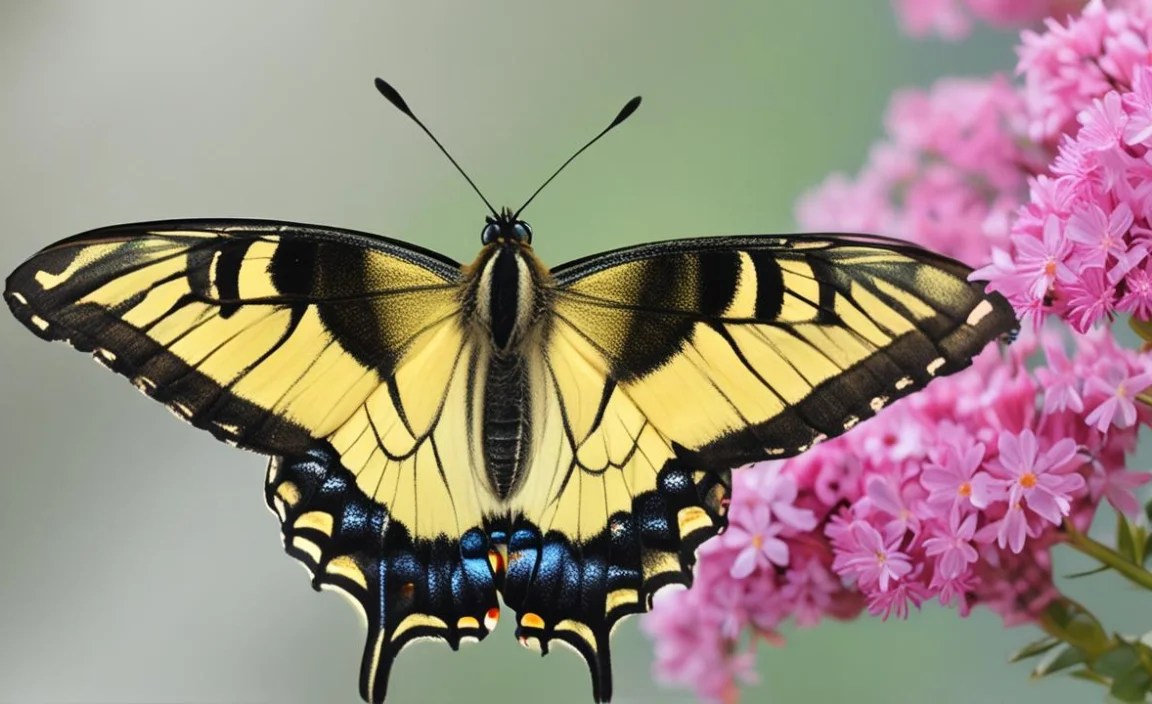
- Tiger Stripes: Bold black stripes running vertically down the wings, resembling a tiger’s pattern.
- Wing Shape: Elongated wings with distinctive “tails” on the hindwings.
These markings are consistent across the species, but there are variations between males and females, and across different geographic regions.
Male vs. Female Markings

Males and females of some Tiger Swallowtail species have different markings, a phenomenon known as sexual dimorphism. Here’s how to tell them apart:
- Males: Generally have brighter yellow wings with well-defined black stripes.
- Females:
- Can be yellow like males (especially in the Eastern Tiger Swallowtail).
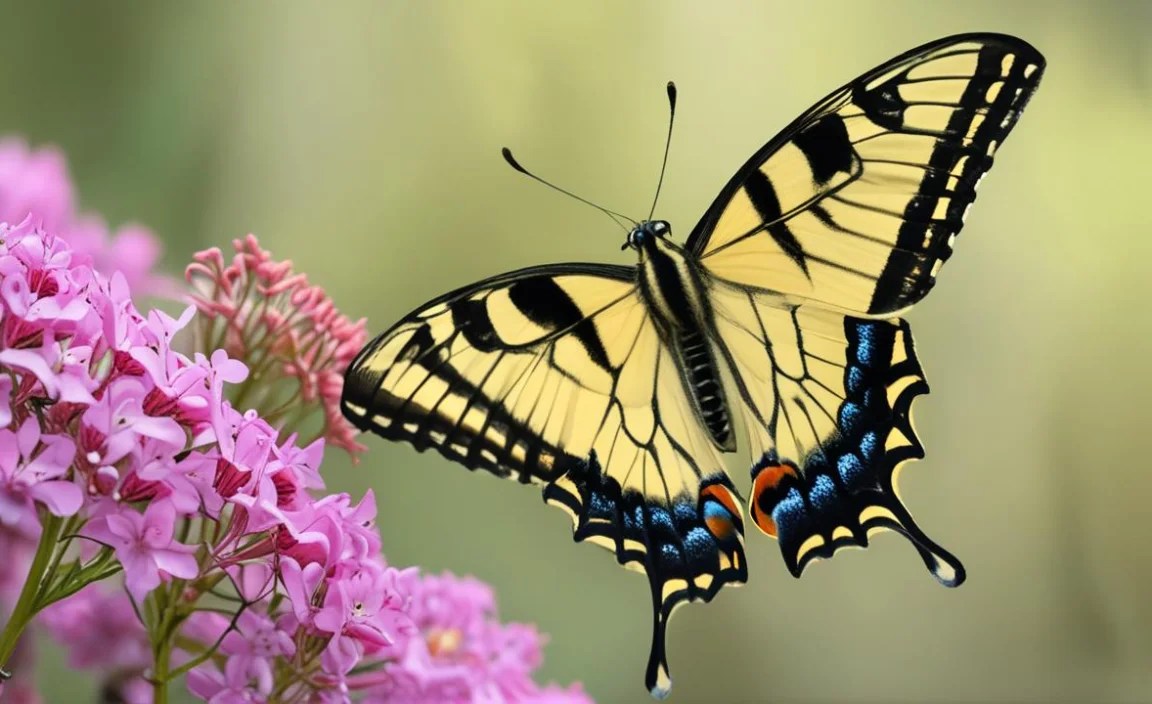
- May have a dark form (especially in the Eastern Tiger Swallowtail), where the yellow is replaced by a dark gray or black. These dark females often have a blue iridescent wash on the hindwings and a row of blue spots.
The presence of a dark female morph is a key indicator for certain species, particularly in the eastern United States.
Tail Characteristics
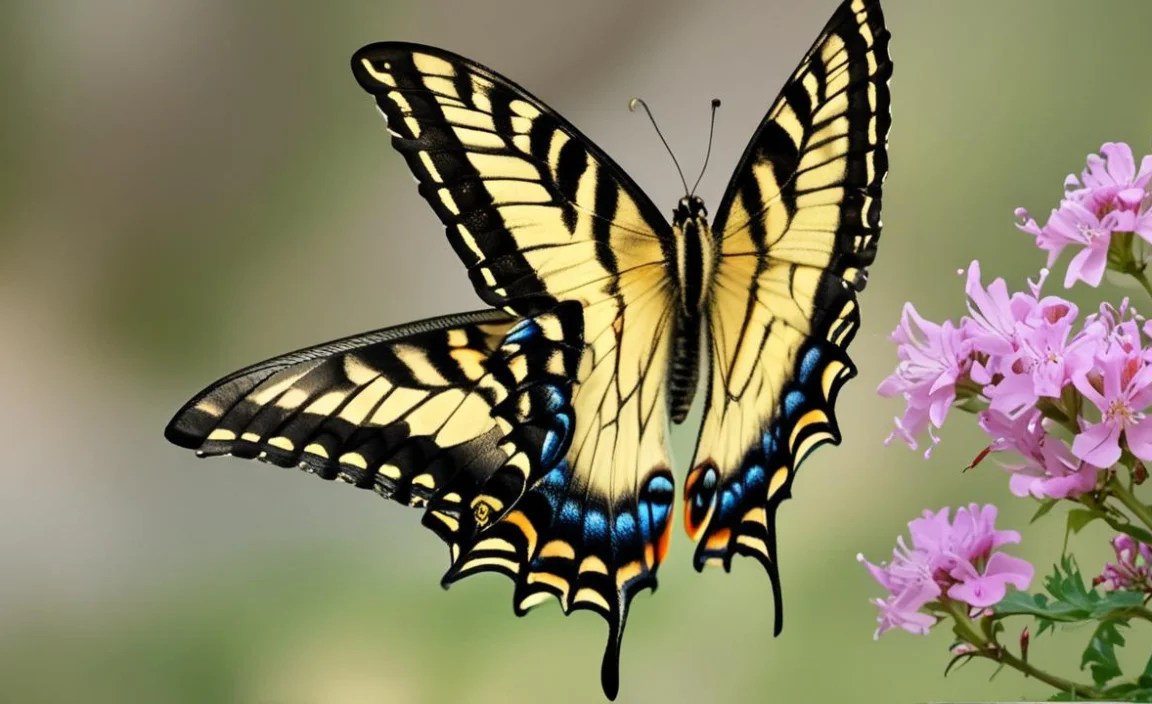
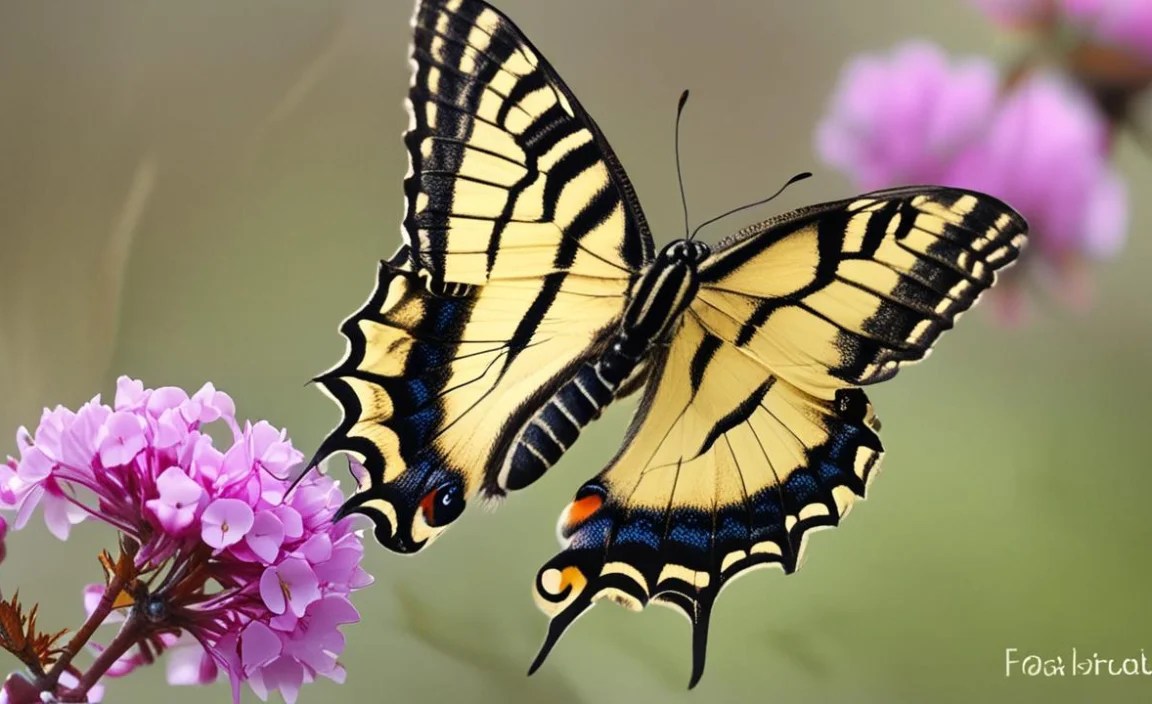
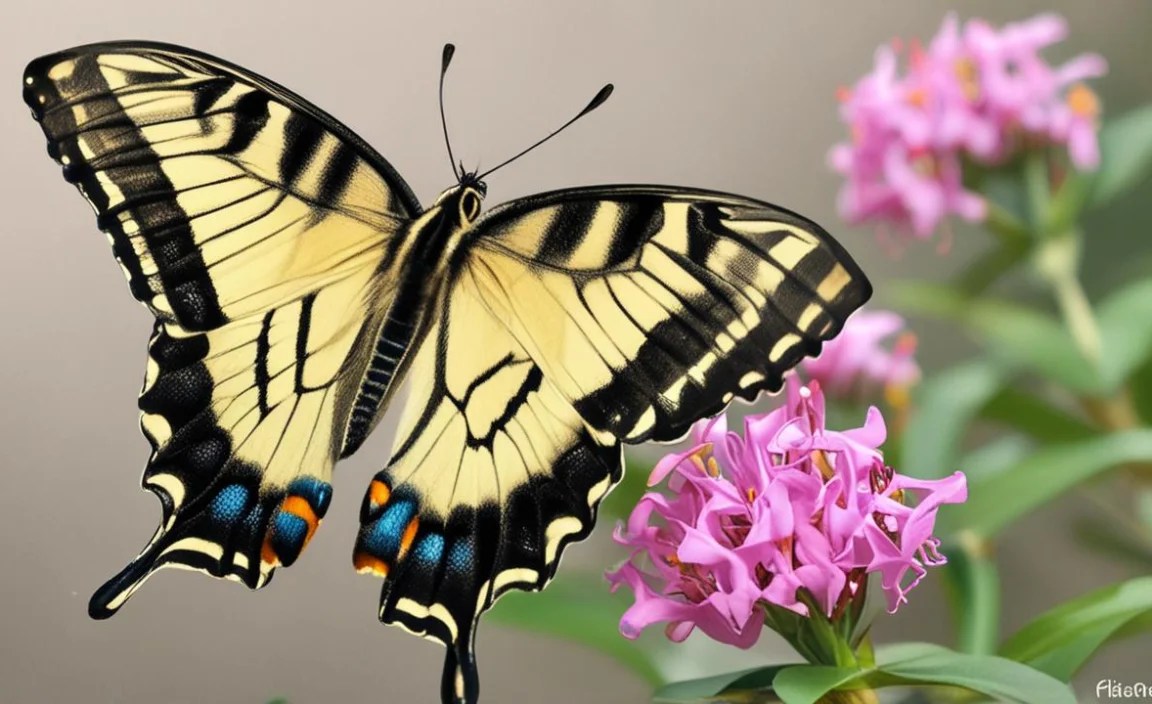
The “tails” on the hindwings are another important feature to examine. These tails are extensions of the wing that look like delicate streamers.
- Length: Typically about 1/2 to 1 inch long.
- Shape: Slender and slightly curved.
- Color: Usually have yellow edges with a black center.
The tails can sometimes be damaged or missing due to wear and tear or predator attacks, so don’t rely solely on this feature.
Regional Variations
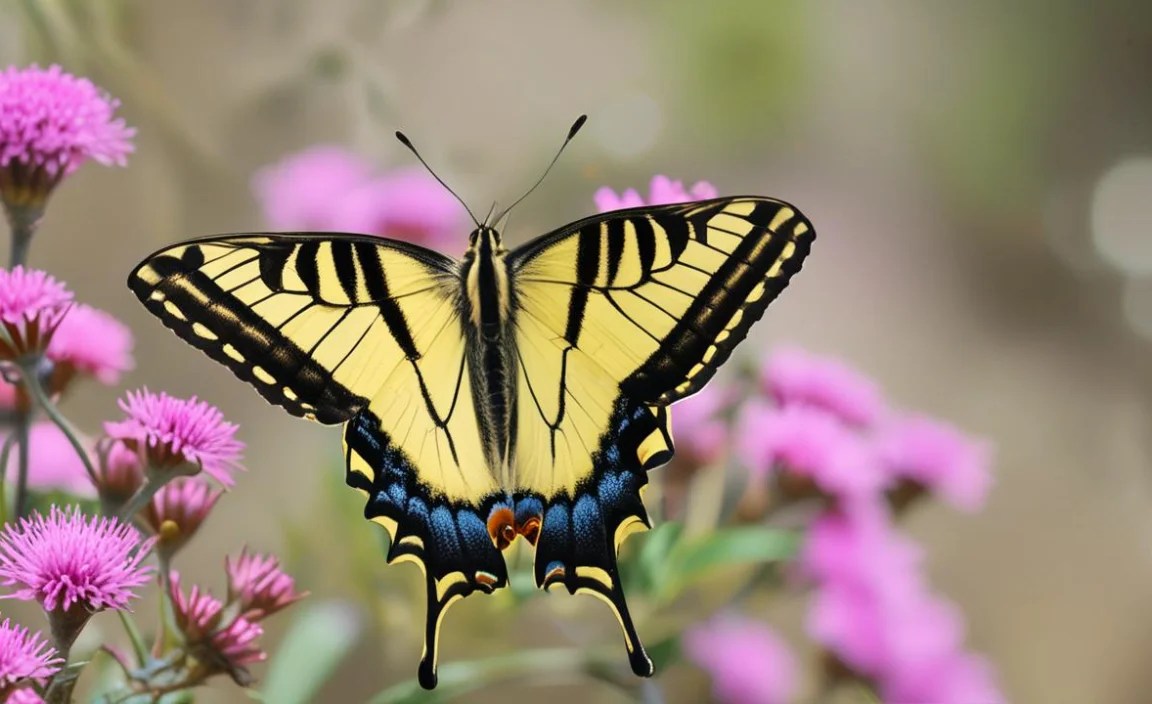
Tiger Swallowtails exhibit considerable regional variation. This means that their appearance can differ depending on where they are found. Here are some key regional differences to be aware of:
Eastern Tiger Swallowtail (Papilio glaucus)

- Range: Eastern North America.
- Characteristics:
- Males are always yellow.
- Females can be yellow or black.
- Black females are more common in the southern part of their range.
Western Tiger Swallowtail (Papilio rutulus)
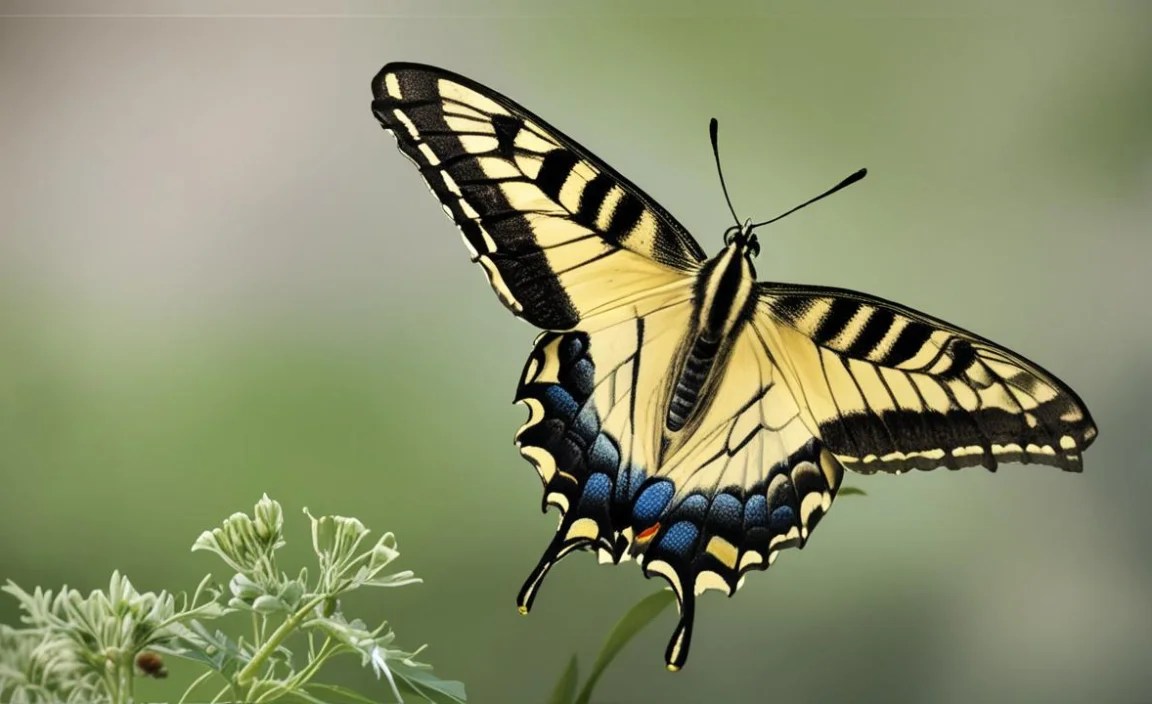
- Range: Western North America.
- Characteristics:
- Generally brighter yellow than Eastern Tiger Swallowtails.
- Black stripes tend to be bolder and more defined.
- Females are almost always yellow.
Canadian Tiger Swallowtail (Papilio canadensis)

- Range: Canada and the northern United States.
- Characteristics:
- Smaller than other Tiger Swallowtails.
- Yellow is often paler.
- Black stripes may be less prominent.
Understanding these regional differences is crucial for accurate identification. Always consider the geographic location when identifying Tiger Swallowtails.
Distinguishing Features Table
Here’s a quick reference table summarizing the key distinguishing features of the three main Tiger Swallowtail species:
| Feature | Eastern Tiger Swallowtail (Papilio glaucus) | Western Tiger Swallowtail (Papilio rutulus) | Canadian Tiger Swallowtail (Papilio canadensis) |
|---|---|---|---|
| Range | Eastern North America | Western North America | Canada and Northern U.S. |
| Size | Large | Large | Smaller |
| Color | Yellow; Females can be yellow or black | Bright Yellow | Pale Yellow |
| Black Stripes | Well-defined | Bolder | Less Prominent |
| Female Forms | Yellow or Black | Almost Always Yellow | Almost Always Yellow |
Behavioral Clues
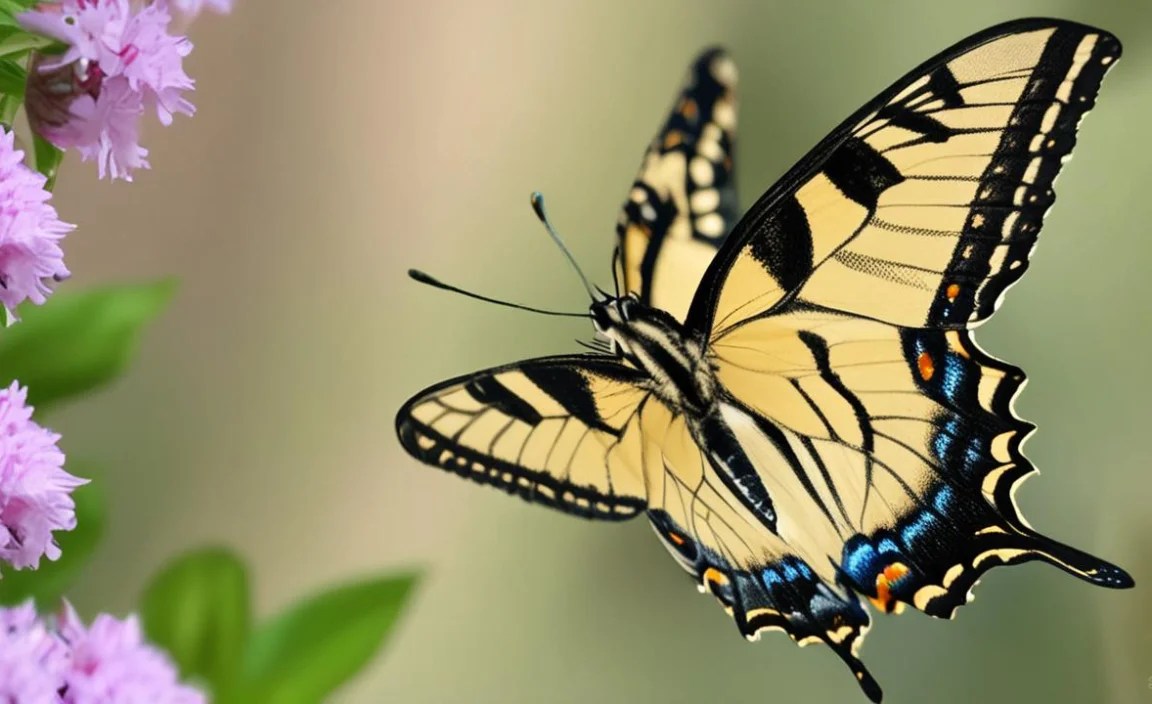
Observing the behavior of a butterfly can also provide clues to its identity. Tiger Swallowtails have some characteristic behaviors:
- Flight Pattern: Strong, soaring flight.
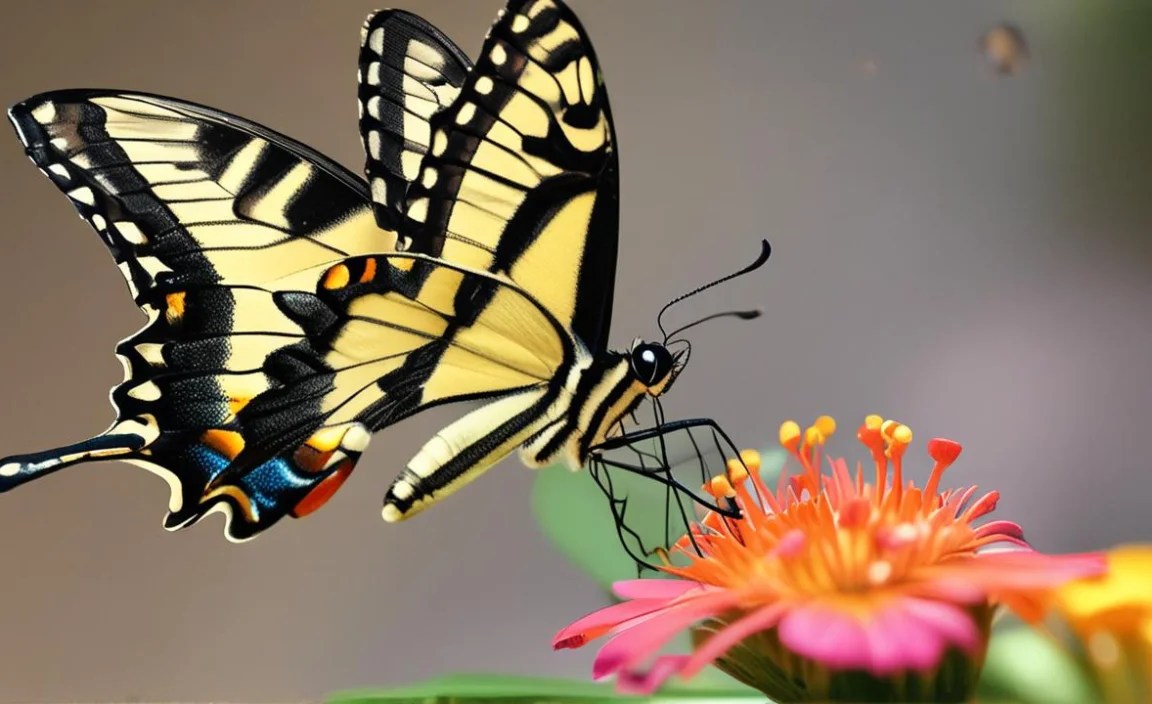
- Nectar Feeding: Frequently visits flowers to feed on nectar. They have a particular fondness for milkweed, thistle, and butterfly bush.
- Puddling: Males often gather in groups at puddles or damp soil to extract minerals.
While these behaviors aren’t unique to Tiger Swallowtails, they can help narrow down the possibilities when combined with physical characteristics.
Habitat and Location
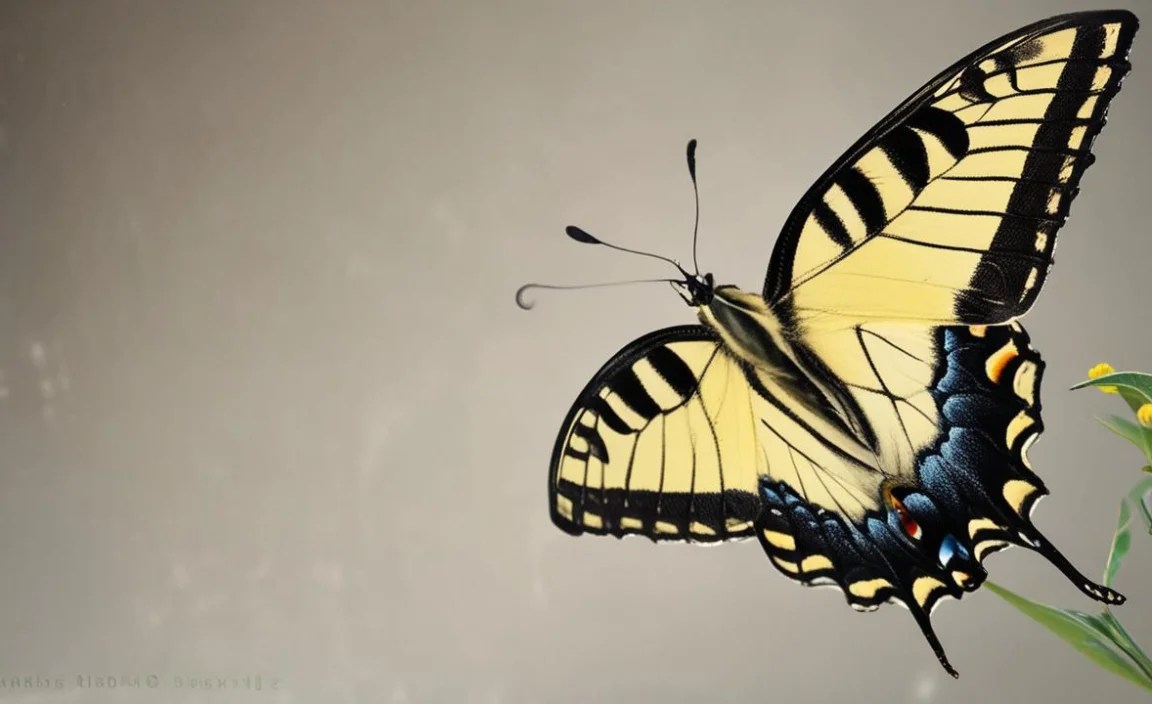
Tiger Swallowtails are found in a variety of habitats, including:
- Woodlands: Forest edges and open woodlands.
- Gardens: Often seen in gardens with nectar-rich flowers.
- Parks: Common in urban parks and green spaces.
- River Valleys: Areas with abundant host plants.
Knowing the typical habitat of each species can aid in identification. For example, if you’re in the western United States, you’re more likely to see a Western Tiger Swallowtail than an Eastern Tiger Swallowtail.
Lookalike Butterflies
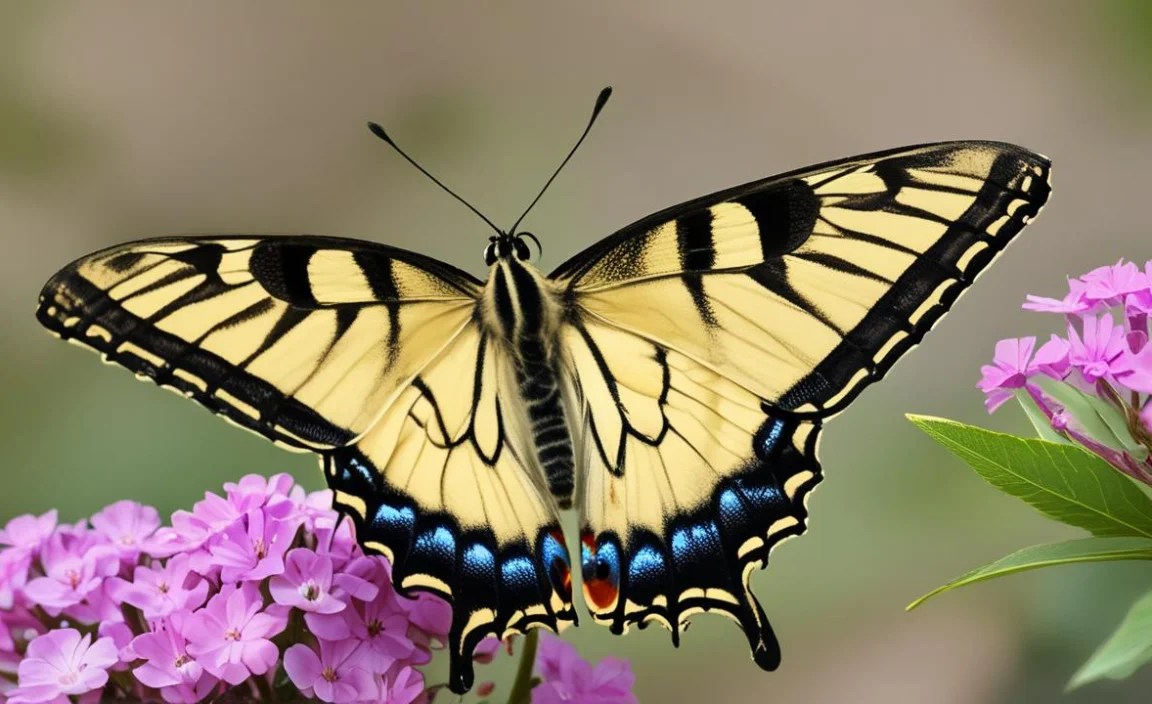
Several other butterflies can be confused with Tiger Swallowtails. Here are some common lookalikes and how to distinguish them:
Spicebush Swallowtail (Papilio troilus)
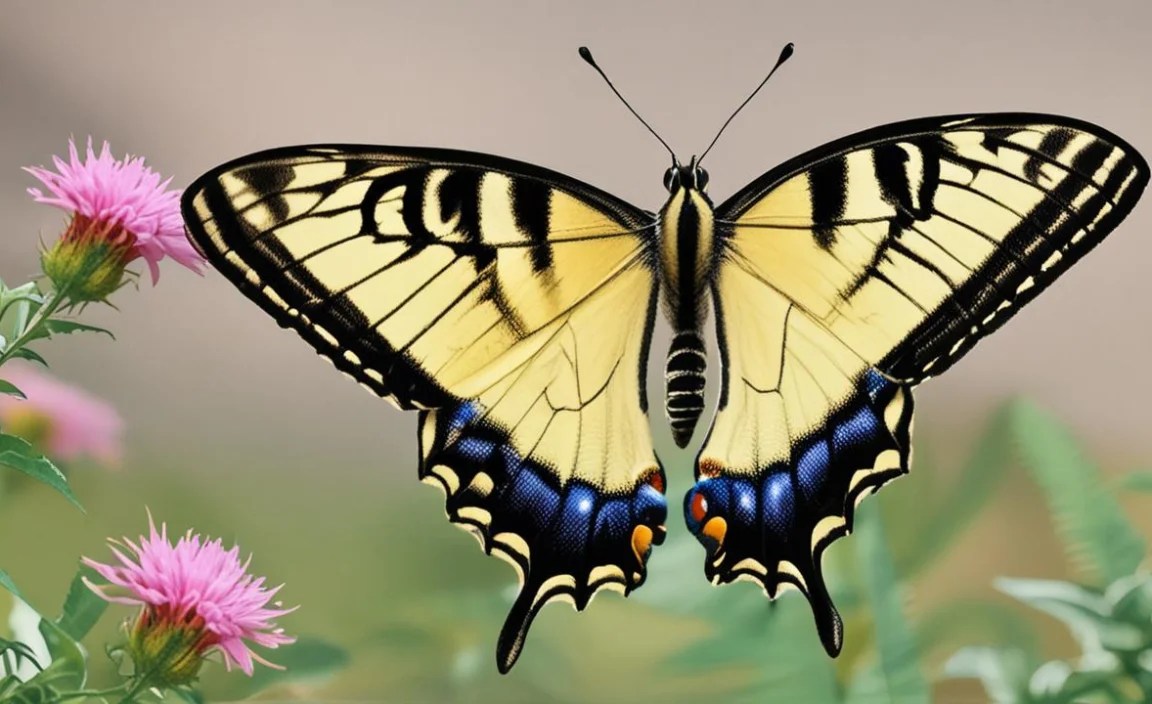
- Similarities: Can be dark in color, similar to the dark form female Eastern Tiger Swallowtail.
- Differences:
- Spicebush Swallowtails have a more rounded wing shape.
- They lack the distinct black stripes of Tiger Swallowtails.
- They have prominent blue-green iridescent patches on the hindwings.
Black Swallowtail (Papilio polyxenes)
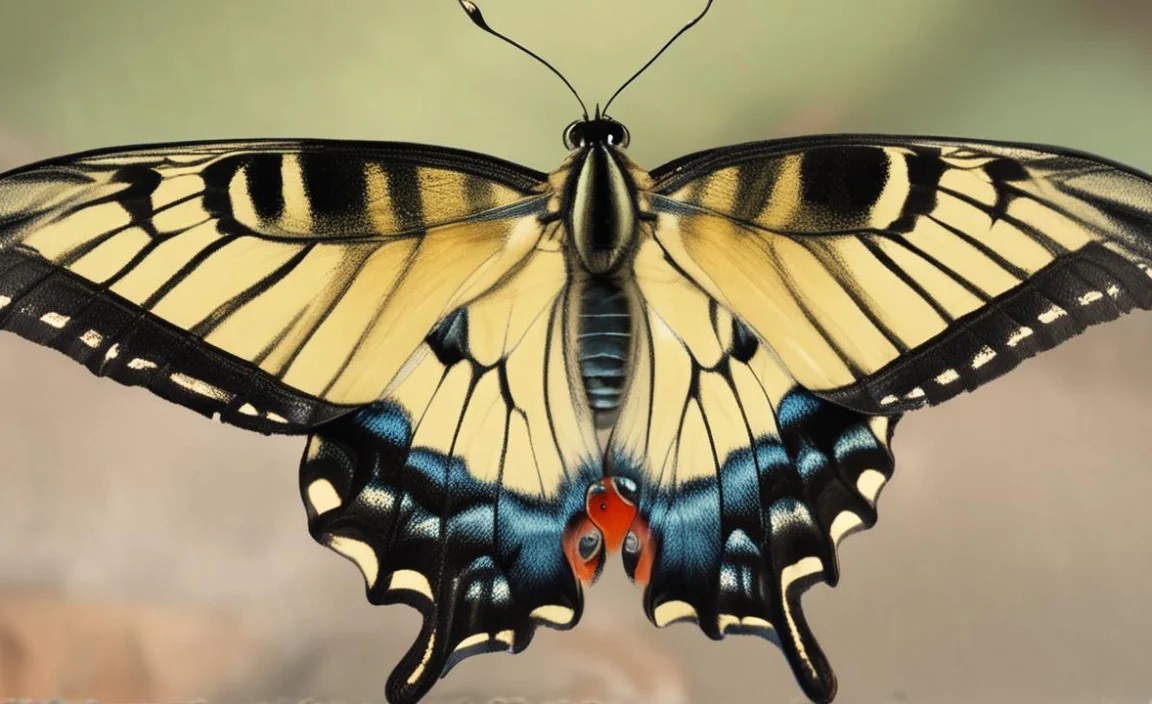
- Similarities: Dark females can resemble dark form Tiger Swallowtails.
- Differences:
- Black Swallowtails have orange spots on the hindwings.
- They lack the tiger-like stripes.
- Their overall wing shape is different, with more rounded hindwings.
Two-tailed Swallowtail (Papilio multicaudata)
- Similarities: Yellow color and large size.
- Differences:
- Two-tailed Swallowtails have two tails on each hindwing, instead of one.
- Their yellow is often a paler shade.
- They are primarily found in the western United States.
Careful observation of these subtle differences is key to accurate identification.
Tools for Identification
Several tools can assist you in identifying Tiger Swallowtails:
- Butterfly Field Guides: These guides provide detailed descriptions and illustrations of different butterfly species. Peterson Field Guides and Kaufman Field Guides are excellent resources.
- Online Butterfly Databases: Websites like Butterflies and Moths of North America (BAMONA) offer comprehensive information and photos.
- Butterfly Identification Apps: Mobile apps such as iNaturalist and Picture Insect can help identify butterflies based on photos you take.
- Local Butterfly Experts: Contacting local butterfly clubs or nature centers can provide valuable insights and assistance.
Photographing Butterflies for Identification
Taking good photographs of butterflies is essential for accurate identification. Here are some tips:
- Focus: Ensure the butterfly is in sharp focus.
- Lighting: Use natural light whenever possible. Avoid harsh shadows.
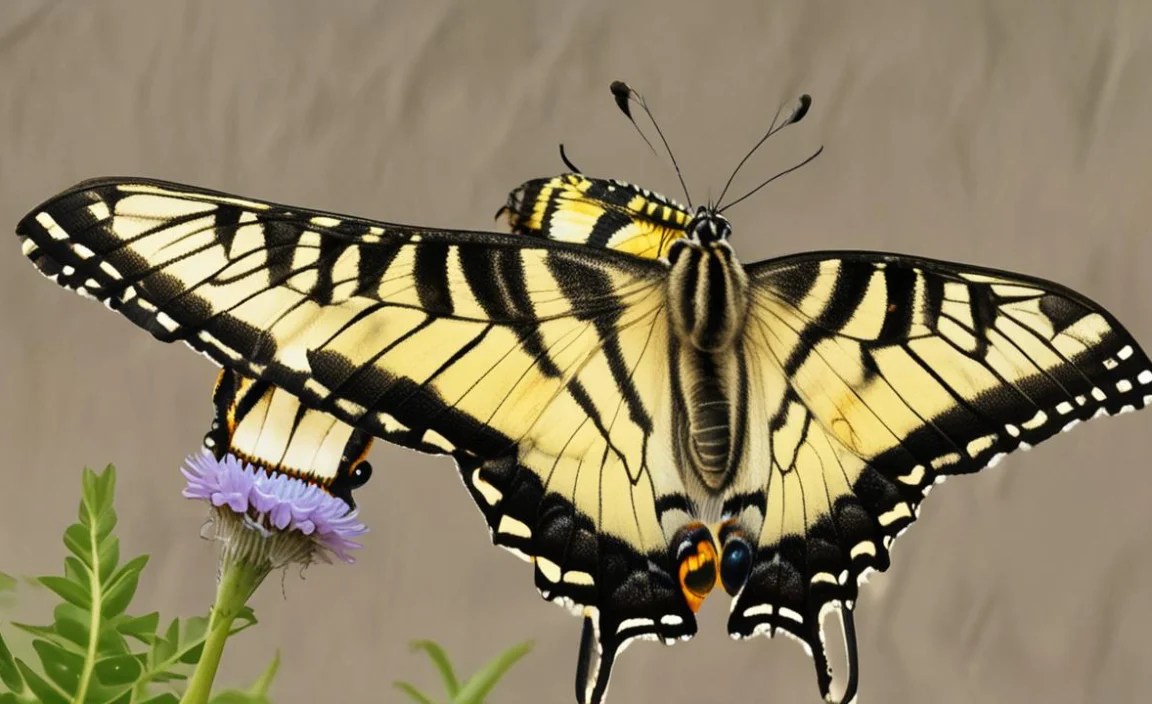
- Angles: Capture images of both the upper and lower sides of the wings.
- Details: Try to capture close-up shots of key features like wing patterns and tails.
High-quality photos will make it easier to compare your observations with field guides and online resources.
Conservation Efforts
Like many butterfly species, Tiger Swallowtails face threats from habitat loss, pesticide use, and climate change. Supporting conservation efforts is crucial for protecting these beautiful creatures. Here are some ways you can help:
- Plant Native Host Plants: Provide food for caterpillars by planting native trees and shrubs like tulip trees, wild cherry, and spicebush.
- Create a Butterfly Garden: Plant nectar-rich flowers that attract adult butterflies, such as milkweed, coneflowers, and zinnias.
- Avoid Pesticides: Use natural pest control methods in your garden to protect butterflies and other beneficial insects.
- Support Conservation Organizations: Donate to or volunteer with organizations that work to protect butterfly habitats. The Xerces Society is a great place to start: https://xerces.org/
- Educate Others: Share your knowledge and passion for butterflies with friends, family, and your community.
Frequently Asked Questions (FAQ)
What do Tiger Swallowtail caterpillars eat?
Tiger Swallowtail caterpillars primarily feed on the leaves of various trees, including tulip trees, wild cherry, ash, and willow. The specific host plants can vary depending on the region and the specific Tiger Swallowtail species.
Are Tiger Swallowtails poisonous?
No, Tiger Swallowtails are not poisonous. However, the caterpillars of some species can sequester (store) toxins from their host plants, making them unpalatable to predators. This is a defense mechanism to avoid being eaten.
How long do Tiger Swallowtails live?
The lifespan of a Tiger Swallowtail butterfly is relatively short. From egg to adult, the entire life cycle takes about one to two months. The adult butterflies typically live for about two weeks, during which they focus on feeding and reproduction.
Where can I find Tiger Swallowtails?

Tiger Swallowtails are found across North America in a variety of habitats, including woodlands, gardens, parks, and river valleys. The specific species and their abundance vary by region. Look for them in areas with host plants for their caterpillars and nectar-rich flowers for the adults.
How can I attract Tiger Swallowtails to my garden?

To attract Tiger Swallowtails to your garden, plant their host plants (such as tulip trees or wild cherry) and nectar-rich flowers like milkweed, coneflowers, and zinnias. Avoid using pesticides, and provide a shallow dish of water with pebbles for them to drink from. A sunny location with shelter from the wind is also ideal.
What is the difference between a male and female Tiger Swallowtail?

Male Tiger Swallowtails are typically bright yellow with black stripes. Female Eastern Tiger Swallowtails can be either yellow (like the males) or a dark morph that’s black or dark gray with blue iridescence. Western and Canadian Tiger Swallowtail females are usually yellow. The presence of a dark female form is a key difference in Eastern Tiger Swallowtails.
Are Tiger Swallowtails endangered?
Tiger Swallowtails are not currently listed as endangered. However, like many butterfly species, they face threats from habitat loss, pesticide use, and climate change. Supporting conservation efforts, such as planting native plants and avoiding pesticides, can help protect their populations.
Conclusion
Identifying Tiger Swallowtails can be a rewarding experience, deepening your connection with the natural world. By paying close attention to their size, color, markings, and behavior, you’ll soon be able to confidently distinguish these magnificent butterflies from other species. Remember to consider regional variations and to use available tools like field guides and online resources. And most importantly, take action to support butterfly conservation efforts, ensuring that future generations can enjoy the beauty of Tiger Swallowtails. Happy butterfly watching!