
How to Identify Butterflies From Photos: Easy Guide

Have you ever seen a pretty butterfly? Butterflies are all around us. They fly in gardens and parks. Some butterflies look very similar. Can you tell them apart? It can be tricky. But, you can learn how to identify butterflies from photos. It is a fun and useful skill.
Key Takeaways
- Use field guides and apps to identify butterflies from photos quickly.
- Note key features like size, color, and wing patterns for identification.
- Pay close attention to the habitat and location of the butterfly.
- Examine the butterfly’s markings, spots, and tail shapes closely.
- Compare your photo to images of known butterfly species.
How to Identify Butterflies From Photos: Basics

How to identify butterflies from photos starts with knowing the basics. Butterflies belong to a group of insects. This group is called Lepidoptera. Moths also belong to this group. Butterflies have some special features. They have colorful wings. They have slender bodies. Butterflies fly during the day. Moths often fly at night. Butterflies hold their wings upright. Moths usually hold their wings flat. Knowing these basics helps a lot. You can tell butterflies from other insects. You can start to learn their names. Photos capture details. Use these details to identify butterflies.
- Butterflies have colorful wings.
- They have slender bodies.
- Butterflies fly during the day.
- Butterflies hold their wings upright.
- Moths usually hold their wings flat.
To identify butterflies from photos, look closely. What colors do you see? Are there any spots? What shape are the wings? These details matter. Some butterflies have tails. Others have stripes. Some have very bright colors. Others are dull. The size of the butterfly is also important. Some are very small. Others are quite large. Use a ruler if needed. Photos can sometimes be misleading. So, pay attention to all the details you can see. This will help you make a good guess.
Fun Fact or Stat: There are about 20,000 species of butterflies in the world!
What are the main butterfly body parts?
What are the main parts of a butterfly? Butterflies have a head, thorax, and abdomen. The head has eyes and antennae. The thorax is the middle part. It has wings and legs. The abdomen is the tail part. It holds the butterfly’s organs. The wings are covered in tiny scales. These scales give butterflies their color. The antennae help butterflies smell. They use their legs to walk. They use their proboscis to drink nectar. Knowing these parts helps. You can describe butterflies better. It also helps with identification.
Why is butterfly wing shape important?
Have you ever noticed butterfly wings? They come in many shapes. Some are round. Some are pointy. Others have tails. The shape of the wings is very important. It can help you identify the butterfly. Swallowtails have long tails. Monarchs have rounded wings. Skippers have hooked antennae. Look at the edges of the wings. Are they smooth? Are they jagged? These details matter a lot. Wing shape is a key clue.
What is the role of antennae in identification?
Did you know butterflies have antennae? These are like tiny feelers. They use them to smell. Butterfly antennae come in different shapes. Most butterflies have clubbed antennae. This means they have a thicker end. Skippers have hooked antennae. Moth antennae are often feathery. Look closely at the antennae in your photos. This can help you tell butterflies apart. It can also help you tell them from moths.
Using Colors and Patterns to Identify Butterflies
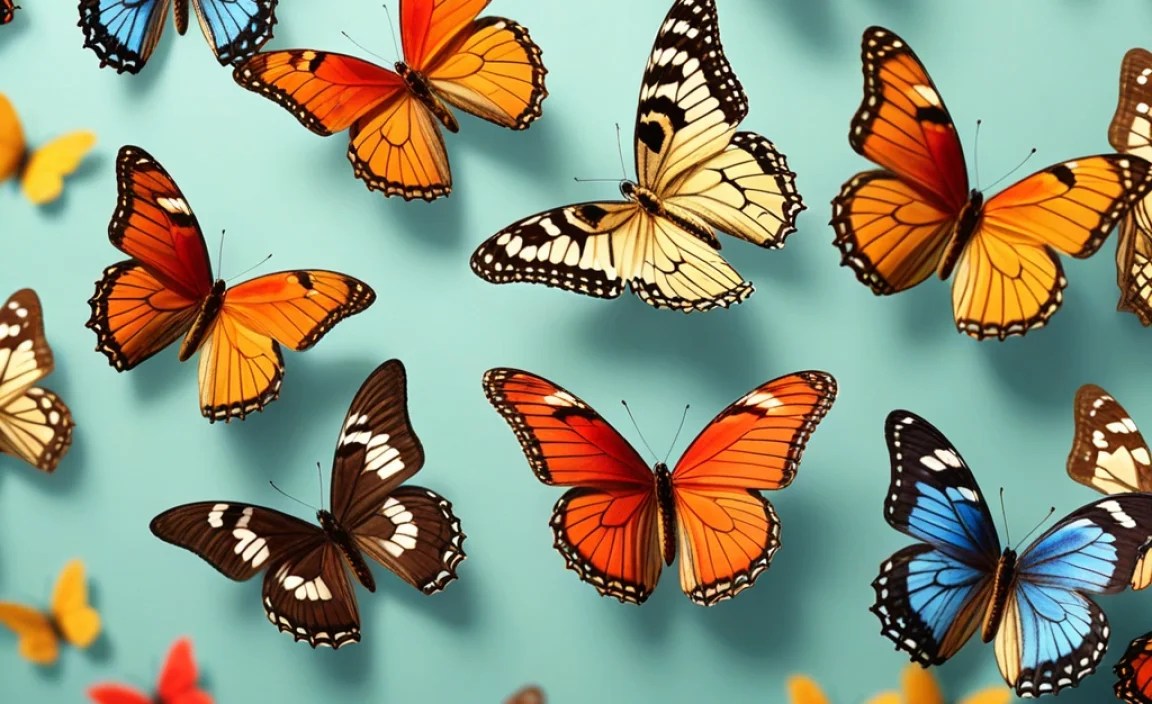
Using colors and patterns is key. It will help you learn how to identify butterflies from photos. Butterflies have many colors. They also have patterns on their wings. Some are bright and bold. Others are subtle. Look at the colors carefully. What colors do you see? Are they arranged in stripes? Are they spots? What shapes are the spots? Do the colors change near the edges? Color and pattern are like a butterfly’s name tag.
- Note the main colors on the wings.
- Look for any patterns like stripes or spots.
- Check if the colors change near the edges.
- See if the patterns are symmetrical.
- Consider the size and shape of any spots.
- Use color to narrow down your search.
Colors and patterns can be tricky. Some butterflies look alike. But small differences exist. The Viceroy butterfly looks like a Monarch. But it has a black line across its hind wing. The Red Admiral has orange bands. The Painted Lady has spots. The Buckeye has eyespots. Pay attention to these small details. They will help you tell butterflies apart. Practice makes perfect. Keep looking at photos. You will get better at seeing the differences.
Fun Fact or Stat: The Queen Alexandra’s Birdwing is the largest butterfly in the world, with a wingspan of up to 12 inches!
What are common butterfly color combinations?
What colors do butterflies usually have? Many butterflies are orange and black. Monarchs and Viceroys are examples. Some are blue and black. The Blue Morpho is very bright. Others are yellow and black. Tiger Swallowtails are common. Green and black butterflies exist too. Red and black is another common mix. Learning these combinations helps. You can quickly narrow down your search.
How do spots and stripes help in identification?
Have you seen butterflies with spots? Or stripes? Spots and stripes are like clues. They help you solve the puzzle. Some butterflies have rows of spots. Others have stripes across their wings. The number and shape of spots matter. The direction of stripes is important. Notice these details. They make each butterfly unique. This helps you learn how to identify butterflies from photos.
What is the difference between symmetrical and asymmetrical patterns?
Are butterfly patterns the same on both sides? Some are symmetrical. This means they are the same. If you fold the wings, they match. Others are asymmetrical. This means they are different. One side is not the same as the other. Symmetrical patterns are common. Asymmetrical ones are rarer. Noticing this helps a lot. It’s a great clue when learning how to identify butterflies from photos.
Habitat and Location’s Role in Butterfly ID

Habitat and location matter a lot. It helps you learn how to identify butterflies from photos. Butterflies live in different places. Some live in forests. Others live in meadows. Some live near water. The place where you saw the butterfly is a clue. Some butterflies only live in certain areas. If you know where you are, it helps. You can rule out butterflies that don’t live there. This makes finding the right name easier.
- Note the type of habitat where you saw it.
- Consider the geographic location.
- Check if the butterfly is common in that area.
- Look for plants that the butterfly might feed on.
- Think about the time of year.
Think about where you took the photo. Was it in your backyard? Was it in a park? Was it in the mountains? Each place has different butterflies. For example, Monarchs migrate. They travel long distances. They are seen in many places. Swallowtails like open areas. They are often near gardens. Knowing these things makes a big difference. It helps you narrow down your choices. You can find the right butterfly name more easily.
Fun Fact or Stat: Some butterflies migrate thousands of miles each year!
What types of habitats do butterflies prefer?
What kind of places do butterflies like? Some like sunny meadows. These are open areas with flowers. Others prefer shady forests. These are cool and dark. Some like wetlands. These are near water. Butterflies need specific plants. These are for food. They also need them to lay eggs. Knowing these things helps. It can help you find butterflies. It can also help you identify them.
How does geographic location help in ID?
Where in the world are you? This is very important. Butterflies live in different places. Some live only in North America. Others live only in South America. Some live in Europe. Others live in Asia. If you know your location, it helps. You can ignore butterflies. Those butterflies don’t live near you. This makes identification easier.
Why is the time of year important?
What time of year is it? This also matters. Some butterflies only fly in the spring. Others fly in the summer. Some fly in the fall. Few fly in the winter. Knowing the season helps. You can rule out butterflies. Those butterflies don’t fly at that time. This makes your search simpler. It helps you learn how to identify butterflies from photos.
Using Butterfly Size and Shape for Identification

Size and shape are important clues. It helps you learn how to identify butterflies from photos. Butterflies come in different sizes. Some are tiny. Others are big. Use something to compare. A coin works well. A ruler is also good. Shape is also important. Look at the wings. Are they round? Are they pointy? Do they have tails? All these details help. They make identification easier.
- Estimate the wingspan of the butterfly.
- Note the overall shape of the wings.
- Look at the shape of the hindwings.
- Check for any tails or extensions.
- Compare the body size to the wing size.
Think about the Monarch. It is a medium-sized butterfly. It has rounded wings. Now think about a Swallowtail. It is larger. It has tails on its wings. Skippers are small. They have hooked antennae. These differences are important. They help you tell butterflies apart. Practice measuring butterflies. Use photos to help. You will get better over time.
Fun Fact or Stat: The smallest butterfly, the Western Pygmy Blue, has a wingspan of only about half an inch!
How do you estimate a butterfly’s wingspan?
How can you tell how big a butterfly is? You can estimate its wingspan. This is the distance from one wingtip. To the other wingtip. Use a ruler if you have one. If not, use something else. A coin or your finger works. Hold it next to the butterfly. Then guess the distance. Practice makes perfect. Over time, you’ll get better.
What are the different wing shapes in butterflies?
Have you seen different butterfly wing shapes? Some are round. Monarchs have round wings. Others are pointy. Some have tails. Swallowtails have tails. Skippers have triangular wings. The shape matters a lot. It helps you identify them. Look closely at the wings. Notice the shape. This is a key clue.
Why is body size relative to wing size important?
Is the butterfly’s body big or small? Compared to its wings? This is important. Some butterflies have small bodies. They have large wings. Others have big bodies. They have small wings. This relationship matters. It helps you tell them apart. Pay attention to this detail. It will help you learn how to identify butterflies from photos.
Using Field Guides and Apps to Identify Butterflies
Field guides and apps are very helpful. They help you learn how to identify butterflies from photos. Field guides are books. They have pictures and information. Apps are on your phone. They do the same thing. These tools make it easier. You can compare your photo. To the pictures in the guide. You can read about the butterfly. This will help you find the right name.
- Get a good field guide for your region.
- Download a butterfly identification app.
- Learn how to use the guide or app.
- Compare your photos to the images.
- Read the descriptions carefully.
- Use the search functions.
There are many field guides. Choose one for your area. Peterson Field Guides are good. Audubon guides are also good. Many apps exist. iNaturalist is popular. Picture Insect is another one. These tools are updated often. They have lots of information. They also have many photos. Use them to help you. You will learn a lot about butterflies.
Fun Fact or Stat: Some butterfly identification apps can identify butterflies with over 90% accuracy!
What are the best butterfly field guides?
Which field guides are the best? Peterson Field Guides are great. They have clear pictures. They have helpful descriptions. Audubon guides are also good. They have beautiful photos. They are easy to use. Find one for your region. This will help you the most.
What are the best butterfly identification apps?
Which apps are good for butterfly ID? iNaturalist is a popular app. It uses image recognition. It helps you identify plants and animals. Picture Insect is another good one. It is easy to use. It also has lots of information. Try a few apps. See which one you like best.
How do you use a field guide or app effectively?
How do you use these tools? First, take a good photo. Make sure it is clear. Then, open the guide or app. Compare your photo. To the pictures in the guide. Read the descriptions. Look for key features. Check the location. Use the search function if needed. Practice makes perfect. You will get better over time.
Advanced Techniques for Butterfly Identification
Advanced techniques can help. It helps you learn how to identify butterflies from photos. These techniques are for experts. But you can learn them. They involve looking at details. These details are very small. They include wing venation. This is the pattern of veins. They also include genitalia. This is the butterfly’s reproductive organs. These details are hard to see. But they are very helpful.
- Study wing venation patterns.
- Examine the shape of the antennae.
- Learn about butterfly genitalia.
- Consider microscopic features.
- Use high-resolution photos.
Wing venation is like a fingerprint. Each butterfly has a unique pattern. The veins are the lines on the wings. Look at where they connect. Look at how they branch. These details matter. Genitalia are even more specific. They are different for each species. But you need special tools. You also need to know a lot. These techniques are for experts. But you can learn about them.
Fun Fact or Stat: Experts use microscopes to study tiny scales on butterfly wings for precise identification!
What is wing venation and how is it used?
What is wing venation? It is the pattern of veins. These veins support the wings. The pattern is different. For each butterfly species. Experts study these patterns. They use them to identify butterflies. You need a good photo. You also need a lot of practice. But it is a helpful skill.
How does antenna shape aid in advanced ID?
Antenna shape can help. Some butterflies have clubbed antennae. Others have hooked antennae. The shape of the club matters. The length of the hook matters. These details are important. Experts use them to identify butterflies. Look closely at the antennae. This can give you a clue.
What role do genitalia play in butterfly ID?
Genitalia are very specific. They are different for each species. Experts study them. They use them to identify butterflies. This is a very advanced technique. You need special tools. You also need a lot of training. But it is the most accurate way. To identify butterflies.
Common Butterfly Identification Mistakes and How to Avoid Them
Mistakes happen. Everyone makes them. It helps you learn how to identify butterflies from photos. But you can avoid them. One mistake is not looking closely. Another is guessing too quickly. Another is not checking the location. Another is not using a field guide. Be careful. Take your time. Check all the details. You will make fewer mistakes.
- Don’t rush the identification process.
- Avoid relying on just one feature.
- Double-check the location data.
- Use multiple resources.
- Be aware of similar-looking species.
Monarchs and Viceroys look alike. But they are different. The Viceroy has a black line. On its hind wing. Swallowtails come in different colors. But they all have tails. Learn the common mistakes. Watch out for them. You will get better at identifying butterflies.
Here is a table of common mistakes and solutions:
| Mistake | Solution |
|---|---|
| Rushing the process | Take your time and check all features |
| Relying on one feature | Look at multiple features before deciding |
| Ignoring location data | Check the butterfly’s location |
| Not using resources | Use field guides and apps |
| Ignoring similar species | Compare to similar butterflies |
Fun Fact or Stat: Experts estimate that even experienced butterfly identifiers make mistakes about 5-10% of the time!
What are common look-alike butterflies?
Some butterflies look very similar. Monarchs and Viceroys are one example. Tiger Swallowtails and Spicebush Swallowtails are another. Learn these look-alikes. Pay attention to the small differences. This will help you avoid mistakes.
Why is location data crucial to avoid errors?
Location matters a lot. Some butterflies only live in certain areas. If you see a butterfly. That doesn’t live in your area. You are probably wrong. Check the location. This can help you avoid mistakes.
How can multiple resources improve accuracy?
Don’t just use one resource. Use many resources. Use a field guide. Use an app. Ask an expert. The more information you have. The better your chances. Of getting the right answer. This helps you learn how to identify butterflies from photos.
Summary
How to identify butterflies from photos involves several steps. First, look at the colors and patterns. Note the size and shape. Consider the location and habitat. Use field guides and apps. Avoid common mistakes. With practice, you’ll become better. You can identify butterflies from photos.
Remember to look closely. Note the details. Compare your photos. To images in field guides. Use apps to help. Be patient. Identification takes time. The more you practice, the easier it becomes. Soon, you’ll be able to name. Many different butterflies.
Conclusion
Learning how to identify butterflies from photos is a fun hobby. It connects you with nature. It also teaches you about science. Use the tips in this article. Look at colors, patterns, and shapes. Consider location and habitat. Use guides and apps. With practice, you’ll become an expert.
Frequently Asked Questions
Question No 1: What is the first thing I should look for when trying to identify a butterfly from a photo?
Answer: The very first thing you should consider is the overall color pattern of the butterfly. Is it primarily orange, blue, yellow, or a combination of colors? Also, take note of any distinct patterns such as stripes, spots, or bands on the wings. This initial assessment helps narrow down the possibilities significantly. You can also factor in size and shape, but color is usually the easiest to see right away, especially when learning how to identify butterflies from photos.
Question No 2: How important is the location where the photo was taken?
Answer: Location is extremely important. Butterflies have specific geographic ranges. Knowing where the photo was taken can eliminate many possibilities. For example, if the photo was taken in North America, you can exclude species that are only found in Asia or Africa. Use regional field guides or online resources. These resources focus on butterflies found in your specific area. This dramatically simplifies the identification process. Ignoring location is a common mistake when learning how to identify butterflies from photos.
Question No 3: Are there any good apps that can help identify butterflies from photos?
Answer: Yes, several excellent apps can help. iNaturalist is a popular choice. It uses image recognition technology. It compares your photo to a vast database of butterfly images. Picture Insect is another good option. These apps often provide additional information about the butterfly. This includes its habitat, food sources, and life cycle. They make how to identify butterflies from photos much easier and more accessible.
Question No 4: What if the butterfly in my photo is damaged or has missing parts?
Answer: Identifying a damaged butterfly can be more challenging. Focus on the features that are still visible. Look at the remaining wing patterns, body shape, and any other distinguishing marks. Consult multiple resources. Cross-reference the visible features with descriptions and images in field guides and online databases. Even with damage, key characteristics may still be identifiable. Consider the location and time of year as well to narrow down possibilities.
Question No 5: How can I tell the difference between similar-looking butterflies, like Monarchs and Viceroys?
Answer: Distinguishing between look-alike butterflies requires careful observation. Monarchs and Viceroys are a classic example. Look for subtle differences in their wing patterns. The Viceroy has a distinct black line across its hindwing. The Monarch lacks this line. Pay attention to size and shape. Use a field guide. Compare the images side-by-side. Noticing these small differences is essential. It is key to learn how to identify butterflies from photos accurately.
Question No 6: Is it possible to identify a butterfly from a blurry or low-quality photo?
Answer: Identifying a butterfly from a blurry photo is difficult. But it might be possible. Try to enhance the photo. Use editing software. Focus on any visible patterns or colors. Consult multiple resources. Describe the butterfly. Include the location and time of year. Even with a poor-quality image, experts or experienced enthusiasts may be able to provide a suggestion. Clear photos make learning how to identify butterflies from photos much easier.


