
Swallowtail Butterfly Phylogenomics Study: Unveiling Secrets

Quick Summary: A swallowtail butterfly phylogenomics study helps scientists understand the evolutionary relationships between different swallowtail species. By analyzing DNA, researchers can trace how these beautiful butterflies have diversified over millions of years, revealing insights into their origins, adaptations, and biogeography. This information is vital for conservation efforts and understanding biodiversity.
Have you ever looked at a swallowtail butterfly and wondered where it came from, or how it’s related to other butterflies around the world? It’s a question many butterfly enthusiasts have! Luckily, scientists are using advanced tools to uncover the secrets of swallowtail evolution. Understanding the relationships between these butterflies can help us protect them and appreciate their incredible diversity. Let’s explore this fascinating field together, and you’ll see how DNA is helping us piece together the swallowtail family tree.
What is Phylogenomics?

Before diving into swallowtail butterflies, let’s understand phylogenomics. Phylogenomics combines phylogeny (the study of evolutionary relationships) with genomics (the study of an organism’s entire set of genes). In simple terms, it’s like creating a family tree using DNA. By comparing the genetic material of different species, scientists can determine how closely related they are and how they evolved over time.
Why is Phylogenomics Important?
Phylogenomics is crucial for several reasons:
- Understanding Biodiversity: It helps us classify and understand the vast diversity of life on Earth.
- Conservation Efforts: By knowing how species are related, we can better prioritize conservation efforts.
- Evolutionary Insights: It reveals how species have adapted and changed over millions of years.
- Disease Research: Understanding evolutionary relationships can help us trace the origins and spread of diseases.
Swallowtail Butterflies: A Brief Overview
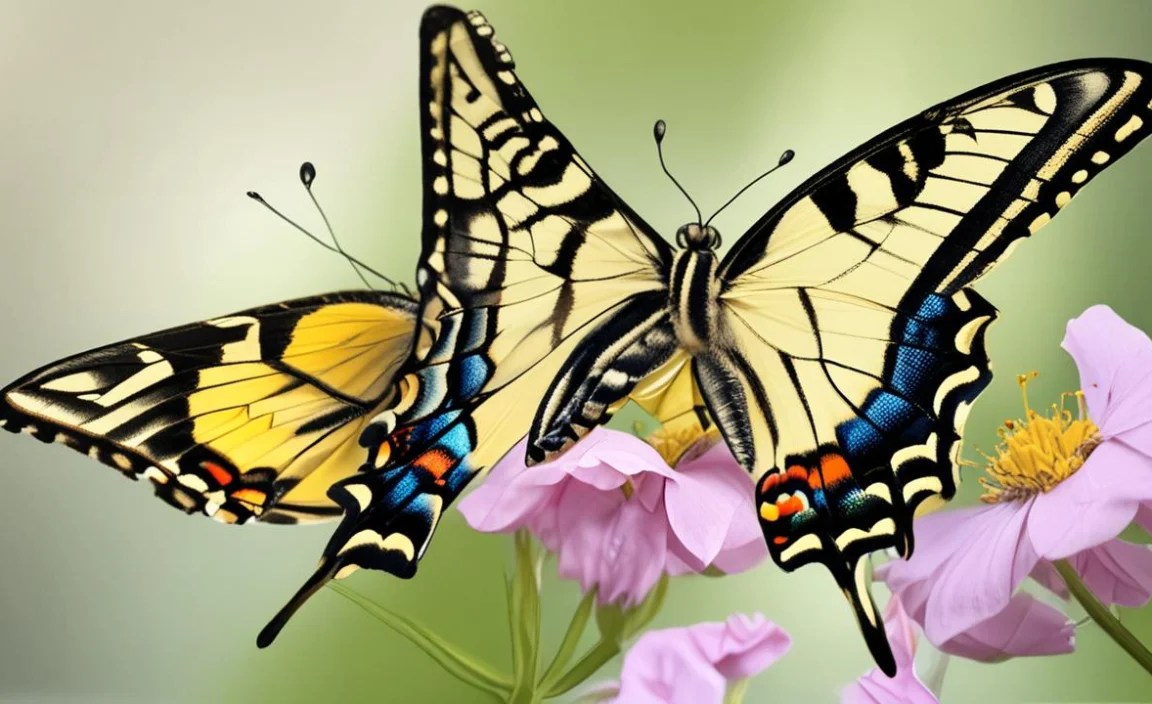
Swallowtail butterflies belong to the family Papilionidae, known for their large size, vibrant colors, and distinctive “tails” on their hindwings. These butterflies are found all over the world, except for Antarctica, and they play important roles in their ecosystems as pollinators. With over 550 species, swallowtails exhibit a wide range of adaptations and behaviors, making them an excellent group for studying evolution.
Characteristics of Swallowtail Butterflies
- Size: Generally large, with wingspans ranging from 3 to 8 inches.
- Color: Often brightly colored with patterns of black, yellow, red, and blue.
- Tails: Most species have distinctive tails on their hindwings.
- Habitat: Found in diverse habitats, from tropical rainforests to temperate woodlands.
- Diet: Larvae feed on a variety of host plants, while adults feed on nectar.
The Significance of Studying Swallowtail Phylogenomics

Studying the phylogenomics of swallowtail butterflies offers several benefits. It helps us:
- Understand Evolutionary History: Trace the origins and diversification of swallowtail species.
- Identify Conservation Priorities: Determine which species are most vulnerable and in need of protection.
- Explore Adaptation: Investigate how swallowtails have adapted to different environments and food sources.
- Improve Classification: Refine the classification of swallowtail butterflies based on genetic data.
How Swallowtail Butterfly Phylogenomics Studies are Conducted

Now, let’s look at the steps involved in conducting a phylogenomics study of swallowtail butterflies.
1. Sample Collection
The first step is to collect samples of swallowtail butterflies from different geographic locations. These samples can be collected as live specimens, which are then released after a small tissue sample is taken, or as preserved specimens from museum collections. It’s important to have a diverse collection to represent the breadth of swallowtail species.
Ethical Considerations
Collecting butterflies for research must be done ethically and sustainably. Researchers should:
- Obtain necessary permits and permissions.
- Minimize harm to butterfly populations.
- Collect only what is needed for the study.
2. DNA Extraction
Once the samples are collected, the next step is to extract DNA from the tissue samples. This involves breaking down the cells and isolating the DNA molecules. There are several methods for DNA extraction, including:
- Chemical Extraction: Using chemicals to dissolve cell membranes and separate DNA.
- Mechanical Extraction: Physically breaking down cells to release DNA.
- Commercial Kits: Using pre-packaged kits that simplify the extraction process.
3. DNA Sequencing
After DNA extraction, the next step is DNA sequencing. This process determines the order of nucleotide bases (A, T, C, and G) in the DNA molecule. There are several sequencing technologies available, including:
- Sanger Sequencing: A traditional method that is accurate but relatively slow.
- Next-Generation Sequencing (NGS): A high-throughput method that can sequence millions of DNA fragments simultaneously.
NGS technologies are commonly used in phylogenomics studies because they can generate large amounts of data quickly and cost-effectively.
4. Data Analysis
The raw DNA sequence data must be processed and analyzed to identify genetic variations and similarities between different swallowtail species. This involves several steps:
- Sequence Alignment: Aligning the DNA sequences to identify homologous regions.
- Phylogenetic Tree Construction: Using computational algorithms to build a phylogenetic tree that represents the evolutionary relationships between the species.
- Statistical Analysis: Performing statistical tests to assess the robustness of the phylogenetic tree.
5. Interpretation and Conclusion
The final step is to interpret the results and draw conclusions about the evolutionary history of swallowtail butterflies. This may involve:
- Identifying ancestral relationships.
- Estimating divergence times.
- Investigating biogeographic patterns.
- Understanding the genetic basis of adaptation.
Tools and Techniques Used in Swallowtail Butterfly Phylogenomics

Several tools and techniques are essential for conducting a swallowtail butterfly phylogenomics study.
1. DNA Sequencing Technologies
As mentioned earlier, DNA sequencing is a critical step in phylogenomics. The choice of sequencing technology depends on the study’s goals and budget. NGS technologies like Illumina, PacBio, and Oxford Nanopore are commonly used for their high throughput and cost-effectiveness.
2. Bioinformatics Software
Bioinformatics software is used to process and analyze the large amounts of DNA sequence data generated in phylogenomics studies. Some commonly used software packages include:
- BLAST: For sequence alignment and similarity searching.
- MEGA: For phylogenetic tree construction and analysis.
- BEAST: For Bayesian evolutionary analysis.
- R: A statistical programming language for data analysis and visualization.
3. Phylogenetic Algorithms
Phylogenetic algorithms are used to build phylogenetic trees based on DNA sequence data. Some commonly used algorithms include:
- Maximum Parsimony: Seeks the simplest explanation for the observed data.
- Maximum Likelihood: Estimates the most likely tree given the data and a specific evolutionary model.
- Bayesian Inference: Uses Bayesian statistics to estimate the probability of different phylogenetic trees.
Case Studies: Examples of Swallowtail Butterfly Phylogenomics Studies
Several studies have used phylogenomics to investigate the evolutionary history of swallowtail butterflies. Here are a few examples:
1. Phylogeny of the Papilio machaon Group
A study published in the journal “Molecular Phylogenetics and Evolution” investigated the phylogeny of the Papilio machaon group, which includes the Old World swallowtail and its close relatives. The researchers used DNA sequence data from multiple genes to construct a phylogenetic tree and found that the Papilio machaon group originated in Asia and diversified across Europe and North America.
2. Evolution of Mimicry in Swallowtail Butterflies
Mimicry is a common phenomenon in swallowtail butterflies, where some species mimic the appearance of toxic butterflies to avoid predation. A study published in “Nature” used phylogenomics to investigate the evolution of mimicry in swallowtail butterflies. The researchers found that mimicry has evolved multiple times independently in different swallowtail lineages, suggesting that it is a highly adaptive trait.
3. Biogeography of Swallowtail Butterflies in the Neotropics
The Neotropics (Central and South America) are home to a diverse array of swallowtail butterflies. A study published in “Journal of Biogeography” used phylogenomics to investigate the biogeographic history of swallowtail butterflies in the Neotropics. The researchers found that the diversification of swallowtail butterflies in the Neotropics was influenced by geological events such as the uplift of the Andes Mountains and the formation of the Isthmus of Panama.
Challenges and Future Directions in Swallowtail Butterfly Phylogenomics
While phylogenomics has greatly advanced our understanding of swallowtail butterfly evolution, there are still challenges to overcome.
1. Data Gaps
One challenge is the lack of genetic data for some swallowtail species, particularly those that are rare or difficult to collect. Filling these data gaps is essential for building a comprehensive phylogeny of swallowtail butterflies.
2. Complex Evolutionary Processes
Swallowtail butterflies have experienced complex evolutionary processes such as hybridization, gene flow, and incomplete lineage sorting, which can make it difficult to reconstruct their evolutionary history accurately. Developing new analytical methods to account for these processes is an ongoing challenge.
3. Integrating Genomics and Phenomics
Integrating genomic data with phenotypic data (e.g., morphology, behavior, ecology) can provide a more complete understanding of swallowtail butterfly evolution. This requires interdisciplinary collaborations between geneticists, morphologists, ecologists, and behaviorists.
4. Advancements in Sequencing Technologies
Continued advancements in sequencing technologies, such as long-read sequencing and single-cell genomics, will enable researchers to generate more detailed and comprehensive genomic data. This will lead to a more refined and accurate understanding of swallowtail butterfly evolution.
Conservation Implications of Swallowtail Butterfly Phylogenomics
Understanding the phylogenomics of swallowtail butterflies has important implications for conservation. By identifying the evolutionary relationships between species, we can better prioritize conservation efforts and protect biodiversity.
1. Identifying Evolutionary Significant Units (ESUs)
ESUs are distinct populations or groups of populations that represent a significant amount of unique evolutionary history. Phylogenomics can help identify ESUs within swallowtail butterflies, which can then be targeted for conservation efforts.
2. Prioritizing Conservation Efforts
Species that are phylogenetically distinct (i.e., have few close relatives) may be given higher priority for conservation because they represent a larger amount of unique evolutionary history. Phylogenomics can help identify these species and inform conservation decisions.
3. Understanding the Impact of Habitat Loss and Climate Change
Phylogenomics can also help us understand how habitat loss and climate change are affecting swallowtail butterflies. By studying the genetic diversity of different populations, we can assess their vulnerability to these threats and develop strategies to mitigate their impact.
How to Contribute to Swallowtail Butterfly Research and Conservation
Even if you’re not a scientist, there are many ways you can contribute to swallowtail butterfly research and conservation.
1. Citizen Science
Participate in citizen science projects that monitor butterfly populations and collect data on their distribution and abundance. Some popular citizen science projects include:
- Butterfly Surveys: Join local butterfly surveys to count and identify butterflies in your area.
- iNaturalist: Use the iNaturalist app to record your butterfly sightings and contribute to a global database of biodiversity observations. Learn more about iNaturalist.
- Monarch Watch: Participate in Monarch Watch to tag and track monarch butterflies during their migration. Visit Monarch Watch.
2. Create a Butterfly-Friendly Garden
Plant native host plants and nectar sources in your garden to attract swallowtail butterflies and provide them with food and habitat. Some popular host plants for swallowtail butterflies include:
- Milkweed: For monarch butterflies.
- Citrus Trees: For giant swallowtails.
- Dill, Fennel, and Parsley: For black swallowtails.
3. Support Conservation Organizations
Donate to or volunteer with conservation organizations that work to protect butterflies and their habitats. Some reputable organizations include:
- The Xerces Society: Focuses on invertebrate conservation. Visit Xerces Society.
- The Butterfly Conservation Society: Dedicated to protecting butterflies and their habitats.
- Local Nature Centers and Parks: Support local conservation efforts in your community.
4. Educate Others
Share your knowledge and passion for butterflies with others. Educate your friends, family, and community about the importance of butterfly conservation and the role they play in our ecosystems.
FAQ About Swallowtail Butterfly Phylogenomics
Here are some frequently asked questions about swallowtail butterfly phylogenomics.
What is the main goal of a phylogenomics study?
The main goal is to understand the evolutionary relationships between different species by analyzing their DNA.
Why are swallowtail butterflies good for phylogenomics studies?
Swallowtails have a wide distribution, diverse adaptations, and a relatively well-studied taxonomy, making them ideal for evolutionary research.
What is DNA sequencing?
DNA sequencing is the process of determining the order of nucleotide bases (A, T, C, and G) in a DNA molecule.
What are some challenges in conducting phylogenomics studies?
Challenges include data gaps, complex evolutionary processes, and the need to integrate genomic and phenotypic data.
How can phylogenomics help with conservation?
It helps identify Evolutionary Significant Units (ESUs) and prioritize conservation efforts for phylogenetically distinct species.
What is a phylogenetic tree?
A phylogenetic tree is a diagram that represents the evolutionary relationships between different species based on their genetic data.
How can I contribute to swallowtail butterfly research?
You can participate in citizen science projects, create a butterfly-friendly garden, support conservation organizations, and educate others.
Conclusion
The study of swallowtail butterfly phylogenomics is a fascinating and important field that helps us understand the evolutionary history, adaptation, and conservation needs of these beautiful creatures. By using advanced DNA sequencing technologies and bioinformatics tools, scientists are unraveling the complex relationships between swallowtail species and gaining insights into the processes that have shaped their evolution. As we continue to explore the genomic landscape of swallowtail butterflies, we can look forward to a deeper appreciation of their diversity and a more informed approach to their conservation.


