
Swallowtail Butterfly Physiology: The Ultimate Guide

Swallowtail butterfly physiology involves a fascinating combination of sensory organs, a unique digestive system, and specialized wings that enable these beautiful creatures to thrive. They have sophisticated ways to taste, smell, see, and navigate their world.
Have you ever wondered how swallowtail butterflies manage to flit from flower to flower, seemingly without effort? Or how they can taste with their feet? It all comes down to their unique physiology—the intricate workings of their bodies that allow them to survive and thrive. Understanding this can deepen your appreciation for these amazing insects.
In this article, we’ll explore the key aspects of swallowtail butterfly physiology, from their sensory organs to their digestive systems and wings. We’ll also discuss how these physiological traits influence their behavior and ecological roles. Get ready to dive into the fascinating world of swallowtail butterflies!
Sensory Organs of Swallowtail Butterflies

Swallowtail butterflies rely on a variety of sensory organs to navigate their environment, find food, and locate mates. These include antennae, eyes, and taste receptors on their feet. Each of these plays a crucial role in their daily lives.
Antennae: Smell and More
A butterfly’s antennae are not just for show; they are essential for detecting scents in the air. These scents help them find nectar sources and locate potential mates. The antennae are covered in tiny sensory receptors that bind to specific molecules, allowing the butterfly to identify different smells. According to research from the Smithsonian Institution, the sensitivity of these receptors is so refined that butterflies can detect scents from miles away.
- Olfactory Receptors: Detect scents of flowers and pheromones.
- Mechanoreceptors: Sense wind direction and speed.
- Hygroreceptors: Measure humidity levels.
Eyes: A Mosaic View of the World
Swallowtail butterflies have compound eyes, which are made up of thousands of individual lenses called ommatidia. Each ommatidium captures a small part of the overall image, and the butterfly’s brain combines these individual images to create a mosaic-like view of the world. This type of vision is excellent for detecting movement, which is crucial for avoiding predators.
Butterflies can also see ultraviolet (UV) light, which is invisible to humans. Many flowers have UV patterns that guide butterflies to their nectar sources. This ability gives them a unique advantage in finding food.
- Compound Eyes: Made of thousands of ommatidia.
- UV Vision: Helps locate nectar sources.
- Motion Detection: Excellent for avoiding predators.
Tarsi: Tasting with Their Feet
One of the most fascinating aspects of butterfly physiology is their ability to taste with their feet. Swallowtail butterflies have chemoreceptors, or taste receptors, on their tarsi, which are the last segments of their legs. When a butterfly lands on a leaf or flower, these receptors can detect the presence of certain chemicals, such as sugars or amino acids. If the chemical profile is right, the butterfly will then use its proboscis to feed.
This ability is particularly important for female butterflies, as they use it to determine whether a plant is suitable for laying their eggs. They can taste the plant’s chemical composition to ensure it will provide the right nutrients for their caterpillars.
- Chemoreceptors: Taste receptors on their feet.
- Plant Suitability: Females use it to find host plants.
- Nutrient Detection: Detects sugars and amino acids.
Digestive System of Swallowtail Butterflies

The digestive system of swallowtail butterflies is adapted to their liquid diet. They primarily feed on nectar, which is a sugary liquid produced by flowers. Their digestive system includes the proboscis, foregut, midgut, and hindgut, each playing a specific role in processing food.
Proboscis: The Nectar Straw
The proboscis is a long, straw-like structure that butterflies use to suck nectar from flowers. When not in use, it is coiled up beneath the butterfly’s head. The proboscis is formed from two elongated maxillae that are held together by interlocking hooks. When the butterfly is ready to feed, it extends its proboscis and inserts it into the flower to draw up nectar.
The proboscis is a marvel of natural engineering, allowing butterflies to access nectar deep within flowers that other insects cannot reach. It is also flexible, allowing the butterfly to navigate the intricate structures of different flower types.
- Coiled Structure: Long, straw-like structure that coils up when not in use.
- Maxillae: Formed from two elongated maxillae held together by hooks.
- Nectar Extraction: Used to suck nectar from flowers.
Foregut: Storage and Initial Processing
Once the nectar is drawn up through the proboscis, it enters the foregut, which consists of the esophagus and the crop. The crop is a storage organ where the nectar is held before it is passed on to the midgut for digestion. The foregut also plays a role in regulating the flow of nectar into the midgut, ensuring a steady supply of nutrients.
The foregut’s ability to store nectar is crucial, as it allows butterflies to feed quickly and efficiently, even when nectar sources are scarce. This ensures they have a constant energy supply for flight and other activities.
- Esophagus: Transports nectar from the proboscis.
- Crop: Stores nectar before digestion.
- Regulates Flow: Ensures steady supply of nutrients to the midgut.
Midgut: Digestion and Absorption
The midgut is the primary site of digestion and absorption in the butterfly’s digestive system. Enzymes in the midgut break down the sugars in the nectar into simpler molecules that can be absorbed into the butterfly’s hemolymph (the insect equivalent of blood). The midgut is lined with specialized cells that facilitate the absorption of these nutrients.
The efficiency of the midgut is essential for butterflies, as they need to extract as much energy as possible from the nectar they consume. This energy is then used to power their flight muscles and other metabolic processes.
- Enzyme Breakdown: Enzymes break down sugars into simpler molecules.
- Absorption: Nutrients are absorbed into the hemolymph.
- Efficient Digestion: Extracts maximum energy from nectar.
Hindgut: Waste Elimination
The hindgut is responsible for eliminating waste products from the butterfly’s body. After the nutrients have been absorbed in the midgut, the remaining material passes into the hindgut, where water and other valuable substances are reabsorbed. The waste is then excreted as frass, which is the insect equivalent of feces.
The hindgut’s ability to reabsorb water is particularly important for butterflies, as it helps them conserve fluids in dry environments. This is crucial for maintaining hydration and overall health.
- Waste Processing: Eliminates waste products from the body.
- Water Reabsorption: Conserves fluids in dry environments.
- Frass Excretion: Waste is excreted as frass.
| Digestive System Component | Function |
|---|---|
| Proboscis | Sucks nectar from flowers |
| Foregut | Stores and regulates nectar flow |
| Midgut | Digestion and nutrient absorption |
| Hindgut | Waste elimination and water reabsorption |
Wings of Swallowtail Butterflies
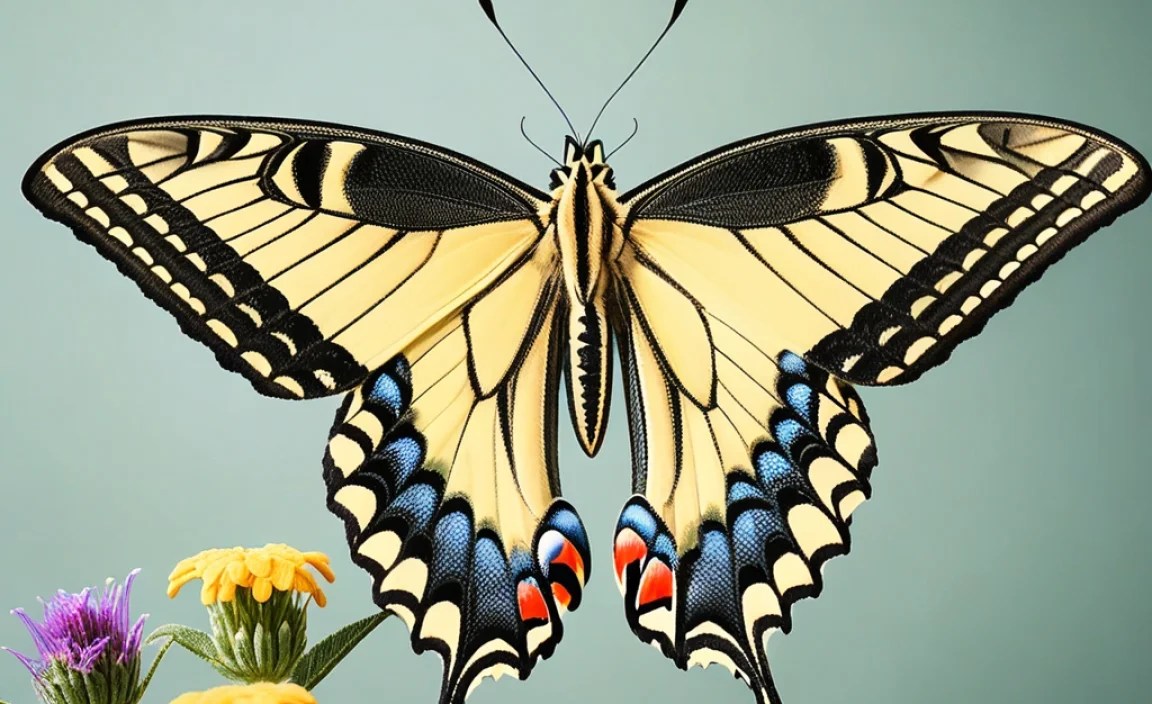
The wings of swallowtail butterflies are not only beautiful but also essential for flight, thermoregulation, and camouflage. Their structure, scales, and patterns play a vital role in their survival.
Wing Structure: Lightweight and Strong
Butterfly wings are made of two layers of membrane supported by a network of veins. These veins provide structural support and also transport hemolymph, which carries nutrients and oxygen to the wing tissues. The wings are incredibly lightweight, allowing for efficient flight, yet strong enough to withstand the stresses of flapping.
The structure of the wings is optimized for aerodynamic performance, allowing butterflies to generate lift and maneuver with precision. This is crucial for escaping predators and finding food and mates.
- Membrane Layers: Two layers of membrane supported by veins.
- Veins: Provide structural support and transport hemolymph.
- Lightweight: Allows for efficient flight.
Scales: Color, Insulation, and Protection
Butterfly wings are covered in thousands of tiny scales, which are responsible for their color and patterns. These scales are modified setae, or hairs, and they overlap like shingles on a roof. The scales contain pigments that give the wings their color, and they also play a role in insulation and protection.
The scales provide insulation by trapping a layer of air next to the wing surface, which helps the butterfly regulate its body temperature. They also protect the wings from damage by deflecting sunlight and abrasion.
- Modified Setae: Tiny, overlapping structures covering the wings.
- Pigments: Provide color and patterns.
- Insulation: Trap air to regulate body temperature.
Wing Patterns: Camouflage and Mate Attraction
The patterns on butterfly wings serve a variety of functions, including camouflage, mimicry, and mate attraction. Some butterflies have patterns that help them blend in with their surroundings, making them less visible to predators. Others mimic the appearance of toxic or unpalatable species, deterring predators from attacking them.
Wing patterns also play a crucial role in mate attraction. Male butterflies often have bright, iridescent colors that attract the attention of females. The patterns can also serve as signals during courtship displays, helping butterflies identify and select suitable mates.
- Camouflage: Blends in with surroundings to avoid predators.
- Mimicry: Imitates toxic species to deter predators.
- Mate Attraction: Bright colors and patterns attract mates.
| Wing Feature | Function |
|---|---|
| Structure | Provides lightweight and strong support for flight |
| Scales | Coloration, insulation, and protection |
| Patterns | Camouflage, mimicry, and mate attraction |
Muscles and Locomotion
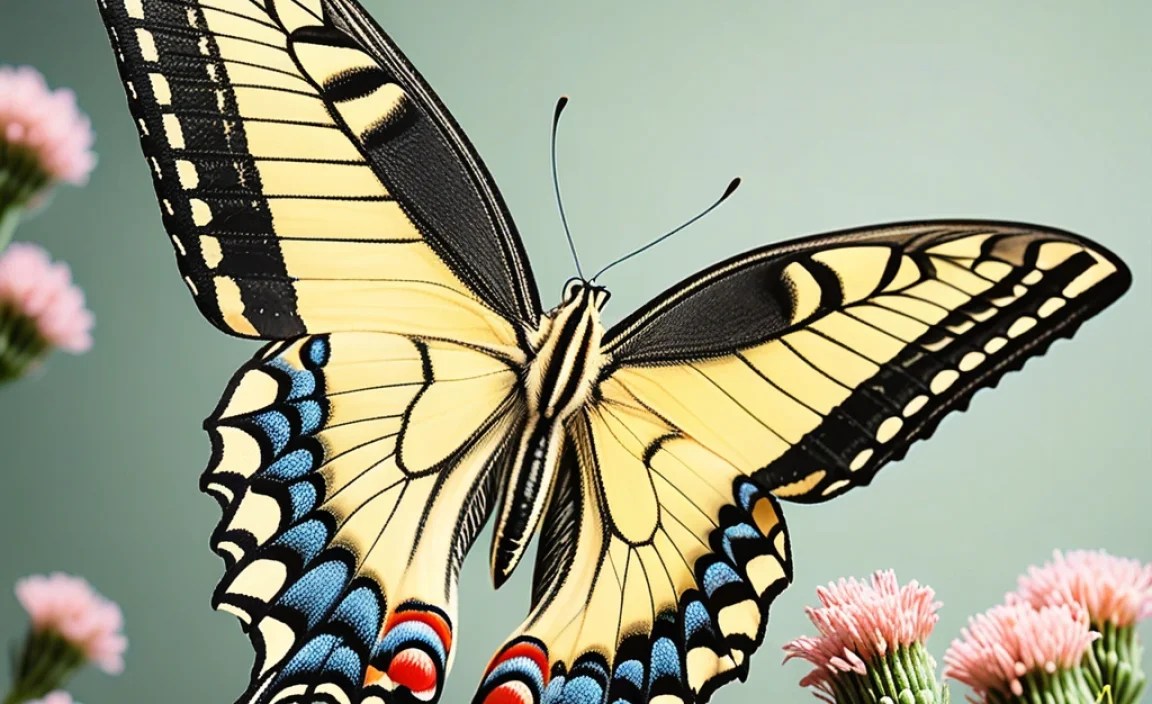
Swallowtail butterflies have a complex muscular system that allows them to fly, walk, and perform other movements. The muscles responsible for flight are particularly well-developed, enabling them to generate the power needed for sustained flight.
Flight Muscles: Powering the Wings
The flight muscles of butterflies are located in the thorax, the middle section of the body. These muscles are attached to the wings and the exoskeleton, and they work together to produce the flapping motion that propels the butterfly through the air. Butterflies have two main types of flight muscles: direct and indirect.
Direct flight muscles are attached directly to the wings, allowing for precise control over wing movement. Indirect flight muscles are attached to the thorax, and they deform the thorax to move the wings. This combination of direct and indirect muscles allows butterflies to generate a wide range of flight maneuvers.
- Thorax Location: Flight muscles are located in the thorax.
- Direct Muscles: Attached directly to the wings for precise control.
- Indirect Muscles: Deform the thorax to move the wings.
Leg Muscles: Walking and Clinging
In addition to their flight muscles, butterflies also have muscles in their legs that allow them to walk, cling to plants, and perform other movements. These muscles are smaller than the flight muscles, but they are still essential for the butterfly’s survival.
The leg muscles are particularly important for caterpillars, as they use them to move around on plants and find food. The muscles also allow caterpillars to grip onto leaves and stems, preventing them from falling off.
- Walking: Allows butterflies to walk on surfaces.
- Clinging: Helps them cling to plants.
- Caterpillar Movement: Essential for caterpillar locomotion and feeding.
Circulatory and Respiratory Systems
Swallowtail butterflies have a simple circulatory system and a unique respiratory system that allows them to transport nutrients and oxygen throughout their bodies.
Circulatory System: Hemolymph and Heart
Butterflies have an open circulatory system, which means that their hemolymph (the insect equivalent of blood) is not confined to vessels but instead flows freely through the body cavity. The hemolymph transports nutrients, hormones, and immune cells to the tissues and organs.
The butterfly’s heart is a long, slender tube that runs along the dorsal side of the body. The heart pumps hemolymph towards the head, where it then flows back through the body cavity. The hemolymph also plays a role in thermoregulation, helping to distribute heat throughout the body.
- Open System: Hemolymph flows freely through the body cavity.
- Hemolymph Function: Transports nutrients, hormones, and immune cells.
- Heart: Pumps hemolymph towards the head.
Respiratory System: Tracheal System
Butterflies do not have lungs; instead, they breathe through a network of tubes called the tracheal system. The tracheal system consists of small openings called spiracles, which are located along the sides of the body. Air enters the body through the spiracles and travels through the trachea to reach the tissues and organs.
The tracheal system is highly efficient at delivering oxygen to the tissues, allowing butterflies to maintain a high metabolic rate. This is essential for powering their flight muscles and other activities.
- Tracheal System: Network of tubes for breathing.
- Spiracles: Openings along the body for air entry.
- Oxygen Delivery: Efficiently delivers oxygen to tissues.
FAQ About Swallowtail Butterfly Physiology
1. How do swallowtail butterflies taste?
Swallowtail butterflies taste with their feet! They have chemoreceptors (taste receptors) on their tarsi, the last segments of their legs. When they land on a plant, these receptors detect chemicals that tell them if it’s a good food source or a suitable place to lay eggs.
2. What do swallowtail butterflies eat?
Adult swallowtail butterflies primarily feed on nectar from flowers, which they suck up using their proboscis, a long, straw-like structure. Caterpillars, on the other hand, eat the leaves of specific host plants.
3. How do swallowtail butterflies see the world?
Swallowtail butterflies have compound eyes made of thousands of individual lenses called ommatidia. This gives them a mosaic-like view of the world and excellent motion detection. They can also see ultraviolet (UV) light, which helps them locate nectar sources on flowers.
4. How do swallowtail butterflies breathe?
Swallowtail butterflies breathe through a network of tubes called the tracheal system. Air enters the body through small openings called spiracles located along the sides of their body, and then travels through the trachea to reach tissues and organs.
5. What is the purpose of the scales on butterfly wings?
The scales on butterfly wings are responsible for their color and patterns, which serve various functions such as camouflage, mimicry, and mate attraction. They also provide insulation and protect the wings from damage.
6. How do swallowtail butterflies fly?
Swallowtail butterflies fly using powerful flight muscles located in their thorax. These muscles are attached to the wings and exoskeleton, producing a flapping motion. They have both direct and indirect flight muscles for precise control and maneuverability.
7. Why are butterfly wings so colorful?
Butterfly wings are colorful because of pigments in their scales. These colors serve multiple purposes, including camouflage to hide from predators, mimicry to resemble toxic species, and attracting mates through bright and iridescent patterns.
Conclusion
Understanding the physiology of swallowtail butterflies gives us a deeper appreciation for these incredible creatures. From their specialized sensory organs to their efficient digestive systems and beautifully patterned wings, every aspect of their anatomy is perfectly adapted to their lifestyle. By studying their physiology, we can gain insights into their behavior, ecology, and conservation needs.
As nature enthusiasts, we can support swallowtail butterflies by creating butterfly-friendly habitats with host plants for caterpillars and nectar-rich flowers for adults. By doing so, we not only enhance the beauty of our gardens but also contribute to the conservation of these fascinating insects. So, let’s continue to explore, learn, and protect these delicate creatures for future generations to enjoy.


