
Evolutionary History of Butterflies: Amazing Origins

The evolutionary history of butterflies spans over 56 million years, tracing back to the late Paleocene epoch. Butterflies evolved from moths, developing their characteristic wing patterns and daytime activity. Fossil evidence and genetic studies help us understand their diversification and adaptation over millions of years.
Have you ever wondered how butterflies, with their delicate wings and vibrant colors, came to be? It’s a fascinating journey through millions of years! Butterflies are more than just pretty insects fluttering in our gardens; they have a rich evolutionary story that connects them to ancient ancestors. Understanding this history helps us appreciate their beauty and the incredible adaptations that have allowed them to thrive.
In this article, we’ll explore the fascinating evolutionary history of butterflies. We’ll journey back in time, uncovering the origins of these beautiful creatures and how they’ve adapted to survive. Get ready to discover the ancient secrets hidden in their wings!
What are some common questions about the evolutionary history of butterflies?

Here are some frequently asked questions about the evolutionary history of butterflies:
When did butterflies first appear?
Butterflies first appeared around 56 million years ago during the late Paleocene epoch.
What did butterflies evolve from?
Butterflies evolved from moths, sharing a common ancestor within the Lepidoptera order.
How do scientists study the evolution of butterflies?
Scientists study butterfly evolution through fossil records, genetic analysis, and comparative anatomy.
What is the oldest butterfly fossil?
The oldest known butterfly fossil is a specimen of Prodryas persephone, dating back to the late Eocene epoch.
How have butterflies adapted over time?
Butterflies have adapted through changes in wing patterns, feeding habits, and behaviors to survive in various environments.
Why are butterfly wings so colorful?
Butterfly wings are colorful due to pigments and structural coloration, which help in camouflage, mate attraction, and thermoregulation.
Are butterflies still evolving today?
Yes, butterflies continue to evolve, adapting to changing environments and ecological pressures.
Tracing Back the Origins: The Dawn of Butterflies

The story of butterflies begins millions of years ago, deep in the Paleocene epoch. This was a time when the Earth was recovering from the cataclysmic event that wiped out the dinosaurs. As the planet healed, new life forms emerged, including the ancestors of our modern butterflies.
The Lepidoptera Lineage
Butterflies belong to the order Lepidoptera, which also includes moths. Both butterflies and moths share a common ancestor, but over time, they diverged into distinct groups. The key differences we see today—such as butterflies’ slender bodies, clubbed antennae, and daytime activity—are the result of millions of years of evolution.
- Shared Ancestry: Both butterflies and moths evolved from a common ancestor.
- Divergence: Over time, they developed distinct characteristics.
- Key Differences: Butterflies evolved to be more active during the day, with different wing structures and antennae.
The First Butterflies
The earliest butterfly fossils date back to the late Paleocene and early Eocene epochs, around 56 million years ago. These ancient butterflies were likely quite different from the ones we see today, but they possessed the basic characteristics that define them as butterflies. One of the oldest known butterfly fossils is Prodryas persephone, found in present-day Colorado. This fossil provides valuable insights into the early evolution of butterflies.
These early butterflies benefited from the rise of flowering plants (angiosperms). The co-evolution of butterflies and flowering plants is a fascinating example of how species can influence each other’s evolution. As flowering plants diversified, butterflies adapted to feed on their nectar and, in turn, helped pollinate the plants.
Key Evolutionary Milestones
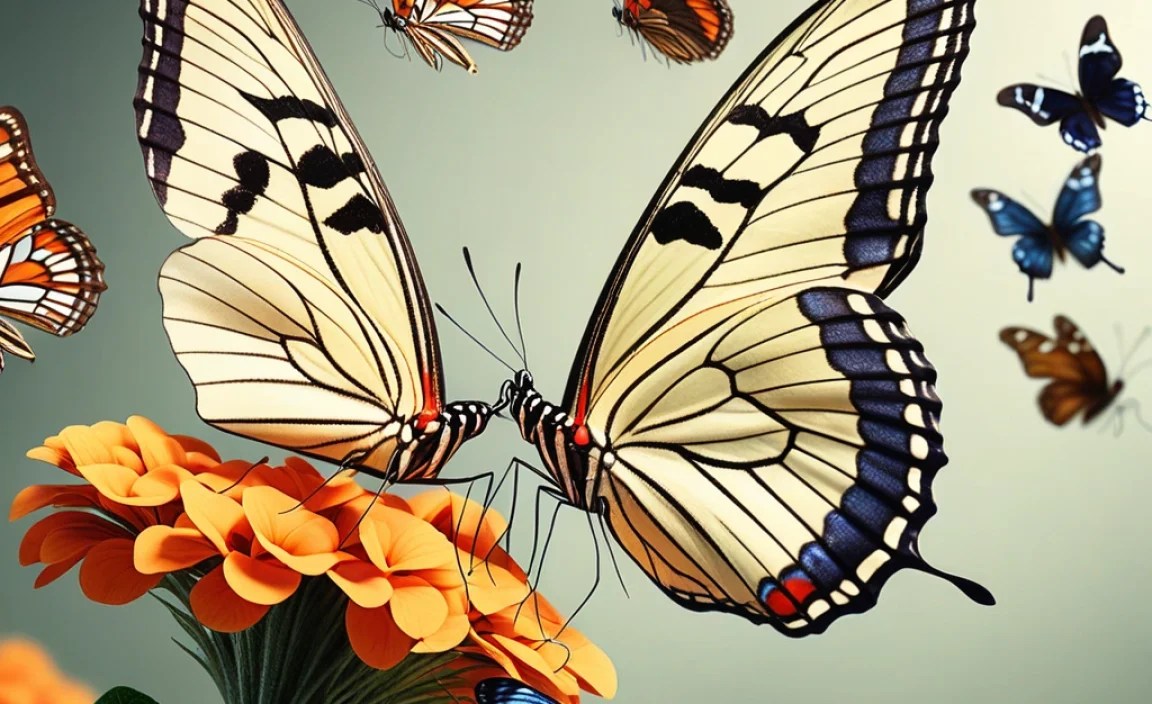
The evolutionary journey of butterflies is marked by several key milestones. These include the development of unique wing structures, feeding mechanisms, and survival strategies.
Wing Structure and Coloration
Butterfly wings are one of their most distinctive features. The intricate patterns and vibrant colors serve multiple purposes, including camouflage, mate attraction, and thermoregulation.
- Scales: Butterfly wings are covered in tiny scales, which give them their color and patterns.
- Pigments: The colors come from pigments within the scales.
- Structural Coloration: Some colors are produced by the physical structure of the scales, which reflect light in different ways.
Over time, butterflies evolved a wide array of wing patterns and colors. Some patterns help them blend in with their surroundings, protecting them from predators. Other patterns are used to attract mates, with males often displaying bright colors to impress females.
Feeding Mechanisms
Butterflies have a specialized feeding structure called a proboscis. This long, straw-like tube is used to sip nectar from flowers. When not in use, the proboscis is coiled up beneath the butterfly’s head.
- Proboscis: A long, straw-like tube used for feeding on nectar.
- Co-evolution with Flowers: Butterflies and flowering plants co-evolved, with butterflies adapting to feed on nectar and pollinate flowers.
- Larval Feeding: Butterfly larvae (caterpillars) have chewing mouthparts, allowing them to feed on leaves and other plant material.
Survival Strategies
Butterflies have developed a variety of survival strategies to cope with the challenges of their environment. These include:
- Camouflage: Blending in with their surroundings to avoid predators.
- Mimicry: Resembling other, more dangerous species to deter predators.
- Migration: Moving to more favorable environments during certain times of the year.
One of the most remarkable examples of butterfly survival is the monarch butterfly’s annual migration. These butterflies travel thousands of miles from Canada and the United States to Mexico, where they overwinter in large colonies. This incredible journey is a testament to the resilience and adaptability of butterflies.
Fossil Evidence: Windows into the Past
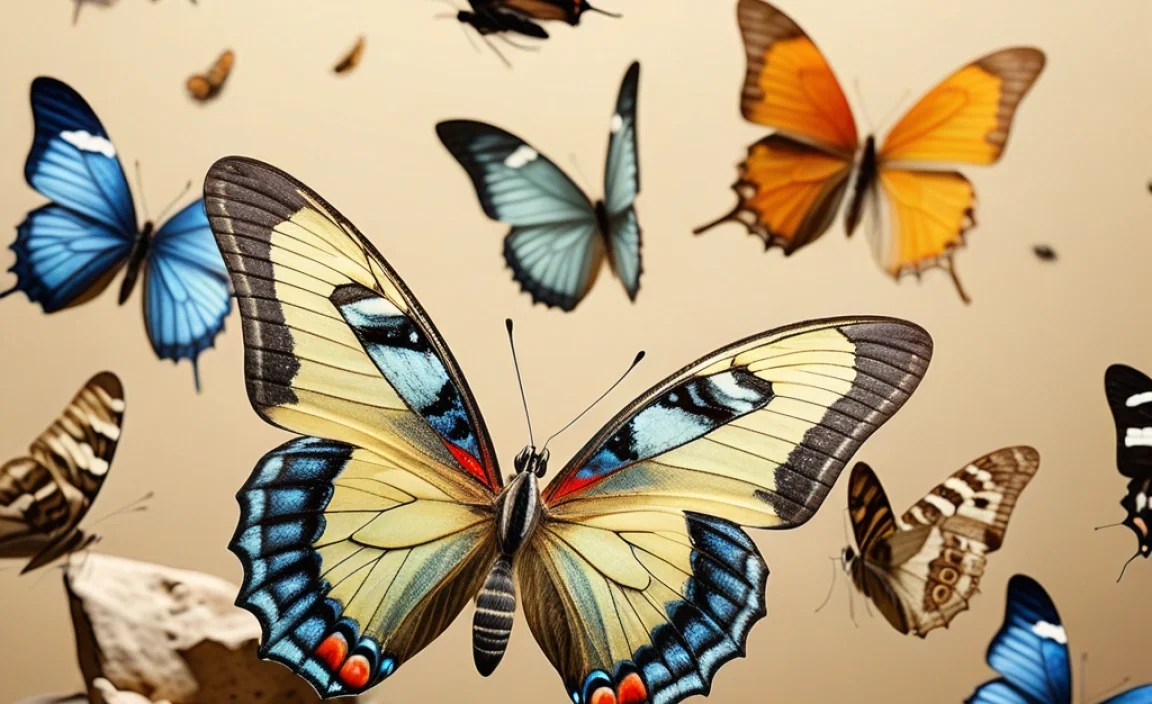
Fossils provide crucial evidence for understanding the evolutionary history of butterflies. Although butterfly fossils are relatively rare due to their delicate bodies, the ones that have been discovered offer valuable insights into their past.
Notable Butterfly Fossils
Some of the most significant butterfly fossils include:
- Prodryas persephone: One of the oldest known butterfly fossils, dating back to the late Eocene epoch.
- Fossils from the Baltic amber: These fossils, preserved in amber, provide detailed information about the anatomy and coloration of ancient butterflies.
What Fossils Tell Us
Butterfly fossils can tell us a great deal about their evolution, including:
- Wing Structure: The shape and venation of butterfly wings.
- Coloration: The patterns and colors of butterfly wings (in some cases, preserved in amber).
- Geographic Distribution: Where butterflies lived in the past.
By studying fossils, scientists can piece together the evolutionary history of butterflies and track their diversification over millions of years.
| Fossil Name | Age | Location | Significance |
|---|---|---|---|
| Prodryas persephone | Late Eocene (around 34 million years ago) | Colorado, USA | One of the oldest known butterfly fossils, providing insights into early butterfly evolution. |
| Baltic Amber Fossils | Eocene (around 40-50 million years ago) | Baltic region | Preserved in amber, these fossils provide detailed information about the anatomy and coloration of ancient butterflies. |
Genetic Studies: Unraveling the Butterfly Genome

In addition to fossil evidence, genetic studies play a crucial role in understanding the evolutionary history of butterflies. By analyzing the DNA of different butterfly species, scientists can trace their relationships and identify the genetic changes that have driven their evolution.
Comparative Genomics
Comparative genomics involves comparing the genomes of different species to identify similarities and differences. This approach can reveal how butterflies are related to each other and to other insects, such as moths.
Molecular Clocks
Molecular clocks use the rate of genetic mutations to estimate when different species diverged from a common ancestor. By analyzing the DNA of butterflies, scientists can estimate when they first evolved and how they have diversified over time.
Key Genetic Findings
Some of the key findings from genetic studies of butterflies include:
- Relationship to Moths: Genetic studies confirm that butterflies and moths share a common ancestor.
- Diversification: Butterflies have diversified into a wide range of species, each adapted to a specific environment.
- Wing Pattern Genes: Specific genes control the development of butterfly wing patterns, and changes in these genes can lead to new patterns and colors.
Genetic studies have also revealed the genes responsible for butterfly migration, allowing scientists to understand how these incredible journeys evolved.
Environmental Influences: Shaping Butterfly Evolution
The environment has played a significant role in shaping the evolution of butterflies. Changes in climate, vegetation, and the presence of predators have all influenced the survival and diversification of butterflies.
Climate Change
Climate change can have a profound impact on butterflies. Changes in temperature and rainfall can affect their distribution, behavior, and life cycle. Some butterflies may be able to adapt to these changes, while others may face extinction.
Vegetation
Butterflies are closely tied to the plants they feed on. Changes in vegetation can affect their food supply and habitat. For example, the loss of milkweed plants, the primary food source for monarch caterpillars, has led to a decline in monarch butterfly populations.
Predators
Predators, such as birds and insects, can also influence butterfly evolution. Butterflies have evolved a variety of defenses to avoid predators, including camouflage, mimicry, and toxic chemicals.
Co-evolution
The co-evolution of butterflies and flowering plants is a prime example of how species can influence each other’s evolution. As flowering plants evolved new ways to attract pollinators, butterflies adapted to feed on their nectar and, in turn, helped pollinate the plants. This mutualistic relationship has driven the evolution of both groups.
Present-Day Evolution: Butterflies Adapting to Change
Evolution is an ongoing process, and butterflies continue to evolve in response to the challenges of the modern world. Human activities, such as habitat destruction and climate change, are putting pressure on butterfly populations, but some species are showing signs of adaptation.
Urban Adaptation
Some butterflies have adapted to urban environments, where they can find food and shelter in gardens and parks. These butterflies may have shorter migration distances and a greater tolerance for pollution.
Pesticide Resistance
The widespread use of pesticides has led to the evolution of pesticide resistance in some butterfly populations. These butterflies have developed genetic mutations that allow them to survive exposure to pesticides.
Conservation Efforts
Conservation efforts play a crucial role in helping butterflies adapt to change. By protecting and restoring habitats, reducing pesticide use, and raising awareness about the importance of butterflies, we can help ensure their survival.
The Future of Butterflies: Challenges and Opportunities
The future of butterflies is uncertain. Climate change, habitat destruction, and pesticide use pose significant threats to their survival. However, there are also opportunities for conservation and adaptation.
Climate Change Mitigation
Reducing greenhouse gas emissions is essential for mitigating the impacts of climate change on butterflies. By transitioning to renewable energy sources and adopting sustainable practices, we can help protect butterfly habitats and reduce the risk of extinction.
Habitat Restoration
Restoring and protecting butterfly habitats is crucial for their survival. This includes planting native plants, creating butterfly gardens, and preserving natural areas.
Sustainable Agriculture
Adopting sustainable agricultural practices can reduce the negative impacts of farming on butterflies. This includes reducing pesticide use, planting hedgerows and buffer strips, and promoting crop diversity.
Citizen Science
Citizen science projects, such as butterfly counts and monitoring programs, can help track butterfly populations and identify areas where conservation efforts are needed. By engaging the public in scientific research, we can increase awareness about butterflies and their importance.
Resources for Further Exploration
Want to learn more about the evolutionary history of butterflies? Here are some valuable resources:
- The Xerces Society: A non-profit organization dedicated to protecting invertebrates and their habitats. Xerces Society
- The Butterfly Conservation Society: An organization focused on conserving butterflies and their habitats.
- National Geographic: Articles and documentaries about butterflies and their evolution. National Geographic
- Smithsonian Institution: Research and collections related to butterflies and other insects. Smithsonian Institution
Conclusion
The evolutionary history of butterflies is a captivating journey through millions of years. From their origins as moth-like ancestors to their present-day diversity, butterflies have adapted and evolved in response to changing environments. By studying fossils, analyzing DNA, and observing their behavior, scientists have pieced together a remarkable story of survival and adaptation.
As we face the challenges of the modern world, it is more important than ever to protect butterflies and their habitats. By understanding their evolutionary history and the threats they face, we can take action to ensure their survival for generations to come. Let’s continue to admire and protect these beautiful creatures, recognizing their ecological importance and the fascinating story etched on their wings.


