
Swallowtail Butterfly Chrysalis Colors: The Ultimate Guide

Swallowtail butterfly chrysalises can be green, brown, or even yellow, depending on factors like species, temperature, and surroundings. These colors help them camouflage and blend in with their environment to avoid predators. Observing these color changes can give you clues about when the butterfly will emerge.
Have you ever watched a caterpillar transform into a chrysalis, eagerly awaiting the day it emerges as a beautiful swallowtail butterfly? One of the most fascinating things about this process is the color of the chrysalis. You might expect all chrysalises to look the same, but swallowtail chrysalises can come in different colors! This can be a bit confusing, especially when you’re trying to figure out what’s going on in your garden.
Why do swallowtail chrysalises change color? What does each color mean? Don’t worry; it’s easier to understand than you think. In this article, we’ll explore the reasons behind these color variations and what they can tell you about the butterfly’s development. Get ready to learn some amazing facts about these incredible insects!
Understanding Swallowtail Butterfly Chrysalis Colors

Swallowtail butterfly chrysalises are not always the same color. The color can vary depending on several factors. Let’s explore the common colors you might see and what they mean.
Common Chrysalis Colors
Here are the colors you’re most likely to see:
- Green: Often found when the chrysalis is surrounded by green leaves.
- Brown: Common when the chrysalis is attached to twigs or brown surfaces.
- Yellow: Sometimes appears as the butterfly gets closer to emerging.
Why the Color Matters
The color of a swallowtail butterfly chrysalis is primarily for camouflage. It helps the chrysalis blend in with its surroundings, protecting it from predators. Think of it as nature’s way of hiding these vulnerable creatures in plain sight.
Factors Influencing Chrysalis Color

Several factors can influence the color of a swallowtail butterfly chrysalis. Understanding these can help you predict what color a chrysalis might be and what it means.
Environmental Factors
The environment plays a big role in determining the color of a chrysalis.
- Habitat: A chrysalis formed in a leafy green area is more likely to be green.
- Surface: If the caterpillar pupates on a brown branch, the chrysalis will likely be brown.
- Sunlight: Exposure to sunlight can also affect the color, making it lighter or darker.
Species Variation
Different species of swallowtail butterflies have different genetic predispositions for chrysalis color.
- Eastern Black Swallowtail: Often green or brown.
- Giant Swallowtail: Typically brown.
- Tiger Swallowtail: Usually green, but can vary.
Temperature and Humidity
Temperature and humidity can also play a role, though not as significant as the immediate surroundings.
- Temperature: Cooler temperatures might lead to darker colors.
- Humidity: High humidity can affect the moisture content of the chrysalis, subtly altering its appearance.
How Caterpillars Choose Chrysalis Color

You might wonder how a caterpillar “decides” what color its chrysalis will be. It’s not really a conscious decision but rather a fascinating biological process.
Hormonal Influence
Hormones play a critical role in this process. Here’s how it works:
- Hormone Release: As the caterpillar prepares to pupate, it releases specific hormones.
- Color Determination: These hormones interact with the caterpillar’s cells to determine the color of the chrysalis.
- Environmental Input: The environment influences how these hormones work, leading to the appropriate color for camouflage.
Camouflage Mechanism
The primary reason for color determination is camouflage. The caterpillar’s body responds to visual cues from its surroundings.
- Visual Cues: The caterpillar “sees” the dominant color of its surroundings.
- Hormonal Response: This visual information triggers a hormonal response.
- Color Change: The hormones then direct the cells to produce pigments that match the environment.
Predicting Emergence Based on Color Changes
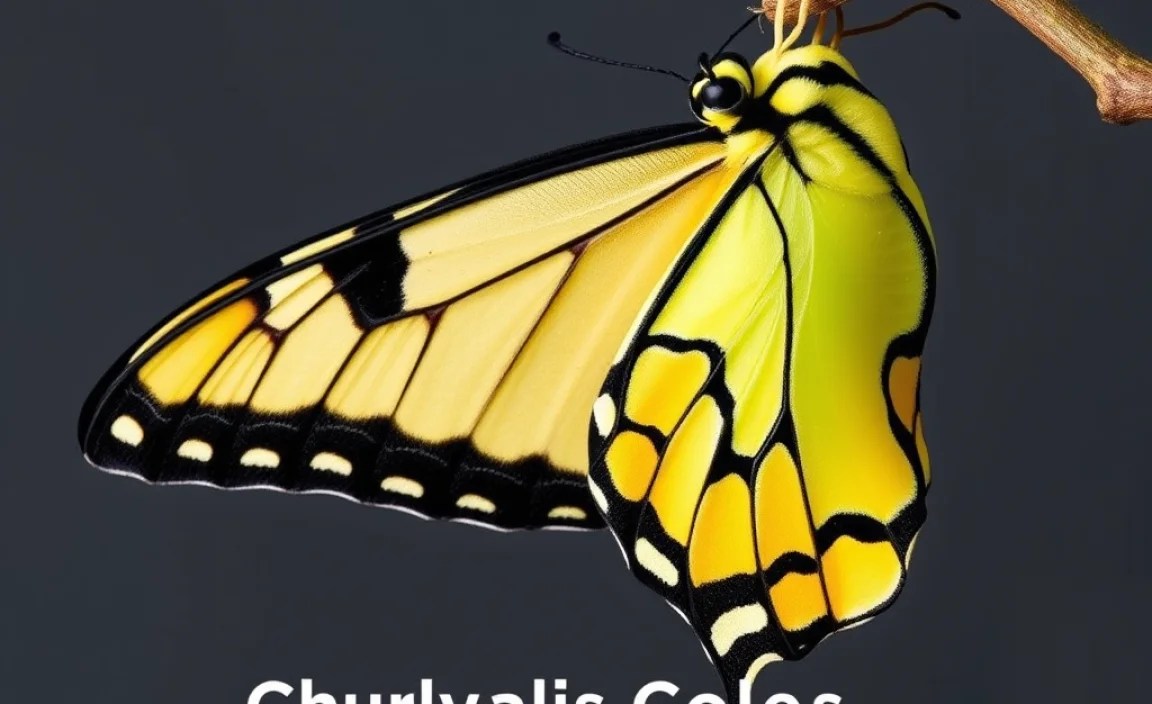
One of the most exciting parts of watching a chrysalis is knowing when the butterfly will emerge. Color changes can give you clues.
Pre-Emergence Color Changes
As the butterfly develops inside the chrysalis, you’ll notice some changes in color.
- Transparency: The chrysalis might become more transparent, allowing you to see the butterfly’s wings inside.
- Darkening: Dark patches might appear as the butterfly’s colors become more visible.
- Yellowing: A general yellowing of the chrysalis is often a sign that emergence is near.
Timeline of Color Changes
Here’s a general timeline of what you might observe:
- Early Stage: The chrysalis is a solid green or brown.
- Mid Stage: Subtle changes in color may occur as the butterfly develops.
- Late Stage: The chrysalis becomes more transparent, and the butterfly’s colors become visible.
What to Do When You See Changes
When you notice these changes, it’s time to prepare for the butterfly’s arrival.
- Monitor Closely: Check the chrysalis several times a day.
- Ensure Safety: Make sure the butterfly has enough space to emerge and dry its wings.
- Avoid Touching: Resist the urge to touch or help the butterfly. Let it emerge naturally.
Examples of Swallowtail Chrysalis Colors by Species

Let’s look at some specific examples of swallowtail butterfly species and their typical chrysalis colors.
Eastern Black Swallowtail (Papilio polyxenes)
The Eastern Black Swallowtail is a common sight in many gardens. Its chrysalis can be either green or brown, depending on the surroundings.
- Green Chrysalis: Usually found on plants with green foliage.
- Brown Chrysalis: Often seen on fences, walls, or branches.
Giant Swallowtail (Papilio cresphontes)
The Giant Swallowtail is one of the largest butterflies in North America. Its chrysalis is typically brown, resembling a dead leaf or twig.
- Brown Coloration: Provides excellent camouflage in wooded areas.
- Rough Texture: The chrysalis has a rough texture that further enhances its disguise.
Tiger Swallowtail (Papilio glaucus)
The Tiger Swallowtail is known for its striking yellow and black stripes. Its chrysalis is usually green but can sometimes be brown.
- Green Chrysalis: Blends in well with the leaves of its host plants.
- Occasional Brown: May occur if the caterpillar pupates on a brown surface.
Pipevine Swallowtail (Battus philenor)
The Pipevine Swallowtail has a unique chrysalis with a distinct shape and color. The chrysalis is often brown or green with a swollen appearance.
- Unique Shape: The chrysalis has a distinctive, curved shape.
- Color Variation: Can be brown or green, depending on the environment.
Creating a Butterfly-Friendly Habitat
To attract swallowtail butterflies to your garden, you need to create a habitat that supports their entire life cycle. This includes providing host plants for caterpillars and nectar sources for adult butterflies.
Host Plants for Caterpillars
Host plants are essential because they provide food for the caterpillars. Here are some popular choices for swallowtail butterflies:
- Eastern Black Swallowtail: Parsley, dill, fennel, and carrot tops.
- Giant Swallowtail: Citrus trees, hop tree, and prickly ash.
- Tiger Swallowtail: Wild cherry, tulip tree, and sweetbay magnolia.
- Pipevine Swallowtail: Pipevine (Aristolochia).
Nectar Sources for Adult Butterflies
Adult butterflies need nectar to fuel their activities. Plant a variety of nectar-rich flowers in your garden to attract them.
- Butterfly Bush (Buddleja davidii): A favorite of many butterfly species.
- Zinnia (Zinnia elegans): Easy to grow and provides lots of nectar.
- Lantana (Lantana camara): Blooms for a long time and attracts butterflies.
- Purple Coneflower (Echinacea purpurea): A native plant that supports pollinators.
Other Habitat Considerations
In addition to host plants and nectar sources, consider these other factors:
- Sunlight: Butterflies need sunlight to warm their bodies.
- Shelter: Provide shrubs and trees for shelter from wind and rain.
- Water Source: A shallow dish of water with pebbles can provide a place for butterflies to drink.
- Avoid Pesticides: Pesticides can harm or kill caterpillars and butterflies.
Photographing Chrysalises
Photographing chrysalises can be a rewarding experience. Here are some tips to help you capture stunning images.
Equipment
Having the right equipment can make a big difference.
- Camera: A DSLR or mirrorless camera with a macro lens is ideal.
- Lens: A macro lens allows you to capture close-up details.
- Tripod: A tripod helps stabilize your camera for sharp images.
- Lighting: Natural light is best, but a reflector can help fill in shadows.
Techniques
Use these techniques to get the best shots:
- Focus: Use manual focus to ensure the chrysalis is sharp.
- Aperture: Use a narrow aperture (e.g., f/8 or f/11) for greater depth of field.
- Composition: Experiment with different angles and compositions.
- Patience: Be patient and wait for the perfect moment.
Tips for Ethical Photography
It’s important to photograph chrysalises ethically.
- Avoid Disturbing: Do not touch or move the chrysalis.
- Respect Nature: Be mindful of the surrounding environment.
- Leave No Trace: Take all your equipment with you when you leave.
| Photography Tip | Description |
|---|---|
| Use a tripod | Ensures stability and sharpness. |
| Manual focus | Allows precise focusing on the chrysalis. |
| Natural light | Provides the best color and detail. |
| Avoid disturbance | Protect the chrysalis and its environment. |
Swallowtail Butterfly Conservation
Swallowtail butterflies, like many other insects, face threats from habitat loss, pesticide use, and climate change. It’s important to take action to protect them.
Threats to Swallowtail Butterflies
Here are some of the main threats:
- Habitat Loss: Development and agriculture reduce the amount of natural habitat available.
- Pesticide Use: Pesticides can kill caterpillars and butterflies directly.
- Climate Change: Changes in temperature and rainfall patterns can disrupt butterfly life cycles.
How You Can Help
There are many ways you can help protect swallowtail butterflies.
- Plant Host Plants: Provide food for caterpillars by planting host plants in your garden.
- Plant Nectar Sources: Support adult butterflies by planting nectar-rich flowers.
- Avoid Pesticides: Use natural pest control methods instead of pesticides.
- Create Habitat: Provide shelter and water sources in your garden.
- Support Conservation Organizations: Donate to or volunteer with organizations that protect butterfly habitats.
Conservation Organizations
Here are some organizations that work to protect butterflies and their habitats:
- The Xerces Society: Focuses on invertebrate conservation.
- National Wildlife Federation: Works to protect wildlife and habitats.
- World Wildlife Fund: Protects endangered species and habitats around the world.
Frequently Asked Questions (FAQ)
Why is my swallowtail chrysalis turning black?
A blackening chrysalis is often a sign of disease or a parasitic infection. Unfortunately, it usually means the butterfly will not emerge successfully.
How long does it take for a swallowtail butterfly to emerge from its chrysalis?
It typically takes between 10 to 14 days for a swallowtail butterfly to emerge from its chrysalis, but this can vary depending on the species and environmental conditions.
Can I move a swallowtail chrysalis?
It’s best to avoid moving a chrysalis if possible. However, if necessary, carefully cut the silk attachment and glue it to a similar surface in a sheltered location.
What do I do if a swallowtail butterfly emerges deformed?
A deformed butterfly likely has a genetic issue or was exposed to harmful substances. Sadly, it may not survive long in the wild. You can provide it with sugar water, but its chances of survival are low.
Why is my swallowtail caterpillar wandering away from its host plant?
A caterpillar wandering away from its host plant is usually looking for a suitable place to pupate. It’s a natural behavior as it prepares to transform into a chrysalis.
Is it normal for a swallowtail chrysalis to wiggle?
Yes, it’s normal for a chrysalis to wiggle! This is a defense mechanism to startle potential predators. It doesn’t mean the butterfly is about to emerge.
What should I do if a bird attacks my swallowtail chrysalis?
If a bird attacks your chrysalis, try to protect future ones by covering them with netting or moving them to a safer location. Prevention is key, as a damaged chrysalis is unlikely to survive.
Conclusion
Understanding the colors of swallowtail butterfly chrysalises and the factors that influence them can deepen your appreciation for these amazing insects. From the camouflage mechanisms that protect them to the environmental cues that guide their development, each color tells a story. By creating butterfly-friendly habitats and supporting conservation efforts, you can help ensure that future generations can enjoy the beauty and wonder of swallowtail butterflies. So, keep an eye on those chrysalises in your garden, and get ready to witness one of nature’s most incredible transformations!


