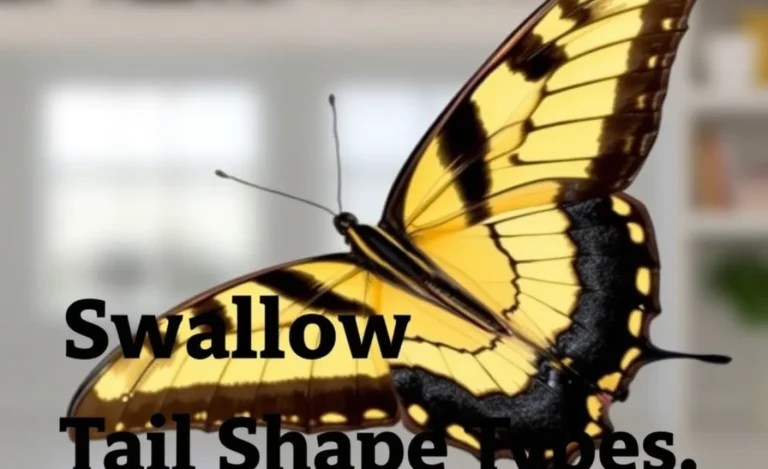
Swallowtail Butterfly Research Studies: Discoveries!

Swallowtail butterfly research studies explore these insects’ genetics, behavior, ecology, and evolution. Scientists investigate their unique wing patterns, chemical defenses, and interactions with host plants to understand how they adapt and survive. These studies also help in conservation efforts to protect swallowtail butterflies and their habitats.
Have you ever wondered how swallowtail butterflies get their vibrant colors or why they seem to prefer certain plants? These beautiful creatures are more than just pretty wings; they’re a fascinating subject of scientific study! Understanding swallowtail butterflies can feel overwhelming, but don’t worry, we’ll break down the key areas of research in a way that’s easy to grasp. We’ll explore what scientists are discovering about these amazing insects and how this knowledge helps us protect them. Let’s dive in and uncover the mysteries of swallowtail butterflies together!
Frequently Asked Questions About Swallowtail Butterfly Research
- What are the main areas of swallowtail butterfly research?
- Research focuses on genetics, behavior, ecology, evolution, and conservation.
- Why are swallowtail butterflies important for scientific study?
- They exhibit diverse adaptations, making them useful models for understanding broader biological principles.
- How do swallowtail butterflies defend themselves?
- Some species use chemical defenses obtained from their host plants, while others mimic toxic butterflies.
- What is the role of host plants in swallowtail butterfly research?
- Host plants are crucial for swallowtail larvae, and understanding their relationships helps in conservation.
- How does research help conserve swallowtail butterflies?
- It provides information needed to protect their habitats and manage populations.
- What are some of the tools used in swallowtail butterfly research?
- Genetic analysis, field observations, and controlled experiments are common methods.
- Can citizen scientists contribute to swallowtail butterfly research?
- Yes, by participating in butterfly counts and reporting sightings.
Unveiling the World of Swallowtail Butterfly Research

Swallowtail butterflies, with their striking patterns and graceful flight, have long captured the attention of scientists and nature enthusiasts alike. These insects serve as valuable models for understanding various biological principles. From their intricate wing patterns to their complex interactions with the environment, swallowtails offer a wealth of research opportunities. Let’s explore some of the key areas of swallowtail butterfly research.
Genetics and Evolution
One of the primary areas of focus is the genetics of swallowtail butterflies. Scientists study their DNA to understand how different species are related and how they have evolved over time. This research helps us understand:
- Phylogeny: Determining the evolutionary relationships between different swallowtail species.
- Genetic Diversity: Assessing the genetic variation within populations, which is crucial for their ability to adapt to changing environments.
- Speciation: Understanding how new species arise through genetic divergence and adaptation.
Genetic studies often involve analyzing specific genes or entire genomes to identify patterns of variation and adaptation. For example, researchers might investigate genes related to wing pattern development to understand how different colors and markings evolve. These genetic insights are essential for conservation efforts, as they help identify populations that are particularly important for maintaining genetic diversity.
Behavioral Studies
Swallowtail butterfly behavior is another fascinating area of research. Scientists observe and analyze how these butterflies interact with their environment, including:
- Mating Behavior: Understanding how swallowtails find mates and the rituals they perform during courtship.
- Foraging Behavior: Studying how they locate and feed on nectar sources.
- Oviposition Behavior: Investigating how females choose host plants for their eggs.
These studies often involve field observations, where researchers track butterflies and record their activities. They may also conduct experiments to test specific hypotheses about behavior. For instance, scientists might examine how different colors or shapes of flowers attract swallowtails, or how females choose host plants based on chemical cues. Understanding these behaviors is crucial for creating butterfly-friendly habitats and promoting their survival.
Ecological Interactions
Swallowtail butterflies play important roles in their ecosystems, and research in this area focuses on their interactions with other organisms, including:
- Host Plant Relationships: Investigating the specific plants that swallowtail larvae feed on and how these relationships influence butterfly populations.
- Predator-Prey Dynamics: Studying how swallowtails avoid predators through camouflage, mimicry, or chemical defenses.
- Pollination: Examining the role of swallowtails as pollinators and their impact on plant reproduction.
Ecological studies often involve a combination of field observations and laboratory experiments. Researchers might monitor butterfly populations in different habitats, analyze the chemical composition of host plants, or conduct feeding trials to assess the effectiveness of different defense mechanisms. These insights are essential for understanding the complex web of life and how swallowtail butterflies contribute to ecosystem health.
Chemical Ecology
Chemical ecology explores the chemical interactions between swallowtail butterflies and their environment. This includes:
- Host Plant Chemistry: Analyzing the chemical compounds in host plants that attract or deter swallowtails.
- Chemical Defenses: Studying the toxins or deterrents that swallowtails acquire from their host plants and use to defend themselves against predators.
- Pheromones: Investigating the chemical signals that swallowtails use to communicate with each other, particularly during mating.
Swallowtail larvae often sequester toxic compounds from their host plants, making them unpalatable or even poisonous to predators. For example, the Pipevine Swallowtail (Battus philenor) feeds on pipevine plants, which contain aristolochic acids. These acids are retained in the butterfly’s body, providing protection against predators. Research in chemical ecology helps us understand the complex interplay between plants, butterflies, and their predators.
Mimicry and Camouflage
Many swallowtail butterflies employ mimicry or camouflage as strategies for survival. Research in this area includes:
- Batesian Mimicry: Studying how palatable swallowtails mimic toxic species to avoid predation.
- Müllerian Mimicry: Investigating how multiple toxic species resemble each other, reinforcing the warning signal to predators.
- Camouflage: Examining how swallowtails blend in with their environment to avoid detection.
For example, the female Eastern Tiger Swallowtail (Papilio glaucus) exists in two forms: a yellow form that resembles the male and a black form that mimics the poisonous Pipevine Swallowtail. This mimicry protects the black form from predators. Research in mimicry and camouflage helps us understand the evolutionary pressures that drive these adaptations.
Conservation Research
With many butterfly populations declining due to habitat loss, climate change, and pesticide use, conservation research is crucial. This area includes:
- Population Monitoring: Tracking butterfly populations to assess their status and identify threats.
- Habitat Restoration: Developing strategies to restore and protect butterfly habitats.
- Conservation Genetics: Using genetic data to inform conservation management decisions.
Conservation efforts often involve creating butterfly gardens, protecting host plant populations, and reducing pesticide use. For example, the Xerces Society is actively involved in butterfly conservation through research, education, and advocacy. Understanding the specific needs of swallowtail butterflies is essential for developing effective conservation strategies.
Key Research Methods in Swallowtail Butterfly Studies

Scientists use a variety of methods to study swallowtail butterflies, each providing unique insights into their biology and ecology.
Field Observations
Field observations are a cornerstone of butterfly research. Researchers spend time in the field, observing butterflies in their natural habitats. This involves:
- Direct Observation: Watching butterflies and recording their behavior, such as feeding, mating, and oviposition.
- Mark-Recapture Studies: Capturing, marking, and releasing butterflies to track their movements and estimate population sizes.
- Habitat Surveys: Assessing the availability and quality of butterfly habitats, including the presence of host plants and nectar sources.
Field observations provide valuable data on butterfly behavior, habitat use, and population dynamics. These data can be used to identify threats and inform conservation strategies.
Laboratory Experiments
Laboratory experiments allow researchers to control variables and test specific hypotheses about butterfly biology. Common experiments include:
- Feeding Trials: Offering butterflies different food sources to determine their preferences and nutritional requirements.
- Oviposition Choice Experiments: Presenting female butterflies with different host plants to assess their oviposition preferences.
- Predator-Prey Interactions: Observing how butterflies interact with predators under controlled conditions.
Laboratory experiments provide insights into the mechanisms underlying butterfly behavior and ecology. These experiments can help us understand how butterflies respond to environmental changes and how to create more favorable conditions for their survival.
Genetic Analysis
Genetic analysis is a powerful tool for studying the evolutionary history and genetic diversity of swallowtail butterflies. Techniques include:
- DNA Sequencing: Determining the order of nucleotides in DNA to identify genes and genetic markers.
- Phylogenetic Analysis: Using genetic data to reconstruct the evolutionary relationships between different species.
- Population Genetics: Analyzing genetic variation within and between populations to assess their genetic health and adaptive potential.
Genetic analysis provides valuable information for conservation management. By understanding the genetic structure of butterfly populations, we can identify those that are most vulnerable to extinction and develop strategies to maintain their genetic diversity.
Chemical Analysis
Chemical analysis is used to study the chemical compounds that mediate interactions between swallowtail butterflies and their environment. This includes:
- Gas Chromatography-Mass Spectrometry (GC-MS): Identifying and quantifying the chemical compounds in host plants, butterfly tissues, and pheromone secretions.
- High-Performance Liquid Chromatography (HPLC): Separating and analyzing complex mixtures of chemical compounds.
- Spectroscopy: Measuring the absorption and emission of light by chemical compounds to determine their structure and concentration.
Chemical analysis provides insights into the chemical ecology of swallowtail butterflies, including their defenses against predators and their interactions with host plants.
Notable Swallowtail Butterfly Research Studies

Numerous research studies have contributed to our understanding of swallowtail butterflies. Here are a few notable examples:
| Study | Focus | Key Findings |
|---|---|---|
| Brower, L. P. (1958). Larval foodplant specificity in butterflies of the Papilio glaucus group. Lepidopterists’ News, 12(5-6), 103-114. | Host plant specificity | Demonstrated that different swallowtail species have distinct host plant preferences, influencing their distribution and survival. |
| Fordyce, J. A. (2006). Host shifts and evolutionary relationships among swallowtail butterflies. Evolution, 60(12), 2603-2613. | Evolutionary relationships | Showed how host plant shifts have driven the evolution of new swallowtail species. |
| Ritland, D. B., & Papaj, D. R. (1993). Host-plant selection by visually specialist swallowtail butterflies. Animal Behaviour, 46(1), 37-46. | Oviposition behavior | Examined how visual cues influence host plant selection by female swallowtails. |
| Sime, K. R., & Feeny, P. P. (1995). Aphids on milkweed and swallowtail butterflies: a tripartite ecological interaction. Ecology, 76(6), 1944-1948. | Ecological interactions | Investigated the complex interactions between swallowtails, aphids, and milkweed plants. |
| Thompson, J. N. (1988). Variation in interspecific interactions. Annual Review of Ecology and Systematics, 19(1), 65-91. | Interspecific interactions | Reviewed the ways in which interactions between swallowtails and other species shape their ecology and evolution. |
How You Can Get Involved in Swallowtail Butterfly Research

You don’t have to be a scientist to contribute to swallowtail butterfly research. There are many ways that citizen scientists can get involved:
- Butterfly Counts: Participate in organized butterfly counts to monitor populations in your area. Organizations like the North American Butterfly Association (NABA) coordinate these events.
- Reporting Sightings: Report your butterfly sightings to online databases, such as iNaturalist or BugGuide. This helps scientists track butterfly distributions and identify trends.
- Creating Butterfly Gardens: Plant host plants and nectar sources in your garden to attract swallowtail butterflies and provide them with food and habitat.
- Supporting Conservation Organizations: Donate to or volunteer with organizations that are working to protect butterfly habitats and promote conservation.
By getting involved in citizen science, you can make a valuable contribution to swallowtail butterfly research and conservation.
Resources for Further Learning
If you’re interested in learning more about swallowtail butterflies and the research being conducted on them, here are some valuable resources:
- The Xerces Society: A non-profit organization dedicated to protecting invertebrates and their habitats. They offer a wealth of information on butterfly conservation and citizen science opportunities.
- North American Butterfly Association (NABA): An organization that promotes butterfly conservation through education, research, and advocacy.
- iNaturalist: An online platform where you can record your observations of nature, including butterfly sightings, and connect with other nature enthusiasts.
- BugGuide: An online community that provides identification resources for insects and other arthropods.
- Smithsonian Institution: Offers vast resources on insects and butterflies, including research and conservation information.
Conclusion
Swallowtail butterfly research is a vibrant and essential field that unveils the complexities of these insects’ lives, from their genetic makeup to their ecological interactions. By understanding their behaviors, defenses, and habitat needs, scientists are better equipped to conserve these beautiful creatures and their environments. Whether through genetic analysis, field observations, or chemical ecology, each study contributes a piece to the puzzle, helping us appreciate and protect swallowtail butterflies. You, too, can play a role by participating in citizen science projects, creating butterfly-friendly gardens, and supporting conservation efforts. Together, we can ensure that future generations will continue to marvel at the beauty and wonder of swallowtail butterflies.