
Blue Morpho “Which” Questions? The Ultimate Guide

Have you ever seen a butterfly so blue it looks like the sky? These amazing butterflies are called Blue Morphos. They live in the rainforests of Central and South America. Many kids have Blue Morpho “which” questions. What do they eat? Where do they live? Why are they so blue? Let’s learn some cool facts about these beautiful creatures!
Imagine walking through a jungle. Suddenly, a flash of bright blue catches your eye. It’s a Blue Morpho butterfly! These butterflies are not just pretty. They are also very interesting. They have special ways to protect themselves. They also play an important role in their ecosystem. So, get ready to explore the world of the Blue Morpho. We will answer all your Blue Morpho “which” questions.
Key Takeaways
- Blue Morpho butterflies have shiny, bright blue wings on the top side.
- They live in rainforests of Central and South America, enjoying humid climates.
- These butterflies eat sap, fruit, and nectar using a long, straw-like tongue.
- Predators are tricked by their bright colors, making them think they are poisonous.
- Many Blue Morpho “which” questions relate to their unique defense mechanisms.
What Are Blue Morpho Butterfly Habitats?

Blue Morpho butterflies live in the rainforests. These forests are in Central and South America. They like warm and wet places. The butterflies need lots of trees and plants. The trees give them shelter from the sun and rain. The plants give them food. The rainforests have many different kinds of plants. This helps the butterflies find the food they need. They can find fruit, sap, and nectar. These butterflies are most common in places like Brazil and Costa Rica. They need a specific environment to survive. Changes in their habitat can hurt their populations. Protecting the rainforest is important for these amazing creatures.
- They live in rainforests.
- They like warm, wet places.
- They need lots of trees.
- Plants give them food.
- Rainforests have many plants.
- They are common in Brazil.
- Costa Rica is also home.
Many people wonder which parts of the rainforest Blue Morphos prefer. They often stay near the forest floor. This is where they can find rotting fruit. They also like to be near streams and rivers. These water sources help keep the air humid. The humidity is important for their survival. They can also be found higher up in the trees. They fly through the canopy in search of food and mates. The Blue Morpho’s habitat is crucial to its life cycle. Without the rainforest, they would not be able to survive. Protecting these habitats is very important.
Fun Fact or Stat: Blue Morpho butterflies are most active during the wet season in the rainforest.
What Makes the Rainforest Ideal?
Have you ever wondered why rainforests are so important? Rainforests provide the perfect environment for Blue Morpho butterflies. The warm temperatures help them stay active. The high humidity keeps them from drying out. The many plants offer lots of food sources. The dense canopy provides shelter from predators. Rainforests also have many different kinds of trees. These trees are important for the butterfly’s life cycle. The butterflies lay their eggs on specific plants. These plants provide food for the caterpillars when they hatch. Without the rainforest, the Blue Morpho would not be able to survive. Rainforests are truly special places.
Do They Migrate?
Do Blue Morphos fly south for the winter like some birds? No, they do not migrate. They stay in the same area all year round. The rainforest provides everything they need. The temperature stays warm. There is always food available. They do not need to travel to find better conditions. Some butterflies migrate to find warmer weather or more food. But Blue Morphos are happy where they are. They have adapted to life in the rainforest. They can survive in the same place year-round. This makes them different from many other butterfly species.
How Does Deforestation Affect Them?
Imagine someone taking away your home. Deforestation does this to the Blue Morpho. When people cut down trees, they destroy the butterfly’s habitat. The butterflies lose their food and shelter. They have nowhere to lay their eggs. Deforestation can lead to a decrease in the Blue Morpho population. It is important to protect the rainforest. We can help these beautiful butterflies survive. By protecting their habitat, we ensure they have a place to live. This is why conservation efforts are so important. We need to help the Blue Morpho.
Which Plants Do Blue Morpho Caterpillars Eat?

Blue Morpho caterpillars are picky eaters. They only eat leaves from certain plants. These plants are their host plants. The caterpillars need these plants to survive. Some of their favorite host plants include pea plants. They also like plants in the bean family. The caterpillars eat a lot of leaves. This helps them grow big and strong. The mother butterfly chooses the right plant. She lays her eggs on the leaves. When the eggs hatch, the caterpillars have food right away. The right plants are important for the Blue Morpho life cycle. Without them, the caterpillars cannot survive. Knowing which plants they need helps us protect them.
- They eat leaves from certain plants.
- These plants are their host plants.
- They like pea plants.
- They also eat bean plants.
- Caterpillars eat a lot of leaves.
- Mothers lay eggs on these plants.
- The caterpillars eat right away.
It’s important to know which plants support the Blue Morpho. Conservation efforts often focus on protecting these specific plants. By preserving the host plants, we help ensure the caterpillars have enough food. This helps the butterfly population thrive. Some people even plant these host plants in their gardens. This can help attract Blue Morphos to their area. It’s a small way to make a big difference. Protecting the Blue Morpho starts with understanding their needs. Knowing their diet is an important part of this.
Fun Fact or Stat: A single Blue Morpho caterpillar can eat its weight in leaves every day!
Why Are Host Plants Important?
Imagine if you could only eat one type of food. That’s kind of like the Blue Morpho caterpillar. Host plants are the only food source for these caterpillars. The mother butterfly carefully selects these plants. She knows her babies will need them to survive. These plants provide the right nutrients. They help the caterpillars grow and develop. Without host plants, the caterpillars would starve. This is why protecting these plants is so important. It’s a key part of Blue Morpho conservation. We must ensure these plants are available.
How Do Caterpillars Find Food?
How do tiny caterpillars find the right plants? They have a special sense. They can smell the chemicals in the leaves. This helps them find their host plants. They also follow trails left by other caterpillars. These trails lead them to food sources. Once they find a host plant, they start eating. They eat almost constantly. They need a lot of energy to grow. Finding the right food is crucial for their survival. They are very good at finding it.
What Happens If Host Plants Disappear?
What would happen if all the pizza in the world disappeared? That’s similar to what happens when host plants disappear. The Blue Morpho caterpillars would have nothing to eat. They would not be able to grow into butterflies. The Blue Morpho population would decline. This is why deforestation is so harmful. It destroys the host plants. Protecting these plants is essential. We must conserve their habitat. This ensures the caterpillars have enough to eat. It protects the entire species.
How Do Blue Morphos Defend Themselves?
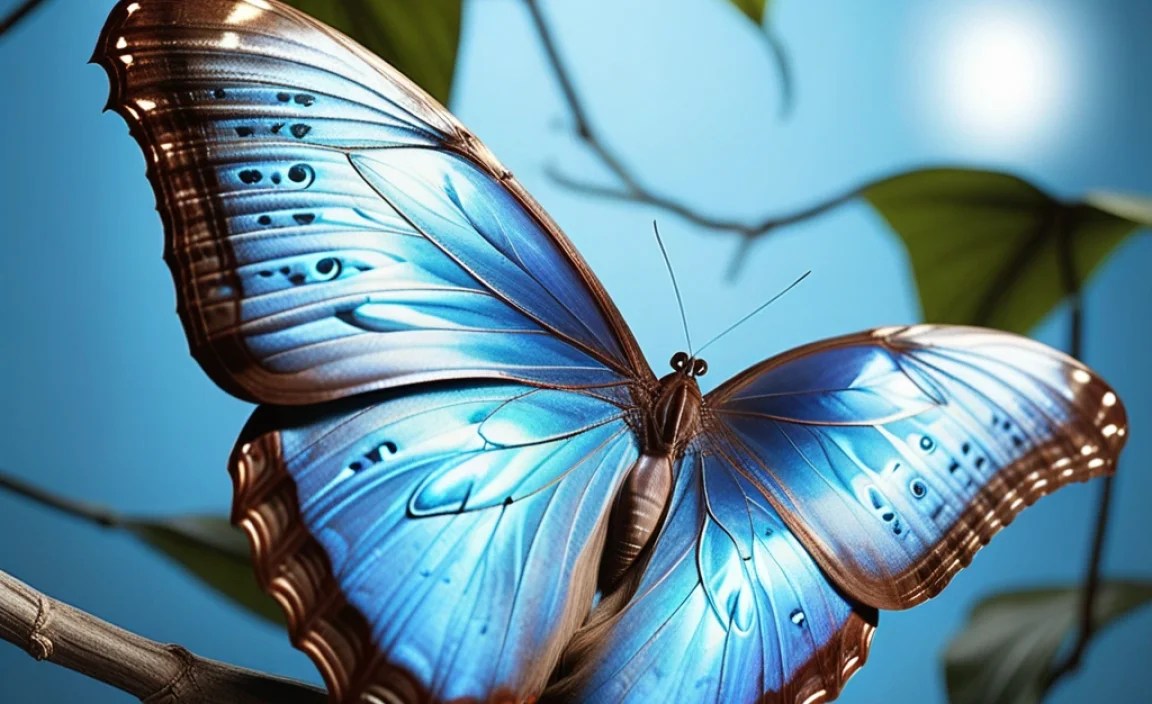
Blue Morphos have some cool ways to stay safe. Their bright blue wings can startle predators. When they fly, the blue flashes can confuse birds. The underside of their wings is brown. This helps them blend in with trees. When they close their wings, they disappear. This camouflage makes it hard for predators to see them. They also have a strong, unpleasant smell. This smell can deter some animals. These defenses help them survive in the rainforest. They are very good at avoiding danger. They have adapted to protect themselves.
- Bright blue wings startle predators.
- Blue flashes confuse birds.
- Brown underside helps them blend.
- They disappear when wings are closed.
- They have a strong, bad smell.
- These defenses help them survive.
- They are good at avoiding danger.
Many Blue Morpho “which” questions focus on their defense strategies. These strategies are very effective. The combination of bright colors and camouflage is unique. The bright blue warns predators. The brown underside hides them. This makes it hard for predators to find them. The unpleasant smell is another layer of defense. It tells predators they might not taste good. The Blue Morpho uses all these defenses to stay alive. These adaptations are crucial to their survival in the rainforest.
Fun Fact or Stat: The scales on a Blue Morpho’s wings reflect light in a way that creates the bright blue color. This is called structural coloration!
How Does Camouflage Work?
Have you ever played hide-and-seek? Camouflage is like that. The brown underside of the Blue Morpho’s wings helps it hide. When the butterfly closes its wings, it blends in with the trees. This makes it hard for predators to see. They look right past the butterfly. Camouflage is a great way to avoid danger. Many animals use camouflage. It helps them survive in the wild. The Blue Morpho is a master of disguise.
Why Are They So Bright?
Why would a butterfly want to be so bright? Isn’t that dangerous? The bright blue color serves a purpose. It can startle predators. It also helps them find mates. The bright color is easy to see. It can attract attention. But it also warns predators. The bright blue says, “I am here!” This can be a risky strategy. But it works for the Blue Morpho. The color is a key part of their defense.
Do They Taste Bad?
Imagine taking a bite of something that tastes terrible. Some predators have learned that Blue Morphos don’t taste good. The butterflies have chemicals in their bodies. These chemicals make them taste unpleasant. This is another way they defend themselves. Predators learn to avoid them. This helps the Blue Morpho survive. Taste is an important defense mechanism. It protects them from being eaten.
What Do Blue Morpho Butterflies Eat?

Blue Morpho butterflies have a special diet. They don’t eat flowers like many other butterflies. Instead, they like to eat rotting fruit. They also drink tree sap. Sometimes, they even eat dead animals. They use a long, straw-like tongue. This tongue is called a proboscis. They unroll it to suck up liquids. The proboscis works like a straw. It helps them get food from hard-to-reach places. Their diet is different from other butterflies. It helps them survive in the rainforest. They can find food even when flowers are scarce. This makes them unique.
- They eat rotting fruit.
- They drink tree sap.
- They eat dead animals.
- They use a long tongue.
- The tongue is called a proboscis.
- It works like a straw.
- Their diet is different.
Many people are curious which foods are most important to the Blue Morpho. Rotting fruit is a key part of their diet. It provides them with the sugars they need for energy. Tree sap is another important source of nutrients. It contains minerals and other compounds. Eating dead animals is less common. But it can provide them with protein. The Blue Morpho is an opportunist. It will eat whatever it can find. This helps them survive in the rainforest. Their diet is varied and interesting.
Fun Fact or Stat: The proboscis of a Blue Morpho butterfly can be longer than its body!
Why Rotting Fruit?
Why would a butterfly want to eat rotting fruit? It sounds gross! Rotting fruit is full of sugar. The sugar gives the Blue Morpho energy. It needs energy to fly and find mates. Rotting fruit is also easy to find in the rainforest. It’s a reliable food source. The butterflies don’t have to work hard to find it. They can just land on the fruit and start eating. This makes rotting fruit a great choice.
How Does the Proboscis Work?
Imagine having a built-in straw. That’s what the Blue Morpho has. The proboscis is a long, straw-like tongue. It stays curled up when not in use. When the butterfly wants to eat, it unrolls the proboscis. It sticks the proboscis into the food. Then, it sucks up the liquid. The proboscis works like a vacuum cleaner. It helps the butterfly get food from hard-to-reach places. It is a very useful tool.
Do They Drink Water?
Just like you, Blue Morphos need water to survive. They get water from the food they eat. They also drink water from puddles and wet leaves. Water is important for their health. It helps them stay hydrated. They need water to fly and reproduce. The rainforest is a humid place. But they still need to drink water. Water is essential for their survival.
What Is the Blue Morpho Life Cycle?
The Blue Morpho life cycle has four stages. These stages are egg, larva (caterpillar), pupa (chrysalis), and adult. The female butterfly lays her eggs on host plants. The eggs hatch into caterpillars. The caterpillars eat a lot and grow quickly. They shed their skin several times. This is called molting. After growing, the caterpillar turns into a pupa. The pupa is also called a chrysalis. Inside the pupa, the caterpillar changes. It transforms into a butterfly. Finally, the butterfly emerges from the pupa. The life cycle starts all over again. It is a fascinating process.
- The life cycle has four stages.
- Egg, larva, pupa, and adult.
- Eggs hatch into caterpillars.
- Caterpillars eat and grow.
- They shed their skin.
- Caterpillars turn into pupae.
- Butterflies emerge from pupae.
Understanding the Blue Morpho life cycle helps answer many Blue Morpho “which” questions. Each stage is important. The egg stage is the beginning. The larva stage is when they eat and grow. The pupa stage is when they transform. The adult stage is when they reproduce. Each stage depends on the others. If one stage is disrupted, the whole cycle is affected. This is why it is important to protect their habitat. It ensures they can complete their life cycle. The Blue Morpho’s life cycle is a wonder of nature.
Fun Fact or Stat: The entire life cycle of a Blue Morpho butterfly lasts about 115 days!
How Long Do They Live?
Imagine living for only a few months. That’s about how long a Blue Morpho lives. The adult butterflies live for about one to two months. Their main job is to reproduce. They need to find a mate and lay eggs. After that, they die. Their life is short but important. They contribute to the next generation. Their beauty is fleeting. But their impact is lasting.
What Happens Inside the Chrysalis?
Have you ever wondered what happens inside a chrysalis? It’s like a secret transformation. The caterpillar turns into a butterfly. The process is called metamorphosis. The caterpillar’s body breaks down. It rearranges into a new form. Wings, legs, and antennae develop. It’s like a magical change. The butterfly emerges completely different. It is an amazing process.
Why Do Caterpillars Molt?
Why do caterpillars keep shedding their skin? They need to grow bigger. Their skin doesn’t stretch. So, they have to shed it. This is called molting. They grow a new skin underneath. Then, they shed the old one. They do this several times. Each time, they get bigger. Molting is a sign of growth. It’s a necessary part of their life cycle. It helps them become butterflies.
Where Do Blue Morphos Lay Their Eggs?
Female Blue Morphos are very careful about where they lay their eggs. They lay their eggs on specific host plants. These plants provide food for the caterpillars. The mother butterfly chooses plants that are healthy. She wants to give her babies the best start. She lays the eggs on the underside of the leaves. This protects them from the sun and rain. She lays only a few eggs on each plant. This ensures there is enough food for each caterpillar. Her choices are important for the survival of her offspring.
- They lay eggs on host plants.
- These plants feed caterpillars.
- Mothers choose healthy plants.
- Eggs are laid under leaves.
- This protects them from sun.
- They lay few eggs per plant.
- This ensures enough food.
Understanding which plants are chosen by the Blue Morpho is important. Conservation efforts often focus on these plants. By protecting these plants, we help the butterflies. The mother butterfly knows what’s best for her babies. Her choices are crucial to their survival. She ensures they have the food they need. She protects them from the elements. Her careful selection of host plants is amazing. It is a key part of the Blue Morpho life cycle.
Fun Fact or Stat: A female Blue Morpho butterfly can lay up to 500 eggs in her lifetime!
How Do They Choose the Right Plant?
Imagine having to pick the perfect spot for your baby to eat. That’s what the mother Blue Morpho does. She uses her senses to find the right plant. She can smell the chemicals in the leaves. She can also see the plant’s shape and color. She looks for healthy plants. She avoids plants that are damaged or sick. She wants to make sure her babies have the best chance.
Why Under the Leaves?
Why do they lay their eggs under the leaves? It’s a safe place. The leaves protect the eggs from the sun. The sun can dry out the eggs. The leaves also protect them from the rain. Rain can wash the eggs away. The underside of the leaf is hidden. This makes it harder for predators to find them. It’s a smart strategy.
What Happens After the Eggs Hatch?
What happens when the eggs finally hatch? Tiny caterpillars emerge. They are hungry. They start eating the leaves right away. They eat almost constantly. They need a lot of energy to grow. The host plant provides everything they need. The caterpillars grow quickly. They shed their skin several times. They are preparing for the next stage.
What Threats Do Blue Morphos Face?
Blue Morphos face many threats in the wild. Deforestation is a big problem. When people cut down trees, they destroy their habitat. Pesticides can also harm them. These chemicals can poison the butterflies and caterpillars. Climate change is another threat. Changes in temperature and rainfall can affect their food supply. Predators also pose a threat. Birds and other animals eat the butterflies. Protecting them is important. We need to reduce these threats. This will help them survive.
- Deforestation destroys habitat.
- Pesticides can poison them.
- Climate change affects food.
- Birds and animals eat them.
- Protecting them is important.
- We need to reduce threats.
- This will help them survive.
Addressing which threats are most critical helps us protect Blue Morphos. Deforestation is a major concern. It destroys their homes. Pesticide use must be reduced. These chemicals harm the butterflies. Climate change needs to be addressed. This will protect their food supply. We can all help by supporting conservation efforts. This will ensure these beautiful butterflies survive. Protecting their habitat is crucial. It is our responsibility to help.
| Threat | Description | Impact on Blue Morphos |
|---|---|---|
| Deforestation | Cutting down rainforest trees | Loss of habitat and food sources |
| Pesticides | Chemicals used to kill insects | Poisoning of butterflies and caterpillars |
| Climate Change | Changes in temperature and rainfall | Disruption of food supply and breeding cycles |
| Predation | Being hunted by birds and other animals | Reduction in butterfly population |
Fun Fact or Stat: The Blue Morpho population has declined by 30% in the last 20 years due to habitat loss!
How Does Climate Change Affect Them?
Imagine the weather changing all the time. That’s what climate change is doing. It’s making the temperatures warmer. It’s changing the rainfall patterns. This can affect the plants that Blue Morphos need. It can also affect their breeding cycles. They might not be able to find food. They might not be able to reproduce. Climate change is a serious threat. We need to take action.
What Can Be Done About Deforestation?
What can we do to stop deforestation? We can support sustainable practices. We can buy products that are made responsibly. We can also donate to conservation organizations. These organizations work to protect rainforests. We can also educate others about the importance of rainforests. Every little bit helps. Together, we can make a difference. We can protect the Blue Morpho’s home.
How Do Pesticides Harm Them?
Imagine spraying poison on your food. That’s what pesticides do to Blue Morphos. Pesticides are chemicals that kill insects. But they can also harm butterflies. The butterflies can get poisoned. The caterpillars can also get poisoned. Pesticides can also kill their food plants. This leaves them with nothing to eat. Pesticides are very dangerous. We need to use them carefully.
Summary
Blue Morpho butterflies are amazing creatures. They live in the rainforests of Central and South America. They have bright blue wings. They use these wings to startle predators. They also have brown undersides. This helps them blend in with trees. They eat rotting fruit, tree sap, and dead animals. Their life cycle has four stages. They face threats from deforestation, pesticides, and climate change. Understanding these things helps us answer Blue Morpho “which” questions.
Protecting Blue Morphos is important. We can support conservation efforts. We can reduce our use of pesticides. We can help fight climate change. Every little bit helps. Together, we can ensure these beautiful butterflies survive. They are an important part of the rainforest ecosystem. We need to protect them for future generations.
Conclusion
Blue Morpho butterflies are truly special. They are beautiful and fascinating. They play an important role in the rainforest ecosystem. We have learned a lot about them. We know where they live. We know what they eat. We know how they defend themselves. We also know the threats they face. By understanding these things, we can help protect them. We can answer Blue Morpho “which” questions and share this knowledge. Let’s work together to ensure these butterflies thrive for years to come.
Frequently Asked Questions
Question No 1: What do Blue Morpho caterpillars eat?
Answer: Blue Morpho caterpillars are picky eaters. They primarily feed on the leaves of specific host plants. These plants are often from the pea family or the bean family. The mother butterfly carefully selects these plants. She lays her eggs on them to ensure the caterpillars have a ready food source when they hatch. The caterpillars eat a lot of leaves. This helps them grow quickly. They need the nutrients from these specific plants to develop properly and transform into butterflies.
Question No 2: Where do Blue Morpho butterflies live?
Answer: Blue Morpho butterflies live in the rainforests of Central and South America. They thrive in warm, humid environments. These rainforests provide the perfect conditions for their survival. The butterflies need lots of trees and plants. These offer shelter and food. They are commonly found in countries like Brazil and Costa Rica. The rainforest provides everything they need to live and reproduce. Deforestation is a major threat to their habitat.
Question No 3: How do Blue Morpho butterflies defend themselves?
Answer: Blue Morpho butterflies have several defense mechanisms. Their bright blue wings can startle predators. The flashing blue color confuses birds. The underside of their wings is brown. This helps them blend in with trees when they close their wings. They also have an unpleasant smell. This can deter some animals from eating them. These defenses help them survive in the rainforest. The combination of color and camouflage is very effective.
Question No 4: What is the life cycle of a Blue Morpho butterfly?
Answer: The Blue Morpho life cycle has four stages. It starts with the egg. The egg hatches into a larva, which is the caterpillar. The caterpillar eats and grows. It then transforms into a pupa, also known as a chrysalis. Inside the pupa, the caterpillar changes into a butterfly. Finally, the butterfly emerges from the pupa. The adult butterfly reproduces. The cycle starts again. Each stage is important for the butterfly’s survival. The whole process takes about 115 days.
Question No 5: Why are Blue Morpho butterflies blue?
Answer: The blue color of Blue Morpho wings is not from pigment. Instead, it’s due to structural coloration. Tiny scales on the wings reflect light. This reflection creates the bright blue color. The scales are shaped in a way that only blue light is reflected. This makes the butterflies appear so vividly blue. The color is a result of physics, not chemistry. It is a beautiful example of natural engineering. When people ask Blue Morpho “which” questions, this is a common one!
Question No 6: What threats do Blue Morpho butterflies face?
Answer: Blue Morpho butterflies face several threats. Deforestation is a major one. It destroys their habitat. Pesticides can poison them and their food sources. Climate change can affect their food supply and breeding cycles. Predators like birds also pose a threat. Conservation efforts are important. They help protect the butterflies and their habitat. Reducing these threats is crucial for their survival. Many Blue Morpho “which” questions come down to what we can do to help.


