
Butterflies in Borneo Rainforests: A Powerful Guide

Quick Summary:
Borneo rainforests are home to an incredible variety of butterflies! To spot them, visit during the dry season (March to September), explore areas with flowering plants, and move slowly. Look for butterflies like the Rajah Brooke’s Birdwing, known for its vibrant green markings, and the Cruiser butterfly, recognized by its swift flight. Remember to bring binoculars, a camera, and a field guide to enhance your butterfly-watching experience.
Have you ever dreamed of stepping into a world filled with fluttering jewels? Borneo’s rainforests offer just that—a dazzling display of butterflies found nowhere else on Earth! But where do you even begin to look for these elusive creatures, and how can you tell one from another? Don’t worry, it’s easier than you think!
This guide will walk you through everything you need to know to discover the butterflies of Borneo. We’ll explore the best times and places to find them, teach you how to identify some of the most stunning species, and share tips for making your butterfly-watching adventure unforgettable. Get ready to be amazed!
Frequently Asked Questions About Butterflies in Borneo
What is the best time of year to see butterflies in Borneo?
The dry season, from March to September, is generally the best time to see butterflies in Borneo. During this period, there is less rain, and more flowers are in bloom, attracting a greater number of butterflies.
Where are the best places to find butterflies in Borneo?
Butterflies are most commonly found in areas with abundant flowering plants, such as forest edges, clearings, and along rivers. Butterfly gardens and nature reserves are also excellent places to spot a variety of species.
What should I bring on a butterfly-watching trip in Borneo?
Essential items include binoculars for closer viewing, a camera to capture your sightings, a field guide for identification, insect repellent, sunscreen, and appropriate clothing for hiking in a rainforest environment.
Are there any poisonous butterflies in Borneo?
Some butterflies in Borneo, like the Rajah Brooke’s Birdwing, are poisonous to predators because their caterpillars feed on toxic plants. However, they are not poisonous to humans upon touch. It’s always best to observe butterflies without handling them.
How can I attract butterflies to my garden in Borneo?
Planting native flowering plants that provide nectar for adult butterflies and host plants for their caterpillars is a great way to attract butterflies to your garden. Avoid using pesticides that can harm butterflies and other beneficial insects.
What is the ecological importance of butterflies in Borneo?
Butterflies play a crucial role in pollination, helping to maintain the biodiversity of the rainforest. They also serve as an important food source for birds, lizards, and other animals.
Are butterflies in Borneo endangered?
Yes, some butterfly species in Borneo are threatened by habitat loss due to deforestation and agriculture. Supporting conservation efforts and sustainable practices can help protect these beautiful creatures and their environment.
Discovering Borneo’s Butterfly Paradise

Borneo, the third-largest island in the world, is a treasure trove of biodiversity. Its lush rainforests teem with life, and among the most enchanting inhabitants are its butterflies. With an estimated 1,000 species flitting through the undergrowth and soaring above the canopy, Borneo is a true butterfly paradise.
But why are there so many butterflies in Borneo? The answer lies in the island’s unique combination of tropical climate, varied habitats, and abundant food sources. The warm, humid climate provides ideal conditions for butterfly breeding and activity year-round. The diverse rainforest ecosystems, ranging from lowland forests to montane forests, offer a wide range of habitats for different butterfly species. And the profusion of flowering plants ensures a constant supply of nectar, the butterflies’ primary food source.
Planning Your Butterfly Adventure
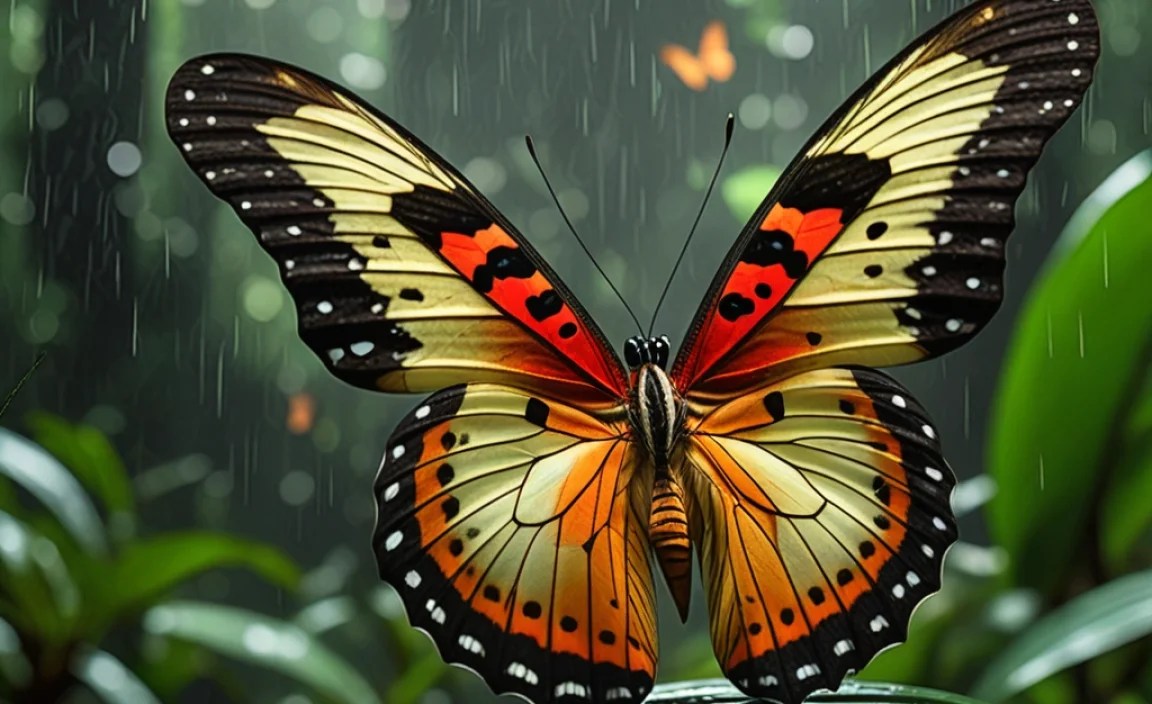
Ready to embark on your own butterfly-watching adventure in Borneo? Here’s what you need to know to make the most of your experience:
1. Timing is Everything: When to Go
The best time to visit Borneo for butterfly watching is during the dry season, which typically runs from March to September. During this period, rainfall is lower, and the sun shines more frequently, encouraging butterflies to be more active. The flowers are also in full bloom, providing a feast for nectar-loving butterflies.
2. Choosing Your Destination: Where to Look
Borneo offers a variety of locations for butterfly watching, each with its own unique charm. Here are a few of the most popular destinations:
- Danum Valley Conservation Area: Located in Sabah, this pristine rainforest is renowned for its exceptional biodiversity. It is home to a wide variety of butterfly species, as well as other iconic Bornean wildlife, such as orangutans and proboscis monkeys.
- Kinabalu National Park: Centered around Mount Kinabalu, the highest peak in Southeast Asia, this park boasts a diverse range of habitats, from lowland rainforests to montane forests. This variety supports a rich butterfly fauna, including many endemic species found nowhere else in the world.
- Lambir Hills National Park: Situated in Sarawak, this park is famous for its incredible tree diversity. It also harbors a wealth of butterfly species, many of which are attracted to the park’s abundant flowering plants.
- Kuban National Park: Offers a more accessible rainforest experience near Kuching, Sarawak. Easy trails and boardwalks wind through the forest, making it easier to spot butterflies and other wildlife.
3. Gear Up: What to Bring
To enhance your butterfly-watching experience, be sure to pack the following essentials:
- Binoculars: A good pair of binoculars will allow you to get a closer look at butterflies, even those that are high up in the canopy or flitting quickly through the undergrowth.
- Camera: Capture the beauty of Borneo’s butterflies with a camera. A macro lens is ideal for taking close-up shots of these delicate creatures.
- Field Guide: A field guide to the butterflies of Borneo will help you identify the species you encounter. Look for guides that include color photographs and detailed descriptions.
- Insect Repellent: Protect yourself from mosquitoes and other insects with a good insect repellent.
- Sunscreen: The tropical sun can be intense, so be sure to wear sunscreen to protect your skin.
- Appropriate Clothing: Wear lightweight, long-sleeved shirts and pants to protect yourself from insects and the sun.
- Hiking Shoes: Sturdy hiking shoes are essential for navigating the rainforest trails.
4. Respect the Environment: Ethical Butterfly Watching
When observing butterflies in their natural habitat, it’s important to do so responsibly and ethically. Here are a few guidelines to follow:
- Observe from a distance: Avoid getting too close to butterflies, as this can disturb them and disrupt their natural behavior.
- Do not touch or handle butterflies: Butterflies are delicate creatures, and handling them can damage their wings or scales.
- Stay on marked trails: Stick to established trails to avoid trampling vegetation and disturbing wildlife.
- Do not collect butterflies: Collecting butterflies is harmful to their populations and is often illegal.
- Leave no trace: Pack out everything you pack in and avoid leaving any litter behind.
Meet Borneo’s Butterfly Stars: A Guide to Identification

Borneo is home to a dazzling array of butterfly species, each with its own unique markings and behaviors. Here are a few of the most iconic and easily recognizable butterflies you might encounter:
1. Rajah Brooke’s Birdwing (Trogonoptera brookiana)
This magnificent butterfly is named after Sir James Brooke, the first White Rajah of Sarawak. It is one of the largest and most striking butterflies in Borneo, with its velvety black wings adorned with iridescent green markings. The Rajah Brooke’s Birdwing is a protected species, and its presence is a sign of a healthy rainforest ecosystem.
Key Identification Features:
- Large size (wingspan up to 7 inches)
- Velvety black wings with iridescent green markings
- Distinctive red spot on the thorax
2. The Cruiser (Vindula dejone)
The Cruiser is a fast-flying butterfly that is commonly seen darting through the rainforest canopy. It is known for its distinctive orange and brown wings, which are marked with a series of white spots. The Cruiser is a common sight in Borneo’s forests and gardens.
Key Identification Features:
- Medium size (wingspan up to 3 inches)
- Orange and brown wings with white spots
- Swift, erratic flight
3. Common Tree Nymph (Idea leuconoe)
This ethereal butterfly is a master of disguise, its translucent white wings resembling delicate petals. It floats gently through the forest, often in large groups, creating a mesmerizing spectacle. The Common Tree Nymph is a protected species in some parts of Borneo.
Key Identification Features:
- Large size (wingspan up to 5 inches)
- Translucent white wings with black markings
- Slow, graceful flight
4. Fivebar Swordtail (Graphium antiphates)
This striking butterfly is easily identified by its long, sword-like tails and bold black and white stripes. It is a fast-flying butterfly that is often seen feeding on nectar from flowers. The Fivebar Swordtail is a common sight in Borneo’s forests and gardens.
Key Identification Features:
- Medium size (wingspan up to 3 inches)
- Black wings with white stripes
- Long, sword-like tails
5. Great Mormon (Papilio memnon)
This butterfly exhibits remarkable polymorphism, meaning that females can mimic different poisonous butterflies to avoid predation. Males are typically black with iridescent blue markings, while females can be black with white patches, brown with yellow spots, or even resemble the poisonous Common Rose butterfly. The Great Mormon is a fascinating example of evolution in action.
Key Identification Features:
- Large size (wingspan up to 5 inches)
- Males: Black with iridescent blue markings
- Females: Highly variable, mimicking different poisonous butterflies
6. Autumn Leaf (Doleschallia bisaltide)
This butterfly is a master of camouflage, its wings resembling a dead leaf. When perched with its wings closed, it is almost impossible to spot against the forest floor. The Autumn Leaf is a testament to the power of natural selection.
Key Identification Features:
- Medium size (wingspan up to 3 inches)
- Wings shaped like a dead leaf
- Brown and mottled coloration
Table: Comparing Borneo Butterflies
| Butterfly Name | Wingspan | Key Features | Habitat |
|---|---|---|---|
| Rajah Brooke’s Birdwing | Up to 7 inches | Black wings with iridescent green markings | Rainforests |
| The Cruiser | Up to 3 inches | Orange and brown wings with white spots | Forests, Gardens |
| Common Tree Nymph | Up to 5 inches | Translucent white wings with black markings | Rainforests |
| Fivebar Swordtail | Up to 3 inches | Black wings with white stripes, sword-like tails | Forests, Gardens |
| Great Mormon | Up to 5 inches | Males: Black with blue. Females: Variable patterns. | Forest edges, Gardens |
| Autumn Leaf | Up to 3 inches | Wings shaped like a dead leaf, brown coloration | Forest floor |
Creating a Butterfly-Friendly Garden in Borneo
Want to bring the beauty of Borneo’s butterflies to your own backyard? Here’s how to create a butterfly-friendly garden:
1. Plant Nectar-Rich Flowers
Butterflies need nectar to fuel their flight and reproduction. Plant a variety of native flowering plants that provide a continuous source of nectar throughout the year. Some popular choices include:
- Lantana (Lantana camara): A colorful shrub that produces clusters of small, nectar-rich flowers.
- Hibiscus (Hibiscus rosa-sinensis): A tropical classic with large, showy flowers.
- Ixora (Ixora coccinea): A compact shrub with clusters of bright red, orange, or yellow flowers.
- Pentas (Pentas lanceolata): A low-growing plant with clusters of star-shaped flowers.
- Zinnia (Zinnia elegans): A cheerful annual with brightly colored flowers.
2. Provide Host Plants for Caterpillars
Butterflies lay their eggs on specific host plants, which provide food for their caterpillars. Research which butterfly species are common in your area and plant their preferred host plants. Some examples include:
- Citrus trees (Citrus spp.): Host plants for the Lime Swallowtail and other swallowtail butterflies.
- Milkweed (Asclepias spp.): Host plant for the Monarch butterfly (though not native to Borneo, it can be introduced).
- Passionflower (Passiflora spp.): Host plant for various passion vine butterflies.
- Aristolochia vines (Aristolochia spp.): Host plants for the Rajah Brooke’s Birdwing and other birdwing butterflies.
3. Provide a Water Source
Butterflies need water to stay hydrated. Provide a shallow dish of water with pebbles or stones for them to land on. You can also create a “puddling” area by filling a shallow dish with sand and keeping it moist.
4. Avoid Pesticides
Pesticides can harm butterflies and other beneficial insects. Avoid using pesticides in your garden and opt for natural pest control methods instead. Consider integrated pest management strategies which rely on attracting natural enemies of pests and using pesticides only as a last resort.
5. Provide Shelter
Butterflies need shelter from the wind and rain. Plant trees and shrubs to provide a protected habitat. You can also create a butterfly house by building a wooden box with slits for butterflies to enter.
Conserving Borneo’s Butterflies: Why It Matters
Borneo’s butterflies are not only beautiful but also play a vital role in the rainforest ecosystem. They are important pollinators, helping to ensure the survival of many plant species. They also serve as a food source for birds, lizards, and other animals.
Unfortunately, many butterfly species in Borneo are threatened by habitat loss due to deforestation and agriculture. As the rainforest is cleared, butterflies lose their food sources and breeding grounds. Climate change also poses a threat, as changing weather patterns can disrupt butterfly life cycles.
We all have a role to play in protecting Borneo’s butterflies. By supporting conservation organizations, promoting sustainable practices, and creating butterfly-friendly habitats, we can help ensure that these beautiful creatures continue to thrive for generations to come.
Here are a few ways you can help:
- Support sustainable palm oil: Choose products made with sustainably sourced palm oil, which helps to reduce deforestation. Look for the Roundtable on Sustainable Palm Oil (RSPO) certification.
- Reduce your carbon footprint: Take steps to reduce your carbon footprint, such as using public transportation, conserving energy, and eating locally sourced food.
- Donate to conservation organizations: Support organizations that are working to protect Borneo’s rainforests and wildlife. Consider donating to organizations like the World Wildlife Fund (WWF) or the Borneo Orangutan Survival Foundation (BOSF).
- Educate others: Share your knowledge about Borneo’s butterflies and the importance of conservation with your friends, family, and community.
By taking action, we can help ensure that Borneo’s butterfly paradise remains a vibrant and thriving ecosystem for years to come. Let’s work together to protect these delicate creatures and the rainforests they call home.
Conclusion
Exploring the butterflies of Borneo’s rainforests is an unforgettable experience. From the vibrant Rajah Brooke’s Birdwing to the camouflaged Autumn Leaf, each species tells a unique story of adaptation and survival. By understanding their habitats, behaviors, and the threats they face, we can become better stewards of these delicate creatures. As you venture into the forests or create your own butterfly garden, remember that every action, no matter how small, can contribute to the conservation of Borneo’s butterfly paradise. So, grab your binoculars, camera, and field guide, and prepare to be amazed by the fluttering jewels of Borneo!


