
Monarch Butterfly Eyes: See Their Powerful Secret

The eyes of monarch butterflies are complex organs that allow them to see the world in ways we can only imagine. They use their vision to find nectar-rich flowers, locate milkweed plants for their young, and navigate during their long migrations. These beautiful eyes are made up of thousands of tiny lenses, giving them a mosaic-like view of their surroundings.
Have you ever wondered how monarch butterflies see the world? Their eyes are so different from ours! It’s fascinating to think about how they find their way during their long journeys, find the best flowers for nectar, and even spot a safe place to lay their eggs. Understanding their eyes gives us a peek into their amazing lives.
In this article, we’ll explore the amazing world of monarch butterfly eyes. We’ll look at how they’re built, what they can see, and how they use their vision to survive. Get ready to discover the secrets of these beautiful creatures!
What Are Monarch Butterfly Eyes?

Monarch butterfly eyes are not like our human eyes. Instead of having single lenses, they have compound eyes. Each eye is made up of thousands of tiny individual units called ommatidia. Think of it like a mosaic, where each tiny piece contributes to the overall picture.
Compound Eyes Explained
Each ommatidium is a separate visual receptor with its own lens, cornea, and photoreceptor cells. These cells detect light and color. The brain then puts all the information together to form an image. This type of eye is excellent for detecting movement and seeing a wide field of view.
- Ommatidia: The individual units making up the compound eye.
- Cornea: The outer covering that protects the eye and helps focus light.
- Photoreceptor cells: Cells that are sensitive to light and color.
Compound eyes provide a different kind of vision compared to the single-lens eyes of humans. Monarchs can see a broader range of the light spectrum, including ultraviolet light, which helps them find nectar-rich flowers. According to research from the University of California, Irvine, butterflies use their UV vision to distinguish between different types of flowers.
How Monarch Butterfly Eyes Work
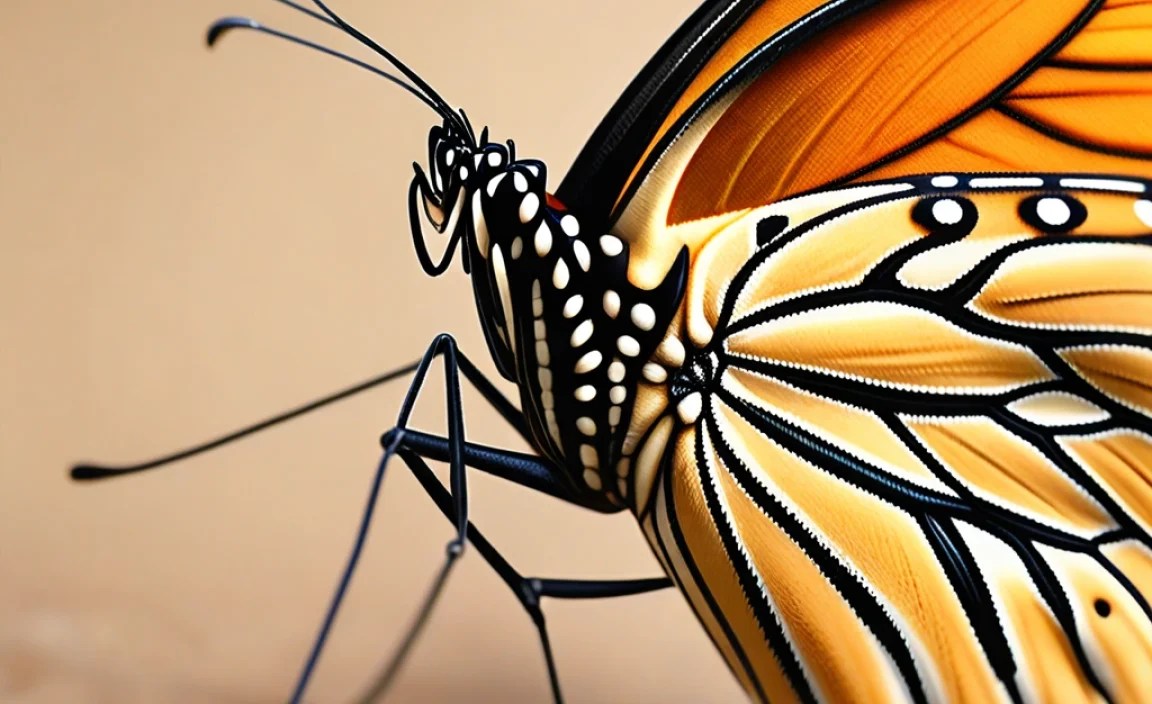
The way monarch butterflies see the world is quite different from how we do. Their compound eyes give them unique abilities that help them survive and thrive in their environment.
The Process of Seeing
Here’s a step-by-step look at how a monarch butterfly sees:
- Light Enters: Light enters each ommatidium through the cornea.
- Light Detection: Photoreceptor cells in each ommatidium detect the light.
- Signal Transmission: The photoreceptor cells send signals to the brain.
- Image Formation: The brain processes these signals to create a mosaic-like image.
Because each ommatidium captures only a small part of the total image, the resolution is not as sharp as human vision. However, the compound eye is excellent at detecting movement, which is crucial for avoiding predators and finding mates. The wide field of view also helps monarchs stay aware of their surroundings.
Color Vision in Monarchs
Monarch butterflies can see a range of colors, including ultraviolet (UV) light. UV vision is especially important for finding food. Many flowers have UV patterns that guide butterflies to the nectar. These patterns are invisible to humans but stand out clearly to monarchs.
A study published in “Nature” showed that butterflies use UV markings on flowers as signals to locate nectar sources. This ability gives them an advantage in finding food efficiently.
Why Are Monarch Butterfly Eyes Important?

Monarch butterfly eyes play a crucial role in their survival. Their vision helps them with navigation, finding food, and avoiding predators.
Navigation
Monarch butterflies are famous for their long migrations, traveling thousands of miles each year. Their eyes help them navigate during these journeys. They use the position of the sun to stay on course, and their UV vision helps them find the best habitats along the way. According to the National Geographic, some monarchs travel up to 3,000 miles during their migration.
Finding Food
Monarchs rely on their vision to find nectar-rich flowers. Their ability to see UV light helps them locate the best sources of food. They can quickly identify flowers with UV patterns that indicate high nectar content. Milkweed is also vital for monarch caterpillars, and the adult butterflies use their vision to find these plants for laying eggs.
Avoiding Predators
Their compound eyes give them a wide field of view, which helps them detect predators. They can quickly spot movement and react to threats. This is crucial for survival, as they are preyed upon by birds, spiders, and other insects. The Xerces Society highlights the importance of protecting monarch habitats to ensure their survival.
Anatomy of Monarch Butterfly Eyes
To truly appreciate the complexity of monarch butterfly eyes, let’s dive into the details of their anatomy.
Key Components
- Cornea: The transparent outer layer of each ommatidium, which focuses light.
- Crystalline Cone: A structure that further focuses light onto the photoreceptor cells.
- Photoreceptor Cells: Cells that detect light and color, converting them into electrical signals.
- Pigment Cells: These cells surround each ommatidium, preventing light from scattering and improving image clarity.
- Nerve Fibers: These fibers transmit signals from the photoreceptor cells to the brain.
The arrangement and function of these components work together to create a highly efficient visual system. The compound eye allows the monarch to process a vast amount of visual information quickly, which is essential for its survival.
Comparison Table
| Component | Function |
|---|---|
| Cornea | Focuses incoming light |
| Crystalline Cone | Further concentrates light |
| Photoreceptor Cells | Detects light and color |
| Pigment Cells | Prevents light scattering |
| Nerve Fibers | Transmits signals to the brain |
This table summarizes the key components of a monarch butterfly’s eye and their respective functions. Each part plays a vital role in the overall visual process.
How Monarch Butterfly Eyes Adapt to Their Environment
Monarch butterfly eyes have evolved to meet the specific demands of their environment. Their vision is finely tuned to help them navigate, find food, and avoid predators in diverse habitats.
Adaptations for Migration
During their long migrations, monarchs rely heavily on their ability to detect polarized light. Polarized light is light that has been filtered so that its waves vibrate in a single plane. Monarchs can use this to determine the direction of the sun, even on cloudy days. This ability is crucial for maintaining their course over long distances. Studies by the Smithsonian have shown that butterflies use polarized light to orient themselves during migration.
Adaptations for Finding Food
The ability to see ultraviolet (UV) light is another key adaptation. Many flowers have UV patterns that guide monarchs to their nectar. These patterns are invisible to humans but are highly visible to butterflies. This helps them find food quickly and efficiently. Some flowers also have UV patterns that indicate the presence of pollen, which is an important food source for other insects.
Adaptations for Predator Avoidance
The wide field of view provided by their compound eyes helps monarchs detect predators from all directions. They can quickly spot movement, allowing them to react and escape potential threats. Additionally, the sensitivity of their eyes to different wavelengths of light helps them distinguish between different objects and backgrounds, making it easier to spot camouflaged predators.
How to Protect Monarch Butterflies
Protecting monarch butterflies is essential for maintaining biodiversity and preserving the beauty of nature. There are several steps you can take to help these amazing creatures thrive.
Plant Milkweed
Milkweed is the only food source for monarch caterpillars. Planting milkweed in your garden or community helps ensure that monarchs have a place to lay their eggs and that their young have enough to eat. Native milkweed species are the best choice, as they are adapted to local conditions and provide the most benefits for monarchs.
Plant Nectar-Rich Flowers
Adult monarchs need nectar for energy. Planting a variety of nectar-rich flowers that bloom throughout the growing season can provide a continuous source of food for them. Choose native flowers whenever possible, as they are often the most attractive to monarchs and other pollinators.
Avoid Pesticides
Pesticides can harm or kill monarch butterflies and other beneficial insects. Avoid using pesticides in your garden, and choose organic gardening methods instead. If you must use pesticides, apply them carefully and only when necessary.
Create a Butterfly Garden
A butterfly garden provides a habitat for monarchs and other butterflies. Include milkweed, nectar-rich flowers, and a water source. Also, provide shelter from wind and predators. A butterfly garden can be a beautiful and rewarding addition to your yard or community.
Support Conservation Organizations
Many organizations are working to protect monarch butterflies and their habitats. Supporting these organizations through donations or volunteer work can help them continue their important work. The U.S. Fish and Wildlife Service is actively involved in monarch conservation efforts.
Fun Facts About Monarch Butterfly Eyes
Monarch butterfly eyes are not only functional but also fascinating. Here are some fun facts that highlight their unique characteristics:
- Thousands of Lenses: Each compound eye contains thousands of individual lenses called ommatidia.
- UV Vision: Monarchs can see ultraviolet light, which helps them find nectar-rich flowers.
- Motion Detection: Their eyes are excellent at detecting movement, which is crucial for avoiding predators.
- Polarized Light: They can detect polarized light, which helps them navigate during migration.
- Wide Field of View: Compound eyes provide a wide field of view, allowing them to see in almost all directions at once.
These fun facts illustrate just how specialized and adapted monarch butterfly eyes are. They are a testament to the power of evolution and the incredible diversity of life on Earth.
FAQ About Monarch Butterfly Eyes
Here are some frequently asked questions about monarch butterfly eyes:
Q: How many lenses do monarch butterflies have in their eyes?
A: Monarch butterflies have thousands of individual lenses, called ommatidia, in each of their compound eyes.
Q: Can monarch butterflies see color?
A: Yes, monarch butterflies can see color, including ultraviolet (UV) light, which helps them find nectar-rich flowers.
Q: How do monarch butterflies use their eyes to navigate?
A: Monarch butterflies use their eyes to detect polarized light and the position of the sun, which helps them stay on course during their long migrations.
Q: What is the difference between human eyes and monarch butterfly eyes?
A: Human eyes have a single lens, while monarch butterfly eyes are compound eyes made up of thousands of individual lenses.
Q: Why is it important to protect monarch butterflies?
A: Protecting monarch butterflies is important for maintaining biodiversity and preserving the beauty of nature. They also play a crucial role in pollination.
Q: What can I do to help monarch butterflies?
A: You can help monarch butterflies by planting milkweed and nectar-rich flowers, avoiding pesticides, and supporting conservation organizations.
Q: Do monarch butterflies have good eyesight?
A: While their vision isn’t as sharp as humans, monarch butterflies have excellent motion detection and a wide field of view, which helps them survive.
Conclusion
Monarch butterfly eyes are truly remarkable organs, perfectly adapted to help these beautiful creatures thrive. From navigating thousands of miles during migration to finding the best nectar sources and avoiding predators, their vision plays a vital role in every aspect of their lives. By understanding how monarch butterfly eyes work, we can gain a deeper appreciation for these incredible insects and the importance of protecting them.
Remember, planting milkweed and nectar-rich flowers, avoiding pesticides, and supporting conservation organizations are all ways you can help monarch butterflies. Let’s work together to ensure that future generations can enjoy the beauty and wonder of these amazing creatures.


