
Swallowtail Butterfly Quiz Questions: Ace the Test!

Swallowtail Butterfly Quiz Questions: Test your knowledge with questions about swallowtail butterfly identification, life cycle, behavior, and habitat. Learn about their distinctive features, host plants, and conservation status to deepen your understanding of these stunning insects.
Do you adore the sight of a swallowtail butterfly fluttering through your garden? These elegant insects, with their vibrant colors and graceful flight, capture the hearts of nature lovers everywhere. But how much do you really know about them? Many people recognize these beautiful creatures, yet they are often unaware of the amazing details of their lives.
This article provides a fun and informative way to test your swallowtail butterfly knowledge. We’ll explore their identification, life cycle, preferred habitats, and more. Get ready to challenge yourself and deepen your appreciation for these amazing insects!
Ready to become a swallowtail expert? Let’s dive in!
Swallowtail Butterfly Basics: A Quick Quiz
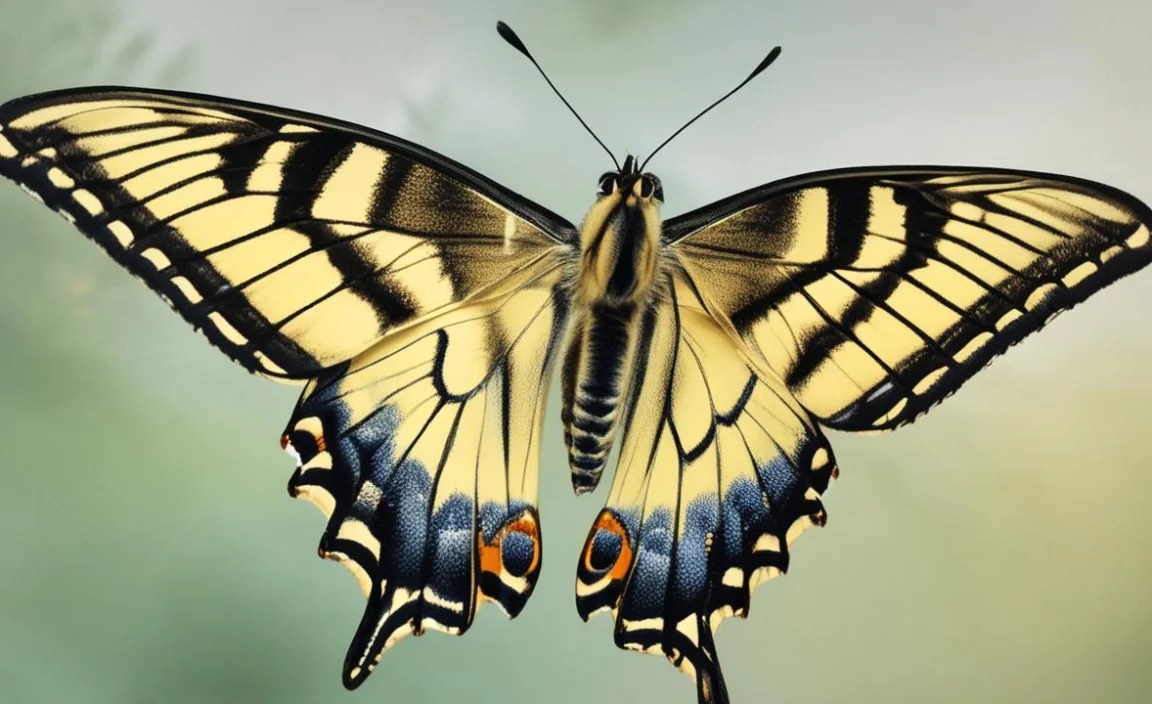
Before we get to the in-depth questions, let’s start with a quick warm-up to test your basic swallowtail knowledge.
- What is the most distinctive feature of swallowtail butterflies?
- What do swallowtail caterpillars primarily eat?
- In what type of habitat are swallowtail butterflies commonly found?
Swallowtail Identification Quiz
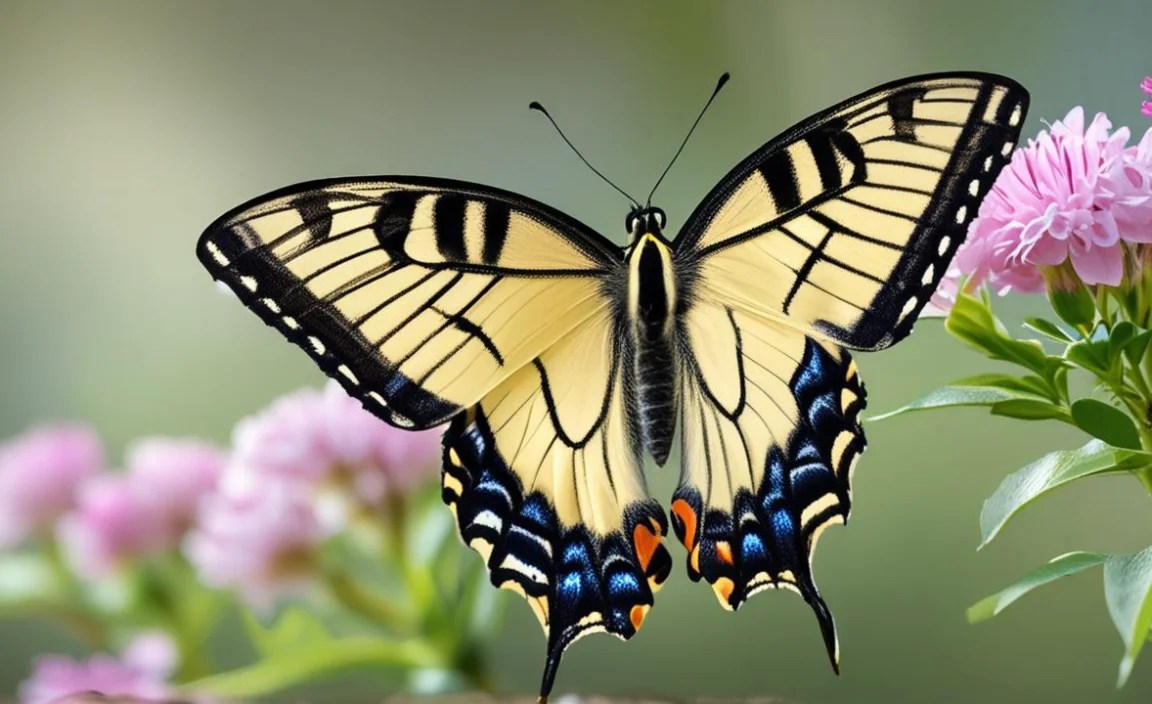
Swallowtail butterflies are a diverse group, with many different species found around the world. Can you identify them based on their unique markings and characteristics?
Question 1: Eastern Tiger Swallowtail
The Eastern Tiger Swallowtail is a common sight in North American gardens and forests. What are the key characteristics that distinguish this species?
- A) Bright yellow wings with black stripes
- B) Blue iridescent hindwings
- C) Orange spots along the wing margins
- D) All of the above
Question 2: Black Swallowtail
The Black Swallowtail is another familiar species in North America. How can you tell the difference between a male and female Black Swallowtail?
- A) Males have larger wings than females.
- B) Females have blue iridescent scales on their hindwings, while males do not.
- C) Males have longer tails than females.
- D) There is no visual difference between males and females.
Question 3: Giant Swallowtail
As the name suggests, the Giant Swallowtail is one of the largest butterflies in North America. What is the primary host plant for Giant Swallowtail caterpillars?
- A) Milkweed
- B) Citrus trees
- C) Oak trees
- D) Violets
Question 4: Pipevine Swallowtail
The Pipevine Swallowtail is known for its striking iridescent blue hindwings and association with pipevine plants. What is the significance of the Pipevine Swallowtail’s coloration?
- A) It helps them attract mates.
- B) It provides camouflage in their habitat.
- C) It warns predators of their toxicity.
- D) It helps them regulate their body temperature.
Question 5: Spicebush Swallowtail
The Spicebush Swallowtail is named for its reliance on spicebush and sassafras plants. What unique defense mechanism do Spicebush Swallowtail caterpillars possess?
- A) They can spit venom at predators.
- B) They have eyespots that mimic snakes.
- C) They blend in perfectly with the bark of trees.
- D) They emit a foul odor when threatened.
Swallowtail Life Cycle Quiz
Swallowtail butterflies undergo a complete metamorphosis, transforming from tiny eggs to stunning adults. How well do you know the stages of their life cycle?
Question 1: Egg Stage
Swallowtail eggs are often laid on specific host plants. What is the typical shape and color of swallowtail eggs?
- A) Round and white
- B) Oval and yellow
- C) Spindle-shaped and green
- D) All of the above
Question 2: Larval Stage (Caterpillar)
Swallowtail caterpillars go through several instars, or molting stages, as they grow. What is the primary function of the caterpillar stage?
- A) Reproduction
- B) Pollination
- C) Feeding and growth
- D) Migration
Question 3: Pupal Stage (Chrysalis)
The chrysalis is a transitional stage where the caterpillar transforms into a butterfly. How do swallowtail chrysalises typically attach to their surroundings?
- A) They hang upside down from a silk thread.
- B) They burrow into the ground.
- C) They are camouflaged to look like leaves or twigs.
- D) All of the above
Question 4: Adult Stage
Adult swallowtail butterflies emerge from their chrysalises ready to reproduce. What is the primary food source for adult swallowtail butterflies?
- A) Leaves
- B) Nectar from flowers
- C) Pollen
- D) Tree sap
Question 5: Life Span
How long do adult swallowtail butterflies typically live?
- A) A few days
- B) A few weeks
- C) A few months
- D) A year
Swallowtail Behavior and Habitat Quiz
Swallowtail butterflies exhibit fascinating behaviors and inhabit a variety of environments. Test your knowledge of their habits and habitats.
Question 1: Habitat Preference
In what types of habitats are swallowtail butterflies most commonly found?
- A) Deserts
- B) Tropical rainforests
- C) Open woodlands, fields, and gardens
- D) Arctic tundra
Question 2: Host Plants
What is the significance of host plants for swallowtail butterflies?
- A) They provide shelter for adult butterflies.
- B) They are the primary source of nectar for adult butterflies.
- C) They are the food source for swallowtail caterpillars.
- D) They help butterflies attract mates.
Question 3: Migration
Do all swallowtail butterflies migrate?
- A) Yes, all swallowtail species migrate long distances.
- B) No, only some swallowtail species migrate.
- C) Only male swallowtails migrate.
- D) Migration is only observed in swallowtails during drought years.
Question 4: Puddling Behavior
What is “puddling” behavior in butterflies, and why do they do it?
- A) It is a mating ritual.
- B) It is a way for butterflies to cool down in hot weather.
- C) It is a behavior where butterflies gather at puddles to obtain minerals and salts.
- D) It is a defensive behavior against predators.
Question 5: Flight Patterns
Describe the typical flight pattern of swallowtail butterflies.
- A) Slow and deliberate
- B) Fast and erratic
- C) Graceful and gliding
- D) Hovering in place
Swallowtail Conservation Quiz
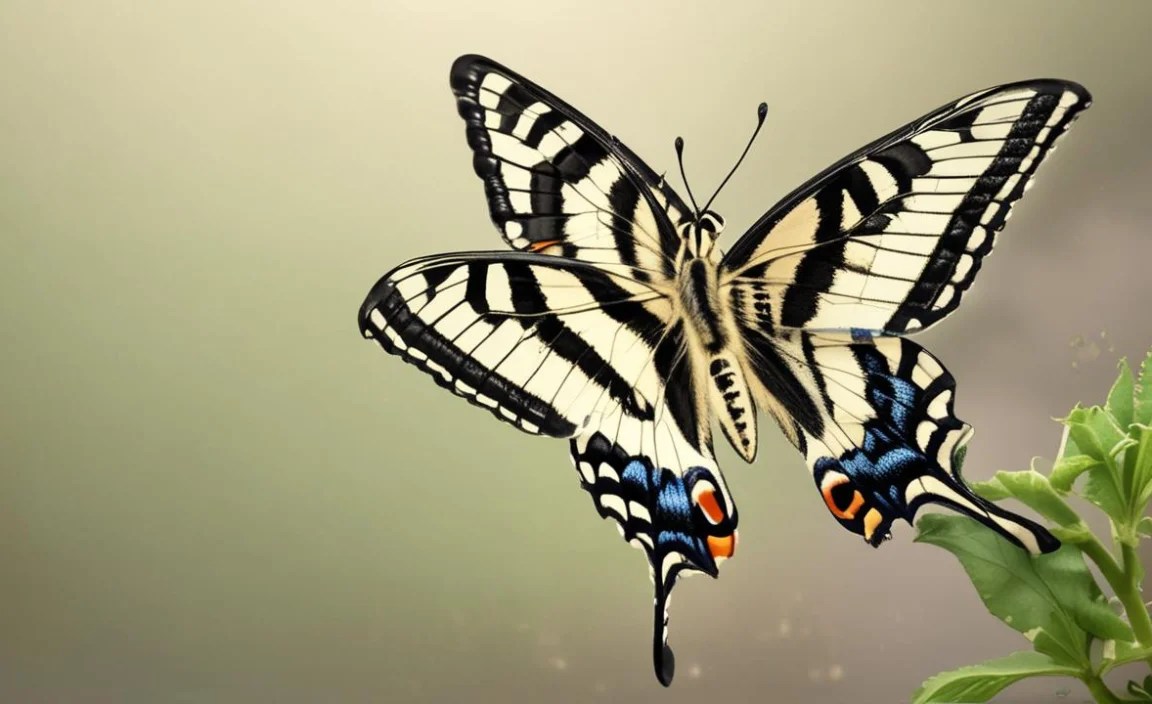
Many butterfly populations are facing threats due to habitat loss, pesticide use, and climate change. How much do you know about the conservation status of swallowtail butterflies?
Question 1: Conservation Status
What is the general conservation status of swallowtail butterflies worldwide?
- A) Most swallowtail species are endangered.
- B) Swallowtail butterflies are not facing any major threats.
- C) Some swallowtail species are threatened or endangered, while others are relatively stable.
- D) Swallowtail populations are increasing globally.
Question 2: Habitat Loss
How does habitat loss impact swallowtail butterfly populations?
- A) It reduces the availability of host plants and nectar sources.
- B) It increases the risk of predation.
- C) It disrupts their migration patterns.
- D) All of the above
Question 3: Pesticide Use
How does pesticide use affect swallowtail butterflies?
- A) Pesticides can directly kill butterflies and caterpillars.
- B) Pesticides can contaminate host plants and nectar sources.
- C) Pesticides can disrupt their reproductive cycles.
- D) All of the above
Question 4: Climate Change
How does climate change threaten swallowtail butterflies?
- A) It alters the timing of plant blooming and butterfly emergence.
- B) It can cause extreme weather events that destroy butterfly habitats.
- C) It shifts the geographic ranges of host plants and butterflies.
- D) All of the above
Question 5: Conservation Efforts
What are some ways that people can help protect swallowtail butterflies?
- A) Planting native host plants and nectar sources
- B) Reducing or eliminating pesticide use
- C) Supporting butterfly conservation organizations
- D) All of the above
Answer Key
Check your answers below and see how well you did!
| Quiz Section | Question Number | Correct Answer |
|---|---|---|
| Swallowtail Identification | 1 | D) All of the above |
| Swallowtail Identification | 2 | B) Females have blue iridescent scales on their hindwings, while males do not. |
| Swallowtail Identification | 3 | B) Citrus trees |
| Swallowtail Identification | 4 | C) It warns predators of their toxicity. |
| Swallowtail Identification | 5 | B) They have eyespots that mimic snakes. |
| Swallowtail Life Cycle | 1 | D) All of the above |
| Swallowtail Life Cycle | 2 | C) Feeding and growth |
| Swallowtail Life Cycle | 3 | D) All of the above |
| Swallowtail Life Cycle | 4 | B) Nectar from flowers |
| Swallowtail Life Cycle | 5 | B) A few weeks |
| Swallowtail Behavior and Habitat | 1 | C) Open woodlands, fields, and gardens |
| Swallowtail Behavior and Habitat | 2 | C) They are the food source for swallowtail caterpillars. |
| Swallowtail Behavior and Habitat | 3 | B) No, only some swallowtail species migrate. |
| Swallowtail Behavior and Habitat | 4 | C) It is a behavior where butterflies gather at puddles to obtain minerals and salts. |
| Swallowtail Behavior and Habitat | 5 | B) Fast and erratic |
| Swallowtail Conservation | 1 | C) Some swallowtail species are threatened or endangered, while others are relatively stable. |
| Swallowtail Conservation | 2 | D) All of the above |
| Swallowtail Conservation | 3 | D) All of the above |
| Swallowtail Conservation | 4 | D) All of the above |
| Swallowtail Conservation | 5 | D) All of the above |
Swallowtail Butterfly FAQs
Here are some frequently asked questions about swallowtail butterflies.
What is the difference between a butterfly and a moth?
Butterflies typically have brightly colored wings, thin antennae with clubbed tips, and are active during the day. Moths, on the other hand, often have duller colors, feathery antennae, and are mostly active at night.
How can I attract swallowtail butterflies to my garden?
Planting host plants for their caterpillars (such as milkweed for Monarchs or dill for Black Swallowtails) and nectar-rich flowers for the adults is the best way to attract them. Also, avoid using pesticides in your garden.
What do swallowtail caterpillars eat?
Swallowtail caterpillars are picky eaters. They each feed on specific host plants. For instance, Black Swallowtail caterpillars love plants in the parsley family, while Monarch caterpillars rely on milkweed.
Are swallowtail butterflies poisonous?
Some swallowtail butterflies, like the Pipevine Swallowtail, are toxic to predators because their caterpillars feed on poisonous plants. The toxins are retained in the butterfly’s body, making them unpalatable to birds and other predators. Their bright colors warn predators of their toxicity.
How do butterflies help the environment?
Butterflies are important pollinators, helping to transfer pollen from one flower to another as they feed on nectar. This process is essential for the reproduction of many plants.
Do swallowtail butterflies sleep?
Butterflies don’t sleep in the same way that humans do. Instead, they enter a state of inactivity, usually at night or during cold weather. They find a sheltered spot, such as under a leaf or in a crevice, and remain still until conditions are more favorable.
What is the lifespan of a swallowtail butterfly?
The lifespan of a swallowtail butterfly varies depending on the species and environmental conditions. In general, adult swallowtails live for about two weeks to a month.
Ready for Another Quiz?
Now that you’ve aced the swallowtail quiz, why not test your knowledge about other butterflies? Delve into the world of monarchs, admire the intricate patterns of viceroys, and explore the elusive blues. Every butterfly has a unique story to tell!
Conclusion
We hope you’ve enjoyed this quiz and learned something new about swallowtail butterflies. These magnificent creatures are a vital part of our ecosystem, and understanding their life cycle, behavior, and conservation needs is crucial for protecting them for future generations. By creating butterfly-friendly gardens and supporting conservation efforts, we can all play a role in ensuring that these beautiful insects continue to grace our world with their presence. So, keep exploring, keep learning, and keep admiring the beauty of butterflies!


