
Swallowtail Butterfly Mimicry Examples: Amazing Protection!

Quick Summary: Swallowtail butterfly mimicry is when harmless swallowtail butterflies evolve to resemble poisonous butterflies. This protects them from predators who avoid the toxic species. Excellent examples include the female tiger swallowtail mimicking the poisonous pipevine swallowtail, and the spicebush swallowtail mimicking the pipevine swallowtail. These incredible adaptations demonstrate nature’s clever ways to survive!
Have you ever seen a butterfly that looked like it was trying to be someone else? That’s mimicry! It’s one of nature’s most fascinating tricks, and swallowtail butterflies are masters of disguise. Some harmless swallowtails have evolved to look like poisonous butterflies. This helps them avoid becoming a tasty snack for birds and other predators.
Understanding swallowtail mimicry reveals the amazing ways evolution shapes creatures for survival. We’ll explore real-life examples of swallowtail mimicry. We’ll explain how these butterflies pull off their disguises. Get ready to discover the clever world of butterfly mimicry!
What is Butterfly Mimicry?
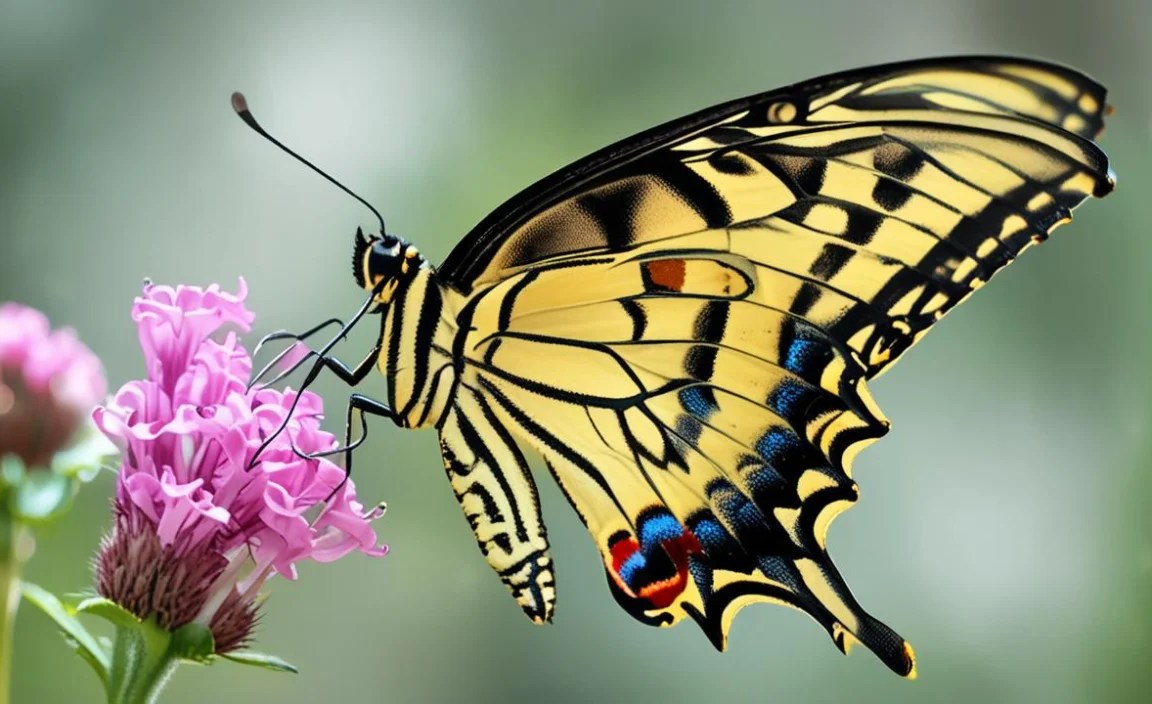
Mimicry in butterflies is when one species evolves to resemble another. This usually happens for protection. The mimic copies the appearance of a model species that predators avoid. There are two main types of mimicry:
- Batesian Mimicry: A harmless species mimics a harmful one. Predators learn to avoid the harmful model. The mimic benefits by looking dangerous without actually being so.
- Müllerian Mimicry: Several harmful species resemble each other. This reinforces the warning signal to predators. The predators learn to avoid that pattern after only one bad experience.
Swallowtail butterflies often use Batesian mimicry. Harmless swallowtails mimic toxic butterflies to protect themselves from predators. This is a powerful example of natural selection at work.
Why Do Swallowtail Butterflies Mimic?
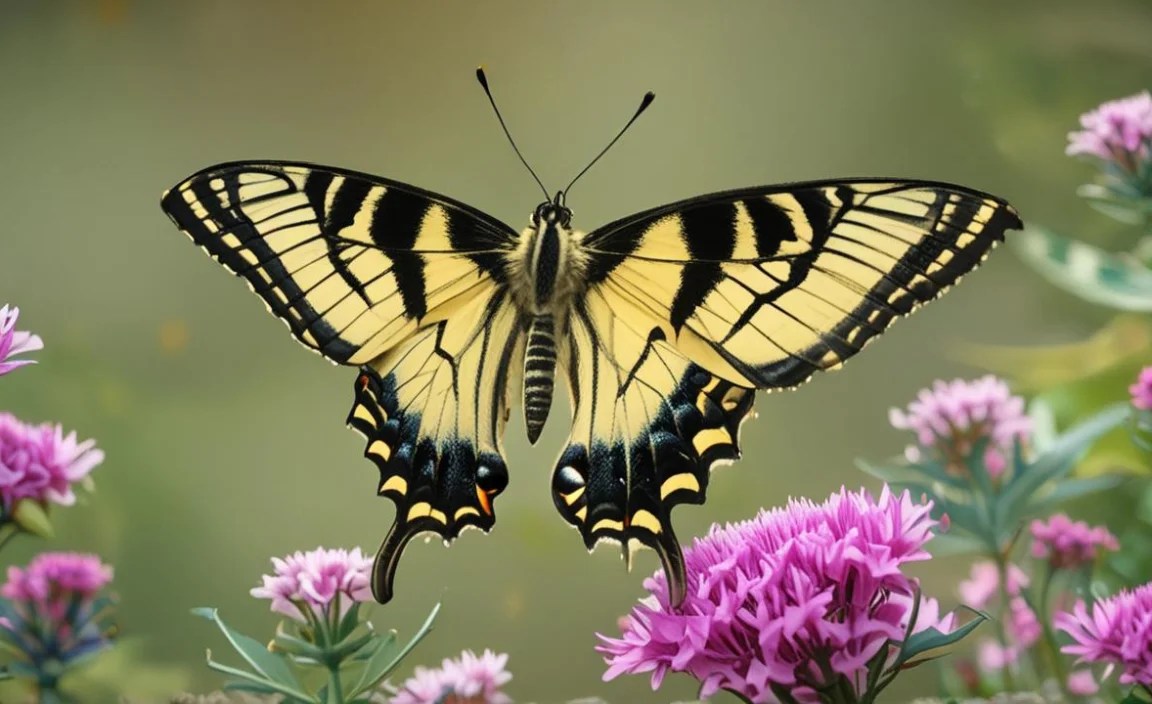
Swallowtail butterflies mimic to survive. Predators like birds quickly learn to avoid butterflies that make them sick. If a harmless swallowtail looks like a poisonous one, predators will leave it alone. This gives the mimic a much better chance of living long enough to reproduce.
Mimicry is especially common in female swallowtails. This is because females are more vulnerable when they’re laying eggs. They need extra protection from predators. Male swallowtails are often less involved in egg-laying. They don’t always need the same level of protection.
Swallowtail Butterfly Mimicry Examples
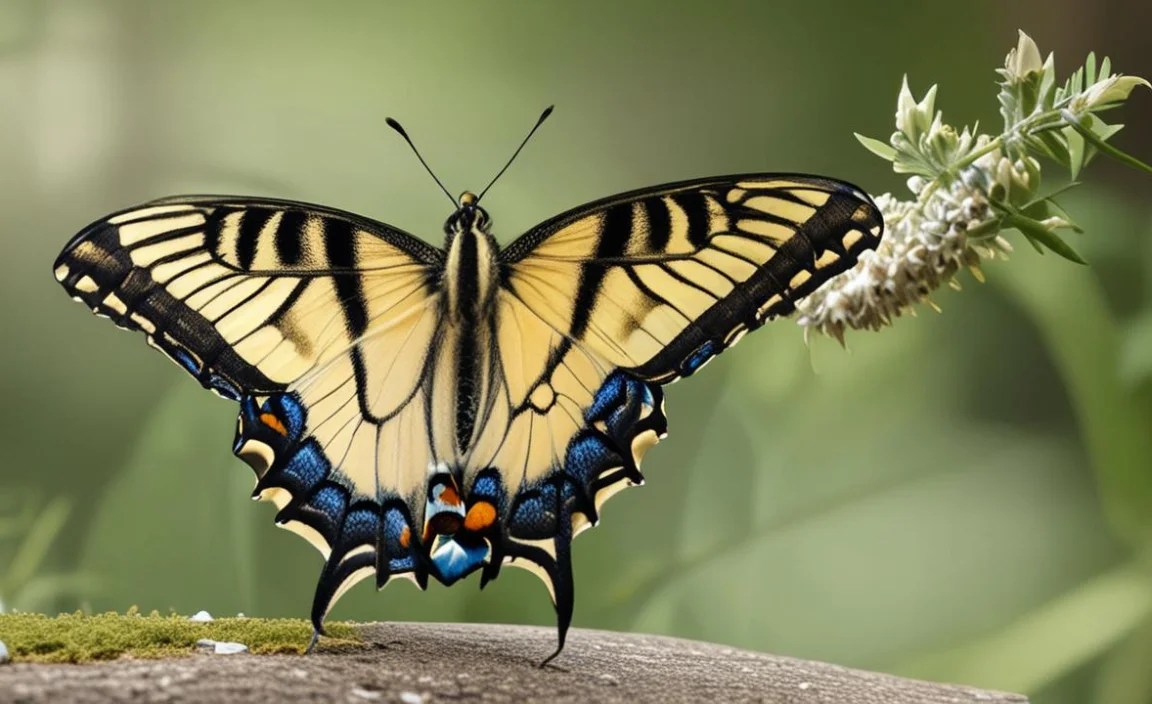
Let’s look at some specific examples of swallowtail butterfly mimicry. These examples highlight the incredible diversity and adaptation within this butterfly family.
Tiger Swallowtail Mimicry
The eastern tiger swallowtail (Papilio glaucus) is a large, beautiful butterfly. Males are always yellow with black stripes. However, females come in two forms: yellow and black. The black females are mimics. They resemble the poisonous pipevine swallowtail (Battus philenor). This mimicry only occurs in areas where the pipevine swallowtail is common. This is because the mimicry is only effective if predators have learned to avoid the model.
The black form of the female tiger swallowtail gains protection from predators. Birds and other animals avoid butterflies that look like pipevine swallowtails. This gives the black females a survival advantage in areas where the poisonous butterfly is present. Tiger Swallowtail populations are found throughout the Eastern United States and have been studied extensively by scientists at the University of Florida’s Entomology and Nematology Department.
Spicebush Swallowtail Mimicry
The spicebush swallowtail (Papilio troilus) also mimics the pipevine swallowtail. The spicebush swallowtail is dark in color with pale markings. It also has similar iridescent blue coloring. This mimicry isn’t as perfect as in the tiger swallowtail, but it’s still effective. Predators often mistake the spicebush swallowtail for the toxic pipevine swallowtail.
Young spicebush swallowtail caterpillars also use mimicry. They resemble bird droppings. This helps them avoid being eaten by birds and other predators. As they grow, they develop large eyespots. These eyespots make them look like snakes, further deterring predators. The species can be found throughout the Eastern United States and Southern Canada.
Black Swallowtail Mimicry
The black swallowtail (Papilio polyxenes) has some mimicry aspects, although it’s not a perfect mimic. The female black swallowtail has more prominent blue markings than the male. It also has red-orange spots. These markings make it look somewhat similar to the pipevine swallowtail. This resemblance provides some protection from predators.
Black swallowtail caterpillars are also interesting. They have a defense mechanism called an osmeterium. This is a forked, orange gland that pops out from behind their head when threatened. The osmeterium looks like a snake’s tongue and emits a foul odor. This startles predators and gives the caterpillar a chance to escape. According to the Wisconsin Department of Natural Resources, Black Swallowtails are commonly found in open habitats such as fields, gardens, and roadsides.
Diana Fritillary and Pipevine Swallowtail
While not a direct mimicry relationship, the Diana Fritillary (Speyeria diana) and Pipevine Swallowtail share habitats and have a similar appearance. The female Diana Fritillary is dark blue-black. It resembles the Pipevine Swallowtail. This similarity may offer some protection through Mullerian mimicry. Both species are unpalatable to predators. Their similar appearance reinforces the warning signal.
Diana Fritillaries are found in the Appalachian region of the United States. They are considered a species of conservation concern. Habitat loss and climate change threaten their populations. Protecting their habitat is crucial for their survival. The North Carolina Wildlife Resources Commission is actively involved in monitoring and conserving Diana Fritillary populations.
Examples of Swallowtail Butterfly Mimicry in Detail

Here’s a table summarizing the examples we’ve discussed:
| Butterfly Species | Mimic/Model | Type of Mimicry | Description |
|---|---|---|---|
| Female Eastern Tiger Swallowtail (Papilio glaucus) | Pipevine Swallowtail (Battus philenor) | Batesian | Black females mimic the toxic pipevine swallowtail to avoid predation. |
| Spicebush Swallowtail (Papilio troilus) | Pipevine Swallowtail (Battus philenor) | Batesian | Dark coloration and iridescent blue resemble the pipevine swallowtail. |
| Black Swallowtail (Papilio polyxenes) | Pipevine Swallowtail (Battus philenor) | Batesian (Partial) | Female has blue markings and red-orange spots similar to the pipevine swallowtail. |
| Diana Fritillary (Speyeria diana) | Pipevine Swallowtail (Battus philenor) | Müllerian (Possible) | Dark blue-black female resembles the pipevine swallowtail, reinforcing warning signals. |
How Mimicry Evolves
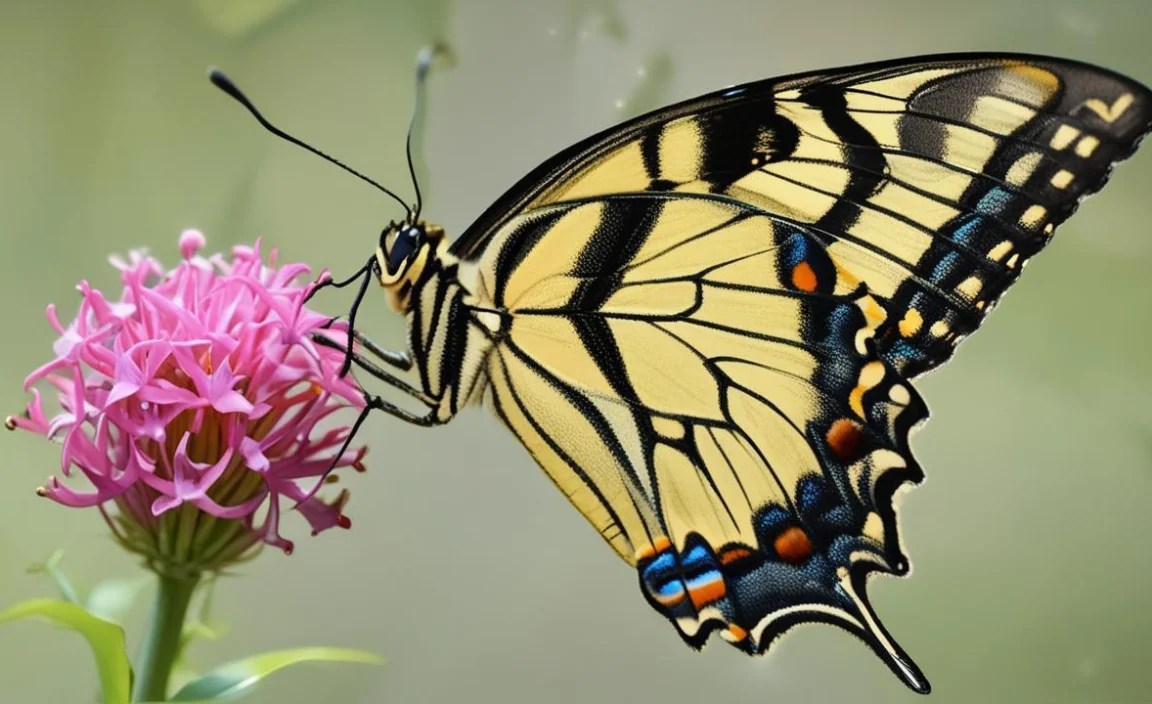
Mimicry evolves through natural selection. It starts with random mutations. Some butterflies are born with a slight resemblance to a toxic species. These butterflies are more likely to survive and reproduce. Over many generations, the resemblance becomes more and more accurate. This results in a highly effective mimic.
The genes that control wing color and pattern are key to mimicry. These genes can change over time. This results in the evolution of new mimicry forms. Scientists study these genes to understand how mimicry evolves. The University of Chicago has conducted extensive research on the genetic basis of butterfly mimicry.
Factors Influencing Mimicry
Several factors influence the evolution and effectiveness of mimicry:
- Predator Learning: Predators must learn to avoid the model species. If predators don’t learn, mimicry won’t work.
- Model Abundance: The model species must be common enough. Predators need to encounter it often enough to learn to avoid it.
- Mimic Frequency: The mimic must be less common than the model. If the mimic is too common, predators will learn that the pattern is not always associated with toxicity.
- Habitat: Mimicry is most effective in habitats where the model and mimic species overlap. This increases the chances of predators encountering both species.
The Role of Genetics in Mimicry
Genetics play a crucial role in mimicry. Specific genes control wing color and pattern. These genes can be turned on or off. This creates different forms within a species. In tiger swallowtails, a single gene controls the presence or absence of the black mimicry form. Scientists have identified this gene and studied how it works. Harvard University has published several studies on the genetics of butterfly mimicry.
Here are some key genetic aspects of mimicry:
- Single Genes: Some mimicry traits are controlled by a single gene. This makes it easier for mimicry to evolve quickly.
- Gene Clusters: Other mimicry traits are controlled by clusters of genes. These genes work together to create complex patterns.
- Regulatory Genes: Regulatory genes control when and where other genes are expressed. These genes can fine-tune the expression of mimicry traits.
Conservation Implications
Mimicry has important conservation implications. Mimicry is an adaptation. It helps species survive in their environment. Protecting the habitats of both the model and mimic species is crucial. This ensures that mimicry remains effective. Climate change and habitat loss can disrupt mimicry relationships. This can threaten the survival of both the mimic and model species.
Here are some conservation actions that can help:
- Habitat Protection: Protect and restore habitats where both the model and mimic species live.
- Climate Change Mitigation: Reduce greenhouse gas emissions to slow down climate change.
- Invasive Species Control: Control invasive species that may prey on or compete with butterflies.
- Education: Educate the public about the importance of butterfly conservation.
How to Observe Butterfly Mimicry in Nature
Observing butterfly mimicry in nature can be a rewarding experience. Here are some tips for finding and identifying mimics:
- Learn the Local Butterflies: Familiarize yourself with the common butterflies in your area. Pay attention to their colors, patterns, and behaviors.
- Visit Butterfly Gardens: Butterfly gardens are great places to see a variety of butterflies. Look for mimics among the different species.
- Look for Pipevine Swallowtails: Pipevine swallowtails are the models for many mimics. If you see a pipevine swallowtail, look for butterflies that resemble it.
- Take Photos: Take photos of butterflies you see. Compare them to photos in field guides or online resources.
- Use Butterfly Identification Apps: There are many butterfly identification apps available. These apps can help you identify butterflies in the field.
Bring a camera and a notebook. Note the location, date, and time of your observations. Share your findings with other butterfly enthusiasts. Consider contributing your observations to citizen science projects such as iNaturalist, which the California Academy of Sciences maintains. These projects help scientists track butterfly populations and distributions.
Swallowtail Butterfly Mimicry: A Closer Look at Specific Species
Delving deeper into specific species provides a clearer understanding of the nuances and complexities of swallowtail butterfly mimicry.
The Palamedes Swallowtail and its Limited Mimicry
The Palamedes Swallowtail (Papilio palamedes) is primarily found in the southeastern United States. It has a limited form of mimicry. While not a direct mimic of the Pipevine Swallowtail, its similar dark coloration and flight pattern may provide some degree of protection. This is especially true in areas where both species coexist. The Palamedes Swallowtail feeds on various species of laurel trees. This makes it relatively common in wooded areas and suburban gardens.
The Anise Swallowtail and its Aposematic Coloration
The Anise Swallowtail (Papilio zelicaon) employs a different strategy. Rather than mimicry, it uses aposematic coloration. Its bright yellow and black patterns serve as a warning signal to predators. This indicates that it is unpalatable or toxic. The Anise Swallowtail feeds on plants in the parsley family. These plants contain chemicals that make the butterfly distasteful to predators. The species is common in the western United States and Canada. It can often be seen flying in open fields and along roadsides.
The Thoas Swallowtail and its Variable Mimicry
The Thoas Swallowtail (Papilio thoas) exhibits variable mimicry depending on its geographic location. In some areas, it mimics the Pipevine Swallowtail. In others, it mimics different species of swallowtails. This adaptability allows it to thrive in a variety of habitats. The Thoas Swallowtail is found throughout Central and South America. It is a strong flier and can often be seen migrating long distances.
The Future of Mimicry Studies
The study of mimicry continues to evolve. New technologies and research methods are providing deeper insights into the genetic, ecological, and evolutionary aspects of mimicry. Scientists are using genomics to identify the genes. They are also using ecological modeling to understand how mimicry evolves in different environments. These studies will help us better understand the complexities of mimicry. They will also inform conservation efforts to protect these amazing butterflies.
FAQ About Swallowtail Butterfly Mimicry
Here are some frequently asked questions about swallowtail butterfly mimicry:
What is the main purpose of mimicry in swallowtail butterflies?
The main purpose of mimicry is to protect themselves from predators. By resembling toxic or unpalatable species, they avoid being eaten.
What is the difference between Batesian and Müllerian mimicry?
Batesian mimicry is when a harmless species mimics a harmful one. Müllerian mimicry is when several harmful species resemble each other, reinforcing the warning signal to predators.
Why do female tiger swallowtails often mimic pipevine swallowtails?
Female tiger swallowtails are more vulnerable when laying eggs. They need extra protection from predators, which mimicry provides.
How does mimicry evolve in butterflies?
Mimicry evolves through natural selection. Butterflies with a slight resemblance to a toxic species are more likely to survive and reproduce. Over generations, the resemblance becomes more accurate.
What factors influence the effectiveness of mimicry?
Predator learning, model abundance, mimic frequency, and habitat all influence the effectiveness of mimicry.
How can I observe butterfly mimicry in nature?
Learn the local butterflies, visit butterfly gardens, look for pipevine swallowtails, take photos, and use butterfly identification apps.
Why is it important to conserve butterflies that use mimicry?
Mimicry is an adaptation that helps species survive. Protecting the habitats of both the model and mimic species is crucial for maintaining this adaptation.
Conclusion
Swallowtail butterfly mimicry is a testament to the power of evolution. These butterflies have developed incredible disguises. They protect themselves from predators. From the tiger swallowtail mimicking the pipevine swallowtail to the spicebush swallowtail’s clever camouflage, these examples highlight the diversity and ingenuity of nature. By understanding and appreciating these adaptations, we can better protect these beautiful creatures and their habitats for future generations. So, next time you see a butterfly, take a closer look. You might just be witnessing one of nature’s most amazing tricks!


