
Swallowtail Butterfly Anatomy Diagram: Your Easy Guide

Swallowtail butterflies, with their vibrant colors and elegant shapes, are a joy to watch. Understanding their anatomy helps us appreciate these creatures even more! Key parts include the head (with antennae and proboscis), thorax (where wings and legs attach), and abdomen (containing vital organs). The wings have distinct sections and vein patterns. Knowing these parts is a great start to butterfly identification and conservation.
Have you ever wondered what makes a swallowtail butterfly so unique? These beautiful insects captivate us with their vibrant wings and graceful flight. But beneath their colorful exterior lies a complex anatomy perfectly adapted for survival.
Understanding the different parts of a swallowtail can deepen your appreciation for these creatures. In this guide, we’ll break down the swallowtail butterfly anatomy diagram step-by-step. We’ll explore each section in plain language, making it easy to learn. Get ready to see butterflies in a whole new light!
Decoding the Swallowtail: A Butterfly Anatomy Guide

Let’s dive into the world of swallowtail butterflies and explore their amazing anatomy. We’ll start from head to tail, covering each important part.
1. The Head: Sensory Central
The head is a swallowtail’s control center, housing key sensory organs. Here’s what you’ll find:
- Compound Eyes: These large eyes are made of thousands of tiny lenses. They give butterflies excellent vision, especially for detecting movement.
- Antennae: Butterflies use their antennae to smell and sense the environment. They are essential for finding food and mates.
- Proboscis: This long, straw-like tongue is used for sipping nectar. When not in use, it’s coiled up neatly under the head.
- Palps: These small, sensory appendages near the proboscis help the butterfly taste and handle food.
These sensory tools work together to help the butterfly navigate the world and find what it needs to survive.
2. The Thorax: Powerhouse of Movement
The thorax is the middle section of the butterfly’s body. It’s the engine room that powers flight and movement. Here’s what makes it so important:
- Wings: Swallowtails have two pairs of wings covered in tiny scales. These scales give the wings their color and patterns. The shape and size of the wings are perfect for flight.
- Legs: Butterflies have six legs attached to the thorax. They use their legs for walking, holding onto plants, and tasting with their feet!
- Muscles: Strong muscles in the thorax power the wings, allowing the butterfly to fly with grace and speed.
The thorax is a marvel of engineering, designed for efficient flight and movement.
3. The Abdomen: Life Support System
The abdomen is the butterfly’s tail section, where its vital organs are located. It plays a crucial role in digestion, reproduction, and overall health.
- Digestive System: The abdomen houses the stomach and intestines, which break down food and absorb nutrients.
- Reproductive Organs: In females, the abdomen contains the ovaries for producing eggs. In males, it holds the organs for reproduction.
- Spiracles: These small openings along the sides of the abdomen allow the butterfly to breathe.
The abdomen is essential for the butterfly’s survival, housing the systems that keep it alive and able to reproduce.
4. Wing Structure: A Closer Look
Butterfly wings are not just beautiful; they’re also complex structures. Understanding their parts can help you identify different species and appreciate their flight abilities.
- Forewing: The larger, front wing that provides most of the lift during flight.
- Hindwing: The smaller, rear wing that helps with balance and maneuverability.
- Cell: The central area on the wing, often surrounded by veins.
- Veins: The lines that support the wing membrane and carry nutrients.
- Scales: Tiny, overlapping structures that give the wings their color and patterns. These scales are easily rubbed off, which is why it’s important to handle butterflies gently.
Here’s a quick look at the key wing parts:
| Wing Part | Description |
|---|---|
| Forewing | Larger, front wing for lift |
| Hindwing | Smaller, rear wing for balance |
| Cell | Central area on the wing |
| Veins | Lines that support the wing |
| Scales | Tiny structures that give color |
5. Legs and Feet: More Than Just Walking
While butterflies use their legs to walk, they also have another cool trick up their sleeve: tasting with their feet! Here’s a closer look:
- Tarsus: The “foot” of the butterfly, which contains sensory organs for tasting.
- Claws: Small claws on the feet help the butterfly grip onto surfaces.
- Tibiae: The “shin” of the butterfly’s leg.
- Femur: The “thigh” of the butterfly’s leg.
When a butterfly lands on a flower, it uses its feet to taste the nectar. If it’s a good match, the butterfly will unfurl its proboscis and start feeding. It’s like having taste buds on your feet!
Swallowtail Anatomy: A Detailed Diagram

To help visualize the anatomy of a swallowtail butterfly, refer to the following diagram. It highlights all the key parts we’ve discussed.
[Imagine here a detailed diagram of a swallowtail butterfly with labels pointing to the head (compound eye, antenna, proboscis, palps), thorax (wings, legs), abdomen (spiracles), and wing structure (forewing, hindwing, cell, veins, scales). This detailed diagram is essential for visual learners.]
Swallowtail Butterfly Life Cycle
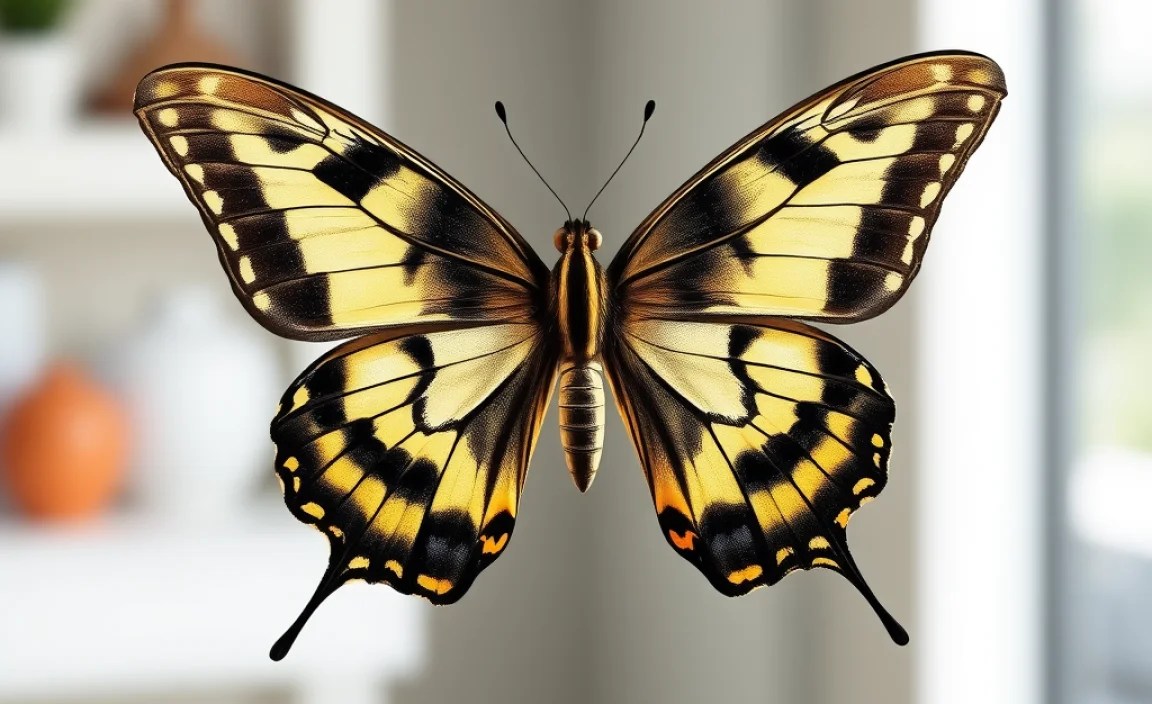
Understanding the anatomy of a swallowtail butterfly is just one piece of the puzzle. To truly appreciate these creatures, it’s also important to know about their life cycle.
1. Egg Stage
It all starts with an egg. Female swallowtails lay their eggs on specific host plants. These eggs are often small and round, and they can range in color from green to yellow to brown. The choice of host plant is crucial because the newly hatched caterpillar will feed on it.
2. Larva (Caterpillar) Stage
Once the egg hatches, a caterpillar emerges. This is the feeding and growing stage of the butterfly’s life. Caterpillars have strong mandibles (jaws) for chewing leaves. They also have prolegs, which are fleshy, leg-like structures that help them grip onto plants. As the caterpillar grows, it molts its skin several times.
3. Pupa (Chrysalis) Stage
When the caterpillar is fully grown, it enters the pupa stage. The caterpillar forms a chrysalis, which is a protective shell. Inside the chrysalis, the caterpillar undergoes a remarkable transformation. Its body breaks down and reassembles into a butterfly.
4. Adult Stage
Finally, the adult butterfly emerges from the chrysalis. Its wings are crumpled and wet at first, but they soon expand and dry. The adult butterfly is now ready to fly, feed, and reproduce.
Here’s a table summarizing the life cycle stages:
| Stage | Description |
|---|---|
| Egg | Laid on host plants |
| Larva (Caterpillar) | Feeding and growing stage |
| Pupa (Chrysalis) | Transformation stage inside a shell |
| Adult | Reproduction and flight stage |
Attracting Swallowtails to Your Garden

Now that you know more about swallowtail butterfly anatomy and life cycle, you might be inspired to attract these beautiful creatures to your garden. Here are some tips:
- Plant Host Plants: Swallowtail caterpillars feed on specific host plants. For example, black swallowtails love plants in the parsley family, like dill, fennel, and parsley. Pipevine swallowtails need pipevine plants.
- Provide Nectar Sources: Adult butterflies feed on nectar from flowers. Plant a variety of nectar-rich flowers that bloom throughout the season. Some good choices include zinnias, butterfly bush, and milkweed.
- Offer a Water Source: Butterflies need water to drink. Provide a shallow dish of water with some pebbles or stones for them to land on.
- Avoid Pesticides: Pesticides can harm or kill butterflies and other beneficial insects. Use organic gardening methods instead.
Creating a butterfly-friendly garden is a great way to support these amazing creatures and enjoy their beauty up close.
The Ecological Role of Swallowtail Butterflies

Swallowtail butterflies play important roles in the ecosystem. They are pollinators, helping to spread pollen from flower to flower. They are also a food source for birds and other animals. By supporting butterfly populations, we can help maintain healthy ecosystems. The Xerces Society is a great resource for learning more about butterfly conservation.
Swallowtail Butterfly Conservation
Many butterfly species, including some swallowtails, are facing threats due to habitat loss, pesticide use, and climate change. There are many things we can do to help protect these creatures:
- Create Butterfly Habitat: Plant host plants and nectar sources in your garden or community.
- Support Conservation Organizations: Donate to or volunteer with organizations that work to protect butterflies and their habitats.
- Educate Others: Share your knowledge about butterflies with friends, family, and neighbors.
- Reduce Pesticide Use: Avoid using pesticides in your garden and support organic farming practices.
By taking action, we can help ensure that swallowtail butterflies continue to thrive for generations to come. Consider supporting organizations like the National Wildlife Federation to aid in conservation efforts.
Frequently Asked Questions (FAQ)
1. What is the proboscis of a swallowtail butterfly?
The proboscis is a long, straw-like tongue that butterflies use to sip nectar from flowers. When not in use, it coils up neatly under their head.
2. How do swallowtail butterflies taste?
Swallowtail butterflies taste with their feet! They have sensory organs on their feet that allow them to detect the sweetness of nectar.
3. What are the scales on butterfly wings made of?
Butterfly wings are covered in tiny, overlapping scales made of chitin, the same material that makes up insects’ exoskeletons. These scales give the wings their color and patterns.
4. What do swallowtail caterpillars eat?
Swallowtail caterpillars eat the leaves of specific host plants. The type of host plant varies depending on the species of swallowtail.
5. How long does it take for a swallowtail butterfly to develop from egg to adult?
The time it takes for a swallowtail butterfly to develop from egg to adult varies depending on the species and environmental conditions. It can take anywhere from a few weeks to a few months.
6. What is the main function of a butterfly’s antenna?
A butterfly’s antenna is primarily used for sensing smells in the environment. It’s crucial for finding food sources and detecting potential mates.
7. Why are butterfly wings so colorful?
Butterfly wings are colorful due to the pigments present in their scales and the way the scales reflect light. These colors serve various purposes, including attracting mates and camouflaging from predators.
Conclusion
Understanding the anatomy of a swallowtail butterfly opens a window into the fascinating world of these incredible insects. From the sensory-packed head to the powerful thorax and the life-sustaining abdomen, each part plays a vital role in the butterfly’s survival. By learning about their wing structure, legs, and life cycle, we gain a deeper appreciation for their beauty and complexity.
But knowledge is just the first step. By creating butterfly-friendly habitats, supporting conservation efforts, and educating others, we can help protect these creatures and ensure they continue to grace our gardens and landscapes for generations to come. So, go out there, explore the world of butterflies, and become a champion for their conservation. Every action, no matter how small, makes a difference.


