
Common Tiger Butterfly: The Powerful ID Guide

The Common Tiger butterfly (Danaus genutia) is a striking orange and black butterfly found across Asia and Australia. To identify it, look for its bold orange wings with black stripes and white spots along the edges. It’s a common sight in gardens and open areas, often seen feeding on nectar or laying eggs on milkweed plants.
Have you ever been captivated by a butterfly with vibrant orange wings, boldly striped with black? Chances are, you’ve spotted the Common Tiger butterfly! This beautiful creature is a familiar sight in many gardens and natural areas, but identifying it can sometimes be a bit tricky. You might wonder, “Is that a Monarch?” or “What kind of butterfly is that feeding on my milkweed?”
Don’t worry, identifying the Common Tiger is easier than you think! In this guide, we’ll walk you through the key characteristics that set this butterfly apart. We’ll explore its unique markings, behavior, and habitat. By the end, you’ll be able to confidently identify the Common Tiger and appreciate its role in the ecosystem. Let’s get started!
Identifying the Common Tiger Butterfly
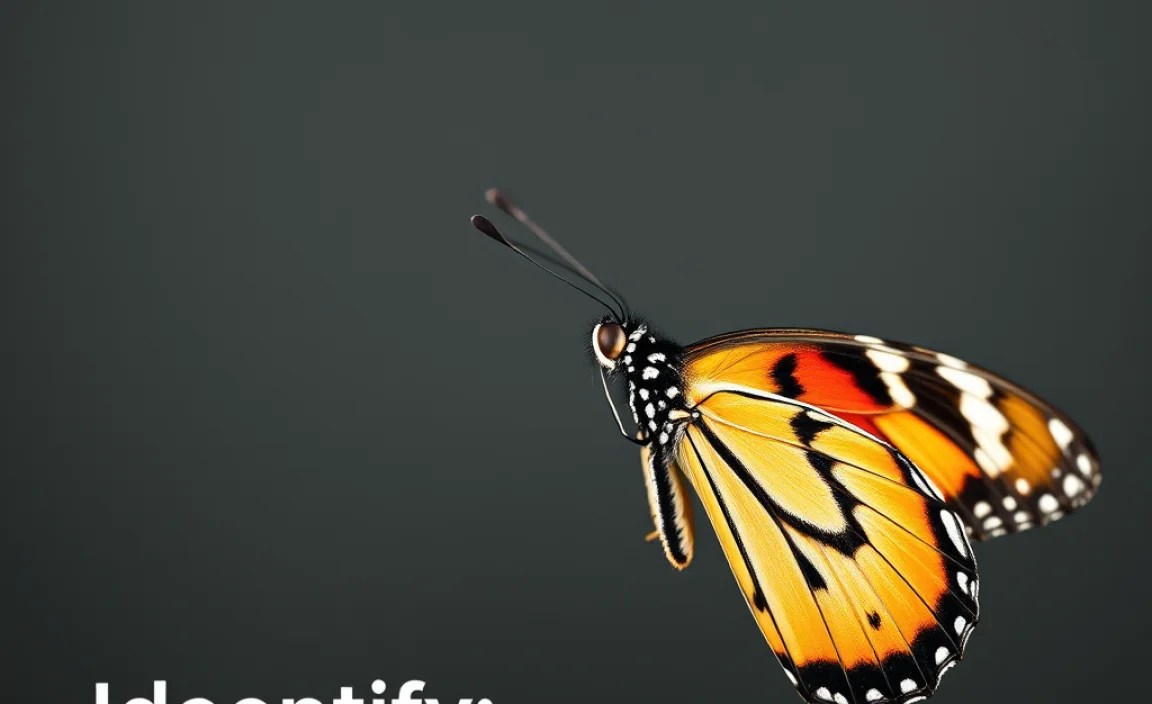
The Common Tiger butterfly is a member of the milkweed butterfly family (Danainae), known for their bright colors and association with milkweed plants. Distinguishing the Common Tiger from other similar butterflies involves observing its size, wing patterns, and behavior. Here’s a breakdown of what to look for:
Physical Characteristics
Let’s explore the key features of the Common Tiger butterfly:
- Size: The Common Tiger has a wingspan ranging from 75 to 95 mm (approximately 3 to 3.7 inches).
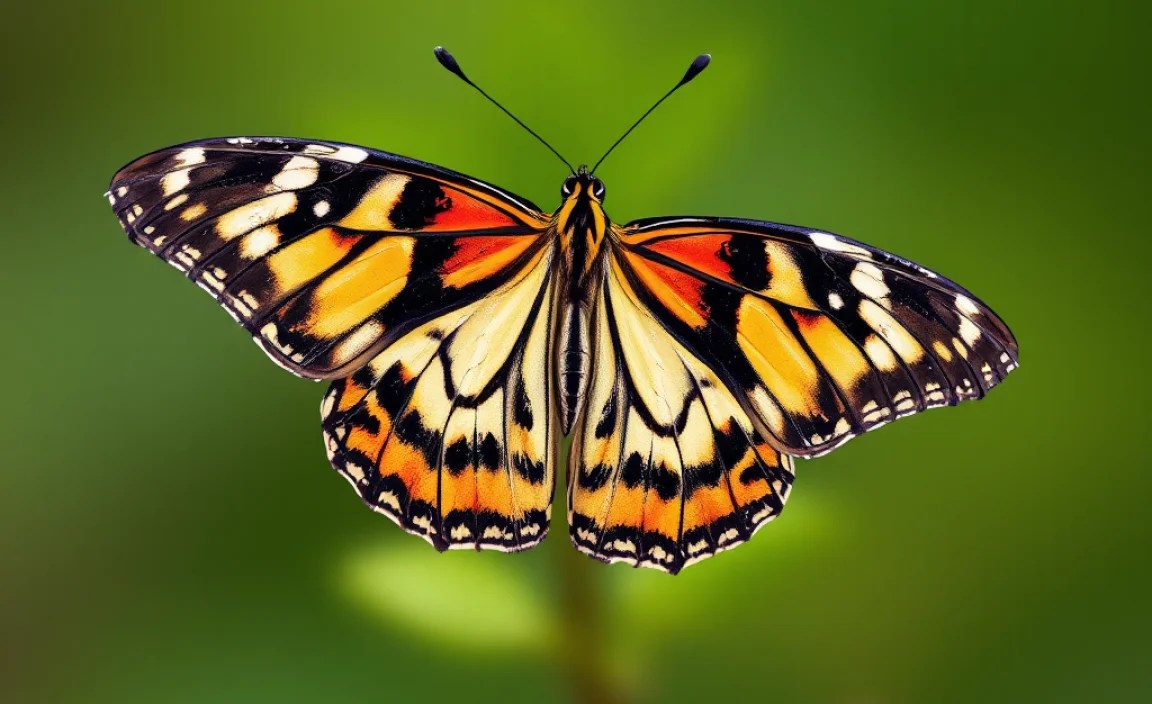
- Wing Color and Pattern: The wings are typically bright orange with black veins and a black border. The border is adorned with white spots. The underside of the wings is similar but paler.
- Body: The body is black with white spots.
- Distinguishing Features: Look for the distinct pattern of black veins on the orange wings and the consistent row of white spots along the wing margins.
Habitat and Distribution
Where you spot a butterfly can be a clue to its identity. Here’s what to know about the Common Tiger’s habitat:
- Geographic Range: This butterfly is widely distributed across South Asia, Southeast Asia, and Australia.
- Preferred Habitats: Common Tigers are frequently found in open forests, gardens, and grasslands. They are adaptable and can thrive in both rural and urban environments.
- Host Plants: The larvae (caterpillars) primarily feed on milkweed plants (Asclepias species) and related plants like Oleander.
Behavior and Life Cycle
Observing a butterfly’s behavior can also help with identification:
- Flight Pattern: The Common Tiger has a slow, gliding flight, making it relatively easy to observe.
- Feeding Habits: Adults feed on nectar from various flowers. They are often seen visiting flowering plants in gardens and along roadsides.
- Life Cycle: Like all butterflies, the Common Tiger undergoes complete metamorphosis:
- Egg: Laid on milkweed plants.
- Larva (Caterpillar): Feeds on milkweed, accumulating toxins that make it unpalatable to predators.
- Pupa (Chrysalis): A protective, often green or brown, shell.
- Adult Butterfly: Emerges from the pupa, ready to reproduce.
Common Tiger vs. Similar Species

Several butterflies can be mistaken for the Common Tiger. Here’s how to tell them apart:
Distinguishing from the Monarch Butterfly (Danaus plexippus)
The Monarch is a well-known butterfly that shares similarities with the Common Tiger, leading to frequent confusion. Here’s how to differentiate them:
- Wing Pattern: Monarchs have bolder black veins and a wider black border with more prominent white spots. The orange color of the Monarch is also a richer, deeper shade compared to the Common Tiger.
- Size: Monarchs are generally larger, with a wingspan of 8.9 – 10.2 cm (3.5 – 4 inches).
- Geographic Range: Monarchs are primarily found in North and South America, whereas the Common Tiger is native to Asia and Australia.
Distinguishing from the Plain Tiger (Danaus chrysippus)
The Plain Tiger is another closely related species that can be confused with the Common Tiger:
- Wing Pattern: The Plain Tiger usually lacks the extensive black veining seen on the Common Tiger’s wings. Its orange color is also more uniform, without the distinct black stripes.
- Size: The Plain Tiger is slightly smaller than the Common Tiger.
- Distribution: While their ranges can overlap, the Plain Tiger is more commonly found in Africa and parts of Asia.
Table: Comparing Common Tiger, Monarch, and Plain Tiger
| Feature | Common Tiger (Danaus genutia) | Monarch (Danaus plexippus) | Plain Tiger (Danaus chrysippus) |
|---|---|---|---|
| Wingspan | 75-95 mm (3-3.7 inches) | 8.9-10.2 cm (3.5-4 inches) | Slightly smaller than Common Tiger |
| Wing Pattern | Orange with black veins, black border with white spots | Bolder black veins, wider black border with more white spots | Orange, less black veining |
| Geographic Range | South Asia, Southeast Asia, Australia | North and South America | Africa, parts of Asia |
| Host Plants | Milkweed (Asclepias spp.) | Milkweed (Asclepias spp.) | Milkweed (Asclepias spp.) |
Attracting Common Tiger Butterflies to Your Garden

If you want to attract Common Tiger butterflies to your garden, here are some helpful tips:
Planting Host Plants
The most effective way to attract Common Tigers is to provide their larval host plants. Milkweed is essential for their survival. Here’s how to get started:
- Select Native Milkweed Species: Choose milkweed species native to your region. Native plants are best adapted to local conditions and support local butterfly populations.
- Plant in Sunny Locations: Milkweed plants thrive in sunny areas with well-drained soil.
- Avoid Pesticides: Do not use pesticides on or near your milkweed plants, as they can harm or kill the caterpillars.
Providing Nectar Sources
Adult butterflies need nectar for energy. Planting a variety of flowering plants that provide nectar will attract them to your garden:
- Choose a Variety of Flowers: Select plants with different colors, shapes, and bloom times to provide a continuous source of nectar throughout the butterfly season.
- Plant in Clusters: Grouping plants of the same species together makes it easier for butterflies to find them.
- Include Native Flowers: Native flowering plants are often more attractive to local butterfly species.
Creating a Butterfly-Friendly Environment
Beyond host and nectar plants, there are other ways to make your garden a haven for butterflies:
- Provide a Water Source: Butterflies need water. A shallow dish with water and some pebbles for them to land on can be very helpful.
- Offer Shelter: Provide shelter from wind and rain with shrubs and trees.
- Avoid Insecticides: As mentioned earlier, avoid using insecticides in your garden to protect butterflies and other beneficial insects.
The Ecological Role of the Common Tiger Butterfly
The Common Tiger butterfly plays several important roles in its ecosystem:
Pollination
As they feed on nectar, butterflies inadvertently transfer pollen from one flower to another, aiding in plant reproduction. While bees are often considered the primary pollinators, butterflies contribute significantly to the pollination of many plant species. The US Forest Service provides detailed information on the role of butterflies as pollinators.
Food Source
Butterflies and their larvae serve as a food source for various animals, including birds, reptiles, and other insects. They are an integral part of the food web, supporting biodiversity and ecosystem health.
Indicator Species
Butterflies are sensitive to environmental changes, making them valuable indicator species. Their presence or absence can reflect the health of the ecosystem. Declines in butterfly populations can signal habitat loss, pollution, or climate change. The Xerces Society is a great resource for learning more about butterfly conservation.
Conservation Status and Threats
While the Common Tiger butterfly is not currently listed as endangered, it faces several threats:
- Habitat Loss: Deforestation, urbanization, and agricultural expansion are reducing the availability of suitable habitats for the Common Tiger and other butterflies.
- Pesticide Use: Insecticides and herbicides can directly harm butterflies and their host plants.
- Climate Change: Changes in temperature and rainfall patterns can disrupt butterfly life cycles and alter the distribution of their host plants.
- Collection: Over-collection for commercial or personal use can impact local populations.
Conservation Efforts
Several conservation efforts can help protect the Common Tiger butterfly and its habitat:
- Habitat Preservation: Protecting and restoring natural habitats is crucial for butterfly conservation. This includes conserving forests, grasslands, and wetlands.
- Sustainable Agriculture: Promoting farming practices that minimize pesticide use and conserve biodiversity can help protect butterflies and other wildlife.
- Citizen Science: Participating in butterfly monitoring programs can help track population trends and identify areas where conservation efforts are needed.
- Education and Awareness: Raising awareness about the importance of butterflies and their conservation needs can encourage individuals and communities to take action.
Cultural Significance and Symbolism
Butterflies have long held cultural significance in many societies, often symbolizing transformation, beauty, and freedom.
- Transformation: The butterfly’s metamorphosis from a caterpillar to a winged adult is a powerful symbol of transformation and rebirth.
- Beauty: Their delicate wings and vibrant colors make butterflies symbols of beauty and grace.
- Freedom: The ability to fly freely represents freedom and the pursuit of dreams.
- Spiritual Symbolism: In some cultures, butterflies are seen as messengers from the spirit world or symbols of the soul.
Table: Cultural Significance of Butterflies
| Culture | Symbolism |
|---|---|
| Greek | The soul; Psyche (soul) is often depicted with butterfly wings |
| Chinese | Immortality, joy, and summer |
| Japanese | Young woman, marital happiness |
| Native American | Transformation, hope, and guidance |
Frequently Asked Questions (FAQ)
What is the Common Tiger butterfly’s main food source?
The caterpillars of the Common Tiger butterfly primarily feed on milkweed plants. Adult butterflies feed on nectar from various flowers.
How can I tell the difference between a Common Tiger and a Monarch butterfly?
Monarchs have bolder black veins and a wider black border with more prominent white spots on their wings compared to Common Tigers. Monarchs are also generally larger and are found in North and South America, while Common Tigers are native to Asia and Australia.
What kind of habitat does the Common Tiger butterfly prefer?
Common Tiger butterflies are typically found in open forests, gardens, and grasslands. They adapt well to both rural and urban environments.
Is the Common Tiger butterfly endangered?
No, the Common Tiger butterfly is not currently listed as endangered. However, it faces threats such as habitat loss and pesticide use.
What can I plant to attract Common Tiger butterflies to my garden?
Plant milkweed species for the caterpillars and a variety of flowering plants for the adult butterflies. Native plants are particularly beneficial.
Why are butterflies important to the environment?
Butterflies serve as pollinators, contributing to plant reproduction. They are also a food source for other animals and can indicate the health of an ecosystem.
What is the lifespan of a Common Tiger butterfly?
The lifespan of a Common Tiger butterfly varies depending on environmental conditions and predation, but typically they live for a few weeks to a couple of months as adults.
Conclusion
Identifying the Common Tiger butterfly is a rewarding experience that connects you more deeply with the natural world. By understanding its unique characteristics, habitat, and behavior, you can confidently distinguish it from other similar species. Planting milkweed and nectar-rich flowers in your garden not only attracts these beautiful creatures but also supports their conservation. Remember, every small action contributes to the health of our ecosystems. So, keep an eye out for the vibrant orange wings of the Common Tiger, and appreciate the vital role it plays in our world. Happy butterfly watching!


