
Common Mistakes Identifying Monarch: Are YOU Sure?

Quick Summary: Confusing monarchs with viceroys is the most common mistake! Look for the black line across the viceroy’s hindwings. Also, check the size, wing patterns, and habitat. Monarchs have bolder black veins and prefer milkweed habitats, while viceroys are smaller and adapt to varied environments. Knowing these differences helps you accurately identify and appreciate these amazing butterflies.
Have you ever spotted a beautiful orange butterfly and wondered if it was a monarch? It’s easy to get them mixed up with other butterflies that look similar! Many people struggle to tell the difference, which can be frustrating, especially if you’re trying to help them by planting milkweed or tracking their populations. But don’t worry, with a few simple tips, you can become a monarch identification expert. We’ll walk through the common mistakes and show you what to look for to confidently identify these iconic butterflies.
Common Mistakes Identifying Monarch Butterflies
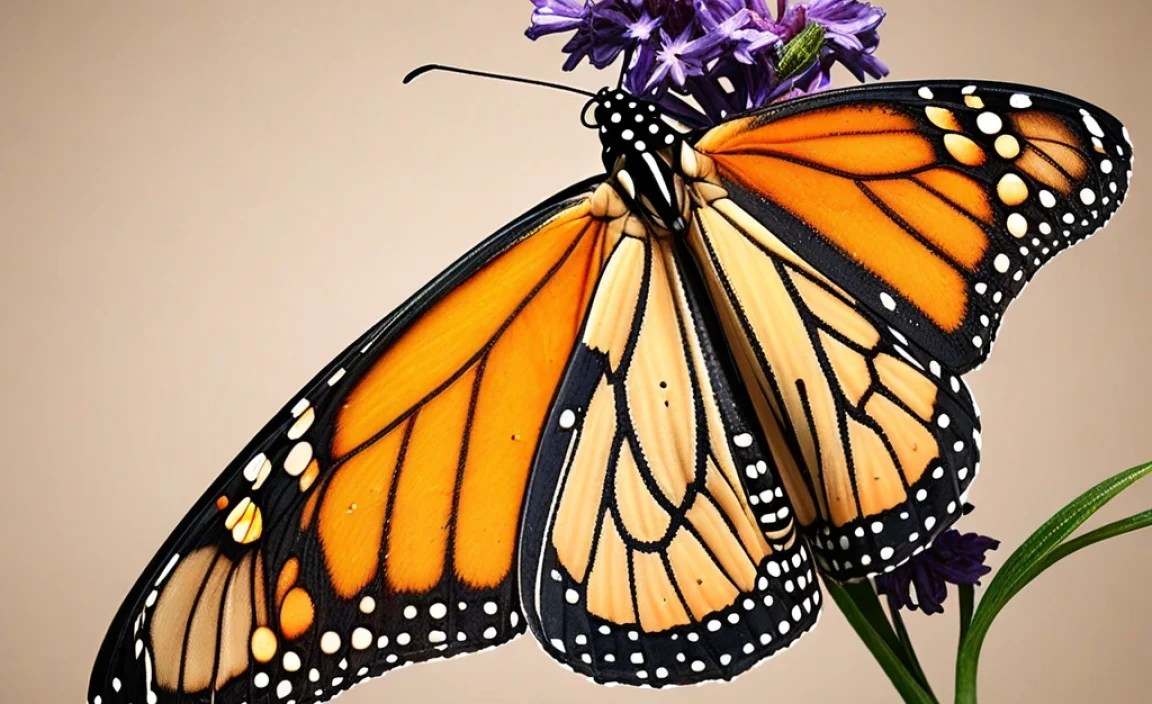
Monarch butterflies are famous for their bright orange wings and incredible migration. However, several other butterflies look similar, leading to confusion. Here are the common mistakes people make when trying to identify monarchs:
Mistaking Monarchs for Viceroys
This is the most frequent error! Viceroys are often mistaken for monarchs because they have similar orange and black patterns. However, there is a key difference:
- Monarch: No black line across the hindwings.
- Viceroy: Has a distinct black line across the hindwings.
Viceroy butterflies evolved to mimic the monarch’s appearance as a form of protection from predators. Since monarchs eat milkweed, which makes them toxic, predators avoid butterflies that look like them.
Ignoring Size Differences
Size can be a helpful clue, although it’s not always definitive.
- Monarch: Larger, with a wingspan of 3.5 to 4 inches.
- Viceroy: Smaller, with a wingspan of 2.5 to 3 inches.
If you can get a good look, compare the size to other butterflies you know. A larger butterfly is more likely to be a monarch.
Overlooking Wing Patterns
Pay close attention to the patterns on the wings, especially the veins.
- Monarch: Thicker, more prominent black veins.
- Viceroy: Thinner, less distinct black veins.
The bolder patterns on the monarch’s wings give it a more striking appearance compared to the viceroy.
Disregarding Habitat
Habitat can provide helpful clues, especially when combined with other identification features.
- Monarch: Commonly found in meadows, fields, and gardens where milkweed is present.
- Viceroy: Found in a variety of habitats, including wetlands, forests, and open areas. They don’t rely solely on milkweed.
Monarchs depend on milkweed as their host plant, so you’re more likely to find them where milkweed grows.
Misinterpreting Flight Patterns
While not always reliable, flight patterns can offer hints.
- Monarch: Strong, soaring flight, often gliding for long distances.
- Viceroy: Faster, more erratic flight with more flapping.
Monarchs are known for their graceful, soaring flight, especially during migration.
Confusing Females and Males
Distinguishing between male and female monarchs is important for accurate identification. They have slight differences in their wing patterns.
- Male Monarch: Has a small black spot (called an androconial spot) on each hindwing.
- Female Monarch: Lacks the black spot and has thicker black veins.
These differences are subtle but can help determine the butterfly’s sex.
Ignoring Caterpillar Identification
Identifying the caterpillar is a great way to confirm if you’ll have monarchs in your area. Monarch caterpillars are distinct.
- Monarch Caterpillar: Black, white, and yellow stripes with two black filaments at each end.
- Viceroy Caterpillar: Brownish with a white saddle-shaped marking.
If you see a caterpillar munching on milkweed with black, white, and yellow stripes, it’s a monarch!
Step-by-Step Guide to Correctly Identifying Monarch Butterflies
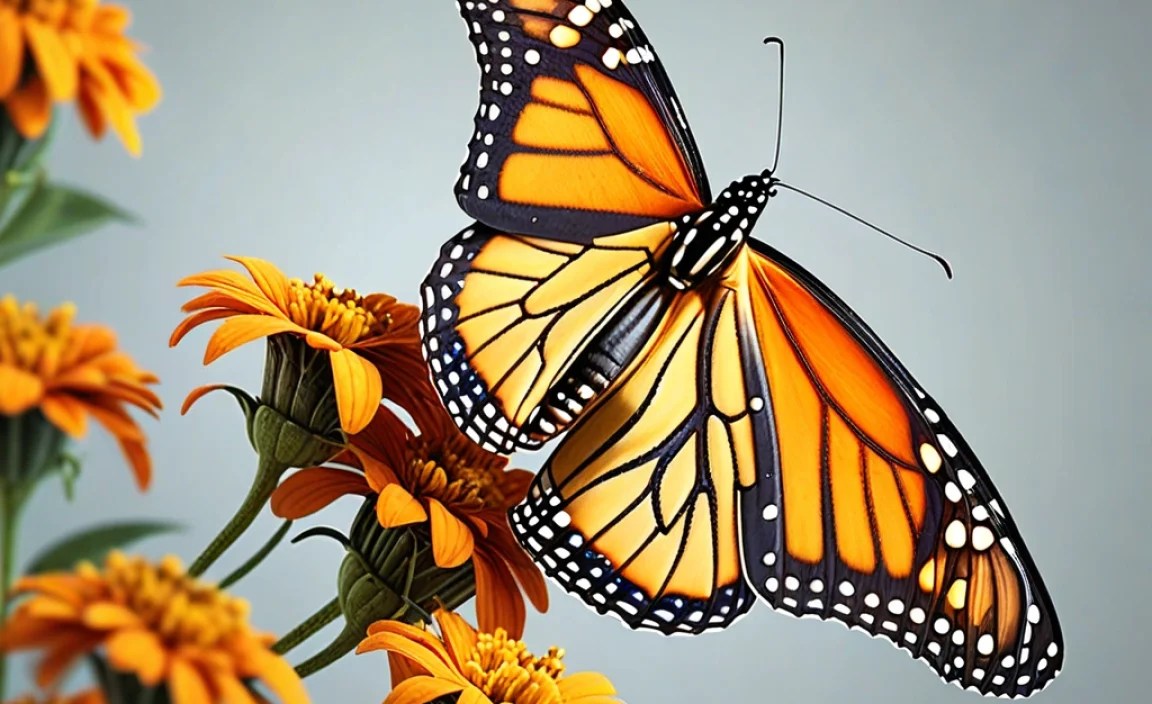
Follow these steps to confidently identify monarch butterflies:
Step 1: Observe the Wing Patterns
Carefully examine the wings for key markings:
- Check for the black line: Look for a black line across the hindwings. If it’s there, it’s a viceroy. If not, continue to the next step.
- Examine the veins: Note the thickness and prominence of the black veins. Thicker veins suggest a monarch.
- Look for spots: Check for the black spot on the hindwings. If present, it’s a male monarch.
Step 2: Consider the Size
Estimate the butterfly’s wingspan:
- Measure or estimate: If possible, measure the wingspan. If not, estimate it relative to other butterflies you know.
- Compare to reference: Remember that monarchs are larger (3.5 to 4 inches) than viceroys (2.5 to 3 inches).
Step 3: Note the Habitat
Consider where you found the butterfly:
- Check for milkweed: Are there milkweed plants nearby? Monarchs are closely associated with milkweed.
- Consider the surroundings: Is it a meadow, garden, forest, or wetland? Monarchs prefer open areas with milkweed.
Step 4: Observe the Flight Pattern
Watch how the butterfly flies:
- Note the style: Does it soar gracefully or flap erratically? Monarchs tend to glide, while viceroys flap more.
Step 5: Confirm with Caterpillar Identification
If possible, look for caterpillars:
- Search milkweed: Check milkweed plants for caterpillars.
- Identify markings: Look for black, white, and yellow stripes, which indicate a monarch caterpillar.
Detailed Comparison Table: Monarch vs. Viceroy

Use this table as a quick reference to compare monarch and viceroy butterflies:
| Feature | Monarch Butterfly | Viceroy Butterfly |
|---|---|---|
| Black Line on Hindwing | Absent | Present |
| Size (Wingspan) | 3.5 – 4 inches | 2.5 – 3 inches |
| Vein Thickness | Thick and Prominent | Thin and Less Distinct |
| Male Spot | Black spot on hindwing | Absent |
| Habitat | Milkweed-rich areas | Varied Habitats |
| Flight Pattern | Soaring and Gliding | Erratic and Flapping |
| Caterpillar Markings | Black, White, Yellow Stripes | Brownish with White Saddle |
Other Butterflies Often Confused with Monarchs
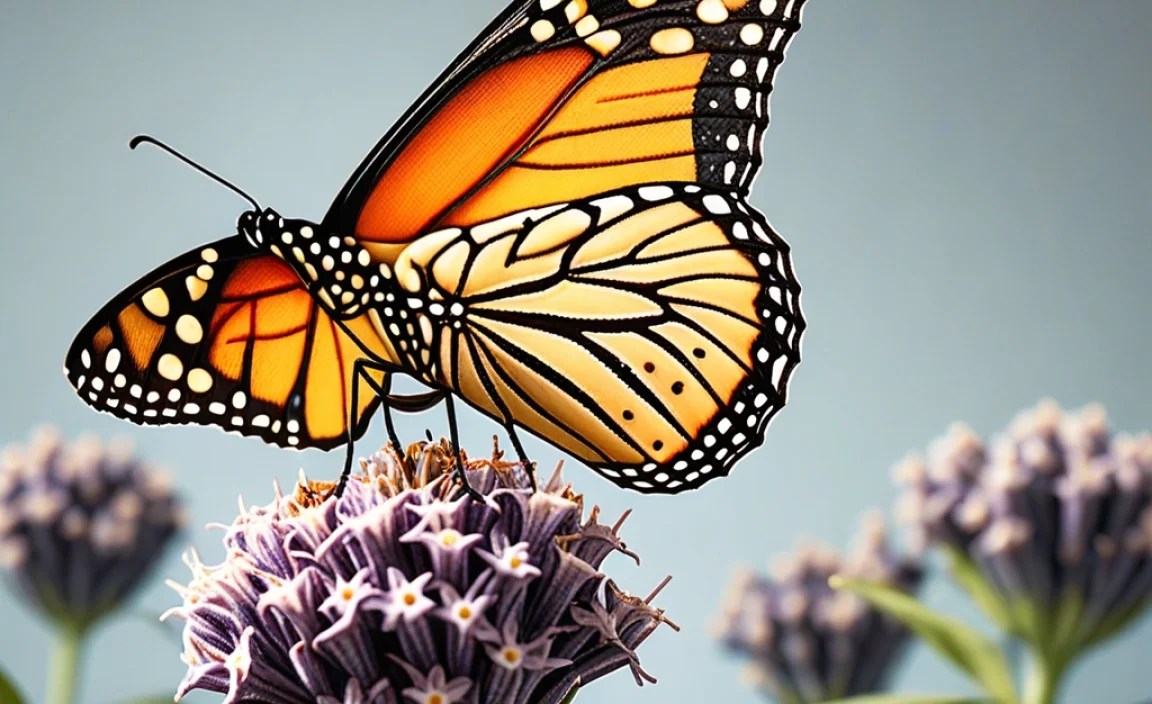
Besides viceroys, other butterflies can sometimes be mistaken for monarchs. Here are a few:
- Queen Butterfly: Darker orange/brown color, found in southern regions.
- Soldier Butterfly: Similar to the Queen, with slightly different wing patterns.
- Painted Lady Butterfly: More mottled patterns, smaller size.
Knowing these differences can help refine your identification skills.
Tools and Resources for Butterfly Identification
Several resources can help you improve your butterfly identification skills:
- Butterfly Field Guides: Books with detailed descriptions and images.
- Online Databases: Websites like Butterflies and Moths of North America offer vast information and photos.
- Butterfly Identification Apps: Mobile apps can help you identify butterflies using photos.
- Local Butterfly Experts: Join a local butterfly club or consult with a naturalist.
Why Accurate Identification Matters
Correctly identifying monarch butterflies is crucial for several reasons:
- Conservation Efforts: Accurate data helps track monarch populations and guide conservation strategies. The U.S. Fish and Wildlife Service relies on this data.
- Citizen Science: Many citizen science projects depend on accurate monarch sightings.
- Gardening for Monarchs: Knowing you have monarchs helps you tailor your garden to their needs, such as planting milkweed.
Tips for Attracting Monarchs to Your Garden
If you want to attract monarchs, here are some tips:
- Plant Milkweed: Milkweed is the only food source for monarch caterpillars.
- Provide Nectar Sources: Plant nectar-rich flowers for adult butterflies.
- Avoid Pesticides: Pesticides can harm or kill butterflies.
- Provide Water: Offer a shallow dish of water with pebbles for butterflies to land on.
The Monarch Butterfly Life Cycle
Understanding the monarch’s life cycle can deepen your appreciation and identification skills:
- Egg: Monarchs lay eggs on milkweed plants.
- Larva (Caterpillar): The caterpillar eats milkweed and grows.
- Pupa (Chrysalis): The caterpillar forms a green chrysalis.
- Adult Butterfly: The butterfly emerges from the chrysalis.
The Importance of Milkweed
Milkweed is essential for monarch survival. It contains toxins that make the caterpillars and butterflies unpalatable to predators. Without milkweed, monarchs cannot complete their life cycle. You can learn more from organizations like the Xerces Society.
Monarch Migration: An Amazing Journey
Monarch butterflies undertake an incredible multi-generational migration. Eastern monarchs migrate from Canada and the United States to Mexico, while western monarchs migrate to California. This journey is one of nature’s most remarkable events.
FAQ: Common Questions About Monarch Identification
What is the biggest difference between a monarch and a viceroy?
The easiest way to tell them apart is the black line across the viceroy’s hindwings, which monarchs lack.
Do male and female monarchs look different?
Yes, male monarchs have a small black spot on each hindwing, while females lack this spot and have thicker black veins.
Where are monarchs most commonly found?
Monarchs are typically found in open areas with milkweed, such as meadows, fields, and gardens.
What do monarch caterpillars eat?
Monarch caterpillars exclusively eat milkweed leaves. It’s their only food source!
How can I attract monarchs to my garden?
Plant milkweed and nectar-rich flowers, avoid pesticides, and provide a shallow dish of water.
Are monarch butterflies endangered?
Monarch populations have declined, and they are considered a species of concern. Conservation efforts are crucial for their survival.
What should I do if I see a monarch butterfly?
Enjoy the sighting! You can also report your sighting to a citizen science project to help track monarch populations.
Conclusion
Identifying monarch butterflies can be fun and rewarding! By paying attention to wing patterns, size, habitat, and behavior, you can confidently distinguish monarchs from look-alikes like viceroys. Accurate identification is vital for supporting conservation efforts and appreciating these incredible creatures. So, grab your field guide, head outside, and start exploring the world of butterflies. With a little practice, you’ll become a monarch expert in no time, contributing to their preservation and enjoying their beauty in your garden and beyond. Happy butterflying!


