
DIY Butterfly Observation Journal: Easy Nature Fun!

A DIY butterfly observation journal helps you record your sightings, track butterfly behavior, and learn more about these beautiful creatures. You can easily create your own journal using a notebook, pens, colored pencils, and some creativity! This is a fun and educational project for nature lovers of all ages.
Have you ever been captivated by the sight of a butterfly flitting through your garden? Do you wish you could remember every detail about it – the colors, the plants it visited, the way it moved? Keeping a butterfly observation journal is the perfect way to document your encounters and deepen your understanding of these amazing insects. Don’t worry if you’re not a scientist or an artist! Creating your own journal is easy, fun, and a wonderful way to connect with nature. Ready to get started? Let’s dive in and create a beautiful and informative record of your butterfly adventures!
Why Keep a Butterfly Observation Journal?
There are so many wonderful reasons to keep a butterfly journal! Here are just a few:
- Record your sightings: Note the species, date, time, and location of each butterfly you see.
- Track butterfly behavior: Observe what the butterfly is doing – feeding, flying, resting, or mating.
- Learn about different species: Identify the butterflies you see and learn about their life cycles, habitats, and host plants.
- Improve your observation skills: The more you observe, the more you’ll notice!
- Contribute to citizen science: Your observations can help scientists track butterfly populations and monitor their health.
- Connect with nature: Spending time observing butterflies is a relaxing and rewarding way to connect with the natural world.
- Create a beautiful keepsake: Your journal will be a treasured record of your butterfly encounters for years to come.
What You’ll Need to Create Your Journal
Gathering your supplies is the first step in creating your DIY butterfly observation journal. Here’s a list of essentials:
- A notebook: Choose a notebook that you love! A spiral-bound notebook, a sketchbook, or even a digital document will work. Consider the size – a smaller notebook is easier to carry, while a larger one provides more space for drawings and notes.
- Pens and pencils: You’ll need pens for writing and pencils for sketching. A variety of colors can be helpful for highlighting details.
- Colored pencils or watercolors: These are great for adding color to your sketches and creating more detailed illustrations.
- A hand lens or magnifying glass: This will help you get a closer look at the butterflies you observe.
- A butterfly field guide: A field guide will help you identify the butterflies you see. Peterson Field Guides and Kaufman Field Guides are excellent resources.
- A camera or smartphone: Taking photos of the butterflies you see will help you remember them and identify them later.
- Optional supplies: Ruler, eraser, sharpener, stickers, washi tape, pressed flowers, and any other embellishments you like.
Step-by-Step Guide to Creating Your Butterfly Observation Journal

Now for the fun part! Here’s a step-by-step guide to creating your DIY butterfly observation journal:
Step 1: Choose Your Notebook
Select a notebook that suits your style and needs. Consider the size, binding, and paper quality. A durable notebook will withstand frequent use in the field.
Step 2: Design Your Journal Pages
Decide how you want to organize your journal pages. You might want to create a template with spaces for:
- Date and time
- Location
- Butterfly species (if known)
- Description of the butterfly (size, colors, markings)
- Behavior (feeding, flying, resting)
- Host plants (if observed)
- Notes (any other interesting observations)
- Sketch or photo
You can create a simple template by drawing lines with a ruler or use a computer to design and print your own pages. Feel free to adapt the template as you gain more experience.
Step 3: Gather Information on Local Butterflies

Before you start your observations, it’s helpful to learn about the butterflies that are common in your area. Consult your field guide or online resources like the Xerces Society to familiarize yourself with the local species.
Step 4: Start Observing!
Head outside to your garden, a local park, or any other place where you might find butterflies. Be patient and observant. Look for butterflies feeding on flowers, basking in the sun, or flying through the air.
Step 5: Record Your Observations
When you see a butterfly, take a moment to observe it carefully. Use your senses to gather as much information as possible. Then, record your observations in your journal. Be as detailed as you can.
Step 6: Identify the Butterfly
Use your field guide, online resources, or a butterfly identification app to identify the butterfly you saw. If you’re not sure, take a photo and try to identify it later. The National Geographic website is a great resource for butterfly identification.
Step 7: Add Sketches or Photos

Add a sketch or photo of the butterfly to your journal page. Even a simple sketch can help you remember the butterfly’s features. If you’re not comfortable drawing, you can print out a photo and glue it into your journal.
Step 8: Personalize Your Journal
Make your journal your own by adding personal touches. You can add stickers, washi tape, pressed flowers, or anything else that inspires you. The most important thing is to have fun and enjoy the process!
Tips for Successful Butterfly Observation
Here are some tips to help you make the most of your butterfly observations:
- Choose the right time of day: Butterflies are most active on warm, sunny days.
- Look for nectar sources: Butterflies are attracted to flowers that are rich in nectar. Plant butterfly-friendly flowers in your garden to attract more butterflies.
- Be patient: Butterfly observation requires patience. Sometimes you’ll see lots of butterflies, and sometimes you won’t see any. Don’t get discouraged!
- Stay quiet and still: Butterflies are easily startled, so try to stay quiet and still when you’re observing them.
- Respect the butterflies: Avoid touching or disturbing the butterflies. Observe them from a distance.
- Join a butterfly club: Connecting with other butterfly enthusiasts is a great way to learn more and share your observations.
- Contribute to citizen science projects: Share your observations with scientists through citizen science projects like the Butterflies and Moths of North America project.
Example Journal Entry
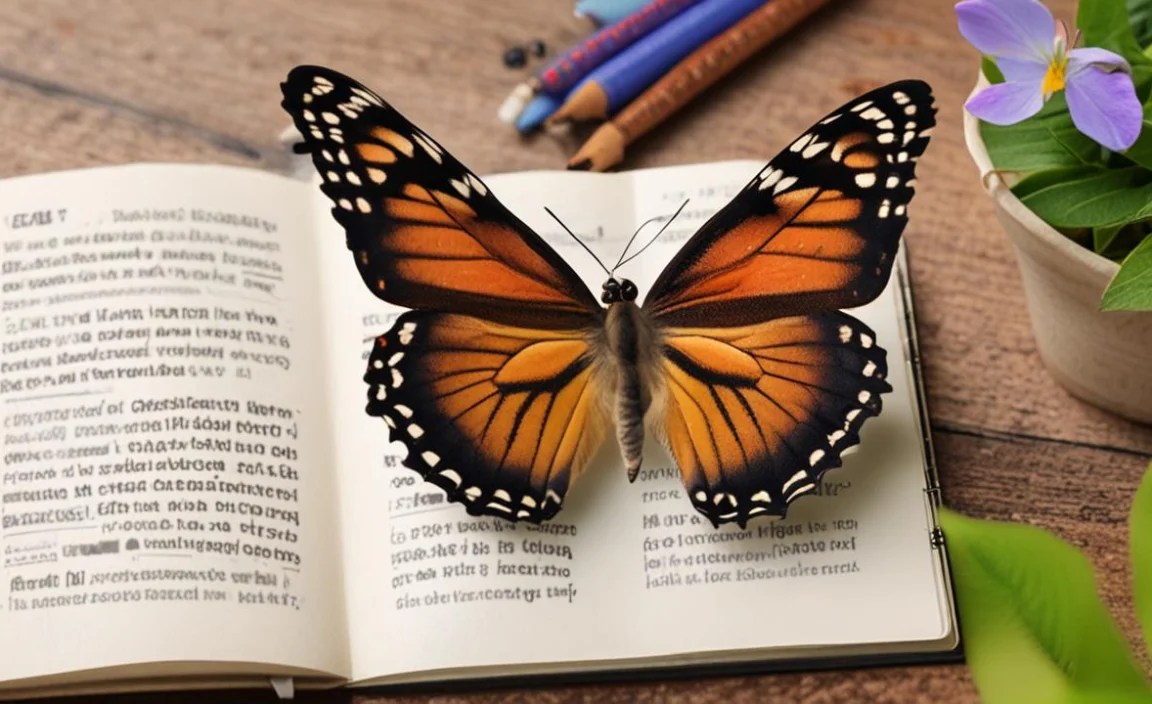
Here’s an example of what a journal entry might look like:
| Date | Time | Location | Species |
|---|---|---|---|
| July 15, 2024 | 10:30 AM | My backyard garden | Monarch (Danaus plexippus) |
Description: Bright orange wings with black veins and white spots along the edges. Approximately 4 inches wingspan.
Behavior: Feeding on milkweed flowers.
Notes: Saw two Monarchs nectaring on the milkweed. One was laying eggs on the underside of the leaves. This is the first time I’ve seen Monarchs in my garden this year!
Sketch: (A simple sketch of a Monarch butterfly on a milkweed flower)
Advanced Techniques for Butterfly Journaling
As you become more experienced with butterfly journaling, you can explore more advanced techniques:
- Track butterfly populations: Count the number of butterflies you see of each species and track the changes in population over time.
- Study butterfly behavior in detail: Observe butterfly mating rituals, egg-laying behavior, and larval development.
- Investigate butterfly migration: Track the movements of migratory butterflies like Monarchs.
- Document butterfly host plants: Identify the plants that butterflies use as food for their caterpillars.
- Create a butterfly garden: Design a garden that provides food and shelter for butterflies.
The Educational Benefits of Butterfly Journaling

Butterfly journaling is not just a fun hobby – it’s also a valuable educational tool. It can help you learn about:
- Butterfly biology: Life cycles, anatomy, and physiology.
- Ecology: The relationships between butterflies and their environment.
- Conservation: The threats facing butterflies and what you can do to help protect them.
- Scientific observation: How to collect and analyze data.
- Art and creativity: How to express your observations through drawing and writing.
Butterfly journaling can be incorporated into science, art, and language arts curricula. It’s a great way to engage students in hands-on learning and connect them with the natural world.
Butterfly Symbolism and Cultural Significance

Butterflies have been symbols of transformation, hope, and beauty in many cultures throughout history. They often represent the human soul and the cycle of life, death, and rebirth.
In some cultures, butterflies are believed to be messengers from the spirit world. In others, they are seen as symbols of good luck or prosperity. The Smithsonian Institution has extensive resources on cultural symbolism in nature.
Understanding the symbolism and cultural significance of butterflies can add another layer of appreciation to your butterfly journaling experience.
Table: Common Butterfly Species and Their Host Plants

Here’s a table of common butterfly species and their host plants:
| Butterfly Species | Host Plant |
|---|---|
| Monarch (Danaus plexippus) | Milkweed (Asclepias spp.) |
| Black Swallowtail (Papilio polyxenes) | Parsley, dill, fennel |
| Painted Lady (Vanessa cardui) | Thistle, mallow |
| Spicebush Swallowtail (Papilio troilus) | Spicebush, sassafras |
| Cabbage White (Pieris rapae) | Cabbage, broccoli, kale |
Table: Butterfly Identification Tips
| Feature | Description |
|---|---|
| Size | Measure the wingspan in inches or millimeters. |
| Color | Note the dominant colors and patterns on the wings. |
| Markings | Look for spots, stripes, or other distinctive markings. |
| Shape | Observe the shape of the wings and body. |
| Flight Pattern | Note how the butterfly flies (e.g., fluttering, gliding). |
FAQ: Your Butterfly Journaling Questions Answered
Q: What if I don’t know the name of a butterfly?

A: That’s okay! Just describe it as best you can. Include details about its size, color, and markings. You can also take a photo and try to identify it later using a field guide or online resources.
Q: Do I have to be an artist to draw butterflies in my journal?

A: Absolutely not! Even simple sketches can be helpful. Focus on capturing the basic shapes and patterns. Don’t worry about making it perfect. The goal is to record your observations, not to create a masterpiece.
Q: What’s the best time of year to start a butterfly journal?

A: Any time of year is a good time to start! You’ll see different butterflies at different times of the year. In the spring and summer, you’ll see more butterflies, but you can still find them in the fall and even in the winter in some areas.
Q: How can I attract more butterflies to my garden?

A: Plant butterfly-friendly flowers that are rich in nectar. Milkweed, butterfly bush, and zinnias are all good choices. You can also provide a water source, such as a shallow dish of water with pebbles for the butterflies to land on.
Q: Can I use a digital journal instead of a paper one?

A: Yes, you can! There are many apps and websites that you can use to record your butterfly observations. You can also create a digital document using a word processor or spreadsheet program. A digital journal can be especially useful for storing and organizing photos.
Q: How can my butterfly journal help with conservation?

A: Your observations can help scientists track butterfly populations and monitor their health. You can share your observations with citizen science projects or local conservation organizations. By documenting the butterflies in your area, you can contribute to our understanding of these important insects and help protect them for future generations.
Q: What if I make a mistake in my journal?

A: Don’t worry about it! Just cross it out or make a note of the correction. Your journal is a record of your learning process, so it’s okay to make mistakes.
Conclusion
Creating a DIY butterfly observation journal is a wonderful way to connect with nature, learn about these fascinating creatures, and contribute to citizen science. Whether you’re a beginner or an experienced naturalist, keeping a butterfly journal is a rewarding and enriching experience. So grab your notebook, pens, and field guide, and head outside to start your butterfly adventure! As you fill the pages with your observations, sketches, and reflections, you’ll gain a deeper appreciation for the beauty and importance of butterflies in our world. Happy journaling!
🐛➡🦋 Life cycle of a butterfly model 🌸 School science project /assignment/ craft ideas #schoolcrafts


