
Butterflies of North America: Ultimate Guide!

Butterflies of North America: A Beginner’s Guide to Identification and Appreciation

Quick Summary: North America is home to diverse butterfly species, each with unique colours, patterns, and habitats. This guide covers identifying common butterflies, understanding their life cycle, attracting them to your garden, and contributing to their conservation. Learn about butterfly migration, camouflage, and symbolism, and start your butterfly-watching journey today!
Butterflies! These beautiful creatures flutter through our gardens and meadows, bringing joy and wonder. But how many different kinds are there? And how can we tell them apart? Identifying butterflies can seem tricky at first, but it’s easier than you think. With a bit of practice, you’ll be spotting Monarchs, Swallowtails, and more in no time.
This guide will help you identify common butterflies of North America, understand their fascinating lives, and create a butterfly-friendly garden. Get ready to explore the colourful world of butterflies!
Identifying Common Butterflies
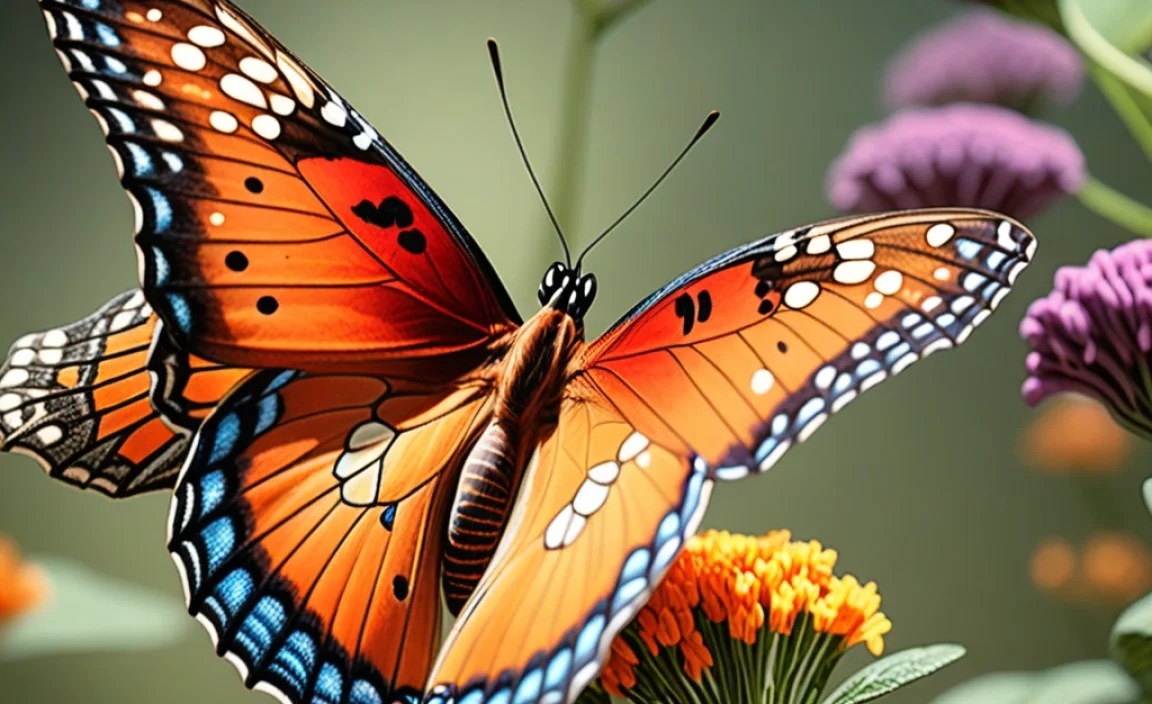
North America boasts a stunning variety of butterflies. Let’s explore some of the most commonly seen species.
Monarch (Danaus plexippus)
The Monarch is perhaps the most recognizable butterfly in North America, known for its incredible migration.
- Appearance: Bright orange wings with black borders and white spots.
- Habitat: Open fields, meadows, and gardens.
- Fun Fact: Monarchs migrate thousands of miles each year to overwintering sites in Mexico and California. Learn more about Monarch migration at National Geographic.
Swallowtail Butterflies
Swallowtails are large, striking butterflies with distinctive “tails” on their hindwings.
Eastern Tiger Swallowtail (Papilio glaucus)
- Appearance: Yellow with black stripes (females may be black).
- Habitat: Woodlands, parks, and gardens.
- Host Plant: Wild cherry, tulip tree.
Black Swallowtail (Papilio polyxenes)
- Appearance: Black wings with yellow spots; blue and orange spots on hindwings.
- Habitat: Fields, gardens, and roadsides.
- Host Plant: Parsley, dill, fennel.
Pipevine Swallowtail (Battus philenor)
- Appearance: Dark iridescent blue-black wings.
- Habitat: Woodlands and gardens near pipevine plants.
- Host Plant: Pipevine.
Painted Lady (Vanessa cardui)
The Painted Lady is a widespread butterfly found across North America.
- Appearance: Orange and brown wings with black spots and white markings.
- Habitat: Open areas, fields, and gardens.
- Fun Fact: Painted Ladies are known for their large-scale migrations.
American Lady (Vanessa virginiensis)
The American Lady is often confused with the Painted Lady, but there are key differences.
- Appearance: Similar to Painted Lady but with two large eyespots on the hindwings.
- Habitat: Fields, meadows, and gardens.
- Host Plant: Everlasting, pearly everlasting.
Question Mark (Polygonia interrogationis)
This butterfly gets its name from the distinctive silver question mark on its hindwing.
- Appearance: Orange and brown wings with jagged edges.
- Habitat: Woodlands, parks, and gardens.
- Host Plant: Elm, hackberry.
Red Admiral (Vanessa atalanta)
The Red Admiral is a striking butterfly with bold red markings.
- Appearance: Black wings with red bands and white spots.
- Habitat: Woodlands, parks, and gardens.
- Host Plant: Nettles.
Cabbage White (Pieris rapae)
The Cabbage White is a common, often abundant butterfly.
- Appearance: White wings with small black spots.
- Habitat: Gardens, fields, and disturbed areas.
- Host Plant: Cabbage, broccoli, and other cruciferous plants.
Gulf Fritillary (Agraulis vanillae)
A beautiful bright orange butterfly common in the southern United States.
- Appearance: Bright orange wings with elongated shape and black spots.
- Habitat: Open sunny areas, gardens, and fields.
- Host Plant: Passionflower vines.
Mourning Cloak (Nymphalis antiopa)
A large, striking butterfly that overwinters as an adult.
- Appearance: Dark brown wings with a yellow border and blue spots.
- Habitat: Woodlands, parks, and riparian areas.
- Host Plant: Willow, elm, birch, and hackberry trees.
Butterfly Identification Tips
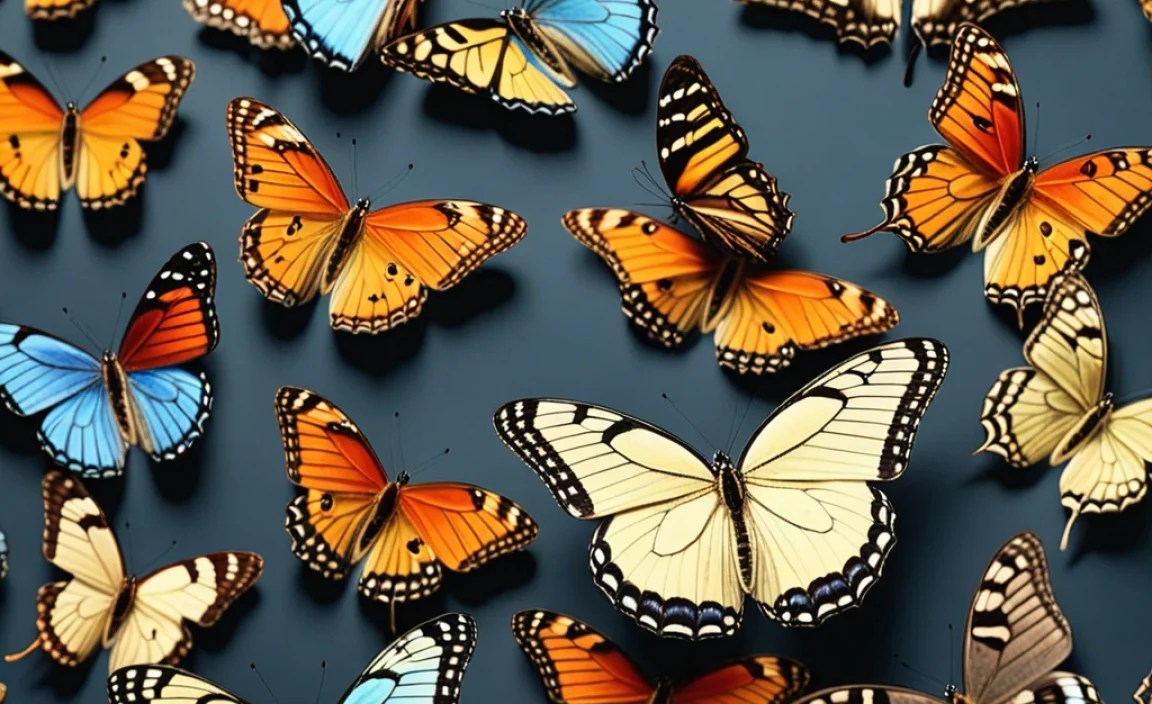
Identifying butterflies can be fun! Here are some helpful tips:
- Observe Wing Patterns: Pay attention to the colors, spots, and stripes on the wings.
- Note the Size: Is it a large butterfly like a Swallowtail or a smaller one like a Cabbage White?
- Consider the Habitat: Where did you see the butterfly? Some species prefer woodlands, while others prefer open fields.
- Check the Flight Pattern: Some butterflies have a distinctive flight, like the Monarch’s slow, graceful flight.
- Use a Field Guide: A good field guide can be invaluable for identifying butterflies. Consider books like “Butterflies of North America” by Jim P. Brock and Kenn Kaufman, or apps like the “Audubon Butterfly Guide.”
- Take Photos: If you can, take a photo of the butterfly to help with identification later.
Understanding the Butterfly Life Cycle

Butterflies undergo complete metamorphosis, meaning they have four distinct life stages:
- Egg: Butterflies lay their eggs on specific host plants.
- Larva (Caterpillar): The caterpillar eats and grows, molting its skin several times.
- Pupa (Chrysalis): The caterpillar transforms into a pupa, or chrysalis, inside which the butterfly develops.
- Adult: The adult butterfly emerges from the chrysalis, ready to reproduce.
Understanding the life cycle is important for butterfly conservation. Providing host plants for caterpillars is just as important as providing nectar sources for adult butterflies. Learn more about butterfly life cycles at the Smithsonian Institution.
Attracting Butterflies to Your Garden
Creating a butterfly-friendly garden is a rewarding way to enjoy these beautiful creatures and support their populations.
Plant Nectar Sources
Adult butterflies feed on nectar from flowers. Choose a variety of plants that bloom at different times of the year to provide a continuous food source.
- Butterfly Bush (Buddleja davidii): A classic butterfly magnet.
- Zinnia (Zinnia elegans): Easy to grow and comes in many colors.
- Coneflower (Echinacea purpurea): A native perennial that attracts many butterflies.
- Lantana (Lantana camara): A colorful and fragrant choice.
- Salvia (Salvia spp.): Attracts butterflies and hummingbirds.
- Asters (Symphyotrichum spp.): Late-blooming flowers that provide nectar in the fall.
Provide Host Plants
Caterpillars need specific host plants to feed on. Research which butterflies are common in your area and plant their host plants.
- Monarch: Milkweed (Asclepias spp.)
- Black Swallowtail: Parsley, dill, fennel
- Pipevine Swallowtail: Pipevine (Aristolochia spp.)
- Gulf Fritillary: Passionflower (Passiflora spp.)
Offer a Water Source
Butterflies need water, but they can’t drink from deep puddles. Provide a shallow dish of water with pebbles or sand for them to land on.
Provide Shelter
Butterflies need shelter from wind and rain. Plant trees and shrubs to provide resting places.
Avoid Pesticides
Pesticides can harm or kill butterflies and other beneficial insects. Choose organic gardening methods to protect butterflies.
Sunlight
Butterflies are cold-blooded and need sunlight to warm their bodies. Make sure your garden has plenty of sunny spots.
Butterfly Conservation
Butterfly populations are declining due to habitat loss, pesticide use, and climate change. Here’s how you can help:
- Plant Native Plants: Native plants provide the best food and habitat for butterflies.
- Create Butterfly Gardens: Even a small garden can make a difference.
- Avoid Pesticides: Use organic gardening methods.
- Support Conservation Organizations: Donate to organizations like the Xerces Society, which works to protect butterflies and other invertebrates.
- Educate Others: Share your knowledge of butterflies with friends, family, and neighbors.
- Participate in Citizen Science: Contribute to butterfly monitoring programs.
Butterfly Migration
Some butterfly species, like the Monarch, are famous for their long-distance migrations. These migrations are triggered by changes in temperature and day length. Monarchs migrate from Canada and the United States to overwintering sites in Mexico and California.
Other migratory butterflies include the Painted Lady and the Cloudless Sulphur. These migrations can be influenced by weather patterns and food availability.
Butterfly Camouflage and Mimicry
Butterflies use camouflage and mimicry to protect themselves from predators.
- Camouflage: Some butterflies have wing patterns that blend in with their surroundings, making them difficult to spot.
- Mimicry: Some butterflies mimic the appearance of other, more toxic butterflies to deter predators. For example, the Viceroy butterfly mimics the Monarch.
Butterfly Symbolism
Butterflies have been symbols of transformation, hope, and beauty for centuries. In many cultures, they represent the soul or spirit. Their metamorphosis from caterpillar to butterfly is often seen as a metaphor for personal growth and change.
| Culture | Symbolism |
|---|---|
| Greek | The soul, immortality |
| Chinese | Love, joy, and summer |
| Native American | Transformation, change |
| Christian | Resurrection, new life |
Butterfly FAQs
What is the difference between a butterfly and a moth?
Butterflies are typically active during the day, have brightly colored wings, and hold their wings upright when resting. Moths are often active at night, have duller colors, and hold their wings flat when resting. Butterflies also have clubbed antennae, while moths have feathery or comb-like antennae.
How long do butterflies live?
Butterfly lifespans vary depending on the species. Some butterflies live only a few weeks, while others can live for several months. Monarchs, for example, can live up to nine months, allowing them to complete their long migration.
What do caterpillars eat?
Caterpillars eat the leaves of specific host plants. Each butterfly species has its preferred host plant. For example, Monarch caterpillars eat milkweed, while Black Swallowtail caterpillars eat parsley, dill, and fennel.
How can I tell if a butterfly is male or female?
In some species, males and females have different wing patterns or colors. In others, you can tell by looking at their abdomens. Females often have larger, rounder abdomens than males.
Are butterflies important for the environment?
Yes! Butterflies are important pollinators. As they feed on nectar, they transfer pollen from flower to flower, helping plants reproduce. They are also an important part of the food chain, serving as food for birds and other animals.
What should I do if I find an injured butterfly?
If you find an injured butterfly, you can try to help it by placing it in a safe, sheltered location and providing it with a source of nectar, such as a sugar-water solution (one part sugar to four parts water) on a sponge or cotton ball. However, severely injured butterflies may not survive.
What is butterfly puddling?
Butterfly puddling is a behavior where butterflies gather around mud puddles or damp soil to drink water and extract minerals and salts. Male butterflies often puddle to obtain nutrients that they pass on to females during mating.
Resources for Further Learning
Here are some resources to help you learn more about butterflies:
- Books: “Butterflies of North America” by Jim P. Brock and Kenn Kaufman
- Websites:
Conclusion
Butterflies are not just beautiful insects; they are vital parts of our ecosystem. By learning to identify them, understanding their life cycle, and creating butterfly-friendly habitats, we can all play a role in their conservation. So, get outside, explore your local parks and gardens, and discover the wonderful world of butterflies. Every small effort counts, from planting a milkweed in your backyard to supporting conservation organizations. Let’s work together to ensure that future generations can enjoy the beauty and wonder of these amazing creatures.


