
Clearwing Butterfly Species: See Amazing Types!

Clearwing butterflies are known for their transparent wings, making them look like bees or wasps. This amazing camouflage helps them avoid predators. Discover different types of clearwing butterflies, how to identify them, and what makes them so special. We’ll also explore their habitats and how you can attract them to your garden.
Have you ever spotted a butterfly that looked like a bee? You might have seen a clearwing butterfly! These fascinating creatures have transparent wings, a rare and beautiful trait in the butterfly world. It can be tricky to identify them and understand their unique adaptations. But don’t worry, we’ll guide you through everything you need to know.
In this article, we’ll explore the diverse world of clearwing butterflies. We’ll cover their different species, how to identify them, their habitats, and what plants attract them. Get ready to discover the enchanting secrets of these amazing insects!
What are Clearwing Butterflies?

Clearwing butterflies belong to the family Sesiidae, although they are sometimes confused with moths. What sets them apart is the transparent sections on their wings. Most butterflies have colorful scales covering their wings, but clearwings have fewer scales, which allow light to pass through.
This transparency is a form of mimicry. Clearwing butterflies imitate the appearance of wasps or bees, which helps protect them from predators. Birds and other animals are less likely to eat them because they think they might get stung.
Clearwing butterflies are found in various parts of the world, including North America, Europe, and Asia. They play an important role in their ecosystems as pollinators.
Popular Clearwing Butterfly Species

Here are some of the most fascinating clearwing butterfly species you might encounter:
1. Hummingbird Clearwing (Hemaris thysbe)
The Hummingbird Clearwing is one of the most well-known clearwing butterflies in North America. It’s named for its resemblance to hummingbirds as it hovers and feeds on nectar from flowers.
Appearance: This butterfly has a thick, furry body that is typically brown or reddish-brown. Its wings have clear sections bordered by a reddish-brown band. It has a wingspan of about 1.5 to 2 inches.
Habitat: Hummingbird Clearwings are found in meadows, gardens, and woodland edges. They are common in the eastern United States and Canada.
Host Plants: Larvae feed on honeysuckle, snowberry, and hawthorn.
2. Snowberry Clearwing (Hemaris diffinis)
The Snowberry Clearwing is another common species in North America. It’s similar to the Hummingbird Clearwing but has some distinct differences.
Appearance: This butterfly has a black and yellow body, resembling a bumblebee. The clear sections of its wings are larger than those of the Hummingbird Clearwing. It has a wingspan of about 1 to 1.8 inches.
Habitat: Snowberry Clearwings are found in similar habitats as Hummingbird Clearwings, including gardens, meadows, and open woodlands. They are widespread across North America.
Host Plants: Larvae feed on snowberry, dogbane, and honeysuckle.
3. Raspberry Clearwing (Pennisetia hylaeiformis)
The Raspberry Clearwing is a species found in Europe and parts of Asia. It is known for its preference for raspberry plants.
Appearance: This butterfly has a slender, wasp-like body with black and yellow bands. Its wings have clear sections and a narrow black border. It has a wingspan of about 0.8 to 1.2 inches.
Habitat: Raspberry Clearwings are found in gardens, orchards, and woodlands where raspberry plants grow.
Host Plants: Larvae feed on raspberry and blackberry canes.
4. Currant Clearwing (Synanthedon tipuliformis)
The Currant Clearwing is a pest species that can damage currant and gooseberry bushes. It is found in Europe and North America.
Appearance: This butterfly has a dark blue or black body with yellow bands. Its wings have clear sections and a dark border. It has a wingspan of about 0.6 to 1 inch.
Habitat: Currant Clearwings are found in gardens and orchards where currant and gooseberry bushes are grown.
Host Plants: Larvae feed inside the stems of currant and gooseberry bushes.
5. Peach Tree Borer (Synanthedon exitiosa)
The Peach Tree Borer is a significant pest of peach trees in North America. Its larvae bore into the trunks of peach trees, causing damage and potentially killing the tree.
Appearance: The adult moth has a blue-black body with yellow bands. The female has a broad orange band across her abdomen. The wings are mostly clear with dark borders. They have a wingspan of about 1 to 1.5 inches.
Habitat: Peach Tree Borers are found in orchards and areas with peach trees throughout North America.
Host Plants: Larvae feed on peach, plum, and cherry trees.
Identifying Clearwing Butterflies
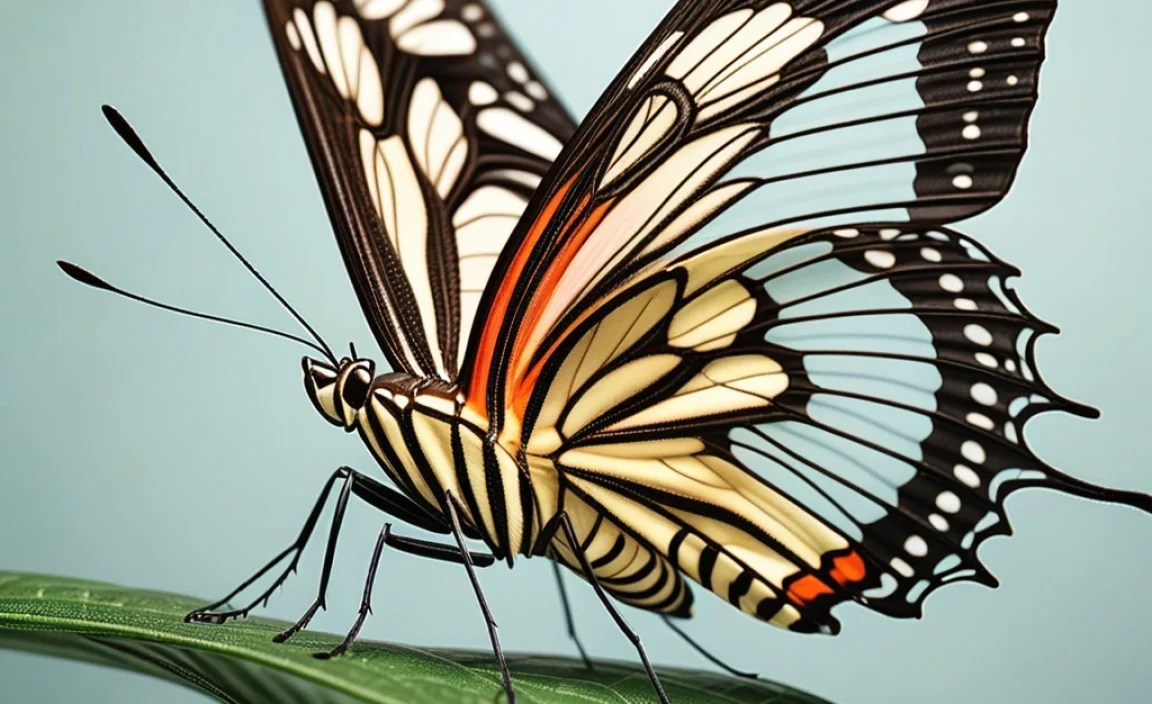
Identifying clearwing butterflies can be tricky because they mimic other insects. Here are some key characteristics to look for:
- Transparent Wings: The most obvious feature is the clear or transparent sections on their wings.
- Body Shape: They often have slender, wasp-like bodies with bright colors like yellow, black, and red.
- Flight Pattern: Clearwings tend to hover and fly quickly, similar to hummingbirds or bees.
- Antennae: Their antennae are usually thread-like or slightly clubbed.
Here’s a simple table to help you quickly identify common species:
| Species | Appearance | Habitat | Host Plants |
|---|---|---|---|
| Hummingbird Clearwing | Brown/reddish-brown body, clear wings with reddish-brown border | Meadows, gardens, woodland edges | Honeysuckle, snowberry, hawthorn |
| Snowberry Clearwing | Black and yellow body, large clear wing sections | Gardens, meadows, open woodlands | Snowberry, dogbane, honeysuckle |
| Raspberry Clearwing | Black and yellow banded body, narrow black wing border | Gardens, orchards, woodlands | Raspberry and blackberry canes |
| Currant Clearwing | Dark blue/black body with yellow bands, dark wing border | Gardens and orchards | Currant and gooseberry stems |
| Peach Tree Borer | Blue-black body with yellow bands, clear wings with dark borders | Orchards and areas with peach trees | Peach, plum, and cherry trees |
The Life Cycle of Clearwing Butterflies

Like all butterflies, clearwings go through a complete metamorphosis. Here’s a breakdown of their life cycle:
- Egg: The female lays her eggs on or near the host plant.
- Larva (Caterpillar): The larva hatches and begins feeding on the host plant. Clearwing larvae often bore into stems or roots of plants.
- Pupa (Chrysalis): The larva pupates, forming a chrysalis. This stage can last from a few weeks to several months.
- Adult: The adult butterfly emerges from the chrysalis. It will then mate and lay eggs, starting the cycle again.
Attracting Clearwing Butterflies to Your Garden
If you want to attract clearwing butterflies to your garden, here are some tips:
- Plant Host Plants: Provide the plants that clearwing larvae feed on, such as honeysuckle, snowberry, and dogbane.
- Plant Nectar-Rich Flowers: Adult butterflies feed on nectar, so plant flowers like bee balm, salvia, and lavender.
- Avoid Pesticides: Pesticides can harm or kill butterflies and other beneficial insects.
- Provide a Water Source: Butterflies need water, so provide a shallow dish of water with pebbles for them to land on.
- Offer a Sunny Spot: Butterflies are cold-blooded and need sunlight to warm up.
Creating a butterfly-friendly garden not only attracts clearwing butterflies but also supports other pollinators and beneficial insects.
Clearwing Butterflies and Their Mimicry
Mimicry is a key survival strategy for clearwing butterflies. By resembling wasps or bees, they deter predators. This is known as Batesian mimicry, where a harmless species mimics a harmful one.
The clear wings, slender bodies, and rapid flight patterns all contribute to the illusion. Birds and other predators often avoid insects that look like they can sting, giving clearwing butterflies a better chance of survival.
This mimicry is a fascinating example of natural selection at work. Over time, clearwing butterflies that looked more like wasps or bees were more likely to survive and reproduce, passing on their traits to future generations.
Ecological Importance of Clearwing Butterflies
Clearwing butterflies play several important roles in their ecosystems:
- Pollination: Adult butterflies feed on nectar and help pollinate flowers.
- Food Source: They serve as a food source for birds and other animals.
- Indicator Species: Their presence or absence can indicate the health of an ecosystem.
However, some clearwing species can also be pests. For example, the Currant Clearwing and Peach Tree Borer can cause significant damage to crops and trees. Managing these species requires careful consideration to minimize harm to beneficial insects and the environment.
Conservation Status and Threats
The conservation status of clearwing butterflies varies depending on the species and location. Some species are common and widespread, while others are rare or threatened.
Threats to clearwing butterflies include:
- Habitat Loss: Destruction of natural habitats due to agriculture, urbanization, and deforestation.
- Pesticide Use: Exposure to pesticides can harm or kill butterflies and their larvae.
- Climate Change: Changes in temperature and precipitation patterns can disrupt their life cycle and distribution.
- Invasive Species: Competition from invasive plants and insects.
Supporting conservation efforts, such as habitat restoration and sustainable land management, can help protect clearwing butterflies and other pollinators.
Interesting Facts About Clearwing Butterflies
Here are some fascinating facts about clearwing butterflies:
- Some species can fly up to 20 miles per hour.
- They use their antennae to detect scents and find food.
- The clear sections of their wings are covered in tiny hairs that help them fly.
- They can see ultraviolet light, which helps them find nectar-rich flowers.
- Some species have a lifespan of only a few weeks.
Resources for Further Learning
If you want to learn more about clearwing butterflies, here are some helpful resources:
- The Xerces Society: A non-profit organization that promotes invertebrate conservation.
- The Butterfly Conservation Society: An organization dedicated to protecting butterflies and their habitats.
- Local Nature Centers and Botanical Gardens: These places often have educational programs and exhibits about butterflies.
You can also find books, websites, and online forums dedicated to butterfly identification and conservation.
FAQ About Clearwing Butterflies
Here are some frequently asked questions about clearwing butterflies:
1. What makes clearwing butterflies different from other butterflies?
Clearwing butterflies have transparent sections on their wings, unlike most butterflies that have colorful scales covering their wings.
2. Why do clearwing butterflies have clear wings?
The clear wings are a form of mimicry. They resemble wasps or bees, which helps protect them from predators.
3. Where can I find clearwing butterflies?
Clearwing butterflies are found in various parts of the world, including North America, Europe, and Asia. Look for them in gardens, meadows, and woodlands.
4. What do clearwing butterfly larvae eat?
Clearwing butterfly larvae feed on various host plants, such as honeysuckle, snowberry, raspberry, and currant bushes.
5. How can I attract clearwing butterflies to my garden?
Plant host plants and nectar-rich flowers, avoid pesticides, and provide a water source and sunny spot.
6. Are clearwing butterflies harmful?
Some clearwing species, like the Currant Clearwing and Peach Tree Borer, can be pests and damage plants. However, most species are beneficial pollinators.
7. What is the lifespan of a clearwing butterfly?
The lifespan of a clearwing butterfly varies depending on the species but is typically a few weeks to several months.
Conclusion
Clearwing butterflies are truly remarkable creatures with their transparent wings and clever mimicry. These butterflies not only captivate us with their unique appearance but also play essential roles in our ecosystems. From the well-known Hummingbird Clearwing to the elusive Raspberry Clearwing, each species has its own story to tell. By understanding their life cycle, habitats, and conservation needs, we can help protect these fascinating insects for future generations.
So, the next time you’re out in your garden or exploring a woodland, keep an eye out for these “flying jewels.” You might just spot a clearwing butterfly flitting among the flowers, reminding us of the beauty and complexity of the natural world. And remember, every small action we take to protect their habitats can make a big difference in ensuring their survival.


