
Easy Species Identification of Ants: A Smart Guide

Have you ever seen tiny creatures marching in your kitchen? Those might be ants! There are so many kinds of ants. How do we know what kind they are? That’s where species identification of ants comes in. It is like being a detective for the insect world.
Why is figuring out ant types important? It helps us learn about nature. Plus, it can help us keep our homes safe from unwanted guests. Let’s explore the world of ant identification!
Key Takeaways
- Species identification of ants helps understand ant behavior and their role in ecosystems.
- Ants are identified by observing their size, color, and body parts under magnification.
- Different ant species require different control methods if they become pests.
- Ants play important roles in the environment, like aerating soil and spreading seeds.
- Learning about ants can be a fun and educational activity for kids and adults.
Basics of Species Identification of Ants

Species identification of ants can seem tricky at first. But it’s like learning about anything new. You start with the basics. First, you need to look closely at the ant. What color is it? How big is it? Does it have any special features? These are important clues. You can use a magnifying glass to get a better view. Look at the different parts of the ant’s body. The head, thorax, and abdomen all have unique shapes. Count the number of segments in its antennae. All these details help scientists tell one ant species from another. Learning these basics makes ant identification fun and interesting for everyone.
- Ants have three main body parts.
- A magnifying glass helps see small details.
- Color and size are important clues.
- Antennae segments can vary by species.
- Each ant species has unique features.
Why is it important to look closely at ants? Because each tiny detail can tell us a lot! Think of it like this: every ant has its own special uniform. This uniform includes its size, color, and body shape. By carefully observing these features, we can start to understand which ant belongs to which team. This helps us learn about their behavior, where they live, and what they eat. It’s like solving a puzzle, and each ant is a piece of the bigger picture. With a little practice, anyone can become an ant detective!
What Tools Do You Need?
Want to become an ant detective? You need some tools! A magnifying glass is a must-have. It helps you see tiny details. A small container can help you catch ants without hurting them. A notebook and pencil are useful for taking notes. Write down what you see! A camera can help you take pictures. You can compare your photos with pictures in a guidebook. Tweezers can help you pick up ants carefully. These tools will help you explore the world of ants like a pro. Do you have your tools ready?
Where Do You Find Ants?
Where do ants hang out? Ants are everywhere! Look in your backyard. Check under rocks and logs. See if you can find them marching in your kitchen. Ants love to build nests in the soil. They also like to hide in cracks in the sidewalk. You might find them near food sources. Keep an eye out for trails of ants. They often follow each other in a line. Explore different places to find different kinds of ants. Are you ready to start your ant adventure?
Why Is It Important to Be Careful?
Ants are small and delicate. We must be careful when we observe them. Avoid squishing them! Use a gentle container to catch them. Don’t disturb their nests too much. Remember, ants are part of nature. We should respect their homes and lives. Observe them with kindness and care. This way, we can learn about them without causing harm. Being careful helps us protect these tiny creatures. Can you promise to be a gentle ant observer?
Fun Fact or Stat: There are over 12,000 known species of ants in the world!
Examining Ant Body Parts for Identification

To really nail species identification of ants, you have to look at their body parts. Ants have three main parts: the head, the thorax, and the abdomen. The head has eyes, antennae, and mandibles (jaws). The thorax is the middle part where the legs are attached. The abdomen is the rear part of the ant. Look closely at the shape of each part. How many segments are on the antennae? Does the thorax have spines? What does the petiole (the part between the thorax and abdomen) look like? These details are very important. They help you tell different species apart. So, grab your magnifying glass and get ready to examine some ant bodies!
- The head has eyes and antennae.
- The thorax is where legs attach.
- The abdomen is the rear part.
- Antennae segments vary by species.
- The petiole connects thorax and abdomen.
- Spines may be present on the thorax.
Have you ever wondered how ants use their antennae? Antennae are like their special sensors. They use them to smell, taste, and feel. Ants can even use their antennae to communicate with each other. The shape and size of the antennae can be different for each species. Some ants have long antennae, while others have short ones. Counting the segments on the antennae is a key step in identifying ant species. So, the next time you see an ant, take a closer look at its antennae. You might be surprised by what you discover!
What Are Mandibles?
Mandibles are an ant’s jaws. They use them for many things. Ants can carry food with their mandibles. They also use them to build nests. Some ants use their mandibles to defend themselves. Mandibles come in different shapes and sizes. Some are large and powerful. Others are small and delicate. Looking at the mandibles can help identify ant species. Have you ever seen an ant carrying something with its mandibles? It’s amazing how strong they are!
What Is the Petiole?
The petiole is a small segment between the thorax and abdomen. It’s like a tiny waist! The shape of the petiole can be different for each ant species. Some ants have one segment in their petiole. Others have two. The shape of the petiole segments can also vary. Some are rounded, while others are more angular. Examining the petiole is an important step in species identification of ants. Can you spot the petiole on an ant?
Do All Ants Have Stings?
Not all ants have stings! Some ants bite instead. Others don’t do either! Stinging ants use their stings for defense. They inject venom into their enemies. Biting ants use their mandibles to pinch. Some ants can spray formic acid. This can irritate the skin. Knowing whether an ant stings or bites can help with identification. Be careful when observing ants. You don’t want to get stung or bitten! Have you ever been stung by an ant?
Fun Fact or Stat: Some ant colonies can have millions of ants!
Using Size and Color for Ant Identification
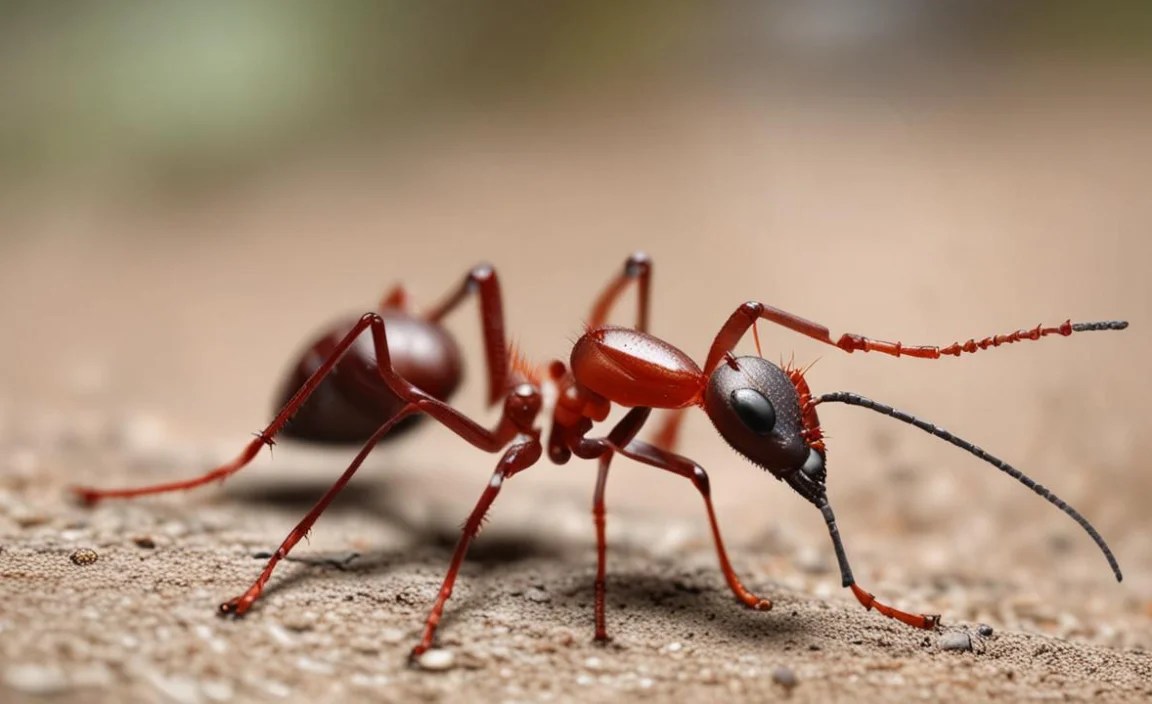
Size and color are easy ways to start species identification of ants. Ants come in many sizes. Some are tiny, like the pharaoh ant. Others are quite large, like the carpenter ant. Color also varies. Ants can be black, brown, red, or even yellow. Look at the overall size and color of the ant. This can help narrow down the possibilities. Remember, size and color are just the first steps. You still need to look at other features. But they are a good place to begin. What colors of ants have you seen?
- Ants come in many sizes.
- Ants can be black, brown, or red.
- Pharaoh ants are very small.
- Carpenter ants are quite large.
- Size and color are good starting points.
Why do ants come in different colors? Color can help ants blend in with their environment. Black ants might be harder to see on dark soil. Red ants might blend in with reddish rocks. Color can also be a warning sign. Some brightly colored ants are poisonous. This warns predators to stay away. The color of an ant can tell us a lot about its life and habits. It’s like a secret code! Can you think of other reasons why ants might have different colors?
How Do You Measure Ant Size?
Measuring ant size can be tricky. Ants are so small! A ruler with millimeters is helpful. You can also use a microscope with a measuring scale. Measure the ant from head to abdomen. Don’t include the antennae. It’s best to measure several ants. This gives you an average size. Record your measurements in your notebook. This helps you compare different species. Are you ready to measure some ants?
Are There Two-Colored Ants?
Yes, some ants are two-colored! These ants have different colors on different parts of their body. For example, some ants have a red head and a black abdomen. Others have a black thorax and a brown head. Two-colored ants can be harder to identify. You need to pay close attention to the color patterns. Look at where the colors change. This can help you figure out the species. Have you ever seen a two-colored ant?
Does Color Change With Age?
Sometimes, the color of an ant can change as it gets older. Young ants might be lighter in color. As they grow, they become darker. This is because their exoskeleton hardens. The exoskeleton is the ant’s outer shell. Color change can make species identification of ants more difficult. It’s important to consider the age of the ant. Look at other features besides color. This will help you identify the species correctly. Can you tell if an ant is young or old?
Fun Fact or Stat: The largest ant species is the Dinoponera, which can grow up to 1.6 inches long!
Ant Behavior and Nesting Habits
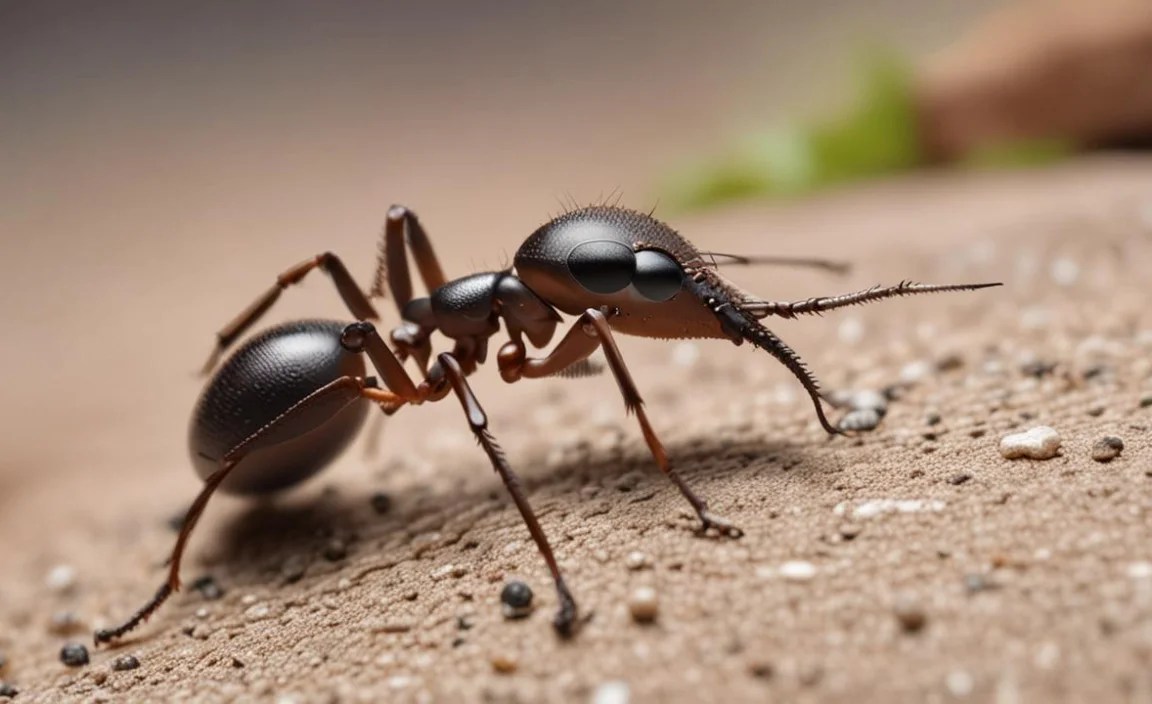
Watching ant behavior is cool for species identification of ants. How do they move? How do they find food? Do they march in straight lines? These clues help you learn about different ant species. Some ants are very aggressive. They will attack anything that comes near their nest. Others are more peaceful. They focus on gathering food. Nesting habits also vary. Some ants build nests in the ground. Others build nests in wood or plants. Where an ant lives and how it acts can tell you a lot about its species.
- Some ants are aggressive.
- Some ants are peaceful.
- Nesting habits vary by species.
- Ants march in straight lines.
- Ants build nests in different places.
- Behavior gives clues about species.
Have you ever noticed how ants work together? Ants are social insects. They live in colonies. Each ant has a job to do. Some ants are workers. They gather food and build the nest. Other ants are soldiers. They defend the colony from enemies. The queen ant lays eggs. She is the mother of all the ants in the colony. This teamwork is what makes ant colonies so successful. By observing their social behavior, we can learn even more about these fascinating creatures.
How Do Ants Find Food?
Ants are amazing food finders. They use their sense of smell. They also leave scent trails. These trails help other ants find the food source. Some ants work together to carry large food items. They communicate using their antennae. They tap and rub antennae to share information. Ants are very efficient at finding and collecting food. Can you imagine finding food using only your sense of smell?
What Do Ants Eat?
Ants eat many things. Some ants eat sweets, like sugar and honey. Others eat proteins, like insects and meat. Some ants are farmers. They grow fungus in their nests. They feed the fungus to their young. The type of food an ant eats depends on its species. Observing what ants eat can help with species identification of ants. What kind of food have you seen ants eating?
Where Do Ants Build Nests?
Ants build nests in many places. Some ants build nests in the ground. They dig tunnels and chambers. Other ants build nests in wood. They chew through the wood to create galleries. Some ants build nests in plants. They use leaves and stems to create shelters. The location of the nest can help identify the ant species. Look around to see where ants are building their homes. Have you ever seen an ant nest?
Fun Fact or Stat: Some ant queens can live for over 20 years!
Distinguishing Common Ant Species

Learning to tell apart common ant species is helpful for species identification of ants. Some ants are common pests. These include the pavement ant, the odorous house ant, and the Argentine ant. Other ants are less common around homes. These include carpenter ants and field ants. Knowing which ants you see most often can help you focus your identification efforts. Look for key features that separate these species. This will make you a better ant identifier.
- Pavement ants are common pests.
- Odorous house ants smell when crushed.
- Argentine ants form large colonies.
- Carpenter ants nest in wood.
- Field ants build nests in soil.
- Learn key features of common ants.
Why is it important to know the difference between ant species? Because different ant species require different control methods. For example, if you have carpenter ants, you need to find and destroy their nest in the wood. If you have odorous house ants, you need to clean up food spills and seal cracks in your home. Using the right approach will help you get rid of the ants quickly and effectively. So, knowing your ants is the first step to controlling them!
What Do Pavement Ants Look Like?
Pavement ants are small and brown. They have grooves on their head and thorax. They build nests under sidewalks and driveways. You often see them crawling on pavement. They eat many things, including insects and seeds. Pavement ants are common in urban areas. They can be a nuisance in homes. Have you ever seen pavement ants on the sidewalk?
How Can You Identify Odorous House Ants?
Odorous house ants are small and dark brown. They are known for their smell. If you crush them, they smell like rotten coconut. They build nests in walls and under floors. They are attracted to sweets. Odorous house ants can be hard to control. Sealing cracks and cleaning up food are important. Do you know what rotten coconut smells like?
What Makes Carpenter Ants Different?
Carpenter ants are large and black. They nest in wood. They don’t eat the wood. They just create tunnels and galleries. Carpenter ants can damage homes. Look for piles of sawdust near wooden structures. This is a sign of carpenter ants. They are most active at night. If you see large black ants in your home, they might be carpenter ants. Are there carpenter ants in your neighborhood?
| Ant Species | Size | Color | Nest Location | Key Feature |
|---|---|---|---|---|
| Pavement Ant | 2.5-3 mm | Brown | Under pavement | Grooves on head |
| Odorous House Ant | 2-3 mm | Dark brown | Walls, floors | Smells when crushed |
| Carpenter Ant | 6-25 mm | Black | Wood | Large size |
| Argentine Ant | 2-3 mm | Light to dark brown | Soil, mulch | Large colonies |
Fun Fact or Stat: Ants can lift 20 times their own weight!
Using Ant Identification Guides and Resources
Species identification of ants is easier with guides and resources. There are many books and websites about ants. These resources show pictures and descriptions of different ant species. They also provide tips for identifying ants. You can use these guides to compare your observations with known species. Some websites have interactive keys. These keys ask you questions about the ant. They then help you narrow down the possibilities. Using these resources can make ant identification more accurate and fun.
- Books show pictures of ants.
- Websites describe different species.
- Guides give tips for identification.
- Interactive keys ask questions.
- Resources make identification easier.
Have you ever used a field guide to identify a bird or a plant? Ant identification guides are similar. They provide information about the physical characteristics and behaviors of different ant species. Some guides are specific to a certain region. Others cover a wider range of species. Look for guides that have clear pictures and easy-to-understand descriptions. These will be the most helpful for beginners. With a good guide, you’ll be identifying ants like a pro in no time!
What Information Do Ant Guides Provide?
Ant guides provide lots of information. They describe the size, color, and shape of ants. They explain where ants build their nests. They also talk about ant behavior and diet. Some guides include maps showing where different ant species live. This information helps you compare the ants you find with known species. Ant guides are valuable tools for learning about ants. What kind of information do you find most helpful?
Where Can You Find Ant Identification Resources?
You can find ant identification resources in many places. Libraries have books about ants. Bookstores also sell ant guides. The internet is full of websites with ant information. Museums and nature centers often have exhibits about ants. You can also contact local experts. Entomologists (insect scientists) can help you identify ants. Explore different resources to learn more about ants. Where will you look for ant information?
Are There Apps for Ant Identification?
Yes, there are apps for ant identification! These apps use your phone’s camera. You take a picture of the ant. The app then compares the picture with its database. It suggests possible species matches. Some apps also provide information about the ant. These apps can be very helpful in the field. Just remember that they are not always perfect. Always double-check the identification with a guide. Have you ever used an app to identify something?
Fun Fact or Stat: Ants have been around for over 100 million years!
The Importance of Ant Identification
Why is species identification of ants so important? It helps us understand the role of ants in the environment. Ants are important for many reasons. They aerate the soil. This helps plants grow. They spread seeds. This helps new plants sprout. They also control other insects. Some ants are predators. They eat other bugs that can harm plants. Knowing what kinds of ants live in an area helps us protect the ecosystem. It also helps us manage pest ants effectively.
- Ants aerate the soil.
- Ants spread seeds.
- Ants control other insects.
- Identification helps protect ecosystems.
- Identification helps manage pest ants.
Have you ever thought about how ants help plants grow? Ants dig tunnels in the soil. These tunnels create air pockets. The air helps plant roots breathe. Ants also carry seeds underground. This helps the seeds germinate. Some ants even protect plants from harmful insects. They act like tiny gardeners, keeping the environment healthy and balanced. We should appreciate the important role that ants play in our world.
How Do Ants Help the Soil?
Ants are great for the soil. They dig tunnels that aerate the soil. This allows air and water to reach plant roots. They also mix the soil. This distributes nutrients evenly. Ants bring organic matter into the soil. This enriches the soil and helps plants grow. Ants are like tiny earthworms. They improve the soil naturally. Have you ever seen an ant hill in your yard?
Why Do Ants Spread Seeds?
Ants spread seeds to new locations. They carry the seeds back to their nests. They eat the fleshy part of the seed. Then, they discard the seed in their tunnels. This helps the seed germinate in a protected environment. Seed dispersal by ants is called myrmecochory. It’s a clever way for plants to spread their offspring. Can you think of other ways that plants spread their seeds?
How Do Ants Control Pests?
Some ants are natural pest controllers. They prey on other insects that damage plants. They eat aphids, caterpillars, and other harmful bugs. By eating these pests, ants help protect crops and gardens. Some farmers even use ants to control pests in their fields. Ants are a natural and effective way to keep pest populations in check. Are ants helping to control pests in your garden?
Fun Fact or Stat: Some ant species can form supercolonies that span hundreds of miles!
Future of Species Identification of Ants
The future of species identification of ants is exciting. New technologies are making it easier to identify ants. DNA barcoding can identify ants based on their genetic code. This is very accurate. Machine learning algorithms can analyze images of ants. This can help identify them automatically. Citizen science projects are engaging people in ant identification. These projects collect data on ant distribution. These advances will help us learn even more about ants. They will also help us protect our environment.
- DNA barcoding identifies ants accurately.
- Machine learning analyzes ant images.
- Citizen science engages people.
- Technology makes identification easier.
- New methods are being developed.
Have you ever heard of DNA barcoding? It’s like a special code that identifies each ant species. Scientists can take a tiny sample from an ant and analyze its DNA. This DNA barcode tells them exactly which species it is. This is especially helpful for identifying ants that look very similar. DNA barcoding is revolutionizing the way we study and understand ants. It’s like having a superpower for ant identification!
What Is DNA Barcoding?
DNA barcoding uses a short DNA sequence. This sequence is like a unique fingerprint. It identifies each species. Scientists compare the DNA barcode of an unknown ant. They compare it to a database of known species. This helps them identify the ant accurately. DNA barcoding is a powerful tool. It’s used for many different organisms. Have you ever had your DNA tested?
How Does Machine Learning Help?
Machine learning uses computers to learn from data. Scientists train computers to recognize ant species. They show the computer many images of ants. The computer learns to identify patterns. It can then identify new ants automatically. This saves time and effort. Machine learning is becoming more and more common. It’s used in many different fields. Can you think of other ways machine learning is used?
What Are Citizen Science Projects?
Citizen science projects involve the public in scientific research. People can collect data on ants in their area. They can submit photos and observations. Scientists use this data to study ant distribution. This helps them understand how ant populations are changing. Citizen science projects are a great way to get involved in science. Would you like to participate in a citizen science project?
Summary
Species identification of ants is important for understanding these tiny creatures. Ants play key roles in our ecosystems. Identifying them helps us learn about their behavior and habits. We can use size, color, and body parts to tell ants apart. There are many resources available to help with identification. Guides, websites, and apps can all be useful tools. New technologies like DNA barcoding and machine learning are also making identification easier. Knowing about ants can help us protect our environment and manage pest ants.
Conclusion
Learning about ants is fun and important. Ants are everywhere. They play a big role in our world. By understanding species identification of ants, we can appreciate these tiny creatures. We can also protect our environment. So, grab your magnifying glass and start exploring the world of ants!
Frequently Asked Questions
Question No 1: Why is species identification of ants important?
Answer: Species identification of ants is important for several reasons. First, it helps us understand the role that ants play in the ecosystem. Different ant species have different behaviors and diets. Some ants are beneficial, while others can be pests. Knowing which species you are dealing with can help you manage them effectively. Second, ant identification can help us protect our homes and gardens. Some ants, like carpenter ants, can damage wooden structures. Identifying them early can prevent costly repairs. Finally, studying ants can be a fun and educational activity for people of all ages.
Question No 2: What are the main body parts used for ant identification?
Answer: The main body parts used for ant identification are the head, thorax, and abdomen. The head has eyes, antennae, and mandibles (jaws). The shape and size of these features can vary among species. The thorax is the middle part of the ant. It is where the legs are attached. The presence of spines or other features on the thorax can be helpful for identification. The abdomen is the rear part of the ant. The petiole, which connects the thorax and abdomen, is also important. The number of segments in the petiole can help distinguish different species.
Question No 3: How can I tell the difference between common ant species?
Answer: You can tell the difference between common ant species by looking at their size, color, and behavior. Pavement ants are small and brown. They build nests under sidewalks. Odorous house ants are small and dark brown. They smell like rotten coconut when crushed. Carpenter ants are large and black. They nest in wood. Argentine ants are small and light brown. They form large colonies. By observing these features, you can learn to identify the most common ant species in your area. Using ant identification guides and resources can also be helpful.
Question No 4: What tools do I need for species identification of ants?
Answer: To identify ants, you’ll need a few basic tools. A magnifying glass is essential for seeing small details. A small container can help you catch ants without hurting them. A notebook and pencil are useful for taking notes and drawing sketches. A camera can help you take pictures for later comparison. Tweezers can help you pick up ants carefully. An ant identification guide or website is also helpful. With these tools, you’ll be ready to start your ant identification adventure. Remember to be gentle and respectful when observing ants.
Question No 5: Where can I find resources for learning about ants?
Answer: There are many places to find resources for learning about ants. Libraries have books about ants and insects. Bookstores sell ant identification guides. The internet is full of websites with ant information. Some good websites include university extension services and entomology departments. Museums and nature centers often have exhibits about ants. You can also contact local experts, such as entomologists or pest control professionals. These resources can provide valuable information about ant biology, behavior, and species identification of ants.
Question No 6: How can new technologies help with species identification of ants?
Answer: New technologies are making species identification of ants easier and more accurate. DNA barcoding can identify ants based on their genetic code. This is very helpful for identifying species that look very similar. Machine learning algorithms can analyze images of ants and identify them automatically. Citizen science projects use online platforms to collect data on ant distribution. These technologies are helping scientists and enthusiasts learn more about ants. They also help us protect our environment and manage pest ants more effectively. The future of ant identification is exciting!


