Brimstone Butterfly Species: Identify Yours!

The Brimstone butterfly (Gonepteryx rhamni) is easily recognised by its vibrant yellow wings and distinctive leaf-like shape. Native to Europe, North Africa, and Asia, it’s a welcome sight in gardens and woodlands. As one of the longest-lived butterflies, seeing a Brimstone often means spring has truly arrived!
Have you ever spotted a bright yellow butterfly fluttering through your garden on the first warm day of the year? It might just have been a Brimstone! These butterflies are among the first to emerge in spring, and their cheerful colour is a sure sign that winter is finally over. But identifying them can sometimes be tricky, and understanding their life cycle and habitat is essential for helping them thrive.
Don’t worry, you’re not alone if you find butterflies a bit puzzling! In this guide, we’ll explore everything you need to know about Brimstone butterflies, from their unique appearance to their vital role in the ecosystem. We will cover identification, habitat, life cycle and how to encourage these beautiful creatures in your garden. Get ready to become a Brimstone butterfly expert!
Identifying the Brimstone Butterfly
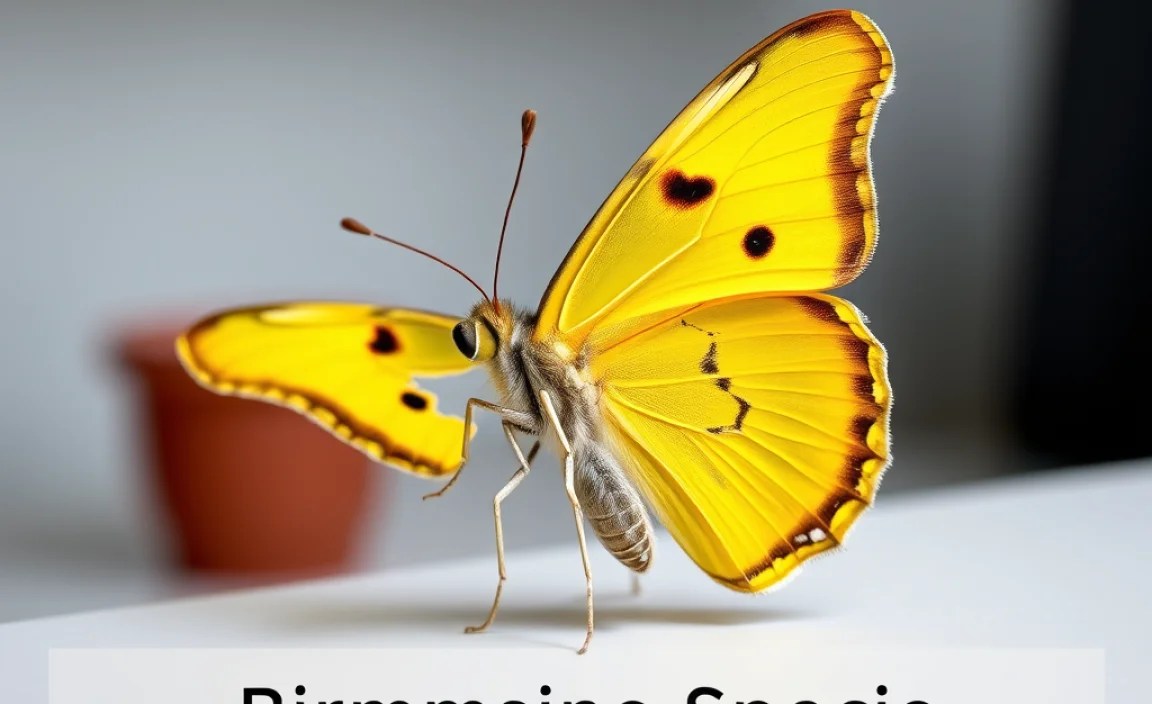
Recognising a Brimstone butterfly is usually quite straightforward once you know what to look for. Here’s a breakdown of their key characteristics:
Appearance
- Wings: The most striking feature is their bright yellow colour in males. Females are paler, often a greenish-white or creamy colour. Both sexes have a pointed shape, resembling a leaf when their wings are closed.
- Size: They have a wingspan of about 2.4 to 2.8 inches (60 to 70 mm).
- Markings: Look for a small orange spot in the centre of each wing. This is a consistent feature in both males and females.
Distinguishing Males from Females
The easiest way to tell the difference between male and female Brimstones is by their colour:
- Males: Bright, sulphur-yellow wings.
- Females: Paler, greenish-white or creamy wings.
Confusion with Other Species
Brimstones can sometimes be confused with other yellow butterflies, such as the Clouded Yellow. Here’s how to tell them apart:
| Feature | Brimstone (Gonepteryx rhamni) | Clouded Yellow (Colias croceus) |
|---|---|---|
| Wing Shape | Pointed, leaf-like | More rounded |
| Colour | Bright yellow (male), greenish-white (female) | Yellow with dark borders |
| Resting Position | Wings closed, resembling a leaf | Often rests with wings open |
| Orange spot | Present in the center of each wing | Absent |
Brimstone Butterfly Habitat and Distribution

Understanding where Brimstone butterflies live can help you spot them in the wild. They are commonly found in:
- Woodlands: Especially areas with plenty of buckthorn, which is their larval food plant.
- Gardens: If you have buckthorn or other nectar-rich flowers, you might attract them to your garden.
- Hedgerows: They use hedgerows as corridors to move between different habitats.
Geographical Range
Brimstone butterflies are widespread across:
- Europe: From Scandinavia to the Mediterranean.
- North Africa: Found in some regions of North Africa.
- Asia: Their range extends into parts of Asia.
Ideal Habitat Conditions
They prefer habitats with:
- Buckthorn: Essential for egg-laying and larval development.
- Nectar Sources: Such as thistles, buddlejas, and knapweeds for adult butterflies.
- Shelter: From strong winds and heavy rain.
The Brimstone Butterfly Life Cycle
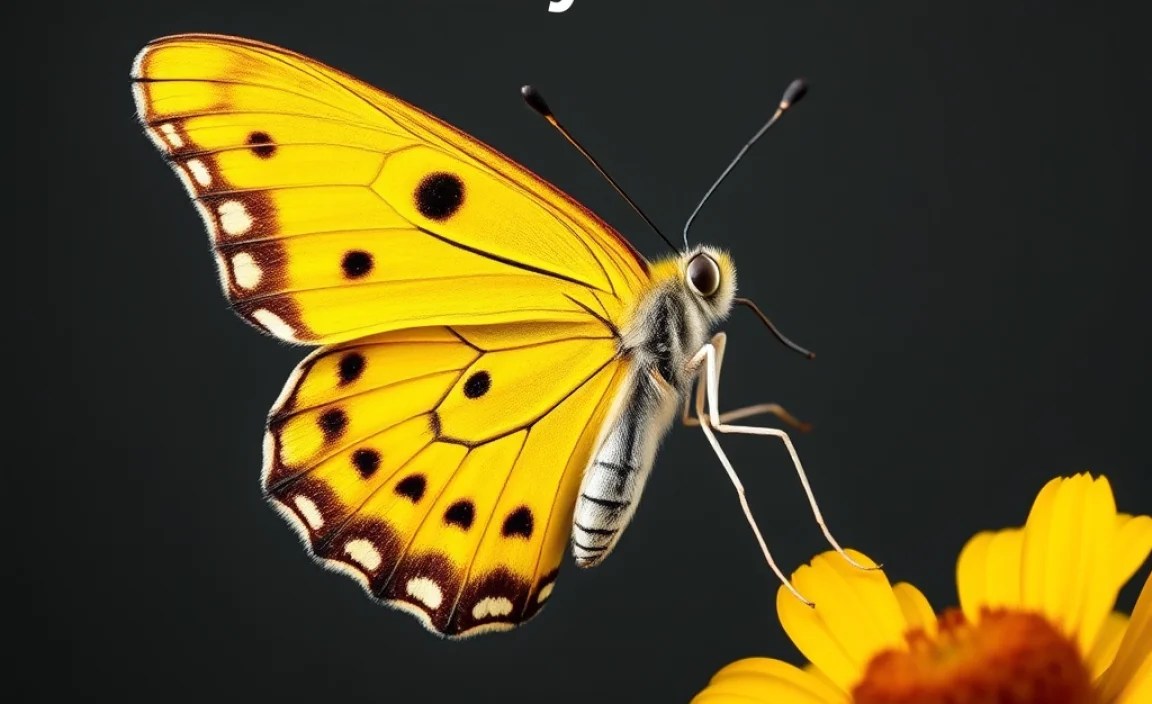
The life cycle of the Brimstone butterfly is a fascinating process that involves several distinct stages:
Egg Stage
- Appearance: The eggs are small, spindle-shaped, and greenish-white.
- Location: Females lay their eggs singly on the leaves or young shoots of buckthorn (Rhamnus cathartica) or alder buckthorn (Frangula alnus).
- Duration: The eggs typically hatch in about 1 to 2 weeks, depending on the weather.
Larval (Caterpillar) Stage
- Appearance: The caterpillars are green with a white stripe along the side, making them well-camouflaged on the buckthorn leaves.
- Feeding: They feed exclusively on the leaves of buckthorn.
- Growth: The caterpillars go through several instars (stages of growth), shedding their skin as they grow larger.
- Duration: The larval stage lasts for about 4 to 6 weeks.
Pupal (Chrysalis) Stage
- Appearance: The pupa is green and leaf-shaped, blending perfectly with the surrounding foliage.
- Location: It is usually attached to a buckthorn twig or leaf.
- Duration: The pupal stage lasts for about 2 to 3 weeks.
Adult Butterfly Stage
- Emergence: The adult butterfly emerges from the pupa, ready to fly and reproduce.
- Lifespan: Brimstone butterflies are known for their long lifespan, living for up to 10-12 months. This is one of the longest lifespans of any butterfly species in Europe.
- Overwintering: They overwinter as adults, finding sheltered spots in evergreen vegetation or undergrowth.
- Reproduction: After overwintering, they become active in the spring and begin to reproduce.
Detailed Life Cycle Table
| Stage | Appearance | Duration | Key Features |
|---|---|---|---|
| Egg | Small, spindle-shaped, greenish-white | 1-2 weeks | Laid singly on buckthorn leaves |
| Larva (Caterpillar) | Green with a white stripe | 4-6 weeks | Feeds exclusively on buckthorn leaves |
| Pupa (Chrysalis) | Green, leaf-shaped | 2-3 weeks | Attached to buckthorn twig or leaf |
| Adult Butterfly | Bright yellow (male), greenish-white (female) | 10-12 months | Overwinters as adult, long lifespan |
Brimstone Butterfly Behaviour and Ecology

Understanding the behaviour and ecological role of Brimstone butterflies can deepen your appreciation for these insects.
Feeding Habits
- Larvae: Caterpillars feed exclusively on buckthorn leaves.
- Adults: Adult butterflies feed on nectar from various flowers, including thistles, buddlejas, and knapweeds. They have a long proboscis (a straw-like tongue) that allows them to reach nectar in deep flowers.
Flight Patterns
- Flight Period: They are among the first butterflies to emerge in spring and can be seen flying until late autumn.
- Flight Style: Their flight is strong and rapid, often covering long distances in search of food or mates.
Overwintering Strategies
- Shelter: Brimstone butterflies overwinter as adults, seeking shelter in evergreen vegetation such as ivy, holly, or coniferous trees.
- Cold Tolerance: They have a remarkable ability to tolerate cold temperatures, thanks to a natural antifreeze in their blood.
Ecological Role
- Pollination: As they feed on nectar, they play a role in pollinating various plants.
- Food Source: They serve as a food source for birds and other predators.
- Indicator Species: Their presence is an indicator of a healthy ecosystem, particularly the availability of buckthorn.
Attracting Brimstone Butterflies to Your Garden
Creating a butterfly-friendly garden is a rewarding way to support Brimstone butterflies and other pollinators. Here’s how to do it:
Planting the Right Flowers
- Nectar Sources: Plant nectar-rich flowers that bloom throughout the butterfly season, such as:
- Buddlejas (Butterfly Bushes)
- Thistles
- Knapweeds
- Lavender
- Sedum
- Native Plants: Choose native plants that are well-suited to your local climate and provide the best nectar sources.
Providing Host Plants
- Buckthorn: The most important step is to plant buckthorn (Rhamnus cathartica) or alder buckthorn (Frangula alnus) to provide food for the caterpillars.
- Location: Plant buckthorn in a sunny spot with well-drained soil.
Creating a Butterfly-Friendly Environment
- Shelter: Provide shelter from wind and rain by planting shrubs and trees.
- Sunlight: Butterflies need sunlight to warm their bodies, so make sure to have sunny areas in your garden.
- Water Source: Provide a shallow dish of water with pebbles for butterflies to drink from.
- Avoid Pesticides: Avoid using pesticides, as they can harm or kill butterflies and other beneficial insects.
Specific Plant Recommendations
Here’s a list of plants that are particularly attractive to Brimstone butterflies:
- Buddleja davidii (Butterfly Bush): A classic butterfly magnet with long, fragrant flower spikes.
- Cirsium vulgare (Spear Thistle): A native thistle that provides abundant nectar for butterflies and other pollinators.
- Knautia arvensis (Field Scabious): A beautiful wildflower with nectar-rich flowerheads.
- Lavandula (Lavender): A fragrant herb that attracts butterflies and bees.
- Sedum (Stonecrop): A late-blooming succulent that provides a valuable nectar source in the autumn.
Conservation Status and Threats
Understanding the conservation status of Brimstone butterflies helps us appreciate the importance of protecting their habitats.
Current Status
- Widespread: Brimstone butterflies are currently widespread and relatively common throughout their range.
- Stable Populations: In many areas, their populations are stable.
Potential Threats
- Habitat Loss: The loss of woodland and hedgerow habitats can reduce the availability of buckthorn and nectar sources.
- Climate Change: Changes in temperature and rainfall patterns can affect their life cycle and distribution.
- Pesticide Use: The use of pesticides can directly harm butterflies and their larvae.
Conservation Efforts
- Habitat Protection: Protecting and restoring woodland and hedgerow habitats is crucial for supporting Brimstone butterfly populations.
- Buckthorn Planting: Encouraging the planting of buckthorn in gardens and nature reserves can provide essential food for caterpillars.
- Sustainable Land Management: Promoting sustainable land management practices that minimize pesticide use and protect butterfly habitats.
Brimstone Butterflies in Culture and Symbolism
Butterflies, in general, hold significant cultural and symbolic meanings across different societies. The Brimstone butterfly, with its distinctive appearance and behaviour, is no exception.
Symbolism
- Transformation: Like all butterflies, the Brimstone symbolizes transformation, change, and renewal. Its metamorphosis from a caterpillar to a beautiful butterfly represents personal growth and spiritual rebirth.
- Hope and Optimism: The bright yellow colour of the male Brimstone butterfly is often associated with hope, optimism, and joy. Seeing one can be a reminder to embrace positivity and look forward to brighter days.
- Resilience: The Brimstone butterfly’s ability to overwinter as an adult and emerge in the spring symbolizes resilience and the ability to overcome challenges.
Cultural Significance
- Folklore: In some European folklore, the Brimstone butterfly is associated with good luck and prosperity. Its early appearance in spring is seen as a sign of a bountiful harvest.
- Art and Literature: Butterflies, including the Brimstone, have been featured in art and literature for centuries, often representing beauty, freedom, and the ephemeral nature of life.
Fun Facts About Brimstone Butterflies
Here are some interesting and lesser-known facts about Brimstone butterflies that you might enjoy:
- Longest-Lived: They are one of the longest-lived butterflies in Europe, with adults living for up to 10-12 months.
- Natural Antifreeze: They have a natural antifreeze in their blood that allows them to survive cold winter temperatures.
- Leaf-Like Shape: Their pointed wings and green or yellow colour help them blend in with foliage, providing excellent camouflage.
- Early Emergence: They are among the first butterflies to emerge in spring, often seen flying on warm days in March or April.
- Buckthorn Specialists: Their caterpillars feed exclusively on buckthorn leaves, making them highly dependent on this plant.
Frequently Asked Questions (FAQs)
What does a Brimstone butterfly look like?
Male Brimstone butterflies are bright yellow, while females are a paler greenish-white. Both have pointed wings shaped like leaves and a small orange spot in the middle of each wing.
Where do Brimstone butterflies live?
They live in Europe, North Africa, and Asia, in woodlands, gardens, and hedgerows, wherever buckthorn (their caterpillar food) is found.
What do Brimstone caterpillars eat?
Brimstone caterpillars exclusively eat the leaves of buckthorn (Rhamnus cathartica) or alder buckthorn (Frangula alnus).
How long do Brimstone butterflies live?
Adult Brimstone butterflies are known for their long lifespan, living for up to 10-12 months, which is one of the longest for European butterflies.
How can I attract Brimstone butterflies to my garden?
Plant buckthorn for the caterpillars and nectar-rich flowers like buddlejas, thistles, and lavender for the adults. Also, avoid pesticides.
When is the best time to see Brimstone butterflies?
You can see them from early spring (March/April) to late autumn, as they are one of the first butterflies to emerge and have a long adult lifespan.
Are Brimstone butterflies endangered?
No, they are currently widespread and relatively common, but habitat loss and climate change could pose threats in the future, so conservation efforts are still important.
Conclusion
The Brimstone butterfly is a fascinating and beautiful creature that adds a touch of sunshine to our gardens and woodlands. With its distinctive appearance, long lifespan, and essential role in the ecosystem, it’s a species worth understanding and protecting. By learning how to identify them, understanding their life cycle, and creating butterfly-friendly habitats, we can all contribute to their conservation.
So, next time you see a bright yellow butterfly fluttering by, take a closer look – it might just be a Brimstone, a symbol of hope, resilience, and the beauty of the natural world. Let’s continue to cherish and protect these delicate creatures for generations to come, ensuring that their cheerful presence remains a familiar sight in our landscapes.