
Blue Morpho Educational Signage: Free Guide!

Have you ever seen a butterfly so bright it looks like the sky? That might have been a Blue Morpho! These amazing insects live in rainforests. They are known for their big, blue wings. Imagine learning all about them. What if there was a way to teach everyone about these cool creatures? That’s where Blue Morpho educational signage comes in.
Key Takeaways
- Blue Morpho educational signage helps people learn about these beautiful butterflies.
- These signs teach about the butterfly’s life, habitat, and importance.
- The signs often include pictures and fun facts for everyone.
- Learning about Blue Morphos helps us care for rainforests.
- These butterflies show how amazing nature can be.
Discovering Blue Morpho Butterfly Facts
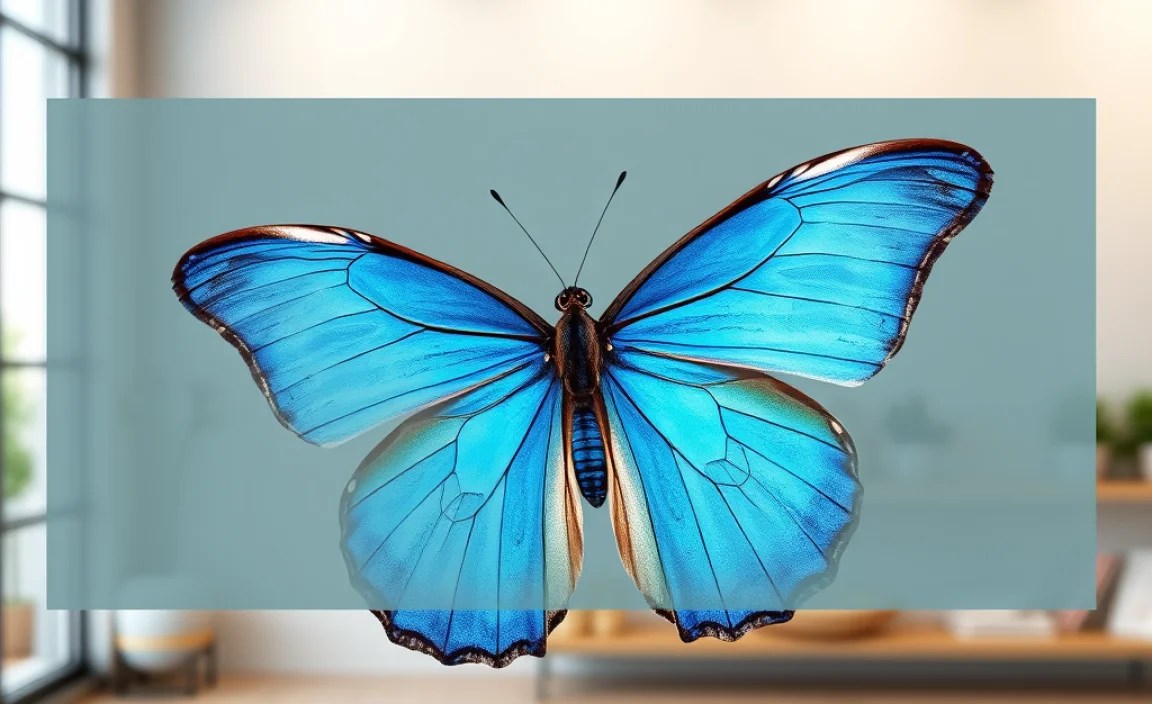
Do you know where Blue Morpho butterflies live? They live in the rainforests of Central and South America. These butterflies are famous for their shimmering blue wings. The bright color comes from tiny scales on their wings. These scales reflect light in a special way. This makes the butterfly look like it’s glowing! Male Blue Morphos are usually brighter than females. This helps them attract a mate. These butterflies are not just pretty. They also play an important role in their ecosystem. They help pollinate plants and are a food source for other animals. Blue Morpho educational signage is great for teaching kids about these butterflies. The signs can be found in zoos, museums, and nature centers.
- Blue Morphos live in rainforests.
- Their wings shimmer with blue light.
- Males are brighter than females.
- They help pollinate plants.
- Signs teach us about them.
Imagine walking through a rainforest. You see a flash of blue. It’s a Blue Morpho butterfly! These butterflies are truly amazing. They are a symbol of the beauty and wonder of nature. Learning about them can inspire us to protect their habitat. We can all help to make sure these butterflies continue to thrive. By learning about the Blue Morpho, we can also learn about the importance of rainforests. Rainforests are home to many different plants and animals. They also help to clean the air and water. Protecting rainforests is important for everyone. Blue Morpho educational signage plays a big role in this.
Fun Fact or Stat: A Blue Morpho’s wingspan can reach up to 8 inches!
Where Do Blue Morphos Live?
Have you ever wondered where these blue butterflies make their home? Blue Morphos live in the warm, wet rainforests of Central and South America. They like to flutter around the trees and plants. The rainforest provides them with food and shelter. They are often seen near rivers and streams. The humidity in the rainforest helps keep them hydrated. These butterflies are well-suited to their rainforest environment. They have adapted to survive in this unique habitat. What would happen if the rainforests disappeared? The Blue Morphos would lose their home. That’s why it’s important to protect these special places. We need to help save the rainforests for the Blue Morphos and all the other amazing creatures that live there.
What Do Blue Morphos Eat?
What do you think Blue Morpho butterflies eat? They have a sweet tooth! They like to drink the juice from rotting fruit. They also sip nectar from flowers. Sometimes, they even eat tree sap. They use a long, straw-like tongue called a proboscis to drink. The proboscis uncoils like a garden hose. This allows them to reach the nectar deep inside flowers. They don’t eat solid food like caterpillars. Instead, they stick to liquids. This diet gives them the energy they need to fly and flutter. It’s like drinking juice all day long! This also allows them to help pollinate flowers. As they move from flower to flower, they spread pollen.
Why Are Rainforests Important?
Why are rainforests so important to the Blue Morpho? Rainforests are the Blue Morpho’s home. They provide everything the butterfly needs to survive. The rainforest offers food, shelter, and a safe place to raise their young. Without rainforests, the Blue Morpho would not be able to exist. But rainforests are important for more than just butterflies. They also play a vital role in the health of our planet. Rainforests help to clean the air and water. They also help to regulate the climate. Protecting rainforests is essential for all living things, including humans. We must work together to conserve these precious ecosystems. If we do not, we risk losing not only the Blue Morpho but also countless other species.
Understanding the Blue Morpho Life Cycle
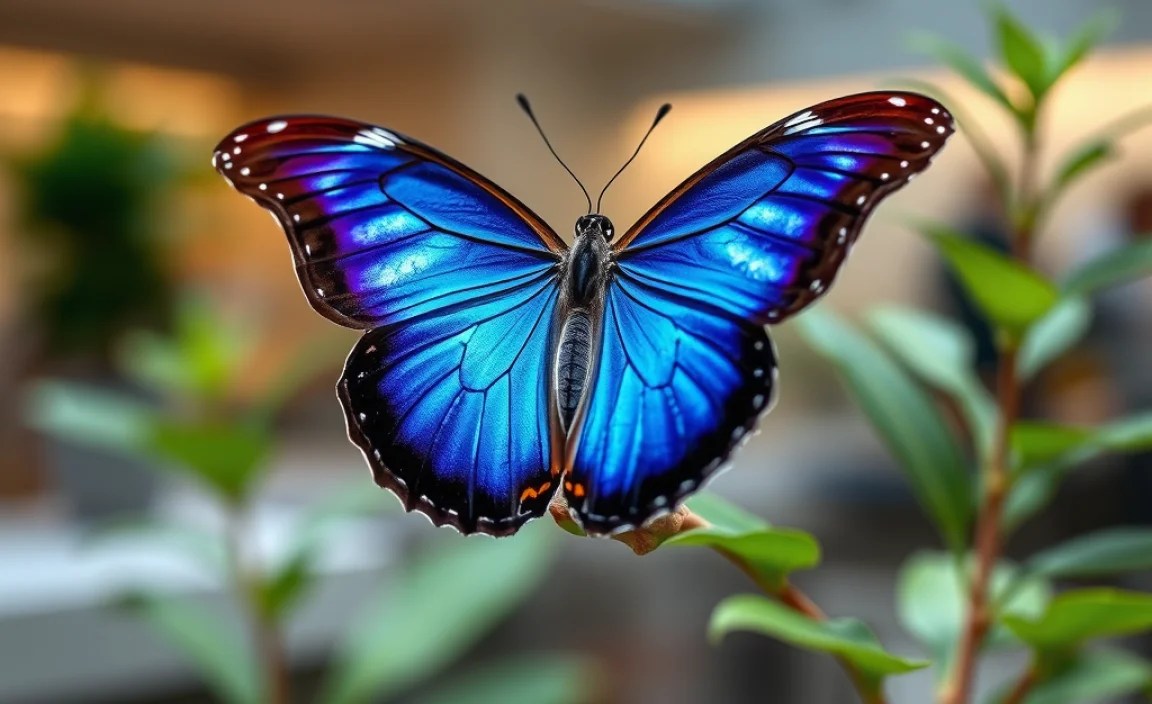
Did you know that the Blue Morpho goes through many changes? It starts as a tiny egg. The egg hatches into a caterpillar. The caterpillar eats and grows. It sheds its skin several times. Then, the caterpillar turns into a pupa. The pupa is also called a chrysalis. Inside the pupa, the butterfly is changing. After a few weeks, the butterfly emerges. It’s a beautiful Blue Morpho! The whole process is called metamorphosis. It’s like magic! The butterfly then flies off to find a mate. The female lays eggs, and the cycle starts again. Blue Morpho educational signage often shows the life cycle with pictures. This helps people understand how the butterfly grows.
- The Blue Morpho starts as an egg.
- It becomes a caterpillar that eats.
- The caterpillar turns into a pupa.
- A butterfly emerges from the pupa.
- The cycle starts all over again.
Have you ever seen a caterpillar change into a butterfly? It’s one of nature’s most amazing transformations. The Blue Morpho caterpillar is not as beautiful as the butterfly. It’s usually brown and has bristles. The caterpillar eats leaves and grows quickly. It needs to store up energy for the next stage. The pupa is a protective shell. Inside, the caterpillar is transforming into a butterfly. This process takes time and energy. When the butterfly emerges, it’s ready to fly. It unfolds its wings and takes to the sky. The Blue Morpho is a symbol of hope and transformation. It reminds us that change is possible.
Fun Fact or Stat: The Blue Morpho caterpillar can be cannibalistic, sometimes eating other caterpillars!
What Does the Caterpillar Look Like?
What do you think a Blue Morpho caterpillar looks like? It’s not blue! The caterpillar is usually brown or reddish-brown. It has long bristles that can be irritating to the touch. The caterpillar uses these bristles for protection. They help to deter predators. The caterpillar also has camouflage. It blends in with the leaves and branches. This makes it harder for birds and other animals to see it. The caterpillar eats a lot of leaves. It needs to grow big and strong. The Blue Morpho caterpillar is an important part of the butterfly’s life cycle. It’s the stage where the butterfly grows and develops.
How Long Does the Life Cycle Take?
How long does it take for a Blue Morpho to complete its life cycle? The entire process takes about 115 days. The egg stage lasts about 8 days. The caterpillar stage lasts about 75 days. The pupa stage lasts about 32 days. Finally, the adult butterfly lives for about 40 days. The length of each stage can vary depending on the weather and food availability. Warmer temperatures and plenty of food can speed up the process. Cooler temperatures and less food can slow it down. The Blue Morpho life cycle is a delicate balance. It depends on the right conditions to be successful. That’s why it’s so important to protect their habitat.
Why Is Metamorphosis Important?
Have you ever wondered why metamorphosis is so important? Metamorphosis is how the Blue Morpho changes from a caterpillar to a butterfly. This change allows the butterfly to adapt to its environment. The caterpillar is good at eating leaves. The butterfly is good at flying and finding nectar. Metamorphosis allows the Blue Morpho to take advantage of different food sources. It also allows the butterfly to escape predators. The butterfly can fly away quickly. Metamorphosis is a survival strategy. It helps the Blue Morpho to thrive in the rainforest. Without metamorphosis, the Blue Morpho would not be able to survive.
The Importance of Blue Morpho Habitat

The Blue Morpho needs a special place to live. This place is called a habitat. The habitat must have everything the butterfly needs. It needs food, water, and shelter. The Blue Morpho lives in the rainforest. Rainforests are warm and wet. They have lots of trees and plants. The trees provide shelter from the sun and rain. The plants provide food for the caterpillars and nectar for the butterflies. The rainforest also has water. The Blue Morpho needs water to drink. Without a healthy habitat, the Blue Morpho cannot survive. Blue Morpho educational signage often shows pictures of the rainforest. This helps people understand the importance of the habitat.
- Blue Morphos need a healthy habitat.
- They live in warm, wet rainforests.
- Trees provide shelter from the sun.
- Plants provide food and nectar.
- Water is essential for survival.
Imagine a world without rainforests. What would happen to the Blue Morpho? It would disappear! The rainforest is its home. Without the rainforest, the Blue Morpho would have no place to live. It would have no food to eat. It would have no shelter from the weather. The Blue Morpho is just one of many animals that depend on the rainforest. Protecting rainforests is important for all living things. We can all help to protect rainforests. We can reduce our use of paper and wood. We can support organizations that are working to conserve rainforests. Together, we can make a difference.
Fun Fact or Stat: Rainforests cover less than 6% of the Earth’s surface but contain over half of the world’s plant and animal species!
What Threats Do Rainforests Face?
Why are rainforests in danger? Rainforests are being destroyed at an alarming rate. People are cutting down trees for wood and to clear land for farming and cattle ranching. This is called deforestation. Deforestation destroys the habitat of the Blue Morpho and other animals. It also contributes to climate change. Rainforests help to absorb carbon dioxide from the atmosphere. When rainforests are destroyed, this carbon dioxide is released back into the atmosphere. This contributes to global warming. We need to protect rainforests from deforestation. We can do this by supporting sustainable forestry practices. We can also reduce our consumption of products that contribute to deforestation.
How Can We Protect Rainforests?
What can we do to help protect rainforests? There are many things that we can do! We can reduce our use of paper and wood. We can recycle paper products. We can buy products that are made from sustainable materials. We can support organizations that are working to conserve rainforests. We can educate our friends and family about the importance of rainforests. We can also make small changes in our daily lives. We can turn off the lights when we leave a room. We can conserve water. We can reduce our carbon footprint. Every little bit helps!
Why Is It Important to Protect the Blue Morpho?
Why should we care about the Blue Morpho? The Blue Morpho is a symbol of the beauty and wonder of nature. It is also an important part of the rainforest ecosystem. The Blue Morpho helps to pollinate plants. It is also a food source for other animals. If the Blue Morpho disappears, it could have a ripple effect throughout the ecosystem. Protecting the Blue Morpho is important for maintaining the health and balance of the rainforest. It is also important for future generations. We want our children and grandchildren to be able to see these beautiful butterflies in the wild. We must work together to protect the Blue Morpho and its habitat.
Creating Effective Blue Morpho Signage
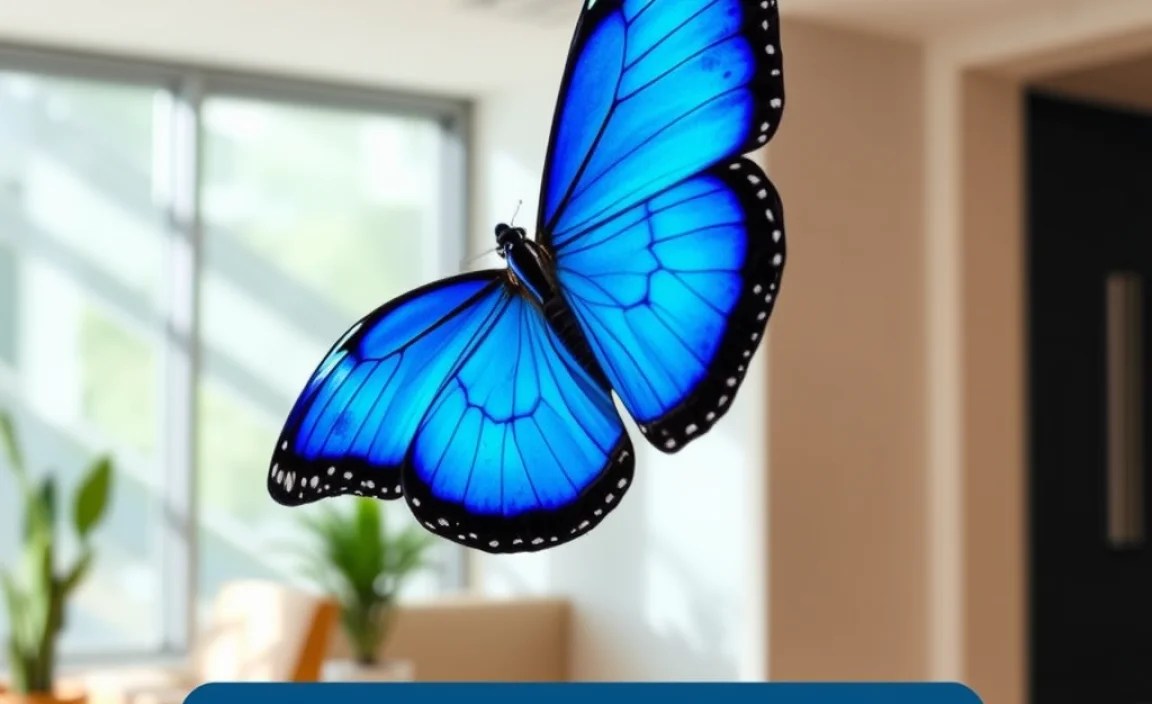
Blue Morpho educational signage should be interesting. It should also be easy to understand. The signs should use pictures and words. The pictures should be colorful and engaging. The words should be simple and clear. The signs should also be informative. They should teach people about the Blue Morpho. They should also teach people about the importance of rainforests. The signs should be placed in locations where people can easily see them. This could be in zoos, museums, or nature centers. The signs should be well-maintained. They should be clean and free of damage.
- Signs should be interesting and clear.
- Use colorful pictures and simple words.
- Signs should be informative and educational.
- Place signs where people can see them.
- Keep the signs clean and in good shape.
Have you ever seen a sign that was hard to read? It’s frustrating! Good signage is easy to understand. It uses clear language and simple designs. It also uses pictures to help people understand the information. Blue Morpho educational signage should be designed with kids in mind. The signs should be engaging and fun. They should also be age-appropriate. The information should be presented in a way that kids can easily grasp. This will help them learn about the Blue Morpho and the importance of rainforests. Good signage can make a big difference in how people learn and understand the world around them.
Fun Fact or Stat: Studies show that people remember information better when it is presented with visuals!
What Makes a Good Sign?
What makes a sign effective? A good sign is easy to read. It uses clear and concise language. It also uses a font that is easy to read. The sign should be visually appealing. It should use colors and images that are eye-catching. The sign should be informative. It should provide accurate and relevant information. The sign should be placed in a location where people can easily see it. It should be well-maintained and free of damage. A good sign is a valuable tool for communication and education. It can help people learn about the world around them.
How Do You Choose the Right Images?
How do you pick the best pictures for a sign? The pictures should be clear and high-quality. They should be relevant to the information being presented. They should be visually appealing. They should also be age-appropriate. For example, a sign about the Blue Morpho should include pictures of the butterfly. It should also include pictures of its habitat. The pictures should be colorful and engaging. They should capture the beauty and wonder of the Blue Morpho. The pictures should also be accurate. They should show the Blue Morpho in its natural environment.
Why Is Sign Placement Important?
Where should you put a sign? Sign placement is very important. A sign is useless if no one sees it. The sign should be placed in a location where people can easily see it. It should be placed at eye level. It should be placed in a high-traffic area. This will ensure that the sign is seen by as many people as possible. The sign should also be placed in a location that is relevant to the information being presented. For example, a sign about the Blue Morpho should be placed near the butterfly exhibit in a zoo or museum. This will help people connect the information on the sign with the real-life butterfly.
Benefits of Educational Signage

Why is Blue Morpho educational signage helpful? It teaches people about nature. It helps them learn about butterflies. It also helps them understand the importance of rainforests. The signs can inspire people to care about the environment. They can also encourage people to take action. By learning about the Blue Morpho, people can learn about the interconnectedness of all living things. They can also learn about the importance of conservation. Educational signage is a valuable tool for promoting environmental awareness. It can help to create a more sustainable future.
- Signs teach about nature.
- They help us learn about butterflies.
- We learn about rainforests.
- Signs inspire us to care.
- Education promotes conservation.
Imagine visiting a zoo or museum. You see a sign about the Blue Morpho. You learn about its life cycle. You learn about its habitat. You learn about the threats it faces. You are inspired to take action. You decide to reduce your use of paper and wood. You decide to support organizations that are working to conserve rainforests. Educational signage can have a powerful impact on people’s attitudes and behaviors. It can help to create a more informed and engaged citizenry. By providing people with accurate and accessible information, we can empower them to make a difference in the world.
Fun Fact or Stat: Studies show that people who visit zoos and museums are more likely to be environmentally conscious!
How Does Signage Increase Awareness?
How do signs make people more aware? Signage increases awareness by providing information. It helps people learn about a topic. It can also change people’s attitudes and behaviors. For example, a sign about the Blue Morpho can teach people about the butterfly. It can also teach them about the importance of rainforests. This can inspire people to care about the environment. It can also encourage them to take action. Signage is a powerful tool for communication and education. It can help to create a more informed and engaged public. It can also help to promote positive social change.
What Actions Can People Take After Learning?
What can people do after they learn something new? After learning about the Blue Morpho, people can take many actions. They can reduce their use of paper and wood. They can recycle paper products. They can buy products that are made from sustainable materials. They can support organizations that are working to conserve rainforests. They can educate their friends and family about the importance of rainforests. They can also make small changes in their daily lives. They can turn off the lights when they leave a room. They can conserve water. They can reduce their carbon footprint. Every little bit helps!
Why Is Education Important for Conservation?
Why is learning so important for saving things? Education is essential for conservation. It helps people understand the importance of protecting the environment. It also empowers them to take action. When people are informed, they are more likely to care. They are also more likely to make choices that are good for the environment. Education is a powerful tool for creating a more sustainable future. It can help to change people’s attitudes and behaviors. It can also inspire them to become environmental stewards. By investing in education, we can invest in the future of our planet.
Comparing Different Types of Signage
There are many kinds of Blue Morpho educational signage. Some signs are simple. They just have a picture and a few words. Other signs are more complex. They have lots of information and details. Some signs are interactive. They let people touch and explore. Other signs are static. They just stand there. The best type of sign depends on the location and the audience. A sign in a zoo might be different than a sign in a museum. A sign for kids might be different than a sign for adults. It’s important to choose the right type of sign for the job.
| Type of Sign | Pros | Cons | Best Use |
|---|---|---|---|
| Simple Sign | Easy to understand, quick to read | Limited information, can be boring | High-traffic areas, quick overview |
| Complex Sign | Lots of detail, very informative | Can be overwhelming, takes time to read | Museums, detailed exhibits |
| Interactive Sign | Engaging, fun, hands-on learning | Can be expensive, requires maintenance | Children’s museums, zoos |
| Static Sign | Inexpensive, easy to install | Not very engaging, can be overlooked | Parks, nature trails |
Have you ever seen a sign that didn’t make sense? It’s confusing! Good signage is well-designed. It uses clear language and visuals. It also considers the audience. What will they find interesting? What will they understand? Blue Morpho educational signage should be tailored to the location and the audience. A sign in a classroom might be different than a sign in a nature center. The goal is to make the information accessible and engaging. This will help people learn about the Blue Morpho and the importance of rainforests.
Fun Fact or Stat: Interactive signage can increase engagement by up to 50%!
What Are the Pros and Cons of Each Type?
What are the good and bad things about each kind of sign? Simple signs are easy to understand. They are quick to read. But they don’t have much information. Complex signs have lots of detail. They are very informative. But they can be overwhelming. Interactive signs are engaging. They are fun and hands-on. But they can be expensive. They also require maintenance. Static signs are inexpensive. They are easy to install. But they are not very engaging. They can be overlooked. Each type of sign has its own advantages and disadvantages.
How Do You Choose the Best Type for Your Needs?
How do you pick the right sign for what you need? Think about your audience. Who are you trying to reach? Think about your budget. How much money do you have to spend? Think about your goals. What do you want people to learn? Think about your location. Where will the sign be placed? Consider all of these factors when choosing the best type of sign. If you are trying to reach a broad audience, a simple sign might be the best choice. If you are trying to provide detailed information, a complex sign might be better. If you want to engage people, an interactive sign might be the way to go.
Why Is It Important to Consider Your Audience?
Why is it important to think about who will see the sign? Your audience is the people who will be reading the sign. You need to make sure that the sign is appropriate for them. A sign for kids should be different than a sign for adults. A sign for experts should be different than a sign for beginners. Consider the age, education level, and interests of your audience. This will help you create a sign that is effective and engaging. A sign that is too complicated will be confusing. A sign that is too simple will be boring. Find the right balance to reach your audience.
Maintaining and Updating Signage
Blue Morpho educational signage needs to be kept in good shape. This means cleaning it regularly. It also means fixing any damage. The signs should also be updated. New information should be added. Old information should be removed. This will ensure that the signs are accurate and up-to-date. Maintenance and updates are important for keeping the signs effective. They help to keep people engaged and learning.
- Keep signs clean and in good shape.
- Fix any damage to the signs.
- Update signs with new information.
- Remove old or incorrect information.
- Maintenance keeps signs effective.
Imagine seeing a sign that is faded and torn. It doesn’t look very good! It also doesn’t inspire confidence in the information. Well-maintained signage shows that you care. It also shows that you value the information being presented. Blue Morpho educational signage should be a source of pride. It should be a reflection of your commitment to education and conservation. Regular maintenance and updates will help to keep the signs looking their best. They will also help to ensure that the signs are providing accurate and up-to-date information.
Fun Fact or Stat: Regularly maintained signage is more likely to be read and remembered!
How Often Should Signs Be Cleaned?
How often do signs need to be cleaned? Signs should be cleaned regularly. The frequency of cleaning depends on the location. Signs in high-traffic areas may need to be cleaned more often. Signs that are exposed to the elements may also need more frequent cleaning. A good rule of thumb is to clean signs at least once a month. This will help to keep them looking their best. It will also help to remove any dirt or grime that may be obscuring the information.
How Do You Update the Information on a Sign?
How do you change the words on a sign? Updating the information on a sign can be a simple process. It depends on the type of sign. Some signs have removable panels. These panels can be easily replaced with updated information. Other signs have digital displays. These displays can be updated with a computer. For more permanent signs, you may need to hire a professional to update the information. No matter how you update the information, be sure to proofread it carefully. This will ensure that the sign is accurate and up-to-date.
Why Is It Important to Keep Information Current?
Why should the information be up-to-date? Keeping information current is very important. Information changes over time. New discoveries are made. New research is conducted. Old information can become outdated or inaccurate. If a sign contains outdated information, it can be misleading. It can also damage your credibility. By keeping the information current, you are showing that you are committed to accuracy. You are also showing that you value your audience’s trust. This will help to ensure that your signs are effective and informative.
Summary
Blue Morpho educational signage is a fantastic way to teach people. The signs help us learn about these beautiful butterflies. They teach us about their life cycle and habitat. They also tell us why rainforests are important. Good signage uses clear pictures and simple words. It is placed where people can easily see it. Keeping the signs clean and up-to-date is also important. This ensures that everyone gets the right information. Educational signs help us care for the environment.
Conclusion
Learning about the Blue Morpho butterfly is fun. It also helps us understand nature. Blue Morpho educational signage is a great way to share this knowledge. These signs teach about rainforests and conservation. By learning, we can all help protect these amazing creatures and their homes. Let’s make sure everyone has the chance to learn about the Blue Morpho.
Frequently Asked Questions
Question No 1: What is a Blue Morpho butterfly?
Answer: A Blue Morpho is a beautiful butterfly. It is known for its bright blue wings. These butterflies live in rainforests. They are found in Central and South America. The bright blue color comes from tiny scales on their wings. These scales reflect light. This makes the butterfly look like it’s glowing. Blue Morphos are a symbol of the beauty of nature. They are also an important part of their ecosystem. They help to pollinate plants and are a food source for other animals. Blue Morpho educational signage helps to teach people all about them.
Question No 2: Where do Blue Morphos live?
Answer: Blue Morphos live in rainforests. Rainforests are warm and wet places. They have lots of trees and plants. Blue Morphos like to flutter around the trees. They are often seen near rivers and streams. The rainforest provides them with food and shelter. They need a healthy rainforest to survive. Sadly, rainforests are being destroyed. People are cutting down trees for wood and land. This is called deforestation. Deforestation hurts the Blue Morphos. It also harms many other plants and animals. We need to protect rainforests to save the Blue Morphos.
Question No 3: What do Blue Morphos eat?
Answer: Blue Morphos have a sweet tooth! They like to drink the juice from rotting fruit. They also sip nectar from flowers. Sometimes, they even eat tree sap. They use a long, straw-like tongue called a proboscis to drink. The proboscis uncoils like a garden hose. This allows them to reach the nectar deep inside flowers. They don’t eat solid food like caterpillars. Instead, they stick to liquids. This diet gives them the energy they need to fly and flutter. It’s like drinking juice all day long! This also allows them to help pollinate flowers.
Question No 4: Why is educational signage important?
Answer: Blue Morpho educational signage is very important. It helps people learn about these butterflies. It teaches them about their habitat and life cycle. It also teaches them why rainforests are important. The signs can inspire people to care about the environment. They can also encourage people to take action. By learning about the Blue Morpho, people can learn about the interconnectedness of all living things. They can also learn about the importance of conservation. Educational signage is a valuable tool for promoting environmental awareness.
Question No 5: How can I help protect Blue Morphos?
Answer: There are many things you can do! You can reduce your use of paper and wood. You can recycle paper products. You can buy products that are made from sustainable materials. You can support organizations that are working to conserve rainforests. You can educate your friends and family about the importance of rainforests. You can also make small changes in your daily lives. You can turn off the lights when you leave a room. You can conserve water. You can reduce your carbon footprint. Every little bit helps! Even telling others about Blue Morpho educational signage can spread awareness.
Question No 6: What makes a good educational sign?
Answer: A good educational sign is easy to read. It uses clear and concise language. It also uses a font that is easy to read. The sign should be visually appealing. It should use colors and images that are eye-catching. The sign should be informative. It should provide accurate and relevant information. The sign should be placed in a location where people can easily see it. It should be well-maintained and free of damage. A good sign is a valuable tool for communication and education. Blue Morpho educational signage follows these rules.


