
Blue Morpho Dissections (Nonlethal): Beautiful Science

Have you ever seen a butterfly with wings so blue, they seem to glow? That’s the Blue Morpho. These amazing insects live in rainforests. They are known for their bright colors. But what if we could learn more about them without hurting them? That’s where Blue Morpho dissections (nonlethal) come in.
Imagine being a scientist. You want to study how a butterfly’s wings work. You don’t want to harm the butterfly. What do you do? Let’s explore how we can learn about these creatures safely.
Blue Morpho dissections (nonlethal) help us understand butterflies. We can study their bodies without causing harm. It’s like being a detective, but for science. Are you ready to learn more about these special butterflies?
Key Takeaways
- Blue Morpho dissections (nonlethal) let us study butterflies without harming them.
- These dissections help us understand butterfly anatomy and life cycle better.
- Scientists use special techniques to examine shed wings and other parts.
- Learning about butterflies helps us protect their rainforest homes.
- You can explore butterfly science with safe, at-home learning kits.
Understanding Blue Morpho Dissections (Nonlethal)
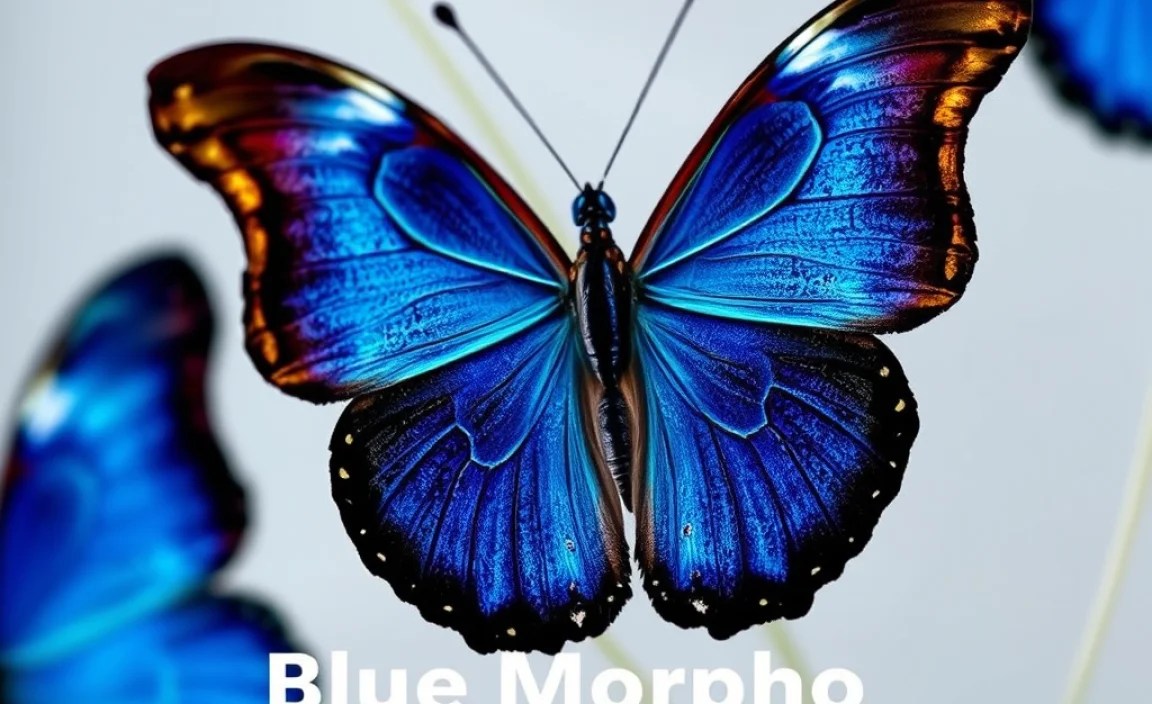
Blue Morpho dissections (nonlethal) are a way to study these amazing butterflies without hurting them. Scientists and students can examine different parts of the butterfly. They look at wings that the butterfly has naturally shed. They study other things like their molted exoskeletons. This helps us learn about their bodies. We can see how their wings create such vibrant colors. We can also understand how they grow and change. This type of study is important because it teaches us about nature. It also shows us how to be kind to animals. It’s a great way to learn science and respect living things at the same time. By using nonlethal methods, we ensure that the Blue Morpho butterflies can continue to thrive in their natural habitats.
- Nonlethal dissections use naturally shed parts.
- Scientists study wings, exoskeletons, and more.
- It helps us understand butterfly anatomy.
- We learn about their life cycle.
- This method protects the butterflies.
- It promotes kindness to animals.
Blue Morpho dissections (nonlethal) teach us so much about these beautiful insects. We learn about their complex bodies and how they work. The bright blue color of their wings comes from tiny scales. These scales reflect light in a special way. When scientists study these scales, they can understand how the butterfly creates its color. They can also learn about how the butterfly flies. By studying their molted exoskeletons, we can see how they grow. This helps us understand their life cycle. All of this knowledge helps us protect the butterflies and their rainforest homes. It’s amazing how much we can learn without harming them. These dissections are a great example of how science and conservation can work together.
Why Study Butterfly Wings?
Have you ever wondered why butterflies have such colorful wings? Butterfly wings are not just pretty. They are important for survival. The colors can help them hide from predators. They can also attract mates. Scientists study butterfly wings to understand these things. By looking closely at the wings, they can see tiny scales. These scales are what give the wings their color. The scales also help the butterfly fly. They create lift and help the butterfly move through the air. Scientists can learn about the structure of the wings. They can also learn about how the colors work. This helps them understand how butterflies have adapted to their environment. So, next time you see a butterfly, remember that its wings are full of secrets waiting to be discovered. What other secrets might they hold?
Exploring Exoskeletons
Imagine you are a butterfly growing bigger and bigger. Your skin doesn’t stretch. What do you do? You shed your old skin! This old skin is called an exoskeleton. Butterflies shed their exoskeletons as they grow. Scientists can study these exoskeletons to learn about the butterfly’s growth. They can see how the butterfly changes over time. The exoskeleton tells a story about the butterfly’s life. Scientists can also learn about the butterfly’s diet. They can see what the butterfly ate by looking at the exoskeleton. Studying exoskeletons is like reading a book about the butterfly’s life. It helps us understand how these amazing creatures grow and change. Exoskeletons provide so much information without harming the butterfly. This makes them a valuable tool for scientists.
The Importance of Conservation
Butterflies are important to our world. They help pollinate flowers. They are also a food source for other animals. But many butterflies are in danger. Their habitats are being destroyed. Pollution is also harming them. That’s why it’s important to protect butterflies. We can help by planting butterfly gardens. We can also reduce pollution. By protecting butterflies, we also protect their rainforest homes. Conservation is about taking care of our planet. It’s about making sure that future generations can enjoy these beautiful creatures. Every little bit helps. Even small actions can make a big difference. What can you do to help protect butterflies?
Fun Fact or Stat: The Blue Morpho’s wings appear iridescent because of microscopic structures that reflect light. This creates the illusion of shimmering blue.
Using Blue Morpho Wings for Art
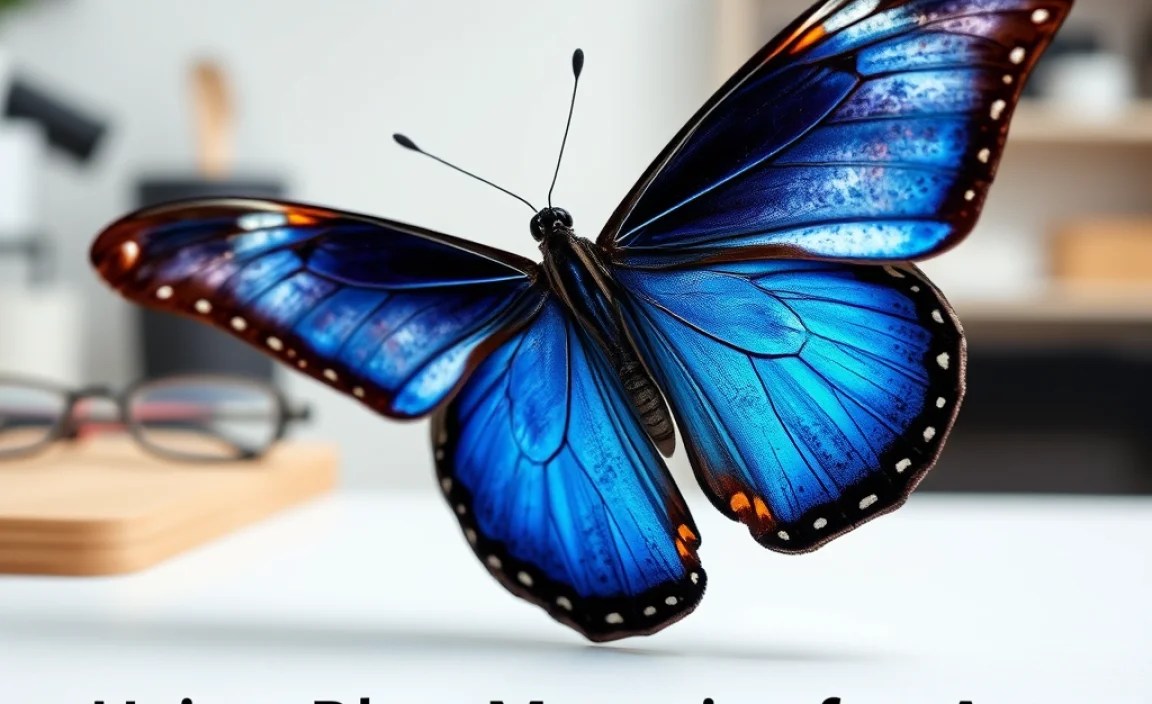
Did you know that Blue Morpho wings can be used to create beautiful art? After butterflies naturally shed their wings, artists can collect them. They use these wings to make mosaics and other types of art. This is a great way to appreciate the butterfly’s beauty. It also helps people learn about these amazing creatures. When people see art made from butterfly wings, they are often amazed by the colors and patterns. This can inspire them to learn more about butterflies. It can also encourage them to protect butterflies and their habitats. Using Blue Morpho wings for art is a creative way to connect with nature. It’s a way to share the beauty of butterflies with the world. It also ensures that no butterflies are harmed in the process. It’s a win-win for art and conservation.
- Artists use shed butterfly wings.
- They create mosaics and other art.
- It’s a way to appreciate butterfly beauty.
- Art can inspire conservation efforts.
- No butterflies are harmed.
- It’s a creative way to connect with nature.
Using Blue Morpho wings for art is a sustainable way to create beauty. The wings are naturally shed. This means that no butterflies are harmed. Artists collect the wings and carefully arrange them into stunning designs. The iridescent blue color of the wings makes the artwork truly special. People who see these creations are often amazed by the intricate patterns and vibrant colors. This can spark an interest in learning more about butterflies and their habitats. Art can be a powerful tool for conservation. It can inspire people to take action to protect the environment. By using Blue Morpho wings in art, we can celebrate the beauty of nature while also promoting conservation efforts. This shows how art and science can come together to make a positive impact on the world.
Butterfly Wing Mosaics
Have you ever seen a mosaic made from tiny pieces of glass or tile? Now imagine a mosaic made from butterfly wings! Artists create these beautiful mosaics by carefully arranging shed butterfly wings. Each wing is unique. This makes every mosaic one-of-a-kind. The iridescent blue color of the Blue Morpho wings makes these mosaics especially stunning. The wings shimmer and change color depending on the light. Creating these mosaics takes a lot of skill and patience. The artist must carefully select and arrange each wing to create a cohesive design. The result is a work of art that celebrates the beauty of nature. These mosaics can inspire people to learn more about butterflies. They can also encourage them to support conservation efforts. What other natural materials could be used to create art?
Butterfly Wing Jewelry
Imagine wearing a piece of jewelry made from a Blue Morpho wing. It would be like carrying a piece of the rainforest with you. Artists create butterfly wing jewelry by carefully preserving and setting the wings in resin or glass. This protects the delicate wings and allows them to be worn as jewelry. The iridescent blue color of the wings makes the jewelry sparkle. Each piece is unique. This makes it a special and meaningful accessory. Wearing butterfly wing jewelry can be a conversation starter. It can also be a way to show your support for butterfly conservation. People often admire the beauty of the wings. This gives you an opportunity to share information about butterflies and their importance. What other ways can jewelry connect us to nature?
Educational Art Projects
Art can be a fun way to learn about butterflies. Teachers can use butterfly wings in educational art projects. Students can create collages, drawings, or paintings inspired by the Blue Morpho. They can also learn about butterfly anatomy and life cycle through art. For example, they can create a diagram of a butterfly’s wing. They can also draw the different stages of a butterfly’s life. Art projects can help students engage with science in a creative way. They can also learn about the importance of butterfly conservation. By creating art inspired by butterflies, students can develop a deeper appreciation for these amazing creatures. What other subjects can be taught through art?
Fun Fact or Stat: Butterfly wing art dates back centuries. Indigenous cultures have long used butterfly wings in ceremonial and decorative items.
Ethical Sourcing of Blue Morpho Wings

When using Blue Morpho wings, it’s important to make sure they are sourced ethically. This means that the wings should be collected from butterflies that have naturally shed them. It also means that the collection process should not harm the butterflies or their habitats. Ethical sourcing is important for protecting butterfly populations. It also ensures that the people who collect the wings are treated fairly. When you buy Blue Morpho wings, look for suppliers who are committed to ethical practices. Ask them about their sourcing methods. Make sure they are not contributing to the destruction of rainforests. By supporting ethical sourcing, you can enjoy the beauty of Blue Morpho wings without harming these amazing creatures. This promotes sustainability and respect for nature.
- Ensure wings are naturally shed.
- Collection should not harm butterflies.
- Protect butterfly habitats.
- Support fair treatment of collectors.
- Ask suppliers about sourcing methods.
- Avoid contributing to rainforest destruction.
Blue Morpho wings are a beautiful and valuable resource. It’s important to use them responsibly. Ethical sourcing is the key to ensuring that these butterflies continue to thrive in their natural habitats. Look for suppliers who work with local communities. These communities often have a deep understanding of the rainforest. They can collect wings in a sustainable way. They can also protect the rainforest from deforestation and other threats. By supporting these communities, you can help protect butterflies and their homes. Ethical sourcing is not just about protecting butterflies. It’s also about supporting the people who live in the rainforest. It’s about creating a sustainable future for both people and nature. This ensures that future generations can enjoy the beauty of Blue Morpho butterflies.
Supporting Local Communities
Local communities often live near butterfly habitats. They can play a vital role in protecting butterflies. By supporting these communities, we can help them conserve butterfly populations. We can also help them improve their livelihoods. One way to support local communities is to buy Blue Morpho wings from them. Make sure that the wings are sourced ethically. This means that the butterflies are not harmed. It also means that the community is paid fairly for their work. Supporting local communities is a win-win situation. It helps protect butterflies. It also helps improve the lives of the people who live near them. What are other ways to support local communities?
Sustainable Collection Practices
Sustainable collection practices are important for protecting butterfly populations. This means collecting wings in a way that does not harm the butterflies. It also means protecting their habitats. One sustainable collection practice is to only collect wings that have been naturally shed. Another practice is to avoid disturbing butterfly habitats. This means not cutting down trees or polluting the environment. By following sustainable collection practices, we can ensure that butterflies continue to thrive. We can also enjoy the beauty of their wings for years to come. What other sustainable practices can we use?
Certifications and Labels
When buying Blue Morpho wings, look for certifications and labels. These can help you identify products that have been sourced ethically. Some certifications ensure that the butterflies have not been harmed. Others ensure that the local communities have been treated fairly. Look for labels from reputable organizations. These organizations have strict standards for ethical sourcing. By buying certified products, you can support ethical practices. You can also help protect butterflies and their habitats. What are some other certifications to look for?
Fun Fact or Stat: Some organizations offer “Butterfly Friendly” certifications to ensure ethical sourcing and conservation efforts.
Blue Morpho Life Cycle and Anatomy

The Blue Morpho butterfly has a fascinating life cycle. It starts as a tiny egg. The egg hatches into a caterpillar. The caterpillar eats and grows. Then, it forms a chrysalis. Inside the chrysalis, the caterpillar transforms into a butterfly. The butterfly emerges from the chrysalis. It flies off to find a mate and lay eggs. The anatomy of the Blue Morpho is also amazing. It has a long, slender body. It has six legs. It has two antennae. It has large, colorful wings. The wings are covered in tiny scales. These scales give the wings their iridescent blue color. Studying the life cycle and anatomy of the Blue Morpho helps us understand these amazing creatures. It also helps us protect them.
- Starts as a tiny egg.
- Egg hatches into a caterpillar.
- Caterpillar grows and eats.
- Forms a chrysalis.
- Transforms into a butterfly.
- Butterfly emerges and flies.
Understanding the Blue Morpho’s life cycle and anatomy is essential for conservation. Knowing how they grow and develop helps us protect their habitats. For example, we know that caterpillars need specific plants to eat. If we protect these plants, we can help the caterpillars survive. We also know that butterflies need forests to live in. If we protect the forests, we can help the butterflies thrive. By learning about their life cycle and anatomy, we can make informed decisions about conservation. We can also educate others about the importance of protecting these amazing creatures. This knowledge empowers us to take action and make a difference in the world. Learning about the Blue Morpho is a journey into the wonders of nature.
Egg to Caterpillar
Have you ever seen a tiny butterfly egg? It’s so small, you might not even notice it. But inside that tiny egg, a whole new life is beginning. The egg is laid on a plant. When the egg hatches, a caterpillar emerges. The caterpillar is very hungry. It starts eating the leaves of the plant. The caterpillar grows quickly. As it grows, it sheds its skin several times. Each time it sheds its skin, it gets bigger. The caterpillar’s job is to eat and grow. It needs to store up energy for the next stage of its life. What do you think it feels like to be a caterpillar?
Chrysalis Transformation
Imagine being inside a chrysalis. It’s dark and quiet. You’re not eating or moving. But inside your body, something amazing is happening. You’re transforming into a butterfly. Your body is breaking down and rebuilding itself. New wings are forming. New legs are growing. New antennae are developing. It’s a slow and gradual process. But eventually, you’ll be ready to emerge. You’ll break out of the chrysalis. You’ll spread your wings and fly. It’s a magical transformation. What would it be like to experience such a change?
Butterfly Anatomy
Butterflies have amazing bodies. Their wings are covered in tiny scales. These scales give the wings their color and pattern. Butterflies have six legs. They use their legs to walk and hold onto plants. Butterflies have two antennae. They use their antennae to smell and taste. Butterflies have a long, slender body. They have a proboscis, which is a long, straw-like tongue. They use their proboscis to drink nectar from flowers. Butterfly anatomy is perfectly suited for their life in the rainforest. How does butterfly anatomy help them survive?
Fun Fact or Stat: The Blue Morpho’s wings are brown on the underside. This helps them camouflage when their wings are closed.
Tools for Blue Morpho Dissections (Nonlethal)
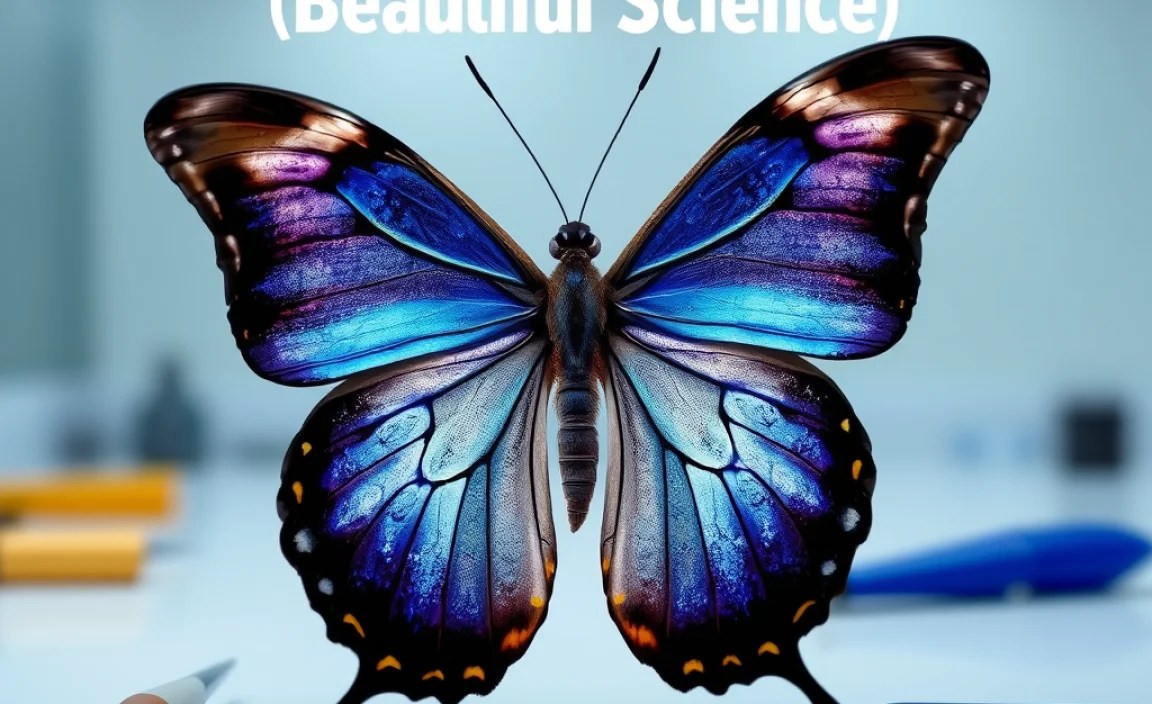
To perform Blue Morpho dissections (nonlethal), you need some special tools. These tools help you examine the butterfly wings and other parts without harming them. You’ll need a magnifying glass or microscope to see the tiny details. You’ll also need tweezers to handle the delicate wings. A petri dish or clear container will help you organize your specimens. A notebook and pencil are important for recording your observations. You might also want to use a camera to take pictures of what you see. These tools will help you explore the world of the Blue Morpho butterfly in a safe and respectful way. Remember, the goal is to learn without causing harm.
- Magnifying glass or microscope.
- Tweezers for handling wings.
- Petri dish or clear container.
- Notebook and pencil for notes.
- Camera for taking pictures.
- Good lighting for clear viewing.
Having the right tools is essential for successful Blue Morpho dissections (nonlethal). A good magnifying glass or microscope will allow you to see the intricate details of the butterfly’s wings. You can examine the tiny scales that give the wings their color. You can also see the veins that support the wings. Tweezers will help you handle the wings without damaging them. A petri dish will provide a clean and organized space to work. A notebook and pencil will allow you to record your observations. You can draw diagrams of what you see. You can also write down your questions and ideas. A camera will help you document your findings. You can share your photos with others. These tools will make your dissections more informative and enjoyable. They will also help you appreciate the beauty and complexity of the Blue Morpho butterfly.
Magnifying Glass vs. Microscope
When studying butterflies, should you use a magnifying glass or a microscope? A magnifying glass is great for seeing things up close. It makes small details easier to see. A microscope is even more powerful. It can show you things that you can’t see with the naked eye. For example, you can see the individual scales on a butterfly’s wing with a microscope. You can also see the tiny structures inside the scales. A magnifying glass is a good choice for beginners. It’s easy to use and doesn’t require any special training. A microscope is a better choice for more advanced studies. It allows you to see much more detail. Which tool would you choose to study a butterfly wing?
Using Tweezers Safely
Tweezers are a useful tool for handling delicate butterfly wings. But it’s important to use them safely. Always hold the tweezers gently. Don’t squeeze too hard. You could damage the wings. Use the tweezers to pick up the wings by the edges. Avoid touching the center of the wings. The center is more fragile. If you drop a wing, don’t panic. Just pick it up carefully. If the wing is damaged, don’t worry. It’s still a valuable specimen. You can still study it. Remember, the goal is to learn without causing harm. What are some other safety tips for using tools?
Recording Observations
Recording your observations is an important part of any scientific study. When you’re studying Blue Morpho butterflies, take notes on what you see. Write down the colors, patterns, and textures of the wings. Draw diagrams of the wings. Label the different parts. Write down any questions you have. Also, write down any ideas you have. Your notes will help you remember what you learned. They will also help you share your findings with others. Keeping a detailed record of your observations is a key skill for any scientist. Why is it important to write down what you observe?
Fun Fact or Stat: Some scientists use special software to analyze images of butterfly wings, revealing hidden patterns and details.
At-Home Blue Morpho Learning Kits
Want to learn about Blue Morpho butterflies at home? You can use learning kits. These kits often include shed butterfly wings. They also include tools like magnifying glasses. Some kits have guides to help you learn. These guides teach about butterfly anatomy. They also teach about the life cycle. Some kits even have activities. These activities make learning fun. You can dissect a butterfly wing safely. You can also create art with the wings. These kits are a great way to explore science. They also help you appreciate nature. They make learning about butterflies easy and fun.
- Kits include shed butterfly wings.
- Magnifying glasses help you see details.
- Guides teach about butterfly anatomy.
- Activities make learning fun.
- Dissect wings safely at home.
- Create art with butterfly wings.
Blue Morpho learning kits are a fantastic way to bring science to life. These kits allow you to explore the world of butterflies in a hands-on way. You can examine the intricate details of their wings. You can learn about their life cycle and anatomy. You can also create beautiful art using the shed wings. These kits are designed to be safe and educational. They provide all the materials you need to conduct your own nonlethal dissections. They also include clear instructions and helpful information. Whether you’re a student, a teacher, or simply a butterfly enthusiast, these kits offer a unique and engaging learning experience. They help you connect with nature and appreciate the beauty and complexity of these amazing creatures. They also promote responsible and ethical learning.
What’s Included in a Kit?
Have you ever wondered what’s inside a Blue Morpho learning kit? Most kits include shed butterfly wings. They also include a magnifying glass. Some kits have tweezers for handling the wings. You might also find a petri dish. This is for organizing your specimens. Many kits include a guidebook. The guidebook teaches you about butterfly anatomy. It also explains the life cycle. Some kits even have art supplies. This lets you create butterfly-inspired art. Each kit is designed to make learning fun and easy. What would you do with a butterfly learning kit?
Safe Dissection Practices
If your learning kit includes a dissection activity, it’s important to follow safe practices. Always work in a well-lit area. Use the tools carefully. Don’t cut yourself. Don’t touch your eyes or mouth. Wash your hands after handling the wings. Follow the instructions in the guidebook. If you have any questions, ask an adult for help. Remember, the goal is to learn without causing harm. Always be respectful of the butterfly wings. Treat them with care. What are some other safety rules to follow?
Creative Activities with Wings
Blue Morpho wings can be used for many creative activities. You can create a butterfly collage. You can make a butterfly mosaic. You can even make butterfly jewelry. The iridescent blue color of the wings makes them perfect for art projects. Use your imagination. See what you can create. Remember, the wings are delicate. Handle them with care. Have fun exploring your artistic side. What other creative things can you make?
Fun Fact or Stat: Some learning kits include virtual reality experiences that allow you to explore a rainforest and learn about Blue Morphos in their natural habitat.
The Future of Butterfly Research
The future of butterfly research is bright. Scientists are developing new technologies to study butterflies. They are using drones to monitor butterfly populations. They are using DNA analysis to learn about butterfly genetics. They are also using computer models to predict how butterflies will respond to climate change. These new technologies will help us understand butterflies better than ever before. They will also help us protect butterflies and their habitats. The future of butterfly research is full of exciting possibilities. We can use this knowledge to ensure the survival of these amazing creatures. This includes refining Blue Morpho dissections (nonlethal) for better understanding.
- Drones monitor butterfly populations.
- DNA analysis studies butterfly genetics.
- Computer models predict climate change effects.
- New technologies improve understanding.
- Research helps protect butterflies.
- Conservation efforts are more effective.
Blue Morpho dissections (nonlethal) will continue to play a role in butterfly research. As technology advances, we will be able to learn even more from these dissections. We will be able to study the butterfly’s wings in greater detail. We will be able to analyze the butterfly’s DNA. We will be able to understand how the butterfly’s body works. This knowledge will help us protect butterflies from threats like habitat loss and climate change. The future of butterfly research is about using science to conserve these amazing creatures. It’s about working together to create a world where butterflies can thrive. It’s about inspiring the next generation of scientists and conservationists. The future is bright for butterflies and for the people who study them.
Drones and Butterfly Monitoring
Imagine using a drone to study butterflies. Drones can fly over rainforests. They can take pictures of butterfly populations. Scientists can use these pictures to count butterflies. They can also track butterfly movements. Drones can help us monitor butterfly populations more efficiently. They can also help us identify areas where butterflies are in danger. Drones are a powerful tool for butterfly conservation. How else can drones help protect the environment?
DNA Analysis and Genetics
DNA is like a blueprint for a butterfly. It contains all the information about the butterfly’s body. Scientists can analyze butterfly DNA to learn about their genetics. They can see how butterflies are related to each other. They can also learn about the genes that control butterfly traits. This knowledge can help us understand how butterflies evolve. It can also help us protect butterflies from genetic diseases. What else can we learn from DNA?
Climate Change and Butterflies
Climate change is a big threat to butterflies. As the climate changes, butterfly habitats are being destroyed. Butterflies are also struggling to adapt to the changing temperatures. Scientists are using computer models to predict how butterflies will respond to climate change. These models can help us identify areas where butterflies are most vulnerable. They can also help us develop strategies to protect butterflies from climate change. What can we do to help butterflies adapt to climate change?
Fun Fact or Stat: Scientists are developing “smart” butterfly habitats that can automatically adjust temperature and humidity to help butterflies cope with climate change.
Summary
Blue Morpho dissections (nonlethal) are a great way to learn about these amazing butterflies. They allow us to study their anatomy without harming them. We can examine their wings, exoskeletons, and other parts. This helps us understand how they grow, fly, and create their vibrant colors. Ethical sourcing of butterfly wings is important. This ensures that the butterflies are protected. Art projects and at-home learning kits can also help us learn about butterflies in a fun and engaging way. By studying Blue Morpho butterflies, we can develop a deeper appreciation for nature. We can also learn about the importance of conservation.
The future of butterfly research is bright. New technologies are helping us understand butterflies better than ever before. These technologies will help us protect butterflies and their habitats. We can all play a role in butterfly conservation. We can plant butterfly gardens. We can reduce pollution. We can support ethical sourcing of butterfly products. Together, we can make a difference in the world.
Conclusion
Blue Morpho butterflies are truly amazing creatures. Their iridescent blue wings and fascinating life cycle capture our imagination. By using methods like Blue Morpho dissections (nonlethal), we can study them without causing harm. This helps us understand their anatomy, behavior, and ecological role. Learning about these butterflies inspires us to protect them. It also encourages us to conserve their rainforest habitats. Let’s continue to explore and appreciate the wonders of nature. We can ensure that future generations can enjoy these beautiful butterflies.
Frequently Asked Questions
Question No 1: What are Blue Morpho dissections (nonlethal)?
Answer: Blue Morpho dissections (nonlethal) are a way to study these butterflies without hurting them. Scientists and students use wings that butterflies have naturally shed. They also study molted exoskeletons. This helps us learn about their bodies and life cycle. It’s like being a detective, but for science. We get to explore the secrets of the butterfly without causing any harm. This method is important because it teaches us about nature in a kind and respectful way. It’s a great example of how science and conservation can work together to protect these beautiful creatures.
Question No 2: Why are nonlethal dissections important?
Answer: Nonlethal dissections are important because they allow us to study animals without harming them. This is especially important for endangered species. It’s also important for teaching children about respecting nature. By using nonlethal methods, we can learn about animal anatomy and behavior. We can also promote conservation efforts. Nonlethal dissections show that science and ethics can go hand in hand. They teach us that we can learn about the world without causing harm. This is a valuable lesson for everyone, especially young scientists. Plus, it allows us to keep enjoying the beauty of creatures like the Blue Morpho in their natural habitats.
Question No 3: Where do Blue Morpho butterflies live?
Answer: Blue Morpho butterflies live in the rainforests of Central and South America. They like warm, humid environments. They need these rainforests to survive. The rainforests provide them with food and shelter. Sadly, rainforests are being destroyed. This is a big threat to Blue Morpho butterflies. That’s why it’s important to protect these rainforests. We can help by supporting conservation efforts. We can also reduce our impact on the environment. By protecting rainforests, we can help ensure that Blue Morpho butterflies continue to thrive.
Question No 4: What do Blue Morpho butterflies eat?
Answer: Blue Morpho butterflies have a special diet. They drink the sap from trees. They also eat fruit. They use their long, straw-like tongue to suck up the liquids. Caterpillars, which are young butterflies, eat leaves. They need to eat a lot to grow. The diet of the Blue Morpho is important for their survival. It gives them the energy they need to fly and reproduce. Protecting their food sources is essential for their conservation. This means protecting the rainforests where they live and feed. Without these resources, they cannot survive.
Question No 5: Can I do a Blue Morpho dissection at home?
Answer: Yes, you can! You can use a Blue Morpho learning kit. These kits include shed butterfly wings. They also include tools like magnifying glasses. The kits provide instructions for safe dissections. Remember, you are only studying wings that the butterfly has naturally shed. This means you are not harming the butterfly. These kits are a great way to learn about butterfly anatomy. They also promote conservation. They show that you can learn about science in a kind and respectful way. Look for kits that emphasize ethical sourcing and sustainability. This ensures that you are supporting responsible practices.
Question No 6: How can I help protect Blue Morpho butterflies?
Answer: There are many ways to help protect Blue Morpho butterflies. You can support organizations that protect rainforests. You can reduce your carbon footprint. This helps to slow down climate change. You can also plant butterfly gardens. These gardens provide food and shelter for butterflies. Educate others about the importance of butterfly conservation. Support ethical sourcing of butterfly products. Even small actions can make a big difference. By working together, we can ensure that Blue Morpho butterflies continue to thrive for generations to come. Every effort counts towards preserving their beautiful existence.


