
Blue Morpho Conservation Strategies: A Powerful Guide

Have you ever seen a butterfly with bright blue wings? It might have been a Blue Morpho. These butterflies are beautiful. But they need our help. Blue Morpho conservation strategies are important. We want to keep these amazing creatures around. What can we do to protect them?
These butterflies live in rainforests. Rainforests are in danger. People cut down trees. This destroys the butterflies’ homes. It also hurts other animals and plants. We need to find ways to save the rainforest. This will help the Blue Morpho and many others.
Saving the Blue Morpho is a big job. It needs many people working together. Scientists study the butterflies. They learn about their needs. Local communities can help protect their habitats. Governments can make laws to protect rainforests. Everyone can play a part in Blue Morpho conservation strategies.
Key Takeaways
- Protecting rainforests is key for Blue Morpho conservation strategies.
- Habitat loss is a major threat to Blue Morpho butterflies.
- Supporting sustainable farming helps protect butterfly habitats.
- Education raises awareness about the importance of these butterflies.
- Creating butterfly farms can boost populations and local economies.
Understanding Blue Morpho Conservation Strategies
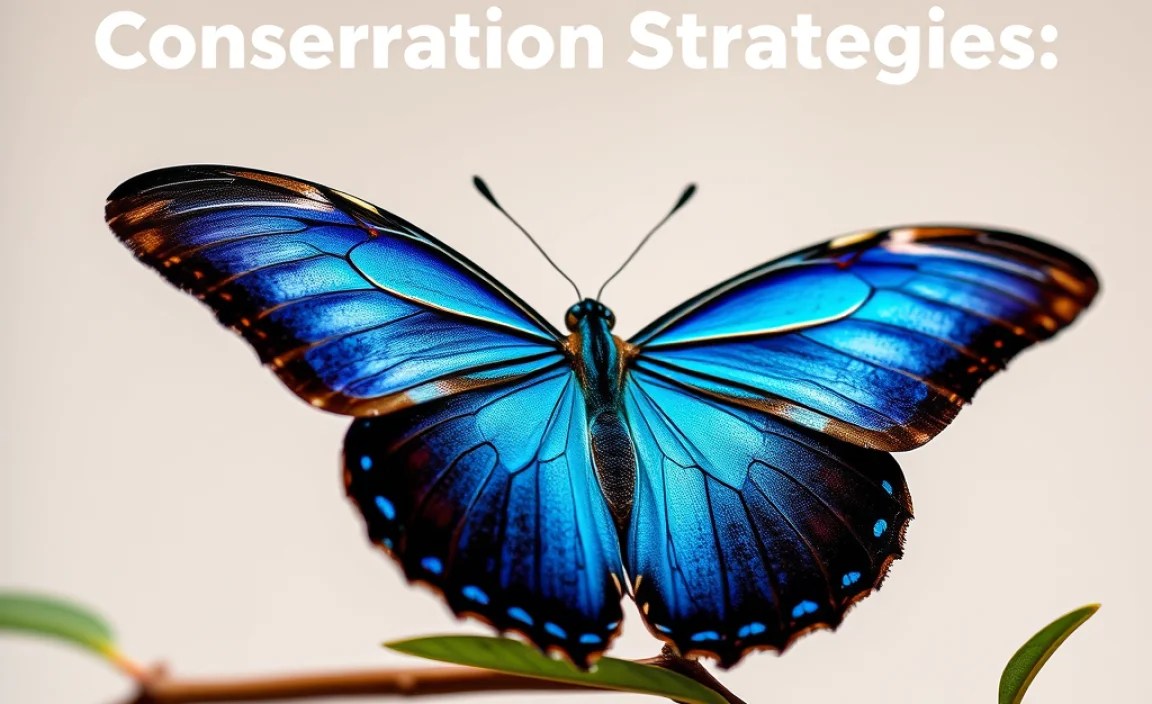
Blue Morpho butterflies are truly amazing. Their bright blue wings shimmer in the sunlight. These butterflies live in the rainforests of Central and South America. Sadly, their homes are in danger. People are cutting down the rainforests. This is called deforestation. Deforestation takes away the butterflies’ food and shelter. It also makes it harder for them to find mates. Without enough rainforest, the Blue Morpho could disappear. That’s why Blue Morpho conservation strategies are so important. We need to protect their homes. We also need to find ways to help them thrive. This means working together to save the rainforests. It also means finding new ways to help the butterflies survive. Everyone can help with Blue Morpho conservation strategies. Even small actions can make a big difference.
- Protect rainforest habitats from destruction.
- Support sustainable farming practices.
- Reduce pesticide use near butterfly habitats.
- Educate people about the importance of butterflies.
- Create butterfly gardens to support populations.
- Encourage ecotourism in Blue Morpho habitats.
Saving the Blue Morpho requires many different actions. We can protect the rainforest by supporting sustainable businesses. These businesses find ways to use the forest without destroying it. We can also reduce our use of paper and wood. This helps to slow down deforestation. Another way to help is by creating butterfly gardens. These gardens provide food and shelter for butterflies. They also help to educate people about the importance of butterflies. By working together, we can make a big difference. We can help the Blue Morpho survive and thrive. Blue Morpho conservation strategies benefit the entire ecosystem. When we protect butterflies, we protect the rainforest too.
Why Are Blue Morphos Important?
Have you ever wondered why butterflies matter? They are more than just pretty insects. Butterflies help pollinate plants. Pollination is how plants make seeds. Without butterflies, many plants could disappear. This would affect the whole food chain. Animals that eat plants would have less food. This could lead to problems for many species. Blue Morpho butterflies are part of this important process. They help to keep the rainforest healthy. They also bring beauty to the world. Losing them would be a great loss. We need to remember that every creature plays a role. Protecting the Blue Morpho helps protect the entire rainforest. We can all do our part to help these beautiful butterflies.
What Are the Biggest Threats?
Imagine your home being torn down. That’s what it’s like for Blue Morpho butterflies when rainforests are destroyed. Deforestation is the biggest threat to their survival. People cut down trees for wood, farms, and roads. This leaves the butterflies with no place to live or find food. Pesticides are another threat. These chemicals can poison butterflies and their caterpillars. Climate change also affects them. Changes in temperature and rainfall can disrupt their life cycle. We need to address these threats to protect the Blue Morpho. Reducing deforestation, using fewer pesticides, and fighting climate change are all important steps. By working together, we can create a safer world for these amazing butterflies.
How Can We Help Locally?
Do you want to help the Blue Morpho? You can start by creating a butterfly garden. Plant flowers that butterflies love, like milkweed and lantana. Avoid using pesticides in your garden. You can also support local organizations that protect rainforests. Educate your friends and family about the importance of butterflies. Even small actions can make a big difference. You can also write to your elected officials. Ask them to support policies that protect rainforests. By working together, we can create a butterfly-friendly community. Blue Morpho conservation strategies start with small, local actions. Every effort counts towards protecting these beautiful creatures.
Fun Fact or Stat: The Blue Morpho’s wings appear iridescent due to microscopic structures that reflect light, not pigment!
Habitat Preservation for Blue Morpho Butterflies

Habitat preservation is super important for Blue Morpho butterflies. These butterflies need rainforests to survive. They eat plants that grow in the rainforest. They also lay their eggs on these plants. When rainforests are destroyed, the butterflies lose their homes. They also lose their food source. That’s why we need to protect rainforests. One way to do this is by creating protected areas. These areas are like parks for butterflies and other animals. People can’t cut down trees or build roads in these areas. This helps to keep the rainforest safe. Another way to help is by supporting sustainable farming. Sustainable farms don’t destroy the rainforest. They find ways to grow food without harming the environment. Blue Morpho conservation strategies include protecting and restoring rainforest habitats. We can all help by supporting these efforts.
- Establish protected areas for rainforests.
- Promote sustainable logging practices.
- Restore degraded rainforest habitats.
- Support local communities in conservation efforts.
- Control invasive species that harm habitats.
- Monitor butterfly populations to track progress.
Protecting the rainforest is not just good for butterflies. It’s also good for people. Rainforests provide us with clean air and water. They also help to regulate the climate. When we protect rainforests, we protect ourselves too. There are many ways to get involved in habitat preservation. You can volunteer with a conservation organization. You can donate to a rainforest protection fund. You can also make simple changes in your daily life. For example, you can recycle paper and avoid buying products that come from deforested areas. Every little bit helps. Blue Morpho conservation strategies rely on everyone doing their part. Together, we can make a big difference in protecting these amazing butterflies and their homes.
What is Habitat Fragmentation?
Imagine a forest being cut into small pieces. That’s what habitat fragmentation is. It happens when roads, farms, and cities break up large areas of forest. This makes it harder for animals to move around. Blue Morpho butterflies need large areas of forest to find food and mates. When their habitat is fragmented, they can’t travel easily. This can lead to smaller populations and less genetic diversity. Habitat fragmentation is a serious threat to the Blue Morpho. We need to find ways to reconnect these fragmented areas. We can do this by creating wildlife corridors. These are strips of land that connect different patches of forest. They allow animals to move safely between habitats. Reducing deforestation and promoting sustainable land use are also important steps.
How Do Protected Areas Help?
Have you ever visited a national park? Protected areas are like national parks for wildlife. They are areas where human activities are limited. This helps to protect the natural environment. Protected areas are very important for Blue Morpho conservation strategies. They provide a safe haven for butterflies and other animals. In protected areas, butterflies can find food, shelter, and mates without being disturbed. These areas also help to preserve biodiversity. Biodiversity is the variety of life on Earth. Protected areas help to ensure that we don’t lose important species. Supporting the creation and management of protected areas is crucial. We can do this by donating to conservation organizations and advocating for stronger environmental laws.
Why is Reforestation Important?
Imagine planting trees where forests used to be. That’s what reforestation is all about. It’s the process of replanting trees in areas that have been deforested. Reforestation is a key part of Blue Morpho conservation strategies. It helps to restore lost habitats and provide food and shelter for butterflies. Reforestation can also help to improve soil quality and prevent erosion. When we plant trees, we are helping to heal the Earth. There are many ways to get involved in reforestation. You can volunteer with a tree-planting organization. You can also plant trees in your own backyard. Even planting just one tree can make a difference. By working together, we can restore forests and create a better future for the Blue Morpho and other species.
Fun Fact or Stat: Some organizations use drones to plant trees in remote areas, making reforestation faster and more efficient!
Sustainable Farming’s Role in Blue Morpho Conservation

Sustainable farming is a friend to the Blue Morpho. It’s a way of growing food that doesn’t hurt the environment. Traditional farming can damage butterfly habitats. Farmers often cut down forests to make room for crops. They also use pesticides that can harm butterflies. Sustainable farming is different. It uses methods that protect the environment. Sustainable farmers might plant trees around their fields. These trees provide shade and shelter for butterflies. They might also use natural pest control methods. This means using insects and other animals to control pests instead of pesticides. Sustainable farming helps to protect butterfly habitats. It also helps to keep the soil healthy. Blue Morpho conservation strategies benefit from sustainable farming practices. When we support sustainable farmers, we support butterflies too.
- Reduce deforestation for agricultural expansion.
- Use natural pest control methods instead of pesticides.
- Plant trees and shrubs around fields.
- Promote crop rotation to improve soil health.
- Support fair trade practices for farmers.
You can support sustainable farming by buying food from local farmers. Look for organic labels and certifications. These labels mean that the food was grown using sustainable methods. You can also grow your own food. Even a small garden can make a difference. When you grow your own food, you know exactly what went into it. You can avoid using pesticides and other harmful chemicals. Sustainable farming is not just good for butterflies. It’s also good for people. It provides us with healthy food and a healthy environment. Blue Morpho conservation strategies are linked to our food choices. By making sustainable choices, we can help protect these beautiful butterflies.
What Are the Benefits of Organic Farming?
Have you ever seen the word “organic” on food labels? Organic farming is a type of sustainable farming. It avoids the use of synthetic pesticides and fertilizers. These chemicals can harm butterflies and other wildlife. Organic farming relies on natural methods to control pests and improve soil health. Organic farmers might use compost and manure to fertilize their crops. They might also use crop rotation to prevent pests and diseases. The benefits of organic farming are many. It protects the environment, promotes biodiversity, and provides us with healthier food. Supporting organic farming is a great way to help the Blue Morpho. By choosing organic products, we can reduce the demand for harmful chemicals and protect butterfly habitats.
How Can Agroforestry Help?
Imagine a farm with trees growing alongside crops. That’s what agroforestry is all about. It’s a farming system that integrates trees and shrubs into agricultural landscapes. Agroforestry can provide many benefits for Blue Morpho conservation strategies. Trees provide shade and shelter for butterflies. They also provide habitat for other wildlife. Agroforestry can also improve soil health and prevent erosion. Some trees even produce fruits and nuts that farmers can sell. This can provide them with extra income. Agroforestry is a win-win situation for farmers and butterflies. It allows farmers to grow food while also protecting the environment. Supporting agroforestry is a great way to promote sustainable farming and help the Blue Morpho.
Why is Fair Trade Important?
Have you ever wondered where your food comes from? Fair trade is a system that ensures farmers in developing countries receive fair prices for their products. This helps them to improve their livelihoods and protect the environment. Fair trade is important for Blue Morpho conservation strategies because it encourages sustainable farming practices. When farmers receive fair prices, they are less likely to resort to destructive practices like deforestation. They can afford to invest in sustainable methods that protect butterfly habitats. By buying fair trade products, we can support farmers who are committed to sustainability. This helps to protect the Blue Morpho and other species.
Fun Fact or Stat: Agroforestry systems can increase biodiversity by up to 50% compared to conventional farming!
Reducing Pesticide Use for Blue Morpho Conservation
Pesticides can be very harmful to Blue Morpho butterflies. These chemicals are designed to kill insects. But they can also kill butterflies and their caterpillars. Pesticides can also pollute the environment. They can contaminate water sources and harm other wildlife. That’s why reducing pesticide use is so important for Blue Morpho conservation strategies. There are many ways to reduce pesticide use. One way is to use natural pest control methods. This means using insects, animals, and other natural substances to control pests. Another way is to plant pest-resistant crops. These crops are less likely to be attacked by pests. We can also use pesticides more carefully. This means using them only when necessary and applying them in a way that minimizes harm to butterflies and other wildlife.
- Use natural pest control methods.
- Plant pest-resistant crops.
- Apply pesticides carefully and sparingly.
- Create buffer zones around butterfly habitats.
- Educate farmers about the dangers of pesticides.
You can help to reduce pesticide use by buying organic food. Organic farmers don’t use synthetic pesticides. You can also avoid using pesticides in your own garden. There are many natural ways to control pests in your garden. For example, you can use insecticidal soap to kill aphids. You can also attract beneficial insects to your garden. These insects will eat pests and help to keep your plants healthy. Reducing pesticide use is not just good for butterflies. It’s also good for people. It helps to protect our health and the environment. Blue Morpho conservation strategies depend on reducing our reliance on harmful chemicals.
What Are Natural Pest Control Methods?
Have you ever heard of using ladybugs to control aphids? That’s an example of natural pest control. It involves using natural methods to control pests instead of synthetic pesticides. There are many different types of natural pest control. Some methods involve using beneficial insects. These insects eat pests or parasitize them. Other methods involve using natural substances like insecticidal soap or neem oil. These substances are toxic to pests but relatively harmless to other wildlife. Natural pest control is a safe and effective way to protect your garden and the environment. It’s also a key part of Blue Morpho conservation strategies. By using natural pest control methods, we can reduce our reliance on harmful chemicals and protect these beautiful butterflies.
How Can Buffer Zones Help?
Imagine a protective barrier around a butterfly habitat. That’s what a buffer zone is. It’s an area of land that surrounds a sensitive habitat. The purpose of a buffer zone is to protect the habitat from harmful activities. For example, a buffer zone around a rainforest might prevent logging or farming from encroaching on the forest. Buffer zones can also help to filter pollutants and prevent erosion. They provide a safe space for wildlife to move between habitats. Buffer zones are an important tool for Blue Morpho conservation strategies. They help to protect butterfly habitats from the negative impacts of human activities. Creating and maintaining buffer zones is a crucial step in protecting these beautiful butterflies.
Why is Education Important?
Have you ever taught someone about butterflies? Education is a powerful tool for conservation. When people understand the importance of butterflies, they are more likely to take action to protect them. Education can take many forms. It can involve teaching children about butterflies in schools. It can involve creating informative displays in parks and nature centers. It can also involve using social media to raise awareness about butterfly conservation. Education is essential for Blue Morpho conservation strategies. It helps to create a culture of conservation and inspire people to take action. By educating others about the importance of butterflies, we can help to protect these amazing creatures for future generations.
Fun Fact or Stat: Some butterflies have evolved to mimic the appearance of poisonous butterflies to avoid predators, a clever survival strategy!
The Role of Butterfly Farms in Conservation
Butterfly farms can play a helpful role in Blue Morpho conservation strategies. These farms raise butterflies for different reasons. Some farms sell butterflies to zoos and museums. Other farms release butterflies into the wild. Butterfly farms can help to increase butterfly populations. They can also help to protect butterfly habitats. By raising butterflies in a controlled environment, farms can reduce the pressure on wild populations. Butterfly farms can also educate people about butterflies. They can teach visitors about the importance of butterflies and their habitats. This can help to raise awareness about conservation issues. Butterfly farms are not a perfect solution. But they can be a useful tool in the effort to protect Blue Morpho butterflies.
| Benefit | Description | Example |
|---|---|---|
| Population Boost | Increases butterfly numbers in the wild. | Releasing farm-raised butterflies into a protected area. |
| Habitat Protection | Encourages conservation of butterfly habitats. | Supporting sustainable butterfly farming practices. |
| Education | Teaches people about butterfly conservation. | Offering tours and workshops at butterfly farms. |
| Economic Benefits | Provides income for local communities. | Selling butterflies to zoos and collectors. |
It is important to make sure butterfly farms are sustainable. They should not harm wild butterfly populations. Farms should use responsible breeding practices. They should also protect butterfly habitats. When done right, butterfly farms can be a valuable part of Blue Morpho conservation strategies. They can help to increase butterfly populations, protect habitats, and educate people about conservation. By supporting sustainable butterfly farms, we can help to protect these beautiful creatures for future generations.
How Do Farms Help Butterfly Populations?
Imagine a safe place for butterflies to lay their eggs and grow. That’s what a butterfly farm can provide. Butterfly farms raise butterflies in a protected environment. This helps to increase their chances of survival. In the wild, many butterfly eggs and caterpillars are eaten by predators. Butterfly farms can protect them from these threats. They can also provide them with plenty of food and shelter. By raising butterflies in a controlled environment, farms can help to boost butterfly populations. This is especially important for endangered species like the Blue Morpho. Butterfly farms can play a vital role in Blue Morpho conservation strategies by increasing the number of butterflies in the wild.
What Are the Economic Benefits?
Have you ever thought about how butterflies can help people make money? Butterfly farms can provide economic benefits for local communities. They can create jobs and generate income. Farms can sell butterflies to zoos, museums, and collectors. They can also offer tours and workshops to visitors. This can bring money into the community and support local businesses. Butterfly farms can also promote sustainable tourism. They can attract visitors who are interested in learning about butterflies and their habitats. This can help to protect rainforests and other natural areas. The economic benefits of butterfly farms can help to support Blue Morpho conservation strategies by providing incentives for local communities to protect butterfly habitats.
Are There Any Risks?
While butterfly farms can be helpful, there are also some risks to consider. One risk is that farms could spread diseases to wild butterfly populations. It is important for farms to follow strict hygiene protocols to prevent this. Another risk is that farms could accidentally release non-native species into the wild. This could harm native butterfly populations. It is important for farms to only raise native species. It is also important for them to prevent butterflies from escaping into the wild. Butterfly farms should be carefully managed to minimize these risks. By doing so, they can play a positive role in Blue Morpho conservation strategies.
Fun Fact or Stat: Some butterfly farms contribute to scientific research by providing data on butterfly behavior and life cycles!
Education and Awareness for Butterfly Protection
Education and awareness are key for Blue Morpho conservation strategies. Many people don’t know about these beautiful butterflies. They also might not know about the threats they face. Education can help to change this. When people learn about butterflies, they are more likely to care about them. They are also more likely to take action to protect them. There are many ways to educate people about butterflies. Schools can teach children about butterflies in science class. Museums and zoos can create exhibits about butterflies. Conservation organizations can use social media to raise awareness about butterfly conservation. Education is a powerful tool for Blue Morpho conservation strategies. It can inspire people to protect these amazing creatures for future generations.
- Create educational programs for schools.
- Develop informative displays for museums and zoos.
- Use social media to raise awareness.
- Organize community events about butterflies.
- Support ecotourism in butterfly habitats.
You can help to educate others about butterflies. Share information about butterflies with your friends and family. Write letters to your elected officials. Ask them to support policies that protect butterflies. You can also support conservation organizations that are working to protect butterflies. Every action counts. By working together, we can raise awareness about the importance of butterflies and inspire others to take action. Blue Morpho conservation strategies depend on education and awareness. The more people who care about butterflies, the better chance they have of surviving.
How Can Schools Help?
Imagine classrooms filled with students learning about butterflies. Schools can play a big role in Blue Morpho conservation strategies. Teachers can incorporate butterfly conservation into their lessons. They can teach students about the life cycle of butterflies. They can also teach them about the threats that butterflies face. Schools can also create butterfly gardens. These gardens can provide habitat for butterflies and other pollinators. They can also serve as outdoor classrooms. Schools can also organize field trips to butterfly farms or nature centers. These trips can give students a hands-on experience with butterfly conservation. By educating students about butterflies, schools can help to create a generation of conservationists.
What Role Do Zoos Play?
Have you ever visited a butterfly exhibit at a zoo? Zoos can also play an important role in Blue Morpho conservation strategies. They can display butterflies in naturalistic habitats. This can help to educate visitors about the importance of butterfly conservation. Zoos can also conduct research on butterflies. They can study their behavior, genetics, and ecology. This information can be used to develop more effective conservation strategies. Zoos can also support conservation projects in the field. They can provide funding and expertise to organizations that are working to protect butterflies in their natural habitats. By combining education, research, and conservation action, zoos can make a significant contribution to Blue Morpho conservation strategies.
Why is Community Involvement Important?
Imagine a community working together to protect butterflies. Community involvement is essential for successful Blue Morpho conservation strategies. Local communities are often the most knowledgeable about butterfly habitats. They can also play a key role in protecting these habitats. Community members can participate in monitoring butterfly populations. They can also help to restore degraded habitats. They can also educate others about the importance of butterfly conservation. By involving local communities in conservation efforts, we can ensure that these efforts are sustainable and effective. Community involvement is a key ingredient for successful Blue Morpho conservation strategies.
Fun Fact or Stat: Butterflies are often used as indicator species, meaning their health reflects the overall health of their ecosystem!
Summary
Blue Morpho conservation strategies are vital for the survival of these beautiful butterflies. Habitat loss, pesticide use, and climate change threaten them. Protecting rainforests is key. Sustainable farming and reducing pesticides help. Butterfly farms can boost populations. Education raises awareness. These strategies require everyone’s participation. We can all help protect the Blue Morpho. Protecting these butterflies benefits the entire ecosystem. We must act now to save them.
Conclusion
The Blue Morpho is an amazing creature. It brings beauty and wonder to the rainforest. We must protect these butterflies. We need to work together to save their habitats. Reducing pesticide use is important. Supporting sustainable farming helps. Education is key to raising awareness. Blue Morpho conservation strategies need our support. Let’s ensure these butterflies thrive for generations.
Frequently Asked Questions
Question No 1: What are the main threats to Blue Morpho butterflies?
Answer: The biggest threats to Blue Morpho butterflies include habitat loss due to deforestation, pesticide use in agriculture, and climate change. Deforestation removes their food sources and breeding grounds. Pesticides can directly poison them. Climate change can disrupt their life cycle and alter their habitats. Addressing these threats is crucial for effective Blue Morpho conservation strategies. We need to protect their rainforest homes and reduce our reliance on harmful chemicals.
Question No 2: How does sustainable farming help Blue Morpho butterflies?
Answer: Sustainable farming practices can greatly benefit Blue Morpho butterflies. These practices minimize deforestation, reduce pesticide use, and promote biodiversity. For example, agroforestry integrates trees into farmland, providing habitat for butterflies. Organic farming avoids synthetic pesticides, protecting butterflies from harmful chemicals. By supporting sustainable farming, we can help to create a healthier environment for Blue Morpho butterflies and other wildlife. These practices are a key part of Blue Morpho conservation strategies.
Question No 3: What is the role of butterfly farms in conservation?
Answer: Butterfly farms can play a complex role in Blue Morpho conservation strategies. On one hand, they can help to increase butterfly populations by raising them in a protected environment. They can also educate the public about butterflies and their conservation needs. However, it’s essential that butterfly farms operate sustainably. They should avoid harming wild populations or spreading diseases. Responsible butterfly farms can contribute positively to conservation efforts.
Question No 4: How can I help Blue Morpho butterflies in my own backyard?
Answer: You can help Blue Morpho butterflies by creating a butterfly-friendly garden. Plant flowers that provide nectar for adult butterflies and host plants for caterpillars. Avoid using pesticides in your garden. Provide a water source for butterflies. Even a small garden can make a difference. Educating your friends and neighbors about butterfly conservation is another great way to help. Every little bit counts towards Blue Morpho conservation strategies.
Question No 5: Why is education so important for butterfly conservation?
Answer: Education is vital because it raises awareness about the importance of butterflies and the threats they face. When people understand the value of butterflies, they are more likely to support conservation efforts. Education can also inspire people to take action, such as creating butterfly gardens or reducing pesticide use. By educating others, we can create a culture of conservation that benefits Blue Morpho butterflies and other species. Effective Blue Morpho conservation strategies always include community engagement and education programs.
Question No 6: What can governments do to help protect Blue Morpho butterflies?
Answer: Governments can play a crucial role in protecting Blue Morpho butterflies. They can establish protected areas for rainforests. They can enact laws to regulate deforestation and pesticide use. They can also support sustainable farming practices. International cooperation is also important. Governments can work together to address climate change and protect butterfly habitats across borders. Strong government action is essential for effective Blue Morpho conservation strategies. Supporting these initiatives will create a sustainable future for these butterflies.


