
Species Identification Micro Photography: Easy ID!

Have you ever wondered what tiny things look like up close? Species identification micro photography lets us see them. It helps scientists learn about bugs, plants, and more. They use special cameras to take super close-up pictures. These pictures show tiny details we can’t see with our eyes.
Imagine you are a detective. You need to solve a mystery about a bug. How do you know what kind of bug it is? Species identification micro photography is your tool. It’s like a magnifying glass for cameras. It makes tiny things look big.
These photos are very important. They help us learn about the world. Scientists can study the tiny parts of animals and plants. They can see how they are different. This helps them know what kind of species they are.
Key Takeaways
- Species identification micro photography helps us study tiny details of living things.
- Scientists use it to identify different types of bugs, plants, and other organisms.
- The close-up images reveal features that are not visible to the naked eye.
- This technology supports important research in biology and environmental science.
- Learning about small things helps us understand the big world around us.
Understanding Species ID Through Micro Photos

Species identification micro photography is like having a superpower. It lets us see things that are normally invisible. Think about a tiny bug crawling on a leaf. You can see it, but you can’t see all the little details. A micro photograph can show you its tiny hairs or the patterns on its wings. This is very helpful for scientists. They can use these details to figure out exactly what kind of bug it is. It’s like using a super-powered magnifying glass to unlock secrets of the tiny world. This helps us learn more about all the living things around us, even the ones we can barely see.
- Micro photos show tiny details.
- Scientists identify species with them.
- It helps with bug and plant types.
- The photos help in research.
- We learn about the tiny world.
Micro photography needs special tools. Scientists use special cameras and lenses. These tools can take very close-up pictures. The pictures are very clear and sharp. They show even the smallest details. Scientists also need to know how to use these tools. They need to know how to take good pictures. Sometimes, they even need to prepare the sample. This might mean putting the bug or plant on a slide. Then, they can take a picture of it under a microscope. It’s a lot of work, but it’s worth it. The pictures help us learn so much.
Fun Fact or Stat: The first microphotograph was taken in 1839 by John Benjamin Dancer!
What Equipment is Needed?
To take good micro photos, you need some special equipment. First, you need a good microscope. The microscope helps you see the tiny things up close. There are different kinds of microscopes. Some are simple, and some are very fancy. You also need a good camera. The camera takes the picture of what you see in the microscope. Some cameras are made just for micro photography. They can take very clear pictures. You also need a light source. The light helps you see the tiny things clearly. Sometimes, you need to prepare the sample. This might mean putting it on a slide or adding special chemicals. It’s like setting up a mini photo studio for tiny things!
How Are Samples Prepared?
Preparing samples is a very important part of micro photography. If you don’t prepare the sample right, the picture won’t be good. First, you need to get the sample. This might be a bug, a plant, or something else. Then, you need to clean it. You want to make sure there is no dirt or dust on it. Next, you might need to cut it into very thin slices. This helps you see the details better. You might also need to stain it. Staining adds color to the sample. This makes it easier to see the different parts. Finally, you put the sample on a slide. Now, it’s ready to be photographed. Do you think preparing the samples is hard work?
What Makes a Good Micro Photograph?
A good micro photograph shows the details clearly. It is sharp and in focus. You can see all the tiny parts of the sample. The lighting is also important. The light should be bright enough to see the details. But it shouldn’t be too bright. If it’s too bright, it can wash out the picture. The colors should also be good. They should be true to life. A good micro photograph also tells a story. It shows something interesting about the sample. It might show how it’s different from other samples. Or it might show how it works. A good micro photograph is like a tiny work of art.
The Role of Magnification in Micro Photography

Magnification is super important in species identification micro photography. It’s like zooming in on a tiny object to see it better. Imagine you’re looking at a coin. You can see the big picture easily. But what about the tiny details? You’d need a magnifying glass to see them clearly. Micro photography does the same thing, but even more powerfully. It uses microscopes and special lenses to zoom in on things that are way too small to see with your eyes alone. This lets scientists see the tiny parts of bugs, plants, and other living things. They can study these parts to figure out what kind of species they are. The higher the magnification, the more details they can see.
- Magnification zooms in on tiny things.
- Microscopes make things look bigger.
- It helps see details on bugs.
- Scientists identify species easier.
- More zoom means more details.
Different types of microscopes offer different levels of magnification. A simple light microscope might magnify things a few hundred times. That’s enough to see cells and some tiny details. But an electron microscope can magnify things millions of times. That’s enough to see atoms! Scientists choose the right microscope based on what they want to see. If they just need to see the basic shape of a bug, a light microscope is fine. But if they need to see the tiny details of its DNA, they need an electron microscope. The level of magnification makes a big difference in what they can learn.
Fun Fact or Stat: Some electron microscopes can magnify objects up to 10,000,000 times!
What is Optical Magnification?
Optical magnification uses lenses to make things look bigger. Think about a magnifying glass. It has a special lens that bends light. This bending makes the object look bigger. Microscopes use a series of lenses to magnify things even more. The lenses work together to zoom in on the tiny object. The amount of magnification depends on the lenses. Some lenses magnify a lot, and some magnify a little. Optical magnification is great for seeing colors and details. It’s like having a super-powered magnifying glass that lets you see the smallest things.
What is Digital Magnification?
Digital magnification is a little different. It uses computers to make things look bigger. When you take a picture with your phone, you can zoom in on it. This is digital magnification. The computer makes the pixels bigger. This makes the object look bigger. But digital magnification has its limits. If you zoom in too much, the picture gets blurry. You lose the details. Digital magnification is good for making things bigger on a screen. But it’s not as good as optical magnification for seeing tiny details.
How Does it Affect Image Quality?
Magnification can affect the quality of the image. If you magnify something too much, the image can get blurry. This is because the light has to spread out more. The details become less clear. Optical magnification usually gives better image quality. It uses lenses to bend the light correctly. This keeps the image sharp. Digital magnification can sometimes make the image look pixelated. The pixels become too big, and you can see the squares. It’s important to find the right balance. You want enough magnification to see the details. But you don’t want so much that the image gets blurry.
Applying Micro Photography To Identify Insects
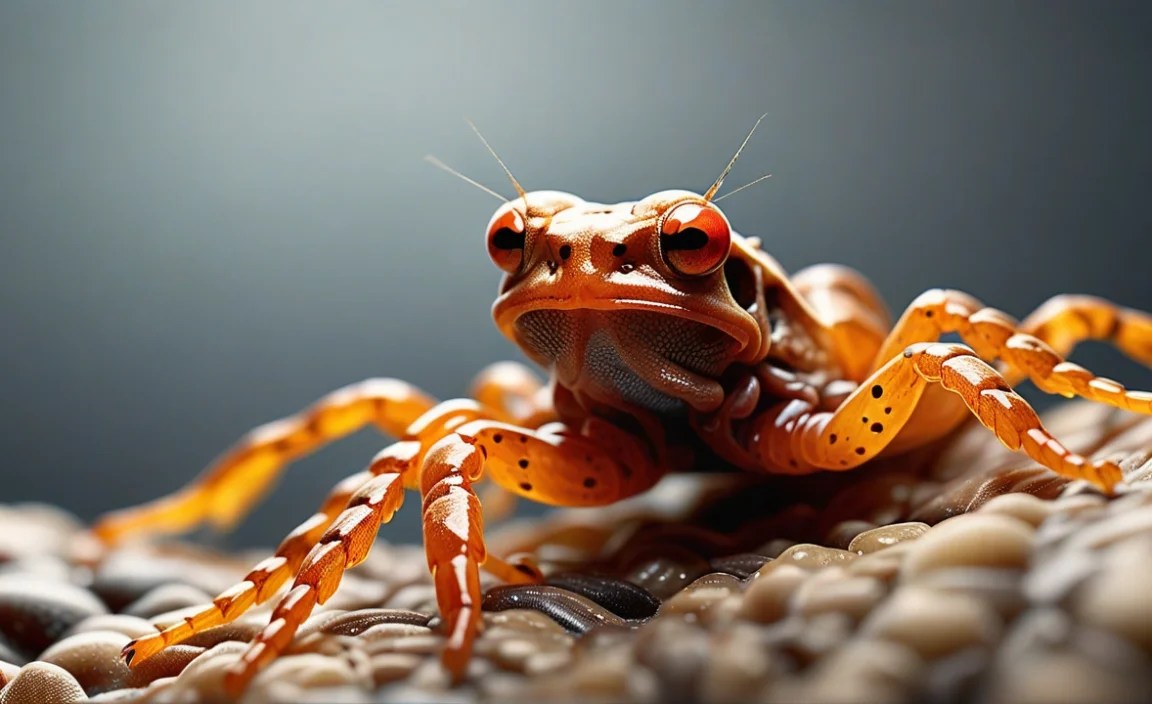
Species identification micro photography is very useful for identifying insects. Insects are small and have many tiny parts. It can be hard to tell them apart just by looking at them. Micro photography lets us see the tiny details that make each insect unique. For example, the hairs on their legs, the patterns on their wings, or the shape of their antennae. These details can help us figure out exactly what kind of insect it is. It’s like having a secret code that only micro photography can unlock. This is important because knowing what kind of insect it is helps us understand how it lives and how it affects the world around us.
- Insects have tiny, unique parts.
- Micro photos show insect details.
- Wing patterns help ID insects.
- Antennae shape matters too.
- Knowing insects helps our world.
Scientists use micro photography to study insects in many ways. They can compare the tiny details of different insects to see how they are related. They can also use micro photography to study how insects change over time. For example, they can look at how the wings of a butterfly change as it grows. Micro photography can also help us find new species of insects. If a scientist finds an insect that looks different from all the others, they can use micro photography to study its details. This can help them decide if it’s a new species. It’s like being an explorer, but instead of exploring new lands, you’re exploring the tiny world of insects.
Fun Fact or Stat: There are an estimated 5.5 million species of insects in the world!
What Features Are Important?
When identifying insects, some features are more important than others. The shape of the head is important. The number of legs is important. The type of wings is important. The color of the body can also be important. But the tiny details are often the most important. The hairs on the legs, the patterns on the wings, and the shape of the antennae. These tiny details are like fingerprints. They help us identify each insect. It’s like being a detective and looking for clues. The tiny details are the clues that help us solve the mystery of what kind of insect it is.
How Does it Help in Classification?
Classification is how scientists organize living things. They put them into groups based on how they are alike. Micro photography helps with classification. It lets scientists see the tiny details that make each insect unique. These details help them decide which group each insect belongs to. For example, if an insect has a certain type of wing pattern, it might belong to a certain family of insects. Micro photography helps make classification more accurate. It’s like having a super-powered sorting machine that can sort insects into the right groups.
Case Study: Identifying a Rare Beetle
Imagine a scientist finds a beetle in the forest. It looks a little different from other beetles. The scientist uses micro photography to study its tiny details. They look at the shape of its head, the hairs on its legs, and the patterns on its wings. They compare these details to other beetles. They realize that this beetle is different from all the others. They decide that it is a new species of beetle. They name it after the forest where they found it. This is how micro photography can help us discover new things.
Micro Photography For Plant Species Recognition
Species identification micro photography isn’t just for bugs. It also helps us understand plants. Plants have tiny parts too. These parts can be hard to see with your eyes. Micro photography lets us zoom in on the leaves, stems, and flowers. We can see the tiny hairs, the patterns on the cells, and the shape of the pollen. These details help us figure out what kind of plant it is. It’s like having a secret code that unlocks the plant’s name. This is important because knowing what kind of plant it is helps us understand how it grows and how it helps the environment.
- Plants have tiny, unique parts.
- Micro photos show plant details.
- Leaf patterns help ID plants.
- Pollen shape matters too.
- Knowing plants helps our world.
Scientists use micro photography to study plants in many ways. They can compare the tiny details of different plants to see how they are related. They can also use micro photography to study how plants change over time. For example, they can look at how the leaves of a tree change as it grows. Micro photography can also help us find new species of plants. If a scientist finds a plant that looks different from all the others, they can use micro photography to study its details. This can help them decide if it’s a new species. It’s like being a plant explorer.
Fun Fact or Stat: There are over 390,000 known species of plants!
What Leaf Structures Are Important?
When identifying plants, leaf structures are very important. The shape of the leaf is important. The edges of the leaf are important. The veins in the leaf are important. The tiny hairs on the leaf are important. The cells in the leaf are important. These tiny details are like fingerprints. They help us identify each plant. It’s like being a plant detective and looking for clues. The leaf structures are the clues that help us solve the mystery of what kind of plant it is.
How Does Pollen Analysis Help?
Pollen is a tiny powder that plants use to make seeds. Each type of plant has different pollen. Pollen analysis is when scientists study pollen. They look at the shape and size of the pollen grains. They use micro photography to see the details. This helps them identify the plant. Pollen can travel far away from the plant. So, pollen analysis can help us learn about plants that grow in different places. It’s like being a pollen detective and tracking down plants.
Using Stems and Roots for Identification
Stems and roots can also help identify plants. The stem is the part of the plant that holds up the leaves. The root is the part of the plant that grows underground. The shape and size of the stem and root can be different for each plant. The texture of the stem and root can also be different. Scientists use micro photography to study the cells in the stem and root. This helps them identify the plant. It’s like being a stem and root detective.
Advanced Techniques in Species ID Micro Photography
There are some really cool, advanced techniques in species identification micro photography. These techniques help scientists see even more details. One technique is called fluorescence microscopy. It uses special lights to make certain parts of the sample glow. This helps scientists see those parts more clearly. Another technique is called confocal microscopy. It takes many pictures at different depths. Then, it puts them together to make a 3D image. This helps scientists see the whole sample in detail. These advanced techniques are like having superpowers for seeing tiny things.
- Fluorescence makes parts glow.
- Confocal creates 3D images.
- These help see more details.
- Scientists can study better.
- It is like having superpowers.
These advanced techniques require special equipment and skills. Scientists need to be trained to use them properly. They also need to know how to interpret the images. But the results can be amazing. These techniques can help us learn things we never could before. They can help us understand how living things work. They can also help us find new ways to treat diseases. It’s like opening a new door to the tiny world and seeing all sorts of amazing things.
Fun Fact or Stat: The first fluorescence microscope was developed in the early 20th century!
What is Fluorescence Microscopy?
Fluorescence microscopy uses special lights to make things glow. Scientists use dyes that stick to certain parts of the sample. When the light shines on the dye, it glows. This helps scientists see those parts more clearly. It’s like putting a spotlight on the important parts. Fluorescence microscopy is used to study cells and tissues. It can help scientists see how cells work. It can also help them find diseases.
Understanding Confocal Microscopy
Confocal microscopy takes many pictures at different depths. Then, a computer puts them together to make a 3D image. It’s like taking slices of a cake and then putting them back together. Confocal microscopy is used to study thick samples. It can help scientists see inside cells and tissues. It can also help them see how cells interact with each other. Do you think it is like creating a map of the inside of a cell?
How Does Image Processing Enhance Results?
Image processing uses computers to make the pictures better. It can make the pictures sharper. It can remove noise. It can add color. It can also measure things in the pictures. Image processing can help scientists see things they couldn’t see before. It’s like having a super-powered photo editor. Image processing is used in all kinds of micro photography. It helps scientists get the most out of their pictures.
Challenges and Limitations of Micro Photography
Species identification micro photography is amazing, but it has some challenges. One challenge is that it can be hard to prepare the samples. The samples need to be very clean and thin. It can also be hard to get good lighting. The lighting needs to be just right to see the details. Another challenge is that it can be expensive. The equipment can cost a lot of money. But even with these challenges, micro photography is a very useful tool. It helps us learn about the tiny world around us. It is still a worthwhile field of study.
- Samples must be very clean.
- Good lighting is also needed.
- The equipment is expensive.
- Training is needed to use it.
- It is still a useful tool.
One of the biggest limitations is that micro photography can only show us what things look like. It can’t tell us what they do. For example, it can show us the shape of a cell. But it can’t tell us how the cell works. To learn about how things work, we need to use other techniques. We need to do experiments. We need to study the chemicals inside the cells. Micro photography is just one piece of the puzzle. It helps us see the tiny world. But we need other tools to understand it.
Fun Fact or Stat: The resolution of a microscope is limited by the wavelength of light!
What Are Common Preparation Issues?
Preparing samples for micro photography can be tricky. One common issue is getting the sample clean. Dirt and dust can block the light. This makes it hard to see the details. Another issue is cutting the sample thin enough. If the sample is too thick, the light won’t go through it. Another issue is staining the sample correctly. If the stain is too light, you won’t see anything. If the stain is too dark, you’ll see too much. It takes practice to prepare samples correctly.
Dealing With Lighting Problems
Lighting is very important in micro photography. If the lighting is bad, the pictures won’t be good. One common problem is not enough light. If there isn’t enough light, the pictures will be dark. Another problem is too much light. If there is too much light, the pictures will be washed out. Another problem is uneven lighting. If the lighting is uneven, some parts of the picture will be bright, and some parts will be dark. It takes practice to get the lighting just right.
Cost Considerations and Alternatives
The equipment for micro photography can be expensive. Microscopes, cameras, and lights can cost a lot of money. This can make it hard for schools and small labs to do micro photography. There are some alternatives. You can use a simple microscope with a cell phone camera. You can also borrow equipment from other labs. You can also use online resources to learn about micro photography. Even if you don’t have a lot of money, you can still explore the tiny world.
## The Future of Species Identification
The future of species identification micro photography looks bright. New technologies are making it easier and cheaper to take micro photos. New software is making it easier to analyze the images. Artificial intelligence (AI) is even being used to identify species automatically. This could make it much faster and easier to study the tiny world around us. Imagine a world where anyone can use their phone to identify any plant or bug. That future is closer than you think!
- New tech makes it easier.
- Software helps analyze images.
- AI identifies species faster.
- Phones could ID plants/bugs.
- The future looks very bright.
Species identification micro photography will play an important role in understanding and protecting our planet. As we learn more about the tiny details of living things, we can better understand how they interact with each other and with the environment. This can help us make better decisions about how to protect our planet. It can also help us find new ways to use living things to solve problems. The future of species identification micro photography is full of possibilities.
Fun Fact or Stat: AI can now identify some species with over 90% accuracy!
### What Role Will AI Play?
AI is changing the world. It can do many things. It can drive cars. It can translate languages. It can even identify species. AI can be trained to recognize patterns in micro photos. It can learn to identify different species. This can make it much faster and easier to identify species. Scientists can use AI to study large numbers of samples. They can also use AI to find new species. AI is a powerful tool for species identification micro photography.
### How Will It Impact Conservation?
Conservation is about protecting living things and their habitats. Species identification micro photography can help with conservation. It can help us identify species that are endangered. It can help us track the spread of invasive species. It can also help us monitor the health of ecosystems. By learning more about the tiny details of living things, we can make better decisions about how to protect them.
### Ethical Considerations and Future Research
As we learn more about living things, we need to think about the ethical implications. We need to make sure that we are using this knowledge responsibly. We need to protect the privacy of living things. We need to make sure that we are not harming them. We also need to continue to do research. There is still much that we don’t know about the tiny world. By continuing to explore, we can learn even more. We can use this knowledge to make the world a better place.
Summary
Species identification micro photography is a powerful tool. It lets scientists see the tiny details of living things. They use special cameras and microscopes. These tools make tiny things look big. This helps them identify different types of bugs, plants, and other organisms. The close-up images show features that we can’t see with our eyes. This helps scientists learn about the world around us. They can study the tiny parts of animals and plants. This helps them know what kind of species they are.
This technology helps research in biology and environmental science. It helps us understand how living things work. It helps us protect our planet. The future of species identification micro photography looks bright. New technologies are making it easier and cheaper to use. Artificial intelligence is helping us analyze the images. This could help us discover new species and protect our planet. It is like having a superpower to explore the tiny world!
Conclusion
Species identification micro photography is a valuable tool for scientists. It helps them learn about the tiny details of living things. These details help them identify different species. This knowledge is important for understanding and protecting our planet. As technology improves, micro photography will become even more powerful. It will help us discover new things about the world around us. It will help us make better decisions about how to care for our planet. Species identification micro photography is an important part of science.
Frequently Asked Questions
Question No 1: What is species identification micro photography?
Answer: Species identification micro photography is a way to take very close-up pictures of tiny things. It helps scientists see details they cannot see with their eyes. These details can help them figure out what kind of bug, plant, or other living thing they are looking at. It’s like using a super-powered magnifying glass to learn about the tiny world around us. The pictures show tiny hairs, patterns, and shapes that help identify species.
Question No 2: What tools do scientists use for micro photography?
Answer: Scientists use special tools for micro photography. They use microscopes to make tiny things look bigger. They also use special cameras to take pictures of what they see in the microscope. The cameras need to be very good to take clear pictures of tiny details. They also need special lights to help them see the details. Sometimes, they need to prepare the sample by putting it on a slide or adding special chemicals. The right tools are important for good micro photography.
Question No 3: Why is micro photography important?
Answer: Micro photography is very important because it helps us learn about the world. It lets us see things that are too small to see with our eyes. This helps scientists understand how living things work. It also helps them find new species. Species identification micro photography can help us protect our planet by learning about endangered species. It’s like unlocking the secrets of the tiny world to make the big world better. By using it, we can learn and protect the environment.
Question No 4: How does micro photography help identify insects?
Answer: Insects are small, and it can be hard to tell them apart. Micro photography lets us see tiny details on insects. We can see the hairs on their legs, the patterns on their wings, and the shape of their antennae. These details help us figure out what kind of insect it is. It’s like having a secret code that only micro photography can unlock. Knowing the insect helps us understand how it lives and affects the world. We can study the close-up images to know more about bugs.
Question No 5: Can micro photography be used for plants too?
Answer: Yes, micro photography can be used for plants too! Plants have tiny parts that are hard to see. Micro photography lets us zoom in on the leaves, stems, and flowers. We can see the tiny hairs, the patterns on the cells, and the shape of the pollen. These details help us figure out what kind of plant it is. It’s like having a secret code that unlocks the plant’s name. It’s not just for animals and insects but also plants. Scientists use species identification micro photography to identify different species.
Question No 6: What are some challenges of micro photography?
Answer: Micro photography has some challenges. It can be hard to prepare the samples. They need to be very clean and thin. It can also be hard to get good lighting. The lighting needs to be just right to see the details. Another challenge is that the equipment can be expensive. But even with these challenges, micro photography is a very useful tool. It helps us learn about the tiny world around us. Species identification micro photography continues to grow as technology improves.


