
Blue Morpho Field Study: Discover Powerful Secrets

Have you ever seen a butterfly with bright blue wings? It might have been a Blue Morpho! These butterflies are amazing. Scientists do field studies to learn about them. What do they discover during a Blue Morpho field study?
Butterflies live in the rainforest. Rainforests are hot and wet. Many interesting animals and plants live there. Scientists want to understand how they live. A Blue Morpho field study helps us learn. We can learn how they eat and grow. We also learn how they stay safe.
Imagine being a scientist. You get to watch butterflies all day. You write down what you see. This is what a Blue Morpho field study is all about. It is about learning by watching. Let’s find out more!
Key Takeaways
- Blue Morpho field studies help us understand their habitat, behavior, and life cycle.
- Scientists observe Blue Morphos in their natural rainforest environment.
- The bright blue wings of the Blue Morpho are for camouflage and attracting mates.
- Blue Morpho caterpillars eat leaves, while adults drink juices from rotting fruit.
- These studies help protect Blue Morphos and their rainforest homes.
Understanding the Blue Morpho Field Study
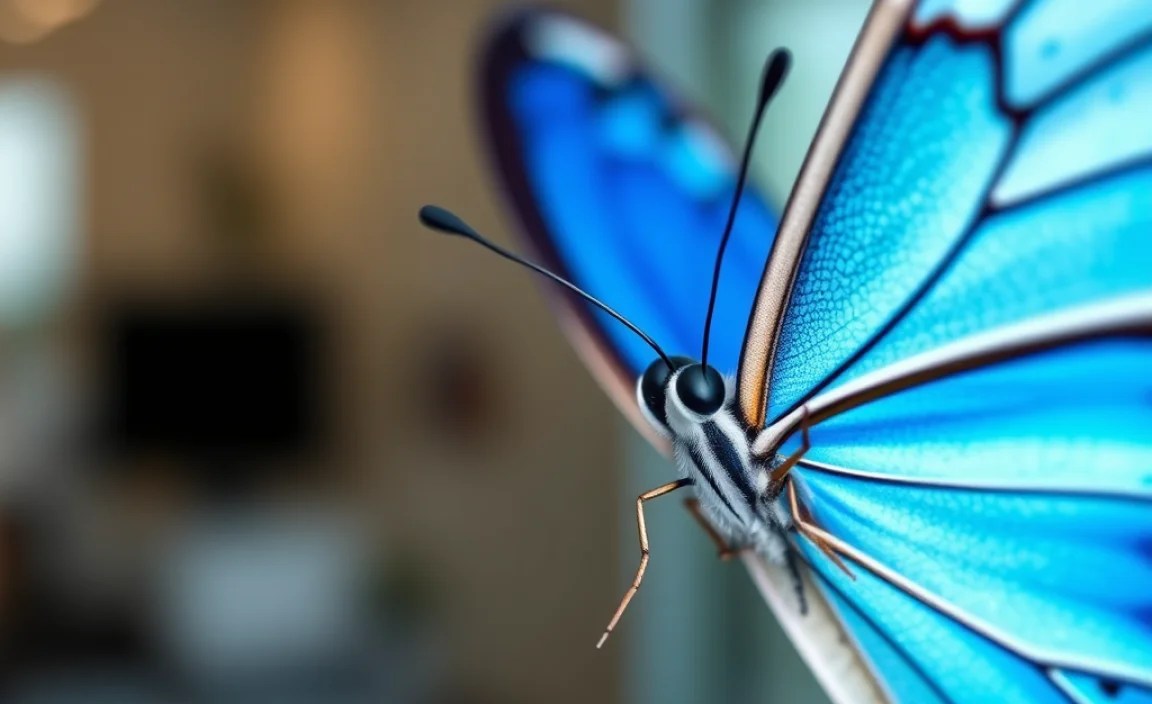
A Blue Morpho field study is when scientists go to the rainforest. They want to learn about Blue Morpho butterflies. They watch the butterflies in their home. This is called their habitat. Scientists watch how the butterflies act. This is called their behavior. They also study how the butterflies grow. This is called their life cycle. Scientists write down everything they see. They use special tools to help them. They might use binoculars to see far away. They might use nets to catch butterflies. They study the butterflies up close. Then they let them go. This helps them learn all about Blue Morphos. The field study is very important for understanding these creatures.
- Scientists observe Blue Morphos in the rainforest.
- They record the butterflies’ behavior.
- They study the butterfly’s life cycle.
- Scientists use tools to help them.
- They release the butterflies after studying them.
Imagine you are a scientist on a Blue Morpho field study. You wake up early. You put on your hiking boots. You grab your notebook and binoculars. You walk into the rainforest. The air is hot and sticky. You see a flash of blue. It is a Blue Morpho! You watch it fly. It lands on a leaf. You write down what you see. You notice it is drinking from a rotting fruit. You learn that Blue Morphos like sweet juice. This is what a field study is like. It is about being a detective in nature. You are always looking for clues.
What is the Purpose of a Field Study?
Why do scientists do field studies? They do them to learn about animals and plants. It helps us learn how they live. We learn what they eat and where they sleep. We learn how they stay safe. Field studies also help us protect them. If we know how they live, we can help them survive. Blue Morpho field studies help us protect the rainforest. Rainforests are important for our planet. They give us air to breathe. They are home to many animals. By studying Blue Morphos, we can protect their home. This helps all the animals and plants that live there. It is like taking care of our planet.
How Do Scientists Collect Data?
How do scientists gather information during a field study? They use many different ways. They write notes in notebooks. They take pictures and videos. They might collect samples. Samples could be leaves or insects. They use special tools to measure things. They measure the size of the butterflies’ wings. They measure the temperature of the rainforest. They use GPS to mark where they saw the butterflies. All of this information is called data. They put the data into computers. They look for patterns. They learn from the patterns. This helps them understand the Blue Morphos better.
Why is a Field Study Important?
Why is studying Blue Morphos in the wild so important? It is important because it shows us how they live in their natural home. We can’t learn everything in a lab. We need to see how they act in the rainforest. We can see what they eat. We can see who their enemies are. We can see how they find a mate. This helps us understand the whole picture. We can learn how to protect them better. If we take them out of their home, they might act differently. A Blue Morpho field study gives us real information. This helps us make good choices to protect them.
Fun Fact or Stat: Blue Morpho butterflies can only be found in rainforests of Latin America!
Studying the Blue Morpho’s Habitat
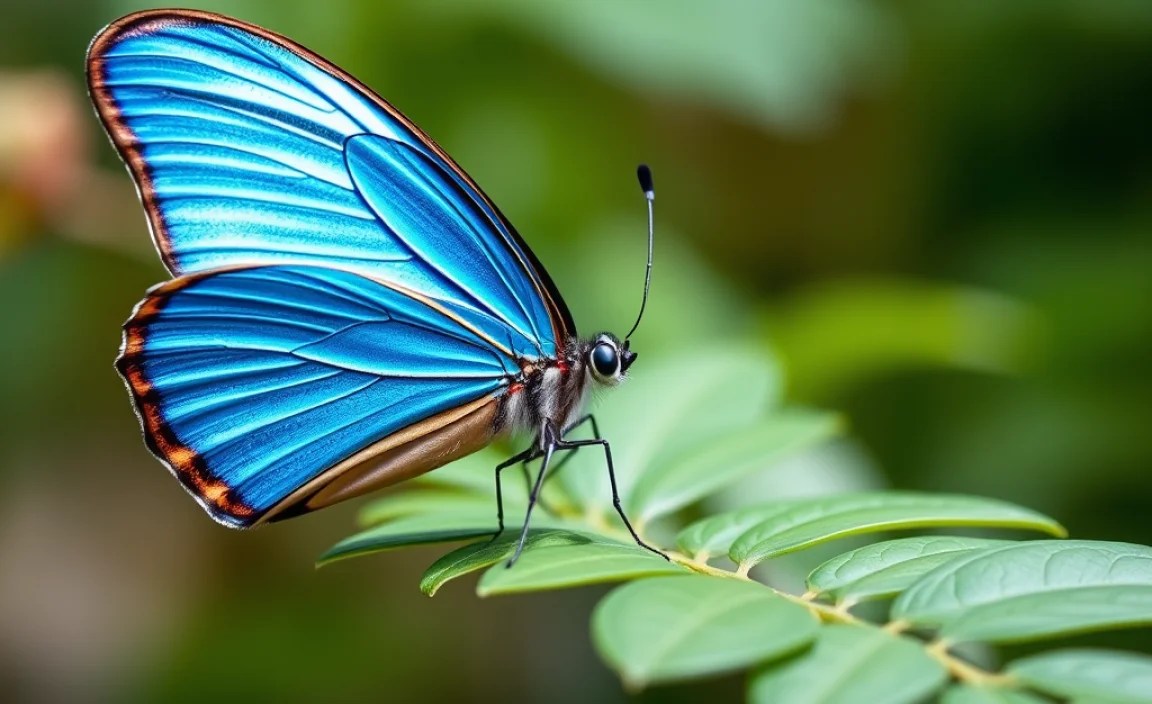
A Blue Morpho field study often focuses on where these butterflies live. This is their habitat. Blue Morphos live in rainforests. Rainforests are hot and wet. They have many tall trees. They have many plants and animals. Scientists study the rainforest to learn what the Blue Morphos need. They study the plants that the caterpillars eat. They study the flowers that the butterflies drink from. They study the weather. They study the other animals that live there. This helps them understand how the Blue Morphos fit into the rainforest. It is like studying a neighborhood to see how everyone gets along.
- Blue Morphos live in rainforests.
- Rainforests are hot and wet places.
- Scientists study the plants they eat.
- They study the flowers they drink from.
- They study the weather patterns.
- They study other rainforest animals.
Imagine you are exploring the rainforest. You are looking for Blue Morphos. You notice that they like to be near rivers. You see them flying near tall trees. You see them landing on certain plants. You write all of this down. You learn that they need water. They need shade. They need certain plants for food. This helps you understand their habitat. You also notice that some areas of the rainforest are being cut down. You realize that this is hurting the Blue Morphos. You know that you need to protect their habitat. This is why studying their habitat is so important.
What Makes the Rainforest Special?
What makes the rainforest so special for the Blue Morpho? The rainforest has everything they need. It has lots of food. The caterpillars eat leaves. The butterflies drink nectar from flowers. It has lots of water. It has places to hide from enemies. The tall trees give them shelter. The rainforest is also warm all year round. This means the Blue Morphos can live there all year. The rainforest is like a perfect home for them. It is important to protect it.
How Do Humans Affect Their Habitat?
How do people change the rainforest? People cut down trees. This is called deforestation. People build farms and roads. This destroys the Blue Morpho’s home. When the rainforest is gone, the Blue Morphos have nowhere to live. They cannot find food. They cannot find shelter. They cannot survive. It is important to protect the rainforest. We need to find ways to live without hurting the rainforest. We can recycle. We can plant trees. We can help protect the Blue Morphos.
What Other Animals Live There?
What other animals share the rainforest with the Blue Morpho? Many animals live there! There are monkeys, sloths, and jaguars. There are toucans, parrots, and macaws. There are frogs, snakes, and lizards. All of these animals depend on the rainforest. They all need food, water, and shelter. They all play a part in the rainforest. The Blue Morpho is just one part of this amazing ecosystem. An ecosystem is a community of living things. They all live together. They all depend on each other.
Fun Fact or Stat: Rainforests cover less than 6% of the Earth’s surface but contain over half of the world’s plant and animal species!
Observing Blue Morpho Behavior in the Wild
A Blue Morpho field study involves watching how the butterflies act. This is their behavior. Scientists watch how they fly. They watch how they eat. They watch how they find a mate. They watch how they protect themselves. They write down everything they see. They learn about their habits. They learn about their social life. They learn about their instincts. This helps them understand how the Blue Morphos survive in the rainforest. It is like watching a movie about their lives.
- Scientists watch how they fly.
- They watch how they eat.
- They watch how they find mates.
- They watch how they protect themselves.
- They learn about their habits.
Imagine you are watching a Blue Morpho. It is flying through the rainforest. It flits from flower to flower. It is looking for nectar. You see it land on a rotting fruit. It is drinking the juice. You see another Blue Morpho fly by. They flutter around each other. They are trying to attract a mate. You see a bird flying towards them. The Blue Morphos quickly fly away. They are trying to escape. You learn that they are always looking for food. They are always looking for a mate. They are always trying to stay safe. This is what their behavior is like.
How Do They Find Food?
How do Blue Morphos find food? The caterpillars eat leaves. They like to eat leaves from certain plants. The butterflies drink nectar from flowers. They also drink juice from rotting fruit. They use their antennae to smell the food. Their antennae are like noses. They can smell the sweet nectar from far away. They also use their eyes to see the flowers. They can see the bright colors. This helps them find the food they need. They are very good at finding food.
How Do They Attract Mates?
How do Blue Morphos find a partner? The male butterflies have bright blue wings. They use their wings to attract the females. They fly around and show off their colors. The female butterflies choose the males with the brightest wings. The bright blue color is a sign of good health. It shows that they are strong. The males also release special smells. The smells are called pheromones. The pheromones attract the females. It is like sending a love letter with a smell.
How Do They Protect Themselves?
How do Blue Morphos stay safe from danger? Their bright blue wings help them hide. When they are flying, the blue color flashes. This makes it hard for birds to catch them. When they land, they close their wings. The underside of their wings is brown. This helps them blend in with the leaves. They also have a special trick. They can drop to the ground and play dead. This makes the birds think they are not alive. This helps them escape from danger.
Fun Fact or Stat: The bright blue color of the Blue Morpho’s wings is not from pigment, but from the way light reflects off tiny scales!
Life Cycle Study of the Blue Morpho

A Blue Morpho field study also looks at how they grow. This is called their life cycle. Blue Morphos go through four stages. First, they are eggs. Then, they are caterpillars. Then, they are pupae. Finally, they are butterflies. Scientists study each stage. They learn how long each stage lasts. They learn what the caterpillars eat. They learn how the pupae change. They learn how the butterflies fly. This helps them understand the whole life of the Blue Morpho. It is like reading a book about their life story.
- Blue Morphos have four life stages.
- The stages are egg, caterpillar, pupa, and butterfly.
- Scientists study each stage carefully.
- They learn how long each stage lasts.
- They learn what the caterpillars eat.
Imagine you are watching a Blue Morpho egg. It is tiny and green. It is stuck to a leaf. After a few days, it hatches. A small caterpillar comes out. The caterpillar is very hungry. It starts eating the leaf. It grows bigger and bigger. It sheds its skin several times. Then, it turns into a pupa. The pupa is inside a chrysalis. The chrysalis is green and hard. Inside, the pupa is changing. After a few weeks, the chrysalis opens. A beautiful Blue Morpho comes out. It flies away. You have watched the whole life cycle.
What Does the Caterpillar Eat?
What do Blue Morpho caterpillars eat? They eat leaves. They like to eat leaves from certain plants. They can eat a lot of leaves. They grow very quickly. They need the food to grow. They eat all day long. They are like little eating machines. They help turn the leaves into energy. This energy helps them change into butterflies.
How Long Does Each Stage Last?
How long does each stage of the Blue Morpho’s life last? The egg stage lasts a few days. The caterpillar stage lasts a few weeks. The pupa stage lasts a few weeks. The butterfly stage lasts a few months. The whole life cycle takes about four months. This can change depending on the weather. Warmer weather makes them grow faster. Colder weather makes them grow slower.
What Happens Inside the Chrysalis?
What happens inside the chrysalis? The caterpillar changes into a butterfly. This is called metamorphosis. It is a big change. The caterpillar’s body breaks down. It forms new parts. It grows wings. It grows antennae. It grows legs. It grows a proboscis. The proboscis is like a straw. It uses it to drink nectar. All of this happens inside the chrysalis. It is like a magic trick.
Fun Fact or Stat: The caterpillar of the Blue Morpho is red-brown and has irritating hairs to protect itself from predators!
Tools and Techniques in Blue Morpho Field Research
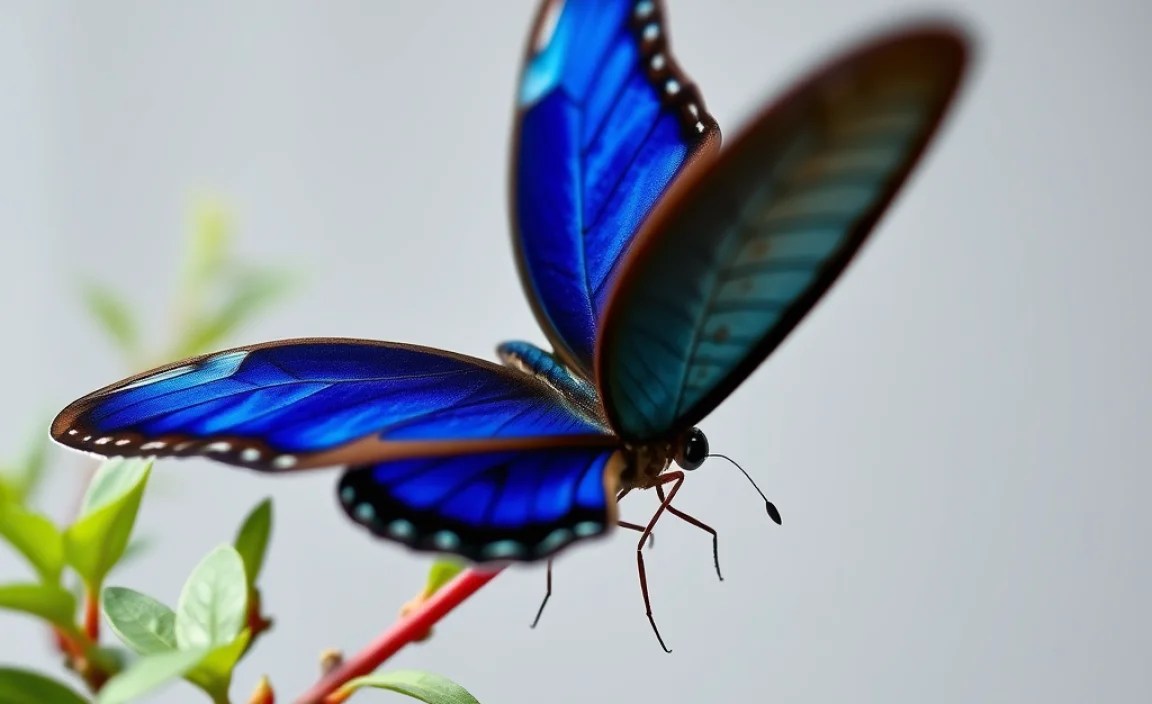
Scientists use special tools for a Blue Morpho field study. They use binoculars to see far away. They use nets to catch butterflies. They use cameras to take pictures. They use notebooks to write down notes. They use GPS to mark locations. They use special software to analyze data. They also use computers to make graphs and charts. All of these tools help them learn more about the Blue Morphos. These tools help them do their work better. Without these tools, it would be hard to study the butterflies.
- Scientists use binoculars to see far.
- They use nets to catch butterflies.
- They use cameras to take pictures.
- They use notebooks to write notes.
- They use GPS to mark locations.
- They use computers to analyze data.
Imagine you are a scientist using a butterfly net. You see a Blue Morpho flying by. You carefully swing the net. You catch the butterfly. You gently take it out of the net. You look at it closely. You measure its wings. You take pictures of it. You write down the date and time. You write down where you caught it. Then, you let it go. You have collected important data. You will use this data to learn more about Blue Morphos. The butterfly net is a very important tool.
What Kind of Nets Do They Use?
What kind of nets do scientists use? They use special nets for catching butterflies. The nets are made of lightweight material. They are easy to carry. The nets have long handles. This helps them reach the butterflies. The nets are also gentle. They don’t hurt the butterflies. The scientists are careful when they use the nets. They want to protect the butterflies.
How Do They Track Butterflies?
How do scientists follow butterflies? They use a technique called tagging. They put small tags on the butterflies’ wings. The tags have numbers on them. The scientists write down the numbers. Then, they release the butterflies. If they see the butterfly again, they can read the tag. They can see where the butterfly has been. This helps them learn about the butterflies’ movements. It is like giving the butterflies a tiny backpack.
What Software Do They Use?
What computer programs do scientists use? They use programs to organize data. They use programs to make graphs. They use programs to analyze data. They use programs to make maps. These programs help them see patterns. They help them understand the data better. The computer is a very important tool for scientists. It helps them make sense of all the information.
Fun Fact or Stat: Some scientists use drones with cameras to observe butterfly populations from above!
Challenges in Conducting a Blue Morpho Field Study
Doing a Blue Morpho field study can be hard. The rainforest is a difficult place to work. It is hot and wet. There are many bugs. It can be hard to find the butterflies. They are good at hiding. It can be hard to track them. They fly far away. It can be hard to protect the data. The weather can damage notebooks and equipment. Despite these challenges, scientists keep studying Blue Morphos. They know it is important to learn about them. They find ways to overcome the problems.
- The rainforest is hot and wet.
- There are many bugs.
- It can be hard to find butterflies.
- It can be hard to track butterflies.
- The weather can damage equipment.
Imagine you are trying to study Blue Morphos in the rainforest. It starts to rain. The rain is pouring down. Your notebook is getting wet. Your pen is not working. You can’t see the butterflies. They are hiding under the leaves. You are getting bitten by mosquitoes. You are tired and sweaty. You want to give up. But you remember why you are there. You want to learn about the butterflies. You want to protect them. You keep going. This is what it is like to face challenges in the rainforest.
How Do They Deal With the Heat?
How do scientists stay cool in the hot rainforest? They wear light clothes. They drink lots of water. They take breaks in the shade. They try to work in the morning. The morning is cooler than the afternoon. They also learn to deal with the heat. They get used to it over time. They know that it is part of the job. They are tough and they don’t give up.
How Do They Protect Themselves From Bugs?
How do scientists keep bugs away? They wear bug spray. They wear long sleeves and pants. They wear hats with nets. They try to avoid areas with lots of bugs. They also learn to ignore the bugs. They know that they are part of the rainforest. They try not to let them bother them. They are brave and they keep working.
How Do They Find the Butterflies?
How do scientists find the Blue Morphos? They know where the butterflies like to be. They look for them near rivers. They look for them near tall trees. They look for them near certain plants. They also use binoculars. They scan the rainforest for flashes of blue. They are patient and they keep looking. They know that eventually they will find the butterflies.
Fun Fact or Stat: Humidity in the rainforest can reach up to 100%, making it feel even hotter!
Conservation Efforts Based on Blue Morpho Field Study
Blue Morpho field studies help us protect these butterflies. Scientists learn about their needs. They learn about their threats. They use this information to help them survive. They work to protect their habitat. They work to stop deforestation. They work to educate people about the butterflies. They help people understand why they are important. They support sustainable farming. This helps farmers grow food without hurting the rainforest. All of these efforts help protect the Blue Morphos and their home.
- Studies help protect their habitat.
- They help stop deforestation.
- They educate people about butterflies.
- They support sustainable farming.
- These efforts help protect the butterflies.
Imagine you are a scientist working to protect Blue Morphos. You have learned that deforestation is hurting them. You work with the local community. You help them find new ways to make money. You teach them about sustainable farming. They can grow crops without cutting down trees. You also teach them about ecotourism. They can take people on tours of the rainforest. This helps them make money and protect the rainforest. You are making a difference in the lives of the Blue Morphos and the people who live there.
| Conservation Effort | Description | How it Helps Blue Morphos |
|---|---|---|
| Habitat Protection | Creating protected areas in the rainforest. | Gives them a safe place to live and breed. |
| Reforestation | Planting trees to replace those that have been cut down. | Restores their habitat and provides food. |
| Sustainable Farming | Helping farmers grow food without harming the rainforest. | Reduces the need for deforestation. |
| Ecotourism | Taking people on tours of the rainforest in a responsible way. | Provides income for local communities and encourages conservation. |
Why is Conservation Important?
Why is it important to protect Blue Morphos? They are part of the rainforest ecosystem. They help pollinate flowers. They are food for other animals. If they disappear, it will hurt the whole ecosystem. It is important to keep the rainforest healthy. It is important to protect all the animals and plants that live there. We all depend on each other. We need to work together to protect our planet.
How Can Kids Help?
How can kids help protect Blue Morphos? They can learn about them. They can tell their friends and family about them. They can support organizations that protect the rainforest. They can recycle and reduce waste. They can plant trees. They can make a difference. Even small actions can help. Every little bit counts. We all need to do our part to protect the planet.
What is Sustainable Farming?
What is sustainable farming? It is farming that does not harm the environment. Farmers use natural methods to grow crops. They don’t use harmful chemicals. They protect the soil. They conserve water. They plant trees. They help protect the rainforest. Sustainable farming is good for the environment. It is good for the farmers. It is good for the Blue Morphos.
Fun Fact or Stat: Some organizations offer “adopt-a-butterfly” programs to raise money for rainforest conservation!
Summary
A Blue Morpho field study is a deep dive into the lives of these beautiful butterflies. Scientists go to the rainforest to watch them. They learn about their habitat and behavior. They study their life cycle. They use special tools to help them. They face many challenges. But they keep going. They know that it is important to learn about these butterflies. Blue Morpho field studies help us protect them and their rainforest home.
These studies provide valuable information. This information guides conservation efforts. By understanding the Blue Morpho’s needs, we can help them thrive. We can protect their habitat. We can support sustainable farming. We can educate people about their importance. Together, we can ensure a future for these amazing creatures.
Conclusion
Blue Morpho butterflies are amazing creatures. They live in the rainforest. They have bright blue wings. Scientists study them in their natural home. This is called a field study. Field studies help us understand how they live. We learn about their habitat, behavior, and life cycle. This information helps us protect them. By learning about these butterflies, we can help save them. We can also help save the rainforest. It is important to protect these beautiful creatures for future generations.
Frequently Asked Questions
Question No 1: What is a Blue Morpho field study?
Answer: A Blue Morpho field study is when scientists go to the rainforest to observe Blue Morpho butterflies in their natural environment. They study their behavior, habitat, and life cycle. They collect data and use tools to learn more about these amazing creatures. This helps us understand how they live and how to protect them. It’s like being a nature detective, solving the mysteries of the rainforest one butterfly at a time.
Question No 2: Where do Blue Morpho butterflies live?
Answer: Blue Morpho butterflies live in the rainforests of Latin America. These rainforests are hot and wet. They have many tall trees and plants. Blue Morphos need these rainforests to survive. The rainforest provides them with food, water, and shelter. It is their perfect home. They cannot live in other places because they need the specific conditions of the rainforest. They are perfectly adapted to their environment, relying on the rainforest for their survival.
Question No 3: What do Blue Morpho butterflies eat?
Answer: Blue Morpho caterpillars eat leaves. They like leaves from certain plants. Adult Blue Morphos drink nectar from flowers. They also drink juice from rotting fruit. They use their proboscis to drink. The proboscis is like a straw. They unroll it and stick it into the nectar or juice. This helps them get the food they need to survive. It’s like having a built-in straw to enjoy their favorite drinks!
Question No 4: Why are Blue Morpho butterflies blue?
Answer: The Blue Morpho’s wings are blue because of the way light reflects off tiny scales. It’s not a pigment. The scales have tiny structures. These structures reflect only blue light. This makes the wings look bright blue. The underside of their wings is brown. This helps them hide from predators when they land. This color is very important for camouflage and attracting mates. It’s like a natural magic trick with light!
Question No 5: How can I help protect Blue Morpho butterflies?
Answer: You can help protect Blue Morpho butterflies in many ways. Learn about them and share what you learn with others. Support organizations that protect the rainforest. Reduce your use of paper and wood products. This helps prevent deforestation. Recycle and reduce waste. Plant trees in your community. Even small actions can make a big difference. By working together, we can help save these beautiful butterflies and their home. Every little bit counts towards protecting their future.
Question No 6: What are some challenges scientists face during a Blue Morpho field study?
Answer: Scientists face many challenges during a Blue Morpho field study. The rainforest is hot and humid. There are many bugs. It can be hard to find the butterflies. They are good at hiding. The weather can be unpredictable. It can rain a lot. Scientists have to be prepared for these challenges. They need to wear appropriate clothing. They need to bring bug spray. They need to be patient and persistent. Despite these challenges, they continue their important work to learn about and protect these amazing butterflies. Their dedication is essential for understanding and conserving these creatures.


