
Seasonal Butterfly Emergence: Witness the Magic!

Seasonal butterfly emergence refers to the time of year when adult butterflies emerge from their pupal stage (chrysalis). This emergence is highly dependent on temperature, daylight hours, and the availability of host plants for caterpillars. Different butterfly species emerge at different times, often coinciding with the blooming of specific flowers. Understanding emergence patterns helps gardeners attract butterflies and contributes to conservation efforts by ensuring habitats are ready when butterflies need them most.
Have you ever wondered when those beautiful butterflies will grace your garden with their presence? It’s a question many of us butterfly enthusiasts ponder! Understanding when different butterfly species emerge can feel like unlocking a secret code to the natural world. Knowing their emergence patterns helps us create the perfect environment for them to thrive, ensuring our gardens and wild spaces are butterfly havens.
In this guide, we’ll explore the fascinating world of seasonal butterfly emergence. We’ll cover the key factors influencing when butterflies appear, how to track emergence patterns, and what you can do to support these amazing creatures. Get ready to discover the magic of butterfly seasons!
Understanding Seasonal Butterfly Emergence

Seasonal butterfly emergence is the period when adult butterflies leave their pupal stage and begin their adult lives. This event is closely tied to environmental cues, primarily temperature and daylight, that signal the right time for butterflies to emerge. Butterfly emergence is not random; it’s a carefully timed event influenced by the species’ life cycle and local climate.
Factors Influencing Emergence
Several factors play a crucial role in determining when butterflies emerge:
- Temperature: Warm temperatures speed up development inside the chrysalis.
- Daylight Hours: Longer days signal the arrival of spring and summer.
- Host Plant Availability: Caterpillars need food, so butterflies emerge when their host plants are abundant.
- Rainfall: Adequate moisture levels are important for plant growth and caterpillar survival.
Why is Emergence Timing Important?
Understanding when butterflies emerge is important for several reasons:
- Gardening: Planting the right flowers at the right time to provide nectar for adult butterflies.
- Conservation: Protecting butterfly habitats by ensuring host plants are available.
- Scientific Research: Studying the effects of climate change on butterfly populations.
- Education: Teaching others about the life cycle of butterflies and their ecological importance.
Tracking Butterfly Emergence in Your Area

To understand when butterflies emerge in your area, you can use a variety of methods. These range from simple observation to more sophisticated tracking techniques.
Observation and Record Keeping
One of the easiest ways to track butterfly emergence is simply to observe and keep records. Here’s how to do it:
- Create a Butterfly Journal: Start a notebook or use a digital document to record your observations.
- Note the Date: Record the date when you see the first adult butterfly of each species.
- Identify the Species: Use a field guide or online resources to identify the butterfly species.
- Record Location: Note where you saw the butterfly (e.g., your garden, a local park).
- Observe Behavior: Take notes on what the butterfly was doing (e.g., feeding on a flower, laying eggs).
Using Citizen Science Projects
Citizen science projects are a fantastic way to contribute to butterfly research and learn about emergence patterns. Here are some popular projects:
- Journey North: Tracks the migration of Monarch butterflies and other species. Journey North
- eButterfly: A platform for reporting butterfly sightings and accessing data on butterfly distributions. eButterfly
- BAMONA (Butterflies and Moths of North America): Provides information on butterfly and moth species, distributions, and sightings. BAMONA
Leveraging Online Resources and Databases
Many online resources and databases can help you track butterfly emergence in your area:
- Local Butterfly Clubs: Many areas have local butterfly clubs that share information on sightings and emergence patterns.
- University Extension Offices: Local extension offices often have information on butterfly activity in your region.
- Online Forums: Butterfly enthusiast forums can provide real-time updates on butterfly sightings.
Creating a Butterfly-Friendly Habitat
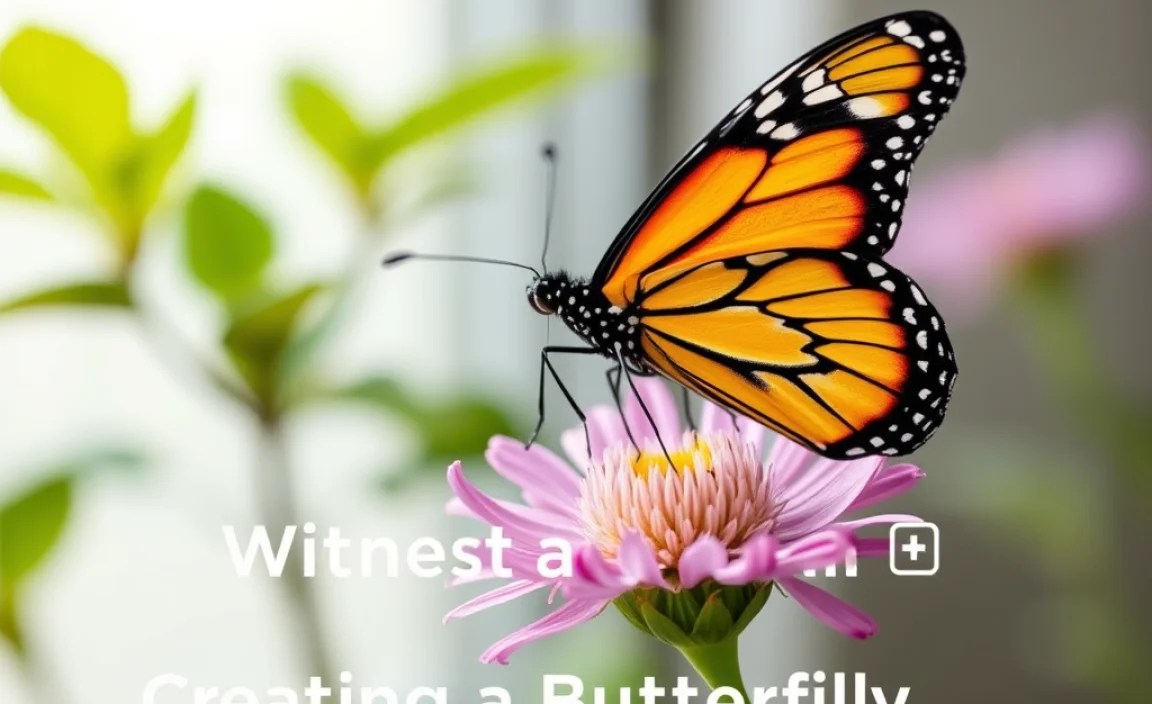
To support butterflies, it’s essential to create a habitat that meets their needs throughout their life cycle. This means providing food for caterpillars (host plants) and nectar for adult butterflies.
Selecting the Right Host Plants
Host plants are specific plants that caterpillars feed on. Different butterfly species have different host plant preferences. Here are some examples:
- Monarch: Milkweed (Asclepias spp.)
- Black Swallowtail: Parsley, dill, fennel
- Spicebush Swallowtail: Spicebush, sassafras
- Eastern Tiger Swallowtail: Wild cherry, tulip tree
Providing Nectar Sources
Adult butterflies need nectar for energy. Plant a variety of flowers that bloom at different times of the year to provide a continuous food source. Some popular nectar plants include:
- Butterfly Bush (Buddleja davidii): A favorite of many butterfly species.
- Zinnia (Zinnia elegans): Easy to grow and comes in many colors.
- Coneflower (Echinacea spp.): A native plant that attracts butterflies and other pollinators.
- Lantana (Lantana camara): Provides a long-lasting source of nectar.
Providing Shelter and Water
Butterflies also need shelter from the elements and a source of water. Here are some tips:
- Shelter: Plant trees and shrubs to provide shelter from wind and rain.
- Water: Create a shallow dish of water with pebbles for butterflies to land on and drink.
- Sun: Butterflies need sunlight to warm their bodies, so ensure there are sunny spots in your garden.
Understanding Butterfly Life Cycles and Emergence Patterns

Butterflies go through a complete metamorphosis, with four distinct stages: egg, larva (caterpillar), pupa (chrysalis), and adult. Understanding these stages helps in predicting and supporting butterfly emergence.
Egg Stage
Butterflies lay their eggs on or near their host plants. The eggs can vary in shape and color, depending on the species. The egg stage typically lasts a few days to a couple of weeks.
Larva (Caterpillar) Stage
The caterpillar stage is when the butterfly grows and feeds voraciously. Caterpillars go through several molts, shedding their skin as they grow. This stage can last from a few weeks to several months, depending on the species and environmental conditions.
Pupa (Chrysalis) Stage
When the caterpillar is ready, it forms a pupa or chrysalis. Inside the chrysalis, the caterpillar undergoes a remarkable transformation, reorganizing its tissues to form the adult butterfly. This stage can last from a few weeks to several months, depending on the species and temperature.
Adult Stage
The adult butterfly emerges from the chrysalis. The butterfly’s wings are initially crumpled, but they expand as fluid is pumped through the veins. Once the wings are dry and hardened, the butterfly is ready to fly and reproduce. The adult stage can last from a few weeks to several months, depending on the species.
Specific Butterfly Emergence Examples
Let’s look at some specific examples of butterfly emergence patterns to illustrate how these principles work in practice.
Monarch Butterfly (Danaus plexippus)
Monarch butterflies are famous for their long migrations. In North America, they typically emerge in the spring and summer, with multiple generations during the breeding season. Here’s a breakdown:
- Spring Generation: Emerges from overwintering sites in Mexico and California.
- Summer Generations: Several generations emerge throughout the summer, moving northward.
- Migratory Generation: The final generation of the year migrates south to overwintering sites.
Black Swallowtail (Papilio polyxenes)
Black Swallowtails are common in gardens and fields. They typically have two to three broods per year. Here’s a typical emergence pattern:
- First Brood: Emerges in late spring.
- Second Brood: Emerges in mid-summer.
- Third Brood: May emerge in late summer in warmer regions.
Eastern Tiger Swallowtail (Papilio glaucus)
Eastern Tiger Swallowtails are large, striking butterflies found in woodlands and gardens. They typically have one to two broods per year.
- First Brood: Emerges in late spring.
- Second Brood: May emerge in mid-summer in warmer regions.
Challenges to Butterfly Emergence
Several factors can negatively impact butterfly emergence, including habitat loss, pesticide use, and climate change.
Habitat Loss
Habitat loss is one of the biggest threats to butterflies. As natural areas are converted to agriculture, urban development, and other uses, butterflies lose their host plants and nectar sources. Supporting local conservation efforts can help preserve vital habitats.
Pesticide Use
Pesticides can harm or kill butterflies and their caterpillars. Avoid using pesticides in your garden, and encourage others to do the same. Organic gardening practices can help create a safe environment for butterflies.
Climate Change
Climate change can disrupt butterfly emergence patterns. Warmer temperatures can cause butterflies to emerge earlier than usual, which can lead to mismatches with their host plants and nectar sources. Supporting efforts to reduce greenhouse gas emissions can help mitigate the impacts of climate change on butterflies.
Conservation Efforts and How You Can Help
Protecting butterflies and their habitats requires a collective effort. Here are some ways you can help:
- Plant Host Plants and Nectar Sources: Create a butterfly-friendly garden by planting host plants and nectar sources.
- Avoid Pesticides: Use organic gardening practices to protect butterflies from pesticides.
- Support Conservation Organizations: Donate to or volunteer with organizations that protect butterfly habitats.
- Educate Others: Share your knowledge about butterflies with friends, family, and community members.
- Participate in Citizen Science Projects: Contribute to butterfly research by reporting your sightings.
Butterfly Emergence Calendar Example
Creating a calendar for your specific region can help you anticipate emergence. Here is an example of what one might look like:
| Month | Butterfly Species | Host Plant | Nectar Source |
|---|---|---|---|
| March | Spring Azure | Flowering dogwood | Spring ephemerals |
| April | West Coast Lady | Thistles, Mallows | Dandelions, Lilac |
| May | Monarch (early) | Milkweed | Lilac, Clover |
| June | Black Swallowtail | Dill, Parsley | Butterfly Bush, Zinnia |
| July | Viceroy | Willow, Poplar | Milkweed, Coneflower |
| August | Red Admiral | Nettles | Asters, Goldenrod |
| September | Monarch (late) | Milkweed | Asters, Goldenrod |
| October | Clouded Sulphur | Clover, Alfalfa | Asters, Goldenrod |
Advanced Tips for Butterfly Observation
Ready to take your butterfly observation to the next level? Here are some more advanced tips:
- Timing is Key: Observe butterflies during the warmest parts of the day when they are most active.
- Learn Butterfly Behavior: Understanding butterfly behavior, such as courtship rituals and feeding habits, can help you find and identify different species.
- Use Binoculars: Binoculars can help you get a closer look at butterflies without disturbing them.
- Photograph Butterflies: Taking photos of butterflies can help you identify them later and document your observations.
Common Myths About Butterfly Emergence
There are several common misconceptions about butterfly emergence. Let’s debunk a few of them:
- Myth: Butterflies emerge at the same time every year. Reality: Emergence times can vary depending on weather conditions.
- Myth: All butterflies migrate. Reality: Only some butterfly species, like the Monarch, migrate.
- Myth: Butterflies only feed on nectar. Reality: Some butterflies also feed on sap, pollen, and even dung.
FAQ About Seasonal Butterfly Emergence
What is seasonal butterfly emergence?
Seasonal butterfly emergence is when adult butterflies come out of their pupal stage (chrysalis) during specific times of the year, mainly influenced by temperature and daylight.
Why is timing important for butterfly emergence?
Timing is crucial because butterflies need to emerge when their host plants (for caterpillars) and nectar sources (for adults) are available. This ensures they have food to survive and reproduce.
How can I track butterfly emergence in my area?
You can track emergence by keeping a butterfly journal, participating in citizen science projects like eButterfly, or consulting local butterfly clubs and online resources.
What are host plants?
Host plants are specific plants that butterfly caterpillars eat. For example, Monarch caterpillars eat milkweed, and Black Swallowtail caterpillars eat parsley and dill.
How can I create a butterfly-friendly habitat?
Plant host plants and nectar sources, provide shelter and water, avoid using pesticides, and ensure sunny spots in your garden.
What are the main challenges to butterfly emergence?
The main challenges include habitat loss, pesticide use, and climate change, all of which can disrupt butterfly life cycles and reduce their populations.
How can I help protect butterflies?
You can help by planting butterfly-friendly plants, avoiding pesticides, supporting conservation organizations, educating others, and participating in citizen science projects.
Conclusion
Understanding seasonal butterfly emergence is a rewarding journey that connects us more deeply with the natural world. By tracking emergence patterns, creating butterfly-friendly habitats, and supporting conservation efforts, we can help these beautiful creatures thrive for generations to come. Whether you’re a seasoned naturalist or just starting to explore the world of butterflies, there’s always something new to discover and appreciate. So, grab your notebook, plant some flowers, and get ready to witness the magic of butterfly season!


