British Butterfly Identification: Your Easy Guide

Quick Summary: British butterfly identification can be easy with the right tools! Start by noting the size, colour, and any distinctive markings. Observe the butterfly’s behaviour and habitat. Use a field guide or a butterfly identification app to match your observations. Join local butterfly groups or online forums for expert help. With practice, you’ll become a butterfly ID expert!
Have you ever been captivated by a butterfly flitting through your garden, wishing you knew its name? Identifying British butterflies can seem daunting at first, but it’s a rewarding skill that connects you to the natural world. Many beginners feel overwhelmed by the variety of species and subtle differences, but don’t worry! This guide will walk you through a simple, step-by-step process to confidently identify these beautiful creatures.
We’ll cover everything from basic butterfly anatomy to using field guides and apps. Soon, you’ll be able to impress your friends and family with your butterfly knowledge. Let’s get started on your butterfly identification journey!
Getting Started with British Butterfly Identification
Before diving into specific species, let’s cover some foundational knowledge that will make the identification process much smoother.
Understanding Butterfly Anatomy
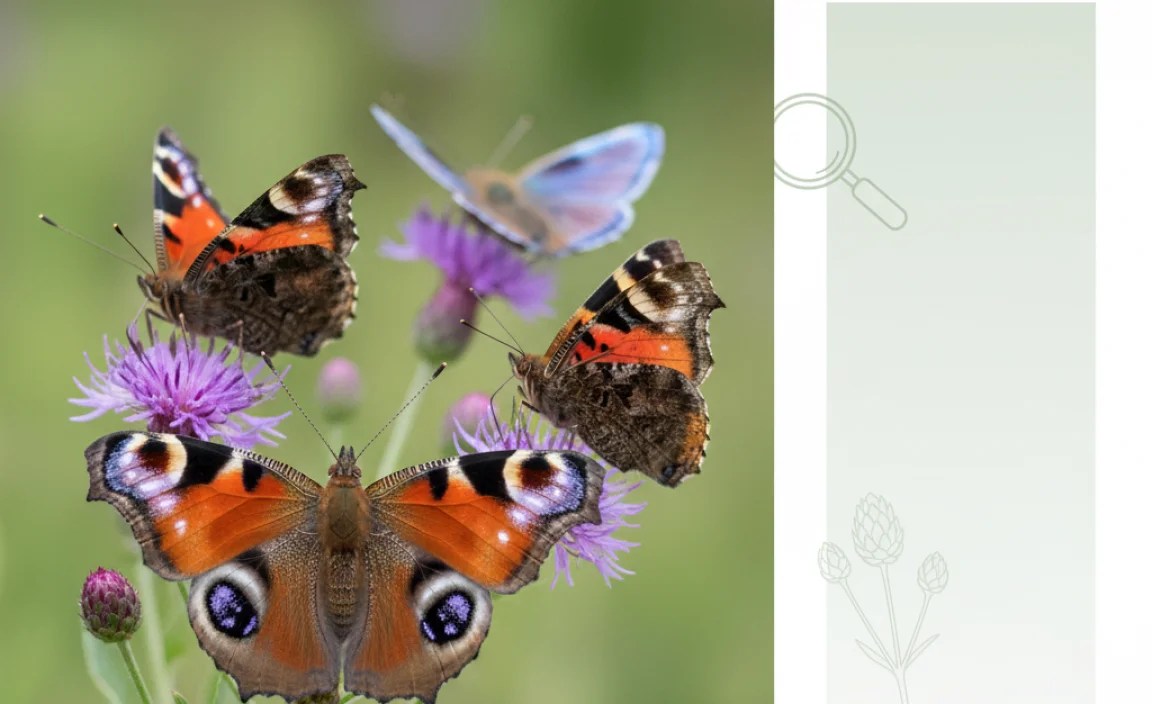
Knowing the basic parts of a butterfly is crucial for accurate identification. Here are the key features to observe:
- Wings: Pay attention to the shape, size, colour, and patterns on both the upper and undersides of the wings.
- Body: Note the colour and markings on the thorax (mid-section) and abdomen (rear section).
- Antennae: Butterfly antennae are typically club-shaped.
- Eyes: Butterflies have large, compound eyes that provide a wide field of vision.
Essential Tools for Butterfly Identification
Having the right tools can greatly enhance your butterfly identification experience:
- Field Guide: A comprehensive field guide specific to British butterflies is invaluable. Look for one with detailed descriptions and high-quality photographs or illustrations.
- Binoculars: A good pair of binoculars allows you to observe butterflies from a distance without disturbing them.
- Camera or Smartphone: Taking photos of butterflies is helpful for later identification and comparison.
- Notebook and Pen: Jot down key observations about the butterfly’s appearance, behaviour, and location.
- Butterfly Net (Optional): If you plan to examine butterflies closely, use a net carefully and release them unharmed.
Where to Find Butterflies in the UK
Butterflies are more likely to be found in certain habitats. Knowing where to look increases your chances of successful identification:
- Gardens: Plant butterfly-friendly flowers to attract them to your garden.
- Woodlands: Many butterfly species thrive in woodland areas, especially along sunny edges and clearings.
- Meadows and Grasslands: These habitats provide essential food sources for butterfly larvae and adults.
- Heathlands: Look for butterflies in heathlands, characterized by low-growing shrubs and acidic soils.
- Coastal Areas: Some butterfly species are adapted to coastal environments.
Step-by-Step Guide to Identifying British Butterflies

Now, let’s break down the identification process into manageable steps.
Step 1: Observe the Butterfly’s Size and Shape
Start by estimating the butterfly’s wingspan and noting its overall shape. This will help narrow down the possibilities.
Small Butterflies: Wingspan of less than 35mm (e.g., Small Blue, Dingy Skipper).
Medium Butterflies: Wingspan between 35mm and 55mm (e.g., Common Blue, Small Copper).
Large Butterflies: Wingspan greater than 55mm (e.g., Swallowtail, White Admiral).
Step 2: Note the Wing Colour and Pattern
The colour and pattern of the wings are often the most distinctive features. Pay attention to both the upper and undersides of the wings, as they can differ significantly.
- Colour: Is the butterfly primarily blue, brown, white, yellow, orange, or a combination of colours?
- Patterns: Look for spots, stripes, bands, eyespots, or other distinctive markings. Note their size, shape, and arrangement.
Step 3: Observe the Butterfly’s Behaviour
A butterfly’s behaviour can provide clues to its identity. Consider the following:
- Flight Pattern: Is the flight fast and erratic, or slow and gliding?
- Feeding Habits: What type of flowers does the butterfly visit?
- Resting Posture: Does the butterfly rest with its wings open or closed?
- Habitat Preference: Where did you find the butterfly (e.g., garden, woodland, meadow)?
Step 4: Consult a Field Guide or Butterfly Identification App
Now it’s time to compare your observations with a field guide or use a butterfly identification app.
- Field Guide: Use the information you’ve gathered to browse through the field guide and find a matching description and illustration.
- Butterfly Identification App: Many apps are available for smartphones that can help you identify butterflies based on photos or descriptions. Some popular options include the “UK Butterflies” app and the “iNaturalist” app.
Step 5: Confirm Your Identification
Once you’ve tentatively identified the butterfly, double-check your identification by comparing it with multiple sources and considering all the factors you’ve observed.
- Online Resources: Websites like UK Butterflies and the Butterfly Conservation website offer detailed information and images of British butterfly species.
- Local Experts: Join a local butterfly group or online forum to get feedback from experienced butterfly enthusiasts.
Common British Butterflies: A Quick Guide
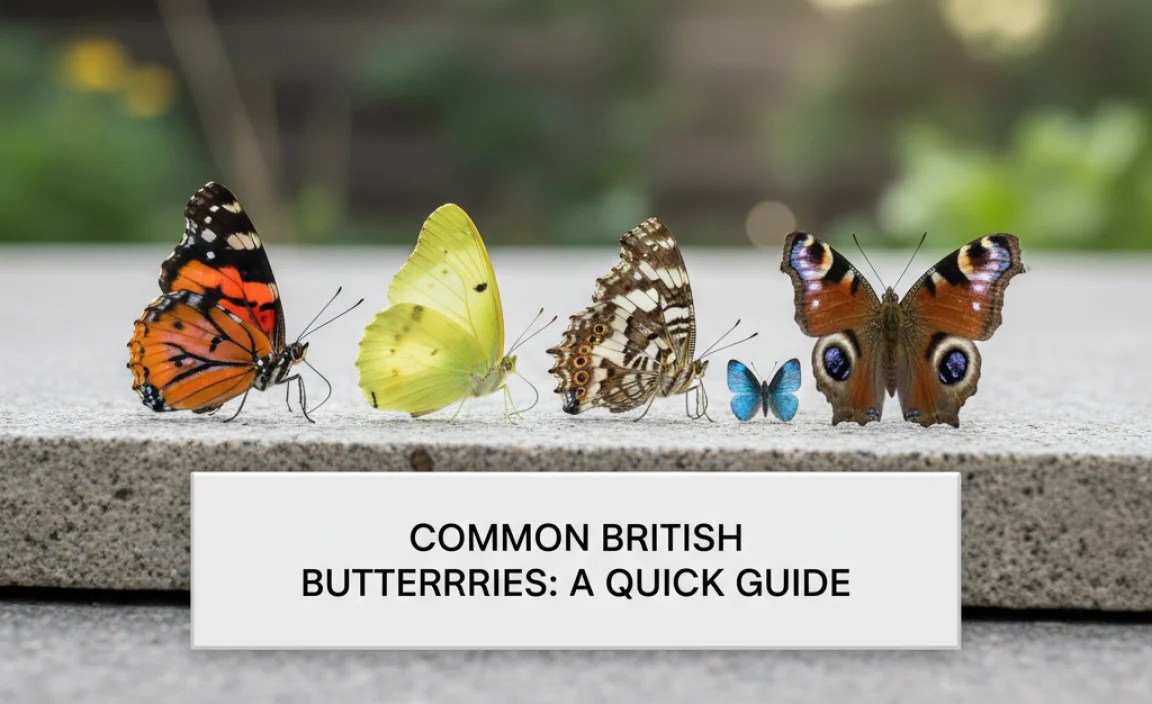
Let’s take a look at some of the most common British butterflies to help you get started.
The Whites
The “whites” are a group of butterflies characterized by their predominantly white wings.
- Large White (Pieris brassicae): A large butterfly with white wings and black tips. Often seen in gardens and fields.
- Small White (Pieris rapae): Similar to the Large White but smaller, with less prominent black markings.
- Green-veined White (Pieris napi): White wings with distinctive green veins on the underside.
The Blues
The “blues” are a diverse group of butterflies, many of which have blue wings (especially in males).
- Common Blue (Polyommatus icarus): Male has bright blue wings, while the female is brown with blue scales.
- Adonis Blue (Lysandra bellargus): A vibrant blue butterfly found in chalk grasslands.
- Holly Blue (Celastrina argiolus): Pale blue wings with black borders, often seen near holly and ivy.
The Browns
The “browns” are a group of butterflies with predominantly brown wings, often with distinctive eyespots.
- Meadow Brown (Maniola jurtina): A common butterfly with brown wings and a single eyespot on each forewing.
- Ringlet (Aphantopus hyperantus): Dark brown wings with small ring-like eyespots.
- Speckled Wood (Pararge aegeria): Brown wings with pale yellow spots, often found in woodlands.
The Skippers
Skippers are small, fast-flying butterflies with hooked antennae.
- Small Skipper (Thymelicus sylvestris): Orange-brown wings with a pointed shape.
- Essex Skipper (Thymelicus lineola): Similar to the Small Skipper but with black antennae tips.
- Dingy Skipper (Erynnis tages): A small, grey-brown butterfly with a mottled pattern.
Advanced Butterfly Identification Techniques
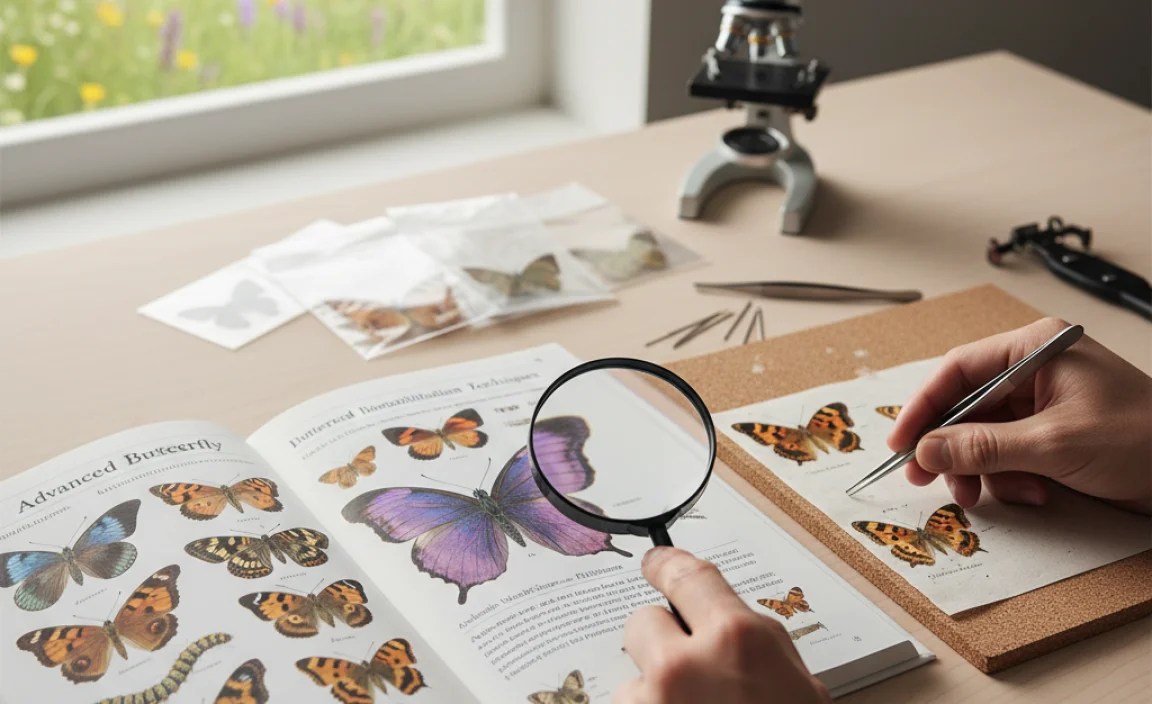
Once you’ve mastered the basics, you can delve into more advanced identification techniques.
Examining Wing Veins
The pattern of veins on a butterfly’s wings can be a useful identification feature, especially for distinguishing between closely related species. A magnifying glass can help you see the veins more clearly.
Analysing Genitalia (For Experts)
In some cases, the only way to definitively identify a butterfly is to examine its genitalia under a microscope. This technique is typically used by experts and requires specialized knowledge and equipment.
Understanding Regional Variations
Butterfly populations can vary slightly in appearance depending on their geographic location. Be aware of regional variations when identifying butterflies.
Attracting Butterflies to Your Garden

One of the best ways to improve your butterfly identification skills is to attract butterflies to your garden. Here are some tips:
- Plant Butterfly-Friendly Flowers: Choose a variety of nectar-rich flowers that bloom at different times of the year. Some popular options include Buddleja (Butterfly Bush), Lavender, and Verbena.
- Provide Host Plants for Caterpillars: Caterpillars need specific plants to feed on. Research which plants are host plants for the butterfly species you want to attract.
- Create a Sunny and Sheltered Environment: Butterflies prefer sunny locations with shelter from the wind.
- Avoid Using Pesticides: Pesticides can harm butterflies and other beneficial insects.
- Provide a Water Source: Butterflies need water to drink. Place a shallow dish of water with pebbles in your garden.
Butterfly Conservation in the UK
Many butterfly species are threatened by habitat loss, climate change, and other factors. You can help protect butterflies by supporting conservation organizations and taking action to create butterfly-friendly habitats.
Key Conservation Organisations
- Butterfly Conservation: A leading UK charity dedicated to protecting butterflies and moths. Butterfly Conservation
- The Wildlife Trusts: A network of local wildlife trusts working to protect habitats and wildlife across the UK.
- RSPB (Royal Society for the Protection of Birds): Works to protect birds and other wildlife, including butterflies.
How You Can Help
- Support Conservation Organisations: Donate to or volunteer with butterfly conservation organisations.
- Create Butterfly-Friendly Habitats: Plant butterfly-friendly flowers and host plants in your garden or local area.
- Reduce Your Carbon Footprint: Climate change is a major threat to butterflies. Take steps to reduce your carbon footprint by using less energy, driving less, and eating sustainably.
- Raise Awareness: Educate others about the importance of butterfly conservation.
- Participate in Citizen Science Projects: Contribute to butterfly monitoring schemes by recording your sightings.
Butterfly Symbolism and Cultural Significance
Butterflies have long held symbolic meaning in various cultures around the world. They often represent transformation, rebirth, and hope.
- Transformation: The butterfly’s metamorphosis from caterpillar to pupa to butterfly is a powerful symbol of transformation and change.
- Rebirth: In some cultures, butterflies are associated with rebirth and the afterlife.
- Hope: The butterfly’s beauty and grace can inspire hope and joy.
Frequently Asked Questions (FAQs)
Here are some frequently asked questions about British butterfly identification:
- Q: What is the best field guide for British butterflies?
A: A popular and comprehensive field guide is “Field Guide to the Butterflies of Great Britain and Ireland” by Jeremy Thomas and Richard Lewington. It features detailed descriptions and illustrations of all British butterfly species.
- Q: How can I attract more butterflies to my garden?
A: Plant a variety of nectar-rich flowers that bloom at different times of the year, provide host plants for caterpillars, create a sunny and sheltered environment, avoid using pesticides, and provide a water source.
- Q: What is the difference between a butterfly and a moth?
A: Butterflies typically have club-shaped antennae, while moths have feathery or comb-like antennae. Butterflies are usually active during the day, while moths are often active at night. Butterflies also typically rest with their wings closed, while moths rest with their wings open.
- Q: Are there any poisonous British butterflies?
A: No, there are no poisonous butterflies in Britain. However, some caterpillars may have hairs that can cause skin irritation.
- Q: How can I report my butterfly sightings?
A: You can report your butterfly sightings to Butterfly Conservation through their online recording scheme or through the iRecord app.
- Q: What should I do if I find an injured butterfly?
A: If you find an injured butterfly, you can try to help it by placing it in a sheltered location with access to nectar. You can also offer it a sugar-water solution (one part sugar to four parts water) on a cotton swab.
- Q: How does climate change affect butterflies?
A: Climate change can affect butterflies in various ways, including changes in their distribution, altered lifecycles, and increased risk of extinction. Rising temperatures and extreme weather events can disrupt butterfly habitats and food sources.
Table: Quick Guide to Common British Butterflies
| Butterfly | Size | Colour | Habitat |
|---|---|---|---|
| Large White | Large | White with black tips | Gardens, fields |
| Small White | Small | White with less black | Gardens, fields |
| Common Blue | Medium | Male: Blue, Female: Brown with blue | Grasslands |
| Meadow Brown | Medium | Brown with eyespots | Meadows |
| Small Skipper | Small | Orange-brown | Grasslands |
| Speckled Wood | Medium | Brown with yellow spots | Woodlands |
Table: Butterfly Identification Checklist
| Feature | Description | Notes |
|---|---|---|
| Size | Small, Medium, Large | Estimate wingspan |
| Wing Colour | White, Blue, Brown, Yellow, Orange | Note upper and undersides |
| Wing Pattern | Spots, Stripes, Eyespots, Bands | Describe size, shape, arrangement |
| Behaviour | Flight pattern, Feeding habits, Resting posture | Observe in natural environment |
| Habitat | Garden, Woodland, Meadow, Heathland, Coast | Location of sighting |
Conclusion
Identifying British butterflies is a fascinating and rewarding journey. By following the steps outlined in this guide, using the right tools, and practicing your observation skills, you’ll be able to confidently identify a wide range of species. Remember to consult field guides, online resources, and local experts to confirm your identifications and expand your knowledge. Whether you’re a beginner or an experienced naturalist, there’s always something new to discover in the world of butterflies. So, grab your binoculars, head out into nature, and start exploring the beauty and diversity of British butterflies!