
Swallowtail Butterfly Migration vs Monarch: Find Out!

Quick Summary: Monarch butterflies are famous for their incredible multi-generational migrations across North America. Swallowtail butterflies, on the other hand, generally don’t undertake true migrations in the same way. Some swallowtail species may move to warmer areas during colder months, but these movements are typically shorter and less predictable than the monarch’s epic journey. Understanding these differences helps us appreciate the diverse survival strategies of these beautiful butterflies.
Have you ever wondered how some butterflies travel thousands of miles while others seem to stay put? It’s a question that has fascinated butterfly lovers for years! The monarch butterfly’s long and amazing migration is well known. But what about swallowtail butterflies? Do they also migrate? The answer is a bit more complex, and understanding the differences between these two butterfly families can give you a deeper appreciation for the incredible diversity in the insect world. Let’s explore the fascinating world of butterfly migration and discover the unique strategies that monarchs and swallowtails use to survive!
Swallowtail Butterfly Migration vs. Monarch: Understanding the Differences
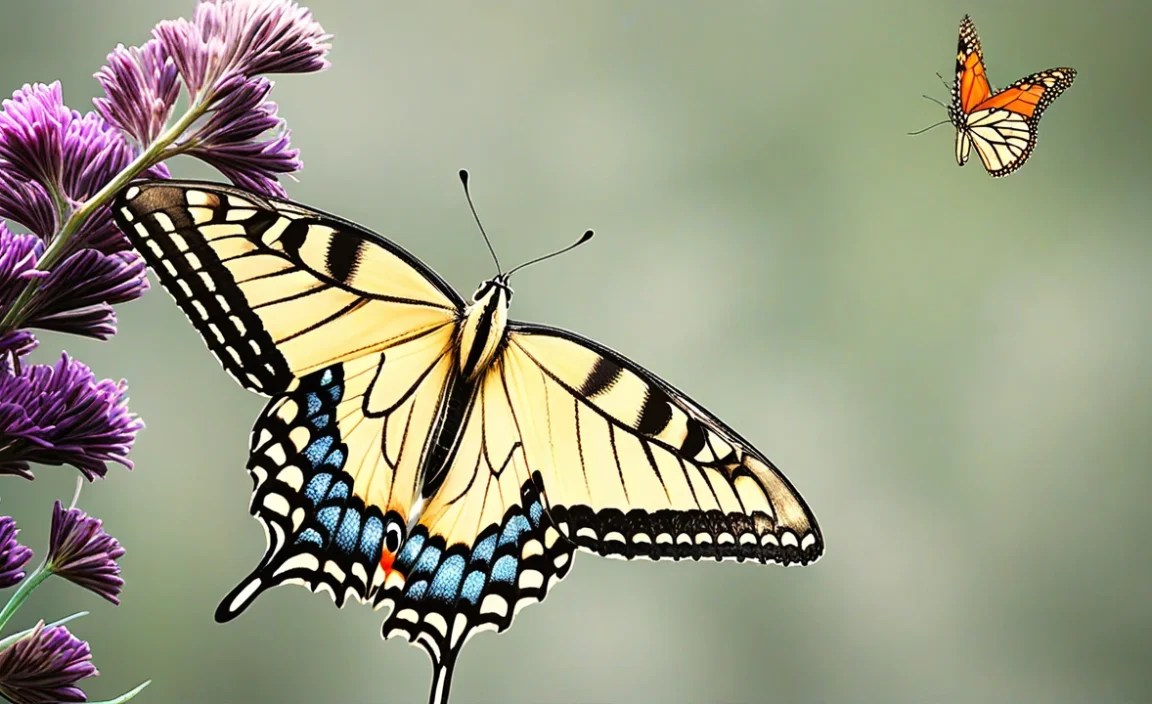
Monarch butterflies are famous for their incredible migrations, but swallowtails have different strategies. Let’s dive into the details to understand the differences.
Monarch Butterfly Migration: An Epic Journey
Monarch butterflies undertake one of the most amazing migrations in the animal kingdom. Here’s what makes their journey so special:
- Multi-Generational Migration: Monarchs complete their migration over several generations. One generation makes the journey south, and subsequent generations return north.
- Long Distance: They travel thousands of miles, from Canada and the United States to Mexico and California.
- Specific Overwintering Sites: Monarchs gather in large numbers in specific overwintering sites in the oyamel fir forests of Mexico and along the California coast.
- Environmental Triggers: Their migration is triggered by environmental cues such as decreasing temperatures and shortening day lengths.
The eastern population of monarch butterflies migrates from eastern Canada and the United States to the oyamel fir forests in the mountains of central Mexico. The western population migrates to overwintering sites along the California coast. These journeys are critical for their survival, as they cannot survive freezing temperatures.
Swallowtail Butterfly Movements: A Different Approach
Swallowtail butterflies, belonging to the family Papilionidae, exhibit different behaviors compared to monarchs. Here’s a breakdown:
- Limited Migration: Most swallowtail species do not undertake long, multi-generational migrations like monarchs.
- Local Movements: Some species may move locally to find better resources or avoid unfavorable conditions.
- Overwintering Strategies: Many swallowtails overwinter as pupae (chrysalises) or larvae, while some adults may remain active in warmer regions.
- Variable Behavior: Migration patterns can vary greatly among different swallowtail species and even within the same species depending on the region.
While swallowtails don’t engage in true migrations, they do exhibit movements that can be influenced by weather, food availability, and habitat conditions. These movements are typically shorter and less predictable than the monarch’s migration.
Key Differences Summarized
To make the differences clearer, here’s a comparison table:
| Feature | Monarch Butterfly | Swallowtail Butterfly |
|---|---|---|
| Migration Type | Long, multi-generational migration | Limited, local movements |
| Distance Traveled | Thousands of miles | Shorter distances, variable |
| Overwintering | Specific overwintering sites in Mexico and California | Overwinter as pupae, larvae, or adults in warmer regions |
| Triggers | Decreasing temperatures, shortening day lengths | Weather, food availability, habitat conditions |
| Predictability | Highly predictable, follows established routes | Less predictable, varies by species and region |
Specific Examples of Swallowtail Behavior
Let’s look at some specific examples to understand how different swallowtail species handle seasonal changes:
- Eastern Tiger Swallowtail (Papilio glaucus): In colder regions, the Eastern Tiger Swallowtail typically overwinters as a pupa. The chrysalis blends in with its surroundings, protecting it from predators and harsh weather.
- Black Swallowtail (Papilio polyxenes): Black Swallowtails also overwinter as pupae. They can have multiple broods during the warmer months, allowing them to take advantage of available host plants.
- Giant Swallowtail (Papilio cresphontes): In warmer climates, Giant Swallowtails may remain active year-round. In cooler areas, they overwinter as pupae, often resembling a dead leaf to avoid detection.
These examples show how swallowtails adapt to their local environments without undertaking long migrations.
Factors Influencing Butterfly Movements

Several factors influence how butterflies move and behave throughout the year. Understanding these factors can help you better appreciate their survival strategies.
Weather Conditions
Weather plays a crucial role in butterfly movements. Extreme temperatures, storms, and droughts can affect their ability to find food, reproduce, and survive. Butterflies may move to more sheltered areas or delay their activities until conditions improve.
Food Availability
The availability of nectar sources for adults and host plants for caterpillars is essential. Butterflies will move to areas where these resources are abundant. For example, if a particular host plant becomes scarce in one area, the butterflies that rely on it may move to another location where it is more readily available.
Habitat Quality
The quality of the habitat, including the presence of suitable breeding sites and shelter, also influences butterfly movements. Butterflies need habitats that provide protection from predators and favorable microclimates. Habitat loss and fragmentation can limit their ability to move and find resources.
Life Cycle Stage
The life cycle stage of the butterfly affects its movement patterns. Adult butterflies are more mobile and can travel greater distances than caterpillars or pupae. The timing of each life stage is often synchronized with seasonal changes to maximize survival and reproduction.
How to Support Butterflies in Your Area

Whether you’re passionate about monarchs or fascinated by swallowtails, there are many ways you can support these beautiful creatures in your own backyard and community.
Plant Native Host Plants
Providing host plants is essential for butterfly reproduction. Monarchs rely exclusively on milkweed, while swallowtails use a variety of plants, including dill, parsley, fennel, and citrus trees. Planting these native species will provide food for caterpillars and help sustain local butterfly populations.
Provide Nectar Sources
Adult butterflies need nectar for energy. Plant a variety of flowering plants that bloom throughout the growing season. Choose native species that are well-suited to your local climate and provide a continuous supply of nectar. Some good options include coneflowers, asters, zinnias, and butterfly bush.
Create a Butterfly Garden
Design a butterfly garden that includes both host plants and nectar sources. Provide shelter from wind and sun, and include a shallow dish of water with pebbles for butterflies to drink from. Avoid using pesticides, as they can harm or kill butterflies and other beneficial insects.
Support Conservation Efforts
Get involved in local conservation efforts to protect butterfly habitats. Support organizations that work to preserve natural areas and promote sustainable land management practices. Advocate for policies that protect butterflies and their habitats.
The Role of Climate Change

Climate change is increasingly impacting butterfly populations and their movements. Rising temperatures, changing precipitation patterns, and more frequent extreme weather events can disrupt their life cycles and alter their distribution.
Impact on Migration
Climate change can affect the timing and success of butterfly migrations. Warmer temperatures may cause butterflies to emerge earlier in the spring, leading to a mismatch between their life cycle and the availability of host plants and nectar sources. Changes in precipitation patterns can also affect the availability of these resources.
Habitat Loss
Climate change can contribute to habitat loss and degradation. Rising sea levels, increased drought, and more frequent wildfires can destroy or alter butterfly habitats, making it harder for them to survive. Protecting and restoring butterfly habitats is more important than ever in the face of climate change.
Shifting Distributions
As the climate changes, some butterfly species may shift their distributions to find suitable conditions. This can lead to changes in the composition of butterfly communities and potential competition between species. Monitoring butterfly populations and their movements can help us understand and respond to these changes.
Conservation Status and Efforts
Many butterfly species, including monarchs and some swallowtails, face conservation challenges. Habitat loss, pesticide use, and climate change are major threats to their survival. Here’s what’s being done to protect them:
Monarch Butterfly Conservation
Monarch butterfly populations have declined significantly in recent decades. Conservation efforts include:
- Habitat Restoration: Restoring milkweed habitat in breeding areas and overwintering sites.
- Pesticide Reduction: Encouraging reduced pesticide use, especially neonicotinoids.
- Citizen Science: Engaging the public in monitoring monarch populations and migration patterns through programs like Monarch Watch and Journey North.
- International Cooperation: Working with governments and organizations in Canada, the United States, and Mexico to protect monarch habitats and migration routes.
The U.S. Fish and Wildlife Service is also actively involved in monarch conservation efforts, assessing their status and implementing conservation strategies.
Swallowtail Butterfly Conservation
While most swallowtail species are not currently endangered, some face local threats due to habitat loss and pesticide use. Conservation efforts include:
- Habitat Protection: Protecting and restoring natural habitats that support swallowtail populations.
- Sustainable Land Management: Promoting sustainable land management practices that minimize the impact on butterfly habitats.
- Public Education: Educating the public about the importance of butterflies and their habitats.
- Monitoring Populations: Monitoring swallowtail populations to track their status and identify potential threats.
Observing and Identifying Butterflies
One of the best ways to appreciate butterflies is to observe and identify them in your own backyard or local natural areas. Here are some tips to help you get started:
Learn Common Species
Start by learning to identify the most common butterfly species in your area. Use field guides, online resources, and local experts to help you. Pay attention to their size, shape, color patterns, and behavior.
Observe Their Behavior
Watch how butterflies interact with their environment. Note what plants they visit for nectar, where they lay their eggs, and how they respond to different weather conditions. This will give you a deeper understanding of their ecology and behavior.
Use Photography
Take photos of the butterflies you see. This will help you identify them later and document your observations. Share your photos with other butterfly enthusiasts and contribute to citizen science projects.
Join a Butterfly Club
Connect with other butterfly enthusiasts by joining a local butterfly club or nature group. These groups often organize field trips, workshops, and other events that can help you learn more about butterflies and their conservation.
Swallowtail and Monarch Butterfly FAQs
Here are some common questions about monarch and swallowtail butterflies:
- Do all butterflies migrate?
- No, not all butterflies migrate. While monarchs are famous for their long migrations, many other butterfly species do not migrate at all or only move locally.
- Why do monarch butterflies migrate?
- Monarchs migrate to escape the cold winters of North America. They travel to warmer regions in Mexico and California where they can survive and reproduce.
- How can I help monarch butterflies?
- You can help monarchs by planting milkweed, providing nectar sources, avoiding pesticide use, and supporting conservation organizations.
- What do swallowtail caterpillars eat?
- Swallowtail caterpillars eat a variety of host plants, depending on the species. Some common host plants include dill, parsley, fennel, citrus trees, and tulip trees.
- How long do butterflies live?
- The lifespan of a butterfly varies depending on the species. Some butterflies live only a few weeks, while others can live for several months.
- Are swallowtail butterflies endangered?
- Most swallowtail species are not currently endangered, but some face local threats due to habitat loss and pesticide use.
- What is the difference between a butterfly and a moth?
- Butterflies typically have slender bodies, clubbed antennae, and are active during the day. Moths usually have thicker bodies, feathery antennae, and are often active at night.
Conclusion
Understanding the differences between swallowtail butterfly movements and monarch butterfly migration highlights the amazing diversity in the natural world. While monarchs undertake epic, multi-generational journeys, swallowtails adapt to their local environments through shorter movements and varied overwintering strategies. By learning about these differences and supporting butterfly conservation efforts, we can help ensure that these beautiful creatures continue to thrive for generations to come. So, get outside, observe, and appreciate the butterflies in your area – each one has a unique story to tell!


