
Monarch Butterfly in Bangladesh: A Secret Paradise?

The monarch butterfly isn’t native to Bangladesh, but it has been seen there! These beautiful orange and black butterflies are famous for their long migrations in North America. While uncommon, sightings in Bangladesh are likely due to individuals straying from their usual routes. Conservation efforts are crucial to ensure these magnificent creatures can continue to thrive.
Have you ever dreamed of seeing a monarch butterfly? Their bright colors and graceful flight are captivating. While these butterflies are best known for their amazing journeys across North America, they sometimes show up in unexpected places like Bangladesh. It can be confusing to hear about monarchs so far from their usual home, but it’s a reminder that nature is full of surprises. Let’s explore why these sightings happen and what they mean for these incredible insects. We’ll cover how to identify them, why they might be in Bangladesh, and what we can do to help protect them.
What We’ll Cover:
- Identifying Monarch Butterflies
- Why Monarchs Might Appear in Bangladesh
- The Monarch’s Natural Habitat and Migration
- Conservation Efforts
- How You Can Help Monarchs
Identifying Monarch Butterflies

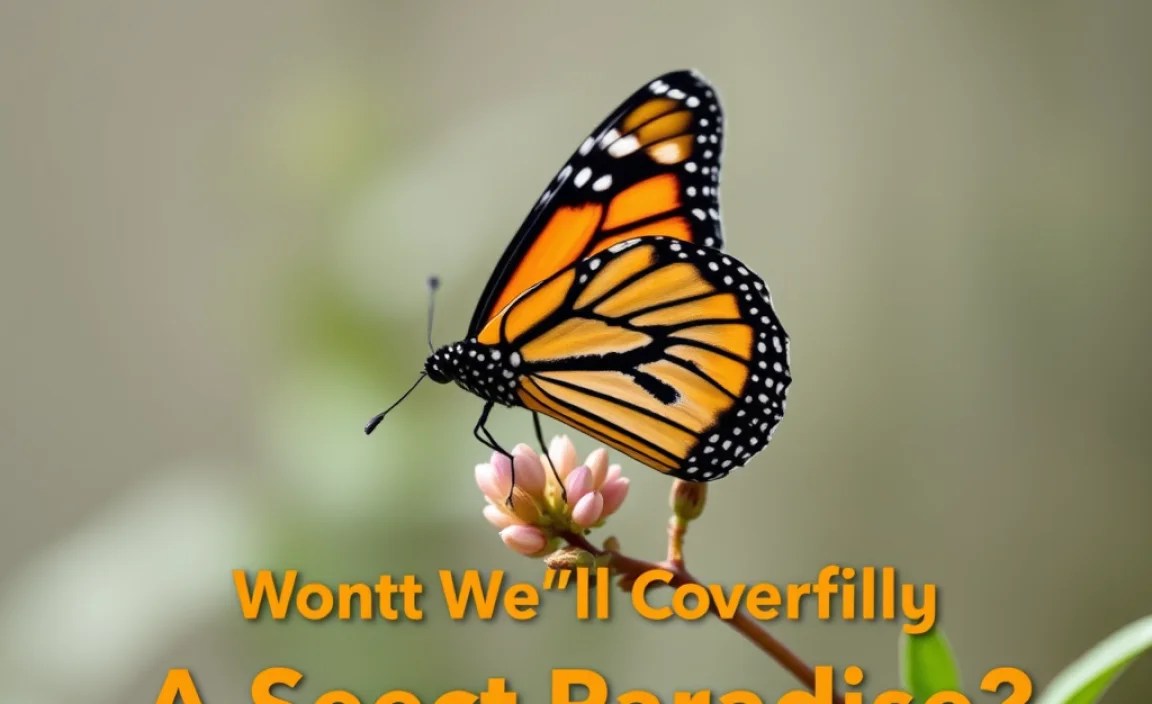
Monarch butterflies are easy to spot with their striking orange wings crisscrossed with black lines and a black border dotted with white spots. Here’s how to make sure you’re looking at a real monarch:
Key Features:
- Wing Color: Bright orange with black veins.
- Wing Borders: Thick black borders with white spots.
- Size: Wingspan of 3.5 to 4 inches (8.9 to 10.2 cm).
- Body: Black body with white spots.
Distinguishing from Similar Butterflies: The Viceroy
The viceroy butterfly looks very similar to the monarch, but there’s a key difference! The viceroy has a black line across its hindwing that the monarch lacks.
Here’s a table to help you quickly compare:
| Feature | Monarch Butterfly | Viceroy Butterfly |
|---|---|---|
| Wing Color | Bright orange with black veins | Orange with black veins |
| Black Line on Hindwing | Absent | Present |
| White Spots on Border | Prominent | Prominent |
Why Monarchs Might Appear in Bangladesh

Monarch butterflies are primarily found in North and Central America. Their appearance in Bangladesh is unusual, and there are a few possible explanations:
- Accidental Migration: Strong winds or storms may carry individual butterflies far off course. Butterflies, while strong fliers, can be redirected by weather patterns.
- Stowaways: Monarchs could inadvertently hitchhike on ships or cargo planes, traveling long distances.
- Climate Change: Altered weather patterns due to climate change may be affecting migration routes and causing some butterflies to stray into new areas.
While exciting, these sightings are rare and don’t indicate a established population in Bangladesh.
The Monarch’s Natural Habitat and Migration

Understanding the monarch’s natural habitat and migration helps us understand why seeing one in Bangladesh is so surprising.
North American Habitat
Monarchs thrive in areas with milkweed, the only plant their caterpillars eat. These areas include:
- Meadows
- Fields
- Gardens
- Roadsides
The Amazing Monarch Migration
Monarchs are famous for their multi-generational migration. Eastern monarchs migrate thousands of miles from Canada and the United States to overwinter in the oyamel fir forests of central Mexico. Western monarchs migrate to overwintering sites along the California coast. These migrations are triggered by changes in daylight and temperature.
The journey is so long that it takes multiple generations of butterflies to complete the round trip. No single butterfly makes the entire journey!
Here’s a simplified breakdown of the monarch migration cycle:
- Summer Breeding: Monarchs breed in the northern U.S. and Canada.
- Fall Migration: The great-great-grandchildren of the spring monarchs migrate south.
- Overwintering: Monarchs spend the winter in Mexico and California.
- Spring Return: Monarchs begin the journey north, laying eggs along the way.
Threats to Monarch Butterflies

Monarch populations have declined significantly in recent decades. Several factors contribute to this decline:
- Habitat Loss: Loss of milkweed due to herbicide use and development reduces food for caterpillars.
- Climate Change: Extreme weather events and changes in temperature disrupt migration patterns and breeding cycles.
- Pesticide Use: Pesticides can directly harm monarchs and other pollinators.
- Illegal Logging: Deforestation in overwintering sites in Mexico destroys crucial habitat.
Conservation Efforts
Many organizations are working to protect monarch butterflies. These efforts include:
- Habitat Restoration: Planting milkweed and nectar-rich flowers to provide food for monarchs.
- Education and Outreach: Raising awareness about the importance of monarch conservation.
- Research and Monitoring: Studying monarch populations to understand their needs and track their movements.
- Policy and Advocacy: Working to protect monarch habitat and reduce pesticide use.
Organizations like the Xerces Society and World Wildlife Fund are at the forefront of these efforts.
How You Can Help Monarchs
You can make a difference in monarch conservation, even from your own backyard!
Plant Milkweed
Milkweed is the only food source for monarch caterpillars. Planting native milkweed species is one of the most effective ways to help monarchs. Different species of milkweed are native to different regions, so choose the right one for your area.
Create a Butterfly Garden
Plant nectar-rich flowers that provide food for adult butterflies. Choose a variety of colors and shapes to attract different pollinators. Include plants that bloom at different times of the year to provide a continuous food source.
Avoid Pesticides
Pesticides can harm or kill monarchs and other beneficial insects. Avoid using pesticides in your garden, especially during the monarch breeding season.
Support Conservation Organizations
Donate to or volunteer with organizations that are working to protect monarch butterflies.
Educate Others
Share your knowledge about monarch butterflies with friends, family, and neighbors. The more people who understand the importance of monarch conservation, the better.
Participate in Citizen Science
Help scientists track monarch populations by participating in citizen science projects. You can report monarch sightings, monitor milkweed patches, or tag monarch butterflies.
Here’s a table summarizing actions you can take and their benefits:
| Action | Benefit |
|---|---|
| Plant Milkweed | Provides food for monarch caterpillars |
| Create a Butterfly Garden | Provides nectar for adult butterflies |
| Avoid Pesticides | Protects monarchs and other pollinators |
| Support Conservation Organizations | Funds research and conservation efforts |
| Educate Others | Raises awareness about monarch conservation |
| Participate in Citizen Science | Helps track monarch populations and movements |
The Symbolism of the Monarch Butterfly
Beyond their ecological importance, monarch butterflies hold significant symbolic meaning in many cultures. They are often associated with:
- Transformation: The monarch’s metamorphosis from caterpillar to butterfly symbolizes change and rebirth.
- Resilience: The monarch’s long migration represents strength and perseverance.
- Beauty: The monarch’s vibrant colors and graceful flight symbolize beauty and joy.
- Spirituality: In some cultures, monarchs are believed to be messengers from the spirit world.
FAQ About Monarch Butterflies
Are monarch butterflies endangered?
Monarch butterflies are not currently listed as endangered in the United States, but they are under consideration. Their populations have declined significantly, raising concerns about their long-term survival.
What do monarch caterpillars eat?
Monarch caterpillars exclusively eat milkweed leaves. Milkweed is essential for their survival.
How long do monarch butterflies live?
Monarch butterflies typically live for a few weeks to several months, depending on the generation. The generation that migrates south to overwinter can live for up to eight or nine months.
Where do monarch butterflies overwinter?
Eastern monarch butterflies overwinter in the oyamel fir forests of central Mexico. Western monarch butterflies overwinter along the California coast.
How can I tell the difference between a male and female monarch butterfly?
Male monarch butterflies have a black spot on their hindwings, while females do not. Males also have slightly thinner black veins on their wings.
What is causing the decline in monarch populations?
The main causes of monarch population decline are habitat loss, climate change, pesticide use, and illegal logging.
Can I raise monarch butterflies at home?
Yes, you can raise monarch butterflies at home, but it’s important to do it responsibly. Make sure you have a source of milkweed and a safe enclosure for the caterpillars. Release the butterflies into the wild once they emerge.
Conclusion
While seeing a monarch butterfly in Bangladesh might be a rare event, it highlights the interconnectedness of our world and the challenges these amazing creatures face. By understanding their life cycle, the threats they face, and how we can help, we can all play a part in ensuring that future generations can marvel at the beauty and wonder of monarch butterflies. Whether you’re planting milkweed in your garden, supporting conservation organizations, or simply spreading awareness, every action counts. Let’s work together to protect these incredible insects and their extraordinary migration.


