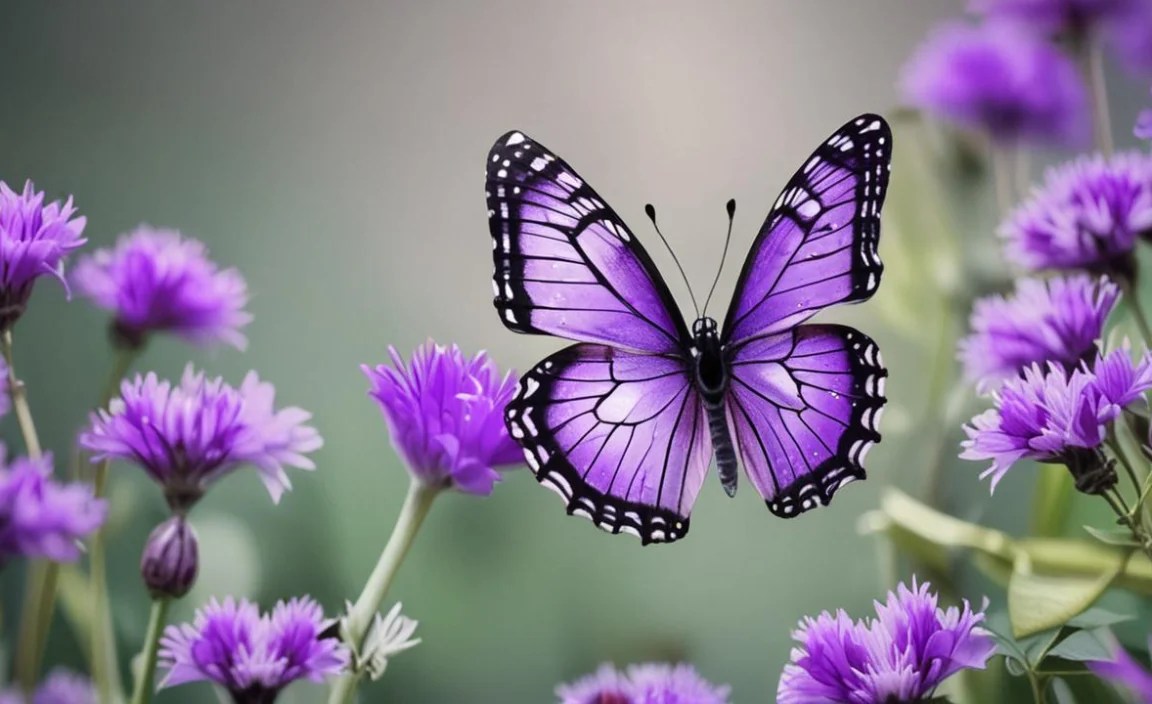
Purple Butterfly Identification: The Ultimate Guide

Identifying a purple butterfly involves looking at its size, wing shape, and unique markings. Purple butterflies often belong to the hairstreak or admiral families. Check their underside patterns and location, as some species are only found in specific regions. Observing their behavior and habitat can also provide clues to their identity.
Ever tried to name a butterfly flitting through your garden, only to get stumped? Purple butterflies, with their stunning hues, can be especially tricky! It’s a common challenge. Luckily, with a few simple steps, you can confidently identify these beauties. This guide will walk you through the process, making you a butterfly expert in no time.
We’ll explore key characteristics, from wing patterns to habitat, helping you distinguish one purple butterfly from another. Get ready to discover the fascinating world of purple butterflies!
Frequently Asked Questions
- What makes a butterfly purple?
The purple color in butterfly wings comes from the way light reflects off tiny scales. These scales contain pigments and structures that create the iridescent effect we see as purple. - Where can I find purple butterflies?
Purple butterflies can be found in various habitats, including forests, gardens, and meadows. Their location depends on the specific species and its preferred host plants. - Are purple butterflies rare?
Some purple butterflies are relatively common, while others are rare or localized. Their populations can be affected by habitat loss and climate change. - What do purple butterflies eat?
Adult purple butterflies feed on nectar from flowers, while caterpillars eat leaves of specific host plants. - How can I attract purple butterflies to my garden?
Planting native trees, shrubs, and flowers that serve as both nectar sources for adults and host plants for caterpillars can attract purple butterflies. - When is the best time to see purple butterflies?
The best time to see purple butterflies varies depending on the species and location. Generally, they are most active during warm, sunny days in spring and summer. - Do purple butterflies migrate?
Some butterfly species known to exhibit purple coloration, like the Red Admiral, are migratory. However, many purple butterflies do not migrate.
Understanding Purple Butterfly Colors

Before diving into identification, let’s understand the source of those gorgeous purple hues. It’s not always about pigment! Butterfly wings often get their colors from iridescence.
- Iridescence: Tiny structures on the wings bend light, creating a shimmering, color-changing effect. This is common in many purple butterflies.
- Pigments: Some butterflies do have purple pigments, but it’s less common. These pigments absorb certain wavelengths of light, reflecting purple back to our eyes.
This knowledge helps you appreciate the complexity of butterfly coloration and prepares you for accurate identification.
Key Characteristics for {Purple butterfly identification}

Identifying purple butterflies involves careful observation. Here’s what to look for:
1. Size and Shape
Butterfly size and shape can vary greatly between species. Here’s how to assess these characteristics:
- Wingspan: Measure or estimate the wingspan. Smaller butterflies might be an inch or less, while larger ones can reach several inches.
- Wing Shape: Note the shape of the wings. Are they rounded, pointed, or angular? Some butterflies have tails or extensions on their hindwings.
2. Wing Patterns and Markings
Wing patterns are like butterfly fingerprints! They are crucial for identification.
- Upperwing: Describe the color, patterns, and markings on the upper side of the wings. Look for spots, bands, or other distinctive features.
- Underwing: The underside of the wings often has different patterns than the upper side. Note the colors, lines, and spots.
- Hairstreaks: Check for delicate lines or “hairstreaks” on the underwings, common in the Hairstreak family.
3. Body Features
Don’t forget to look at the body! It can offer additional clues.
- Color: Note the color of the butterfly’s body. Is it black, brown, or another color?
- Markings: Look for any stripes, spots, or other markings on the body.
- Antennae: Observe the shape and color of the antennae. Some butterflies have clubbed antennae, while others have feathery ones.
4. Habitat and Location
Where you find a butterfly can be just as important as what it looks like.
- Habitat: Note the type of habitat where you saw the butterfly. Was it in a forest, meadow, or garden?
- Location: Record the geographic location. Some butterflies are only found in specific regions. You can use resources like the Butterflies and Moths of North America website to narrow down possibilities.
5. Behavior
Butterfly behavior can provide additional clues.
- Flight Pattern: Observe how the butterfly flies. Is its flight erratic, gliding, or direct?
- Feeding Habits: Note what the butterfly is feeding on. Is it nectaring at flowers, sipping from mud, or feeding on tree sap?
- Sunbathing: Does the butterfly bask in the sun with its wings open or closed?
Common Purple Butterfly Species
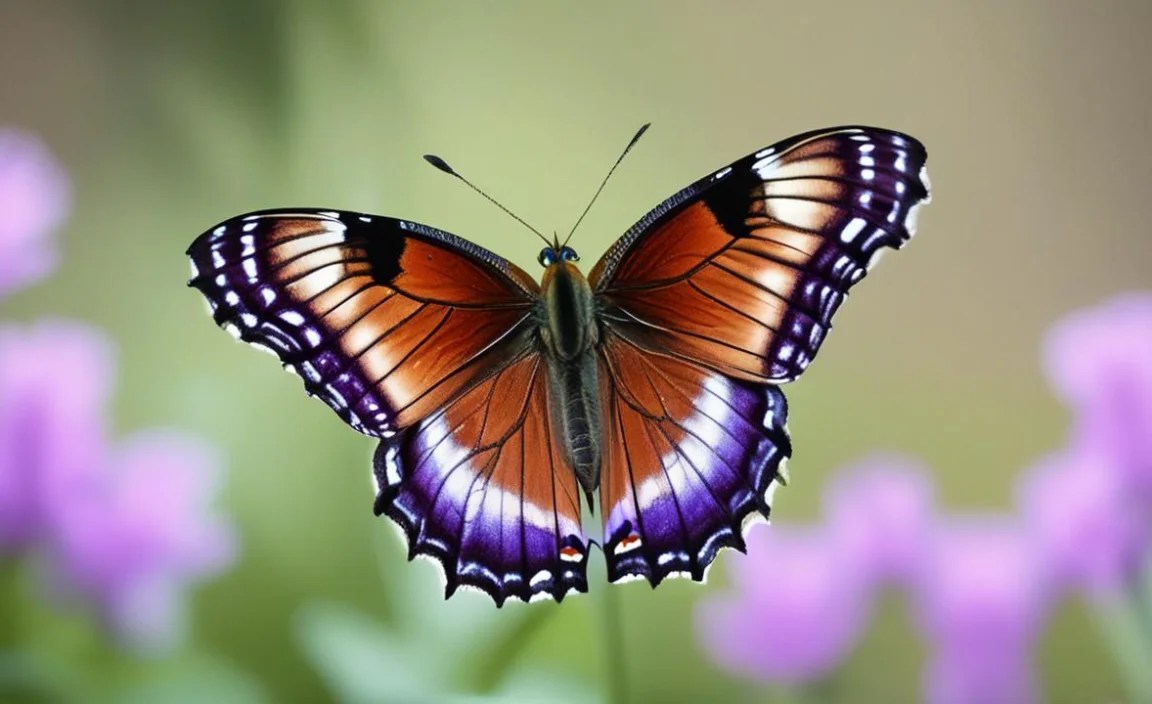
Let’s look at some of the most common purple butterflies you might encounter:
1. Purple Emperor (Apatura iris)
The Purple Emperor is a majestic butterfly found in Europe and Asia.
- Appearance: Males have iridescent purple wings, while females are mostly brown with white markings.
- Habitat: Deciduous forests, especially oak woodlands.
- Behavior: Known for its high-flying habits and attraction to tree sap and honeydew.
2. Purple Hairstreak (Favonius quercus)
The Purple Hairstreak is a small, enchanting butterfly found in Europe.
- Appearance: Dark brown with a purple sheen on the upperwings. The underwings have a white-edged dark line and orange spots.
- Habitat: Oak woodlands, where the caterpillars feed on oak leaves.
- Behavior: Often found flying around the tops of oak trees, making it challenging to observe.
3. Red-spotted Purple (Limenitis arthemis astyanax)
The Red-spotted Purple is a striking butterfly found in North America.
- Appearance: Black wings with iridescent blue or purple sheen and red spots on the underside.
- Habitat: Woodlands, forests, and edges.
- Behavior: Mimics the poisonous Pipevine Swallowtail, gaining protection from predators.
4. Lorquin’s Admiral (Limenitis lorquini)
Lorquin’s Admiral is a beautiful butterfly found in western North America.
- Appearance: Black wings with white bands and orange tips. The iridescent blue sheen can sometimes appear purple.
- Habitat: Open woodlands, streamsides, and gardens.
- Behavior: Often seen basking in the sun or feeding on nectar from flowers.
5. ‘Atala’ Hairstreak (Eumaeus atala)
The ‘Atala’ Hairstreak is a brightly colored butterfly found in Florida and parts of the southeastern United States.
- Appearance: Black wings with iridescent blue or green sheen, sometimes appearing purplish, and bright orange spots on the body.
- Habitat: Tropical and subtropical areas, especially where its host plant, the coontie palm, grows.
- Behavior: Once rare, it has made a comeback due to conservation efforts and increased planting of coontie palms.
{Purple butterfly identification} Table
| Species | Appearance | Habitat | Behavior |
|---|---|---|---|
| Purple Emperor | Males: Iridescent purple wings; Females: Brown with white markings | Deciduous forests, oak woodlands | High-flying, attracted to tree sap |
| Purple Hairstreak | Dark brown with purple sheen, white-edged dark line and orange spots on underwings | Oak woodlands | Flies around oak tree tops |
| Red-spotted Purple | Black wings with iridescent blue or purple sheen, red spots on underside | Woodlands, forests | Mimics Pipevine Swallowtail |
| Lorquin’s Admiral | Black wings with white bands, orange tips, sometimes purplish sheen | Open woodlands, streamsides, gardens | Basks in the sun, feeds on nectar |
| ‘Atala’ Hairstreak | Black wings with iridescent blue or green sheen, orange spots on body | Tropical and subtropical areas, coontie palm habitats | Conservation success story |
Tools for Butterfly Identification
These tools can make your butterfly identification journey easier:
- Butterfly Field Guides: A good field guide is essential. Look for one specific to your region. Examples include the National Audubon Society Field Guide to North American Butterflies.
- Online Resources: Websites like Butterflies and Moths of North America and local butterfly society websites offer valuable information and images.
- Binoculars: A good pair of binoculars allows you to observe butterflies from a distance without disturbing them.
- Camera: Taking photos of butterflies allows you to study them later and compare them to images in field guides or online resources.
- Butterfly Net: Use a butterfly net to catch butterflies carefully for closer observation, but be sure to release them unharmed. (Check local regulations, as some areas may restrict collecting.)
- Magnifying Glass: A magnifying glass can help you see the fine details of butterfly wings and bodies.
Tips for Successful Butterfly Identification
Here are some extra tips to boost your identification skills:
- Take Clear Photos: Capture multiple angles of the butterfly, including the upper and underwings.
- Note the Date and Time: Record when and where you saw the butterfly. This can help narrow down possibilities based on flight seasons and geographic range.
- Observe Host Plants: Identify any plants the butterfly is using as a host for its caterpillars. This can provide valuable clues.
- Join a Butterfly Club: Connect with other butterfly enthusiasts in your area. They can offer advice and help you identify challenging species.
- Be Patient: Butterfly identification can take time and practice. Don’t get discouraged if you don’t identify every butterfly right away.
Attracting Purple Butterflies to Your Garden
Want to see more purple butterflies? Here’s how to create a butterfly-friendly garden:
- Plant Host Plants: Research the host plants for purple butterfly caterpillars in your area and include them in your garden. For example, plant oak trees for Purple Hairstreaks.
- Provide Nectar Sources: Plant a variety of nectar-rich flowers that bloom throughout the butterfly season. Choose native species whenever possible.
- Offer a Water Source: Butterflies need water. Provide a shallow dish of water with pebbles or sand for them to land on.
- Avoid Pesticides: Pesticides can harm or kill butterflies and other beneficial insects. Use organic gardening methods instead.
- Provide Shelter: Plant shrubs and trees to provide shelter from wind and predators.
- Create a Sunning Spot: Butterflies need to bask in the sun to warm up. Provide a sunny spot with flat rocks or paving stones.
Conservation of Purple Butterflies
Many butterfly populations are declining due to habitat loss, climate change, and pesticide use. Here’s how you can help:
- Support Conservation Organizations: Donate to or volunteer with organizations that protect butterfly habitats. The Xerces Society is a great resource.
- Create Butterfly-Friendly Habitats: Plant native trees, shrubs, and flowers in your garden and community.
- Reduce Pesticide Use: Avoid using pesticides in your garden and support policies that reduce pesticide use in agriculture.
- Educate Others: Share your knowledge of butterflies with friends, family, and neighbors.
- Advocate for Conservation: Contact your elected officials and urge them to support policies that protect butterfly habitats and reduce pollution.
Additional Resources for {Purple butterfly identification}
Explore these resources to deepen your knowledge:
- Books:
- Butterflies of North America: A Natural History and Field Guide by Jim P. Brock and Kenn Kaufman
- The Butterfly Book: An Easy Guide to Butterfly Gardening, Identification, and Life Cycles by Donald and Lillian Stokes
- Websites:
- Butterflies and Moths of North America (butterfliesandmoths.org)
- The Xerces Society (xerces.org)
- Apps:
- iNaturalist
- Picture Insect
Conclusion
Identifying purple butterflies is a rewarding journey that connects you more deeply with nature. By paying attention to key characteristics like wing patterns, size, habitat, and behavior, you can confidently identify these beautiful creatures. Remember to use helpful tools like field guides, online resources, and binoculars. And don’t forget that you can create a butterfly-friendly garden to attract more purple butterflies to your yard!
By understanding and appreciating these delicate insects, we can all play a part in their conservation. So, keep exploring, keep learning, and keep marveling at the beauty of purple butterflies!