
Easy Gulf Fritillary Identification: A Visual Guide

Quick Summary: Gulf fritillaries are beautiful orange butterflies with elongated wings and striking silver spots on their undersides. To identify them, look for their vibrant orange color on the upper wing, the distinct silver markings below, and their characteristic rapid flight.
They are commonly found in gardens and open sunny areas throughout the southern United States and into South America. Size and host plants like passionflower vines are also helpful clues!
Have you ever spotted a bright orange butterfly flitting through your garden and wondered what it was? Identifying butterflies can be a delightful experience, but it’s easy to get confused with so many species around. One of the most striking and commonly seen butterflies is the Gulf fritillary. Its vibrant colors and unique markings make it a favorite among butterfly enthusiasts. Figuring out if you’ve seen one doesn’t have to be complicated!
In this guide, we’ll walk you through the key characteristics that set the Gulf fritillary apart. From its distinctive wing patterns to its favorite habitats, you’ll learn everything you need to confidently identify this stunning butterfly. Get ready to become a Gulf fritillary expert!
Identifying Gulf Fritillaries: A Step-by-Step Guide
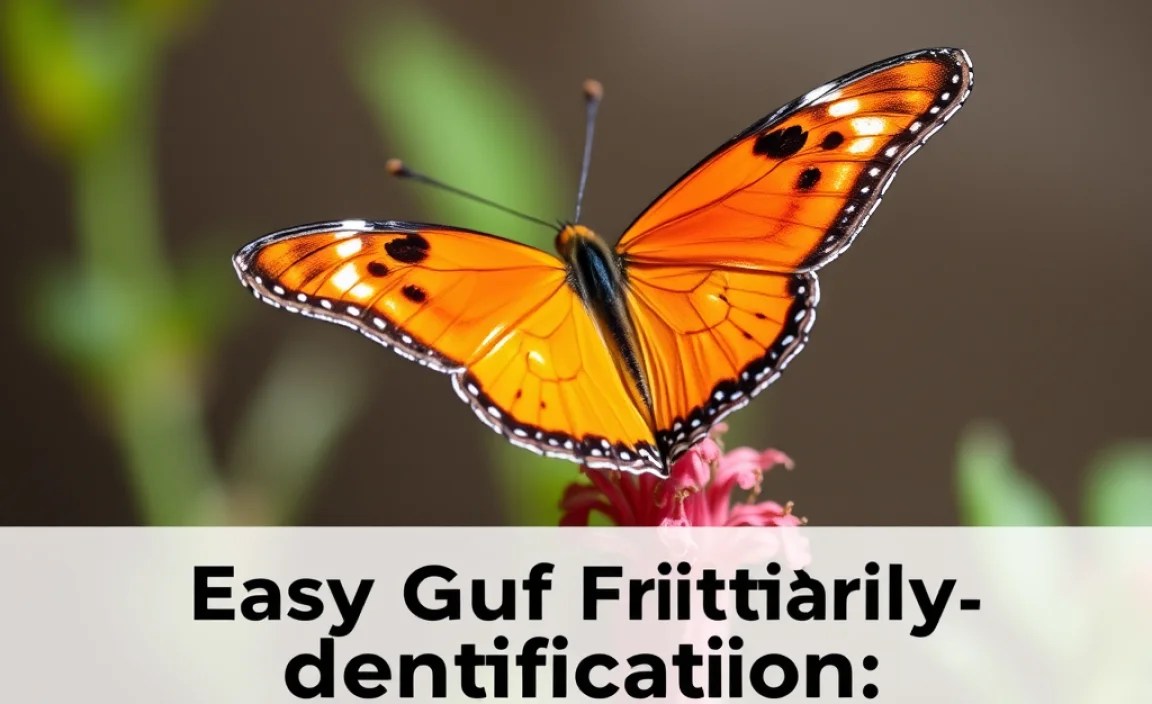
Identifying Gulf fritillaries involves looking at several key features, including their color, size, wing patterns, and behavior. Let’s break it down:
1. Observe the Color and Wing Shape
The first thing you’ll notice about a Gulf fritillary is its bright orange color. The upper side of its wings is a vibrant, almost fiery orange, making it easy to spot in gardens and meadows. The wings are elongated, giving the butterfly a distinctive shape as it flies.
- Upper Wing Color: Bright, vibrant orange.
- Wing Shape: Elongated, giving a slender appearance.
This orange coloration helps them stand out, but it’s the underside of their wings that truly sets them apart.
2. Examine the Underside of the Wings
The underside of the Gulf fritillary’s wings is where you’ll find its most distinguishing feature: striking silver spots. These spots are elongated and расположены across the wing surface, creating a shimmering effect as the butterfly moves. This is a key identifier.
- Silver Spots: Look for elongated, shimmering silver spots.
- Background Color: The background color on the underside is a mix of brown and orange hues.
Here’s a table to summarize the key visual characteristics:
| Feature | Description |
|---|---|
| Upper Wing Color | Bright orange |
| Under Wing Pattern | Silver spots on a brown and orange background |
| Wing Shape | Elongated |
3. Check the Size
Gulf fritillaries are medium-sized butterflies. Their wingspan typically ranges from 2.5 to 4 inches (6 to 10 cm). This size helps differentiate them from smaller butterflies like skippers and larger ones like monarchs.
- Wingspan: 2.5 to 4 inches (6 to 10 cm)
- Body Size: Proportionate to the wingspan, not overly large or small.
4. Observe Their Flight Pattern
Gulf fritillaries have a rapid, somewhat erratic flight pattern. They don’t glide as much as some other butterflies; instead, they tend to flutter quickly from flower to flower. Their flight is purposeful and energetic.
- Speed: Rapid and quick
- Movement: Fluttering, less gliding
- Direction: Purposeful, moving directly between flowers
5. Identify Their Habitat
Gulf fritillaries are commonly found in open, sunny areas such as gardens, fields, and roadsides. They are prevalent in the southern United States, ranging from California to Florida, and extend southward into Central and South America. Knowing their habitat can help confirm your identification.
- Geographic Range: Southern United States, Central America, and South America.
- Preferred Habitats: Gardens, fields, roadsides, and open sunny areas.
6. Look for Host Plants
Caterpillars of the Gulf fritillary feed exclusively on passionflower vines (Passiflora species). If you see bright orange butterflies frequently visiting passionflower plants in your garden, it’s a strong indication that they are Gulf fritillaries. The presence of caterpillars on these plants further confirms their identity.
- Primary Host Plant: Passionflower vines (Passiflora spp.)
- Caterpillar Appearance: Spiky, bright orange or reddish-brown.
7. Examine the Caterpillar (If Possible)
If you spot caterpillars on passionflower vines, take a closer look. Gulf fritillary caterpillars are quite distinctive. They are spiky and usually bright orange or reddish-brown. These spikes, while they look intimidating, are harmless to humans.
- Color: Bright orange or reddish-brown
- Texture: Spiky appearance
- Diet: Exclusively passionflower leaves
Distinguishing Gulf Fritillaries from Similar Butterflies

While the Gulf fritillary has unique characteristics, it can sometimes be confused with other orange butterflies. Here’s how to tell them apart:
Gulf Fritillary vs. Monarch Butterfly
Monarchs are larger and have distinct black veins and borders on their wings, with white spots along the edges. Gulf fritillaries are smaller, lack the prominent black veins, and have silver spots on the underside.
| Feature | Gulf Fritillary | Monarch Butterfly |
|---|---|---|
| Size | Medium (2.5-4 inches) | Large (3.5-5 inches) |
| Upper Wing | Bright orange, no black veins | Orange with black veins and borders |
| Under Wing | Silver spots | Similar pattern but lacks silver spots |
Gulf Fritillary vs. Variegated Fritillary
Variegated fritillaries have a more mottled pattern on their upper wings, with a mix of orange, brown, and black markings. The underside has more brown and less distinct silver spots compared to the Gulf fritillary.
| Feature | Gulf Fritillary | Variegated Fritillary |
|---|---|---|
| Upper Wing | Bright orange, uniform color | Mottled orange, brown, and black |
| Under Wing | Distinct silver spots | Less distinct silver spots, more brown |
Gulf Fritillary vs. Queen Butterfly
Queen butterflies are a deeper reddish-brown color and lack the bright orange hue of the Gulf fritillary. They also lack the silver spots on the underside of the wings.
| Feature | Gulf Fritillary | Queen Butterfly |
|---|---|---|
| Color | Bright orange | Reddish-brown |
| Under Wing | Silver spots | No silver spots |
Attracting Gulf Fritillaries to Your Garden

If you want to see more Gulf fritillaries in your garden, here are some tips to attract them:
- Plant Passionflower Vines: This is the most effective way to attract them since it’s their host plant.
- Provide Nectar Sources: Plant flowers that provide nectar, such as zinnias, lantana, and pentas.
- Avoid Pesticides: Pesticides can harm or kill butterflies and caterpillars.
- Provide a Water Source: A shallow dish of water with pebbles can provide butterflies with a place to drink.
- Offer Sunny Spots: Butterflies need sunny areas to warm themselves.
By creating a butterfly-friendly habitat, you’ll not only attract Gulf fritillaries but also support other pollinators and beneficial insects. For more resources on creating pollinator gardens, check out organizations like the Xerces Society.
The Life Cycle of a Gulf Fritillary

Understanding the life cycle of the Gulf fritillary can deepen your appreciation for these creatures. The life cycle consists of four stages: egg, larva (caterpillar), pupa (chrysalis), and adult butterfly.
1. Egg Stage
Female Gulf fritillaries lay their tiny, yellowish eggs on or near passionflower vines. These eggs are small and can be difficult to spot, but they are usually laid in clusters.
2. Larva (Caterpillar) Stage
Once the eggs hatch, the caterpillars emerge. These caterpillars are bright orange or reddish-brown with black spines. They feed voraciously on passionflower leaves, growing rapidly through several molts.
3. Pupa (Chrysalis) Stage
After reaching full size, the caterpillar transforms into a chrysalis. The chrysalis is often a mottled brown color and hangs upside down from a stem or leaf. This stage lasts about two weeks.
4. Adult Butterfly Stage
Finally, the adult butterfly emerges from the chrysalis. The newly emerged butterfly will hang upside down to allow its wings to expand and dry. Once its wings are ready, it will fly off to find nectar and mate, continuing the cycle.
Gulf Fritillary Fun Facts
Here are some interesting facts about Gulf fritillaries:
- Migration: Gulf fritillaries are migratory butterflies, especially in the northern parts of their range. They can travel long distances to find suitable habitats and food sources.
- Longevity: Adult Gulf fritillaries typically live for about a month, during which they mate and lay eggs.
- Defense Mechanism: The caterpillars ingest toxins from passionflower vines, making them unpalatable to predators.
- Symbolism: In some cultures, butterflies symbolize transformation and rebirth, reflecting their dramatic metamorphosis from caterpillar to butterfly.
FAQ: Gulf Fritillary Identification
Here are some frequently asked questions about Gulf fritillary identification:
What is the main identifying feature of a Gulf fritillary?
The most distinctive feature is the presence of elongated, shimmering silver spots on the underside of their wings.
What do Gulf fritillary caterpillars eat?
Gulf fritillary caterpillars exclusively feed on the leaves of passionflower vines.
Where are Gulf fritillaries commonly found?
They are commonly found in the southern United States, Central America, and South America, in open sunny areas like gardens and fields.
How big are Gulf fritillaries?
Their wingspan typically ranges from 2.5 to 4 inches (6 to 10 cm).
Are Gulf fritillaries poisonous?
No, Gulf fritillaries are not poisonous, but their caterpillars ingest toxins from passionflower vines, making them unpalatable to predators.
Do Gulf fritillaries migrate?
Yes, Gulf fritillaries are migratory, especially in the northern parts of their range.
What is the lifespan of a Gulf fritillary butterfly?
Adult Gulf fritillaries typically live for about a month.
Conclusion
Identifying Gulf fritillaries is a rewarding experience that connects you more deeply with the natural world. By observing their bright orange color, distinctive silver spots, and preference for passionflower vines, you can confidently identify these beautiful butterflies. Whether you’re a seasoned butterfly enthusiast or just starting out, learning about these creatures enhances your appreciation for the biodiversity around us.
So, keep an eye out in your garden or local park, and you’re sure to spot a Gulf fritillary fluttering by. Happy butterfly watching!


