Barrier Effect Roads Butterflies: Powerful Fixes!

Quick Summary:
Roads act as barriers to butterflies, disrupting their movement, dispersal, and access to essential resources. The “barrier effect” occurs because butterflies are reluctant or unable to cross roads due to traffic, habitat fragmentation, and changes in microclimate. Mitigation strategies like wildlife crossings, roadside habitat management, and reduced road salt usage can help reduce this impact and protect butterfly populations.
Have you ever noticed fewer butterflies in certain areas, even when the habitat seems perfect? Roads, while essential for human transportation, can create significant challenges for these delicate creatures. The constant flow of traffic, altered landscapes, and habitat fragmentation can prevent butterflies from reaching food sources, finding mates, and completing their life cycles. This is what we call the “barrier effect,” and it’s a growing concern for butterfly conservation. But don’t worry! There are ways we can help.
In this article, we’ll explore how roads impact butterflies and what practical steps we can take to minimize the barrier effect. We’ll cover everything from understanding butterfly behavior to implementing effective mitigation strategies. Get ready to discover how we can build a world where butterflies and roads can coexist!
Understanding the Barrier Effect on Butterflies
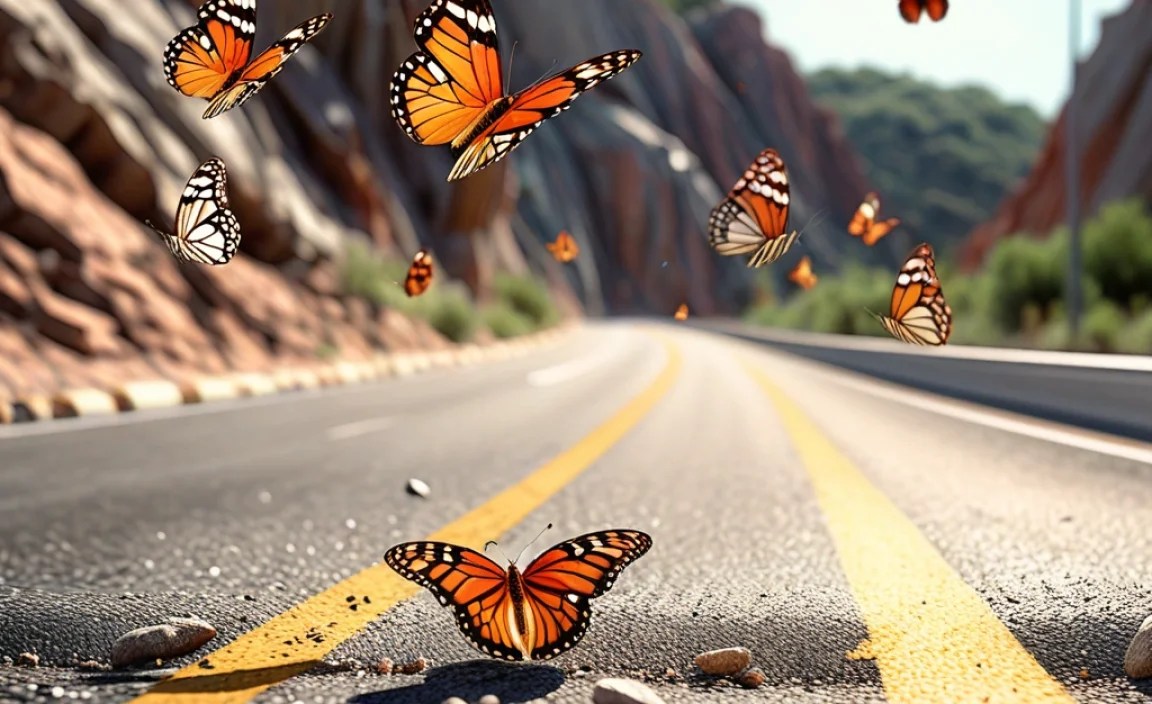
The barrier effect refers to how roads impede the movement and dispersal of wildlife, including butterflies. It’s not just about physical obstruction; several factors contribute to this phenomenon.
Factors Contributing to the Barrier Effect
- Traffic Volume: High traffic volume creates a direct threat to butterflies attempting to cross, leading to mortality.
- Habitat Fragmentation: Roads divide habitats, isolating butterfly populations and reducing genetic diversity.
- Roadside Management: Frequent mowing, herbicide use, and other management practices can eliminate essential butterfly food sources and host plants.
- Microclimate Changes: Roads can alter local temperature, humidity, and wind patterns, making the environment less suitable for butterflies.
- Pollution: Road runoff containing pollutants like salt and heavy metals can contaminate soil and water, harming butterflies and their host plants.
How Roads Impact Butterfly Behavior
Butterflies rely on specific cues to navigate and find resources. Roads can disrupt these cues, leading to disorientation and reduced movement.
- Disrupted Flight Patterns: Butterflies often avoid crossing open spaces like roads, preferring to stay within the cover of vegetation.
- Reduced Foraging Efficiency: When roads separate butterflies from nectar sources, they must expend more energy to find food, reducing their overall fitness.
- Limited Mate Availability: Habitat fragmentation caused by roads can prevent butterflies from finding suitable mates, leading to inbreeding and reduced genetic diversity.
- Altered Oviposition Behavior: Female butterflies may avoid laying eggs near roads due to pollution and habitat degradation, reducing reproductive success.
Assessing the Impact: Identifying Problem Areas

Before implementing mitigation strategies, it’s essential to identify areas where roads pose the greatest threat to butterfly populations. Here’s how to assess the impact:
1. Butterfly Surveys and Monitoring
Conducting regular butterfly surveys can provide valuable data on population size, species distribution, and movement patterns. This information can help identify areas where butterfly populations are declining or fragmented due to roads.
- Transect Walks: Walk along predetermined routes, counting and identifying butterflies within a fixed distance.
- Point Counts: Record butterfly observations at specific locations for a set period.
- Mark-Recapture Studies: Capture, mark, and release butterflies to track their movement and estimate population size.
2. Habitat Mapping and Analysis
Mapping butterfly habitats and analyzing their connectivity can reveal how roads are fragmenting populations and limiting access to essential resources. Use GIS (Geographic Information System) software to overlay road networks with habitat maps and identify critical areas for conservation.
- Identify Core Habitats: Locate areas with high butterfly diversity and abundance.
- Assess Connectivity: Determine how roads are disrupting the connections between core habitats.
- Map Potential Corridors: Identify areas where habitat restoration or enhancement could improve butterfly movement.
3. Road Mortality Studies
Documenting butterfly mortality along roads can provide direct evidence of the barrier effect. Conduct roadkill surveys to count and identify butterflies killed by vehicles. This data can help prioritize areas for mitigation measures.
- Regular Roadside Surveys: Walk or drive along roads, recording the number and species of butterflies found dead.
- Data Analysis: Analyze the data to identify hotspots of butterfly mortality and determine the factors contributing to roadkill.
Mitigation Strategies: Helping Butterflies Cross Roads

Now that we understand the impact of roads on butterflies, let’s explore practical strategies to minimize the barrier effect and help these creatures navigate our roadways.
1. Wildlife Crossings
Wildlife crossings provide safe passage for butterflies and other animals to cross roads. These structures can be designed specifically for butterflies or incorporated into larger wildlife crossings.
Types of Wildlife Crossings for Butterflies
- Underpasses: Tunnels or culverts beneath roads that allow butterflies to cross safely.
- Overpasses: Bridges covered with vegetation that provide a natural habitat for butterflies to cross above roads.
- Green Bridges: Wide overpasses designed to mimic natural habitats, providing a safe and inviting crossing for butterflies and other wildlife.
Design Considerations: When designing wildlife crossings for butterflies, consider the following factors:
- Location: Place crossings in areas with high butterfly activity and habitat connectivity.
- Vegetation: Plant native butterfly host plants and nectar sources to attract butterflies to the crossing.
- Microclimate: Create a favorable microclimate with appropriate temperature, humidity, and sunlight levels.
- Width: Ensure the crossing is wide enough to provide a comfortable and safe passage for butterflies.
2. Roadside Habitat Management
Managing roadside vegetation to create butterfly-friendly habitats can help mitigate the barrier effect by providing food, shelter, and breeding sites.
Creating Butterfly-Friendly Roadside Habitats
- Plant Native Species: Plant native butterfly host plants and nectar sources along roadsides.
- Reduce Mowing: Minimize mowing to allow wildflowers and grasses to bloom, providing food and shelter for butterflies.
- Limit Herbicide Use: Avoid using herbicides that can harm butterflies and their host plants.
- Create Butterfly Gardens: Establish small butterfly gardens along roadsides to provide concentrated areas of food and habitat.
Best Practices for Roadside Management: Follow these best practices to create and maintain butterfly-friendly roadside habitats:
- Develop a Management Plan: Create a detailed plan that outlines specific goals, strategies, and timelines for roadside management.
- Monitor Butterfly Populations: Regularly monitor butterfly populations to assess the effectiveness of management practices.
- Engage Volunteers: Involve local volunteers in planting, monitoring, and maintaining roadside habitats.
3. Reducing Road Salt Usage
Road salt can have harmful effects on butterflies and their host plants. Reducing salt usage can help protect butterfly populations and improve roadside habitat quality.
Alternatives to Road Salt
- Calcium Chloride: A less toxic alternative to road salt that can be used to de-ice roads.
- Magnesium Chloride: Another alternative that is less harmful to the environment than road salt.
- Sand and Gravel: A natural alternative that can provide traction on icy roads without the harmful effects of salt.
Best Practices for Reducing Salt Usage
- Apply Salt Sparingly: Use only the minimum amount of salt needed to de-ice roads.
- Use Pre-Wetting Techniques: Pre-wetting salt with brine can improve its effectiveness and reduce the amount needed.
- Implement Anti-Icing Strategies: Apply de-icing agents before snow or ice accumulates to prevent bonding with the pavement.
4. Modifying Road Design and Construction
Road design and construction can significantly impact butterfly populations. Incorporating butterfly-friendly features into road projects can help minimize the barrier effect.
Butterfly-Friendly Road Design Features
- Reduce Road Width: Narrower roads can reduce the distance butterflies must cross, decreasing the risk of mortality.
- Create Vegetated Medians: Planting native vegetation in medians can provide habitat and connectivity for butterflies.
- Install Butterfly Fences: Fences can guide butterflies towards safe crossing areas, such as wildlife crossings.
Best Practices for Road Construction
- Minimize Habitat Disturbance: Limit the amount of habitat disturbed during road construction.
- Restore Disturbed Areas: Restore disturbed areas with native vegetation to provide habitat for butterflies.
- Control Erosion: Implement erosion control measures to prevent sediment from polluting nearby habitats.
5. Public Awareness and Education
Raising public awareness about the impact of roads on butterflies is crucial for promoting conservation efforts. Educating the public about butterfly conservation can inspire individuals and communities to take action.
Strategies for Public Awareness and Education
- Educational Programs: Develop and implement educational programs for schools, community groups, and the general public.
- Public Signage: Install signs along roadsides to educate drivers about butterfly conservation and encourage them to drive cautiously.
- Community Events: Organize community events, such as butterfly walks and habitat restoration projects, to engage the public in conservation efforts.
| Mitigation Strategy | Description | Benefits | Challenges |
|---|---|---|---|
| Wildlife Crossings | Structures that allow butterflies and other animals to cross roads safely. | Reduces road mortality, improves habitat connectivity. | High initial cost, requires careful design and placement. |
| Roadside Habitat Management | Creating butterfly-friendly habitats along roadsides through planting native species, reducing mowing, and limiting herbicide use. | Provides food, shelter, and breeding sites for butterflies, enhances habitat quality. | Requires ongoing maintenance, potential conflicts with road maintenance activities. |
| Reducing Road Salt Usage | Using alternatives to road salt and implementing best practices to minimize salt usage. | Protects butterflies and their host plants from harmful effects of salt, improves roadside habitat quality. | May require changes in road maintenance practices, potential concerns about road safety. |
| Modifying Road Design and Construction | Incorporating butterfly-friendly features into road projects, such as reducing road width and creating vegetated medians. | Minimizes habitat disturbance, improves habitat connectivity. | May increase construction costs, requires careful planning and design. |
| Public Awareness and Education | Raising public awareness about the impact of roads on butterflies through educational programs, public signage, and community events. | Promotes conservation efforts, encourages individuals and communities to take action. | Requires ongoing effort, may be difficult to reach all audiences. |
Case Studies: Success Stories in Butterfly Conservation
Let’s take a look at some successful examples of how communities and organizations have implemented mitigation strategies to protect butterfly populations.
1. The Netherlands: Green Bridges for Wildlife
The Netherlands has implemented several green bridges to connect fragmented habitats and provide safe passage for wildlife, including butterflies. These bridges are covered with vegetation and designed to mimic natural habitats, providing a safe and inviting crossing for various species. Research has shown that these green bridges have been successful in increasing butterfly movement and reducing road mortality ( Rijkswaterstaat ).
2. United States: Roadside Habitat Restoration in California
In California, several organizations have partnered with transportation agencies to restore roadside habitats and create butterfly-friendly environments. These projects involve planting native butterfly host plants and nectar sources, reducing mowing, and limiting herbicide use. Monitoring data has shown that these efforts have increased butterfly populations and improved habitat quality ( California Department of Fish and Wildlife ).
3. United Kingdom: Butterfly Conservation’s Road Verge Management
Butterfly Conservation, a UK-based organization, has worked with local authorities to implement butterfly-friendly road verge management practices. These practices include reducing mowing, planting native wildflowers, and avoiding herbicide use. Studies have shown that these efforts have significantly increased butterfly abundance and diversity on road verges ( Butterfly Conservation ).
FAQ: Addressing Common Questions
1. What exactly is the “barrier effect” in relation to butterflies and roads?
The “barrier effect” refers to how roads impede the movement and dispersal of butterflies, preventing them from accessing essential resources, finding mates, and completing their life cycles. Traffic, habitat fragmentation, and roadside management all contribute to this effect.
2. Why are roads such a problem for butterflies? Can’t they just fly across?
While butterflies can fly, they often avoid crossing open spaces like roads due to the risk of being hit by vehicles, the lack of shelter, and changes in microclimate. Roads also fragment habitats, isolating butterfly populations and reducing genetic diversity.
3. What are wildlife crossings, and how do they help butterflies?
Wildlife crossings are structures, such as underpasses and overpasses, that allow butterflies and other animals to cross roads safely. They provide a protected pathway, reducing the risk of road mortality and improving habitat connectivity.
4. How can I create a butterfly-friendly habitat in my yard to help offset the barrier effect of roads?
You can create a butterfly-friendly habitat by planting native butterfly host plants and nectar sources, reducing or eliminating pesticide use, providing a water source, and offering shelter from wind and predators. Even a small garden can make a big difference!
5. What is roadside habitat management, and why is it important for butterfly conservation?
Roadside habitat management involves managing roadside vegetation to create butterfly-friendly habitats. This includes planting native species, reducing mowing, and limiting herbicide use. These practices provide food, shelter, and breeding sites for butterflies, helping to mitigate the barrier effect of roads.
6. Are there alternatives to road salt that are safer for butterflies and the environment?
Yes, there are several alternatives to road salt, including calcium chloride, magnesium chloride, and sand and gravel. These alternatives are less toxic to butterflies and their host plants and can help improve roadside habitat quality.
7. How can I get involved in butterfly conservation efforts in my community?
You can get involved by participating in butterfly surveys, volunteering for habitat restoration projects, educating others about butterfly conservation, and supporting organizations that work to protect butterfly populations. Every effort, no matter how small, can make a difference!
Conclusion: Paving the Way for Butterfly Conservation
The barrier effect of roads on butterflies is a significant challenge, but it’s not insurmountable. By understanding the factors contributing to this effect and implementing effective mitigation strategies, we can help butterflies navigate our roadways and thrive in a changing world. From building wildlife crossings and managing roadside habitats to reducing road salt usage and raising public awareness, there are many ways we can make a positive impact.
As butterfly enthusiasts and conservation advocates, it’s our responsibility to take action and create a world where butterflies and roads can coexist. Let’s work together to protect these delicate creatures and ensure that future generations can enjoy their beauty and ecological importance. By supporting butterfly conservation efforts and making butterfly-friendly choices, we can pave the way for a brighter future for butterflies and the ecosystems they inhabit. Let’s keep fluttering forward!